
Quick Take
- The earthworms you've been told are good for soil are quietly doing something catastrophic to North American forests. See the ecological collapse →
- The unlikely way invasive earthworms first entered North American forests traces back to something most people would never suspect. Trace how worms arrived →
- A single season of jumping worm activity can undo centuries of forest floor accumulation, and there is a specific reason these worms are so much worse than the rest. Understand the duff destruction →
- Once invasive earthworms take hold in a forest, eradicating them may be just as dangerous as letting them stay. Explore the eradication dilemma →
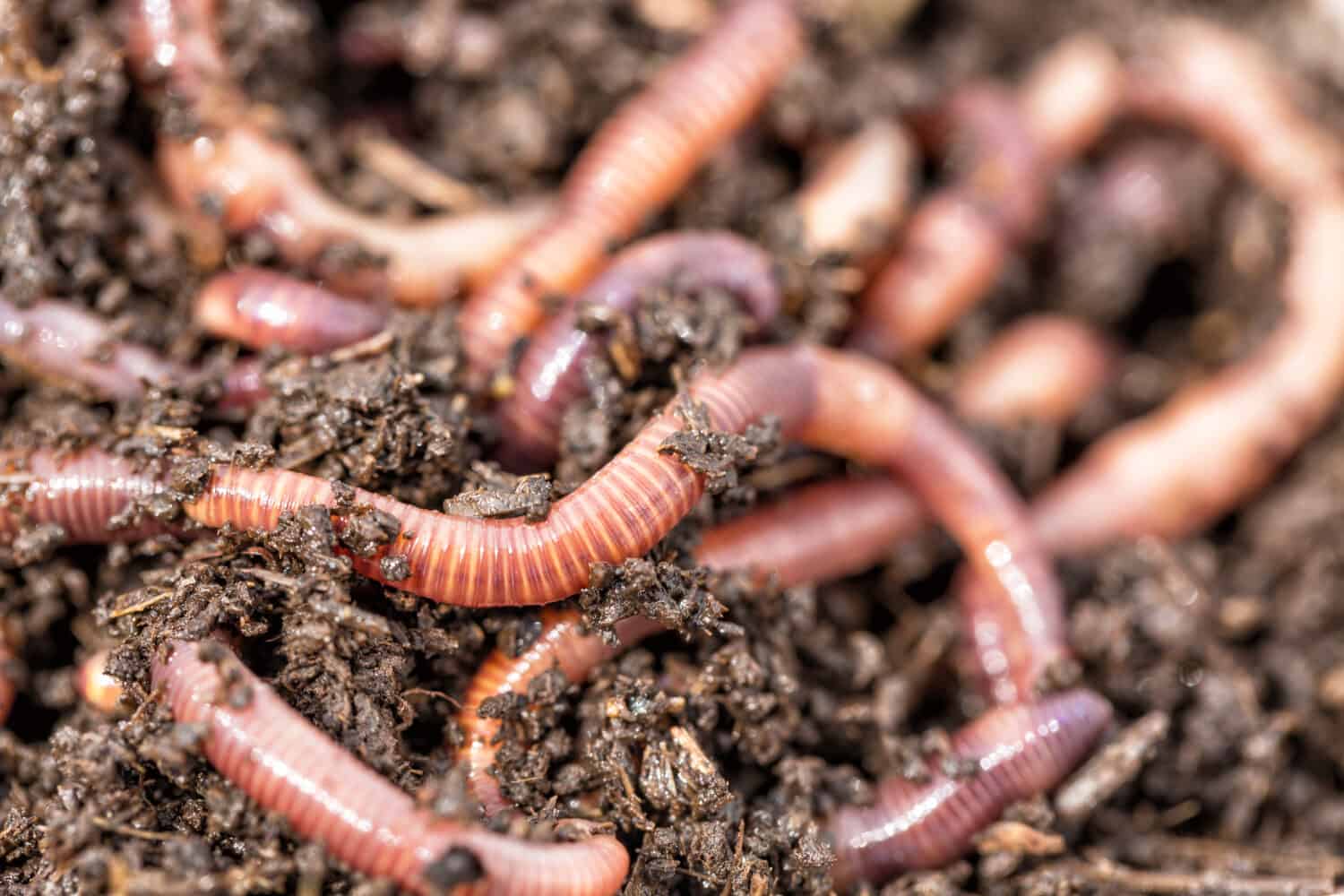
Many people think of earthworms as the wriggly, unsung heroes of the environment. Their positive effect on the environment is twofold. Earthworms are some of nature’s most effective detritivores and coprophages, as they eat abundant amounts of decomposing organic matter and animal waste. They also serve as an important food source for many creatures in ecosystems, including birds. What most people don’t realize, however, is that earthworms are actually an invasive species in North America.
Since arriving in the 17th century with the first European settlers, earthworms have slowly but surely destroyed the ability of North American forests to regenerate. Put simply, these earthworms are so effective at eating decomposing organic matter that they render what was once rich soil into dry, bare ground. Humans may reduce the distribution of forests, but invasive earthworms might be the primary driver of forest decline in the Midwestern and Northeastern United States. In turn, scientists and government agencies are racing to figure out how to prevent earthworms from destroying woodland habitats.
Inauspicious Arrival
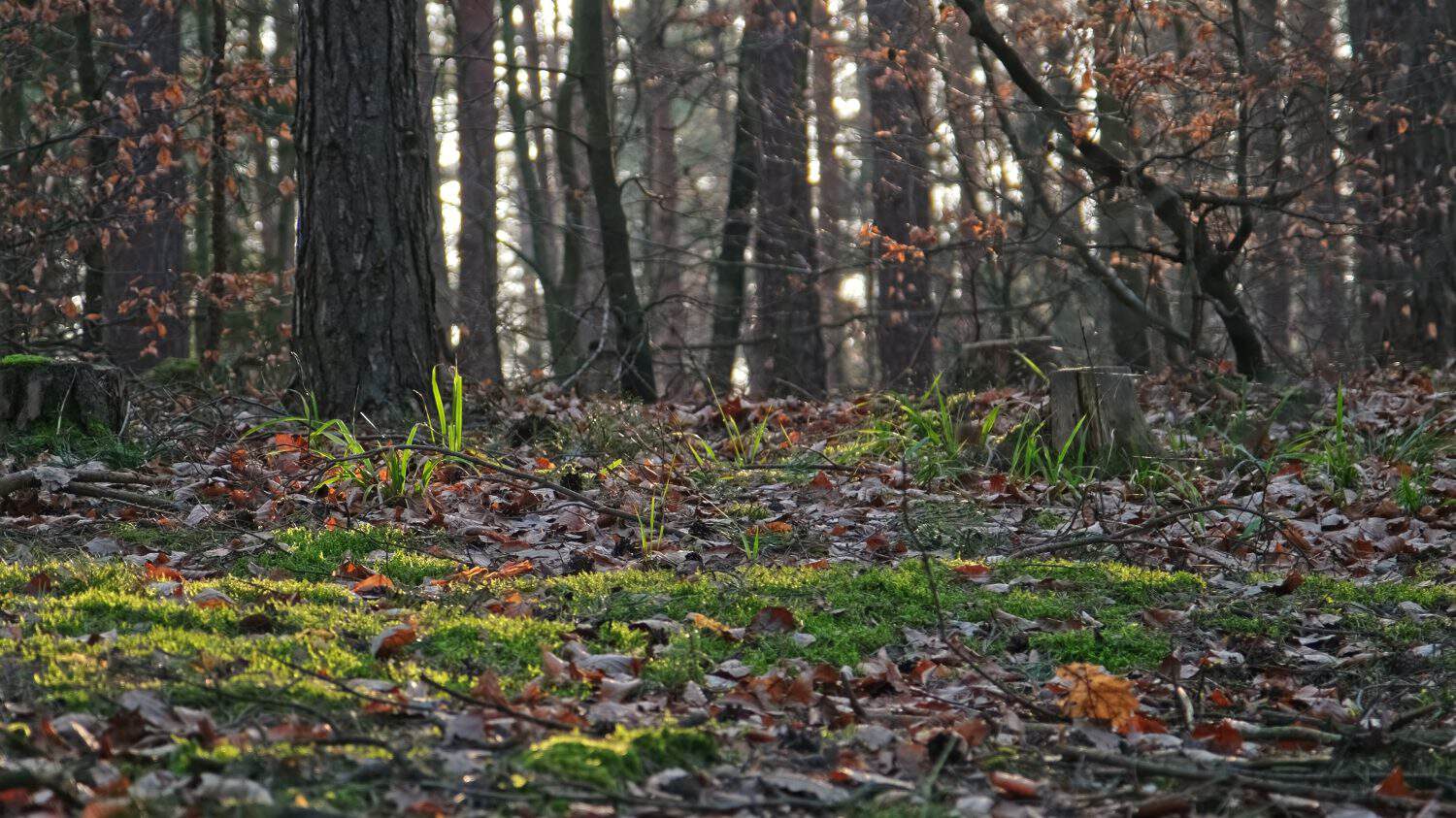
The duff layer, the top spongy layer of soil on the forest floor, is being devoured by invasive earthworms at an incredible rate.
©moomin201/Shutterstock.com
It’s easy to overlook earthworms. They are small, nimble, hide in the dirt, and really only come to the surface at certain times of day. Their introduction to the forests and ecosystems of North America likely happened because of this low-key nature. The arrival of large swaths of European settlers to North America in the 18th and 19th centuries brought countless agricultural products and soil to grow them in. This provided European earthworms like common nightcrawlers with a convenient delivery system into the continent. As people spread across North America and established farms, so did earthworms.
Asian earthworms, particularly the aggressive jumping worms, came later. Many arrived in North America as unplanned hitchhikers in the soil of imported plants sometime in the late 19th century. Thanks to the growth of the bait industry and commercialization of compost and mulch, Asian earthworms spread across the continent far and wide.
North American woodlands developed for thousands of years without earthworms and their voracious appetites. Now, the continent’s forests are under serious threat, as the decaying forest floor that serves as the foundation of flora and fauna is being eaten up at an alarming rate.
The Forest Floor
North American forests once thrived on a layer of spongy organic detritus called the duff layer. Composed of fallen leaves, pine needles, and bark that decomposes, it sits above humus, which sits above mineral soil. The importance of the duff layer can’t be overstated. It acts as a perpetual nursery for native tree seedlings and wildflowers. Its damp, spongy consistency also prevents drastic temperature swings. Furthermore, it functions as a sanctuary and kitchen for many creatures, including insects, birds, small mammals, and salamanders.
In its natural state, the decomposition process of the duff layer takes years. With the widespread distribution of invasive earthworms, however, this process happens too fast for the duff layer to regenerate. Jumping worms, in particular, use their voracious appetite to eat through the top few inches of soil. In just a single season, jumping worms can completely consume decades of accumulated organic material.
Extreme Effects
This rapid consumption of the duff layer produces disastrous effects on North American forests. Rich, spongy soil is transformed into hard, dry pellets of dirt. A domino effect occurs from there. Lack of rich soil leaves no support for plant roots. Native plants fail to germinate. Mature tree roots become vulnerable to deadly pathogens.
In short order, the food chain of the forest disintegrates. Birds that build nests on the ground lose the material required to build, and salamanders starve because all of the leaf-litter insects are gone. The only plants that can handle this dry, unwelcoming earth are invasive, non-native weeds like garlic mustard and buckthorn. In a year or less, the forest floor that sat preserved for centuries is gone, leaving nothing but invasive plants and little to no creatures.
Risky Response
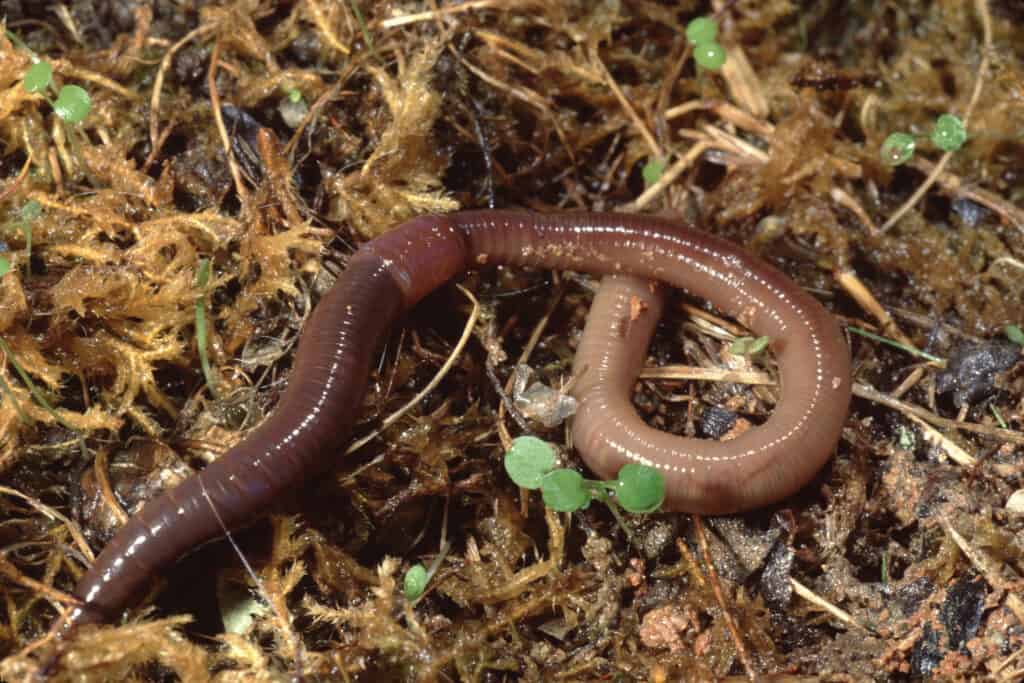
No one has figured out a viable way to eradicate earthworms without destroying the environment in the process.
©Liz Weber/Shutterstock.com
The accelerating decline of North American woodlands has put both scientists and government agencies on the offensive. The problem, however, is that there is no viable way to eradicate invasive earthworms. Once they have a foothold in a forest ecosystem, they are hard to get rid of without serious consequences. Any pesticides designed to eradicate earthworms would also destroy other soil organisms and fungi and would likely run off into nearby freshwater sources.
In response, authorities are trying different methods to stop the spread of earthworms. One of the latest approaches involves the use of organic fertilizers derived from tea seed meal. However, no one is quite sure yet what effects these organic fertilizers have on native insects. Some states, like Wisconsin, have classified jumping worms as invasive. This makes it illegal to import, transport, or sell them. Many forest services now post warnings regarding these earthworms, with many asking people entering forests to scrub soil and mud from their shoes. On the commercial side, nurseries and land managers have started selling bare-root plants instead of those grown in soil.
Only time will tell if humans can figure out an effective method to stop invasive earthworms from destroying forests without destroying other things in the process.