
Quick Take
- A bee surrounded by flowers can still be starving, and this has nothing to do with how many blooms are available. See why abundance isn't enough →
- One amino acid in pollen can cause bees to eat less of everything, even food they actually need. Explore the histidine effect →
- Honeybees quietly solved a nutritional problem that plant evolution created, and the solution happens inside the hive rather than in the field. Discover the hive-level fix →
- A garden can buzz with bees all summer and still fail them completely. Find the missing guidance →
When people talk about helping bees, the advice is usually simple: plant more flowers.
That advice is not wrong. Bees do need flowers. But new research led by the University of Oxford suggests the real story is more precise than that. Bees do not appear to treat all pollen as interchangeable “bee food.” Instead, they seem to regulate their feeding based on the balance of essential nutrients inside that pollen. And honeybees, in particular, may have evolved an impressive workaround for the fact that pollen is not always nutritionally ideal for bees.
The study, published in Current Biology, looked at how bees respond to the balance of essential amino acids in their diet. Essential amino acids are the protein building blocks animals cannot make for themselves, meaning they must come from food. For bees, that food is mostly pollen.
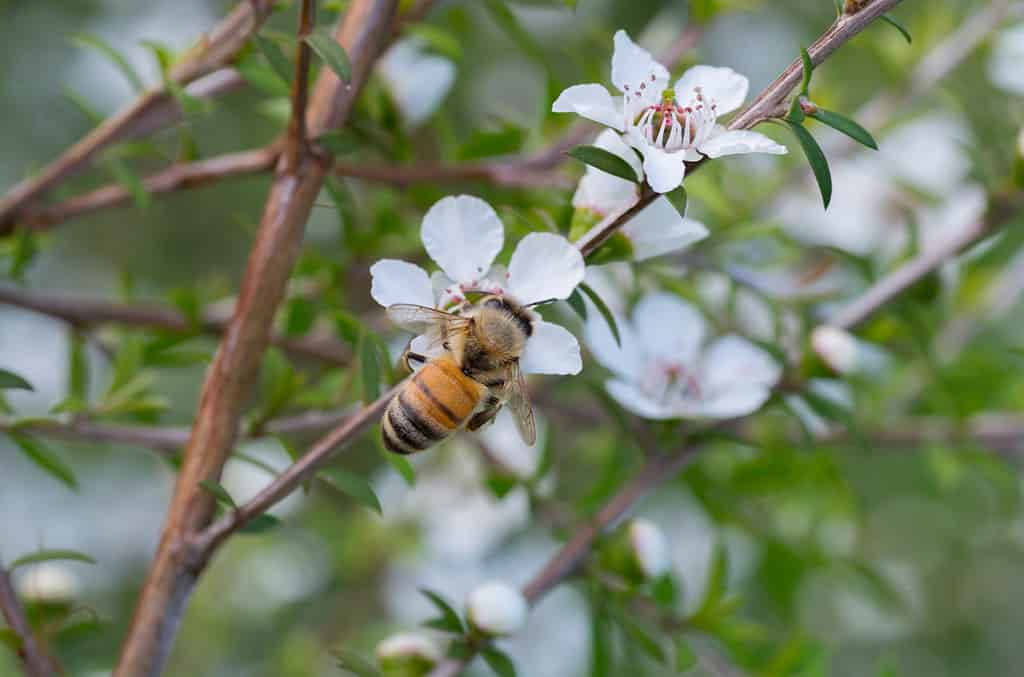
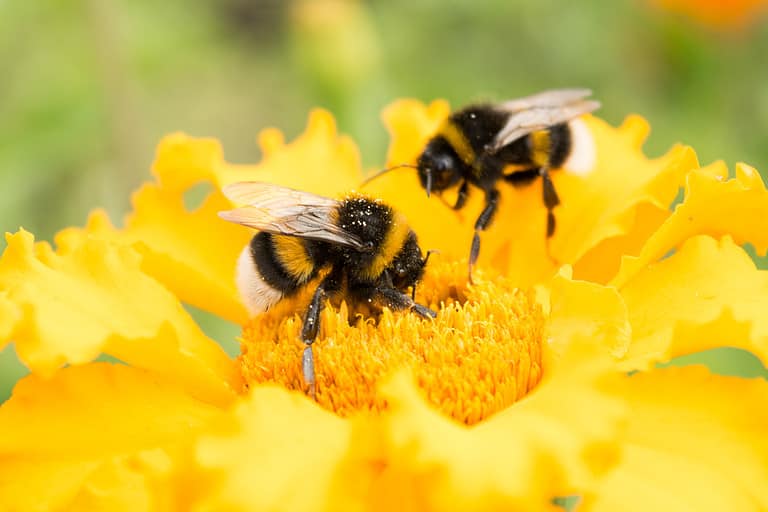
For bees, it’s not a matter of one-flower-fits-all nutritional needs. Offering a variety of plants to pollinate provides better nutritional value.
©purefocus/iStock via Getty Images
The catch is that pollen was not designed by plants primarily as a bee meal. It is the male reproductive material of flowering plants. Nectar, by contrast, is more obviously a reward, as it is a sugary lure that encourages pollinators to visit. Pollen can be eaten by bees, but from the plant’s perspective, it has another job entirely. That creates what Professor Geraldine Wright of Oxford calls a “conflict of interest between the plant and the pollinator.”
In practical terms, that means a flower can be abundant, attractive, and useful to a bee while still offering pollen that is nutritionally unbalanced.
Why “Lots of Pollen” May Not Be Enough
It is easy to imagine pollen as a complete food. After all, bees gather it constantly, pack it into their legs, store it in hives, and use it to feed the next generation. But the Oxford-led study found that many pollen sources do not closely match the amino acid profile bees actually need.
The researchers compared the essential amino acid profiles of honeybee tissues with pollen from 99 flowering plant species in the United Kingdom, spanning 26 plant families. They then created artificial diets that mimicked either the amino acid profile of different pollens or the profile of honeybee tissues. Newly emerged worker honeybees were fed these diets under controlled laboratory conditions.
Bees fed diets that more closely matched their own tissue composition ate more, gained more body mass, and consumed a more protein-rich balance of food than bees fed diets modeled on many pollen sources.
The Histidine Problem
The researchers suspected that one amino acid, histidine, might play an important role. Histidine is essential, but bees only need it in small amounts. When it appears in high proportion relative to other amino acids that support growth and development, such as leucine and isoleucine, it may create a nutritional bottleneck.
To test this, the team gave bees artificial diets in which histidine was either high or low compared with those branched-chain amino acids. When histidine was relatively high, bees ate less overall. Importantly, they did not just reduce protein intake. They also consumed less carbohydrate.
That suggests bees may not be making a simple “eat more protein” calculation. Instead, they may be responding to a physiological signal after digestion that tells them when a nutrient is becoming risky in excess.
Comparing this to patterns seen in other animals such as rats, the study indicates that excess histidine can be converted into histamine, which interacts with brain receptors involved in feeding control. The bee study does not prove the exact same mechanism is operating in bees, but it points toward a similar principle that animals can stop eating not only because they are full, but because their bodies detect that the nutrient balance is wrong.
These findings change how we should look at bee nutrition. A bee that is surrounded by flowers may still face a dietary problem if the available pollen sources have the wrong nutrient ratios.
Honeybees Have a “Baby Food” Solution
One of the most fascinating parts of the study is what it reveals about honeybee colonies.
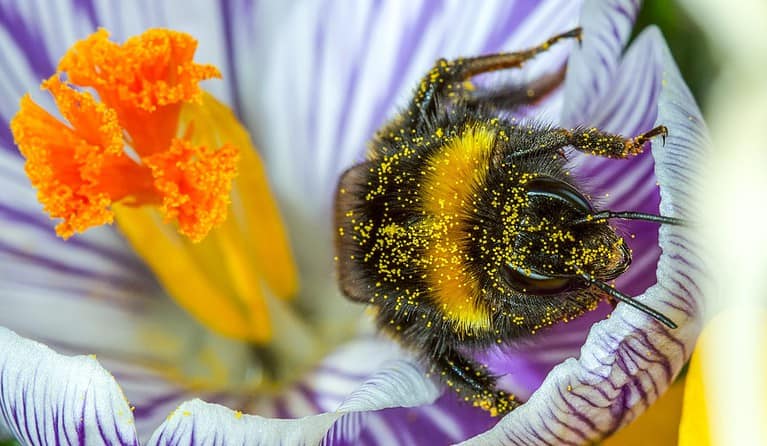
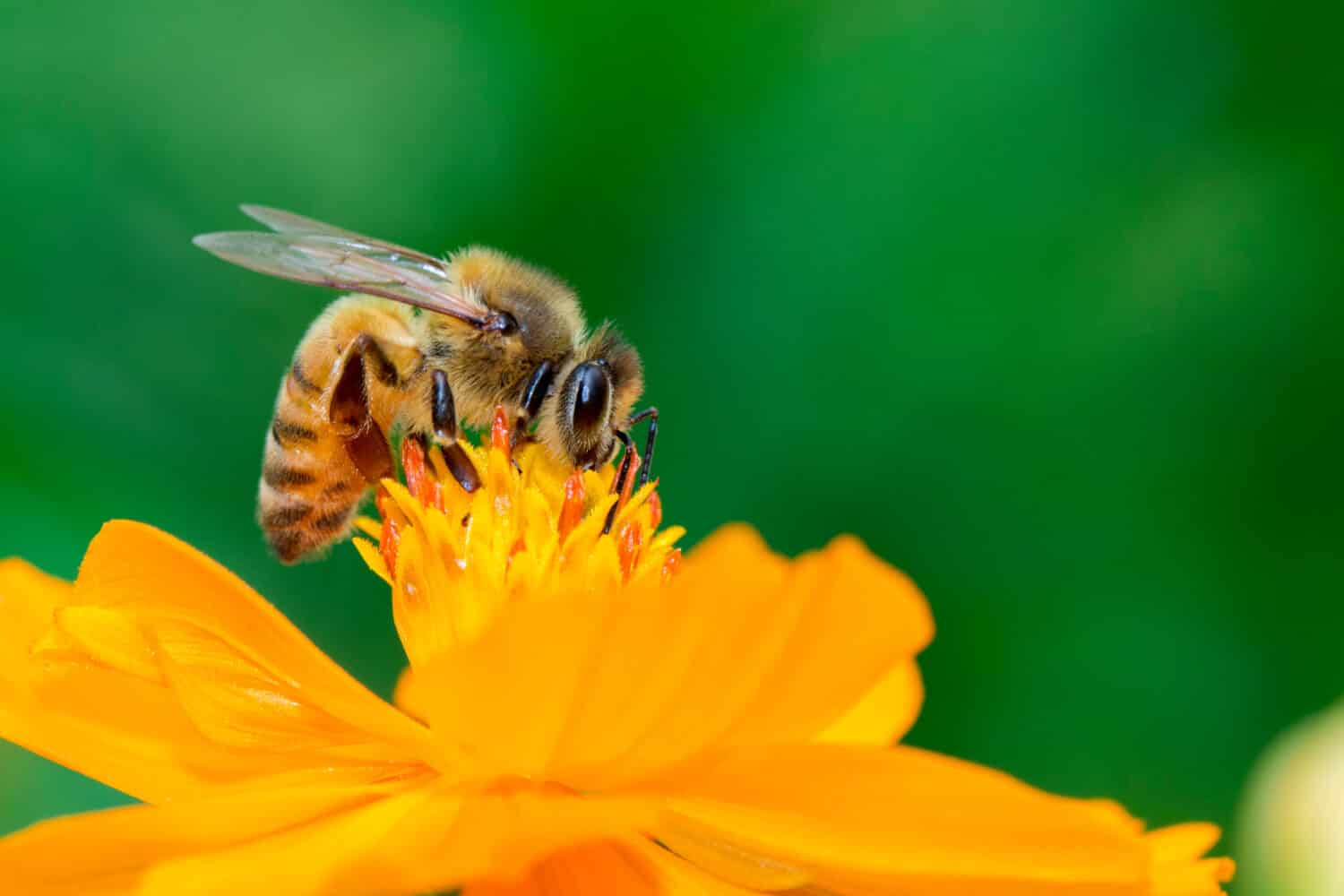
Honeybees foragers collect pollen from many flowers and store it in the hive as “bee bread,” a fermented pollen mixture. Nurse bees then eat that bee bread and convert its nutrients into glandular secretions, including royal jelly, which are fed to developing larvae.
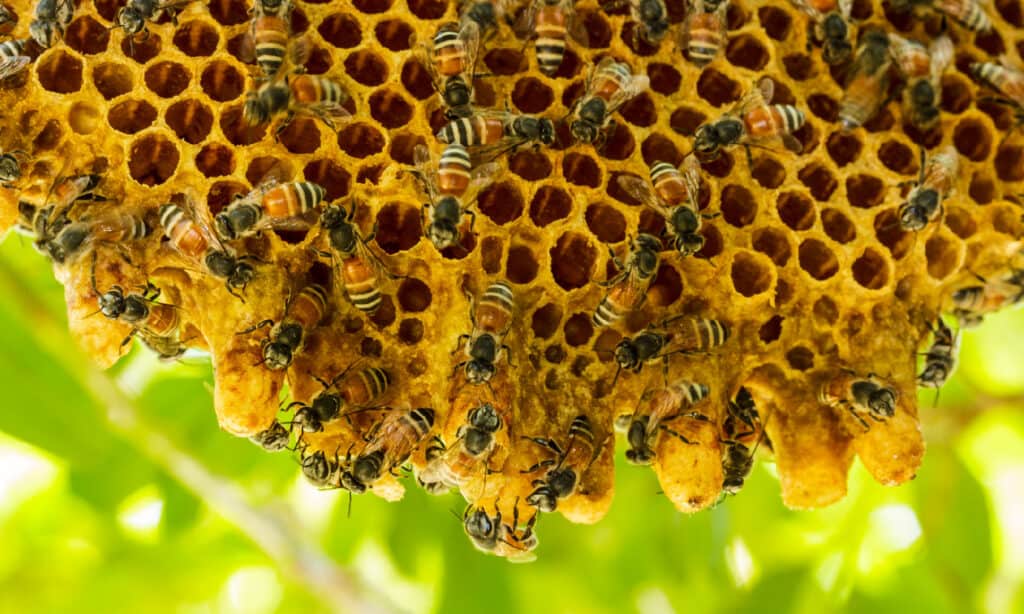
Honeybees gather pollen from many plants, blend it at the colony level, and then nurse bees transform those raw materials into a more precisely balanced larval food.
©iStock.com/nayneung1
When the researchers analyzed bee bread, they found that its essential amino acid profile was better balanced than most single pollen sources. Royal jelly was better still. According to the study, royal jelly closely matched the amino acid profile of bee tissues.
In essence, honeybees may actually be solving the pollen problem through both diversity and biological processing. They gather pollen from many plants, blend it at the colony level, and then nurse bees transform those raw materials into a more precisely balanced larval food.
Professor Wright puts it plainly: honeybees may have evolved glandular secretions that provide larvae with the amino acid ratios that maximize growth.
Wild Bees May Not Have the Same Safety Net
Honeybees are only one part of the pollinator world. Many wild bees, including bumblebees and solitary bees, do not have the same colony-level food processing system. In many species, females directly provide pollen to their young. A solitary bee may gather pollen, pack it into a brood cell, lay an egg, and seal that food supply away for the developing larva.
That means the larva may be stuck with whatever nutritional balance the mother was able to find. If the area where she gathered it has many kinds of flowering plants, the bee has a better chance of building a balanced provision. But if the environment is dominated by a narrow range of flowers, such as a single crop or a landscape plan chosen mainly for visual appeal, the pollen may be abundant but nutritionally incomplete or imbalanced.
This is an important distinction because many “pollinator-friendly” efforts measure success by bloom time, flower count, or attractiveness to adult bees. But a garden can buzz with visitors and still fail to provide the right mix of nutrients across a bee’s life cycle.
What This Means for Gardeners, Farmers, and Landowners
The most useful takeaway from all of this is that diversity matters more than decoration. A pollinator planting should not rely on one or two showy species, even if bees seem to love them. It should offer a broad mix of flowering plants from different plant families, blooming across the season. That gives bees more chances to combine pollen sources and balance their intake.
For gardeners, that might mean planting clusters of native flowers with different bloom periods rather than choosing only the prettiest summer blooms. For landowners, it may mean preserving hedgerows, meadow edges, and “messier” patches where multiple wildflowers can grow. For farmers, it points toward the value of field margins, cover crops, and habitat strips that provide nutritional variety before, during, and after crop bloom.
The study also suggests we should be careful with overly simplistic pollinator advice. Rather than broadly telling people to just plant flowers, people should be encouraged to plant a diverse, season-long menu of pollen sources.
A Sophisticated Approach to Helping Bees
For years, public concern about pollinators has focused on pesticides, habitat loss, disease, climate change, and the disappearance of flowering plants. All of those issues remain important. But this study highlights the fact that even when flowers are present, the quality and balance of pollen can shape bee health.
That does not mean every pollen mismatch is catastrophic. Bees are flexible foragers, and honeybee colonies in particular have impressive ways of buffering nutritional variation. But it does mean simplified landscapes can create a hidden problem. If bees cannot access enough different pollen sources, they may not be able to assemble the diet they need, and some species may be more vulnerable than others.
Bees are not tiny machines that turn any flower into pollination. They are animals with specific nutritional needs, physiological limits, and life stages that depend on different forms of food. Helping them requires more than providing blooms. It requires rebuilding the variety that lets them feed well.