
Quick Take
- One common cat behavior looks playful in kittens but is actually a red flag in adult cats, though most owners miss it entirely. See the adult cat red flag →
- DIY gland expression sounds simple, but a vet warns it can make things dramatically worse. Here's what's actually at stake. Read the vet warning →
- If your home suddenly smells off and your cat seems fine, the culprit might be something most owners would never suspect. Find the hidden culprit →
- Anal gland problems have a point of no return, and most owners don't recognize it until treatment has gotten a lot more serious. See the point of no return →
When someone asks, “How can you tell if your cat needs their glands expressed?” which glands do they mean? In most cases, they’re talking about anal glands. Dogs and cats both possess two anal sacs inside the edge of the anus at approximately the 4 o’clock and 8 o’clock positions. These glands serve as a scent marker for animals when they have a bowel movement. When cats don’t express them normally, health concerns can occur. Here are seven ways to tell whether your cat needs its anal glands expressed.
Anal Gland Expression in Cats
Unlike small dogs, cats rarely require anal gland expression. According to Dr. Shelly Wyatt of Northwood Hills Animal Hospital, “Although our feline friends with bobbed tails [such as Manx] experience these issues more frequently, any cat can develop anal sac problems. If your cat shows symptoms [of requiring their glands expressed], it’s important to visit the veterinarian immediately for this procedure.”
She also told A-Z Animals that cat anal glands are very sensitive and fragile, and trying to express them on your own could result in anal gland impaction, infections, and even a rupture. All of these issues result in an extremely painful ordeal for your cat. While it is uncommon for cats to need their anal glands expressed, it does happen occasionally. If your cat is a Manx or has a shorter tail than normal, they’re more likely to experience anal sac disease. If your cat shows any of the signs below, reach out to your vet for advice.
#1. Bum-Scooting: The Number One Sign Your Cat Needs Their Glands Expressed
The primary sign that your cat requires their glands to be expressed is bum-scooting. We’ve probably all seen this behavior — legs up, bum to the ground, and dragging it across the carpet, grass, or floor. When a cat does this, there are several health concerns that could be the reason. Cats bum-scoot due to poop stuck to the area, worms making their bum itchy, and anal sac problems. The discomfort caused by the swollen glands causes the cat to try to relieve the pressure by scooting. Bum-scooting can lead to rug burn or other scrapes and scratches around the sensitive anal area. If your cat is bum-scooting, go to the vet.
#2. Excessive Licking
Another huge sign that your cat needs an anal gland expression is when they lick at their back end excessively. We all know cats lick themselves to get clean, but if they’re constantly licking their bottom, it’s usually a sign of difficulty in the anal region. Take your cat to the vet if they can’t stop licking the area around their anus.
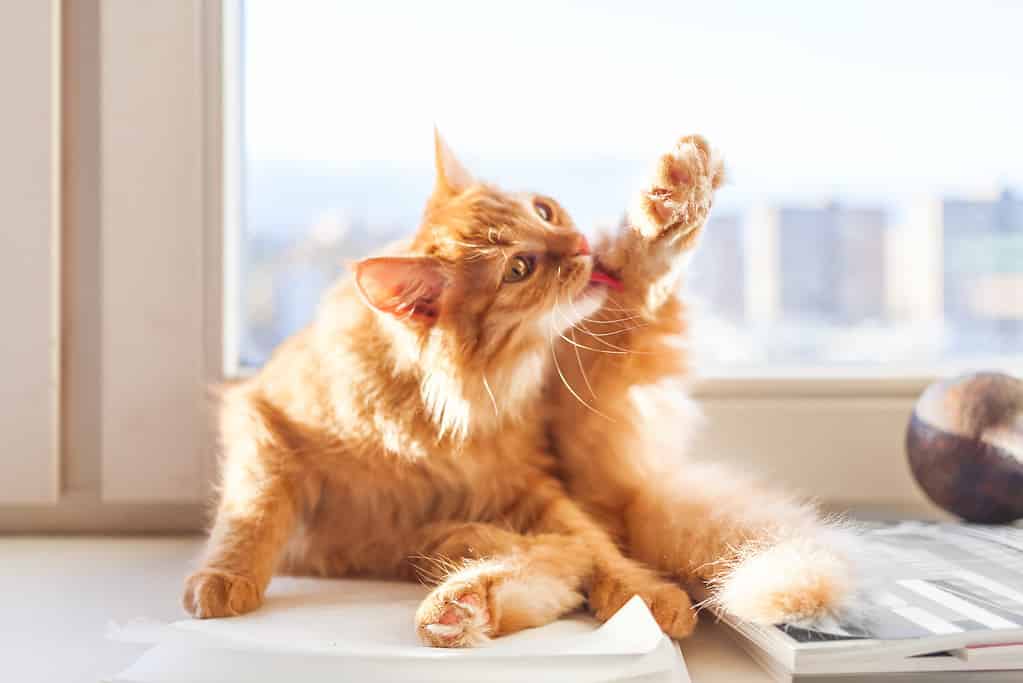
Cats lick themselves to get clean, but excessive licking of the anal area can signify a problem.
©Konstantin Aksenov/iStock via Getty Images
#3. Biting at the Anal Area
Similar to licking, some cats that need their glands expressed nibble or chew at the area. Due to the pressure build-up, they want to relieve the pain. Chewing at the area can result in an anal gland rupture, which requires veterinary attention. Is your cat chewing on their posterior? It’s definitely time for a trip to the vet.
#4. Chasing Their Tail
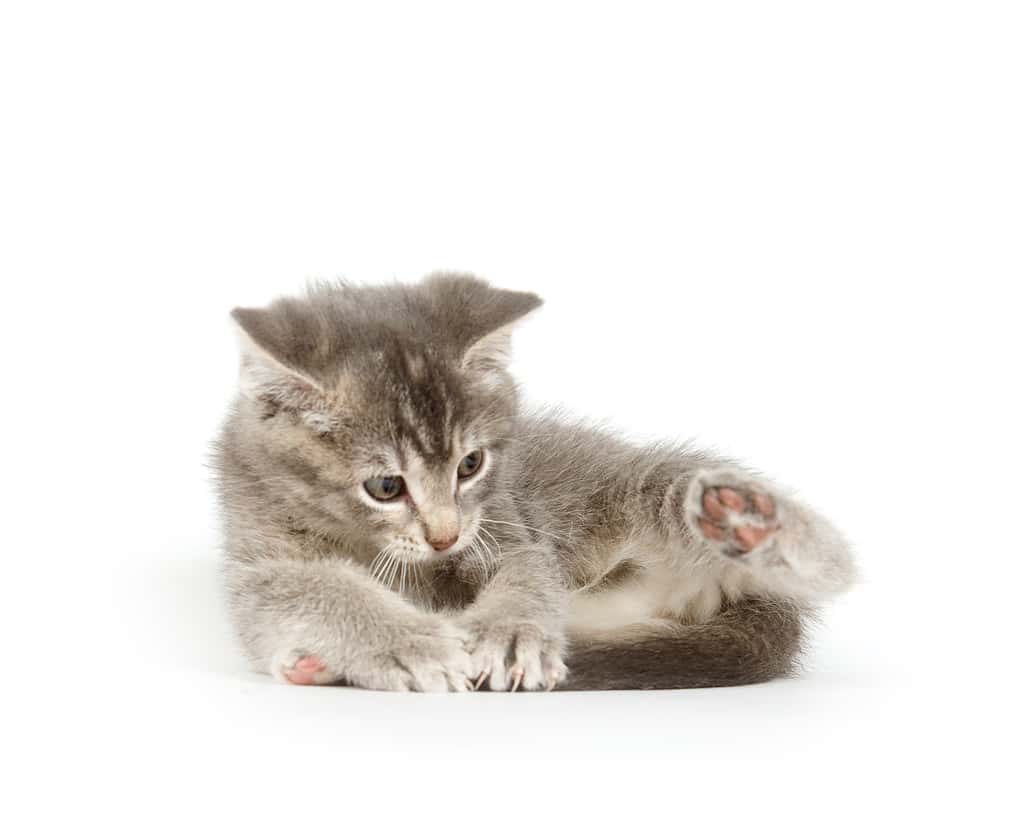
Kittens chase their tail for fun, but in an adult cat, they might do this due to anal sac problems.
©Tony Campbell/iStock via Getty Images
While watching a kitten chase their tail is generally entertaining and harmless, this activity in an adult cat may point to a problem with the anal sacs. If your cat needs their glands expressed, they may spin around in a circle, trying to lick or chew at the area. If you continue to see this behavior, reach out to your vet for advice.
#5. Foul Odor
A cat’s anal sacs contain a foul-smelling fluid that normally expresses when they poop. However, if the sacs aren’t expressing fully, they may secrete small amounts of fluid. This fluid often lingers on the fur or furniture, producing a rank smell. This scent is difficult to remove since it is oil-based. If you smell a foul odor from your cat, take them to the veterinarian ASAP!
#6. Swelling
Another sign your cat requires their glands to be expressed is swelling in the area around the anus. Normally, the anal sacs are smaller than a green pea and cannot be seen with the naked eye. However, when they become impacted (when the gland becomes blocked), they may become significantly swollen. Swollen anal sacs may become infected and cause a fever. This swelling is very uncomfortable. Your cat might become lethargic and refuse to eat. If their anal sacs are swollen, make an appointment with your vet.
#7. Anal Sac Rupture: When You Missed the Earlier Signs
If you notice your cat suddenly has an extra opening back there, chances are they needed their glands expressed and you missed the signs. At this point, the anal sac has ruptured. Anal sac rupture requires a veterinary visit for flushing and packing the area. Most cats will have to wear a cone, a.k.a. an Elizabethan collar, to prevent them from licking at the area and causing additional damage. They must also take oral antibiotics to prevent infection. If you see holes in your cat that weren’t there before, don’t panic. Just take them to a veterinarian right away.
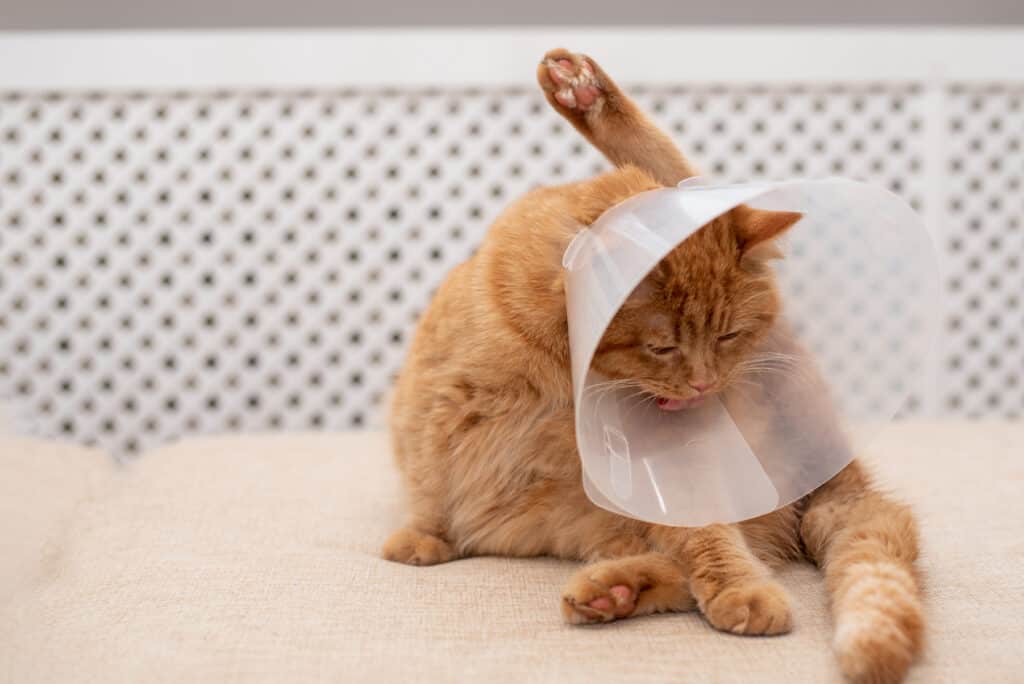
If your cat’s anal sac ruptures, they’ll have to wear a cone while it heals.
©Natalia Sem/Shutterstock.com