
Quick Take
- Your cat's choice of sleeping spot is actually a calculated survival strategy, one that says something specific about how they see you. See the survival strategy →
- The warmth your feet give off plays a surprisingly precise role in where your cat settles, and the reason has nothing to do with affection. Explore the warmth science →
- Every time your cat curls up at your feet, it leaves behind a message that most owners never notice. Decode the scent message →
- This nightly ritual matters far more to your cat's health than most owners realize, and disrupting it carries a real cost. Understand the nightly ritual →
What Drives Your Cat to Sleep at Your Feet?
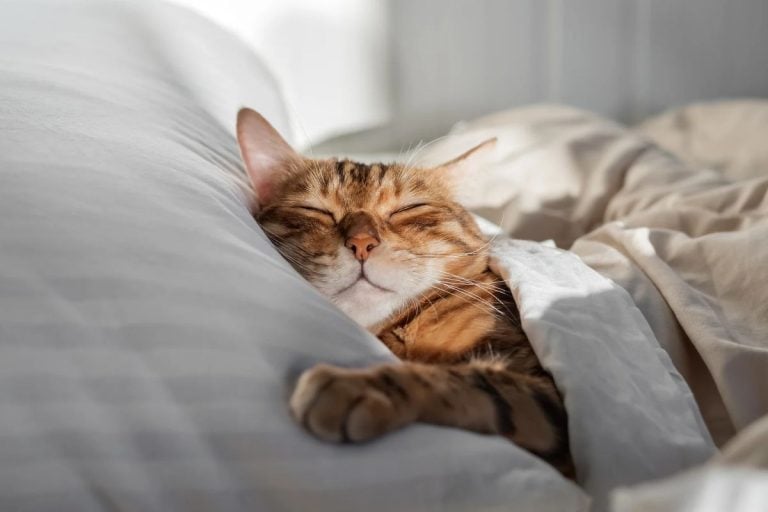
Cat owners often find themselves sharing the foot of their bed with a furry companion night after night. This familiar scene is more than coincidence. Scientific observations point to a complex blend of feline instincts and fundamental needs guiding this nightly ritual, each choice shaped by centuries of evolution and the subtle dance of trust between pet and human.
Daytime may see cats behaving independently, weaving around the house at their own pace. Yet, when evening arrives, many gravitate toward the end of the bed. This behavior has roots in biology and psychology, revealing much about what makes felines unique in the animal kingdom.
A Question of Safety and Strategy
Despite living in the comfort of modern homes, cats maintain the instincts honed in the wild. Their brains, ever alert to potential danger, remain partially vigilant even in deep sleep. For a cat, the foot of the bed serves as a natural lookout, offering a broad view of the room and a quick path to safety if startled. Unlike spots closer to the head, this vantage point is both open and accessible, ensuring they stay in control of their environment.
Experts compare this to dogs, who often crave close contact and will press snugly beside their owners. Cats, by contrast, want security without complete surrender of their independence. The end of the bed gives them the best of both worlds: proximity for comfort and the space they need to feel in command of their safety.
The Science of Warmth and Comfort
There’s also a physiological side to this nightly routine. Cats, whose normal body temperatures run higher than those of their humans (averaging around 101.3°F, compared to 98.6°F), seek out steady, comfortable heat sources. Your feet emit warmth, but not so much that it becomes uncomfortable, an ideal middle ground compared to the stronger heat from your torso or head.
Feline behavior studies have shown that conserving energy is a primary concern for cats, an echo from their ancestors who needed to rest efficiently between hunts. By choosing a sleep spot that minimizes energy loss and maximizes warmth, cats ensure their bodies stay ready for whatever comes next, be it play, exploration, or simply another nap.
Marking Territory and Building Bonds
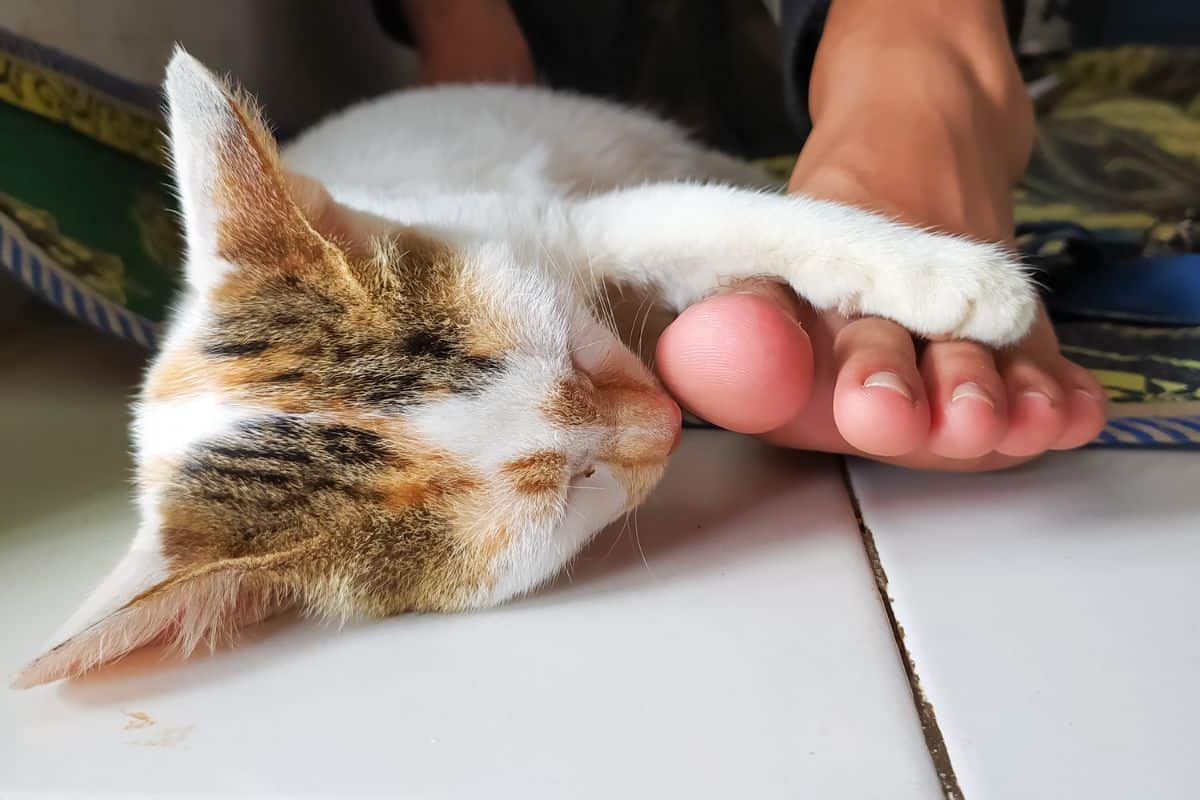
Yet, the choice of sleeping location isn’t purely about comfort or safety. It’s also deeply social. Cats use subtle scent markers from sebaceous glands in their skin to lay claim to their chosen space. By resting at your feet, they signal their presence and connection, not just to you, but to anyone who might enter their domain.
Feline behavioral experts note there’s a hierarchy in sleep locations. Cats who regularly share your bed tend to display a higher level of trust and emotional closeness than those who opt for a separate basket or distant spot. By staying near without crowding, your cat is balancing autonomy with attachment, marking both their territory and their bond with you.
Routine, Reassurance, and What It Means for You
Cats thrive on predictability. Once they discover a spot that feels safe and meets their needs, they’ll often return night after night. This ritual creates a sense of stability, reassuring your cat and supporting its emotional well-being. Behavioral studies highlight how such routines help reduce feline stress, a key factor in their overall health.
When your cat curls up at your feet, it’s building more than a habit, it’s forming a quiet partnership. The rhythmic weight at the bottom of the bed is a sign of trust forged across millennia, shaped by wild instincts but softened by companionship. Each night, you and your cat create a shared space that, for both of you, becomes a haven of familiarity and comfort.