
Quick Take
- Most owners spay or neuter too early, and for Malamutes this timing mistake has real consequences for their development. See the recommended timing →
- A Malamute owner in England had no idea what they were signing up for when they adopted their puppy, and the result is hard to believe. Meet Mal from England →
- There's a specific window to start training your Malamute, and missing it means their natural stubbornness may become much harder to manage. Find the training window →
Alaskan Malamutes come from a long line of powerful sled dogs that were bred for hard work. However, these days, they make playful, gentle companions for any family. These dogs thrive in cold climates and love being outdoors. If you’re thinking about adopting an Alaskan Malamute, learn more about their milestones from puppyhood to adulthood.
Breed Summary
The Alaskan Malamute is a strong, loyal, affectionate, playful, and dignified dog breed. They are known for their bushy tails and dense, fluffy coats. These dogs originated from Arctic sled dogs that were bred for endurance. They were developed to work in a pack, hauling heavy loads over long distances. You can see their working origins in their deep chests, sturdy bodies, and muscular shoulders. Although these dogs still require plenty of exercise, they are also happy to relax with their humans after a long day.
Malamute Weight Chart by Age
The table below outlines estimated weights to expect at specific ages. However, these figures may vary from dog to dog.
| Age | Weight in Pounds |
|---|---|
| Newborn | 1-1.5 |
| 1 Month | 5-10 |
| 2 Months | 10-25 |
| 3 Months | 15-30 |
| 4 Months | 25-40 |
| 5 Months | 30-50 |
| 6 Months | 45-60 |
| 7 Months | 50-65 |
| 8 Months | 55-70 |
| 9 Months | 55-70 |
| 10 Months | 60-75 |
| 11 Months | 65-75 |
| 12 Months | 70-80 |
| 2 Years | 75-85 |
When Will My Malamute Stop Growing?
Alaskan Malamutes will be close to their full weight and height around their first birthday. They generally stop growing between 18 and 24 months old. However, after that, they will continue to put on muscle and fill out until they are about three years old.
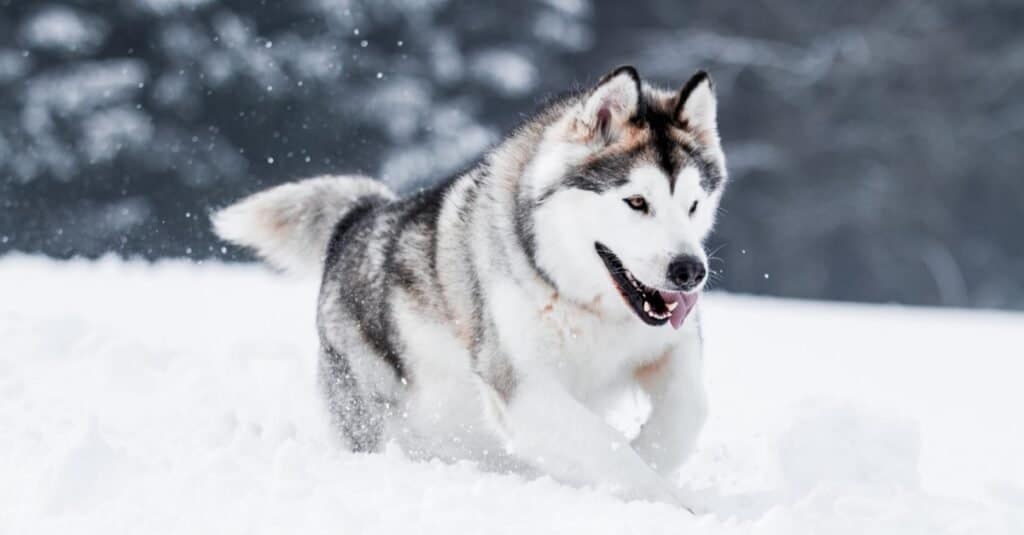
When fully grown, most Malamutes measure between 23 and 25 inches in height at the shoulder.
©Aneta Jungerova/Shutterstock.com
How Big Will My Malamute Be When It’s Fully Grown?
When fully grown, male Malamutes generally measure up to 25 inches in height at the shoulder, while females measure up to 23 inches. They are large dogs, with males weighing up to 85 pounds and females weighing up to 75 pounds. However, some exceptionally large individuals may stand taller and weigh more. These dogs are usually about 29.5 to 34.5 inches in length. There are three ways to predict how big a Malamute will be: age, genetics, and paw size.
The Biggest Malamute Ever Recorded
The giant Alaskan Malamute is a bigger version of the Alaskan Malamute, and they are gentle giants in the dog world. These enormous dogs can exceed 150 pounds and stand up to 35 inches tall. One of the most heavily documented giant Malamutes is a pup from Bourne, England, who has been known to turn heads due to his enormous size. When “Mal” was adopted, his owners didn’t realize their pup was going to become a giant, but now they say he is the size of a Shetland pony. Mal is currently five years old and weighs 180 pounds.
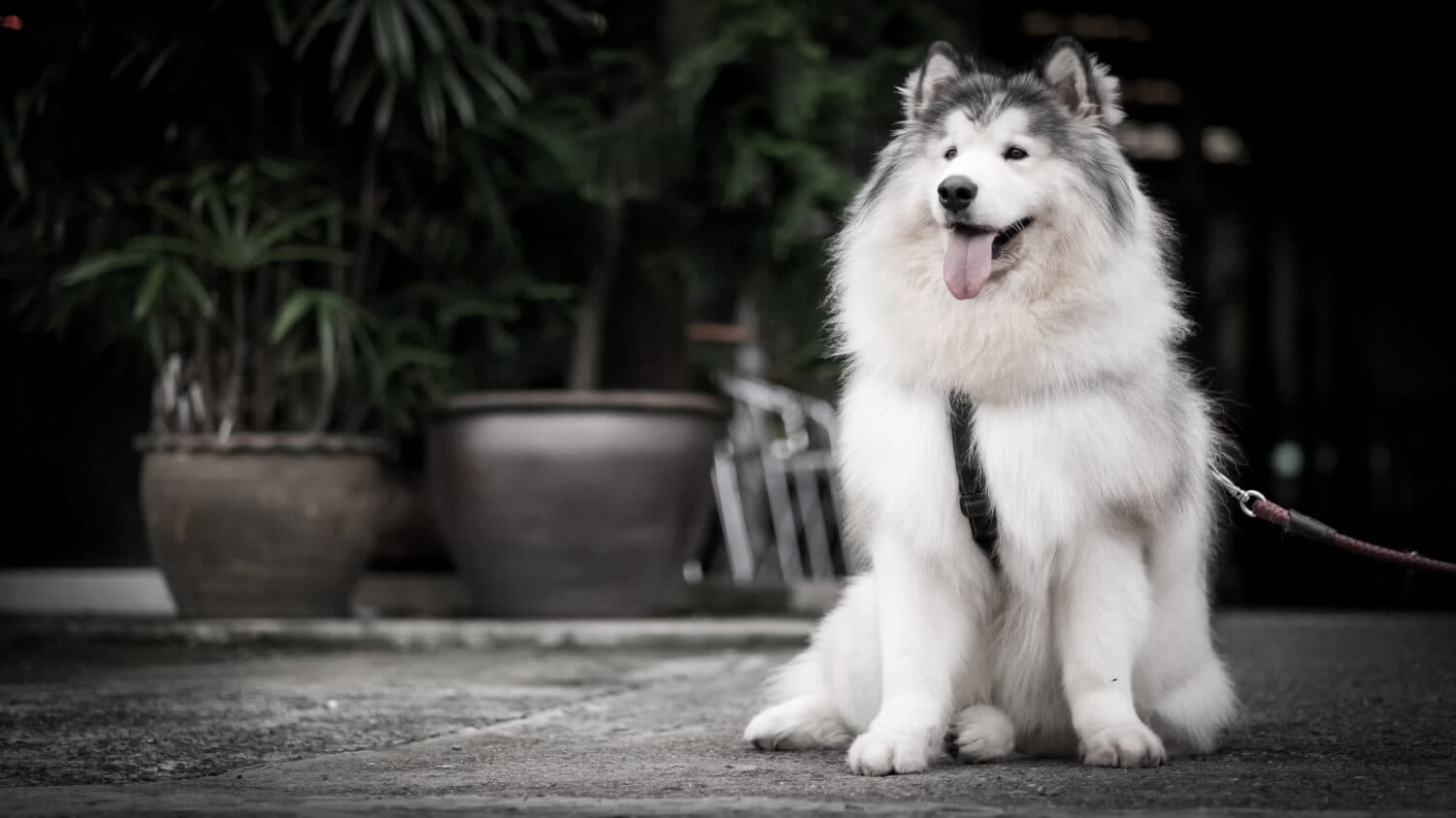
The giant Alaskan Malamute can weigh over 150 pounds.
©Tatar CCube/Shutterstock.com
When Should My Malamute Be Spayed or Neutered?
Spaying or neutering your Malamute is a good thing for many reasons. You will not have to worry about finding good homes for puppies if you are not planning on breeding. Spaying and neutering are also proven ways to reduce several risks, including testicular cancer, uterine infections, and breast cancer. When it comes to males, neutering prevents territorial and aggressive behavior, and it will stop your male Malamute from looking for a mate every time you go for a walk.
Conventional wisdom used to be that dogs should be spayed or neutered around six months, but vets will often recommend different ages depending on the breed. Many breeders and vets recommend waiting to neuter a male Malamute until at least the 18-month mark to allow their testosterone to support their bone strength, broad head, and muscular body. Some breeders also recommend waiting to spay females until around 12 months for the growth benefits, but talk to your veterinarian about the perfect timing for your dog.
When Should My Malamute Be House Broken?
Malamutes’ training progression starts early, and you can begin training your pup as soon as you get them home. However, when they are 8 weeks old they can begin to learn, but bladder control is limited. As an owner, there are a few signs to look out for that your puppy is ready to be housebroken. These include starting to squat, lifting a leg, pawing at the door, and sniffing the floor. Some tips to help with potty training involve using a crate to confine your puppy when you are not available to take them out.
Also, use a leash to take your puppy outside to where you would like them to go potty. Then, use treats to reward your puppy when they “go” outside. Lastly, keep cleaning supplies close in case of accidents until you have confidence that your puppy is fully housebroken. Patience is vital when house training any dog. Your dog will long to please you and will eventually learn.

Malamutes can begin training as early as 8 weeks old.
©pio3/Shutterstock.com
When Should My Malamute Stop Eating Puppy Food?
All puppies, including Malamutes, need good-quality, high-protein food. They should be on this food from birth until about 18 months of age. After 18 months, their dietary needs will change as they will not need as much protein. It is a good idea to speak to your vet about changing from puppy food to adult food, as switching too early or too late may be detrimental to your dog’s health.
When Will My Malamute Start Losing Teeth?
Malamutes will begin to lose their puppy teeth at about four months. However, sometimes, these baby teeth do not fall out naturally, and this can cause dental problems. Unfortunately, this is a common issue in dogs of all sizes. If it occurs, your dog should be taken to the vet to extract the teeth before it causes painful gums, adult tooth loss, or bad breath.
In puppies, the teething process will continue for a few months and cause behavior such as chewing and destruction of objects. This is because it is uncomfortable or painful for the puppy. To reduce pain and discomfort, owners can try chewing toys with different textures to help relieve the pain.

Malamutes will begin to lose their puppy teeth at about four months.
©Kseniia Grigoreva/Shutterstock.com
When Should I Start Training My Malamute?
Malamutes are strong-willed and intelligent. Therefore, the earlier they are trained, the better, which can help to prevent issues in the future. They were bred to be sled dogs, and if taught correctly, their natural instincts can be channeled in a positive direction. Malamutes can be trained as early as 8 weeks old. Socialization is crucial for all dogs, and Malamutes should be introduced to different people, animals, and environments from a young age. Malamutes are pack animals, however, so the owner must establish themselves as the leader of the pack. So firm but loving training is required to ensure your pup knows who is in charge.
What Cues Should I Teach My Malamute First?
Training cues will help establish the owner as the pack leader. The first recommended cue to teach a Malamute is the “sit” command. Start with the dog in front of you and have a treat in your hand. Then, slowly move the treat from the dog’s nose over and down the back of its head. This will cause the dog to lean back and sit. As they do this, you should say the sit command. Then, offer them the treat. Repetition is key. Eventually, the dog will follow the command without the treat. After the sit command has been executed successfully, you can start with “stay,” “come,” or “leave it.”
When Will My Malamute Calm Down?
Each dog is different. However, Malamutes generally reach mental and emotional maturity between 2 and 3 years, which is when they will start calming down. At this stage, they will begin to be more relaxed and have less energy. Owners can also help their dogs settle down with consistent training, setting clear boundaries, and positive reinforcement. These things all go a long way to showing your dog how to behave and what is acceptable. Another tip is providing physical and mental stimulation, such as taking them for walks and engaging in playtime. Owners can also provide their Malamute with a calming environment, such as a place with a comfortable bed, calming music, and dim lighting.
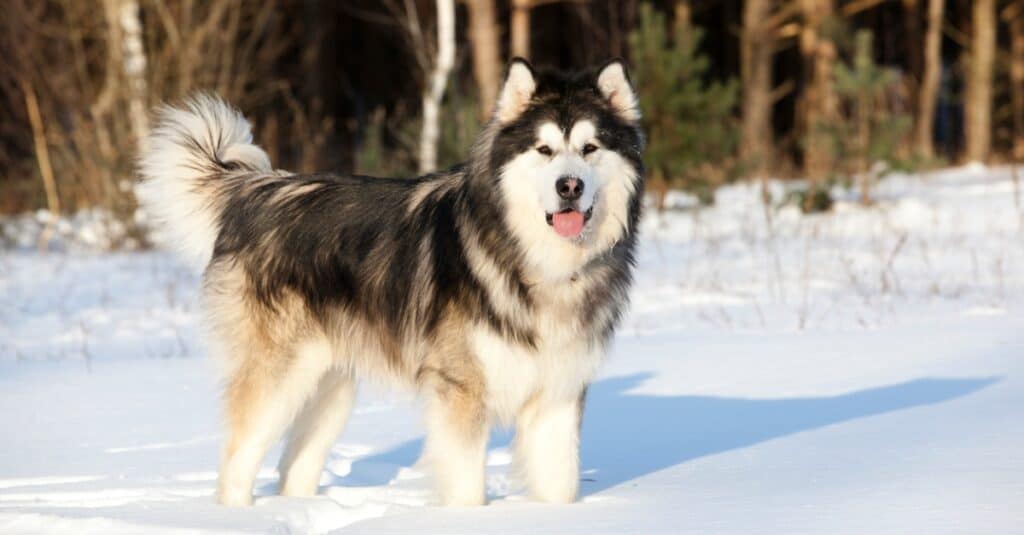
Malamutes generally reach mental and emotional maturity between 2 and 3 years old.
©iStock.com/Liliya Kulianionak
Common Health Issues Your Malamute Might Experience
Malamutes are generally healthy dogs when cared for properly. However, there are a few health problems that can affect these dogs, including:
- Hip dysplasia
- Elbow dysplasia
- Chondrodysplasia (dwarfism)
- Hypothyroidism
- Bleeding disorders such as thrombopathia and von Willebrand’s disease
- Day blindness
- Degenerative polyneuropathy