
Quick Take
- The rarest Chessie coat color looks nothing like a traditional retriever, a result that breeders do not actively breed for. See the rarest color →
- At AKC shows, judges largely ignore coat color. What they scrutinize instead is directly tied to the breed's survival in icy water. See what judges actually check →
- One accepted coat color is so close to another that most breed sources don't even bother distinguishing it, even though the AKC recognizes it separately. See the nearly identical shade →
- Chessies were bred to disappear into their environment, and their entire color palette was engineered with one specific hunting purpose in mind. See the hunting-driven color standard →
Chesapeake Bay retrievers, also known as Chessies, may not be as common as Labrador retrievers, but they have made a name for themselves as the state dog of Maryland, which is where the breed was developed. Chesapeake Bay Retrievers were bred to be duck dogs, so their coat colors were intended to help them blend into their surroundings. In this article, we’ll discuss the eight Chesapeake Bay Retriever coat colors from most common to rarest.
What Does the Breed Standard Say About Chesapeake Bay Retriever Colors?
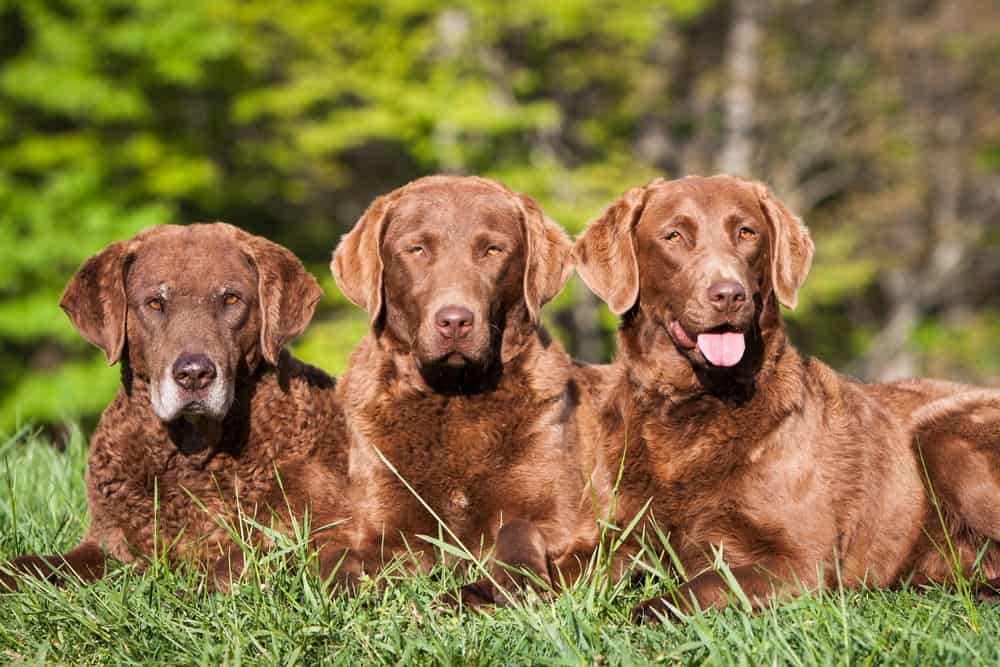
Chesapeake Bay Retrievers have three primary colors: brown, deadgrass, and sedge. The American Kennel Club (AKC) breed standard also accepts tan coats. Chessies’ eyes are always either amber or yellow. According to the AKC, Chessies should be bred to camouflage into their environment while hunting. This is why their fur can be a range of brown tones frequently seen in nature.
It’s also seen as ideal for the dogs to be self-colored, which means one color all over, with or without lighter or darker shades of the same color. However, small white spots on the chest, stomach, toes, or backs of the paws are allowed. So are coats with various shades throughout, provided the coat colors are accepted by breed standards. You may also sometimes see masking. Disqualifications from AKC shows include black fur and white spots appearing outside of the chest, stomach, and paws. No one shade is given preference over another.
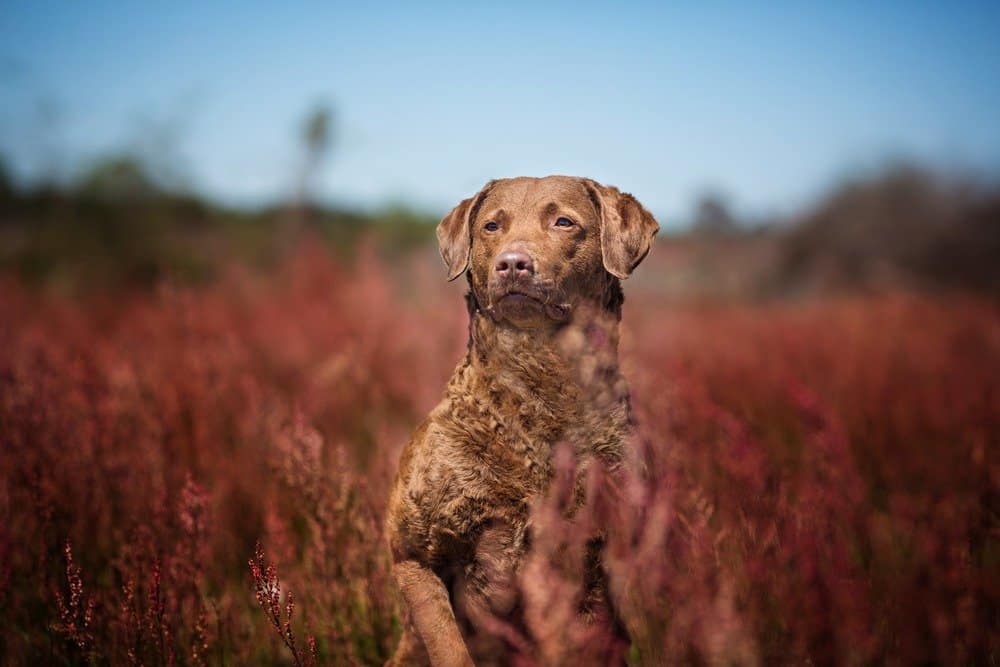
The quality of the coat is more important in judging Chessies than the color.
©Kerrie T/Shutterstock.com
Other Fun Facts About Chessie Fur
Chesapeake Bay retrievers also have unique coat textures. Chessies were bred to withstand very cold temperatures, sometimes diving into icy waters to retrieve waterfowl. They have double coats, with a wavy, short, harsh outer coat and a dense, fine, wooly undercoat. Their fur is also coated with natural oils to keep them warm and dry in adverse conditions.
The coat can be no longer than 1.5 inches long. Breed standards also note that the hair on their faces and legs should be very short and straight, and wavy hair is acceptable on the shoulders, neck, back, and loins only. At AKC dog shows, judges will evaluate a Chessie’s coat according to texture more than color, as this is what impacts the dogs’ working abilities.
#8: Brown
Brown is the most common coat color we see in Chessies. These dogs have deep brown fur, similar to the “chocolate” color seen in other dog breeds. Breed standards note that brown includes all shades from a light cocoa color to a deep bittersweet chocolate.
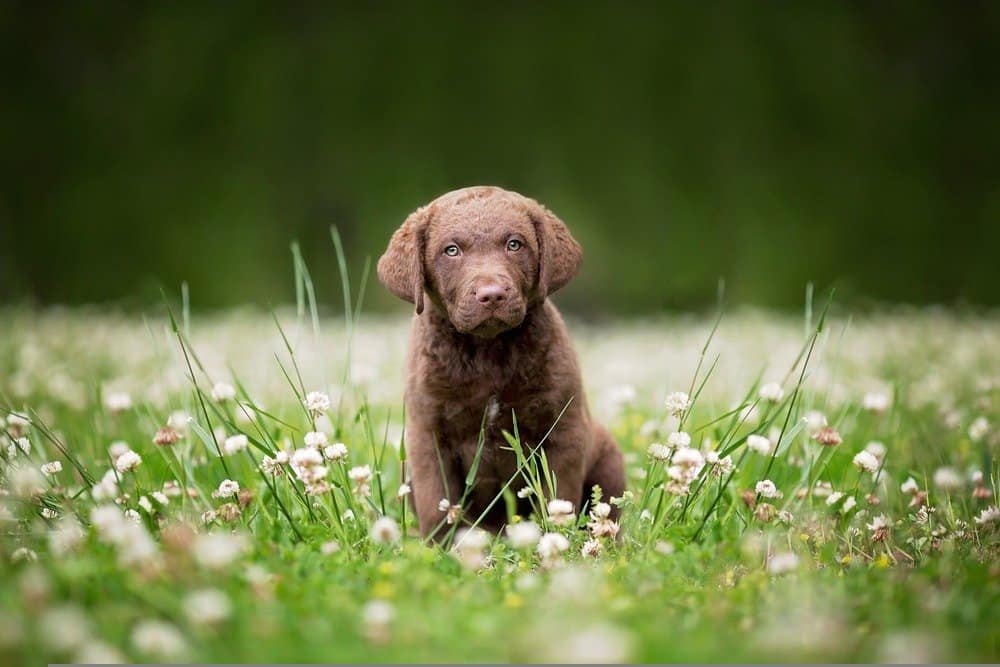
Brown is the most common color in Chessies.
©Kerrie T/Shutterstock.com
#7: Dark Brown
Dark brown coats in Chessies are exactly what they sound like. The dogs have very dark brown coats, sometimes with varying shades throughout the fur.
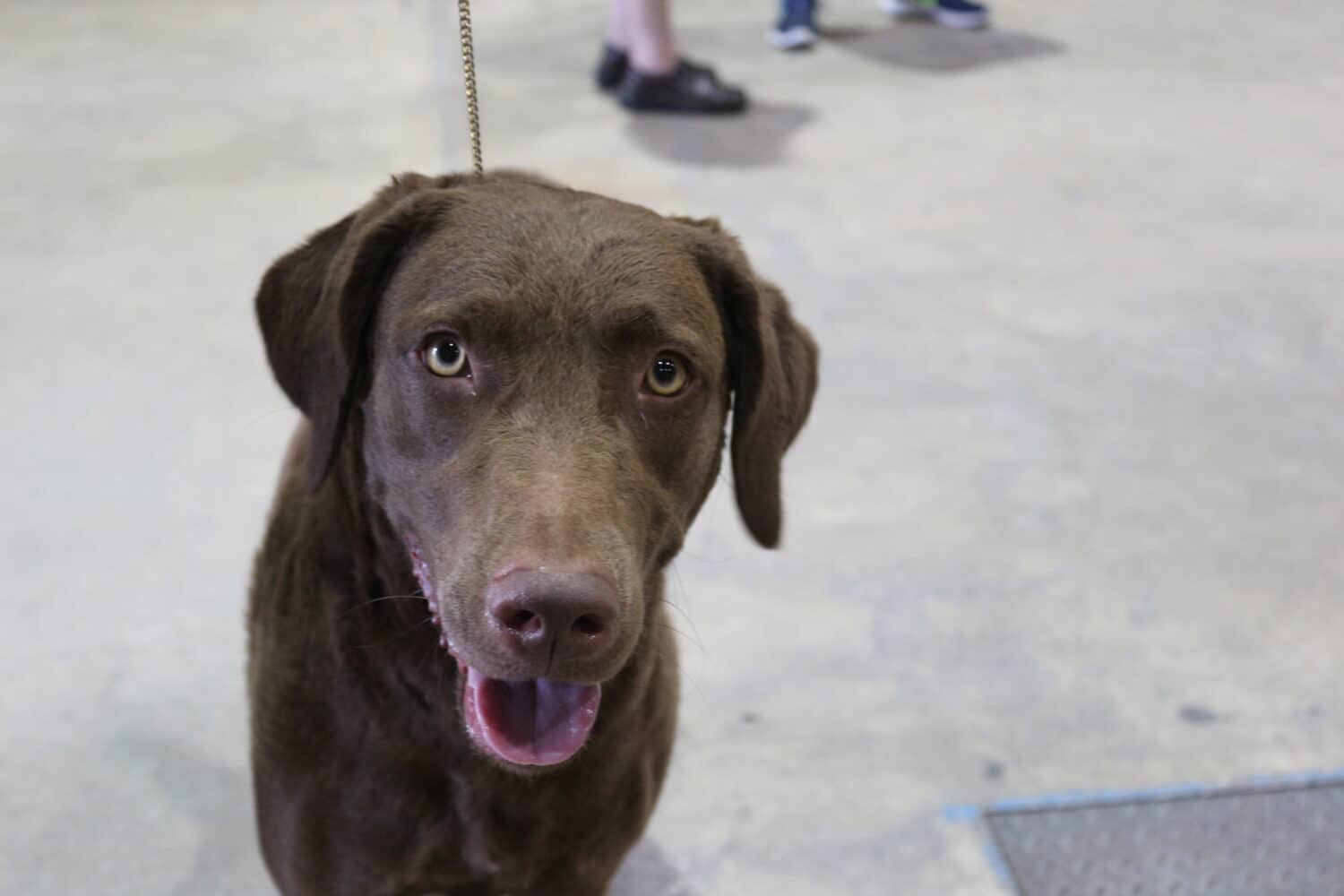
Chessies can be very dark brown in color, but black fur is disqualifying for the breed.
©Life Gemz/Shutterstock.com
#6: Sedge
Sedge is another coat color similar to what we see in darker-colored Golden Retrievers. In Chesapeake Bay retrievers, the color can range from light orange-yellow to dark chestnut. These coats have a reddish-orange hue.
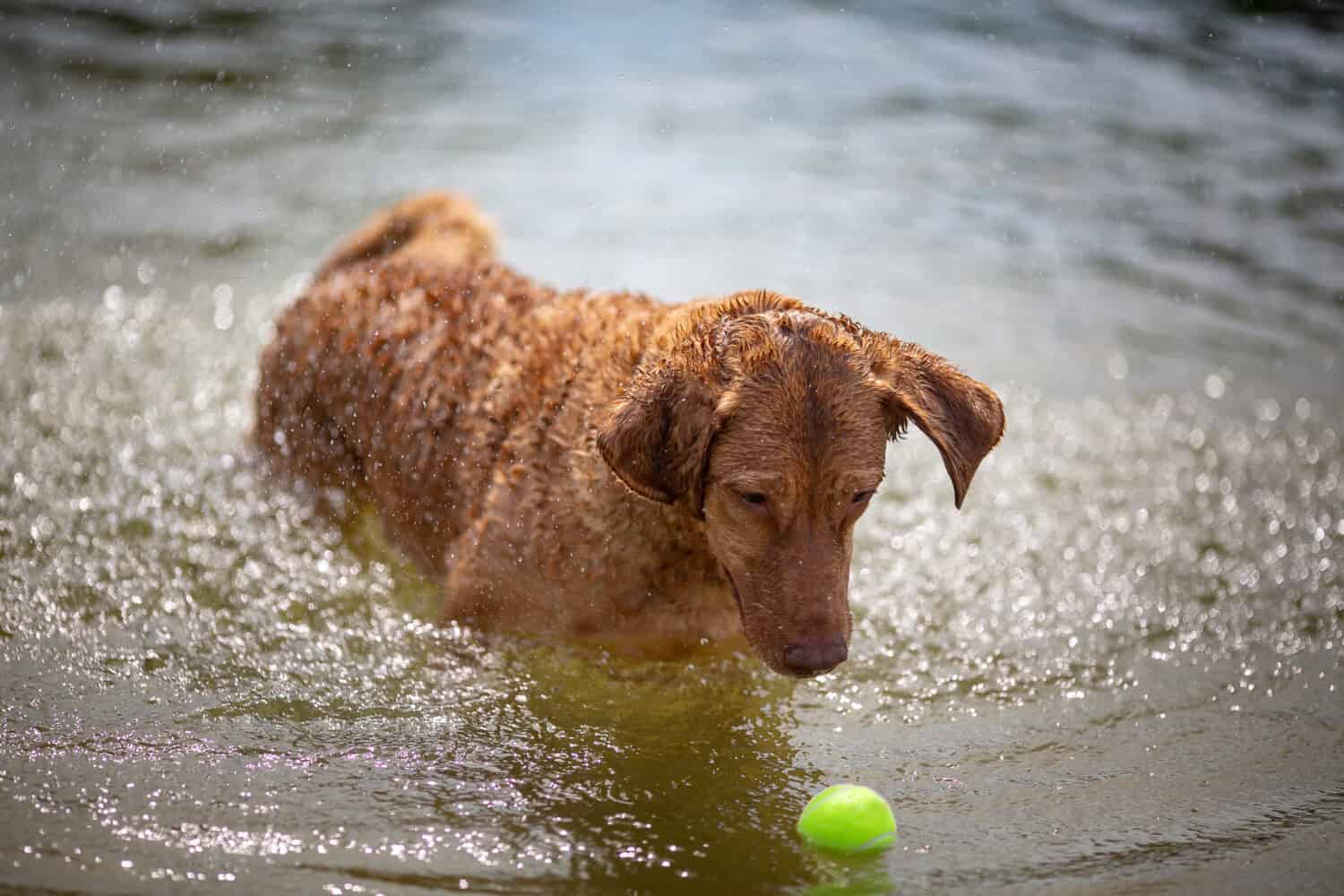
Reddish colored Chesapeake Bay retrievers are called sedge.
©Kerrie T/Shutterstock.com
#5: Light Brown
Light brown Chesapeake Bay retriever coats are a cool-toned shade of brown. These coats are dull in color, but not in overall appearance. They’re not as warm or golden in tone as the deadgrass coat colors.
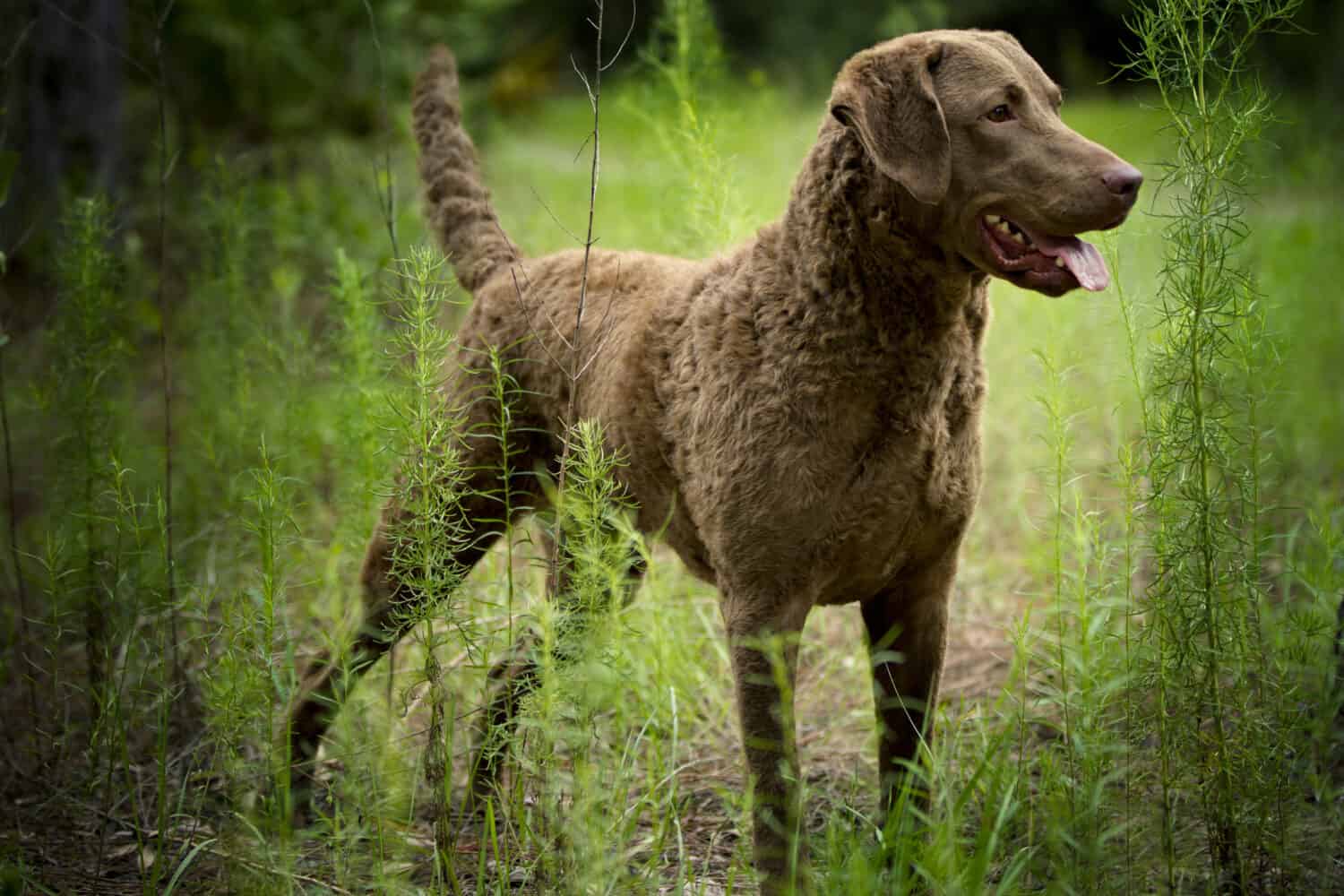
Cool-toned brown coats are called light brown, while warmer hues are classified as deadgrass or sedge.
©Kerrie T/Shutterstock.com
#4: Light Deadgrass
These coats closely resemble the coats of yellow Labrador retrievers. Light deadgrass is a light golden shade that can sometimes be almost white in appearance. Deeper tones on ears and muzzles are acceptable for light deadgrass-colored dogs.
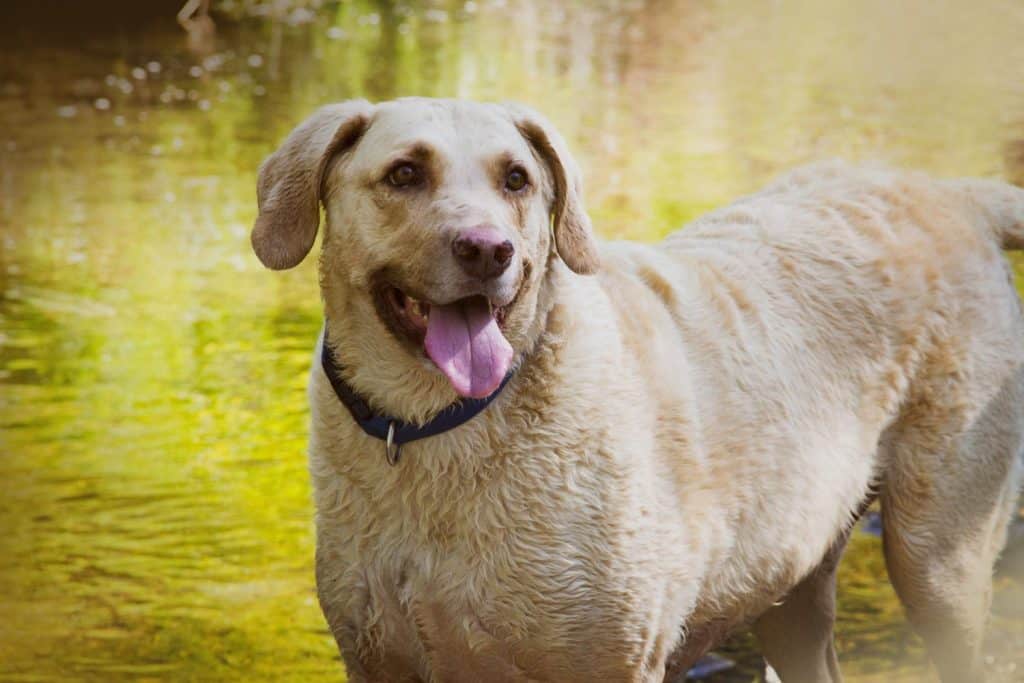
Light deadgrass Chessies have a similar color to a yellow Labrador.
©Karlie Butler/Shutterstock.com
#3: Deadgrass
Deadgrass, also sometimes called “medium deadgrass” to separate it from the darker and lighter hues, is a warm, golden brown. According to breed standards, deadgrass can range from a faded tan to a dull straw color. It’s similar to the coat color that most people associate with Golden retrievers. As noted above, deeper shades on ears and muzzles are acceptable for deadgrass-colored pups.
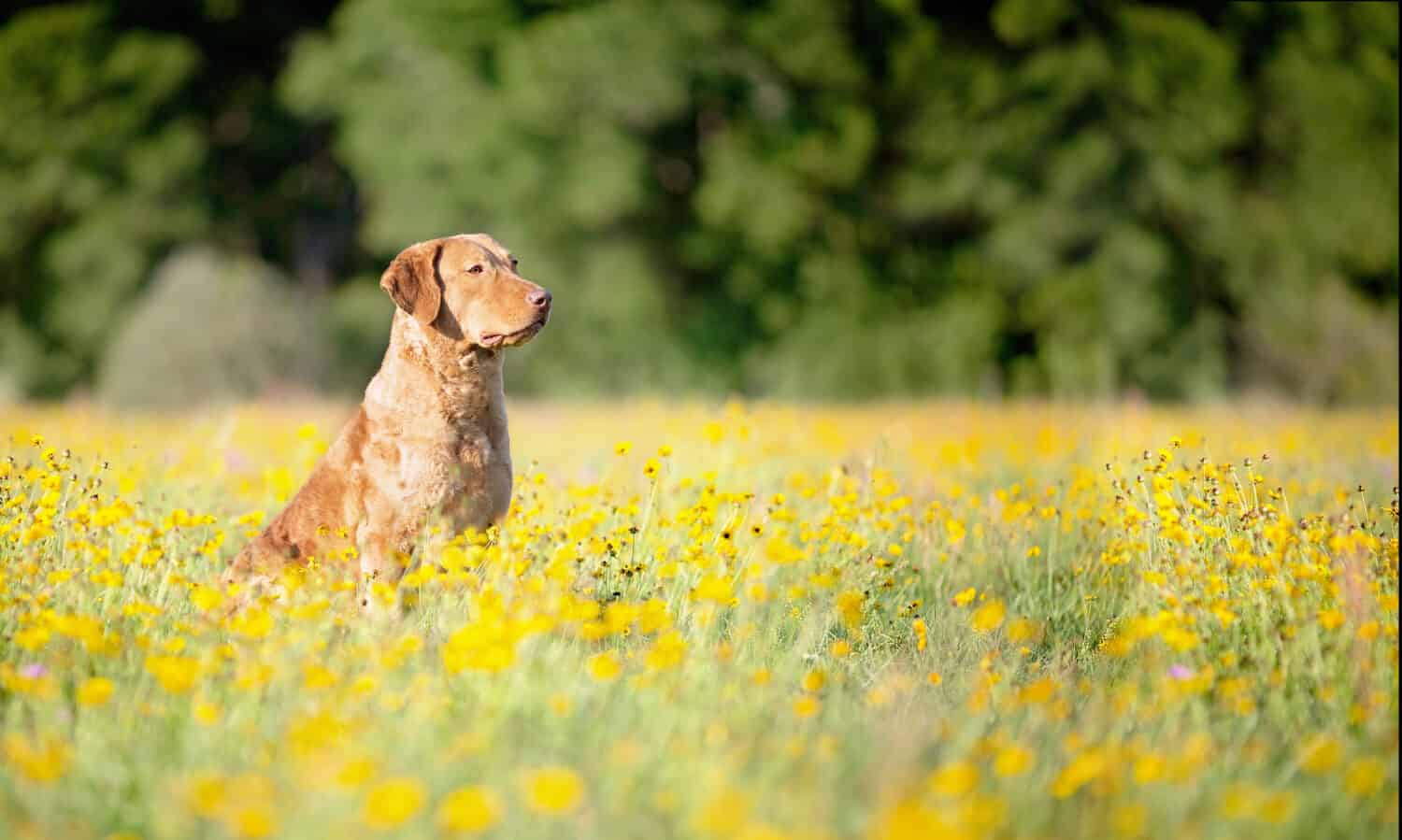
Chessies with deadgrass coats easily blend into wheat fields and similar environments.
©Kerrie T/Shutterstock.com
#2: Tan
Despite being a separate AKC-approved coat color, most sources don’t cover the tan color in the breed in detail, as tan is included in the range of deadgrass shades. Tan Chessie coats are generally a light, dull brown color.
#1: Dark Deadgrass
Dark deadgrass is considered a less desirable shade in Chessies, so breeders typically don’t breed for it purposefully, and thus it is rarely seen. Darker deadgrass colors can include diluted shades of brown. These coats appear as an ashy gray color. Deeper colors are also acceptable on the ears and muzzles of dark deadgrass-colored Chessies.
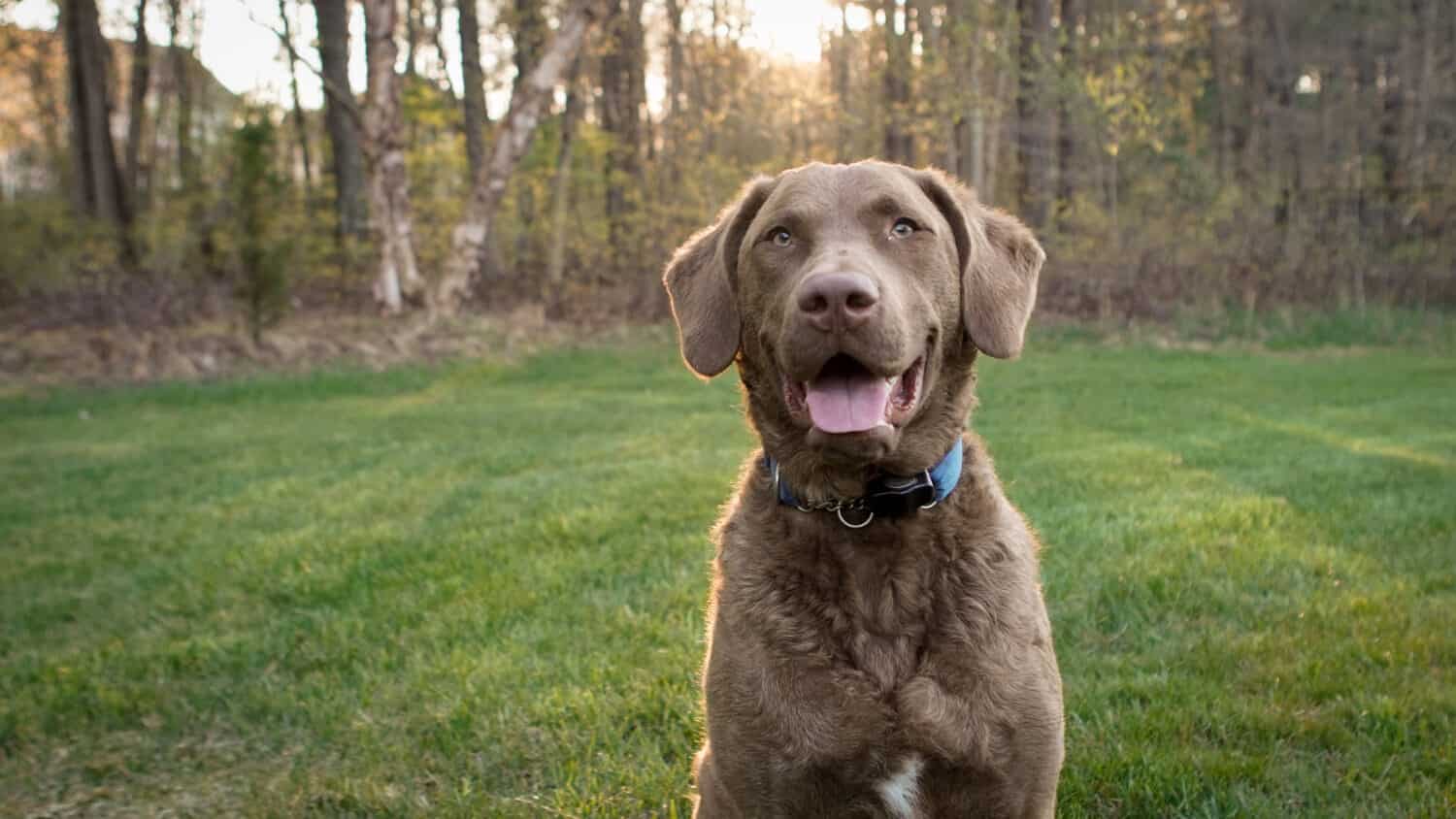
Also known as “ash,” dark deadgrass dogs have gray-brown fur.
©Progressive Ground/Shutterstock.com