
Quick Take
- Virginia winter birds vary by region, from cold western mountains to milder eastern plains, but all rely on dependable backyard food when natural supplies drop.
- American Robins shift to berries in winter and roost in evergreens, sometimes forming large yard groups when fruit is abundant.
- Keep feeders clean with mild bleach, discard moldy seed, and offer varied foods and feeder types to attract diverse species.
Virginia’s winters can feel completely different depending on which part of the state you are in. While in the Appalachian Mountains, you’ll have cold air, snow, and extended periods that feel like the Arctic. Farther east, the landscape gradually softens into the Piedmont with variable weather, then into the Tidewater coastal plain, where winter often means cool rain instead of deep snow. Despite these regional differences, backyard feeders across the state all share one thing in common: a steady flow of hungry winter birds looking for dependable food when natural supplies run low. Look for the species highlighted below if you set up a feeder this winter.
White-Throated Sparrow (Zonotrichia albicollis)
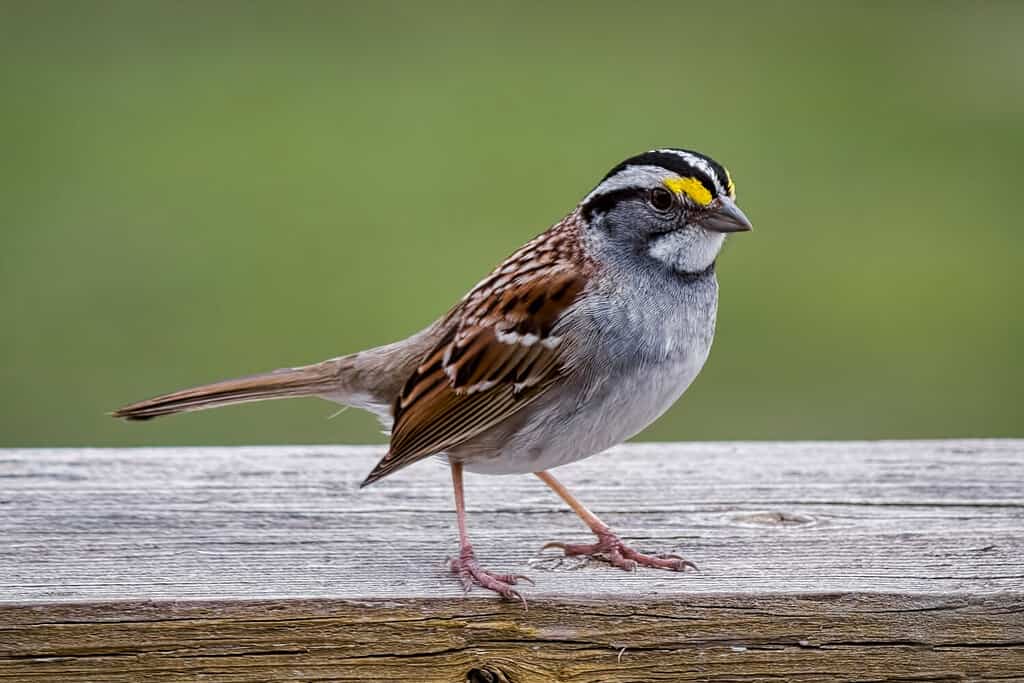
White-Throated Sparrow (Zonotrichia albicollis)
©Fiona M. Donnelly/Shutterstock.com
The white-throated sparrow is one of the most recognizable winter birds scratching beneath feeders and hedges across Virginia. Up close, its sharp head stripes — either black and white or black and tan — contrast with a clean gray face and the bright white throat patch that gives the species its name. These sparrows spend the colder months in brushy edges, thickets, and overgrown corners of neighborhoods, often joining loose flocks with song sparrows, juncos, and other small birds. Rather than perching on feeders for long, they prefer the ground, kicking leaves or snow with both feet to uncover spilled seed. They arrive in late fall, remain common throughout winter in both rural and suburban areas, and move north again in spring to breed in northern forests.
American Robin (Turdus migratorius)
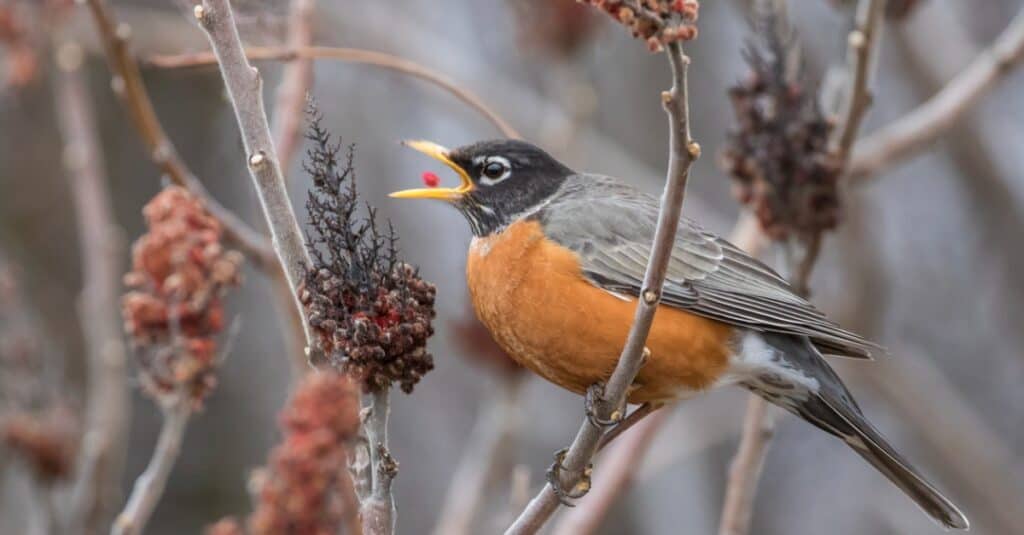
American Robin (Turdus migratorius)
©iStock.com/mirceax
Although many people associate American robins with spring, these birds remain in Virginia all year. Their behavior changes during winter, when they leave lawns behind and gather in wandering flocks that move through woods, parks, and neighborhoods in search of fruit. Berries from holly, cedar, crabapple, and other winter-fruiting plants become their main food source. If those fruits are abundant, large groups of robins may suddenly appear in a single yard. They often roost together in dense evergreens on cold nights, then spread out by day to forage. Robins rarely visit seed feeders, but winter trays offering chopped fruit or softened raisins can sometimes attract them, especially when placed near protective cover.
Northern Mockingbird (Mimus polyglottos)
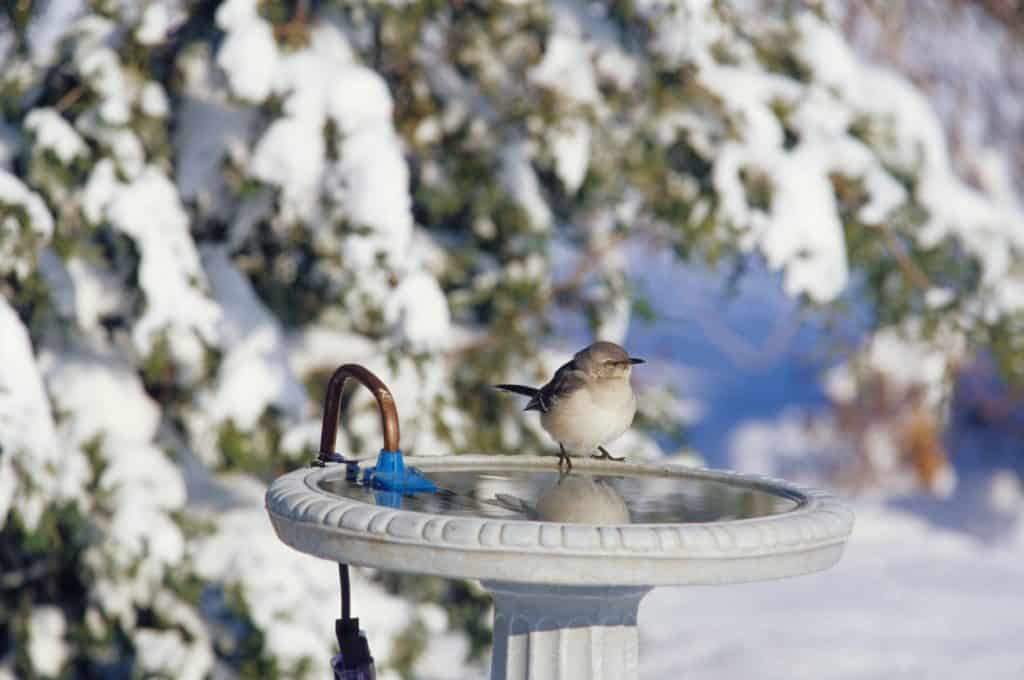
Northern Mockingbird (Mimus polyglottos)
©Danita Delimont/Shutterstock.com
The northern mockingbird is a familiar year-round presence in Virginia and is easy to spot even in winter. Slim and gray with a long tail and bold white wing flashes, it thrives in open spaces with scattered shrubs and small trees — the classic suburban yard setup. Well known for their wide range of songs and impressions, mockingbirds often perch on fence posts or wires during mild winter days to broadcast their latest vocal mix.
While they don’t flock to standard seed feeders, mockingbirds can be drawn in with the right winter offerings. They favor fruit, so a platform feeder stocked with raisins, currants, chopped grapes, or halved oranges can catch their attention. Suet with added berries or a small dish of mealworms also works. Planting or maintaining berry-producing shrubs like holly, dogwood, pyracantha, and blackberry thickets gives them a natural food source they’ll return to all season. In many neighborhoods, one territorial mockingbird will guard a productive berry bush — and any well-stocked fruit tray — with surprising intensity.
Northern Cardinal (Cardinalis cardinalis)
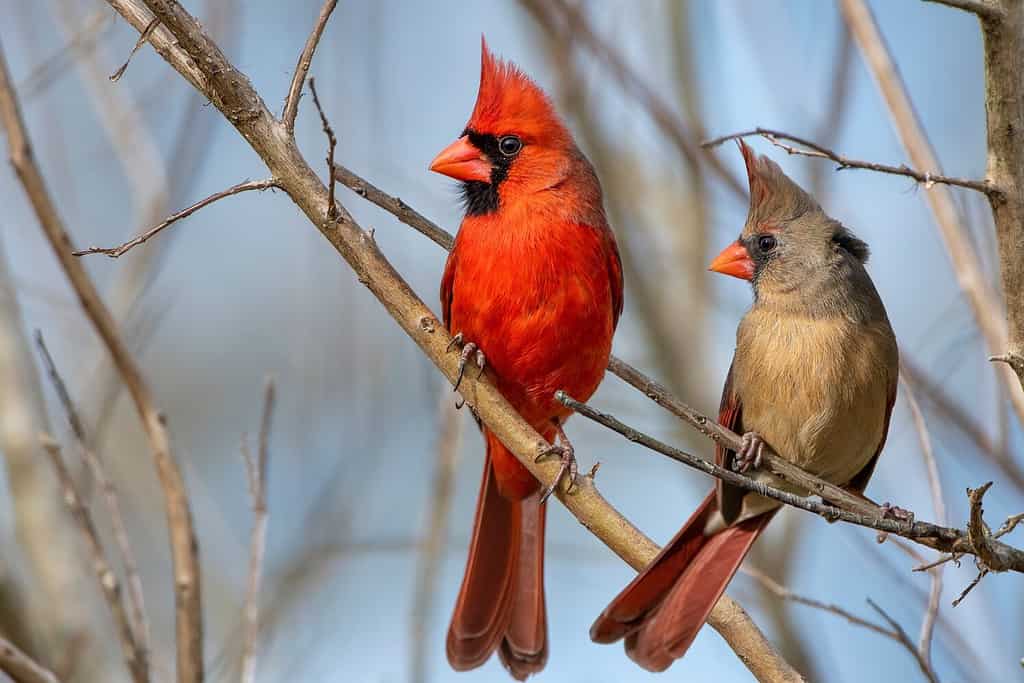
Northern Cardinal (Cardinalis cardinalis)
©Bonnie Taylor Barry/Shutterstock.com
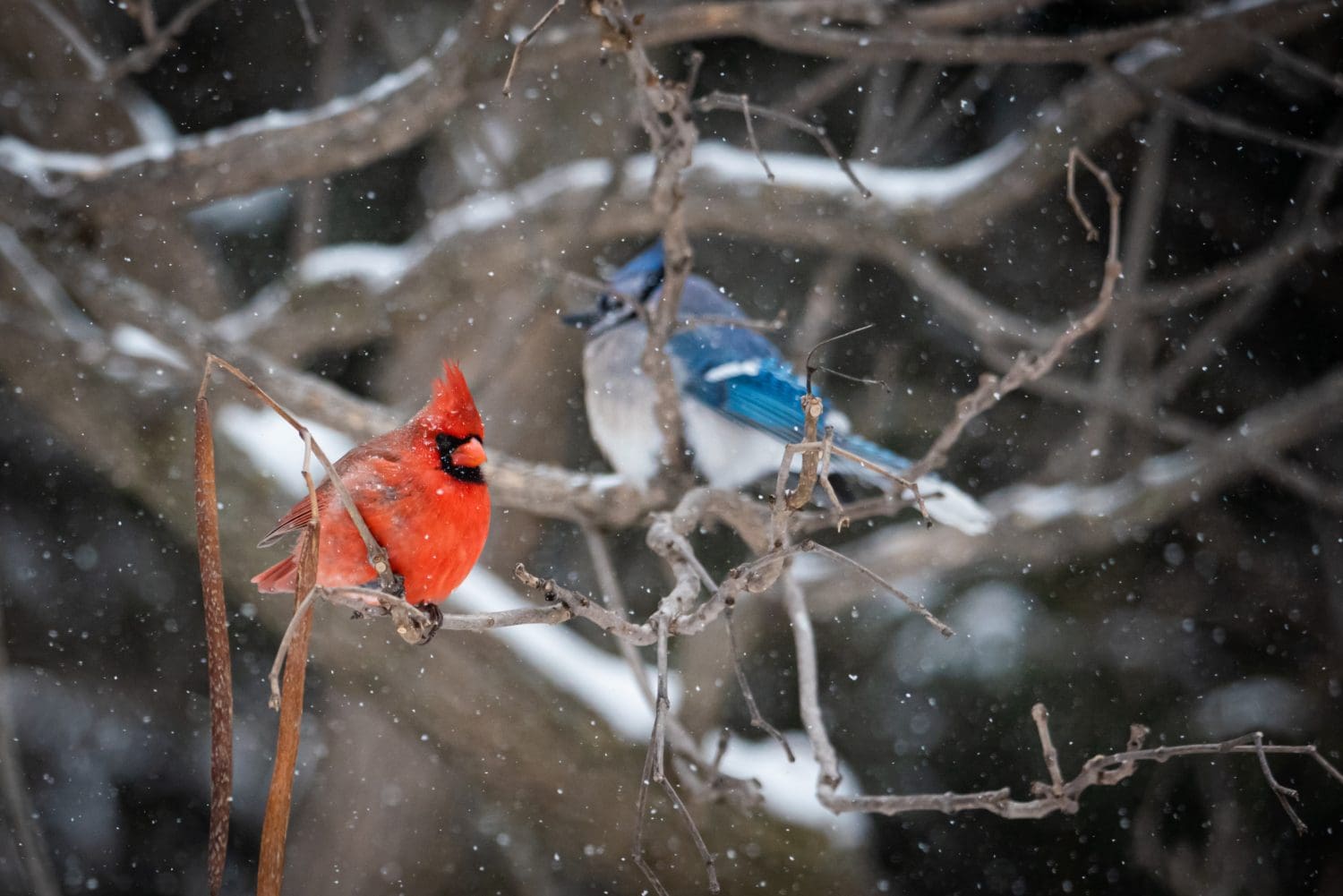
As the state bird of Virginia, the northern cardinal is everywhere — and in winter, it becomes one of the most striking sights in the yard. Males blaze bright red with a sharp crest and black facial mask. Females wear softer tan tones with reddish touches, but their warm coloring is just as beautiful in winter light. Both have stout orange bills built for cracking seeds with ease.
Cardinals live year-round throughout Virginia, from the Blue Ridge to the Chesapeake Bay. When winter arrives, they often travel in pairs or family groups, visiting platform or hopper feeders filled with black oil sunflower seeds or mixed blends. Their clear whistles float through yards long before they appear at the feeder, making them feel like familiar neighbors even on the coldest mornings.
Although cardinals share feeders with many species, they can show a bit of attitude when food is tight. Mild shooing, wing-flashing, or short chases are common as they defend a prime perch or patch of seed. These scuffles rarely amount to more than posturing, and the feeder settles back into calm moments later. Their boldness is part of their charm — a flash of personality to go with all that winter color.
White-Breasted Nuthatch (Sitta carolinensis)
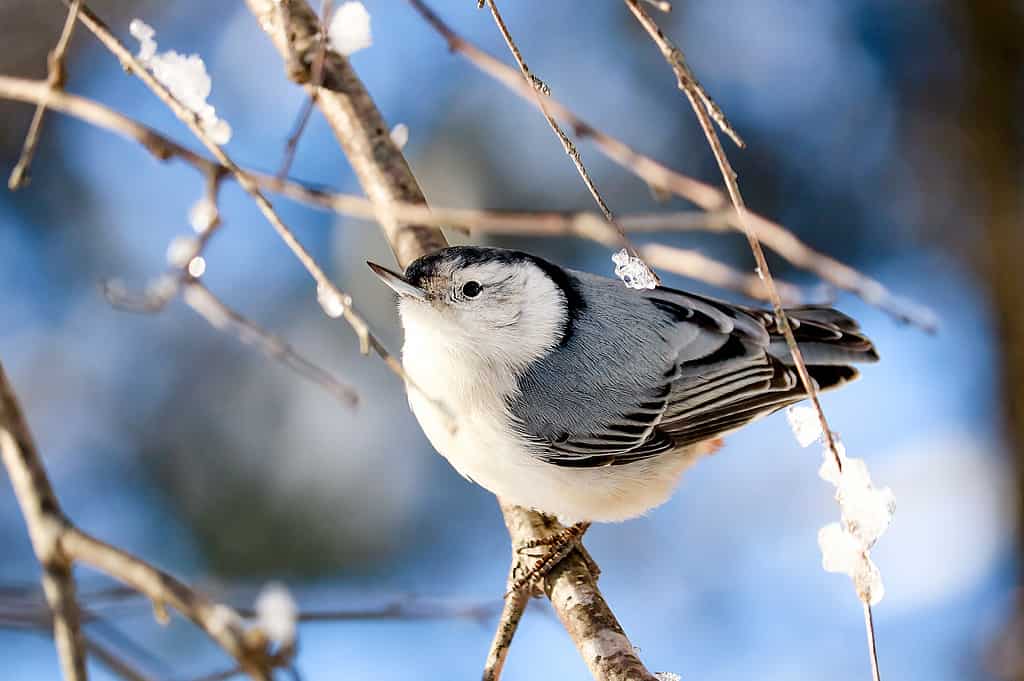
White-Breasted Nuthatch (Sitta carolinensis)
©lauraag/iStock via Getty Images
These birds bring a bit of acrobatic flair to Virginia’s winter feeders. They are medium-sized with blue-gray backs, white underparts, and black crowns, and they’re instantly recognizable by their habit of traveling headfirst down tree trunks. Living year-round in mature forests, woodlots, and older neighborhoods with big trees, their nasal calls often carry through the cold air and alert other birds to food sources.
In winter, they join chickadees, titmice, and woodpeckers in loose foraging groups that move steadily across a territory, stopping at feeders as they go. They readily take sunflower seeds, peanuts, and suet, often flying off to stash their prize in a bark crevice for later. Unlike the quick, darting chickadees around them, nuthatches tend to pause and survey a feeder before choosing their next move. Their careful approach — paired with the ability to forage sideways or upside down — lets them reach bits of food other birds overlook, making them the quiet, efficient cleanup crew of the winter-feeding station.
Downy Woodpecker (Dryobates pubescens)
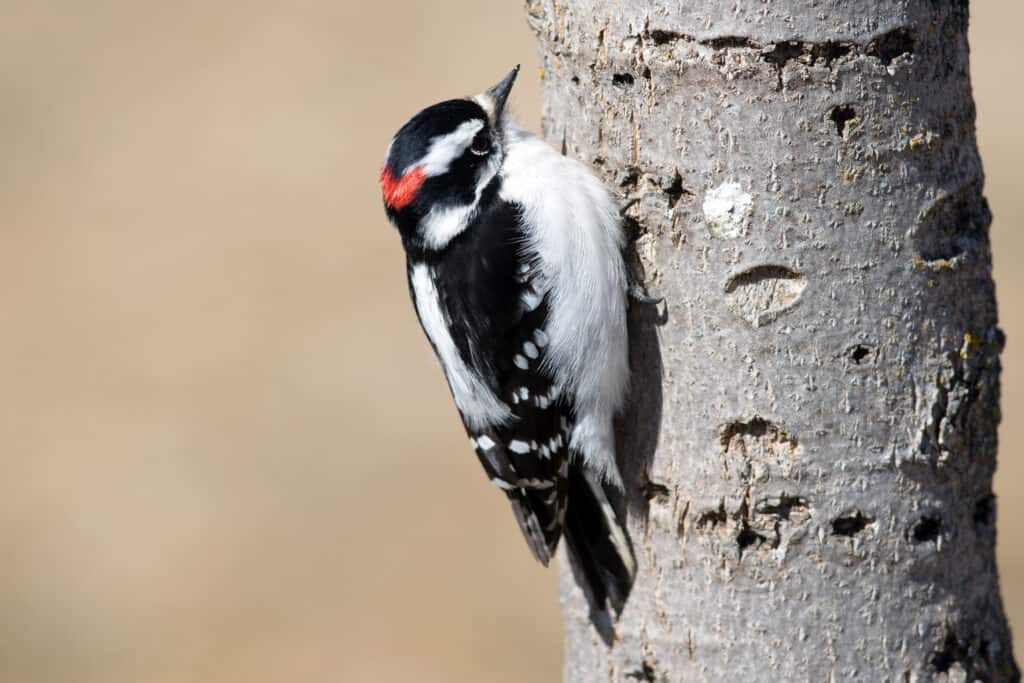
Downy Woodpecker (Dryobates pubescens)
©Northernguy/Shutterstock.com
The downy woodpecker is Virginia’s smallest woodpecker and a year-round resident throughout the state. Males and females show crisp black-and-white plumage with a white belly and white outer tail feathers, and males add a small red patch on the back of the head. Their tiny size and short bill make them easy to distinguish from the larger hairy woodpecker.
Downy woodpeckers are found everywhere from mountain hollows to coastal woodlands. They probe bark for insects and larvae, but in winter they happily rely on suet blocks or seed feeders — especially those offering sunflower seeds or peanut pieces. They often feed alongside chickadees and titmice in roaming winter flocks. If you put out suet or sunflower seeds, downies will almost certainly reward you with regular visits. Their tapping, fluttering, and calm persistence add a steady rhythm to winter feeding stations.
American Goldfinch (Spinus tristis)
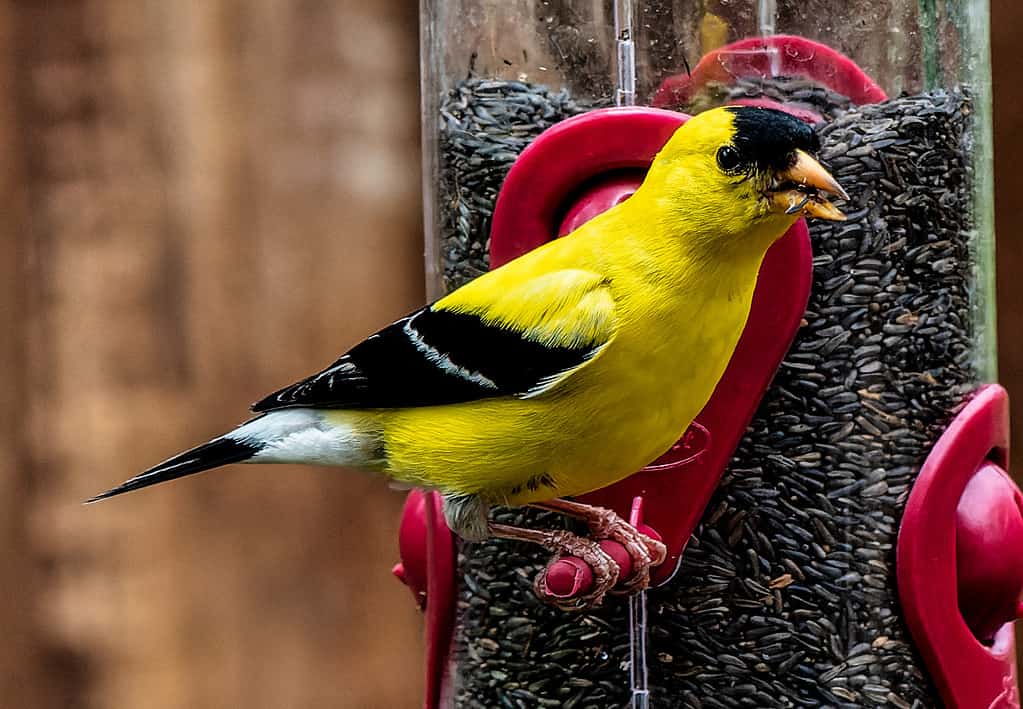
An American GoldFinch on the feeder
©blightylad-infocus/iStock via Getty Images
Virginia sees American goldfinches year-round, but their winter appearance can surprise people who know them only as bright yellow summer birds. In winter, both males and females take on a softer olive-brown with pale underparts. Only the blackish wings and sharp wing bars give away the bird’s identity.
Goldfinches thrive in open habitats such as fields, roadsides, meadows, and suburban yards. Their numbers tend to rise in winter when birds from farther north join the resident population. At feeders, they gather in lively groups around nyjer (thistle) seed tube feeders. They also enjoy small sunflower hearts. Their gentle calls and constant shuffling from perch to perch give winter feeding stations a soft, musical background. Even on quiet days, a goldfinch flock brings motion and sound to the yard.
Tufted Titmouse (Baeolophus bicolor)
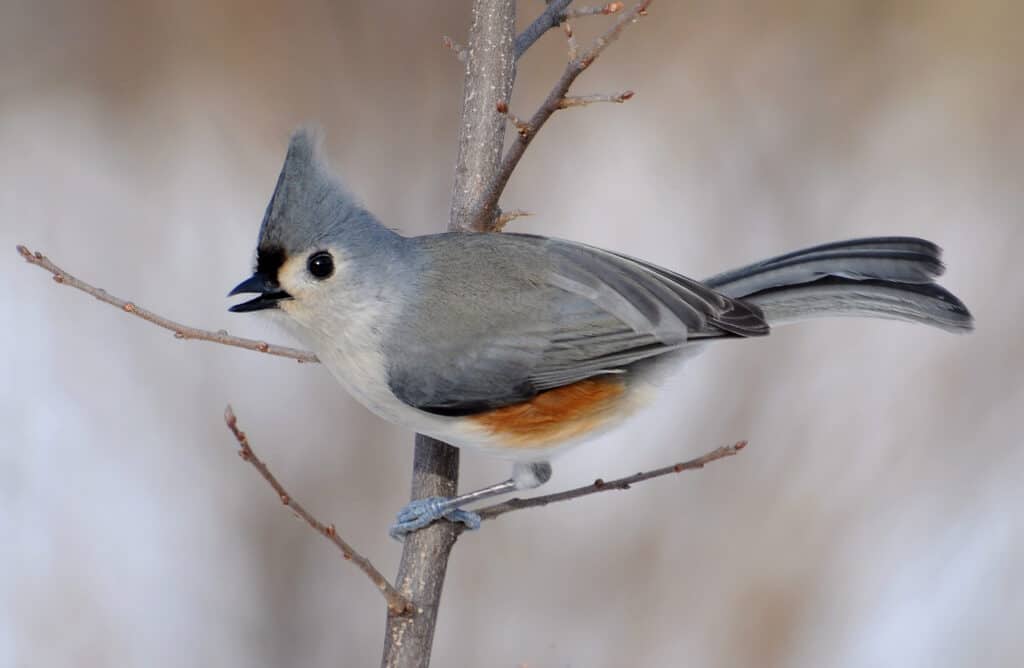
Tufted Titmouse (Baeolophus bicolor)
©Brian A Wolf/Shutterstock.com
The tufted titmouse is another energetic presence in Virginia’s winter landscape. This small bird has gray upperparts, pale underparts, and peachy flanks, all topped off with a sharp pointed crest that makes it easy to identify. Its large dark eyes give it a bright, alert look.
Titmice live year-round throughout Virginia’s woodlands, streamside forests, and well-treed neighborhoods. In winter, they often travel with chickadees and nuthatches in mixed flocks. At feeders, they readily take sunflower seeds, peanuts, and suet, and they often fly off to crack their food open in private or hide it for later. Their whistled “peter-peter-peter” call is one of the most recognizable winter sounds in Virginia. When you hear it, you’ll often see the rest of the flock arriving moments later.
Carolina Wren (Thryothorus ludovicianus)
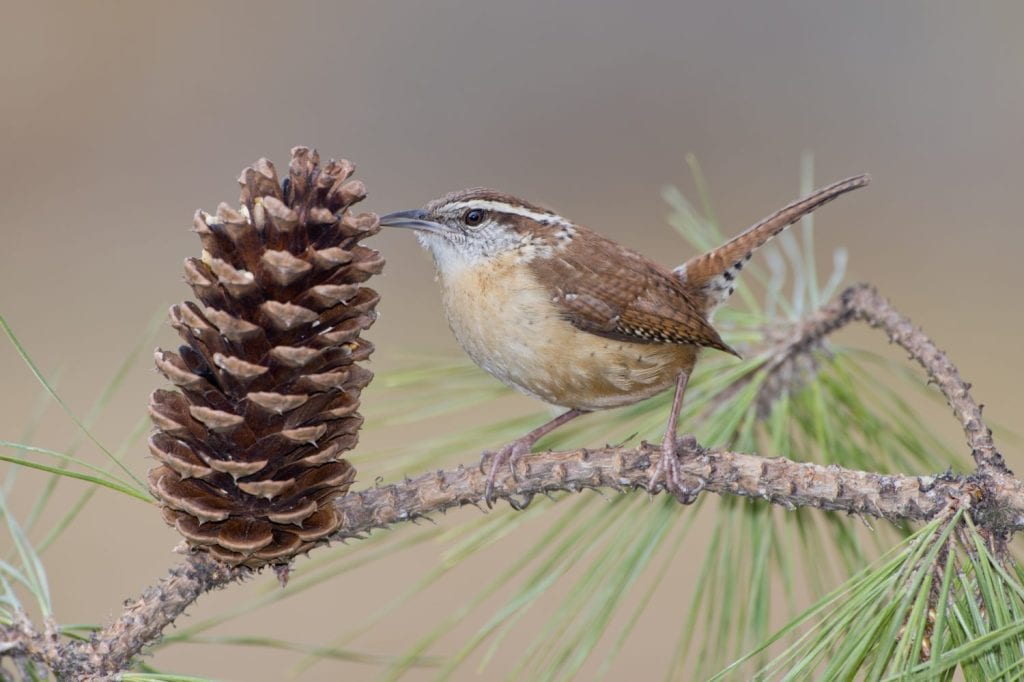
Carolina Wren (Thryothorus ludovicianus)
©Bonnie Taylor Barry/Shutterstock.com
Few birds pack as much personality into such a small body as the Carolina wren. With rich reddish-brown upperparts, warm buff underparts, and a bold white eyebrow stripe, these wrens stand out even before they begin to sing. Their voices are powerful, ringing, and cheerful — a bright soundtrack on winter mornings.
Carolina wrens live in Virginia all year and thrive in thickets, vine tangles, brush piles, woodpiles, and yards with plenty of sheltered hiding spots. Winter can be especially hard on them, so reliable food sources help them survive the coldest stretches.
They visit suet feeders frequently and also take sunflower chips, peanuts, and mealworms. Their loud calls and constant curiosity make them some of the most enjoyable winter birds to watch up close. Adding dense shrubs or a brush pile near your feeder gives them the confidence to come out and feed more often.
Blue Jay (Cyanocitta cristata)
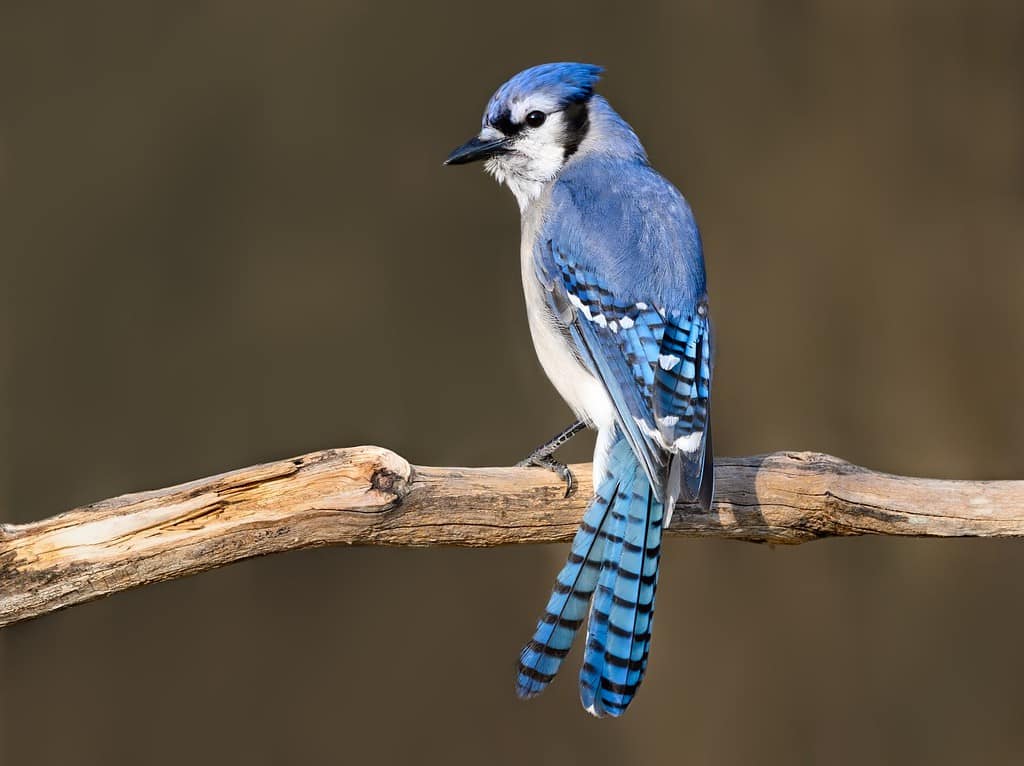
Blue Jay (Cyanocitta cristata)
©FotoRequest/Shutterstock.com
One of the most beautiful winter birds, blue jays bring color, confidence, and a whole lot of personality to Virginia feeders. With bright blue wings and tails, a white face, a black “necklace,” and a tall crest, they’re unmistakable even from afar. These large songbirds remain in Virginia year-round and are common in forests, edges, and suburban neighborhoods.
At feeders, blue jays can be assertive, sometimes temporarily clearing the area when they arrive. They especially love whole peanuts, corn, and sunflower seeds. Their strong bills make cracking tough shells effortless. In natural settings, they help oak trees spread by caching acorns in soil and leaf litter. Their calls range from sharp cries to whistles to surprisingly complex sounds. They can even imitate the cries of hawks to scare away other birds and dominate the food. One thing’s for sure: when a group of blue jays arrives, you’ll know it.
Best Practices for Winter Bird Feeding
©OlegD/Shutterstock.com
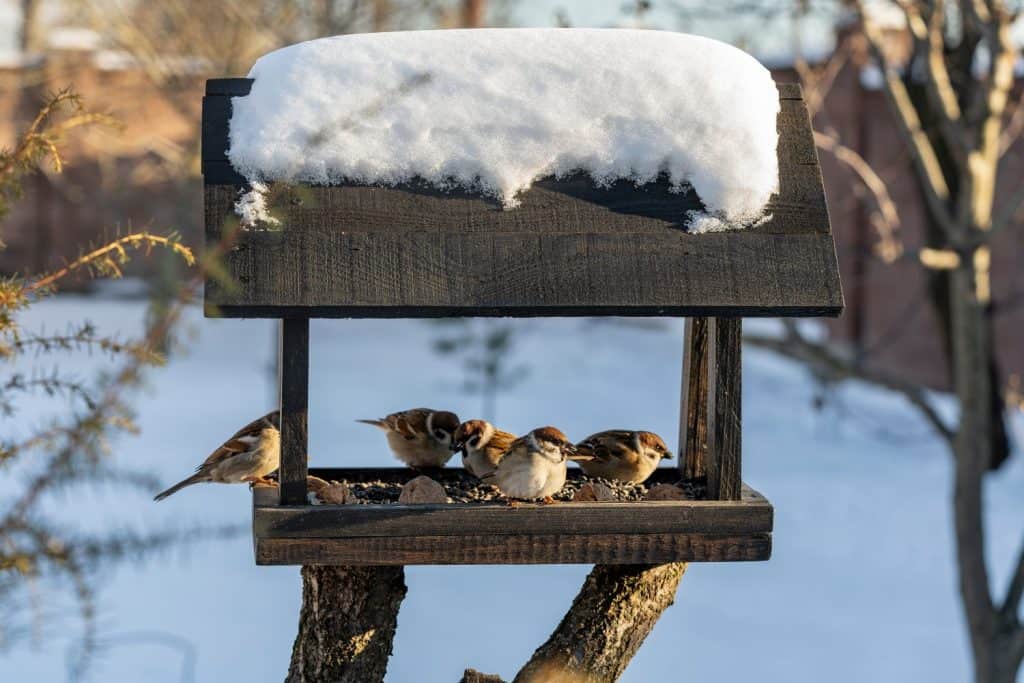
Supporting winter birds in Virginia starts with clean, safe, well-stocked feeders. Since many birds gather closely around food in winter, sanitation is key. Wash feeders regularly using a mild bleach solution, rinse thoroughly, and allow them to dry completely before refilling. Throw out any seed that’s clumped, wet, or moldy.
Offering variety is the best way to attract a wide range of species:
• Black oil sunflower seeds for cardinals, chickadees, titmice, and nuthatches
• Nyjer for goldfinches
• Suet cakes for woodpeckers and wrens
• Peanuts for titmice, jays, and nuthatches
Use a mix of feeder types — tube, hopper, platform, and suet cages — to accommodate different feeding styles. Place feeders where birds can quickly reach shrubs or small trees if a predator appears, but not so close that cats can hide beneath them. To reduce window strikes, add decals or patterned film to break up reflections, and position feeders either very close to windows or more than ten to twelve feet away.
A Winter Full of Life
Virginia’s winter birds bring energy and color to even the bleakest days. From bright red cardinals and bold blue jays to tiny chickadees and curious wrens, each species adds its own character to the season. With clean feeders, fresh food, and thoughtful placement, you can give these birds a safe haven in winter — and in return, you get daily glimpses of the wild little animals sharing your home landscape.