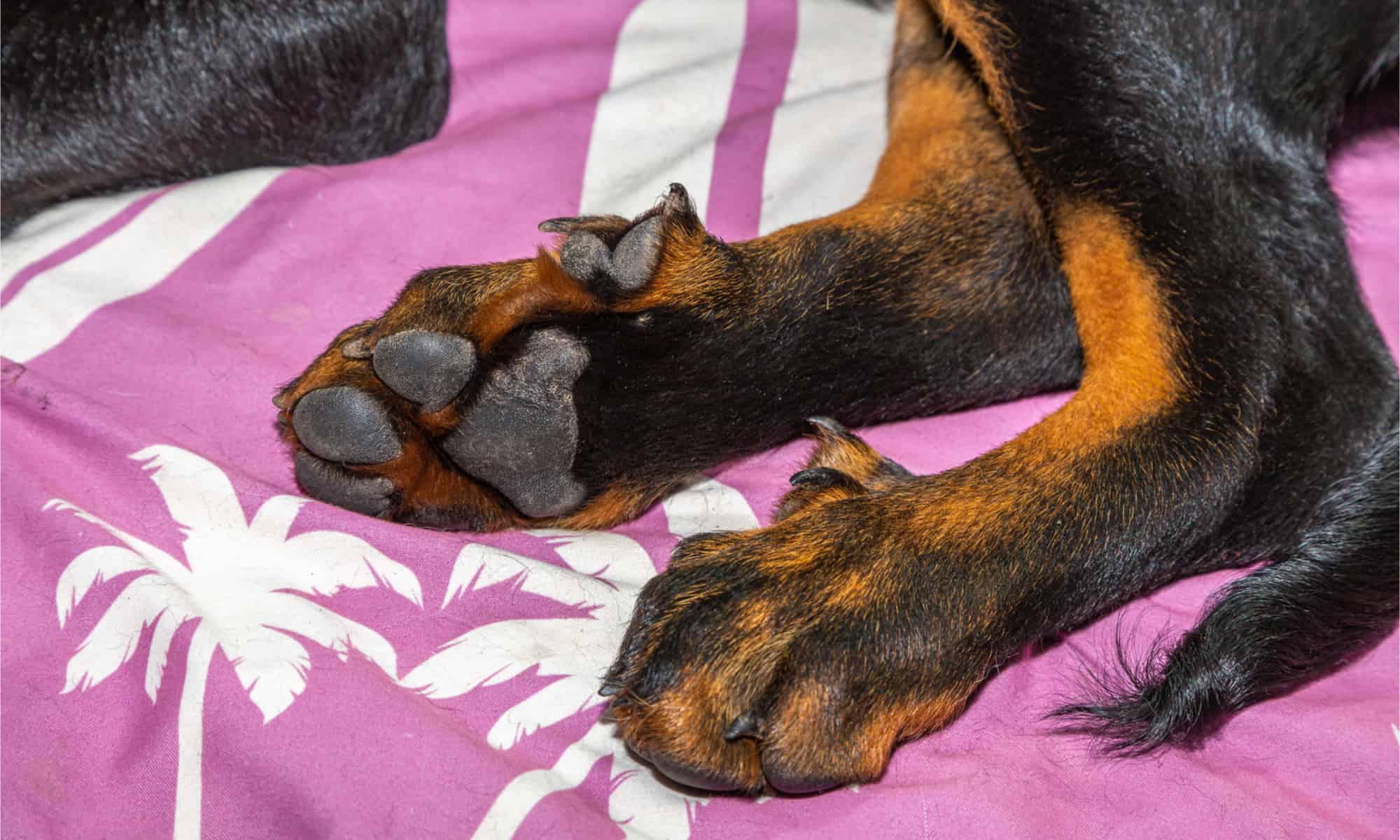

Most pet owners love to cuddle their pups. We know every marking and spot on our furry friends’ bodies. While trimming their nails, you have no doubt noticed five nails on their front paws and four nails on their rear paws. That extra claw on the front is called a dewclaw. Some breeds even have dewclaws on their hind legs. Keep reading to learn everything you need to know about dewclaws.
What Is a Dewclaw?
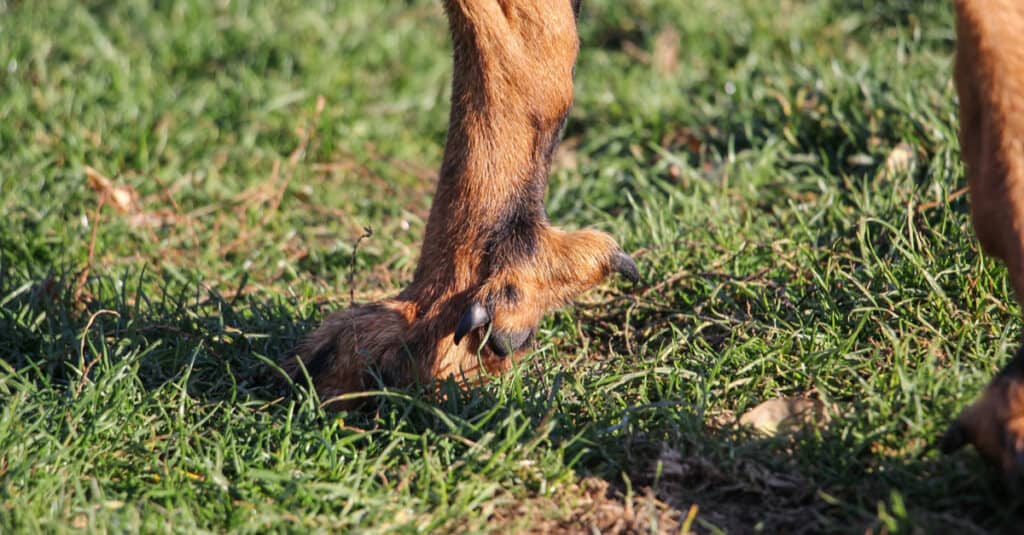
Great Pyrenees, Icelandic sheepdogs, and Beauceron are some of the breeds with double rear dewclaws.
©Madeeva_11/Shutterstock.com
Most dogs are born with a dewclaw on the back of each of their front legs. These front dewclaws are connected to your pup’s legs by bones, tendons, and ligaments, similar to their toes. The dewclaws are set high on the inside of the leg and typically do not touch the ground unless the dog is running or making sharp turns.
Some dogs have single or double dewclaws on the back of their hind legs, too. However, these rear dewclaws are generally not connected to the leg by bone like the front dewclaws. Rear dewclaws are attached to the leg only by the dog’s skin and other fibrous tissue. However, breeds such as Great Pyrenees, Icelandic sheepdogs, Beauceron, and Briard have two rear dewclaws, and these are firmly attached by bone. For show dogs, a double dewclaw may even be required by the breed standard.
Why Do Dogs Have Dewclaws?
Although there is still some debate about the original purpose of dewclaws, research has shown that dewclaws provide stability when your dog is in motion. The dewclaw touches the ground when your dog is cantering or galloping, which helps to stabilize the carpus of the lead leg, which is similar to the human wrist. Dewclaws also dig into the ground when dogs are turning, which provides additional support for their limbs.
As noted above, herding dogs such as the Great Pyrenees have a double set of dewclaws on their hind legs. Experts believe their back dewclaws provide greater traction and also act as a type of braking system when pursuing predators across challenging terrain. Dewclaws can also help dogs grip objects when they are climbing.
Is Dewclaw Removal Necessary?
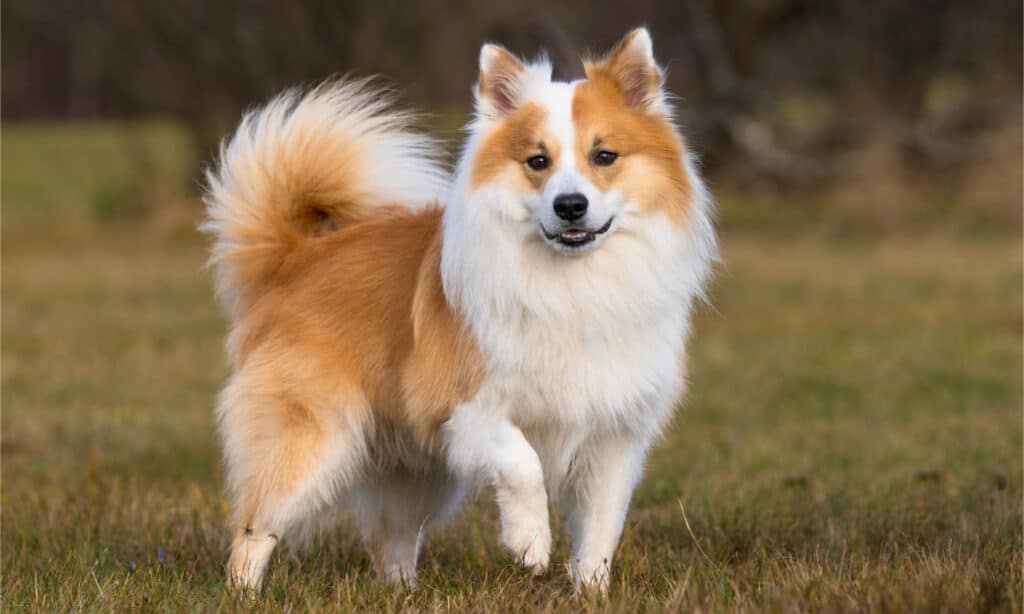
The breed standard for Icelandic sheepdogs prefers them to have double dewclaws.
©Bildagentur Zoonar GmbH/Shutterstock.com
Dewclaw removal is a surgical procedure that takes off the entire claw. However, many vets and pet owners feel that the procedure isn’t necessary. Usually, these claws can safely be kept intact without any discomfort to the dog. As dewclaws do serve a purpose when your dog is in motion, removing them can actually make your dog more prone to injury.
Overall, the determining factor in dewclaw removal is the best interest of the dog. Occasionally, the front dewclaw can become injured or infected. Sometimes, rear dewclaws protrude too far from the leg. In such cases, the dog risks snagging its claws on the carpet or other surfaces, which could cause a serious injury. If you believe your dog’s dewclaws may need to be surgically removed, contact your veterinarian for advice and assistance.
Dewclaw Care
Though dewclaws may seem a bit odd, they are relatively easy to take care of. They can be trimmed like any other nails, so they don’t require any particular grooming supplies. Many active breeds wear their nails down naturally. However, since dewclaws don’t reach the ground, they may grow more quickly.
Regular trimming is important to ensure your dog’s dewclaws do not grow too long. These claws can curl up and poke your dog’s feet. They could also get snagged, which would be painful for your pup. Experts recommend testing to see if your dog’s nail catches on your finger. If so, it’s time for a trim.