
Quick Take
- One of these breeds carries a hidden prey drive risk that no amount of training can fully fix, which changes everything about how you'd need to manage your yard. Explore the prey drive risk →
- Both breeds shed about the same, yet their grooming demands are surprisingly far apart. Compare grooming demands →
- The lifespan gap between these two breeds comes down to a biological quirk scientists still can't fully explain. See the lifespan gap →
- The breed that looks easier to handle on paper may actually be the harder one to live with day-to-day. See day-to-day challenges →
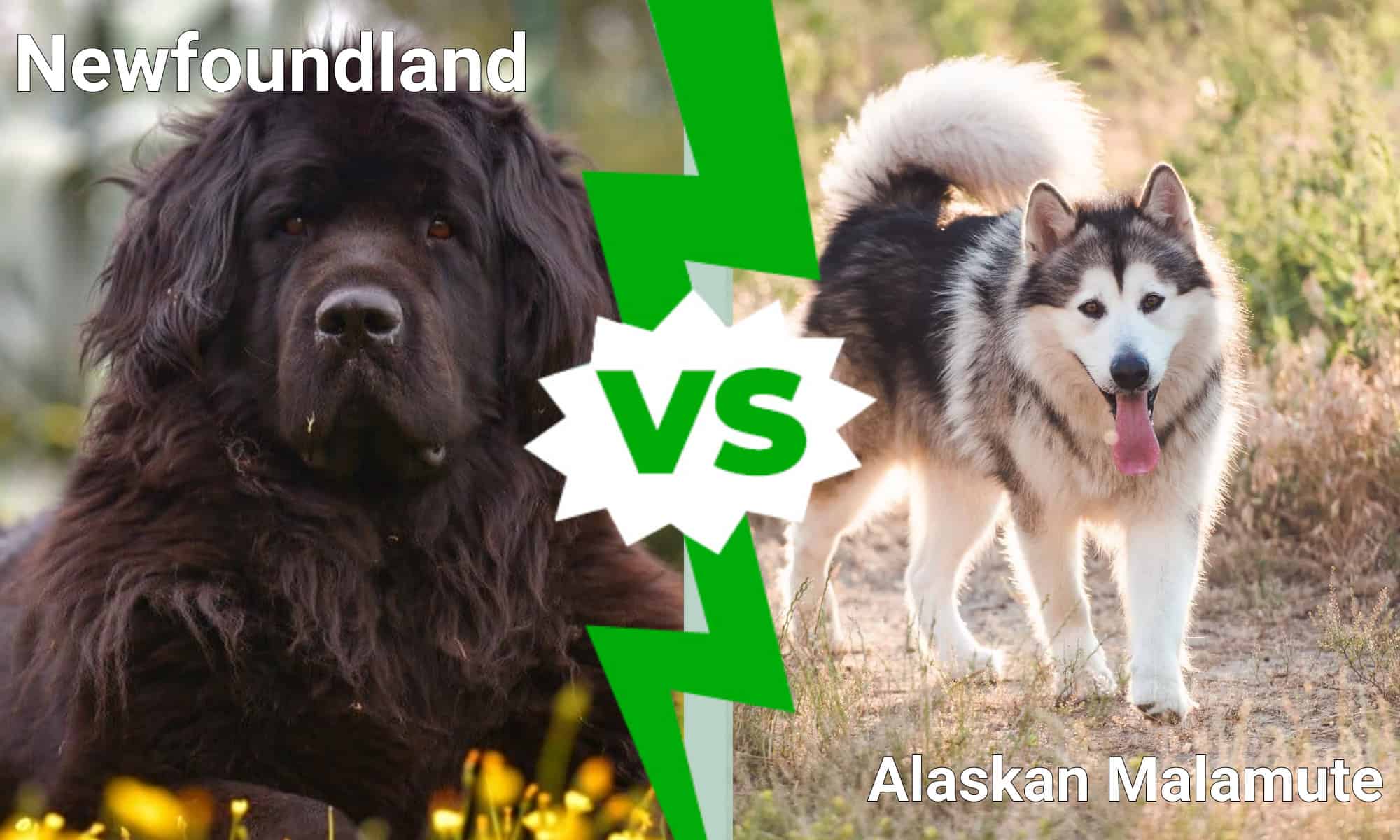
When deciding between a Newfoundland vs. an Alaskan Malamute, it’s important to have all of the facts. While both breeds are large, strong working dogs, they are very different when it comes to appearance, temperament, and genetic health issues. In this article, we’ll take a closer look at Newfoundlands and Alaskan Malamutes so you can determine which dog is best for you and your family.
Newfoundland vs. Alaskan Malamute: A Comparison
| Key Differences | Newfoundland | Alaskan Malamute |
|---|---|---|
| Size | Height: 26-28 inches Weight: 100-150 pounds | Height: 23-25 inches Weight: 75-85 pounds |
| Coat | Medium-length double coat in a variety of colors | Medium-length double coat in a variety of colors |
| Temperament | Family-oriented, good with children and other dogs, friendly, protective, quiet | Good with children and other dogs, protective, can be stubborn |
| Activity Level and Trainability | Moderate; relatively easy | High; can be difficult |
| Life Expectancy | 9-10 years | 10-14 years |
| Health Issues | Prone to ear infections, hip and elbow dysplasia, heart problems, and cystinuria | Prone to hip and elbow dysplasia, dwarfism, thyroid disease, polyneuropathy, day blindness, and blood clotting disorders |
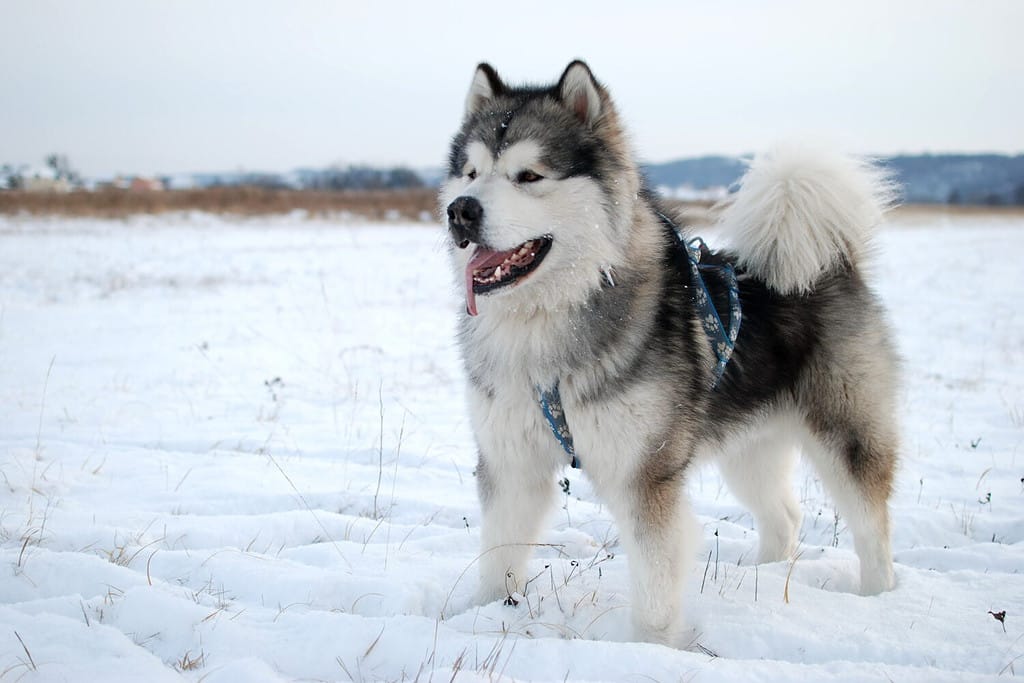
Alaskan Malamutes are large dogs, but Newfoundlands can weigh up to 75 pounds more.
©DiLiDon/Shutterstock.com
Key Differences Between Newfoundlands and Alaskan Malamutes
Newfoundlands and Alaskan Malamutes have some similarities, including the length of their coats and their protective natures. However, if you’re trying to decide which breed might be best for your family, the key differences are more important. Take an in-depth look at the differences between these breeds, including their size, coat texture and color, temperaments, activity level and trainability, lifespans, and health issues.
Size
Newfoundlands are considered an extra large breed. Female Newfoundlands stand around 26 inches at the shoulder and weigh 100-120 pounds. Males stand 28 inches at the shoulder and weigh a whopping 130-150 pounds.
Alaskan Malamutes are a large breed, but they are much smaller than a Newfoundland. Females stand 23 inches at the shoulder and weigh up to 75 pounds. Males reach 25 inches at the shoulder and weigh up to around 85 pounds.
Coat
Both breeds have medium-length double coats that shed moderately. They will shed more profusely during shedding season, which occurs twice yearly in the spring and fall. Newfoundlands should be brushed a few times a week, and daily during shedding season. Alaskan Malamutes require daily brushing year-round.
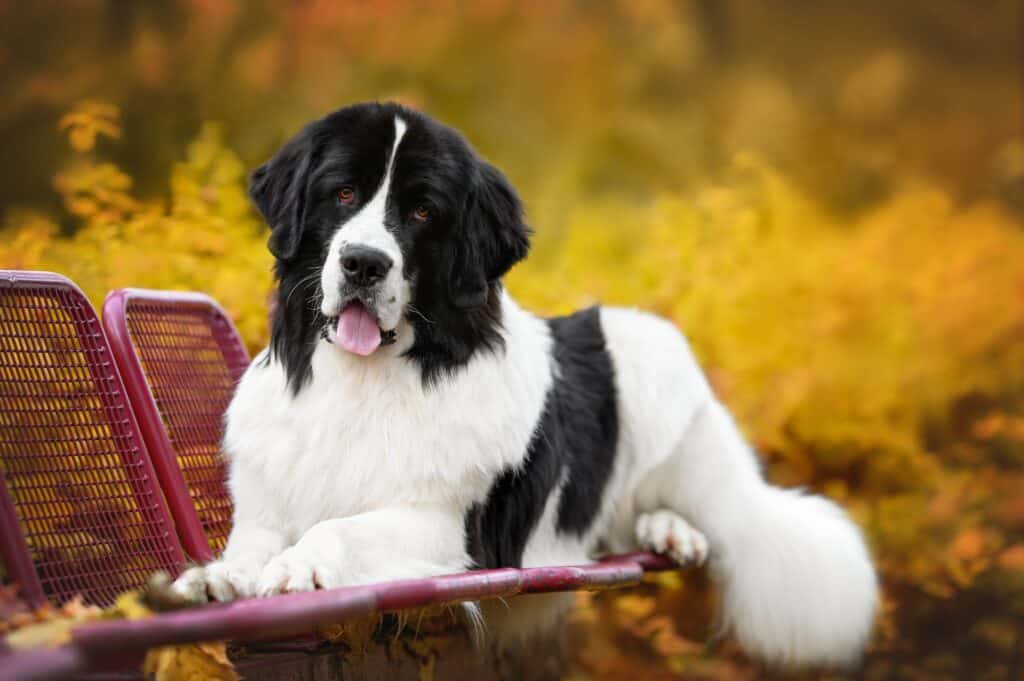
Newfoundlands require less grooming than Alaskan Malamutes, who must be groomed daily.
©Otsphoto/Shutterstock.com
Their coat colors also vary. The American Kennel Club (AKC) accepts the following coat colors for Newfoundlands:
- Black
- Brown
- Gray
- White and black
The AKC breed standard for Alaskan Malamute contains more variety. Accepted coat colors include:
- Gray and white
- Black and white
- Red and white
- Seal and white
- Silver and white
- White
- Sable and white
- Blue and white
- Agouti and white
Temperament
Both breeds are known for being protective, gentle, and good with children. Newfoundlands are incredibly outgoing and affectionate. They love kids, dogs, and even strangers. They are patient, loyal, and relatively calm, even indoors. Newfies also tend to be quiet dogs, barking only to alert.
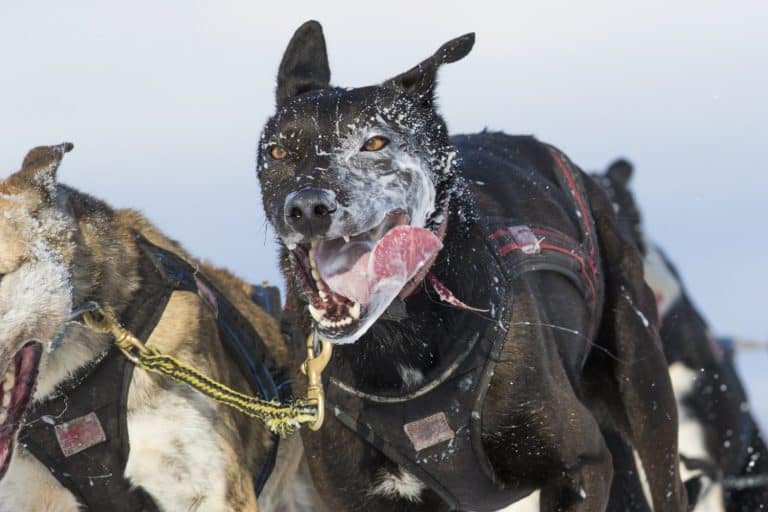
Alaskan Malamutes love their families and can be affectionate and cuddly, but may take more time to warm up to new people and dogs. They also need more training to learn how to be gentle with kids and other animals, as it doesn’t come as naturally to them as it does to Newfies. Alaskan Malamutes were bred to work in a pack pulling sleds, so they do well with other dogs of the same size but may see smaller dogs and cats as prey unless properly socialized while young. They tend to be more independent than Newfies, though individual personalities will vary. Alaskan Malamutes bark a moderate amount.
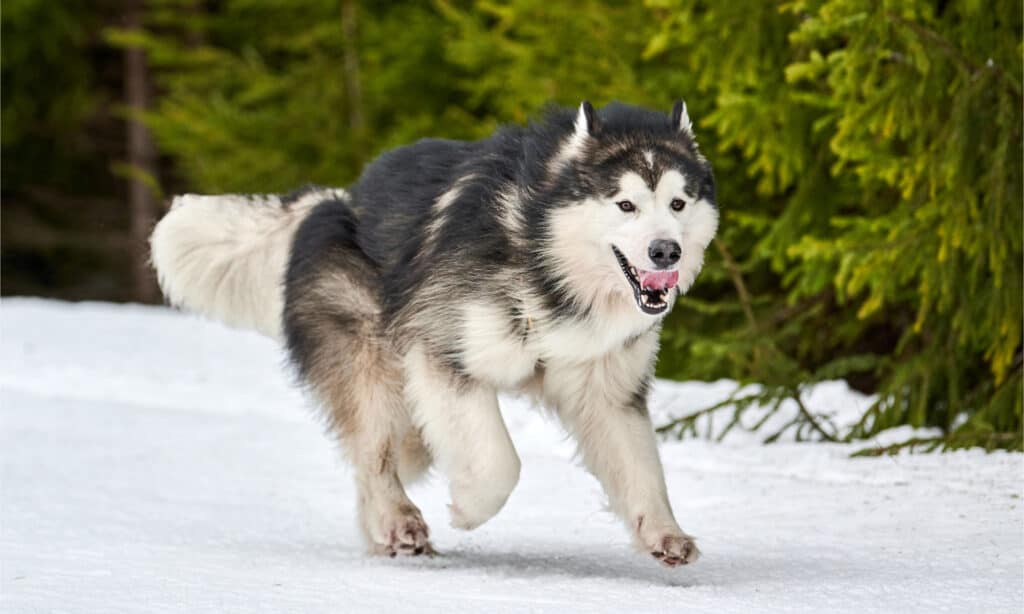
Alaskan Malamutes are higher energy dogs with higher prey drives than Newfoundlands.
©travelarium.ph/Shutterstock.com
Activity Level and Trainability
Both are working breeds and require daily exercise, but Alaskan Malamutes are much higher-energy. As mentioned above, they were built to endure long days of sled-pulling, so they thrive when given “work” to do, whether it’s an actual job, a dog sport, or an activity around the house. Alaskan Malamutes are more independent and can be stubborn, so they need positive reinforcement and firm, consistent training.
Newfoundlands require at least a half hour of moderate exercise according to the AKC. They can often handle more, especially if they’re used to it, but it’s important to take things at their pace. Newfies also love the water, so consider taking them swimming! Newfoundlands tend to be very trainable, as they are intelligent and love to please their people.
Both breeds should be socialized well at a young age, which means introducing them slowly to new experiences. If you want your adult dog to be comfortable in a situation, introduce them to it while they’re a pup. Lastly, remember that prey drive cannot be trained away. Alaskan Malamutes should be kept on leash or in well-enclosed yards, meaning fences should be tall and extend underground to prevent the dog from digging underneath.
Life Expectancy
Newfoundlands live 9-10 years on average. Alaskan Malamutes tend to live longer, typically reaching around 10-14 years of age.
This difference in lifespan is due to their size difference. Larger dogs tend to have shorter lifespans than smaller ones, though scientists aren’t completely sure why. One theory is that rapid growth during the puppy years is detrimental to a large dog’s lifespan and increases their risk of health complications such as cancer.
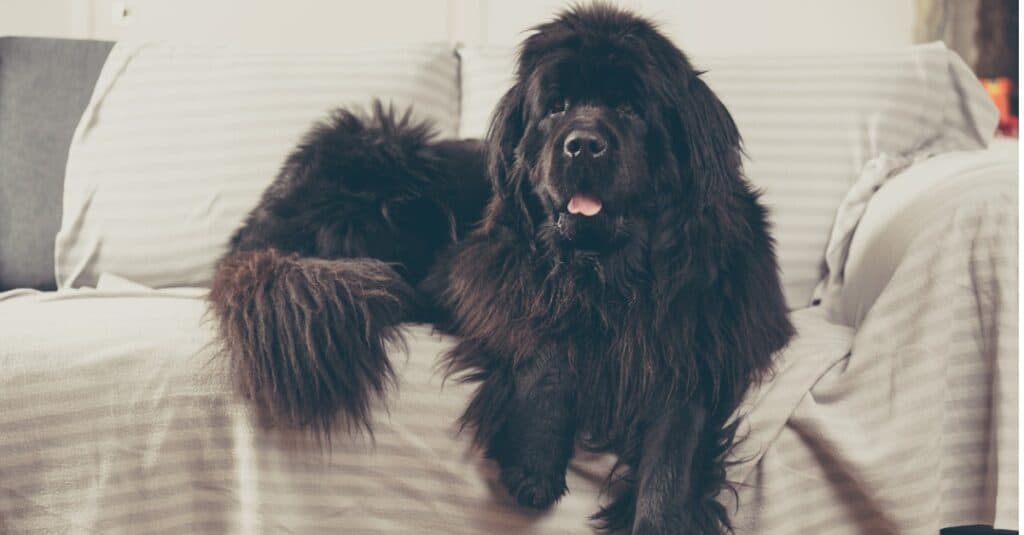
Newfoundlands typically live 9-10 years, while Alaskan Malamutes live an average of 10-14 years.
©iStock.com/rzoze19
Health Problems
Newfoundlands are prone to health problems such as ear infections, hip and elbow dysplasia, heart problems, and cystinuria (which causes kidney and bladder stones).
Alaskan Malamutes are also prone to hip and elbow dysplasia. They’re also prone to dwarfism, thyroid disease, polyneuropathy, day blindness, and blood clotting disorders such as thrombopathia and von Willebrand’s disease.
Reputable breeders will screen both parents for most of these conditions, though not all can be prevented. The OFA is a great resource to see what breeders should screen for. Never buy a puppy from someone who doesn’t have all recommended health testing results completed and available for you to see.
Which Breed Is Best for You?
When deciding which breed is best for you, consider your lifestyle and what you can provide for a dog. Alaskan Malamutes will require more exercise and grooming and may be more difficult to train. Meanwhile, Newfoundlands are quite a bit larger and will be more expensive to feed and vet. They may also prove more difficult to handle due to their size.
It’s also important to think of your family. Newfoundlands tend to do better with smaller dogs and cats due to their low prey drives and are usually gentler with kids. However, Alaskan Malamutes can be trained to do well with children. Alaskan Malamutes also tend to tolerate being left alone better than Newfies do, although no dog should be left alone for too long. If you work long hours, doggie daycare is a great option for well-socialized pups.