
Quick Take
- The home remedies most owners reach for first do not simply fail to help. They actively make your dog's ear infection worse. See why home remedies backfire →
- An untreated outer ear infection can escalate into something far more serious than a sore ear, and most owners do not realize how short the window to act actually is. See how infections escalate →
- One of the most common causes of canine ear infections is something well-meaning owners do on purpose. Discover the surprising causes →
- Some ear infection symptoms have nothing to do with the ear itself, and missing them could delay treatment at the worst possible time. See the full symptom list →
Whether you’re seeking more information after your dog was diagnosed with an ear infection or want to know how to prevent them from getting one, you’ve come to the right place. In this article, we’ll talk about the three types of ear infections in dogs, symptoms to watch for, and how they’re treated. We’ll also share some tips on how you can help prevent your dog from getting an ear infection.
Ear Infections in Dogs
Dogs have three types of ear infections: otitis externa, otitis media, and otitis interna. These are outer, middle, and inner ear infections, respectively. Inner ear infections are the most severe, while outer ear infections are common and are typically very simple to treat. Learn more about each type of infection in the following sections.
Otitis Externa (Outer Ear Infection)
Otitis externa is the most common type of ear infection in dogs. It is essentially the inflammation of the lining of the ear canal. The outer ear is typically where the infection starts, but if left untreated, it can spread into the middle or inner ear. Otitis externa is also the easiest ear infection for a veterinarian to treat. The shape of the pinna or ear canal can make otitis externa more likely in some dogs. Additionally, recurring otitis externa could mean that your dog has otitis media.
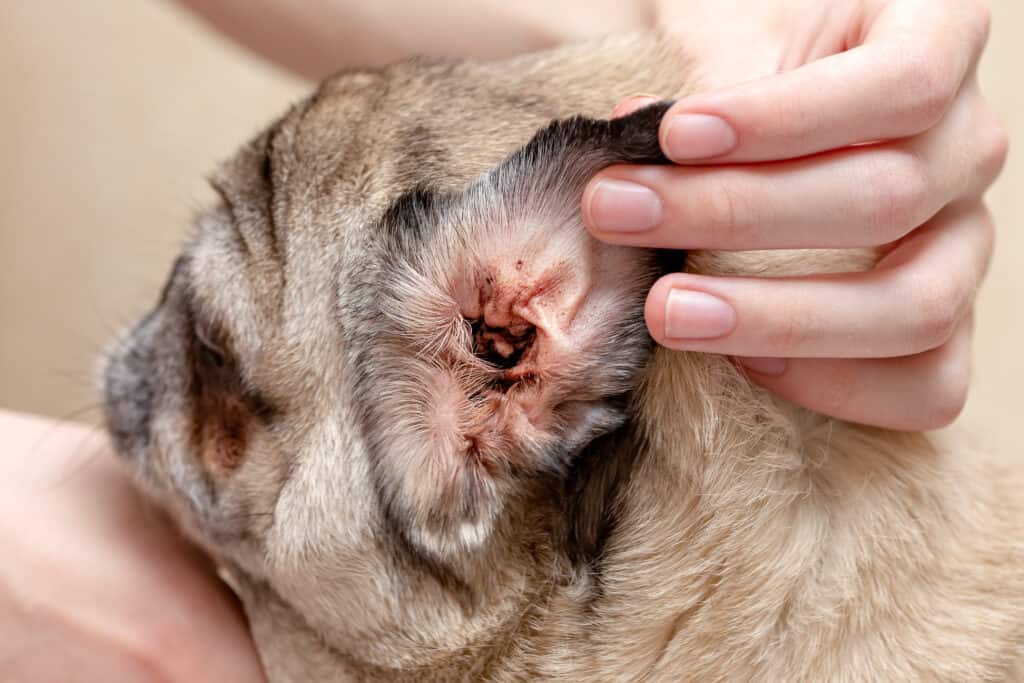
The outer ear is typically where the infection starts, but if left untreated, it can spread.
©Glikiri/Shutterstock.com
Otitis Media (Middle Ear Infection)
Otitis media is when the middle ear becomes infected. Most commonly, this happens when an outer ear infection spreads. However, it can also occur if the eardrum ruptures. Otitis media is more difficult to treat than a simple outer ear infection, but it is not as hard to treat as an infection that has spread to the inner ear. The signs of otitis media are similar to outer ear infections but are more severe, as they may involve neurological issues.
Otitis Interna (Inner Ear Infection)
Otitis interna, or inner ear infection, is the hardest to treat and, luckily, also the rarest. Most often, if your dog has an inner ear infection, it’s because the infection has gone untreated and spread. However, it can also be caused by a polyp in the ear or a small object like a seed lodged deep in the ear canal. Signs of otitis interna include balance loss and deafness.
Symptoms of Ear Infections in Dogs
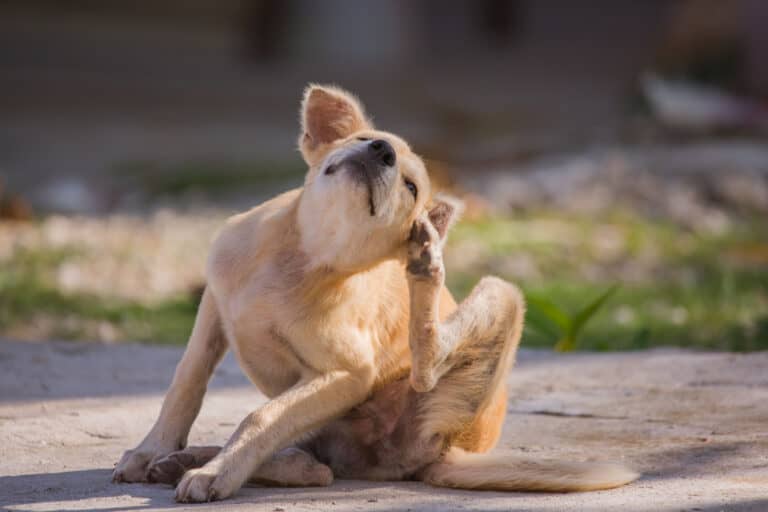
You’ll often notice your dog has an ear infection because of scratching, redness, or odor. These common symptoms are easy to identify. However, ear infections can sometimes be mistaken for other things, like ear mites or injuries. Either way, it’s important to see a vet if you notice symptoms, especially because parasites and injuries can also cause ear infections.
If you’re not sure if your dog has an ear infection, here’s a complete list of symptoms to watch out for:
- Shaking their head
- Scratching their ears
- Dark discharge or excessive amounts of earwax
- Odor (often described as sweet and fruity or yeasty)
- Redness
- Inflammation
- Pain
- Crusting or scabs
- Difficulty or pain while chewing
- Head tilt
- Loss of balance, lack of coordination
- Hearing loss
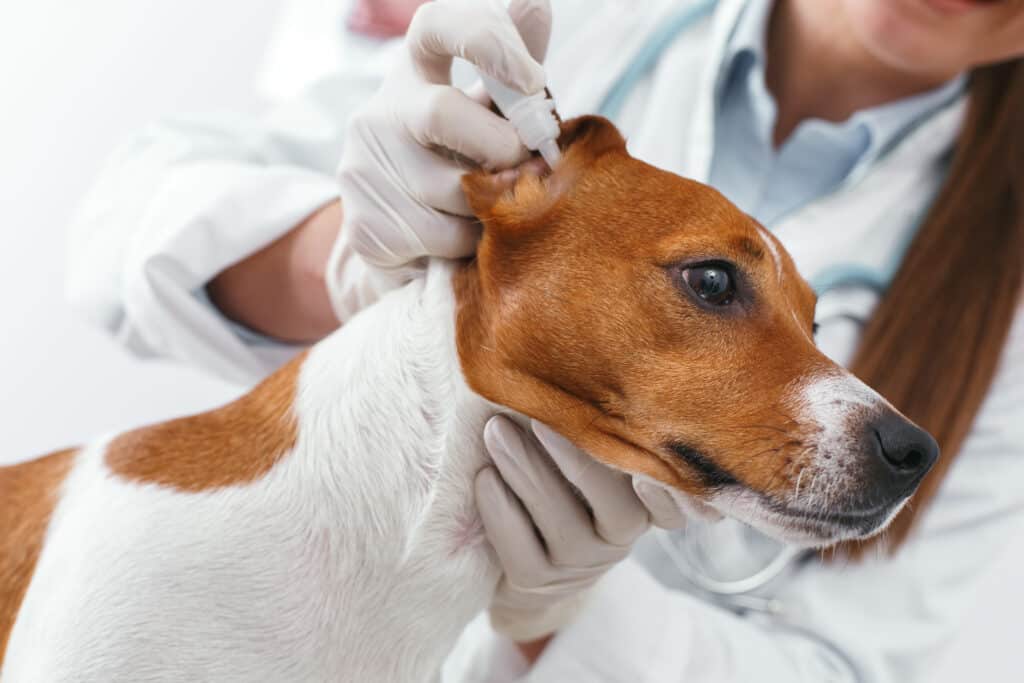
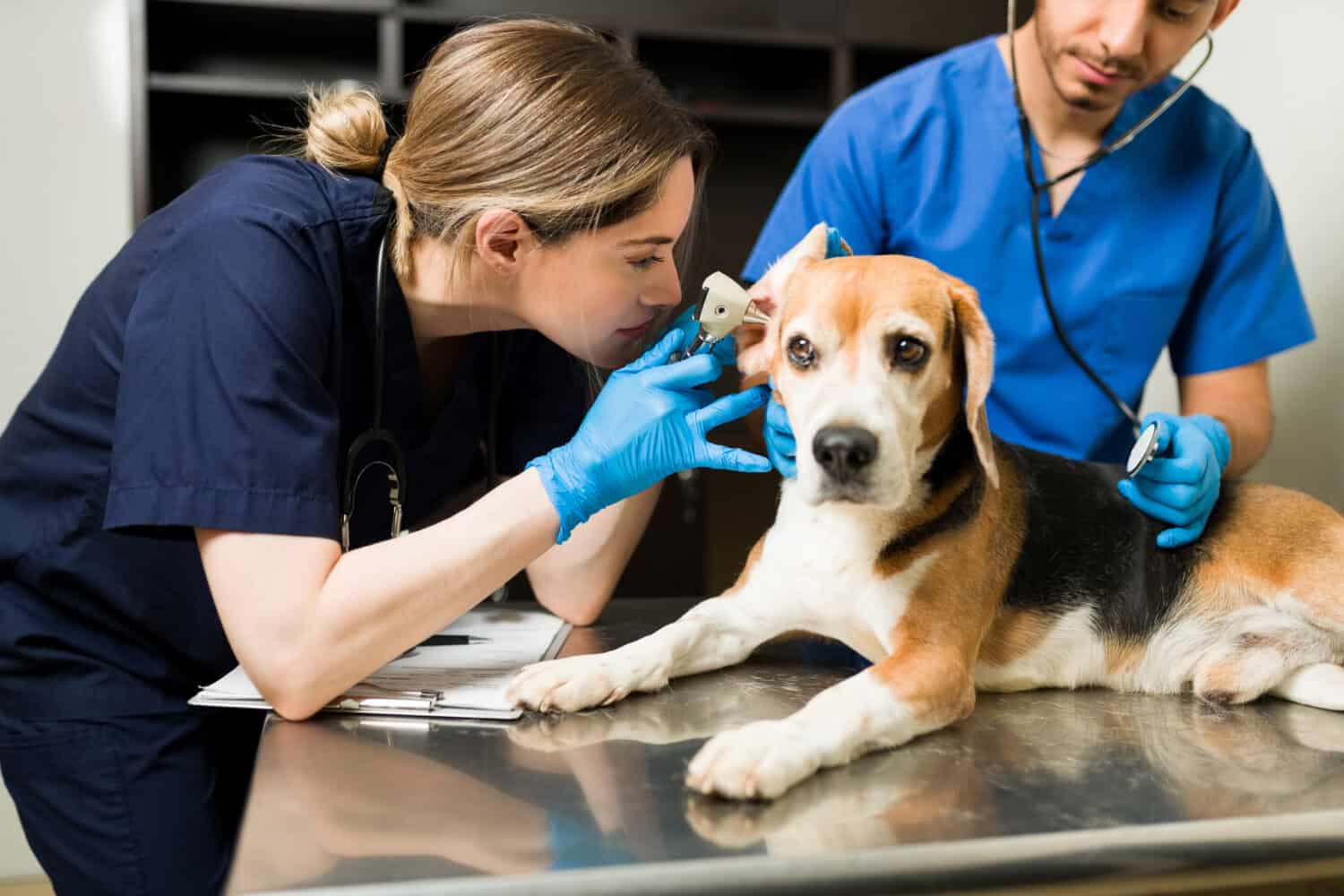
Seeing a veterinarian as soon as possible is vital if you suspect your dog has an ear infection.
©Viktoriia Hnatiuk/Shutterstock.com
How Veterinarians Treat Ear Infections in Dogs
First, it’s important to note that no home remedies will effectively treat your dog’s ear infection. Most of them, including hydrogen peroxide and vinegar, can actually make the infection worse. Your dog’s condition can worsen the longer you wait, so acting quickly is essential.
An untreated ear infection can lead to deafness, nerve damage, coordination problems, and the infection spreading to other parts of the body, such as the brain. So, seeing a veterinarian as soon as possible is vital if you suspect your dog has an ear infection.
For outer ear infections, vets will likely use some or all of the following treatments:
- Cleaning the ears and sending you home with an ear-cleaning solution to keep them clean going forward
- A medicated topical treatment that goes in the ear
- Oral antibiotics
- Anti-inflammatory medication
They might also prescribe other treatments to address the root cause of the ear infection. For instance, they may prescribe a parasite-prevention medication to kill ear mites. Most ear infections clear up in 1-2 weeks, but sometimes it takes months to heal fully. If your dog’s ear infection does not heal, they might need more aggressive treatment, including surgical intervention.
Causes of Ear Infections in Dogs
Canine ear infections can have many root causes, including:
- Moisture or water in the ear
- Bacteria
- Parasites
- Fungus
- A build-up of wax
- Cleaning the ear too frequently
- An item, such as a seed, getting stuck inside the ear
- Ear injuries
- Allergies, either food or environmental
- Endocrine disorders
- Autoimmune disorders
- Ear polyps
- Tumors in the ear
Most commonly, ear infections are caused by allergies, water in the ear, or wax build-up. If you’re unsure why your dog has an ear infection, your veterinarian should be able to provide answers. Don’t be afraid to ask questions during your dog’s appointment. This is especially important if your dog is continually developing ear infections, as the only way to prevent them is to know why they’re occurring in the first place.
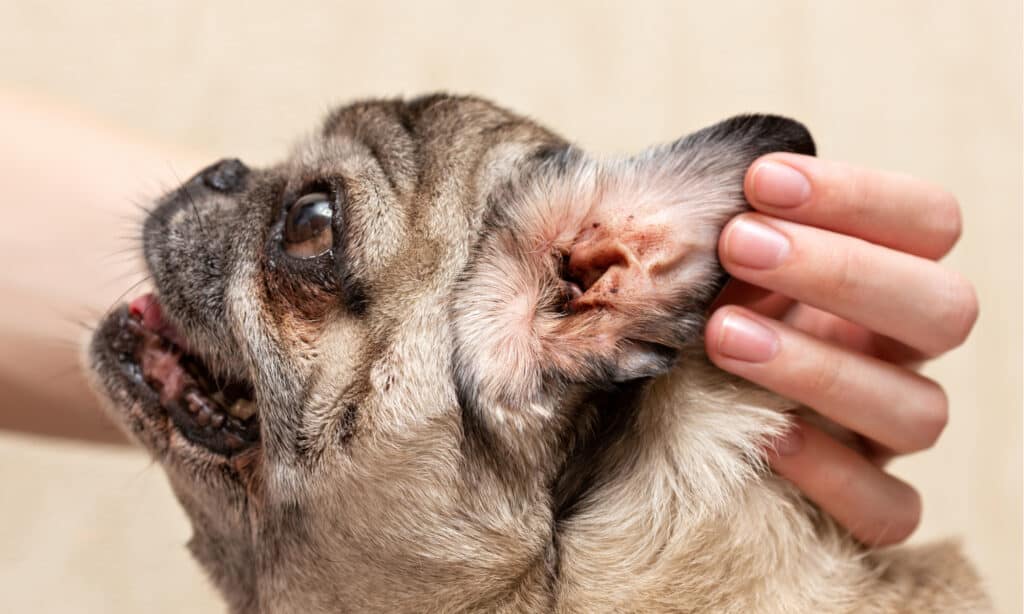
If your dog gets frequent ear infections, they may need to have their ears cleaned more than usual.
©Glikiri/Shutterstock.com
How to Prevent Ear Infections in Dogs
Luckily, there are many ways to prevent ear infections in dogs. These include keeping your dog’s ears dry, cleaning them regularly, treating underlying health conditions, and avoiding injuries. Learn more about each of these preventative measures below.
Keep Your Dog’s Ears Dry
It’s essential to keep the ears dry. This means drying them off after your dog has a bath or plays in the water and trying your best not to get water in their ears. For instance, if you’re playing with the hose, don’t aim it at your dog’s ears.
As mentioned previously, avoid using home remedies for ear infections like vinegar or hydrogen peroxide because these have significant water content. If water gets trapped in the ear, it’s likely to cause or worsen an infection.
Clean Their Ears Regularly
If your dog gets ear infections, they may need to have their ears cleaned more than usual. Most dogs with healthy ears may only need their ears cleaned every one to two months, but a vet may suggest every one to two weeks for dogs that are prone to frequent infections.
This can be done by using an ear-cleaning solution to rinse the ear or by wiping the outer ear with the same cleaning solution on a cotton pad. Remember not to stick anything into the ear canal, which can cause pain, wax build-up, or even damage your dog’s ear.
Treat Underlying Health Conditions
Other preventatives include managing underlying conditions like allergies, thyroid disease, or autoimmune disorders. If these ailments are causing ear infections, they might continue to recur until you get the root cause under control.
Avoid Situations Where Ear Injuries Could Occur
Lastly, try your best to avoid situations where ear injuries could occur. Limit interactions with other dogs to those you know get along with yours. Steer clear of places with large groups of dogs, like dog parks, where dog fights are more common.
Never try to brush through tangles or mats on your dog’s ears, as this can rip the sensitive skin. As we noted above, do not use cotton swabs to clean your dog’s ears, as this could push the infection deeper into the ear canal or rupture their eardrum. If your dog’s ear does get injured, keep the wound clean and see a veterinarian for treatment, especially if you notice signs of infection or the injury is slow to heal.