
Quick Take
- Your dog's normal temperature would count as a fever in a human, and knowing exactly where the line is could save their life. See normal ranges →
- There's one small prep mistake that quietly throws off your reading before you even get started, and most owners never catch it. Avoid this prep mistake →
- A nervous or aggressive dog changes the entire thermometer equation, and the fallback option comes with a critical limitation you need to know about. Understand the fallback limits →
Prior to your pup getting sick, it is important to have a thermometer on hand and to know how to use it to obtain the most accurate reading. Many people don’t know how to take a dog’s temperature. In fact, most people don’t know what a dog’s temperature should be. Check out our guide to safely and easily taking your dog’s temperature, and learn when your pup has a fever and needs to see the vet.
What Should Your Dog’s Temperature Be?
Don’t be worried if your dog has a higher temperature than you do. It is perfectly normal for dogs to be warmer than humans, which is why they make great snuggle companions. A dog’s temperature should range from 101° to 102.5°F, while the normal range for humans is 97° to 99°F. Dogs with a temperature of 103°F have a fever. If your dog has a high temperature of 106°F, this is considered an emergency, and you should seek veterinary care immediately.
Deciding on a Thermometer
Since there are several types of dog thermometers available these days, owners must decide which will work best for their pups. However, certain thermometers work better than others. You might already have a thermometer at home, but if you are shopping for one, it’s best to know how they work so you can choose the best fit for your dog.
Ear Thermometers
The ear thermometer is less invasive and it is still relatively accurate. These thermometers have been around for a long time, and many people find them very effective. Dogs also generally tolerate them better than rectal thermometers. It is a great choice for owners who have nervous dogs.
However, the downside is that an ear thermometer is not as accurate as a rectal thermometer. Unlike us, dogs have angled ear canals. Different breeds also have different ear sizes and shapes, so a one-size-fits-all thermometer may not be as reliable for your dog. Also, hair and ear wax can affect the reading.
Non-Contact Infrared Thermometers
Since the pandemic, people have become more familiar with non-contact infrared thermometers, especially when visiting childcare facilities, doctor’s offices, and hospitals. These thermometers detect infrared radiation emitted by the body to determine the temperature without touching the skin. While this might work well on people who don’t have fur coats, this thermometer is generally inaccurate for pets and cannot be relied upon for clinical use.
However, using a non-contact thermometer might be your only choice if your dog is anxious or even aggressive because they are in pain, so it’s a useful way to get an approximate reading. Use it on a relatively hair-free area, like the ears or inner thighs. Above all, trust your intuition. Don’t second-guess yourself if you feel something is wrong with your dog, but the reading is normal. Take your pup to the vet as soon as possible.
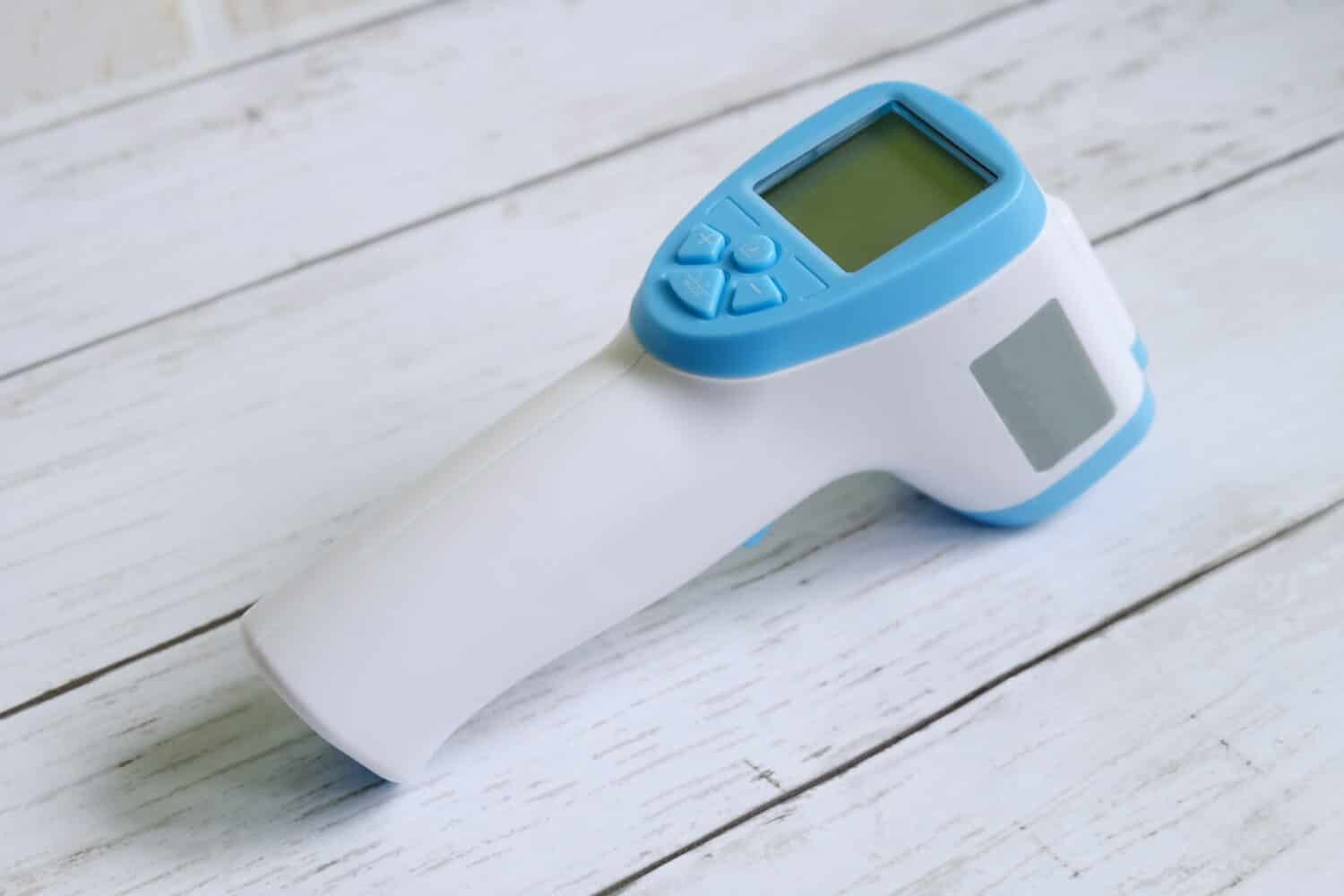
Using a non-contact thermometer might be your only choice if your dog is anxious or aggressive.
©Faizal Ramli/Shutterstock.com
Rectal Thermometers
The best way to take a dog’s temperature is with a rectal thermometer. Many digital thermometers can be used rectally, and some are specifically designed for rectal use in animals. A rectal thermometer is the easiest and fastest way to get an accurate reading.
While it is not the most pleasant experience for either the owner or the dog, the process is much simpler than you think. Ultimately, the owner needs to decide which thermometer will work best, but rectal and ear thermometers are generally the best options.
Taking a Dog’s Temperature with a Rectal Thermometer
To use a rectal thermometer, the guide below explains the supplies you’ll need and the steps to follow to get an accurate temperature reading with a rectal thermometer.
Supplies
First, gather all your supplies. When you are prepared, the process is easier for both you and your dog. You will need:
- A digital rectal thermometer
- Animal-friendly lubricants like petroleum jelly
- Paper towels
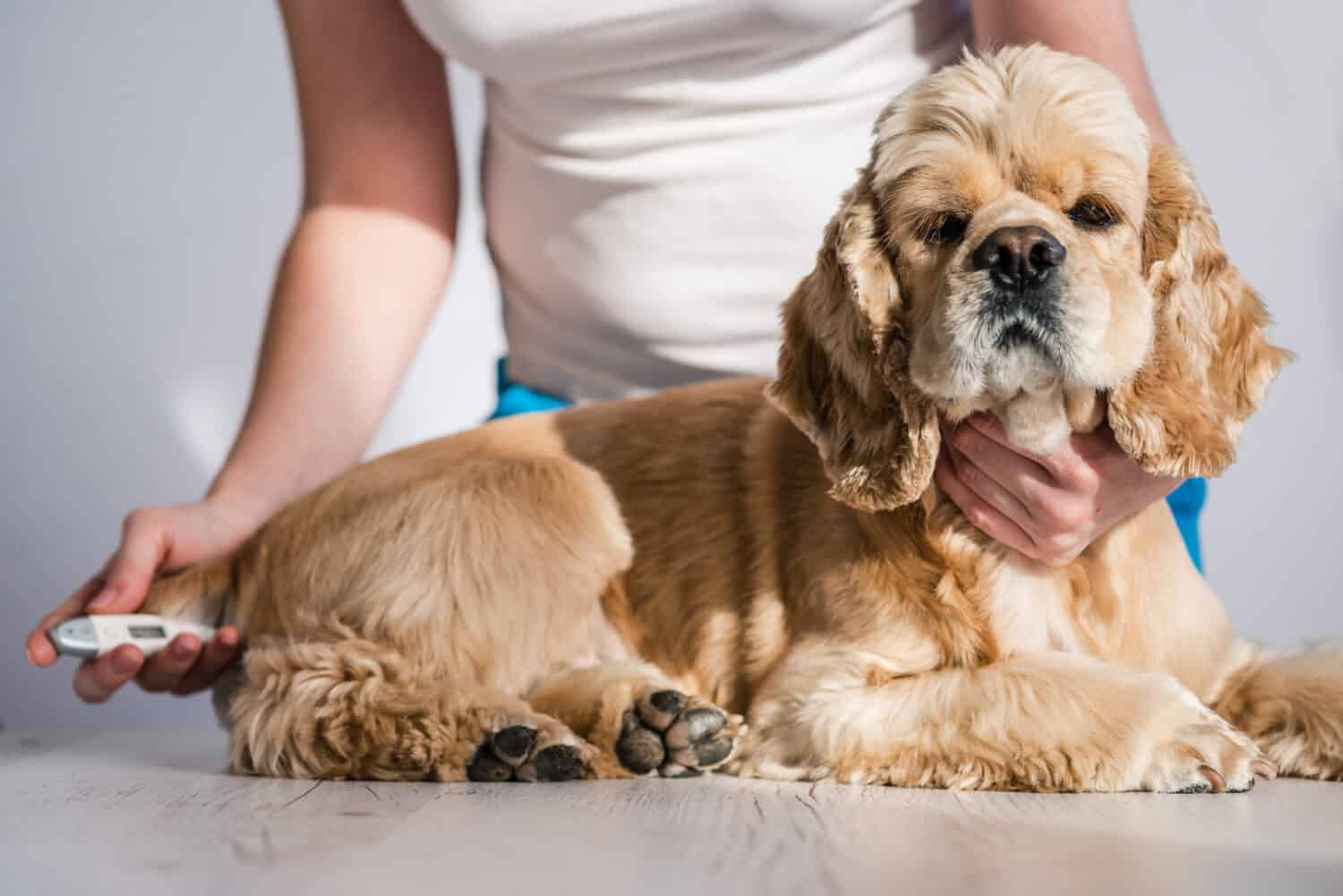
One of the best ways to take a dog’s temperature is with a rectal thermometer.
©O_Lypa/Shutterstock.com
Clean the Equipment
Before inserting the thermometer into your dog, ensure it has been sanitized and cleaned. Then, cover it in the lubricant and make sure your dog is in a comfortable position.
Position Your Dog
While arranging your dog in the best position to take its temperature is important, it is also essential that your pup remains calm. Place your pup where they feel the most relaxed, even if that is in your lap. Also, ensure you support your dog’s abdomen when taking its temperature.
Insert the Thermometer Into the Rectum
Once you have your dog in place, gently lift its tail and carefully insert the thermometer into its rectum. Do not insert it too far — it only needs to go about one inch deep, though two to three inches is fine for larger dogs. Next, hit the button on the thermometer’s handle to turn it on. Hold it still until it begins to beep, and you can see a reading on the screen.
Remove the Thermometer
After the thermometer has beeped, gently remove it from the dog’s rectum and record the reading. Reward your dog with praise or treats to help make this a positive experience. Finally, sanitize the end of the thermometer before putting it in a safe, dry place.
Taking a Dog’s Temperature with an Ear Thermometer
If your pup has a nervous nature and you think they won’t react well to a rectal thermometer, then an ear thermometer is the best option. Follow the steps below to take your dog’s temperature with an ear thermometer.
Supplies
Again, ensure you are prepared by having all your supplies ready to go. Luckily for this reading, all you need is the ear thermometer and the disposable tip covers.
Position Your Dog
If you have a nervous dog, it’s best to have two people when taking its temperature, one to hold the dog and one to take the reading. Ensure your dog is comfortable by keeping them on your lap or stroking them while they stand.
Using the Ear Thermometer
Do not clean your dog’s ear before taking its temperature. The cleaning solution can lower the temperature inside the ear. Gently lift the pup’s ear flap, carefully insert the thermometer at a 90-degree angle from its head, and turn it on. Do not push the thermometer too far into the ear. If your dog resists, ensure the thermometer is not in too far and causing your furry friend pain.
Once the thermometer beeps and the reading is visible on the screen, you can remove it from the dog’s ear and record the temperature. Praise or reward your dog with treats so it associates this experience with something positive. Lastly, clean the thermometer and place it in a clean, dry place.