
Huskies (Canis lupus familiaris) were bred as working dogs to provide transport in cold climates. Depending on the breed, they also make good companions and excel in sports, herding, hunting, and guarding. These breeds love going outside, but should limit their exposure outdoors during the summer. These breeds are a type of northern sled dog well-adapted to the Arctic’s freezing temperatures. Huskies have muscular and athletic bodies, thick double coats, and webbed paws for traversing icy planes. With proper training, large husky breeds make good pets, though they should be leashed in public at all times. Continue reading to learn about the seven largest of these breeds.
7. Sakhalin Husky
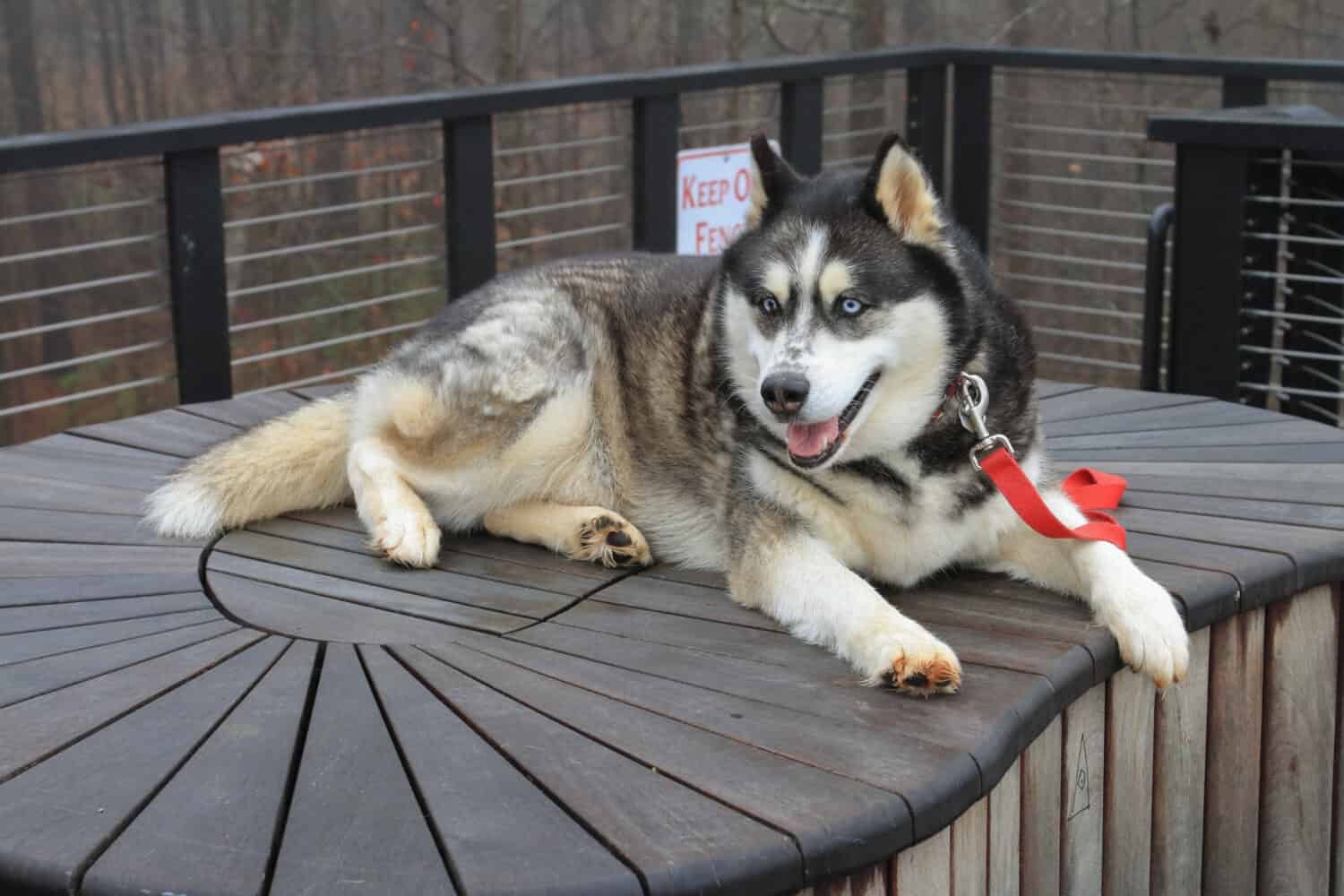
Sakhalin huskies weigh 66 to 88 pounds.
©Wirestock Creators/Shutterstock.com
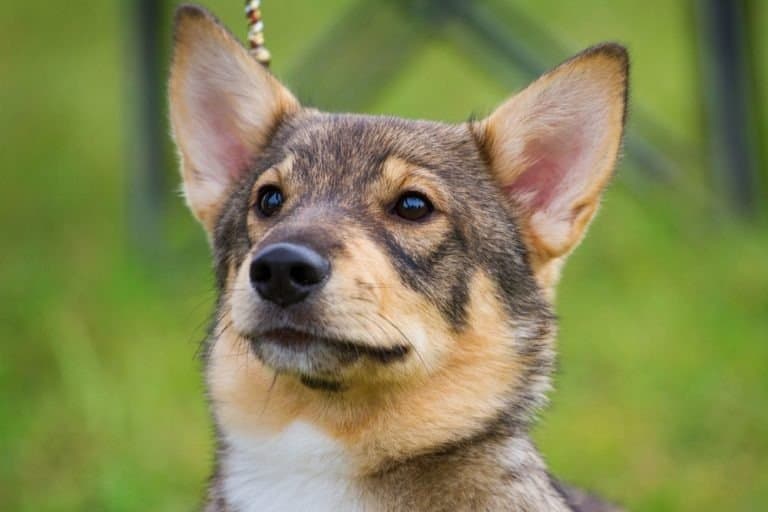
The Sakhalin husky (Karafuto Ken) is a rare Japanese sled dog, near extinction. The species is a relatively large-sized husky breed, weighing 66 to 88 pounds. They have black, tan, and cream markings. Sakhalin huskies are loyal, intelligent, active, and alert. Unfortunately, only a few Sakhalin breeders remain in Japan, and their numbers are unknown.
Sakhalin huskies made the news during the 1958 rescue operation for researchers from Japan in Antarctica. Fifteen dogs accompanying the researchers were left behind to be rescued later. The dogs were left in a safe area with food and water. However, a storm halted the rescue efforts, and many believed the dogs were dead. After one year, a new expedition arriving at the location found two surviving Sakhalin huskies that the team had left behind.
6. Canadian Inuit Dog
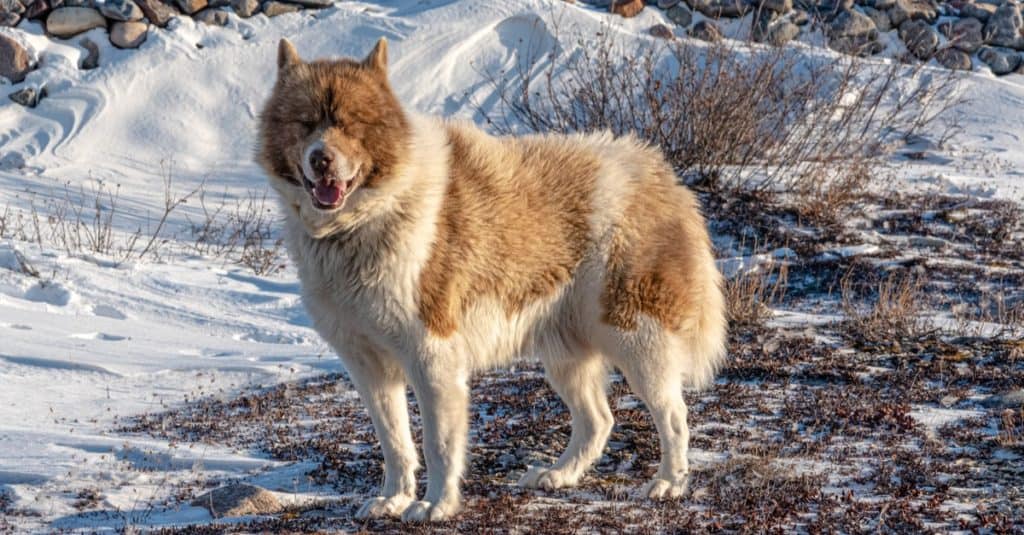
Canadian Inuit huskies are rare, with only 300 huskies registered by CKC.
©Scalia Media/Shutterstock.com
The Canadian Inuit husky was bred to hunt polar bears and haul goods on sleds. The dogs are powerful and can pull as much as 176 pounds. Currently, their numbers are critically low. The main reason for their decline is the invention of snowmobiles. The powered snow vessels have had a tremendous negative impact on the breed. Because of recovery efforts, their numbers are increasing. Today, Continental Kennel Club records indicate there are 300 Canadian Inuit huskies in existence.
The Inuit husky’s appearance is the same as that of the spitz. They have a sturdy build and an imposing look. They measure between 22 and 28 inches in height and maintain a maximum healthy weight of 88 pounds. According to CKC, the Canadian Inuit husky is still primitive and cannot qualify as a house pet, even though the dog is affectionate and can be a great furry friend to experienced pet guardians. This breed needs plenty of space and exercise and will not adapt to apartment life.
5. Chinook
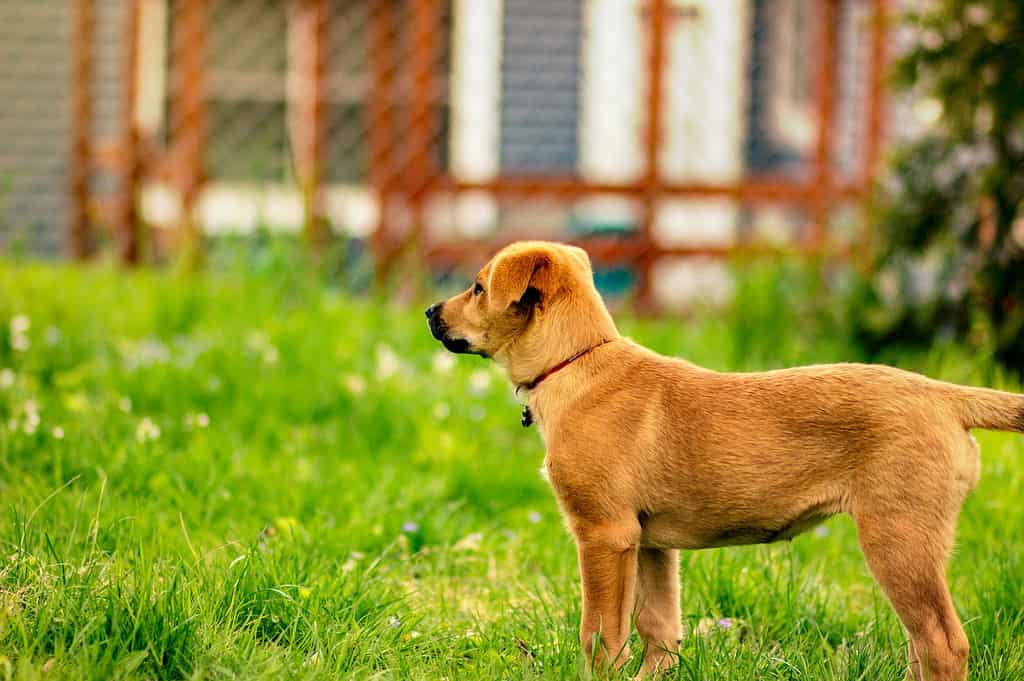
Chinook huskies closely resemble Labradors.
©suzieh870/Shutterstock.com – Original
At a glance, Chinooks differ from other husky species, but they are still sled dogs. Most huskies have a rich coat, facial markings, curled tails, and prick ears. However, the Chinook closely resembles a Labrador. Chinook are large, standing between 22 to 26 inches and weighing 55 to 90 pounds. The American Kennel Club recognized the breed in 2013. They are a rare breed, the 190th breed registered by AKC of 197.
Chinooks are a 20th-century breed, a cross between a mastiff and a husky. They originate from New Hampshire, and the state recognizes the Chinook as its official state dog. They are amiable dogs that interact well with humans and other animals. Training a Chinook demands experience and expertise, as these dogs have an independent nature.
4. Mackenzie River Husky
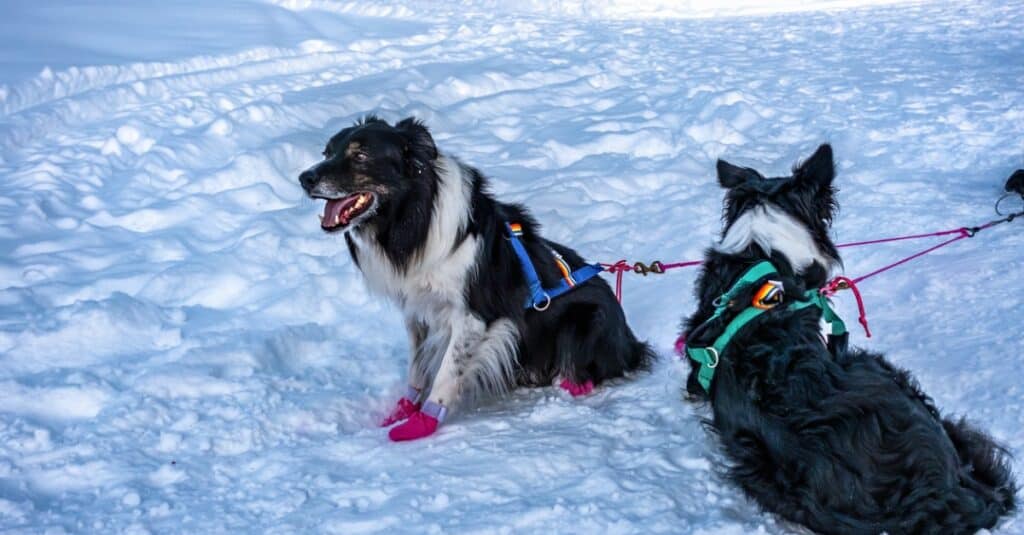
The Mackenzie River husky weighs approximately 90 pounds.
©iStock.com/Alexandre Patchine
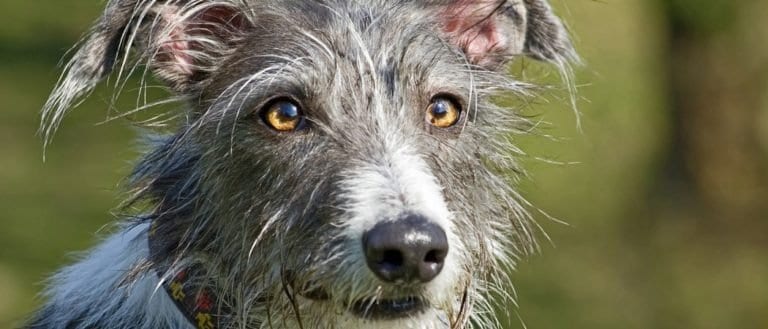
Because of confusion about the Mackenzie River breed, there are conflicting views on whether they are a breed or a type. Although they have a different build and coat from their famous Siberian cousin, the AKC does not recognize them as a different breed. In general, the breed name is used for several dogs from Northwestern Canada. They are sled dogs from the Yukon Territory, a crossbreed of European breeds like Newfoundlands or St. Bernards. Mackenzie River huskies are rare and primarily restricted to their homeland.
The Mackenzie River breed falls under the freight husky category, originating near the Arctic Circle. The breed type belongs to dogs that worked together in small teams, pulling heavy loads across rugged terrains of deep snow. Mackenzie River huskies are known for enduring serious work with minimum provisions.
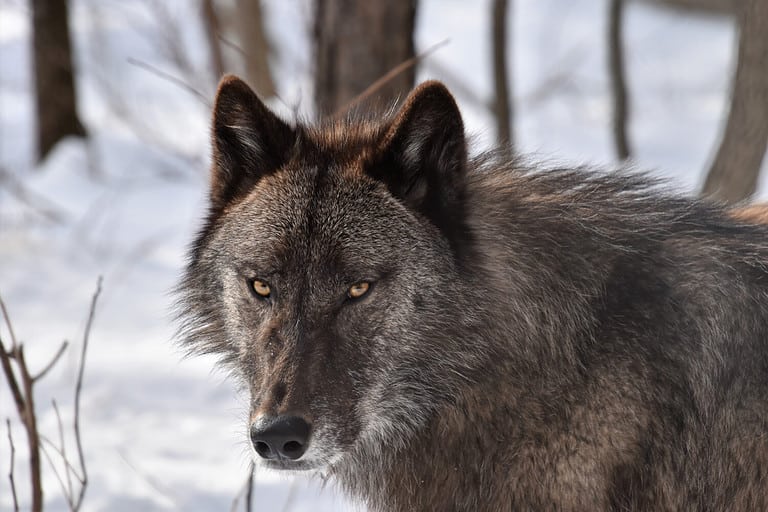
The Mackenzie River husky is larger than the Siberian husky, reaching shoulder heights of 27-32 inches and a healthy weight of up to 90 pounds. These dogs resemble wolves in their body structure, posture, and methods of bonding. This breed is independent and has a dominant spirit, which can be taxing for first-time caregivers.
3. Utonagan Husky
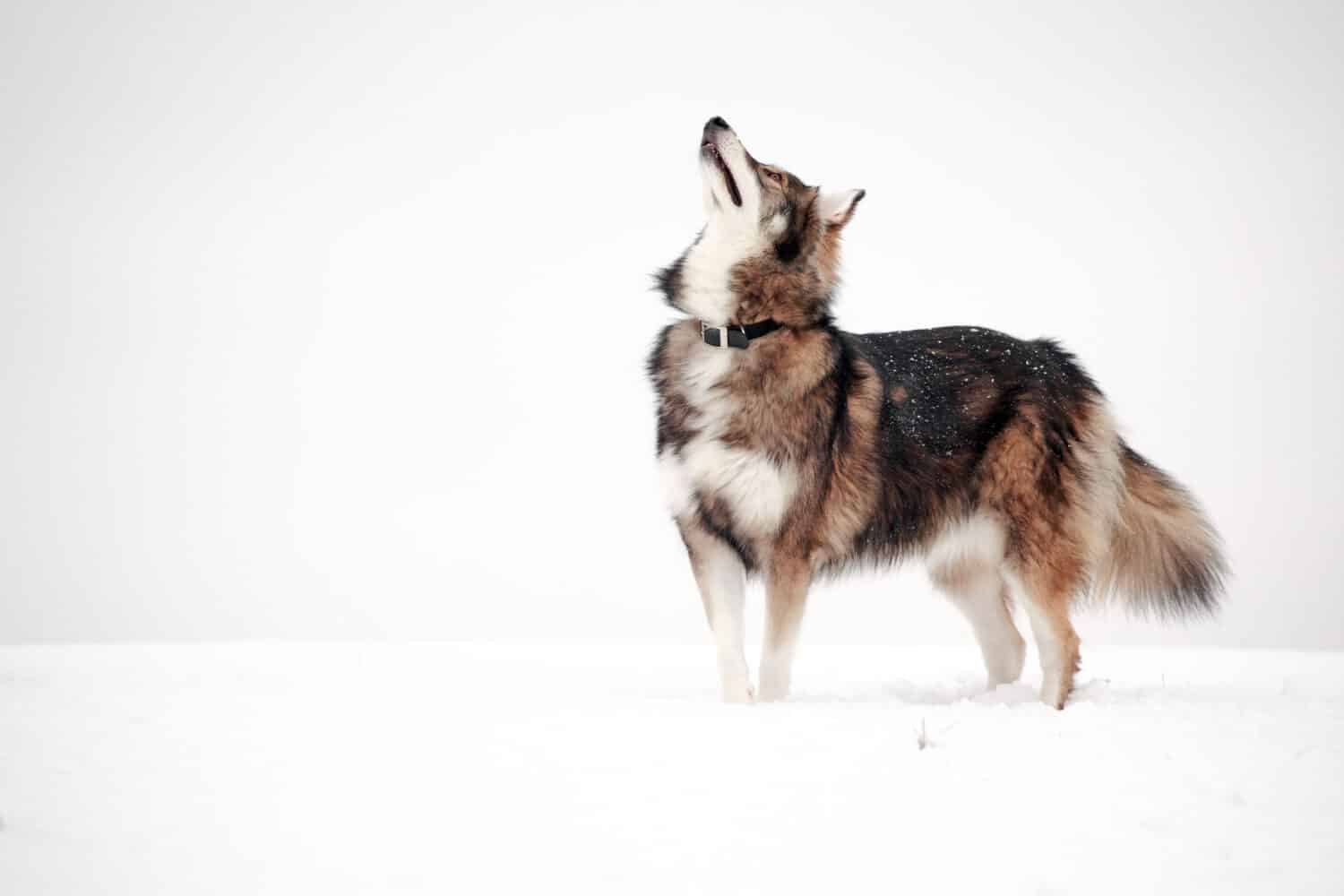
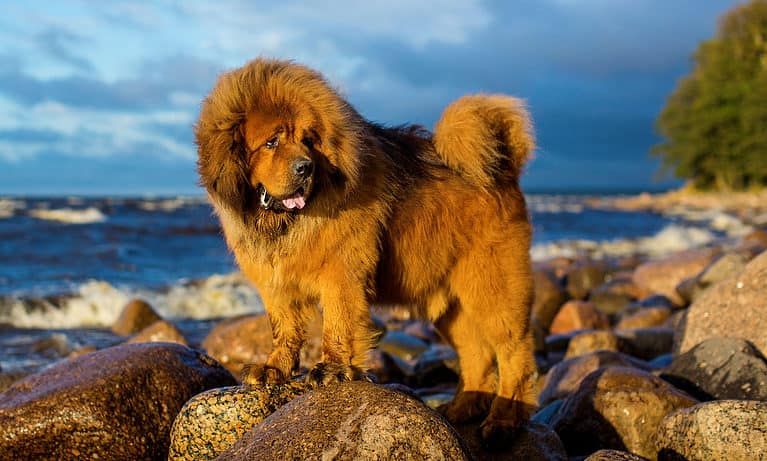
A utonagan husky weighs as much as 110 pounds.
©Binson Calfort/Shutterstock.com
Like most husky types, the utonagan closely resembles a wolf. In fact, their name comes from the Chinook Indian word meaning spirit of the wolf. Utonagan is not a pure breed but a mixture of Alaskan malamute, Siberian husky, and German shepherd. They are a relatively new breed that was developed in the 1980s. The original breeder, Edwina Harrison, intended to create a friendly and easy-to-train dog that resembled a wolf. Although the breed was not intended to pull sleds or hunt, they have impressive stamina.
The utonagan is taller than the Alaskan malamute. They can reach heights of 28 inches and weigh as much as 90 pounds. Unlike most huskies, the utonagan is naturally gentle. They adapt well to family life and enjoy the home environment. However, they are active dogs that require plenty of exercise and space. These dogs also exhibit the characteristic husky independence.
2. Alaskan Malamute
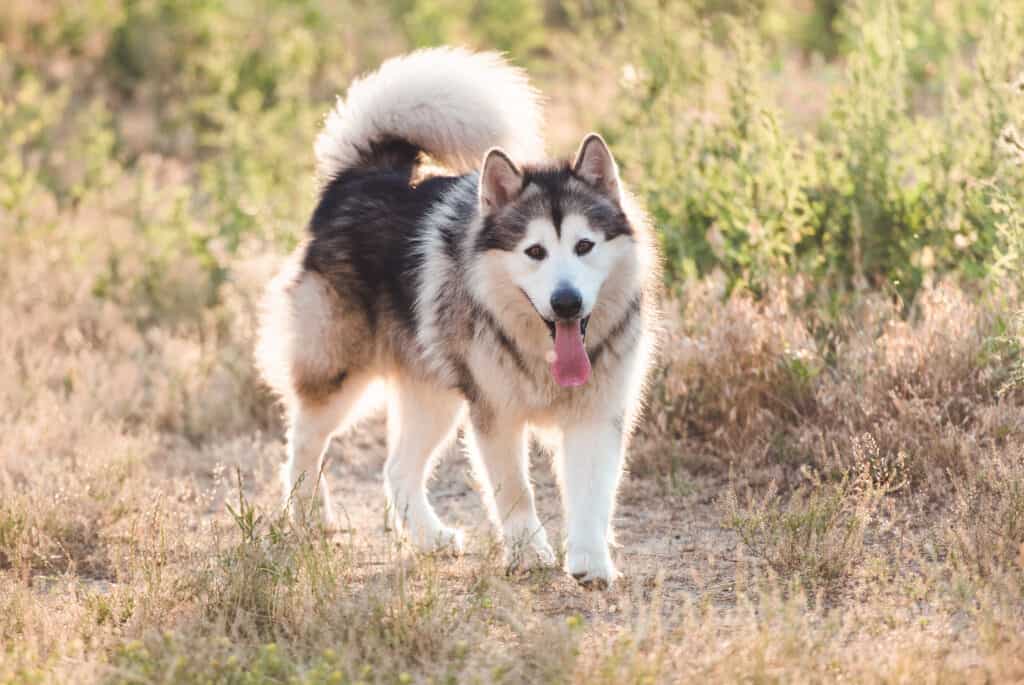
An Alaskan malamute weighs about 100 pounds.
©iStock.com/VYCHEGZHANINA
Alaskan malamutes are among the oldest husky breeds created by the Mahlemut tribe. They are direct descendants of wolves and have existed for over 2,000 years. Malamutes excel in many tasks, including hunting game, pulling sleds, guarding, and being companions. They are cousins of the Siberian husky and resemble them to an extent, though these dogs are different breeds. The AKC registered the Alaskan malamute as a breed in 1935. The breed’s males can attain a height of 23-26 inches and typically weigh between 85 and 95 pounds, though some large males can reach 100 pounds.
The Alaskan malamute may not be a good companion for first-time pet caregivers. Additionally, ample space is critical to these dogs because they are highly active. This breed thrives in the countryside, running long distances and enjoying outdoor activities.
1. Labrador Husky
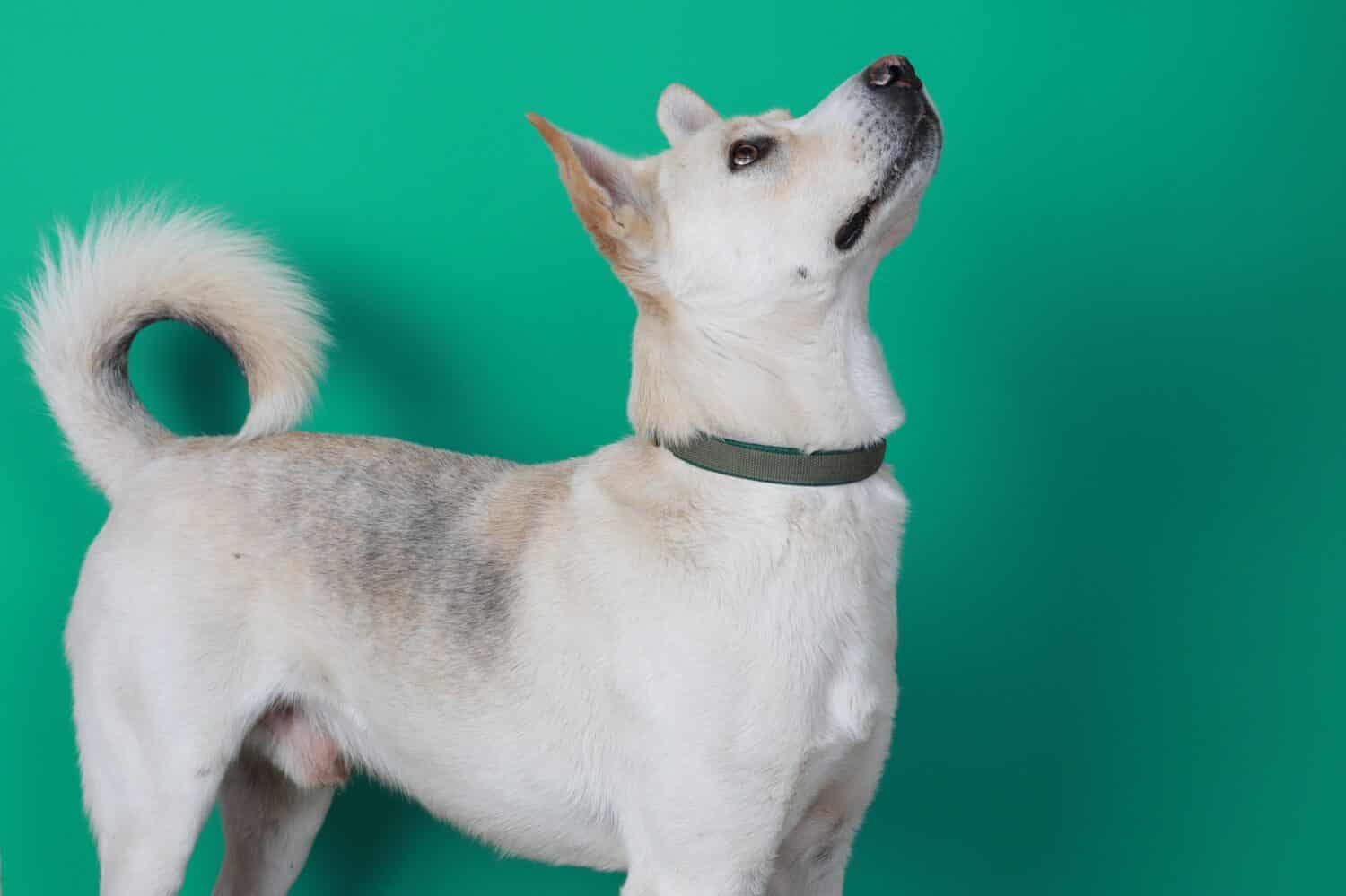
Labrador huskies weigh approximately 100 pounds.
©Bernard Khalil/Shutterstock.com
Although many assume Labrador huskies are a cross between a retriever and a husky, they are not. Labrador huskies are their own breed. However, the dogs have some Alaskan Malamute and German shepherd heritage. This husky breed originates from the Labrador area in Canada, where they were introduced in 1300 by the Inuit people.
Labrador huskies have a similar temperament to Siberian huskies; they are affectionate and hardworking. This large breed can stand 26 inches at the shoulder and weigh 60 to 100 pounds. They have a dense, wavy coat that comes in black, red, brown, gray, white, or a mixture. Because of their size and powerful hunting instinct, Labrador huskies are not suitable for homes with smaller pets. The dogs bond closely with their family and can become overly protective.