
Quick Take
- This wolf-lookalike was engineered from eight different breeds, though five of them remain a mystery to this day.
- Utonagans look fierce but have a behavioral quirk that can turn even the sweetest dog difficult, and most new owners never see it coming. See the behavioral quirk →
- One common health condition in this breed can become life-threatening within hours, and the warning signs are easy to dismiss. Learn about bloat risks →
- Their wolf-like looks have landed Utonagans an unexpected Hollywood career, though not in the role most people would guess. Explore their film roles →
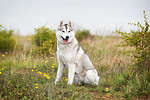
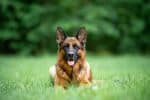
The Utonagan is a relatively new dog breed. It was developed in the 1980s by Edwina Harrison, who wanted to create a dog that resembled a wolf but was still well-tempered and sweet like other domesticated dogs. The Utonagan is a crossbreed that was created using a Siberian Husky, an Alaskan Malamute, a German Shepherd, and five other rescue breeds that remain unknown.
This hybrid breed is not an officially recognized breed by the American Kennel Club, but it is popular with many dog lovers. They are very affectionate and gentle, which makes them excellent family pets. They can also function well as a working dog.

Ownership: 3 Pros and Cons
| Pros | Cons |
|---|---|
| Excellent family dog: Utonagans make a great family dog. They are loving, gentle, and even-tempered and enjoy spending time with the people in their family. | Can be dominant: If a Utonagan isn’t properly trained and doesn’t see its owner as the clear leader, it may try to assert their dominance. |
| Long Lifespan: Compared to other larger dog breeds, a Utonagan has a long lifespan. It can live for up to 15 years. | Higher maintenance grooming in winter: The coat of a Utonagan is thicker in the winter than in the summer. It will need more brushing and grooming during the colder months. |
| Friendly: Utonagans are a very friendly dog breed. They are sometimes chosen to be a therapy dog for patients in schools, hospitals, or hospices. | High activity needs: Utonagans have high exercise needs. They will need daily walks. Additionally, this breed also needs plenty of mental stimulation to prevent them from getting bored and destructive. |
Size and Weight
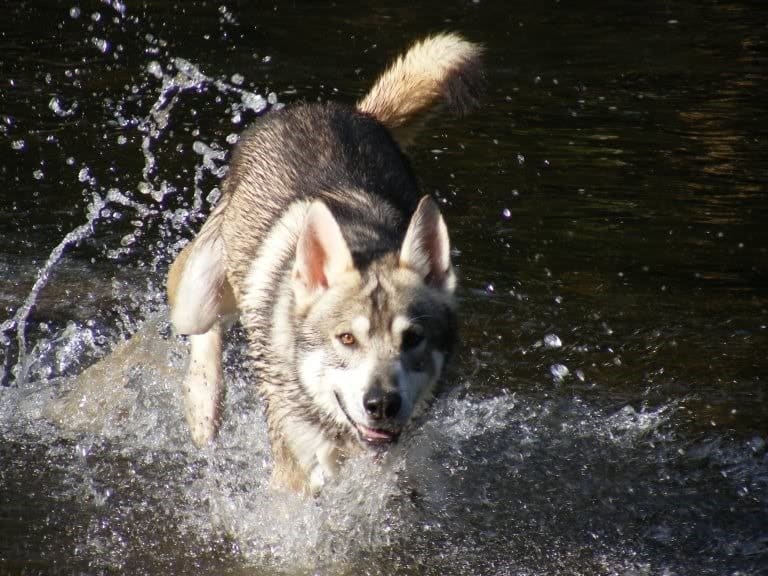
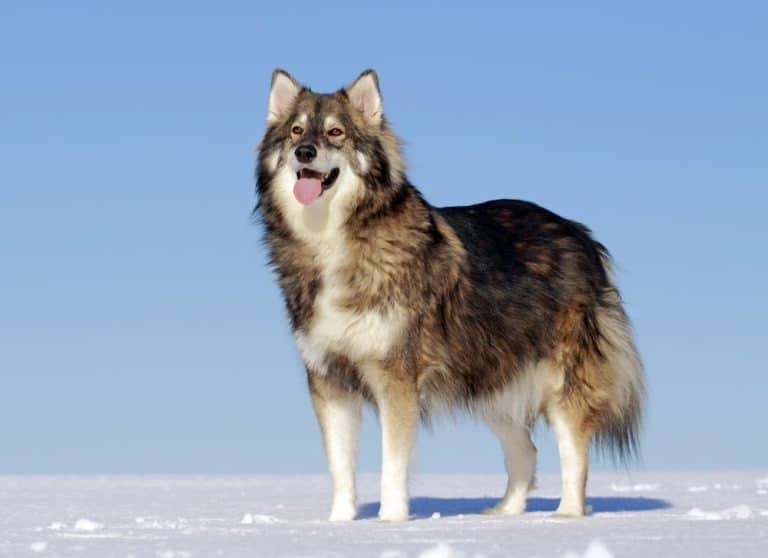
Utonagans are medium- to large-sized dogs. Males and females are about the same height and weight.
©Lanieniven, Public domain, via Wikimedia Commons – Original / License
Utonagan are medium- to large-sized dogs. Both males and females can weigh between 55 and 110 pounds. Both sexes are generally between 23 and 30 inches tall.
Common Health Issues
As a Utonagan owner, there are a few common health issues you should be aware of. Knowing what health concerns your dog may face will help you provide superb care.
Some Utonagans can suffer from obesity. This can lead to joint issues, heart problems, and more. It will be important to make sure your dog is eating a healthy portion of food and getting sufficient exercise every day to prevent this issue.
Hip dysplasia is another possible health issue that Utonagans may develop. This is an inherited condition where the thighbone does not properly connect to the hip bone. The two bones rub together, which becomes very painful over time. You may notice that your dog begins to limp if it has hip dysplasia.
Bloat is another potential concern for Utonagans. Larger breed dogs can suffer from this disorder, in which the stomach twists and gas gets trapped inside. They are unable to vomit or belch to relieve the bloating, and this condition can be life-threatening. If your dog exhibits any symptoms of bloat, you will want to rush it to an emergency veterinarian.
Temperament and Behavior
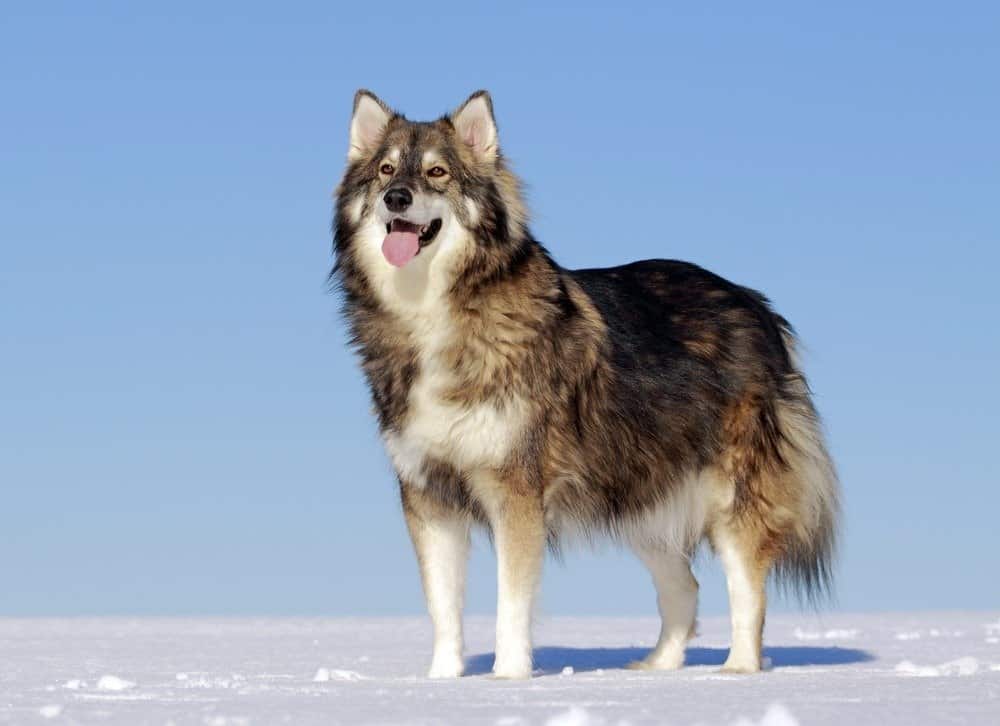
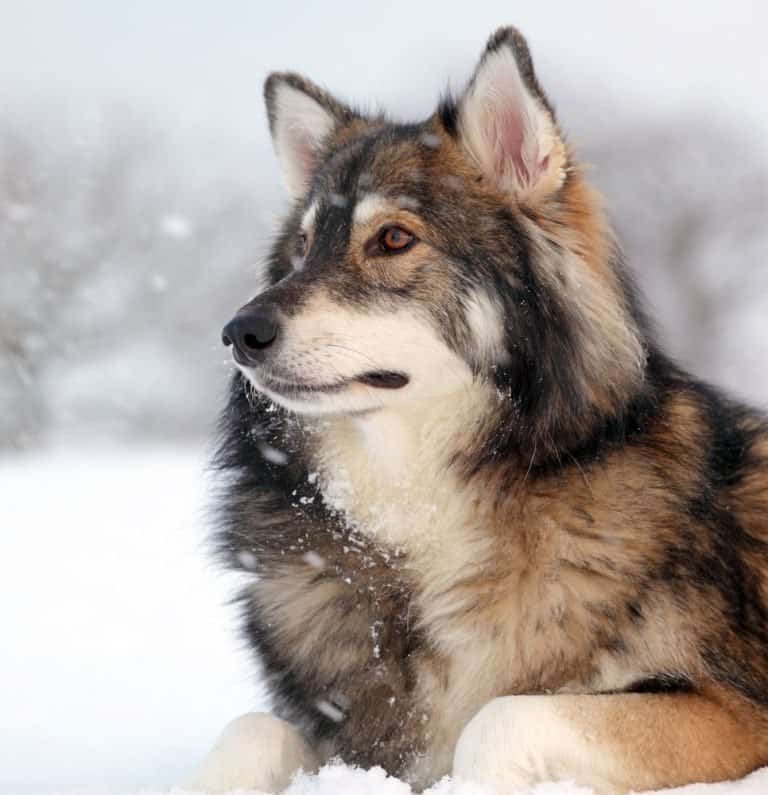
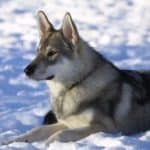
Utonagan in the snow.
©Binson Calfort/Shutterstock.com
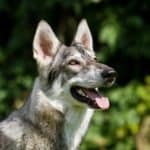
Utonagans are a hybrid, bred to be sweet dogs, and that is exactly what they are. This breed has a very sweet and loving personality. They are very even-tempered. These personality traits make this breed an excellent choice for families with children.
However, if a Utonagan does not get enough exercise or mental stimulation, it can exhibit negative or destructive behaviors. It is also important for owners to set boundaries for their dogs and show that they are the leader; otherwise, a Utonagan may try to become more dominant.
Care
Utonagans have unique needs. Keep their temperament, health concerns, nutritional needs, and other important characteristics of this breed in mind when you plan for their care.
Best Dog Food
When selecting food for your Utonagan, it is important to look for options that offer a healthy mix of meat, fats, and plant fibers. You may choose to cook homemade meals for your dog, or you may decide to purchase food from a pet store. When choosing a food for your dog, be sure to select a product that has high-quality ingredients from a well-known and trusted manufacturer. Some owners also choose to feed their dogs a raw food diet. If you are unsure which option will be best for your dog, check with your veterinarian.
As a large breed that can develop hip dysplasia, Utonagan owners must feed their dogs high-quality food that keeps their weight in check. It’s essential to find a food that fuels a Utonagan’s high exercise needs with lean protein to maintain a healthy weight.
Utonagans are larger dogs, so you can also look for a dog food that is specially formulated for large breeds. You may find that your dog does best with food designed for working breeds. Your dog’s age can also help you select the best food for their needs. Puppies should be fed large-breed puppy food, whereas adults or seniors should be fed options designed for their specific age ranges.
Since Utonagans can suffer from obesity, be sure to feed your dog an appropriate amount of food. You can consult the serving sizes listed on the dog food bag or check with your veterinarian if you have questions about how much food they should eat.
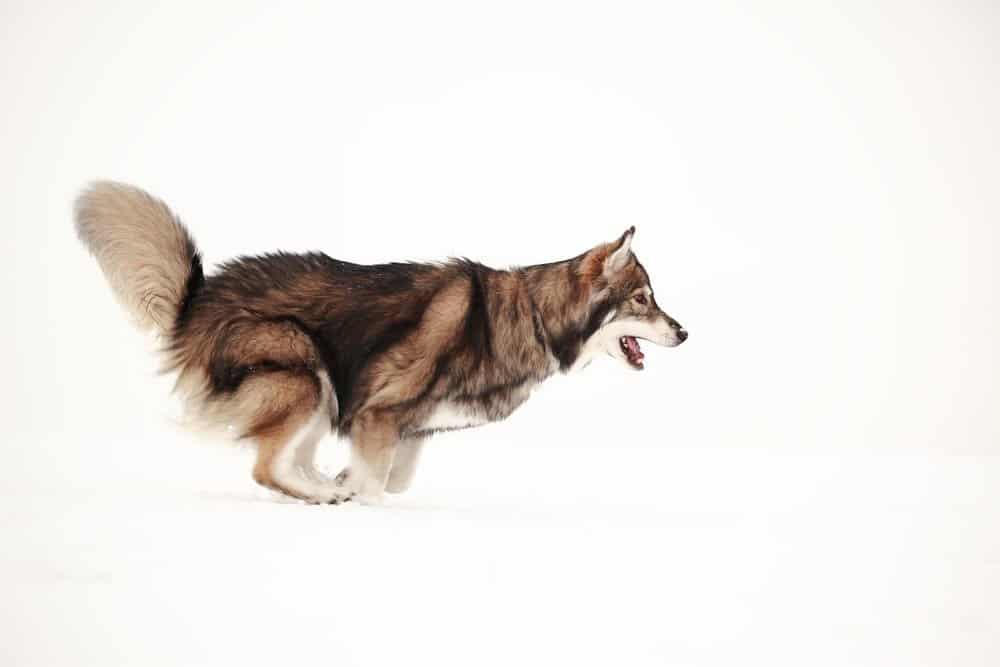
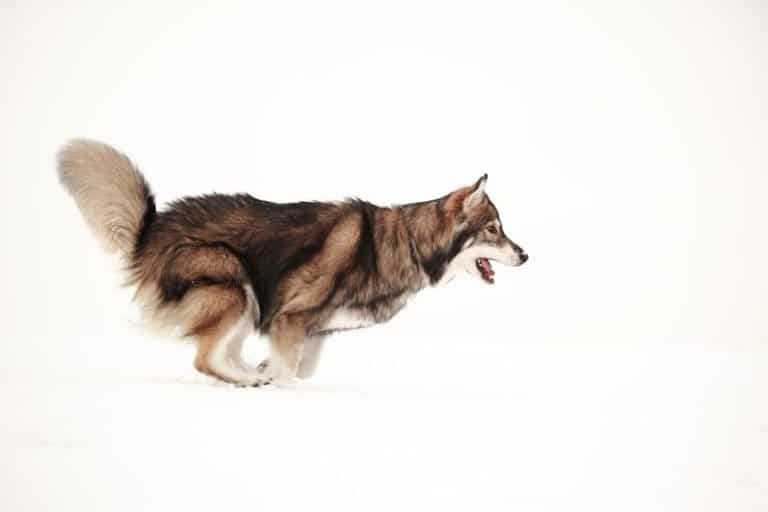
The Utonagan needs experienced training and plenty of exercise to be an obedient and happy dog.
©Binson Calfort/Shutterstock.com
Maintenance and Grooming
Utonagans require more maintenance than other dog breeds. Their coat is very thick in the winter and will require more frequent brushing and grooming. However, the summer months will be easier, which may make up for the extra work during the winter. They’ll only need to be brushed about two times a week during the summer.
In addition to brushing and grooming your dog, be sure to also brush its teeth and clean its ears regularly. You should also trim the nails to prevent them from getting too long and making it painful for the dog to walk.
Training
Utonagans are an intelligent breed and are relatively easy to train. It will be important to assert clear boundaries with Utonagans, as they may try to assert dominance if it is not clear who is in command. These dogs do best with experienced owners who know how to train a dog.
Early training and socialization are important with this breed. They will learn more quickly and be less likely to try to assert dominance when they are younger. Plus, puppies are smaller and will be less of a challenge to control than a full-sized dog.
Exercise
It is important to make sure a Utonagan gets plenty of exercise. They are not well-suited to living in an apartment or a house without a fenced-in backyard where they can run and play. It will be important to take your dog for daily walks and play with him or her to ensure it gets enough exercise.
In addition to needing physical exercise, this breed also needs to be mentally stimulated. Without enough mental stimulation, they may become bored and destructive.
Puppies
When purchasing a Utonagan puppy from a breeder, look for a reputable breeder. You want to find someone who will be upfront about the health of the dog’s parents, since many potential health problems can be inherited.
It will be very important to begin training and socializing your dog as soon as you bring it home. Utonagans are much easier to train and control when they are younger. If you are new to owning this breed, you may also want to look for an obedience training class where a professional trainer will be able to work with your dog.
Socialization is also important. It will help your puppy begin to learn how to act in different environments and how to interact with people and other pets.
While your puppy is still growing, you will want to avoid letting it play too roughly with children or other pets. This can cause damage to their developing bones and muscles.
Children
A Utonagan can make an excellent pet for families with children. This breed is very loving and tolerant of children. They are also very gentle with children. As with all dog breeds, it is important to closely supervise children when they are around a Utonagan. This can prevent accidental injury to either the dog or the child.
Similar Dogs
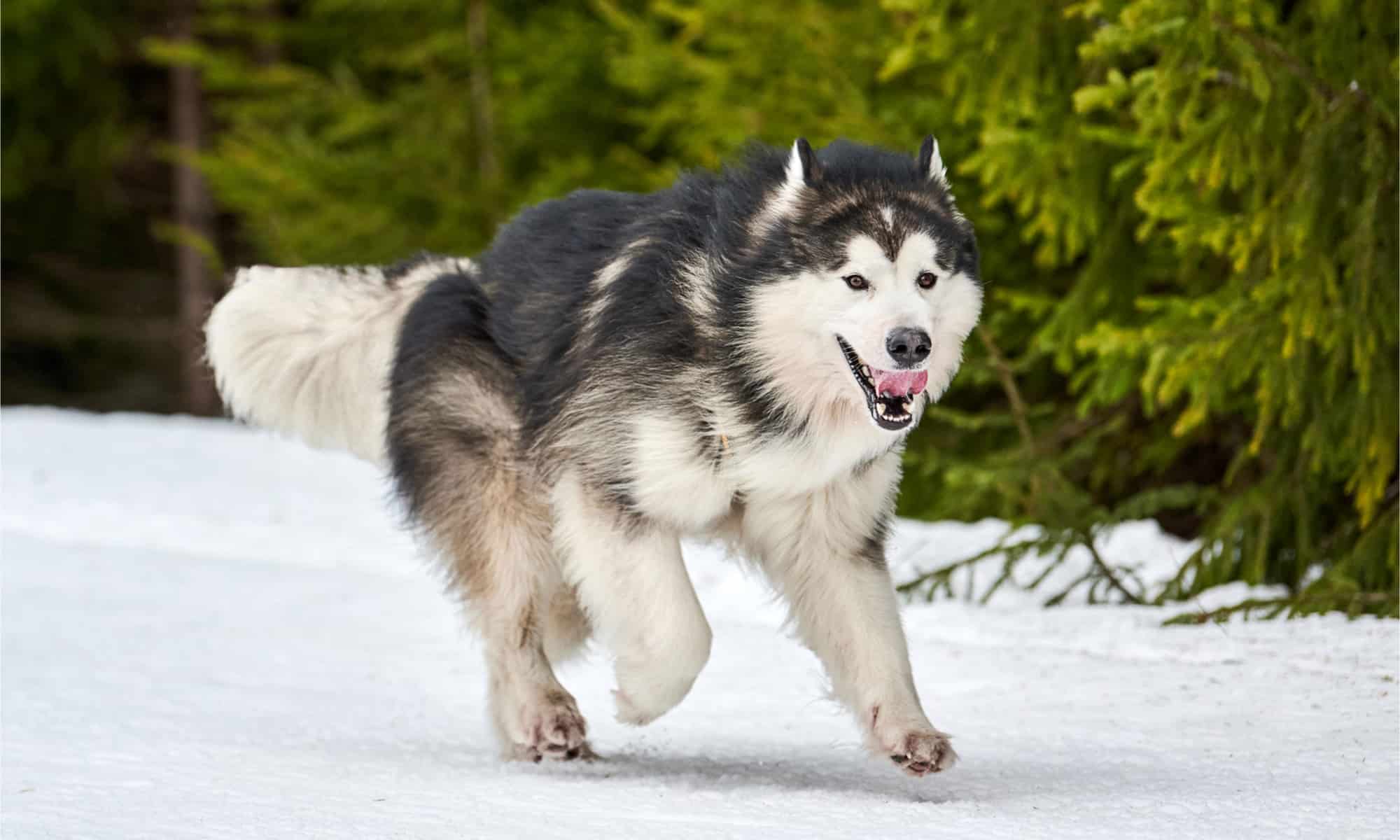
Alaskan Malamutes are also excellent family dogs like the Utonagans.
©travelarium.ph/Shutterstock.com
Tamaskans, Finnish Spitzes, and Alaskan Malamutes are three dog breeds that share some similarities with the Utonagan.
- Tamaskan: Tamaskans and Utonagans both originated from the United Kingdom. Both dogs are large. They both typically weigh somewhere between 50 and 100 pounds. Tamaskans and Utonagans may both be gray, black, or cream-colored. Utonagans may also be brown or silver, and Tamaskans may be black or red.
- Finnish Spitz: A Finnish Spitz and a Utonagan are both loyal and energetic dogs. Both breeds also make great family pets. One key difference between these two breeds is that a Finnish Spitz is a good deal smaller than a Utonagan. Finnish Spitzes typically weigh between 22 and 29 pounds, while Utonagans can weigh up to 110 pounds.
- Alaskan Malamute: Alaskan Malamutes are large dogs, like Utonagans. Both breeds can weigh around 100 pounds. Alaskan Malamutes make an excellent family dog, like Utonagans. Utonagans weren’t bred for any specific purpose, other than to resemble a wolf and have a domesticated temperament. Alaskan Malamutes, on the other hand, were bred to be sled dogs.
Famous
Because of their wolf-like appearance, Utonagans have been used in films and TV shows to portray a wolf.
https://www.youtube.com/watch?v=U-y38XGXzco&ab_channel=A-Z-Animals
Watch on YouTube
Utonagan Pictures
View all of our Utonagan pictures in the gallery.

Binson Calfort/Shutterstock.com
Sources
- Pet Guide / Accessed December 1, 2020
- Pet Gear Lab / Accessed December 1, 2020
- Doglime / Accessed December 1, 2020
- Animal Corner / Accessed December 1, 2020
- My Dog Breeds / Accessed December 1, 2020