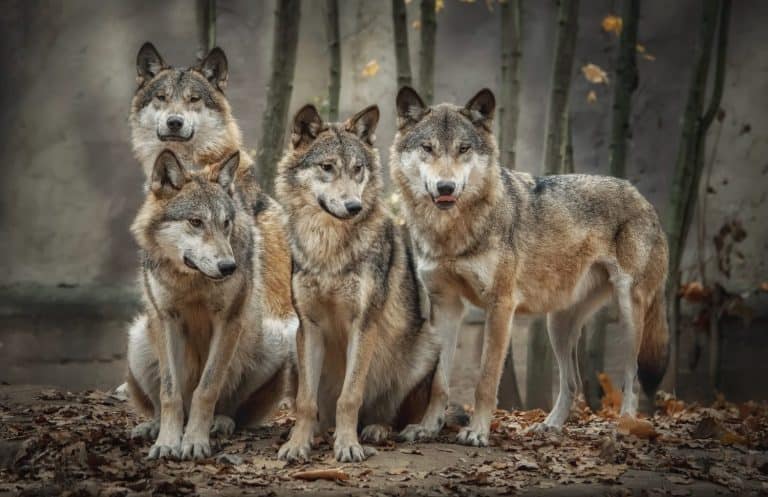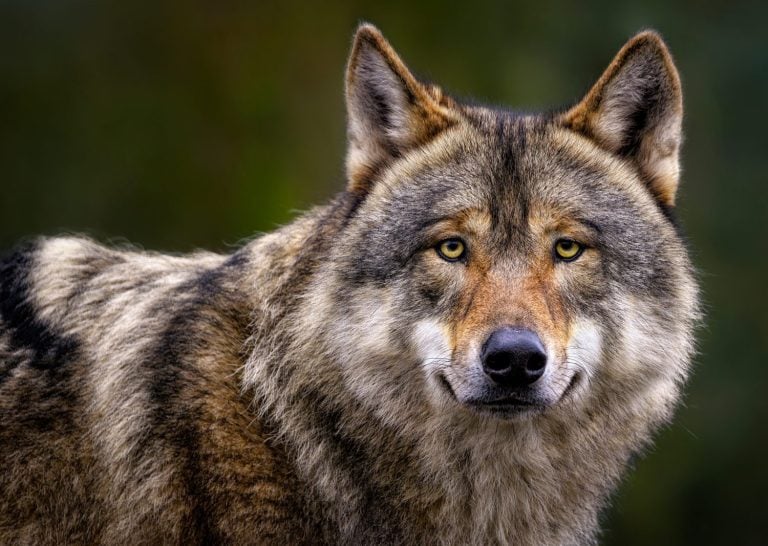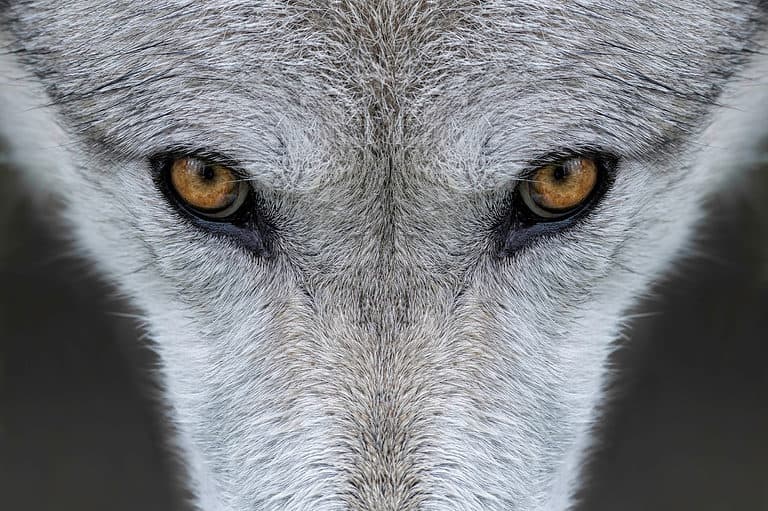

Wolves are the largest members of the canid family, which includes animals like coyotes and domestic dogs. Many people are surprised by just how big these wild canines are. Wolves may share a common ancestor with modern dogs, but they easily tower over most domestic dog breeds today.
The classification of wolf species has been a long-standing debate. While dozens of subspecies have been proposed over the years, the gray wolf (Canis lupus) and the red wolf (Canis rufus) are currently the only two wolves widely accepted as their own distinct species, with gray wolves being the larger of the two. Among all the proposed and accepted wolf species and subspecies to date, see how the largest wolves on Earth today compare to each other.
10. Italian Wolf (Canis lupus italicus)
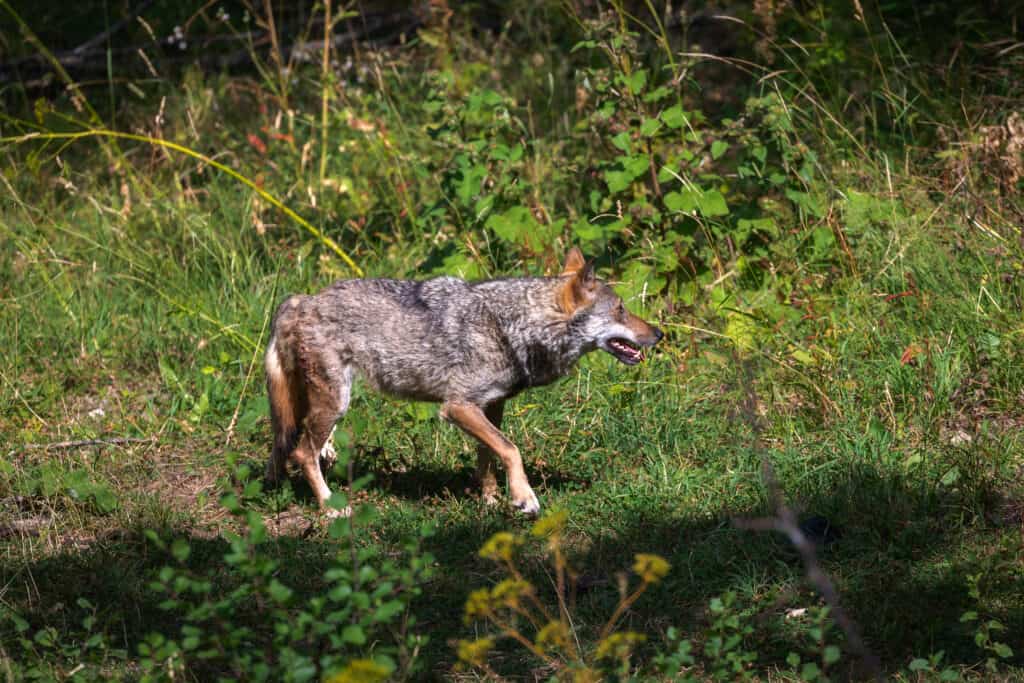
Italian wolves are important in the culture of Italy, featuring prominently in the founding legend of Rome.
©iStock.com/Gennaro Leonardi
The Italian wolf, also known as the Apennine wolf, is native to the Western Alps and Apennine Mountains. These large and striking wolves stand up to 2.6 feet tall at the shoulder and measure up to 4.8 feet long. A typical male weighs 55 to 80 pounds, but some can reach up to 99 pounds. Their fur is a mix of gray and tawny brown, often developing a reddish tint in the summer months. They have lighter fur on their cheeks and belly. Their backs and the tips of their tails are marked with darker bands.
For centuries, the Italian wolf faced severe persecution from humans. Sadly, its population plummeted to just 70 to 100 wolves by the 1970s. Fortunately, Italy stepped in with legal protection and new conservation programs, allowing the wolves to rebuild and even expand their populations.
9. Iberian Wolf (Canis lupus signatus)
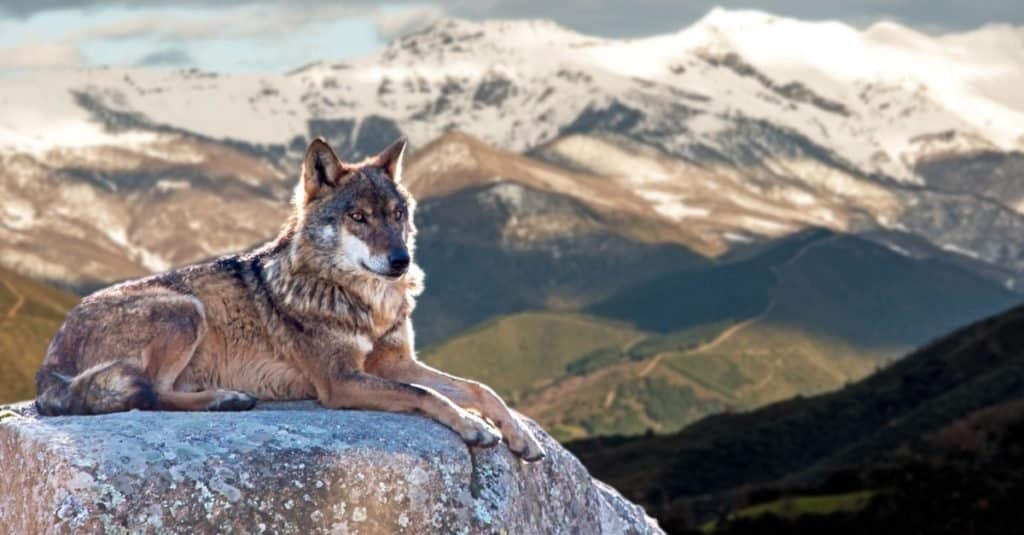
Iberian wolves are now legally protected in Portugal.
©carlosobriganti/Shutterstock.com
The Iberian wolf is a subspecies of the gray wolf that lives in the northwestern Iberian Peninsula in parts of Portugal and Spain. Iberian wolves reach up to 4.5 feet long, stand 2.3 feet tall, and weigh up to around 110 pounds. The wolves’ fur changes with the seasons, with lighter colors in the summer and darker hues in the winter. They also have distinct white patterns around their snouts and dark stripes that run down their front legs. Iberian wolves have pointed snouts, relatively short ears, and striking yellow eyes.
Iberian wolves prefer woodlands and open forests near mountainous regions, where they primarily hunt wild boar and deer. They were also once widespread across France, but humans hunted them to extinction there by the 1940s. Fortunately, in the 1990s, some wolves began to find their way back to southern France. They have begun recolonizing places like the Jura Mountains, the Pyrenees, and the Massif Central.
8. Tundra Wolf (Canis lupus albus)
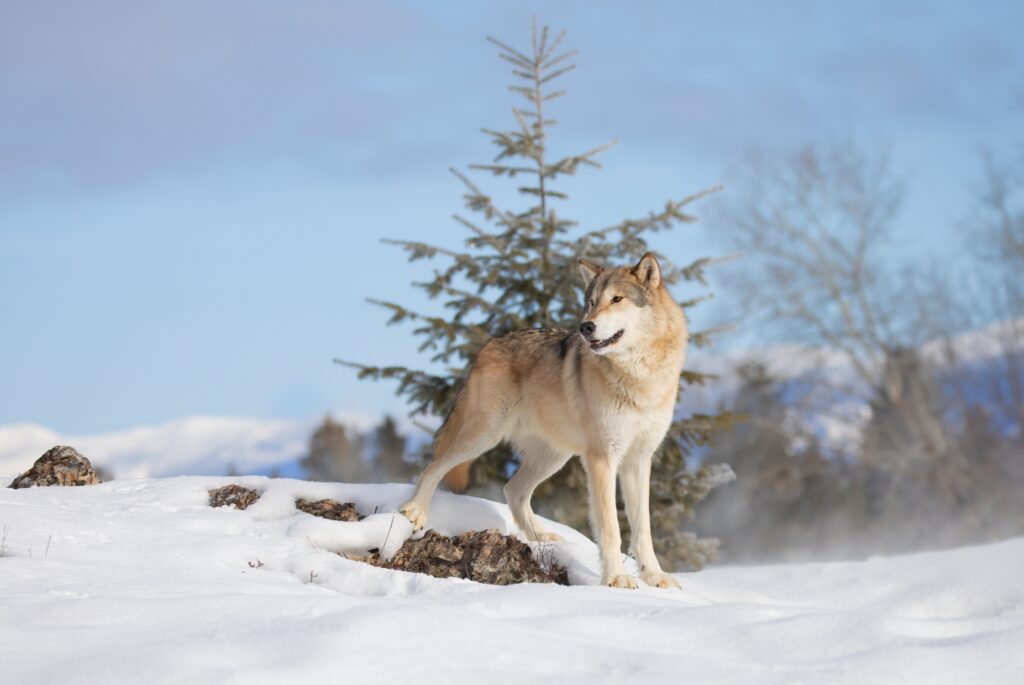
Tundra wolves are often on the move following migrating reindeer.
©Jim Cumming/Shutterstock.com
The tundra wolf, also called the Turukhan wolf, is a large and hardy animal built to live in the extreme cold of the tundra and forest-tundra regions of Russia, Finland, and Norway. They measure around 4.5 feet in length and stand around 2.3 feet tall. These wolves generally weigh from 88 to 110 pounds.
They have thick, long fur, which provides exceptional insulation in their freezing habitats. The fur is typically lighter on top and darker on the bottom, with a mix of gray and reddish-gray tones. Tundra wolves are well-adapted to their environment and primarily hunt smaller reindeer. When larger prey is scarce, however, they will also hunt smaller animals, like Arctic foxes and hares.
7. Himalayan Wolf (Canis lupus chanco)
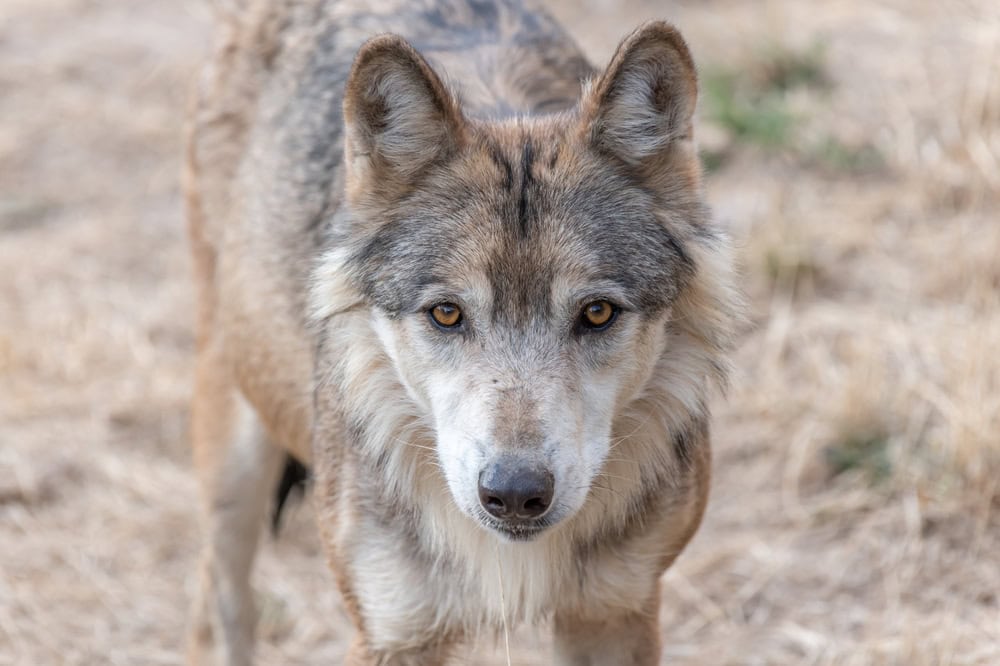
Wolves are important symbols in Mongolian legends and culture.
©Images01/Shutterstock.com
The Himalayan wolf is an ancient and unique subspecies, found at elevations of over 15,100 feet in the remote Tibetan Plateau and Himalayan mountains. These wolves are perfectly adapted to their high-altitude habitats. They have evolved a unique biology that allows them to thrive on much less oxygen than other wolf species. Himalayan wolves stand 2.5 feet at the shoulder, measure 4 to 6 feet long, and weigh an average of 66 to 120 pounds.
They have thick, brown fur on their backs and tails, with paler fur on their faces, chests, undersides, and legs. Himalayan wolves primarily hunt the Tibetan gazelle, but they also feed on smaller animals such as pikas, hares, and marmots. They face many threats, including illegal hunting and livestock conflicts. However, organizations like the Himalayan Wolves Project are working to protect and study this unique species.
6. Arctic Wolf (Canis lupus arctos)
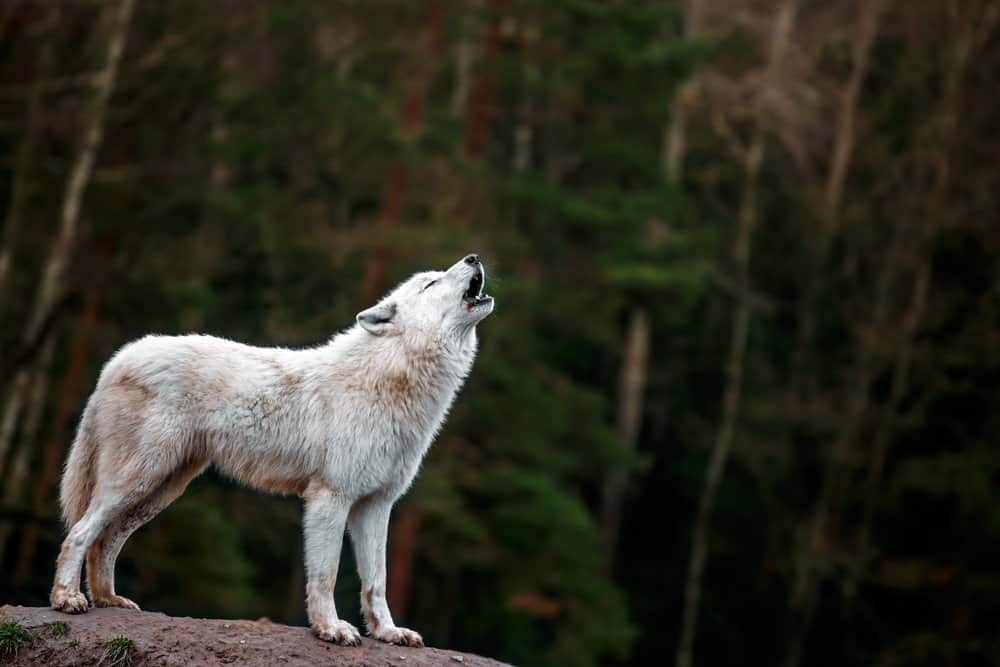
Arctic wolves are also called white wolves or polar wolves.
©Josef_Svoboda/Shutterstock.com
This stunning subspecies of gray wolf lives in the frigid, snowy tundra of Greenland and the Arctic regions of North America, including parts of Canada and Alaska. Arctic wolves are a solid presence, standing up to 2.6 feet tall at the shoulder, up to 6 feet long, and weighing between 70 and 125 pounds. Their white fur coat is long year-round, helping them to blend into their environment and withstand the cold. Arctic wolves also have somewhat rounded ears and faces, in addition to long, bushy tails and long legs, which help them stay warm and navigate the snow-covered terrain.
Life on the tundra is challenging, requiring these wolves to travel far and wide to find food. They often hunt smaller animals, like lemmings, ptarmigan, nesting birds, and Arctic hares. When hunting together in a pack, they can also take down larger prey, such as musk oxen and caribou. Because they live in remote regions with little human contact, Arctic wolves have not faced the same persecution and habitat destruction as other wolves.
5. Great Plains Wolf (Canis lupus nubilus)
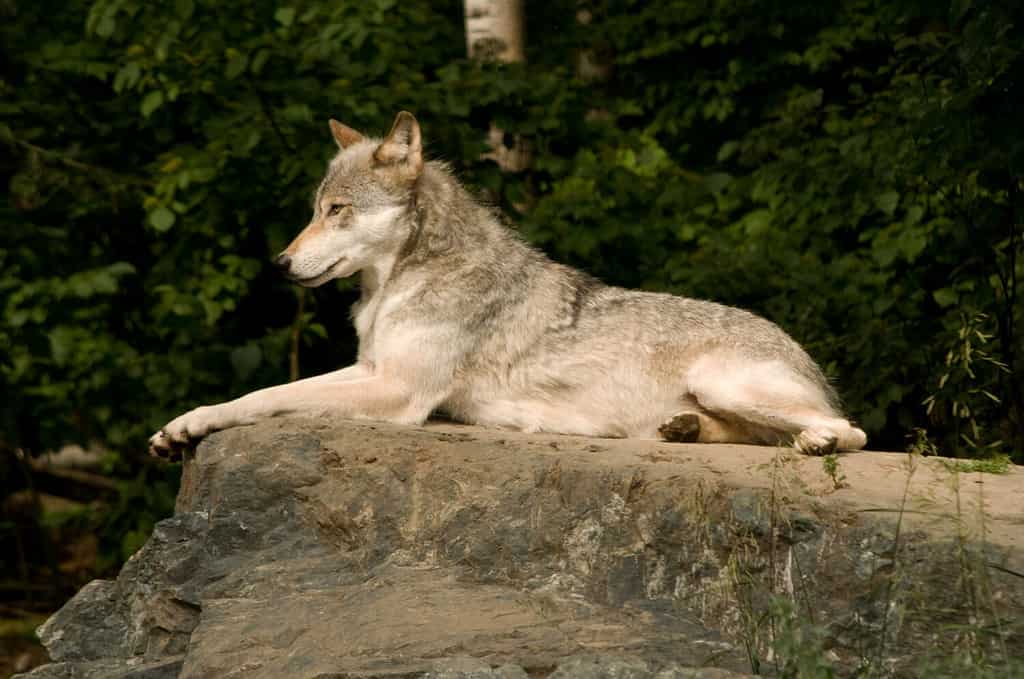
The Great Plains wolf is considered extinct as a distinct subspecies.
©Carol Heesen/Shutterstock.com
Although it once roamed across North America, the Great Plains wolf is believed to have been extinct since 1926. However, a very small number of wolves are thought to have escaped persecution and poisoning. Their descendants may now inhabit the Great Lakes region of the United States and Canada, specifically in northern Michigan, Minnesota, and Wisconsin. Researchers suggest that hybridization between Great Plains wolves and Eastern gray wolves (Canis lupus lycaon) took place prior to recovery efforts. So, debates around the genetics of wolves in this region and their conservation status are ongoing.
The wolves inhabiting the Great Lakes region today grow 4.5 to 6.5 feet long and average around 2.5 feet at the shoulder. Males typically weigh around 110 pounds, with some larger individuals reportedly weighing around 130 pounds. Their coat color can vary from white and black to multi-colored, but most wolves have light-colored fur. These wolves have a very adaptable diet depending on their location. In the western parts of their range, they mainly hunt bison and elk. Further north, however, they prey on white-tailed deer, moose, and caribou.
4. Northern Rocky Mountain Wolf (Canis lupus irremotus)
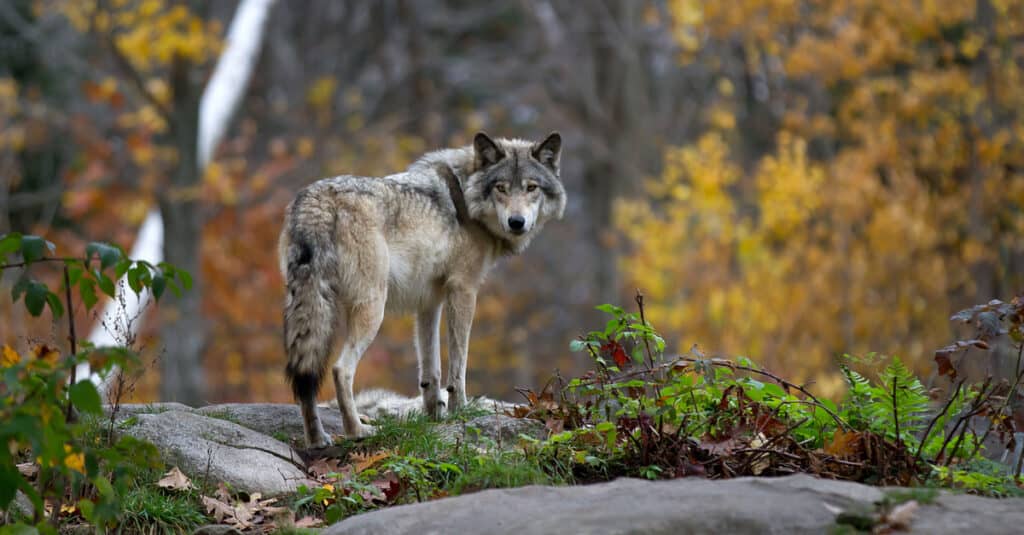
Northern Rocky Mountain wolves face threats from hunters and the livestock industry.
©Jim Cumming/Shutterstock.com
The Northern Rocky Mountain wolf can be found in Wyoming, Montana, Idaho, and Alberta, Canada. These wolves weigh between 70 and 135 pounds. They generally reach up to 6 feet in length and about 2.7 feet tall at the shoulders. They are medium-to-large-sized wolves, said to be larger than Great Plains wolves but smaller than northwestern wolves.
Their coat is described as paler than that of other gray wolves, with a higher proportion of white fur to black fur. They also have flatter, narrower frontal regions when compared to other gray wolves. Their prey includes elk, moose, bison, and mule deer, but they will also prey on smaller animals such as beavers if the opportunity arises. Northern Rocky Mountain wolves face threats from hunters and the livestock industry. The Endangered Species Act (ESA) protects all gray wolves in the contiguous U.S., except for the Northern Rocky Mountain population. Recently, a federal judge ruled that the U.S. Fish & Wildlife Service must reconsider their decision to refuse these wolves the protection of the ESA.
3. Yukon Wolf (Canis lupus pambasileus)
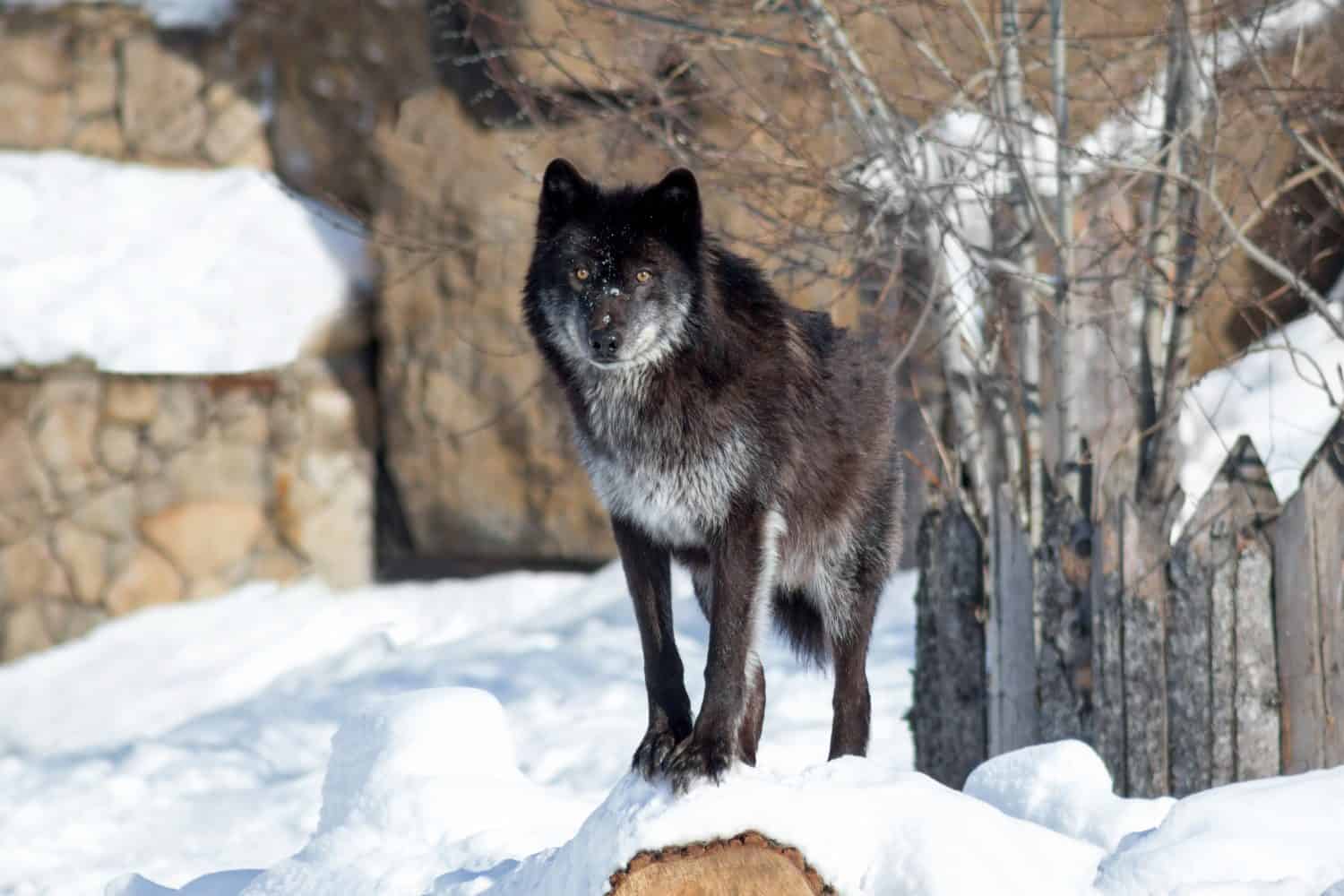
The Yukon wolf is also called the interior Alaskan wolf.
©Tikhomirov Sergey/Shutterstock.com
The Yukon wolf, also known as the interior Alaskan wolf, is a large subspecies of the gray wolf found in the interior of Alaska, the Yukon, and parts of Canada’s Northwest Territories and British Columbia. Known for their impressive size, Yukon wolves usually weigh between 85 and 115 pounds, but some individuals can weigh as much as 145 pounds or more. Yukon wolves generally stand up to 2.8 feet tall and measure 4.5 to 6.5 feet long.
They often have dark coats, although their coats can also be white, gray, grizzled, or tawny gray. They primarily prey on moose, caribou, and Dall sheep in their boreal forest habitats. However, their diet also includes smaller animals, like ground squirrels and hares. Historically, these impressive wolves faced many severe threats, including being hunted for their thick fur and being poisoned in the mid-twentieth century due to public stigma. Fortunately, hunting is regulated today, and conservation efforts are working to protect the wolves.
2. Eurasian Wolf (Canis lupus lupus)
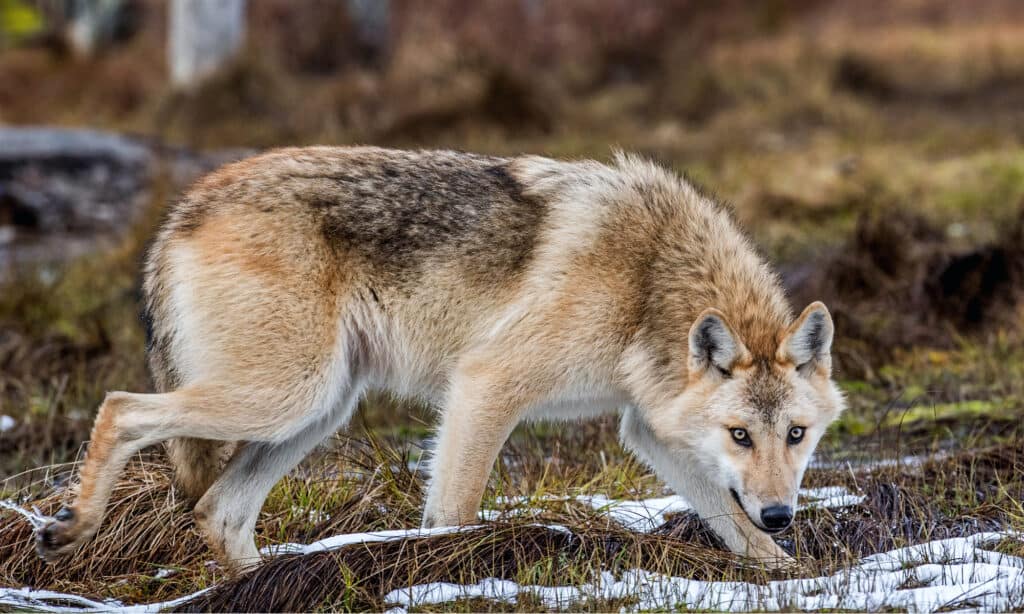
Poland banned wolf hunting in the 1990s, helping the country’s Eurasian wolf population to recover.
©Sergey Uryadnikov/Shutterstock.com
The Eurasian wolf, also known as the common wolf or Carpathian wolf, is a subspecies of the gray wolf in Europe. It is the largest gray wolf subspecies in the Old World. Their size primarily depends on where they live, with wolves in Russia and Scandinavia measuring larger than those in continental Europe. These large wolves typically grow up to 6 feet long, stand up to 2.8 feet tall, and weigh around 86-110 pounds. However, some impressive individuals have been documented to reach around 175 pounds.
Eurasian wolves have short, coarse fur with tawny hues that help them blend into their scrubland and woodland habitats. They once lived across much of Europe, but centuries of human persecution and hunting led to the extinction of these wolves in much of their former range, including Britain and most of Western Europe. However, some wolves survived in Bulgaria, Poland, and Italy, and have begun to expand their territories into parts of Germany, Denmark, the Netherlands, and France. The diet of Eurasian wolves also depends largely on where they live. Some hunt prey like deer, wild goats, moose, and wild boar, but in areas lacking abundant natural prey, the wolves must scavenge from the garbage or prey on livestock.
1. Northwestern Wolf (Canis lupus occidentalis)
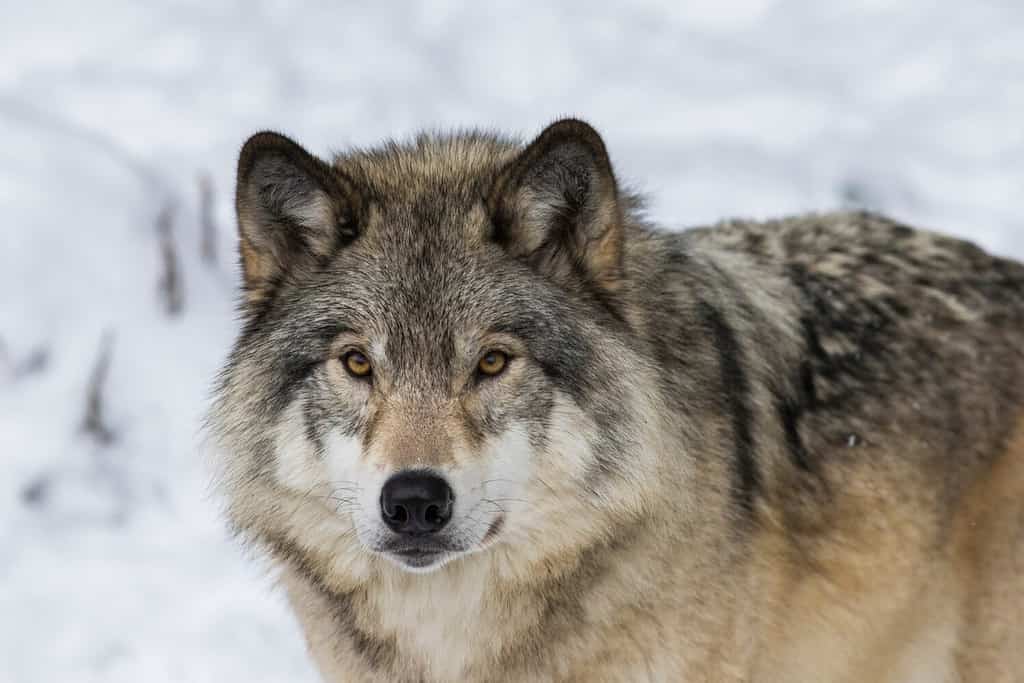
Northwestern wolves have an incredibly strong bite force that can crack a moose’s femur bone.
©Mircea Costina/Shutterstock.com
The northwestern wolf, also known as the Mackenzie Valley wolf, Rocky Mountain wolf, or Alaskan wolf, is widely cited as the largest subspecies of gray wolves. It lives in Canada, Alaska, and the northwestern U.S. Northwestern wolves are massive animals, standing 3 feet tall, measuring up to 7 feet long, and typically weighing up to 150 pounds, though some exceptional individuals can reach 175 pounds. Their physical traits are well-suited to their cold environment. They have short ears to minimize heat loss and wide feet like snowshoes to help them move swiftly over snow.
Northwestern wolves may be many different colors, depending on their region. In the Mackenzie Valley, they are often white, gray, or black, while in northern Canada, they are generally black. A single litter can even contain pups with different coat colors. They are social predators and typically hunt together in packs to take down large prey such as moose, bison, caribou, elk, mountain goats, and deer. They also supplement their diet with smaller animals, like snowshoe hares, lemmings, beavers, and ground squirrels.