
Quick Take
- Punishing your dog for chewing can actually make the problem worse, and understanding why reveals a lot about how dogs process stress. Why punishment backfires →
- There's a right and wrong way to take a forbidden item from your dog's mouth. The wrong way turns the whole situation into a game. Safe redirection techniques →
- One of the most effective solutions involves giving your dog more things to destroy, not fewer. Let them shred safely →
- If your dog only chews when you're gone, the fix may have nothing to do with toys or training commands. Tackling anxiety-driven chewing →
Chewing is a natural canine behavior driven by boredom, teething, or anxiety. Although some chewing behavior is expected, it becomes a household issue when unmet physical or emotional needs lead dogs to target inappropriate items to chew. Eliminating destructive chewing requires proper supervision, environmental proofing, and redirection to safe toys. Continue reading to discover 13 tried-and-true solutions.
Provide Your Dog With Durable Toys
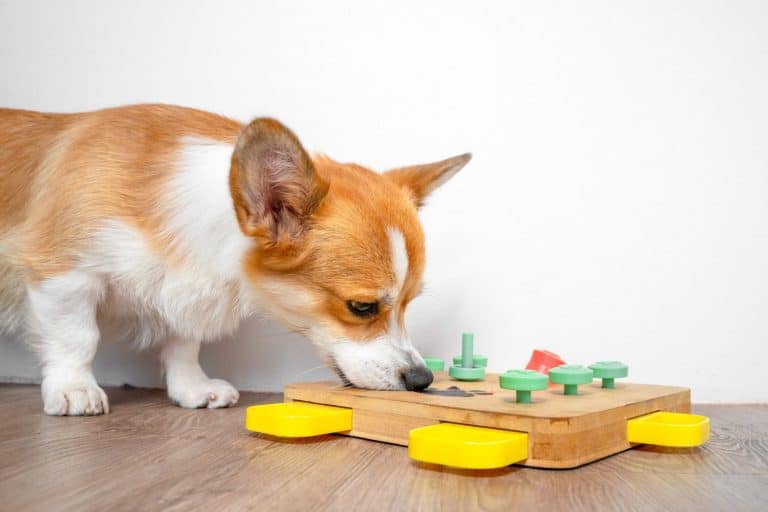
Providing durable chew toys is a highly effective way to redirect a dog’s natural chewing urge away from your household items. Investing in heavy-duty rubber toys, thick nylon bones, or stuffable puzzle feeders gives your dog a safe, satisfying outlet for their jaws while protecting your furniture and shoes.

Dogs need to chew, so it’s important to provide them with chew toys.
©Valeriya Dzyuba/Shutterstock.com
To keep your dog interested and prevent them from returning to your belongings, it is best to rotate through a few different toys each week, so the options always feel new and exciting.
Give Your Dog Appropriate Items to Shred
Allowing your pup to shred safe, designated items satisfies their natural predatory instincts and provides excellent mental stimulation. Using low-cost materials like cardboard boxes, paper towel rolls, or packing paper lets them rip and tear safely without ruining your household belongings.

Allowing your dog to shred appropriate items is another way to keep them from tearing apart your things.
©Carolyn Dietrich/Shutterstock.com
Ensure They’re Getting Enough Exercise and Mental Enrichment
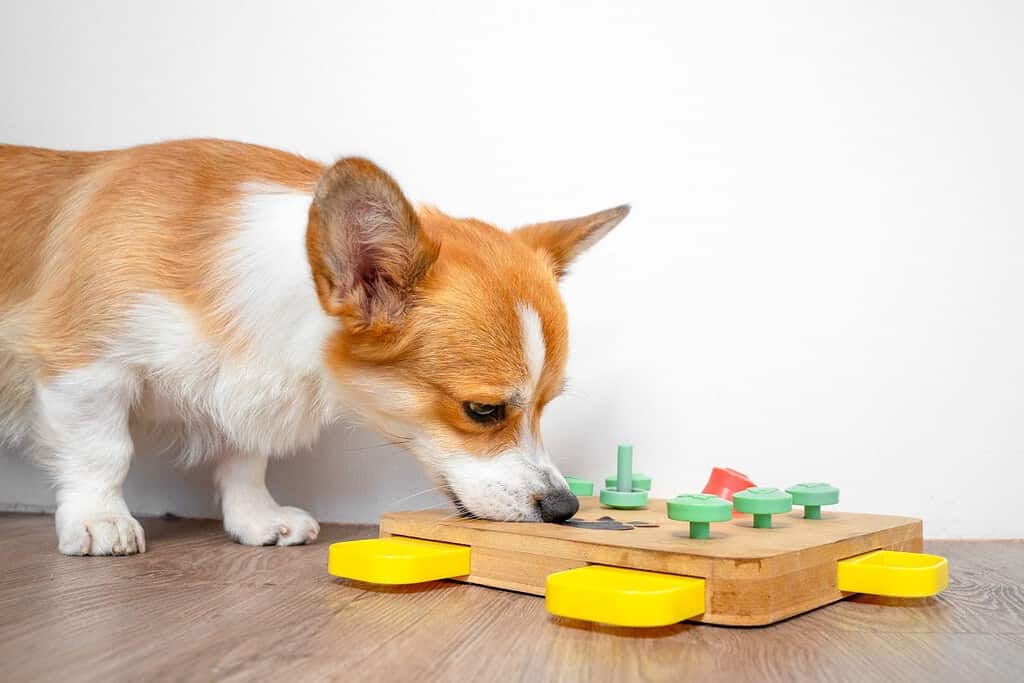
Many dogs who chew inappropriately are bored due to a lack of mental stimulation.
©Masarik/Shutterstock.com
A bored dog is more likely to engage in problem behaviors like destructive chewing. They aren’t trying to get back at you for skipping their morning walk; they’re simply looking for a way to burn off that energy.
Make sure you’re providing enough exercise and also plenty of mental enrichment through training, games, and puzzle toys.
Address Separation or Isolation Anxiety

Anxiety in dogs often causes misbehavior.
©Zontica/Shutterstock.com
If your dog tends to destroy things when you aren’t around, they may have separation or isolation anxiety. Work with your veterinarian and a force-free dog trainer or behaviorist to resolve the issue.
Dog-Proof Your Home
While your dog learns what they can and can’t chew, it’s your job to make sure inappropriate items are kept out of reach. Keep your belongings off the ground, secure any garbage cans so they can’t be dug through, and put away anything that could hurt your dog, such as cleaning supplies.

Keep things your dog likes to chew put away so they can’t get to them.
©Prostock-studio/Shutterstock.com
Provide Constant Supervision
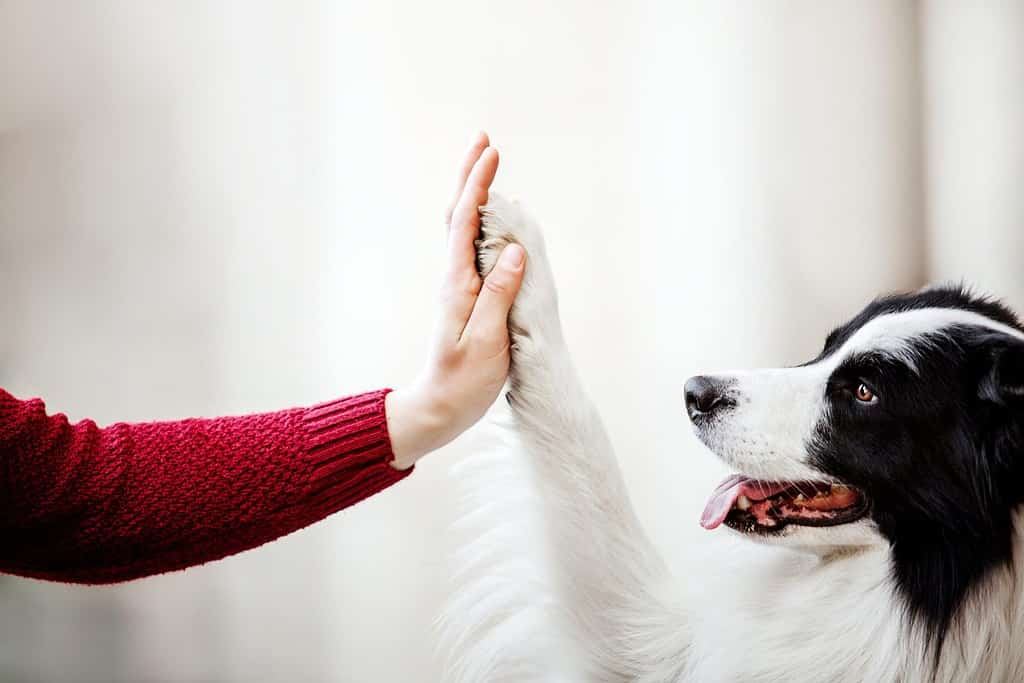
Keep an eye on your dog and stop destructive chewing before it happens.
©OlgaOvcharenko/Shutterstock.com
Since not everything can be removed from your dog’s reach, such as the couch or your walls, which some dogs are happy to gnaw on, you’ll also need to provide constant supervision until your dog learns what’s off-limits.
Crate Train Your Dog
If you can’t supervise your dog, consider crate training. Crate training takes time and doesn’t simply mean putting your dog in the crate and letting them cry it out.

A crate can keep your dog safe from choking hazards and intestinal blockages due to destructive chewing.
©iStock.com/Christine McCann
Instead, make the crate a fun space by playing crate games, feeding them inside, and never using it as a punishment tool.
Keep Your Dog in a Dog-Proofed Room or Playpen While You’re Away
If you don’t like the idea of keeping your dog crated, you can also put them in a dog-proofed room or playpen when you can’t supervise them. This is ideal as it provides them with more space to move and play, while still keeping them and your belongings safe from harm.
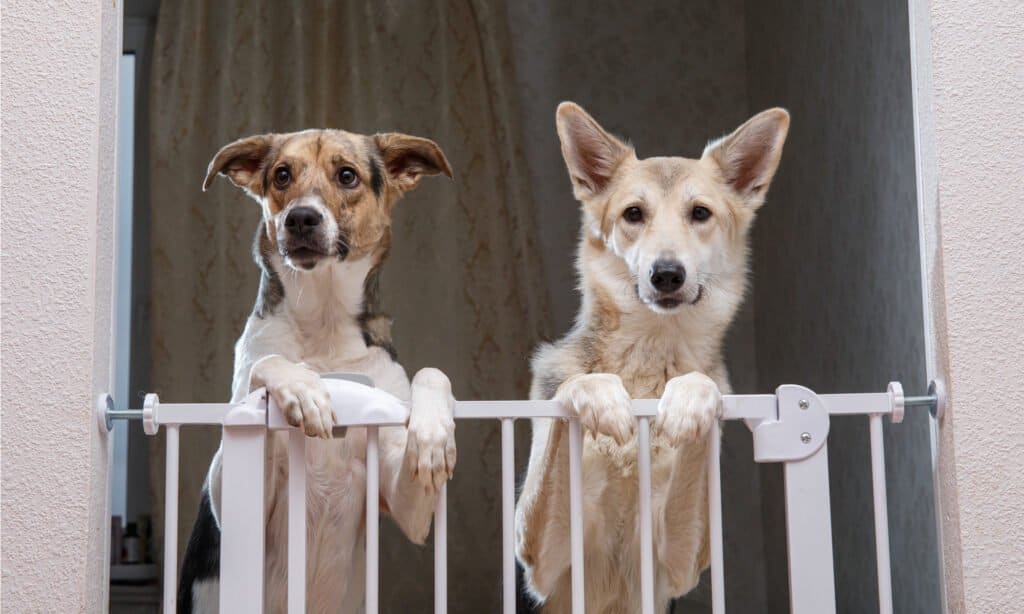
Baby or pet gates can be used to safely block off unsafe areas.
©Alex Zotov/Shutterstock.com
Redirect Your Dog to Toys
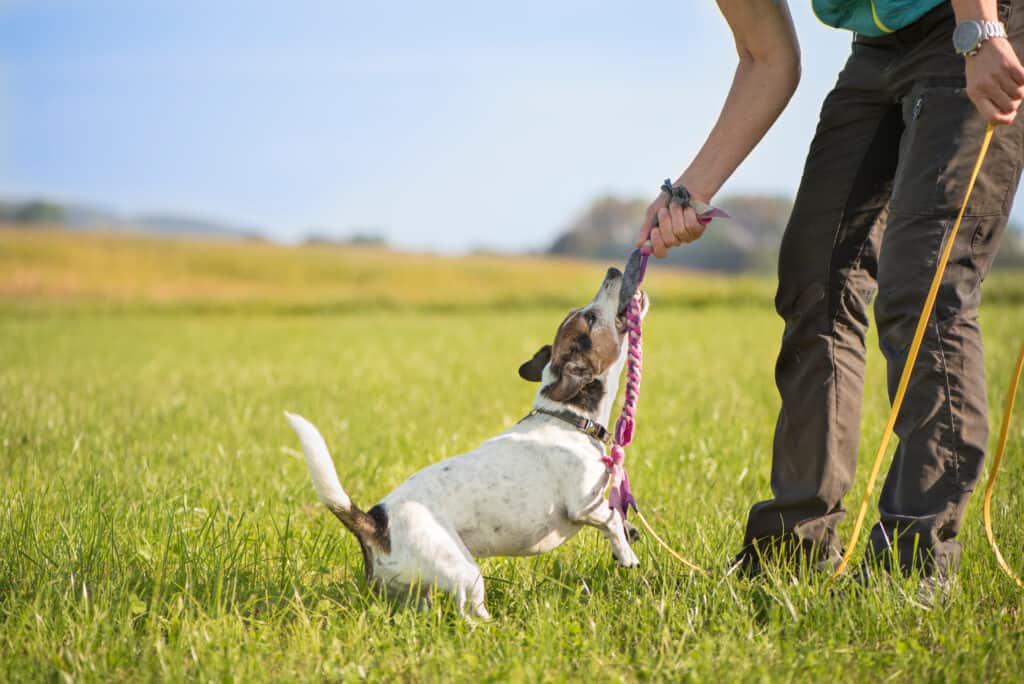
Keep toys on hand to redirect destructive chewing when needed.
©thka/Shutterstock.com
Don’t chase your dog to retrieve an item from them, as most dogs will see this as a game. You also don’t want to pry their mouth open and force the item from them, as this can lead to a bite.
Teach “Leave It,” “Drop It,” and “Trade”
Whenever your dog chews something they shouldn’t, redirect them to their chew toys or a treat. You can also teach them to trade an item they shouldn’t have for a higher-value treat or toy.

Cues like “drop it” are essential for all dogs but especially destructive chewers.
©Julia Zavalishina/Shutterstock.com
Training “leave it,” “drop it,” and “trade” commands helps to keep your dog safe when they pick up things they shouldn’t.
Use Deterrent Sprays
Some items can be sprayed with deterrent sprays that taste bad when your dog puts their mouth on them. These are effective for many dogs, though some may ignore the taste or not be bothered by it.
Never Punish Your Dog for Chewing

Punishing dogs for chewing is generally ineffective and can worsen anxiety or lead to other behavioral problems.
©Jaromir Chalabala/Shutterstock.com
Punishments tend to be ineffective for dogs, especially when you’re punishing natural behaviors like chewing. Your dog may not see the difference between chewing your belongings and their toys–so, they don’t even know what they’re being punished for.
Punishments can also lead to or worsen anxiety. Since chewing is a great stress reliever for dogs, they may chew more as a result of being punished.
Instead of punishments, try force-free training techniques like those outlined above.