
Quick Take
- When cats bite, scratch, or freeze during play, most owners read those signals completely backwards, and that misreading has real consequences. See the real consequences →
- Researchers watched how thousands of people reacted to videos of distressed cats, and what they found reveals something unsettling about how we see ourselves as pet owners. Explore the research findings →
- A cat that stays still and doesn't fight back is not necessarily giving you the green light. It may actually be doing the opposite. Understand freezing behavior →
- There's a specific type of "play" that conditions cats to see you as a threat, and most people do it without thinking. Spot harmful play habits →
Understanding the Unseen Side of Playing With Cats
Videos of people “playing” with their cats are everywhere online. But a closer look reveals that many of those cats don’t seem to be enjoying themselves at all. For people adept at reading feline body language, it’s immediately obvious, what looks like fun for humans can actually be stressful or even threatening for the animal.
Recent research has highlighted a widespread misunderstanding. While many pet owners believe they’re engaging their cats in play, they may actually be annoying or stressing them. Movements considered playful by humans, such as quick gestures, chasing, or rough handling, can often be perceived as threatening by cats.
What Online Reactions Reveal About Cat-Human Interactions
To investigate why so many misunderstand their cats, researchers analyzed over 1,100 comments on social media videos showcasing what appeared to be dangerous “games” between people and cats. The videos, selected from sites like YouTube, TikTok, Instagram, and Facebook, all showed clear signs of feline distress: hissing, biting, attempts to escape, visible injuries to humans, and in some instances, actual violence against the cats.
Even with these warning signs, the vast majority of viewers, between 75% and 93%, posted positive reactions. People from both cat-owning and non-owning backgrounds often described stressful or even aggressive behaviors as cute or funny. Many normalized rough handling and interpreted clear signs of stress as excitement or affection.
The Power of Belief and Misinterpretation
Social beliefs played a significant role in how viewers interpreted the videos. Many comments reflected pre-existing ideas about cats and the human-animal relationship, coloring how people judged what they saw. For instance, some dismissed obvious distress as harmless because they assumed the cat would simply leave or retaliate more strongly if truly uncomfortable. Others minimized biting and scratching, citing similar behaviors in their own pets as evidence of normal playfulness.
Cognitive dissonance, a mental discomfort that arises from holding conflicting beliefs, was evident in many responses. When faced with evidence that contradicted their personal views or image of themselves as good pet owners, commenters often relied on denial or defensiveness. Comparisons to how some excuse troubling behavior in other relationships weren’t hard to find.
There was also a common assumption that domesticated or bonded cats could easily differentiate between play and violence, with some even suggesting that cats “knew” when to hold back. This belief persisted even in cases where evidence to the contrary was visible, such as a video featuring a baby who’d been bitten, yet viewers continued to insist the cat was being gentle.
The Risks of Misreading and Overstimulating Cats
Experts emphasize that while cats can sometimes moderate their behavior during actual play, they are frequently overstimulated, which can escalate to defensive bites or scratches. Signs like ears turned back, lashing tails, aggressive attacks, or growling are often misread as enthusiasm for rough play, when they’re in fact warning signals of distress.
It’s important to note that a cat remaining still or refraining from escalation isn’t a sign of enjoyment. Sometimes, cats engage in a “freeze” response, staying put to minimize risk to themselves or avoid worsening the situation. Unwanted or overwhelming play, and even persistent tolerance by a trusted human, can erode the bond of trust over time.
Another concern is that many viewers actively encouraged others to keep pursuing these stressful interactions, convinced that persistence would build a closer relationship with the cat. Some saw human injuries as proof of devotion or badges of honor, interpreting “love bites” as affection, when in fact these are typically a polite feline signal that they’ve had enough.
Moving Toward Genuine Play
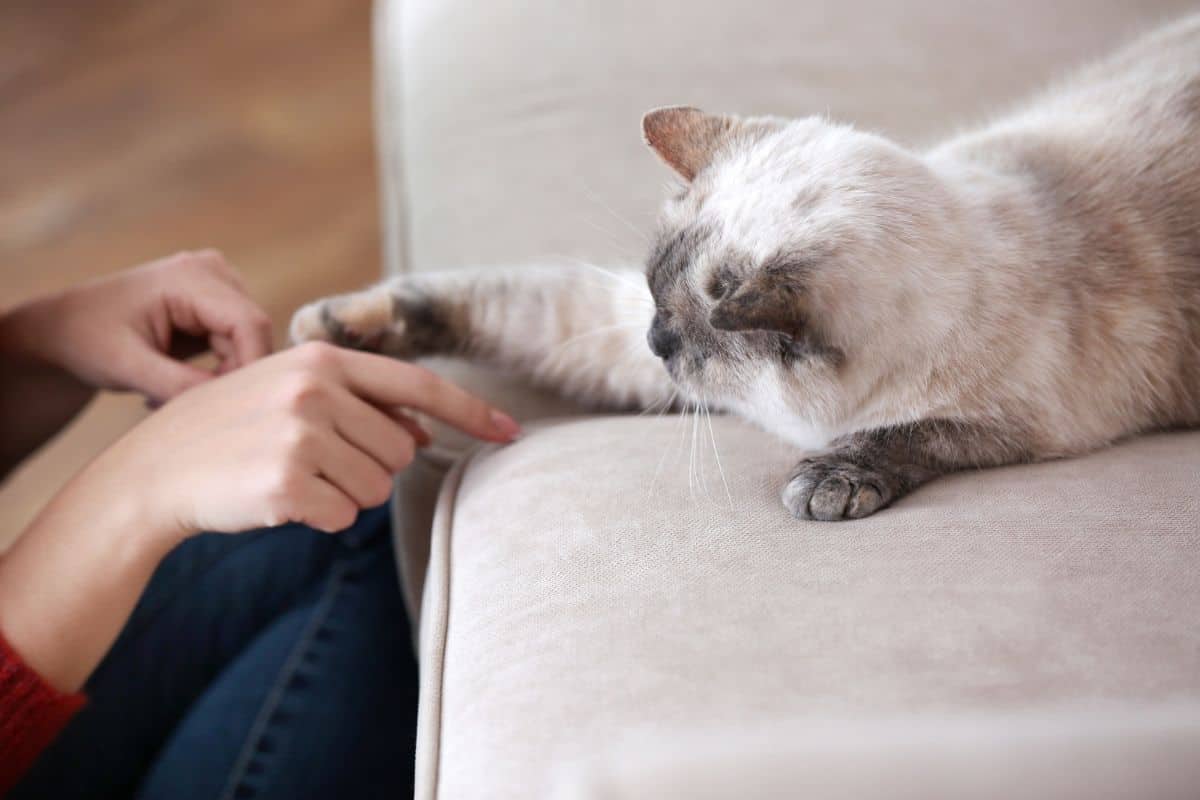
Researchers advise letting your cat set the pace. Let your cat choose whether to engage, begin gently, always offer escape routes, and watch carefully for subtle cues that they’ve had enough. Avoid rough play with your hands. Such games may condition cats to see hands as toys, often resulting in injury and heightened stress.
Alternative toys like wand-style items allow for interactive play at a safe distance, protecting both you and your cat from scratches or bites and lessening the risk of accidental stress. Staying curious about your cat’s reactions is critical, many people miss or misread signals not out of bad intent, but because acknowledgment would contradict their sense of themselves or their beliefs about animals. Science shows that curiosity can help us overcome these preconceptions.
The complex relationship between humans and cats underscores an essential truth: truly understanding another species means questioning our own assumptions, and sometimes, the best connection comes from letting animals show us, on their terms, how they want to play.