
The dragon fruit cactus is the perfect choice for you if you want to grow your very own fruit that is genuinely otherworldly. This stunning plant only blooms at night and has enormous, fragrant blossoms that give it some additional aesthetic appeal. The dragon fruit cactus is native to Mexico, Central America, and South America. It is actually one of several different fruits that can be produced from cacti. There are also a few different species of this cactus as well.
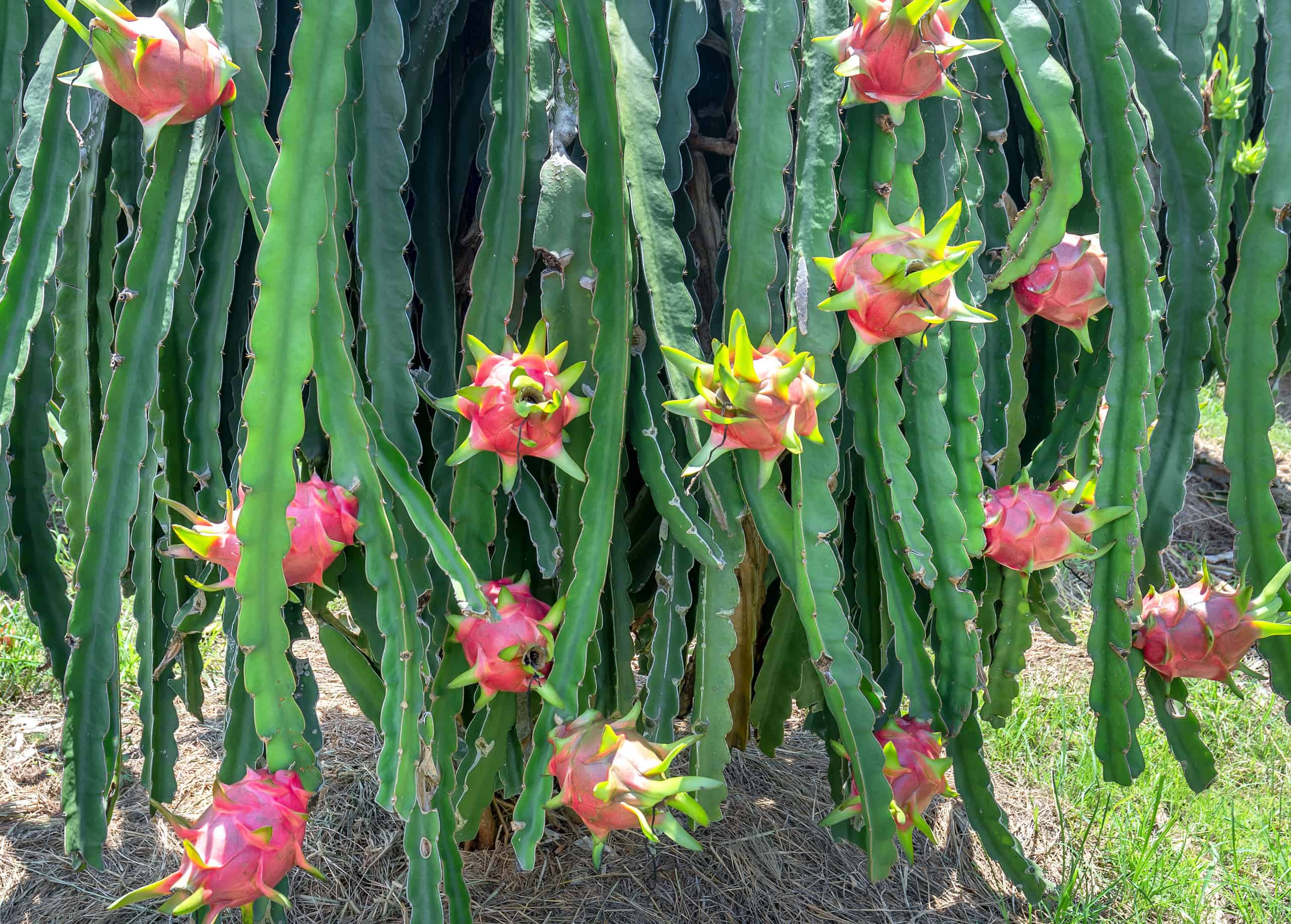
Dragon fruit is sweet on the inside. It has bright white flesh and tiny black seeds. The fruit itself is distinguished by its vivid pink or yellow leathery skin. If you grow this species of cactus, you’ll not only be able to harvest this special fruit, but these perennial cacti also provide decorative value to your house or garden.
Dragon fruit cacti are best planted in the spring and can easily reach a height of 20 feet. They produce aerial roots that enable them to cling to surfaces, giving them their creeping, climbing habit.
In this guide, we’ll take a look at some interesting facts about the dragon fruit cactus, as well as how you can start growing your very own plants at home.
What is a Dragon Fruit Cactus?
The dragon fruit cactus, also known as the pitaya or pitahaya fruit cactus, refers to a few different species belonging to the Hylocereus (or Selenicereus), Cereus, and Acanthocereus genera of plants. In general, dragon fruit or pitaya refers to 15 different species which mainly boast fruit with red or yellow peels and white or red pulp. In general, the most common species that produce fruit sold and grown in the United States is Selenicereus undatus, the white-fleshed dragon fruit.
Anatomy of the Dragon Fruit Cactus
The tropical, perennial, epiphytic, and vine-like dragon fruit cactus is a member of the Cactaceae family of cacti. This climbing cactus is mostly reproduced by propagation, but seeds can also be utilized in the wild. It has triangular, green stems that can reach a length of 20 feet and a width of 10 feet. The palm-like trunk rises to a tangled mass of vines that almost resembles the fronds of a palm tree.
The huge, bell-shaped, white blooms of this cactus add a beautiful splash of color to the plant. Both the beauty and fragrance of these wonderful blossoms are exquisite. While the blooms are equipped with both male and female reproductive parts, certain cultivars and species need cross-pollination in order to produce fruit. Because they only open for one night at a time, the plant is also sometimes referred to as the moonflower.
The fruit of the dragon fruit cactus is the true treasure of this plant. The fruit is delightfully unique in every way. Depending on the cultivar and the surroundings, the pitahaya plant might go through four to six fruiting cycles yearly. This cactus stands out in the environment with its stunning neon-pink fruits and elliptical form.
Uses of the Dragon Fruit Cactus
Because of its seeds, which are black and gritty, the texture of the dragon fruit is occasionally compared to that of the kiwi fruit. Linoleic acid and linolenic acid are found in the seed oil of this plant. Juices and alcoholic beverages can be colored and flavored using dragon fruit. You can also consume the blooms or soak them in tea. In general, the dragon fruit cactus is mainly used as a source of food. However, it can also be grown as a decorative cactus in desert gardens.
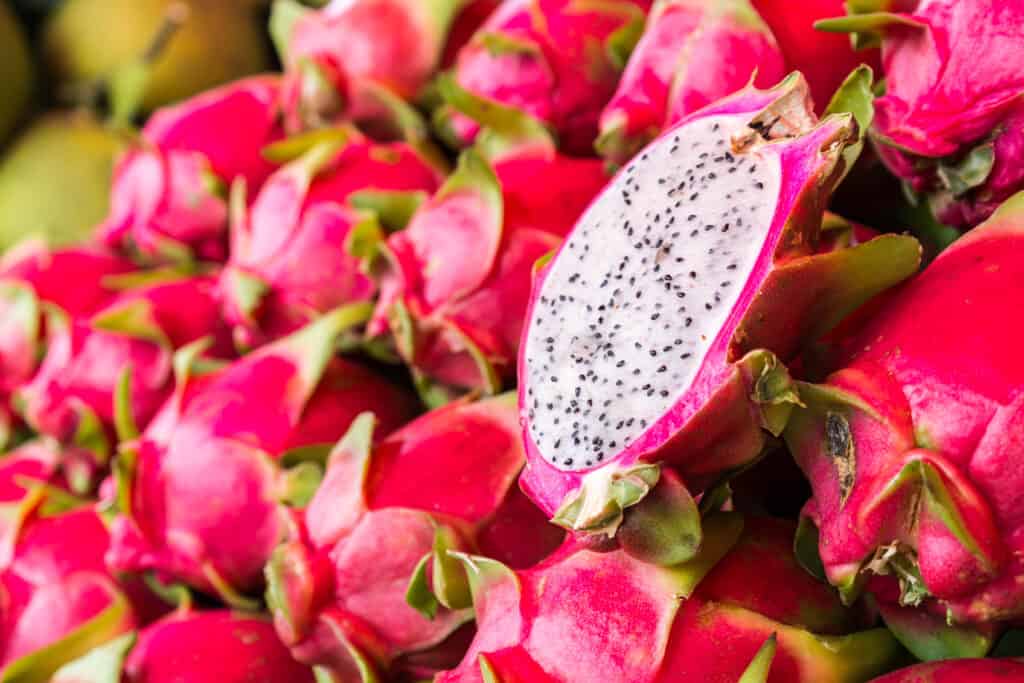
Dragon fruit (pictured) is commercially grown around the world.
©Pitchayarat Chootai/Shutterstock.com
Dragon Fruit Cactus Native Environment
Southern Mexico, as well as the Pacific shores of Guatemala, Costa Rica, and El Salvador, are home to all species of dragon fruit. Pitaya is grown all throughout the tropical and subtropical parts of the world, including East Asia, South Asia, Southeast Asia, the United States, the Caribbean, and Australia. It is commercially grown in all of the above regions as a source of food.
Dragon Fruit Cactus Varieties and Subspecies
Over 15 different species of dragon fruit cacti exist, each with distinctive fruit and shell colors. There are also several hybrid types, such as the Tricia dragon fruit cactus or the Edgar’s Baby dragon fruit cactus. As mentioned earlier, Selenicereus undatus is the most common type of dragon fruit cactus that you might find at local nurseries or at grocery stores.
One particularly elusive species is Hylocereus megalanthus. Under a yellow, prickly shell, this dragon fruit develops delicious white fruit flesh. There’s also Hylocereus costaricensis; the fruit pulp and shell of this species can be a rich blood-red or deep pink color.
Another unusual species is called Hylocereus guatemalensis, which has vibrant purple fruit pulp and a shell that is deep pink with greenish fins. Fruit from the Hylocereus polyrhizus features a green prickly exterior and a vivid scarlet pulp. Fruits that Hylocereus stenopterus produces might be red, yellow, or orange.
Colors of the Dragon Fruit Cactus
This tree would make a wonderful focal point for a tropical or oriental garden due to its vibrant colors. Its stems are bright green. Its fruit can either be yellow, pink, or reddish-purple in hue, though it might be green when first developing. The flowers of the dragon fruit cactus are white.
When Will My Dragon Fruit Cactus Bloom?
Early summer to mid-autumn is the normal blooming period for this type of cactus. The blossoms on the night-blooming dragon fruit cactus only stay for one night. Go outside in the dead of the night with a flashlight to view the magnificent spectacle, or go to your garden very early in the morning to catch a glimpse.
Pitaya flowers will often fail to bloom. However, this is sometimes only due to the plant’s immaturity. The majority of dragon fruit plants take at least a few years to blossom, which is common with most cactus species.
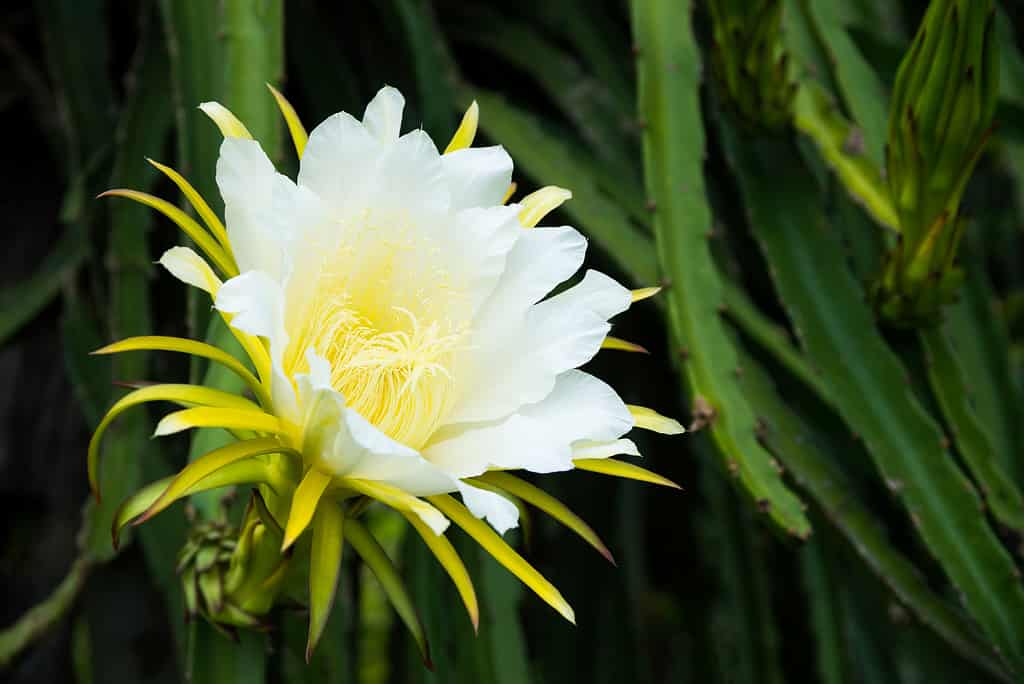
The dragon fruit cactus flower (pictured) only blooms at night.
©iStock.com/krungchingpixs
How to Grow a Dragon Fruit Cactus
You’ll need to plant your cactus in a hot, sunny area and have plenty of garden space if you want to successfully grow your own dragon fruit plant. This species is a big cactus that has a climbing habit and lengthy stems. Ensure sure it is planted sufficiently distant from your house, electrical wires, and any additional potentially dangerous structures. A sturdy trellis is typically required to support it as well. We recommend getting one early on to support the cactus as it grows.
Repotting and Transplanting a Dragon Fruit Cactus
You can repot your dragon fruit cactus the same way you repot other species of cacti. Choose a pot with a diameter that is several inches wider than the current pot. It is advisable to use a pot with drainage holes to avoid overwatering the roots. Choose a potting mix that drains well, ideally one designed for succulents and cacti. Make sure you don’t overwater the plant when repotting. This can cause issues for the plant. Try not to repot your cactus more than once every few years. They do not tolerate being moved very well.
Pruning a Dragon Fruit Cactus
Your dragon fruit cactus will be more susceptible to fungus and insect infestation if you don’t prune it. Just as well, a lack of pruning may cause the tangled middle stems to get insufficient light. This may have an effect on fruit production. In addition to promoting the profusion of flowers, regular trimming keeps the plant from being too heavy for the trellis it is using for support.
Prepare to periodically prune back any stems that are too long, broken, entangled, or dead. Do this maybe twice or three times a year. If you’re fortunate or have a younger plant, you might only need to prune once a year. This can be done after the fruit has been harvested.
Water Requirements for a Dragon Fruit Cactus
Do not fall into the trap of believing that just because this plant is a cactus, you can go without watering it. While dragon fruit cacti can withstand some drought, it’s important to water them regularly from the time they begin to produce blooms until you harvest your crop of dragon fruit if you want a nice fruit crop. That being said, overwatering also increases the risk of fungal diseases and root rot. Give the plant’s soil plenty of time to dry over the winter and into the first few weeks of spring to encourage abundant blooms.
Sunlight Requirements for a Dragon Fruit Cactus
Although dragon fruit trees thrive in warm climates and need to be planted in direct sunshine, excessive sun exposure in dry or extremely hot climates can harm the stems. It’s recommended to put your cactus in a location with some partial shade if temperatures in your area are usually close to 100 degrees F, which is common in their native habitat. It’s equally crucial to be mindful that too much shade might lead to less plentiful fruit production and a lower-than-expected quality of the crops it produces.

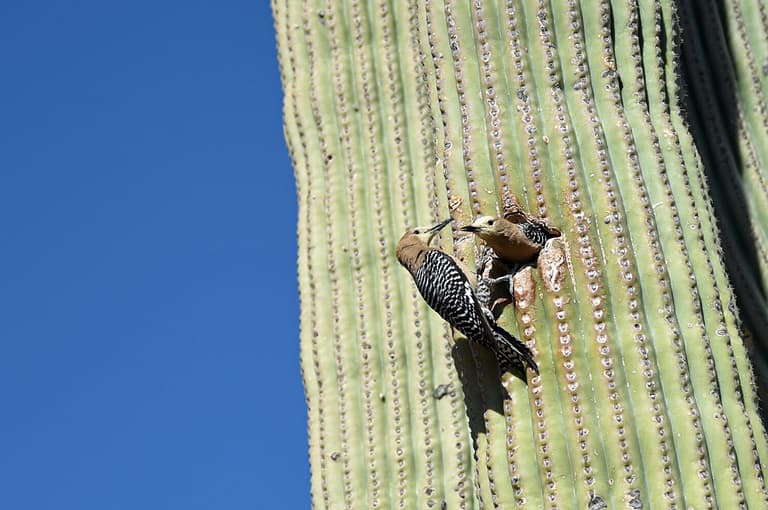
Dragon fruit cacti are native to Mexico and South America, but they can also be grown in desert regions like Arizona or the Sonoran Desert (pictured).
©iStock.com/Eric Mischke
Soil and Fertilizer Requirements for a Dragon Fruit Cactus
When it comes to the type of soil they grow in or the pH level, dragon fruit cacti are not overly picky. Their soil’s moisture content, organic matter content, and drainage are crucial factors to consider. Experts on cacti advise mulching around the plant’s base to help the soil retain moisture, especially in dry areas.
Being somewhat hungry plants, dragon fruit cacti should be fed every few months throughout their first year with a balanced 20-20-20 fertilizer. After the plants are established, they should survive with just a few fertilizer applications per year. Plan to add compost or other organic matter to the soil a few times a year as well.
Temperature and Humidity Requirements for a Dragon Fruit Cactus
Dragon fruit cacti can grow outdoors in USDA hardiness zones 10 through 12. As such, not all gardens are ideal for dragon fruit trees. They won’t thrive in locations that have cold weather because they are indigenous to tropical and desert climates. This is especially so if the frost lasts for an extended period of time. For dragon fruit cacti, temperatures between 65 degrees F to 80 degrees F at their peak is ideal.
Pests to Watch Out For
Wild creatures may be drawn to your dragon fruit harvest, depending on where you reside. You might need to take precautions to keep birds, raccoons, rodents, and other animals away from your cactus and its fruit. Ants, mealybugs, spider mites, and thrips are some insects that are also drawn to dragon fruit cacti.
You can easily treat insect infestations by using an organic pesticide or a swab with rubbing alcohol. If your plant has been ravaged by any pest, you might want to throw it out and start fresh to avoid the infestation spreading to your other plants.
Problems and Diseases to Watch Out For
Fruit canker, stem canker, and rot can pose problems for your dragon fruit cactus. If you notice reddish brown, yellowish, or even white patches and lesions on the stems and blades of your plant, it may have stem rot or canker.
Unfortunately, it might be challenging to control rot and canker on a dragon fruit plant. After removing the harmed, diseased sections, treat the plant with a fungicide designed for this kind of plant. Make sure your cactus receives the proper amount of sunlight, moisture, and airflow to prevent these kinds of problems in the future.
Perhaps you are not seeing any fruit on your cactus after several years. This typically implies the plant is not getting enough sun, depending on whether you grew it from a seed or a cutting. Try moving it to a new spot to see if it starts fruiting.
This cactus must blossom from early summer through early to mid-fall in order to bear fruit. The plant may be too chilly or is not receiving enough sunshine if you don’t see any blossoms or if the flowers that have developed aren’t blossoming. Try placing the plant in a greenhouse or an area that receives more light. Also, if you don’t cut the dead branches, your cactus may not produce fruitful flowers since it will be using energy to hold onto the dead weight. Many cacti don’t do well with pruning, but dragon fruit cacti really do need it!
Is It Hard to Grow a Dragon Fruit Cactus?
Not at all! Dragon fruit cacti are pretty low maintenance. As long as you live in the right hardiness zone, don’t get too much rain, and can keep your cactus somewhere it can be supported and have ample space to grow, you shouldn’t have any problems. Like most cacti, these plants are slow-growing. If you’re impatient, you might want to look for something else that fruits quickly. This cactus can easily live for 20 years, so keep that responsibility in mind. This plant is considered invasive in portions of Florida, so keep that in mind as well if you live in that region of the United States!
What’s not to love about the dragon fruit cactus? This group of cacti species is not only visually beautiful, but they are great sources of food. And with such minimal care requirements, it is a great starter cactus for aspiring plant parents. As long as you live in the right hardiness zones, you can start growing the dragon fruit cactus today!