
Interestingly enough, the Norfolk Island pine tree is not a pine tree! It is an evergreen conifer that grows in subtropical environments. Norfolk Island pine trees are treated as living Christmas trees in some parts of the world. They can also be grown as Bonsai trees. In the wild, their tall stature may make them appear intimidating, but they only reach 3-8 feet when planted indoors. This makes the Norfolk Island pine tree a perfect candidate for Bonsai tree art.
| Botanical Name | Araucaria heterophylla |
| Common Types | No varieties or cultivars are available. |
| Sunlight | Full sun for 4-6 hours of direct sunlight a day. |
| Soil | It prefers acidic soil but can be grown in many different soil conditions. Any specialty Bonsai tree soil mixture should work just fine. |
| Water | Needs more water in the summer than in the winter. Somewhat tolerant of drought but still needs regular, even watering. |
| For Beginners? | Yes! Caring for one of these trees is not too difficult. One of the only real challenges comes with pruning. Letting the tree grow naturally and pruning it very little is better. |
| Indoors or Outdoors? | Indoors throughout the year, unless outside conditions are warm, temperate, and humid. |
| Pairs Well With? | Moss, rocks, and other natural ornamentation. |
Common Types of Norfolk Island Pine Bonsai Trees
Norfolk Island pine trees are known for their unique appearance. The branches on these trees are widely spaced, sometimes giving the appearance of being evenly spaced. They create a triangular or pyramidal shape that is symmetrical. Even in the wild, where they are pruned, Norfolk Island pine trees retain symmetry throughout their lives.
These beautiful trees are native to Norfolk Island, an island near Australia and New Zealand. These trees can only be found on this island. There are no varieties or cultivars of the Norfolk Island pine tree available.
Norfolk Island Pine Tree
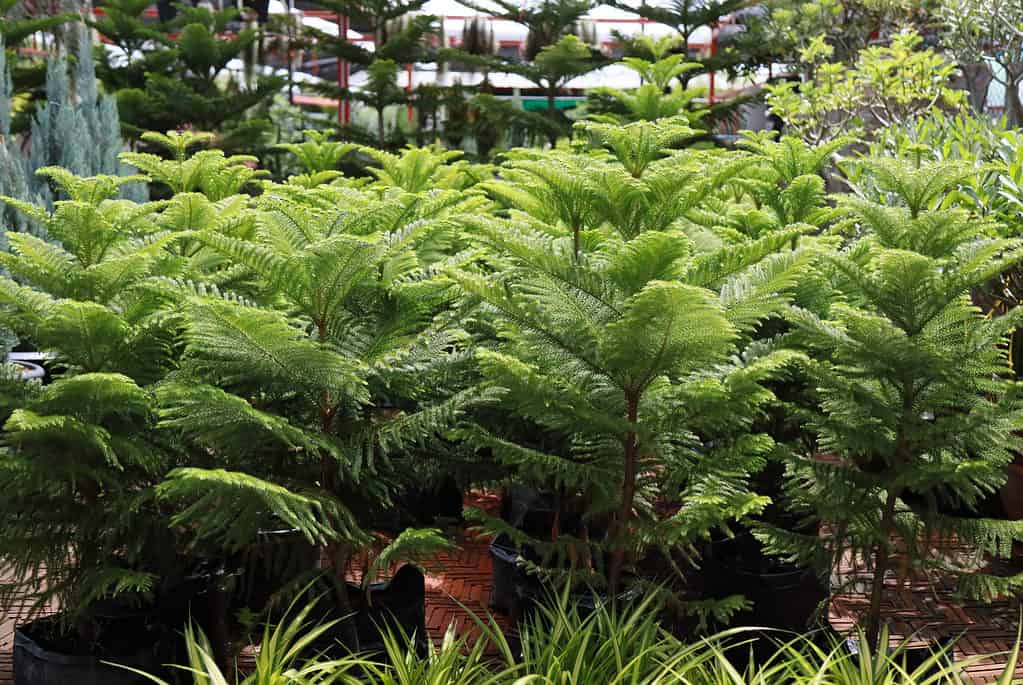
Norfolk Island pine trees.
©ZANTACUZ/Shutterstock.com
The Norfolk Island pine tree grows slowly. Growing in the wild, they often reach 150-210 feet. Their slender trunks grow straight and tall, and along those trunks are branches of needles. These branches are spaced widely apart and are often symmetrical. They create a pyramidal shape that the tree retains for most of its life, even when subjected to rough coastal winds. As they mature, Norfolk Island pine trees have been known to lose some of that symmetry.
Another difference between young Norfolk Island pine trees and mature ones is the difference in their needles. The name “heterophylla” means different leaves. The needles are soft on younger trees, but they grow harder and change shape as they mature.
Norfolk Island pine trees are almost always grown indoors if they are not planted naturally. Since they are used to warm, humid temperatures throughout the year, it is difficult, and sometimes impossible, for these trees to endure winters in the Northern Hemisphere. Thankfully, a Norfolk Island pine does not reach 200 feet when grown indoors. The tallest they grow indoors is generally about 8 feet. Because they are used to being planted in pots and containers, Norfolk Island pine trees are great for Bonsai tree art.
Despite only being found on Norfolk Island, these trees are not endangered by the houseplant trade. Many Norfolk Island pine trees are grown specifically to be sold as houseplants.
Caring for Your Norfolk Island Pine Bonsai Tree
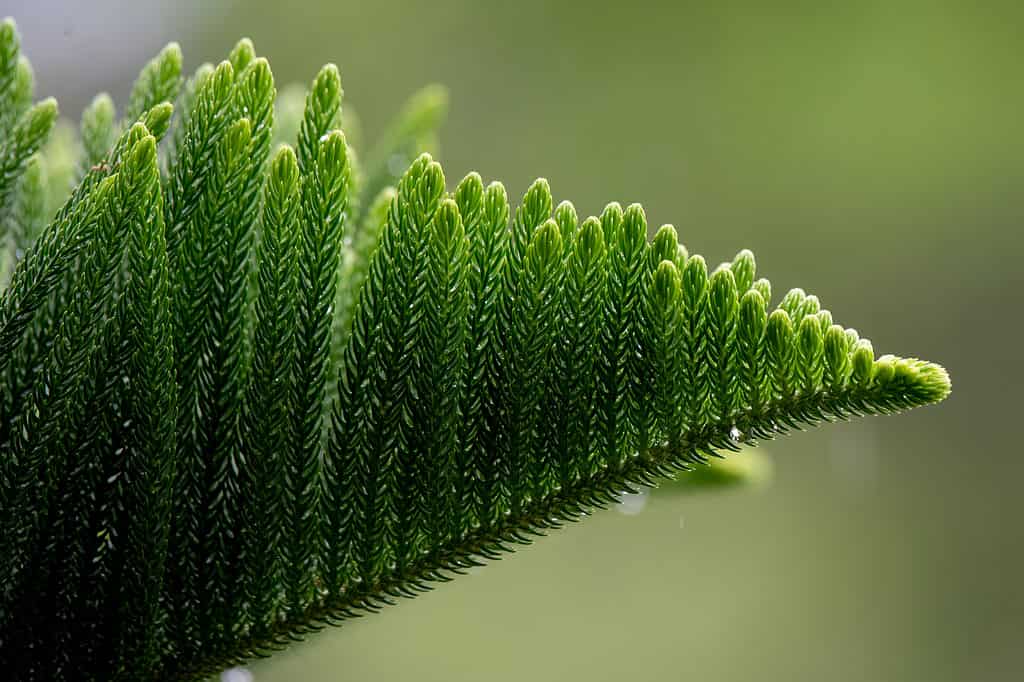
Norfolk Island pine trees aren’t too difficult to take care of. This is true for them as Bonsai or otherwise.
©IZZ HAZEL/Shutterstock.com
Overall, Norfolk Island pine trees are not too difficult to care for. This does not change much when they are planted in Bonsai tree containers. They are relatively hardy trees that do not need much attention but can’t be left alone.
Here is everything you need to know about properly caring for your Norfolk Island pine Bonsai tree so that it can thrive.
Sunlight
Perhaps unsurprisingly, Norfolk Island pine Bonsai trees love the sunshine. They need full sun every day. This means placing your tree somewhere the sun can reach it for a few hours daily. A good rule of thumb is 3-6 hours every day.
Norfolk Island pine Bonsai trees tend to grow toward the sunlight. This can make the trunk slant. To avoid this, rotating your tree every week or so is a good idea. This ensures that every trunk part gets as much sun as the others.
Soil Type
Learning what soil type works best for your Bonsai tree can be challenging. There are different components that Bonsai tree soil is made from. And, yes, Bonsai trees often need specialty soil mixtures. Soil mixes made for regular houseplants just don’t cut it, usually.
Thankfully, Norfolk Island pine Bonsai trees are not too picky about what’s in their soil. You can use just about any Bonsai soil mixture for your Norfolk Island pine Bonsai tree. Using soil with a bit more acidity than usual is recommended, as Norfolk Island pines love acidic soil, but it isn’t necessary. As long as the soil is well-draining — which it should be if it is a Bonsai tree soil mixture — your Norfolk Island pine Bonsai tree will do just fine.
Water
Another problematic aspect of caring for a Bonsai tree can be watering it. For the most part, a good rule of thumb is never to let the rootball dry out, but that can be tricky. Some species grown as Bonsai trees can tolerate or even prefer consistently wet soil. Other species grown as Bonsai trees cannot handle anything wetter than soil damp to the touch.
The Norfolk Island pine Bonsai tree is the latter. In this case, it is okay to let some soil — usually the first inch or so — dry out between waterings. When you water it, ensure it is as even as possible.
A Norfolk Island pine Bonsai tree needs less water when winter rolls around. Generally speaking, watering evenly every one to two weeks should be plenty. Sometimes, if your tree grows in humid conditions, it can be watered even less in the winter. As always, though, make sure to be checking up on the plant regularly between waterings. The plant needs more water when the first inch or two of topsoil has dried out completely.
Speaking of humidity, Norfolk Island pine Bonsai trees are used to much of it. If proper humidity levels — generally around 50% — can’t be reached naturally, investing in a humidifier for the little tree is probably a good idea.
Placement
For the most part, Norfolk Island pine Bonsai trees are grown indoors. If summer temperatures are humid and warm, as opposed to dry and hot, these trees can be placed outside. On Norfolk Island, where these trees come from, temperatures stay about 70 degrees Fahrenheit throughout the year. That’s the type of climate these trees are used to.
If grown outside, ensure your Norfolk Island pine Bonsai tree is somewhere the sun can reach for a few hours daily. It needs to be protected from sweltering and dry conditions.
It is almost impossible for one of these trees to survive most winter conditions outdoors in North America. The tree should be brought indoors if conditions are icy and dry. It must be placed somewhere the sun can reach it for a few hours a day. If this is not possible, then grow lights can be used. In most cases, a humidifier can be necessary during the winter months.
Pruning Your Norfolk Island Pine Bonsai Tree
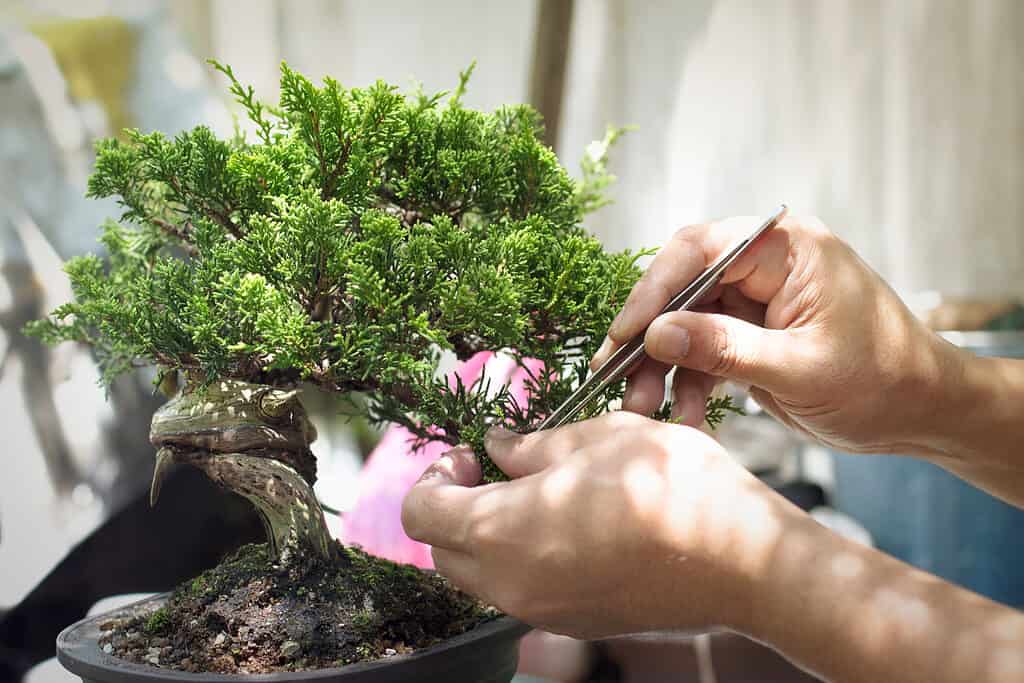
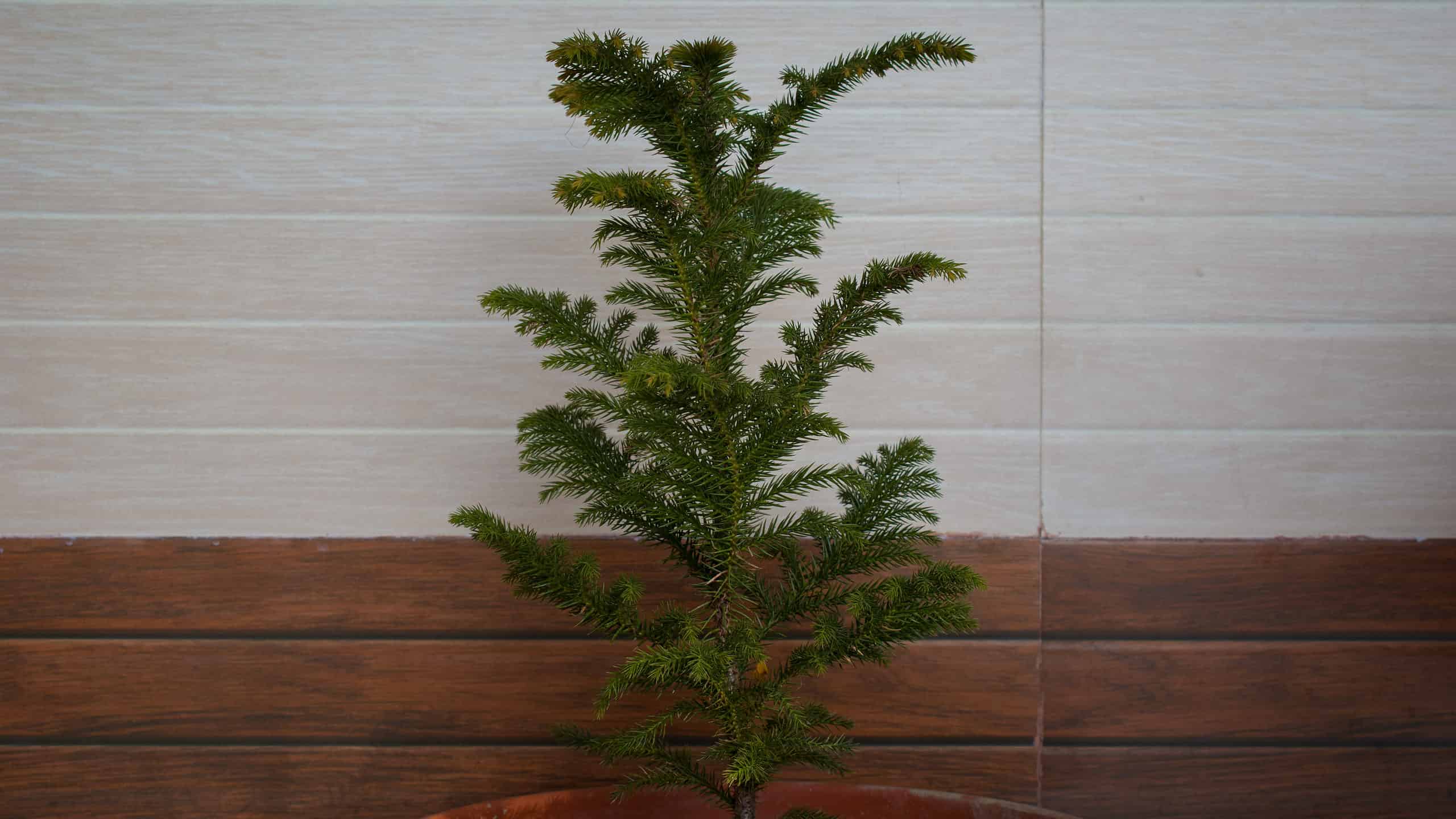
The pruning of Norfolk Island pine Bonsai trees (not pictured) can be particularly difficult.
©qSPOoKYp/Shutterstock.com
Pruning a Norfolk Island pine Bonsai tree can be difficult. They do not react to specific pruning techniques like other Bonsai trees do. However difficult it may be, pruning and shaping one of these trees is not impossible! It can be done with the right tools, tips, and a lot of patience.
First and foremost, it is usually never a good idea to prune these trees’ trunks or branches. This can lead to the death of the entire plant. Once branches, usually the lower ones, have already died, which is common with this Bonsai tree, they can be pruned off. New buds should be pruned in the spring. Even then, they should only be pruned when they are still colored green or light green.
Wiring one of these trees is almost impossible. Because of this, it is recommended not to wire this tree. Indeed, the best course of action is probably to let a Norfolk Island pine Bonsai tree grow naturally. Cut away old or dead growth as carefully as possible. Prune new growth to allow the tree to keep its natural shape.
Ideal Norfolk Island Pine Bonsai Tree Styles
Just because Norfolk Island pine Bonsai trees are challenging to shape does not mean they are boring! These trees and their caretakers are often limited in Bonsai tree styles, but dramatic techniques can still be achieved.
Perhaps the most popular, and the easiest to achieve, is the style of Chokkan. This style, also called the formal upright style, involves letting the Bonsai tree grow upright with a singular trunk. Branches are generally pruned off at the bottom, with clusters near the top of the tree. It is widespread among pine trees and conifers like the Norfolk Island pine.
Another style that is more challenging but can still be achieved with a Norfolk Island pine Bonsai tree is the Yose-ue style. This style is sometimes called the forest style. You’re growing more than one Bonsai plant with it! It suits trees with thin trunks like these very well because it involves many trunks staggered in the same pot. They are often arranged to resemble a forest.
Propagating Your Tree
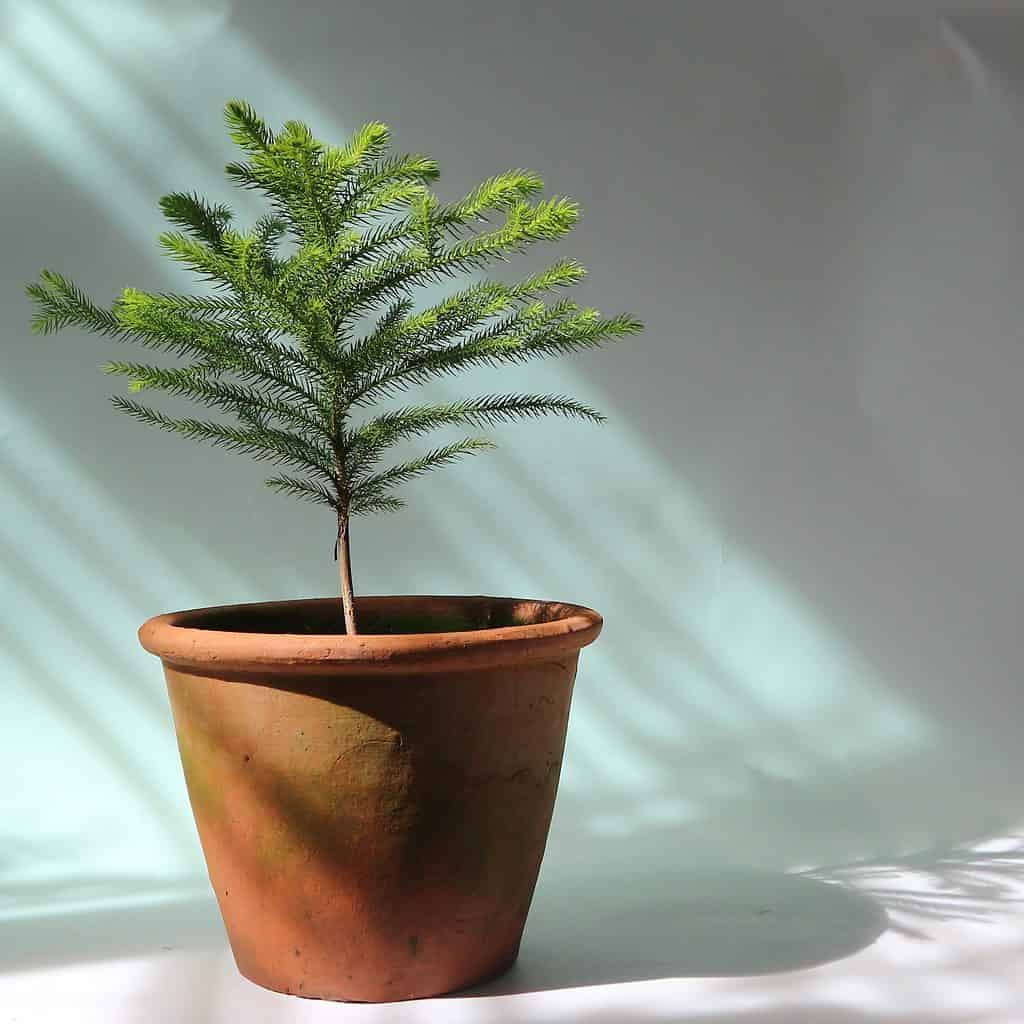
Norfolk Island pine trees are typically sold around the holiday season to serve as Christmas trees.
©Panooh/Shutterstock.com
Norfolk Island pine Bonsai trees can be propagated from seeds and cuttings. However, they are usually sold in stores around the holiday season as mini Christmas trees. They can also be ordered online.
Common Problems with Norfolk Island Pine Bonsai Trees
For the most part, Norfolk Island pine Bonsai trees are resistant to most diseases and pests. However, since they need humidity to grow their best, fungus is often the most common problem. Specifically, root rot, mold, and leaf spot show up often. Placing your tree in a room or area with good air circulation, especially fresh air, should address these problems.