
The San Pedro cactus, also known as the Echinopsis pachanoi, is a fascinating South American cactus with a rich history. Naturally, this stunning cactus grows in Argentina, Bolivia, Colombia, Chile, Ecuador, Peru, and Venezuela. Although it’s only native to South America, you can find this plant throughout the world. It’s a popular ornamental plant in the southwest United States.
There is also a lot more to this cactus species than meets the eye! Follow along to learn more about it.
What is a San Pedro Cactus?
The San Pedro cactus is a beautiful succulent found throughout South America. It has many names, including huachuma, wachuma, aguacolla, achuma, giganton, and the San Pedro. This cactus is thick with light to dark green or blue-grey stems and many ribs. The San Pedro cactus is covered in small white areoles with yellow or brown spines. However, some cultivars of this species are spineless.
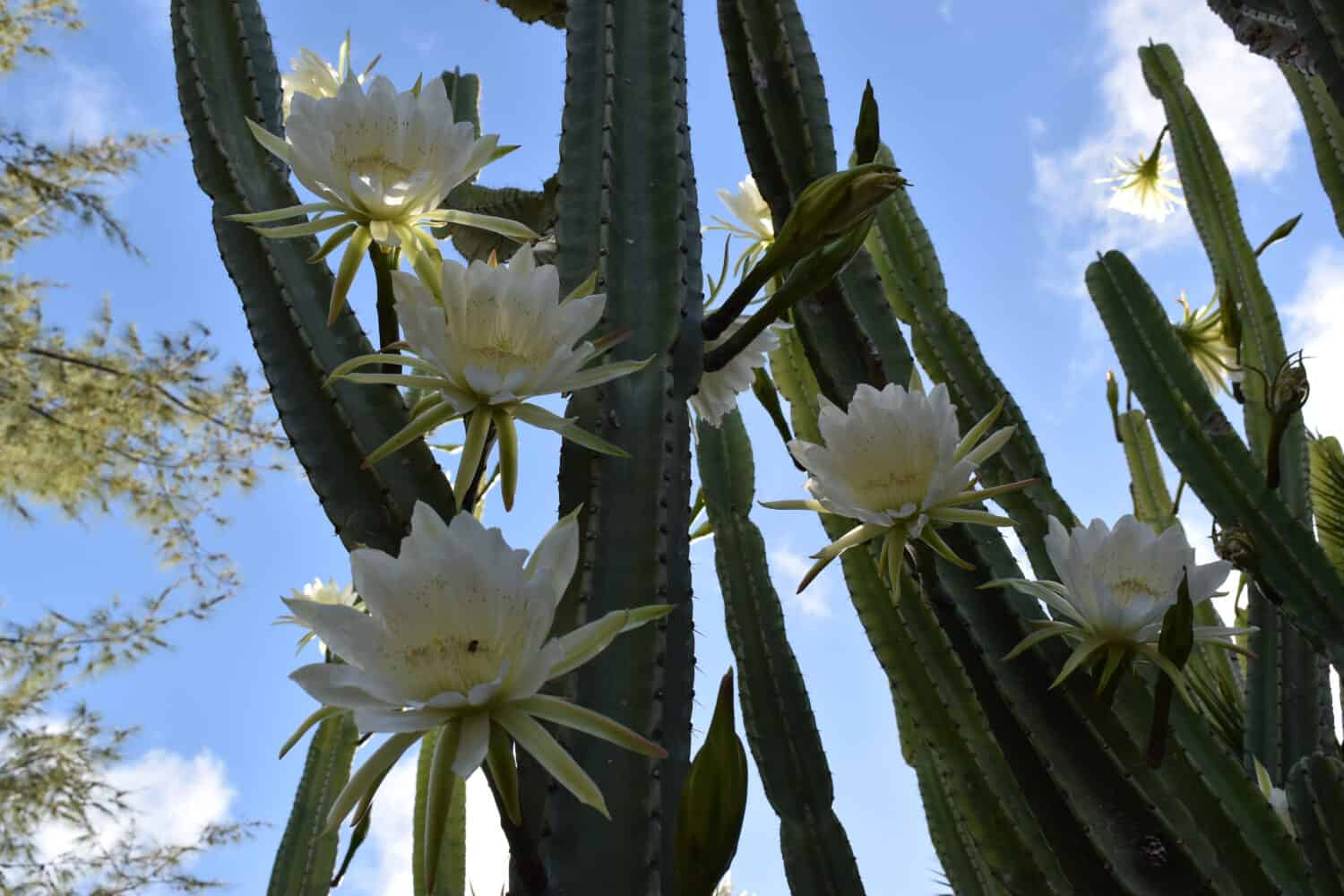
In the wild, this gorgeous cactus typically reaches between 10 to 20 feet tall, however, the tallest recorded San Pedro cactus was 40 feet tall. This lovely succulent is best known for its large and fragrant white flowers. They open at night and produce dark green fruits.
The San Pedro cactus is an important plant with cultural significance. It’s especially important in Peru and was declared a cultural heritage by the Peruvian Ministry of Culture in 2022. For many years it’s been used as a traditional medicine. Evidence suggests that Moche, Nazca, and Chavín cultures used this plant as a medicine starting at least 2,000 years ago.

The San Pedro cactus is a large cactus found throughout South America. It has many white areoles with yellow or brown spines.
©Bosco Jack/Shutterstock.com
The Colors of San Pedro Cactus
For the most part, the San Pedro cactus is the same colors across cultivars. However, it ranges from a deep forest green to slightly blue. When young, this plant is a pale green that darkens as it ages. The flowers are a bright white and are striking against the green stems and branches. They have a green and yellow center.
Can You Grow a San Pedro Cactus Indoors?
San Pedro cacti are easy to grow indoors, despite their size. This plant requires a lot of bright light. A good place to put your San Pedro cactus is a well-lit window sill. They also require well-draining soil. If they don’t get enough sunlight, San Pedro cacti may grow thin stems and branches.
When Will My San Pedro Cactus Bloom?
San Pedro cacti have beautiful flowers. They bloom at night and produce a sweet and super strong fragrant. These flowers typically last for two days before wilting. They bloom in early summer for a few weeks. Interestingly, some plants take about 6 to 15 years to flower.

San Pedro cacti bloom in early summer.
©Opachevsky Irina/Shutterstock.com
Caring for a San Pedro Cactus
These sweet-smelling succulents are easygoing. They are one of the easier cacti to grow if you live in the right growing conditions. They are often grown in cactus gardens or as ornamentals in front yards. You can also grow them inside, but they require frequent repotting as they grow up to 12 inches every year. So, how do you care for this amazing plant? Follow along to learn more!
Watering
Like other cacti, it doesn’t need a lot of water. Instead, it’s very drought tolerant. When watering this plant in the ground, only water when the top layer is dry. You can check by sticking a finger in the soil. When you are watering your cactus in a container, water sparingly. Water the soil when dry and wait to see the water drip down the bottom. It’s best if you sit a tray underneath the container to catch excess water. Dump the excess water so the roots don’t drown. You should water San Pedro cacti more in the summer than in the winter. Water this succulent about once every week or two depending on the climate.
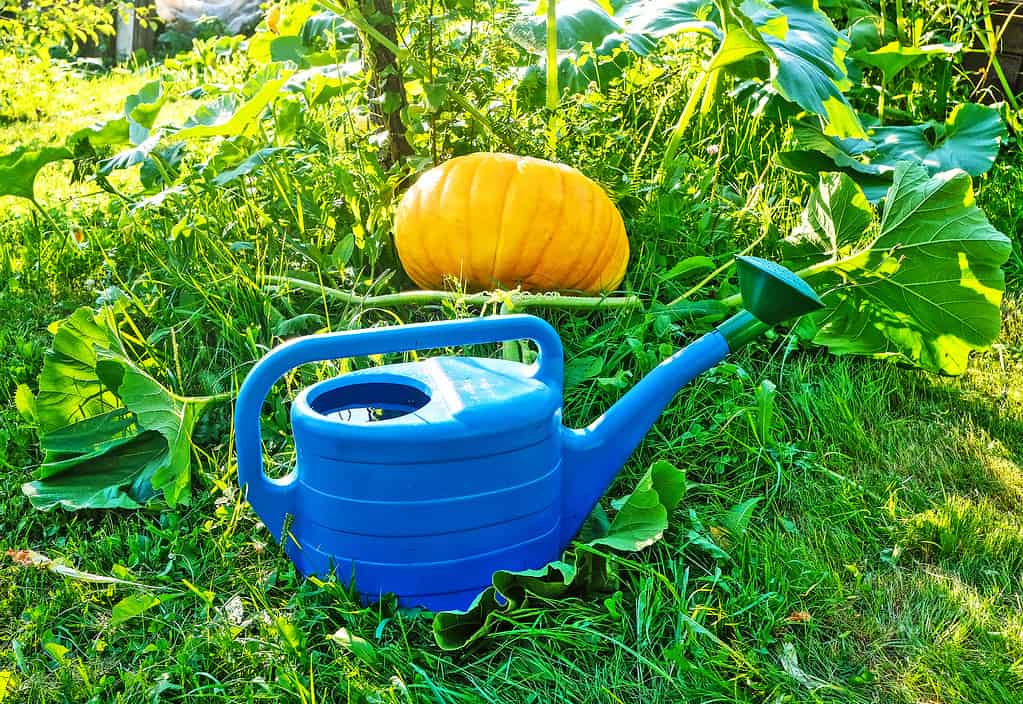
San Pedro cacti don’t need a lot of water. Only water this plant when the top layer is dry.
©ElenaG177/Shutterstock.com
Sunlight
Although the cactus doesn’t need a lot of water, it does need plenty of light. However, seedlings should not be placed directly in the sun as they can suffer from burns and die. After about 1 year of maturity, San Pedro cacti need about 6 to 8 hours of full sun. During summer, if possible, place your cactus in the shade. While they can tolerate some cold weather, they grow best in USDA zones 8b through 10b.
Nutrition
Not all plants need additional nutrients or fertilizer. But, if your cactus is missing important nutrients or isn’t growing fast enough, you can add fertilizer once a month during the growing season. In winter, however, don’t add fertilizer since the plant isn’t growing. The cactus in winter stays dormant and prepares for flowering season. Fertilizers can disrupt this process. Some experts recommend adding slow-release fertilizer to it.
Soil-Type
Regular potting soil isn’t ideal for this cactus. Instead, these plants need nutrient-rich soil mixed with organic materials and ingredients. While you can purchase cactus potting soil in the stores, you can also make your own by mixing different mediums. For example, you can mix peat moss, perlite, compost, potting soil, or coco coir. It’s important though that your potting soil is light with good drainage. If the soil packs too tightly or retains water, it can lead to root rot and other diseases. Too much moisture also attracts pests which harm the plant.
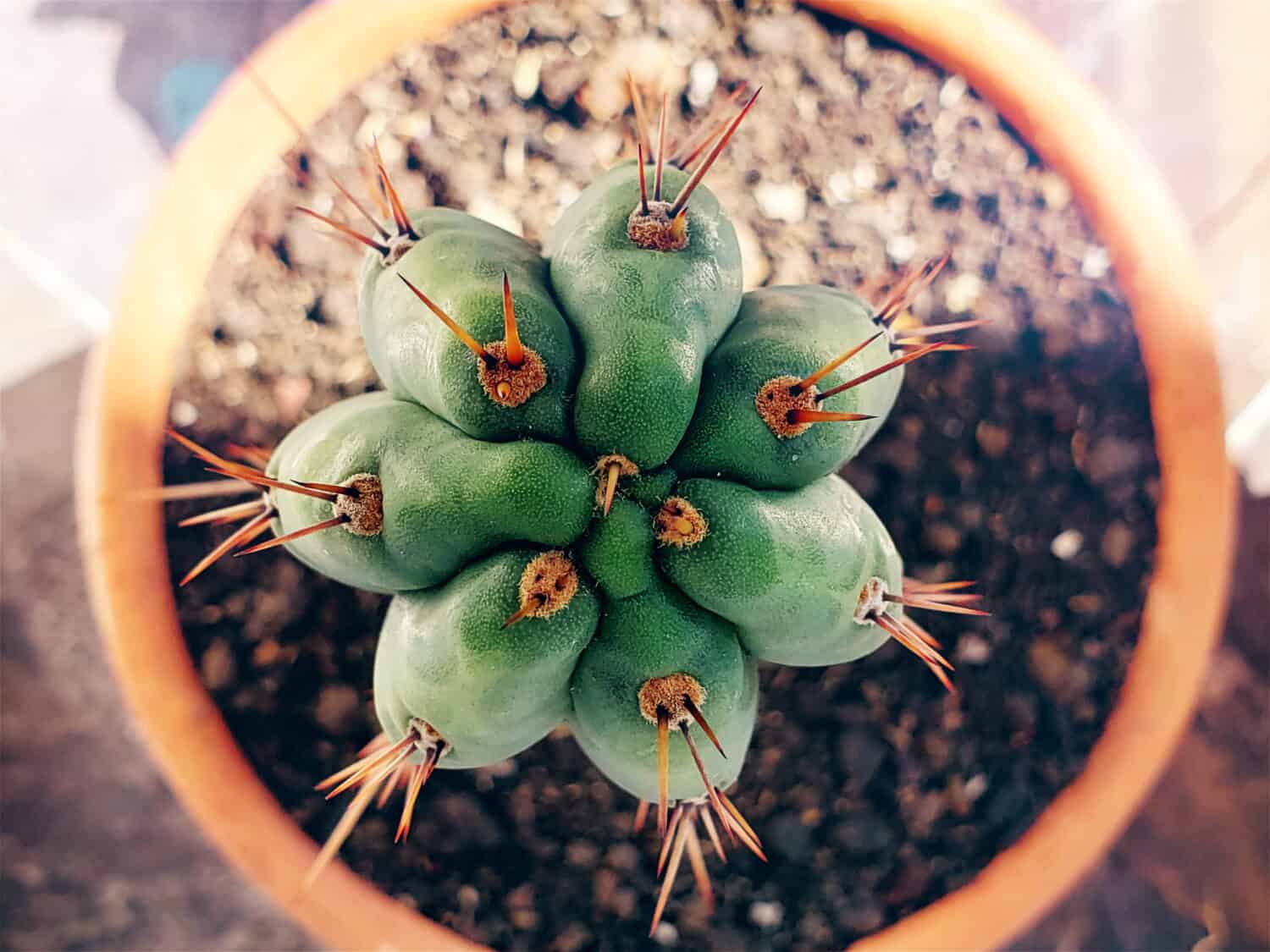
San Pedro cacti need well-draining and nutrient-rich soil.
©Karlos Agoran/Shutterstock.com
How to Grow San Pedro Cacti From Seed
While you can grow San Pedro cacti from seed, it’s easiest to propagate the plant with a cutting. If you grow from seed, the seeds germinate in 60 and 70. If you want to grow your San Pedro cactus outdoors, start the seeds indoors during winter. It can take between 1 to 2 weeks for the seeds to sprout.
You can start these seeds like you would any other plant. Get the right soil mixture in a container and fill it halfway. Add the seed and place more soil on top. Water the seed well and wrap plastic on top to cover the container. Poke holes in the container, this increases humidity and helps lessen the need for watering. Put the container with the seed in a place that receives bright but indirect sunlight. In no time you should have your very own San Pedro cactus!
How to Propagate San Pedro Cacti
The most popular method of growing this cactus is to propagate the plant from a cutting. The first step is to gather the right materials. While you can use scissors, most San Pedro cacti are thick. Instead, choose a sharp knife. Slice through about 12 inches of top growth. If you are taking multiple cuttings, it’s important you clean and sterilize your knife in between. This way, you can decrease the chances of spreading diseases and bugs.
The inside of the cactus is light green. It also resembles the shape of an 8-pointed star or flower. Before you can stick the cutting into the soil mix, you must dry the end. To do this, place it in direct sunlight for about 1 to 3 days. However, try not to expose the sides of the cutting to the sun as it can damage the plant. Cover the sides with a light blanket or piece of cardboard, but leave the end exposed to the sunlight. In a few days to a week, the end should be dry. It changes color and can range be grey, brown, orange, black, or white.
Place the plant upright in a container with nutrient-rich cactus-friendly soil. Water lightly. Too much water can cause fungal infections. After the plant has developed roots, which can take weeks or months, place it in direct sunlight.