
B
Species Profile

Black Russian Terrier

Canis lupus familiaris

Built to guard, trained to serve
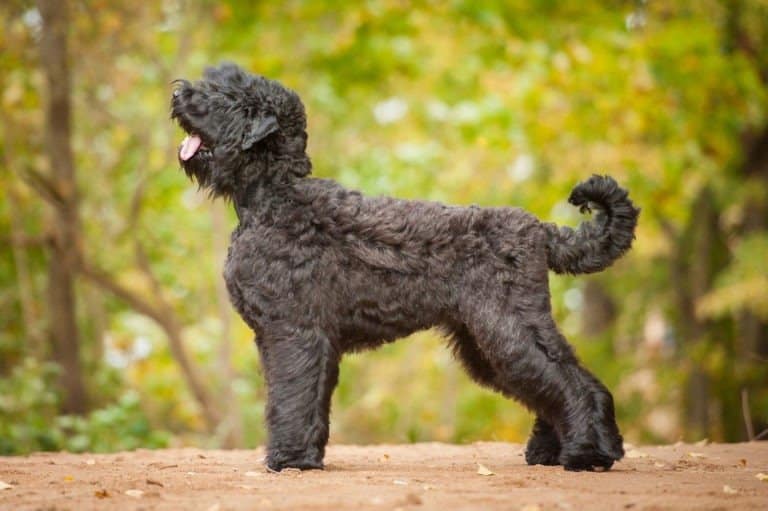
Marina Trunova/Shutterstock.com

Black Russian Terrier Distribution

Click a location to explore more animals from that region

Origin Location

This map shows the native origin of the Black Russian Terrier. As a domesticated species, they are now found worldwide.

Loading map...

Found in 1 country

Size Comparison

Human 5'8"
Black Russian Terrier 2 ft 4 in

Black Russian Terrier stands at 41% of average human height.

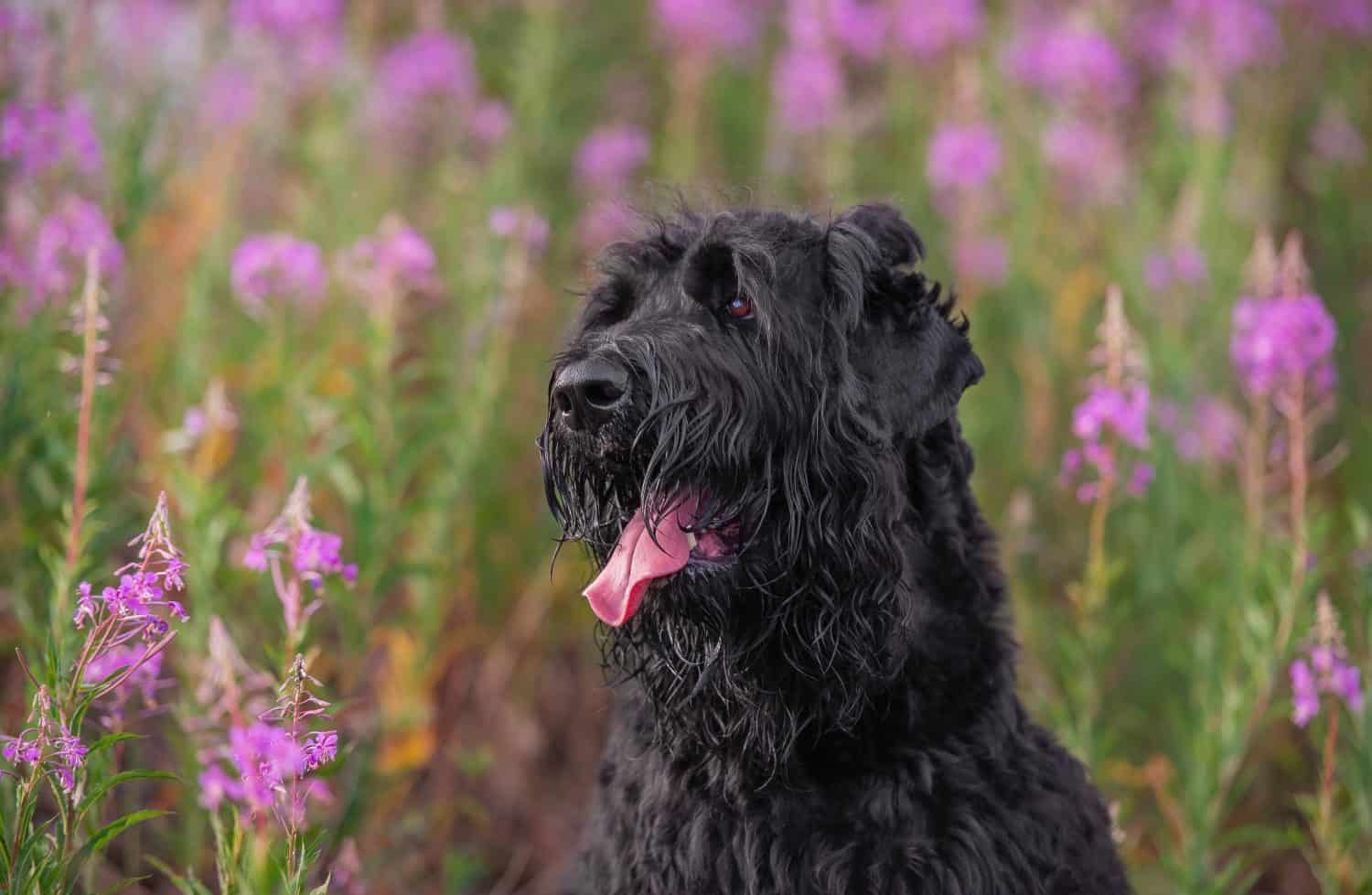
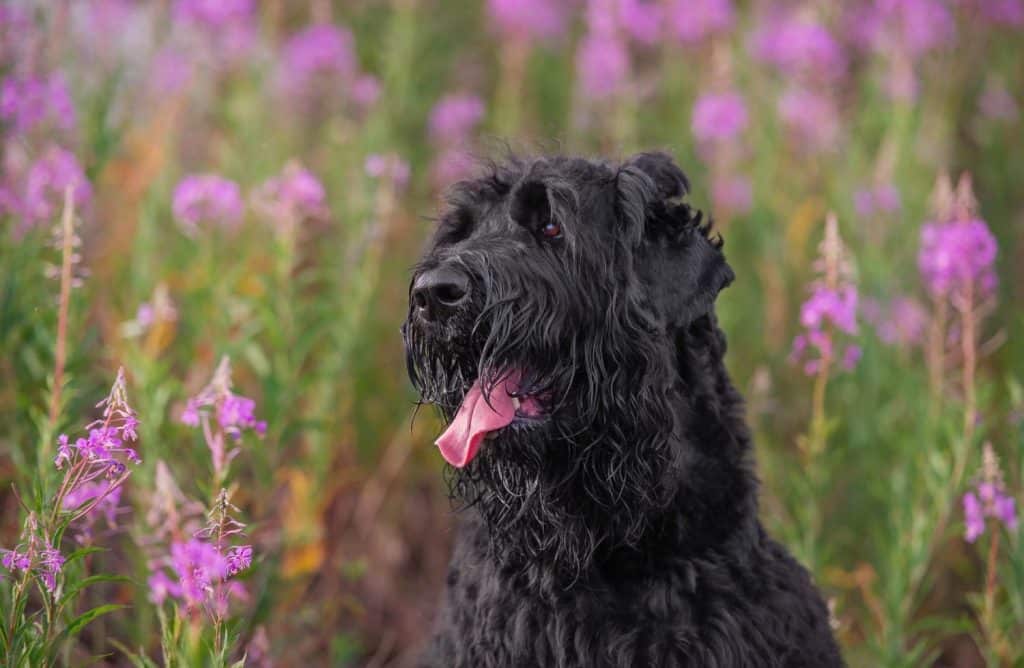
Russian black terrier Aron portrait in Ivan tea

At a Glance

Domesticated
Also Known As BRT, Russian Black Terrier, Black Russian, Чёрный терьер, Chyorny Terrier
Diet Omnivore
Activity Diurnal+
Lifespan 11 years
Weight 68 lbs
Status Not Evaluated
Did You Know?

Despite the name, the Black Russian Terrier isn't a true terrier; it was bred as a versatile working/guard dog.

Scientific Classification

The Black Russian Terrier is a large, powerful working dog breed developed in the Soviet Union primarily for guarding and service roles. It is known for a dense, typically black coat and a robust, confident temperament when properly trained and socialized.

Kingdom
Animalia
Phylum
Chordata
Class
Mammalia
Order
Carnivora
Family
Canidae
Genus
Canis
Species
Canis lupus

Distinguishing Features

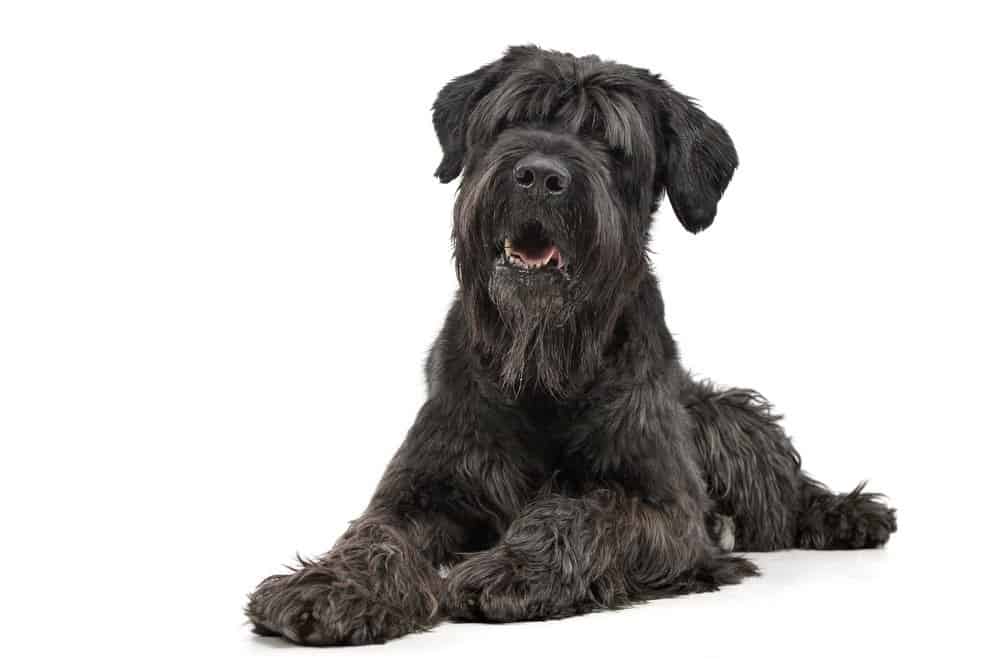
  • Large, robust working-dog build with substantial bone and musculature
  • Dense double coat, commonly black, often with a slightly wavy/wiry texture
  • Characteristic facial furnishings (beard/mustache/eyebrows)
  • Bred for guarding/service temperament: alert, confident, protective when trained

Physical Measurements

Males and females differ in size

Height
2 ft 6 in (2 ft 4 in – 2 ft 6 in)
2 ft 4 in (2 ft 3 in – 2 ft 4 in)
Length
4 ft 1 in (3 ft 9 in – 4 ft 5 in)
3 ft 10 in (3 ft 7 in – 4 ft 1 in)
Weight
126 lbs (110 lbs – 143 lbs)
110 lbs (99 lbs – 121 lbs)
Tail Length
1 ft 4 in (1 ft 2 in – 1 ft 6 in)
1 ft 2 in (12 in – 1 ft 4 in)
Top Speed
28 mph
medium speed, good endurance

Appearance

Primary Colors
Secondary Colors
Skin Type Black Russian Terrier skin has a heavy double coat: thick outer coat over a dense undercoat. Skin is protected but may get irritated or develop hot spots if coat mats or stays damp; check skin/ears.
Distinctive Features
  • Large, powerful working/guard-type domestic dog developed in the Soviet Union for service and protection roles; more robust and heavily coated than the base domestic dog average.
  • Dense double coat with coarse/harsh texture and substantial facial furnishings (pronounced beard, mustache, and eyebrows) that distinguish it from many other domestic dog breeds.
  • Rectangular, athletic build with heavy bone and strong musculature; substantial head with strong muzzle and pronounced stop; confident, imposing silhouette.
  • Temperament context (breed-specific vs. general domestic dog): typically confident, protective, and territorial; requires early, ongoing socialization and structured training to channel guarding instincts appropriately.
  • Grooming/care requirement: high-maintenance coat-regular brushing/combing to prevent matting (especially beard/legs), scheduled trimming/stripping as needed, and thorough drying after bathing/swimming to reduce skin issues.
  • Exercise/mental needs: working heritage means daily physical exercise plus training/mental enrichment; under-stimulation can contribute to nuisance behaviors.
  • Watch for hip and elbow dysplasia; cardiac disease (hereditary cardiomyopathy in some lines); eye issues like progressive retinal atrophy; hypothyroidism; and bloat (gastric dilatation-volvulus) in large, deep-chested Black Russian Terriers—manage with regular meals and monitoring.
  • Ear/eye hygiene: heavy facial hair and drop ears can trap moisture/debris-regular ear cleaning and eye-area grooming helps prevent infections/irritation.
  • Historically docked tail/cropped ears may be seen in some regions/lines, but practices vary by country and are often restricted; natural tail and ears are common and functional.

Sexual Dimorphism

Sexual dimorphism is noticeable: males are typically larger, heavier-boned, and more massive in head/neck; females tend to be slightly smaller with a somewhat lighter frame while retaining the same robust working-dog proportions and coat type.

  • Generally taller and heavier with broader chest and thicker neck/crest
  • More substantial head width and bone
  • Often more pronounced overall mass and presence
  • Typically slightly smaller and less bulky while remaining muscular and sturdy
  • Often a slightly more refined head and lighter bone compared to males
  • Same dense coat and facial furnishings, sometimes appearing a bit less profuse depending on individual

Did You Know?

Despite the name, the Black Russian Terrier isn't a true terrier; it was bred as a versatile working/guard dog.

The breed was developed in the USSR (notably through the Red Star Kennel) for military and service tasks in harsh climates.

Its dense, weather-resistant double coat and heavy facial furnishings help protect it from cold, wet, and abrasive conditions.

Black Russian Terriers were shaped using several breeds (commonly cited contributors include Giant Schnauzer, Rottweiler, Airedale Terrier, and Newfoundland) to combine strength, nerve, and coat.

They mature slowly compared with many dogs-both physically and mentally-often staying "adolescent" longer than expected for their size.

A well-bred, well-trained BRT typically has a strong sense of territory and will naturally position itself to watch doors, gates, and family members.

Though usually solid black, some individuals may show small amounts of gray or scattered lighter hairs as the coat changes with age and grooming.

Unique Adaptations

  • Cold- and weather-tolerant coat: a dense, harsh outer coat with insulating undercoat helps in severe winter and wet conditions common in parts of Russia.
  • Protective furnishings: pronounced eyebrows, mustache, and beard offer extra shielding for face and muzzle during brush work and rough weather.
  • Large, athletic build: developed for power and endurance-able to perform guarding, escorting, and service work rather than sprint-only tasks.
  • High trainability with strong nerve: selected for stable working temperament-confident under pressure when properly bred and socialized.
  • Efficient territorial vigilance: many individuals conserve energy by watching and evaluating before acting, useful for guard duty.
  • Species context (domestic dog): like other domestic dogs, Black Russian Terriers share social cooperation, human-directed learning, and flexible behavior-then amplify guarding instincts through selective breeding.

Interesting Behaviors

  • Perimeter patrol: many will "check the fence line" or scan property boundaries, a carryover from guard and patrol selection.
  • Doorway blocking: instinctively placing their body between family and unfamiliar visitors, then watching for cues from the handler.
  • Silent assessment: rather than constant barking, they often stare, posture, and wait-escalating only if a threat persists.
  • Shadowing their person: strong handler-orientation can look like quiet follow-and-observe behavior, especially indoors.
  • Strategic positioning: choosing high-visibility spots (hallways, landings) to monitor multiple rooms at once.
  • Play that looks like work: tug, carry, and controlled wrestling often appeal because they mimic gripping and handling tasks.
  • "Beard check" curiosity: using their heavy facial furnishings as tactile "feelers," they may nudge objects or people while investigating.

Cultural Significance

Linked to Soviet working-dog programs, the Black Russian Terrier, Canis lupus familiaris, was bred to guard and help military and state groups, a symbol of strength. Abroad it's called a "Soviet guardian" with a big, black bearded coat; today owners focus on pets, sport, and training.

Myths & Legends

Red Star Kennel origin lore: breed histories often retell the story of a state-directed "create the ideal guard dog" effort-an origin narrative that frames the BRT as a deliberately engineered protector for Soviet service work.

The "Black Pearl" nickname: enthusiasts sometimes recount early kennel tales of exceptionally dark, glossy-coated dogs prized as rare, pearl-like guardians, a storytelling tradition that highlights the breed's striking black appearance.

In Russian and Eastern European working-dog circles, stories say bearded Black Russian Terriers stood at gates like guards, only letting friends in after a calm signal from their handler, showing the breed's watchful, signal-driven nature.

Name-as-identity: the enduring label "Black Russian Terrier," despite its non-terrier function, is often treated in breed lore as a deliberate misdirection or legacy naming quirk-an anecdotal tradition that underscores its unique place among working dogs.

Conservation Status

NE Not Evaluated

Has not yet been evaluated against the criteria.

Population Stable

Life Cycle

Birth 8 pups
Lifespan 11 years

Lifespan

In the Wild
10–12 years
In Captivity
9–14 years

Reproduction

Mating System Polygyny
Social Structure Managed Domestic
Breeding Pattern Serial
Fertilization Managed Selective
Birth Type Managed_selective

Black Russian Terrier (Canis lupus familiaris): Breeding is human-managed, not pack-based like wolves. A few popular males may sire many litters (polygyny). Pairings are arranged per heat with internal fertilization. Dogs do not usually help raise pups; people care for them.

Behavior & Ecology

Social Pack Group: 4
Activity Diurnal, Crepuscular
Diet Omnivore Meat-forward foods (e.g., beef or chicken-based complete dog diets)

Temperament

Confident, steady, and protective; typically reserved with strangers but loyal and affectionate with its household when well socialized.
High trainability for obedience/service tasks; best with consistent, fair, structured training-can become pushy or overly suspicious if boundaries are unclear.
Guarding/territorial tendencies are more pronounced than the base species average for many pet-line dogs; early controlled exposure to people/places reduces inappropriate suspicion.
HUBS (domestic dog behavioral pattern): social flexibility-can be highly social or more selective depending on genetics, early experiences, and reinforcement history; BRTs trend toward selective sociability and strong handler orientation.
Black Russian Terrier (Canis lupus familiaris) dogs are bred for protection and service, often slow to warm up and very alert, and they follow human direction more than hunt like wolf packs.
Care requirements (behavioral): needs daily structured physical exercise plus mental work (obedience, scent games, task training); insufficient enrichment can amplify guarding, barking, and reactivity.
Care requirements (management): intensive early socialization, ongoing neutrality training around strangers/dogs, and secure containment; grooming/coat care is significant due to dense coat.
Health concerns commonly discussed in the breed: hip and elbow dysplasia risk; some cardiac issues reported in large breeds; eye issues possible; bloat/GDV risk-use appropriate feeding management and monitor after meals/exercise.
Handling considerations: large, powerful dog-early leash manners and impulse control are essential; not ideal for inconsistent handling or low-structure homes.

Communication

Alert barking Territorial/stranger approach
Low growl/rumble Warning/space-increasing
Whine Attention-seeking, frustration, greeting
Play barks In friendly arousal contexts
Body posture: forward lean, high tail carriage, blocking/placing body between handler and perceived threat Breed-typical protective display
Facial signals: hard stare, closed mouth, lifted brows; lip-licking/yawning as subtle stress signals
Scent marking Urine marking; investigation/overmarking in multi-dog contexts
Tactile contact: leaning, pawing, close following-often directed to primary handler
Ritualized greeting and de-escalation behaviors (turning head, curving approach) that vary by individual socialization; BRTs may show more distance-increasing signals with strangers

Habitat

Biomes:
Temperate Forest Boreal Forest (Taiga) Temperate Grassland Tundra Alpine Mediterranean Desert Hot Desert Cold Wetland Freshwater +4
Terrain:
Plains Hilly Mountainous Coastal Valley
Elevation: Up to 16404 ft 3 in

Ecological Role

Domestic working/guardian canid; human-associated omnivore that primarily consumes provisioned diets rather than hunting.

Property and livestock guarding (deterrence of predators and intruders) Companion/service roles that support human activities Opportunistic pest deterrence (discouraging rodents/mesopredators) Minimal direct predation impact in managed settings when responsibly contained

Diet Details

Main Prey:
Small mammals Birds Carrion
Other Foods:
Starches and grains Vegetables Fruits Grasses and plant matter

Human Interaction

Domestication Status

Domesticated

Black Russian Terrier (Canis lupus familiaris) is a domestic dog that came from gray wolves and was shaped by people. Bred in the Soviet Union (mid-1900s) at state kennels like Red Star to make a large, tough service and guard dog from breeds like Giant Schnauzer, Rottweiler, Airedale. BRTs are protective, powerful, slow to mature, and need heavy grooming, training, and vet care.

Danger Level

Moderate
  • Large body size and bite strength increase injury potential if mishandled or poorly trained.
  • Protective/territorial behavior can lead to defensive aggression toward perceived threats (e.g., strangers entering home/yard) without proper socialization and management.
  • Risk of accidental injury (knock-downs) to children/elderly due to exuberance and power.
  • Higher risk situations include inadequate containment, off-leash exposure in public, and punitive/insufficient training that increases reactivity. Breed-specific mitigation notes: Early, ongoing socialization; consistent reward-based training with clear boundaries; controlled introductions; secure fencing; and proactive grooming/handling training to ensure safe vet/groomer interactions.

As a Pet

Suitable as Pet

Legality: Generally legal to own in most U.S. jurisdictions as a domestic dog breed. However, ownership may be affected by local breed-restriction policies, housing/HOA rules, insurance exclusions, and public-access rules for large guarding breeds. Verify city/county ordinances and landlord/insurer requirements.

Care Level: Experienced

Purchase Cost: $2,000 - $4,500
Lifetime Cost: $25,000 - $65,000

Economic Value

Uses:
Companion animal market Working/security services Breeding/show and sport Pet services (grooming, training, boarding) Veterinary and preventive healthcare
Products:
  • puppies from registered breeders
  • working/guard dogs for private property (where appropriate and legal)
  • training services (obedience, behavior, protection sports where legal)
  • professional grooming (coat stripping/clipping, bathing, de-matting)
  • specialized equipment (large-crate systems, heavy-duty leashes/harnesses, muzzles for public safety when needed)

Relationships

Ecological Equivalents 6

Animals that fill a similar ecological role in their ecosystem

Giant Schnauzer
Giant Schnauzer Canis lupus familiaris Similar niche as a large, trainable working dog used for guarding, police/service tasks, and property protection. Both require structured training, firm handling, and significant mental and physical work.
Rottweiler
Rottweiler Canis lupus familiaris Comparable role as a confident, powerful guardian with strong protective instincts. Similar needs for early socialization, clear boundaries, and joint-friendly conditioning because of large body mass.
Caucasian Shepherd Dog Canis lupus familiaris Overlap in function as a deterrent and guardian; contrasts with the Black Russian Terrier (BRT) in that many Caucasian types are more independent, whereas BRTs are typically selected for handler responsiveness in service and guard contexts.
German Shepherd Dog
German Shepherd Dog Canis lupus familiaris Shares the human-directed working niche (patrol, service, guarding), where trainability and stability are prioritized; differs from BRT in coat type—BRT typically has a dense, harsh, usually black coat—and is often heavier with a more molosser-influenced build.
Gray wolf
Gray wolf Canis lupus Black Russian Terrier (Canis lupus familiaris) derives from the domesticated form of Canis lupus and was bred for guarding. Compared to wild gray wolves, BRTs are easier to train, less likely to hunt or fear people, and have a heavy, weather-resistant coat and a confident nature.
Domestic dog
Domestic dog Canis lupus familiaris Black Russian Terrier (Canis lupus familiaris) is a Soviet-era guard dog bred to remain calm and protective. It is large and strong with a thick black double coat and requires more grooming, training, and health monitoring for hips, elbows, heart, thyroid, and eyes.

Some of the breeds used to create the Black Russian Terrier breed include Rottweilers, Giant Schnauzers, Airedale Terriers, and Newfoundlands. Black Russian Terriers worked to patrol the border or keep watch over prisoners.

In the 1950s, the Russian Army did not need as many Black Russian Terriers and allowed officers to bring their companions home, and began selling Black Russian Terriers to civilians. The people of Russia soon learned what an intelligent, calm, and affectionate dog a blackie can be. Black Russian Terriers make great companions and guardians. Their personality traits also make them a good fit for homes with children.

Owning a Black Russian Terrier: 3 Pros and Cons

ProsCons
Family-friendly
Blackies can make an excellent family pet. They are playful, protective, and loving.
Needs a lot of attention
Blackies love getting attention from their family members. However, if they don’t get enough attention or are left alone for too long, they can develop separation anxiety or may become destructive.
Good guard dog
Black Russian Terriers are very alert and protective. They are more suspicious of strangers or other dogs and will bark to alert their owners when something seems off.
Higher maintenance
Black Russian Terriers need more grooming and trimming than many other breeds. Their coat will need to be brushed multiple times a week, and you will need to trim their hair on their face or hire a professional groomer.
Loyal
Blackies are very loyal and develop a strong bond with their owners.
Need physical and mental stimulation
Black Russian Terriers will need both mental and physical stimulation. If you aren’t able to provide both of these daily, this may not be the right breed for you.
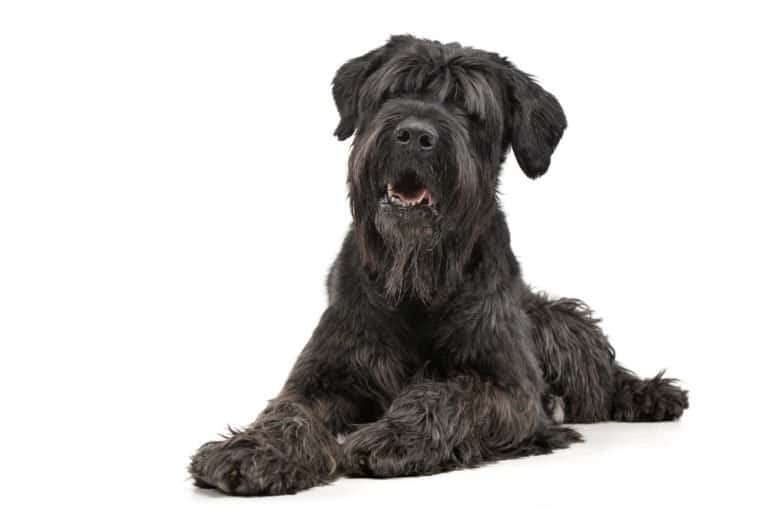
Black Russian Terrier isolated on white background

Black Russian Terriers need lots of attention from their owners.

History and Origins

In the 1930s, the Soviet government established the Red Star Kennel near Moscow with the intention of creating a super-dog for the Russian army. This goal was difficult to achieve due to the destruction caused by the Russian Revolution and the two World Wars, which significantly reduced the quality of Russia’s purebred dog breeds. Because of the economic depression, importing high-quality dogs from other European countries was also close to impossible, so the team at Red Star had to start from scratch.

Seventeen breeds, including Airedale terriers, giant schnauzers, and rottweilers, were combined to create the Black Russian Terrier. After World War II, the program was enhanced with the introduction of high-quality dogs from Germany.

The Black Russian Terrier was bred to be a dedicated and tireless guard dog who could patrol the extensive borders of Russia. It was strong enough to capture and hold intruders at Stalin’s notorious prison camps, and its thick coat enabled it to work in even the coldest of temperatures. Despite its name, the breed contains less than 30 percent terriers.

The black Russian terrier was originally used by the army to guard important places like prisons, borders, and military camps. In the mid-1950s, when these places no longer needed protection, the army began selling the extra puppies to hobbyists and dog show enthusiasts. Retired officers who took their K-9 partners home in the late ’50s made the Russian people aware of this loyal guardian, which they fondly named the “Black Pearl of Russia” or simply “Blackie”.

The Black Russian Terrier is no longer used for guarding political prisoners but instead can be found on suburban lawns. It was recognized as a breed in 1981 by the Soviet Ministry of Agriculture and was accepted into the American Kennel Club’s Stud Book in 2004.
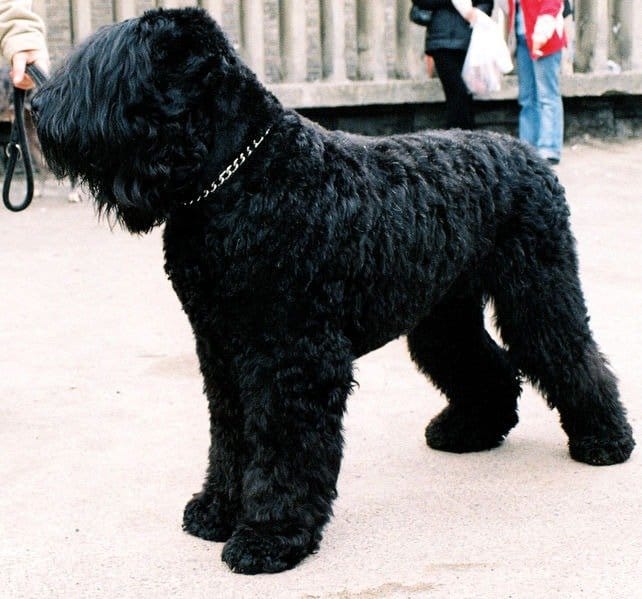
Black Russian Terrier during the international show of dogs in Katowice - Spodek, Poland

Black Russian Terriers were originally bred as guard dogs.

Size and Weight

Black Russian Terriers are large terriers. Both males and females generally weigh between 80 and 130 pounds. Males may be a little taller, with a height between 27 and 30 inches, whereas females stand between 26 and 29 inches tall. Black Russian Terrier Puppies weigh between 24 and 36 pounds when they are three months old. By the time they are six months old, they will have grown to weigh between 64 and 78 pounds. They will be fully grown around the time they are 12 months old.

Black Russian Terriers are large dogs weighing between 80 and 130 pounds.

Common Health Issues

In general, Black Russian Terriers are a healthy breed. However, there are still a few health issues you should be aware of that may impact your dog.

One issue to be aware of is hip dysplasia. This is a genetic condition where the thigh bone doesn’t connect correctly with the hip bones. It causes the two bones to rub against one another. This can be quite painful and may cause a blackie to limp. They can develop arthritis with age and will likely be very uncomfortable. Since this condition is genetic, if a blackie has hip dysplasia, they should not be bred.

Elbow dysplasia is another condition to be aware of with Black Russian Terriers. Like hip dysplasia, this condition is likely caused when the bones and joints don’t grow and develop properly. This leads to a weakened joint. Blackies with elbow dysplasia may develop arthritis. Surgery, medication, or weight-management measures may be recommended by a vet to treat elbow dysplasia.

Black Russian Terriers may also suffer from Progressive Retinal Atrophy or PRA. With this condition, the retina gradually deteriorates. Dogs will become night-blind at first but will eventually lose all eyesight.
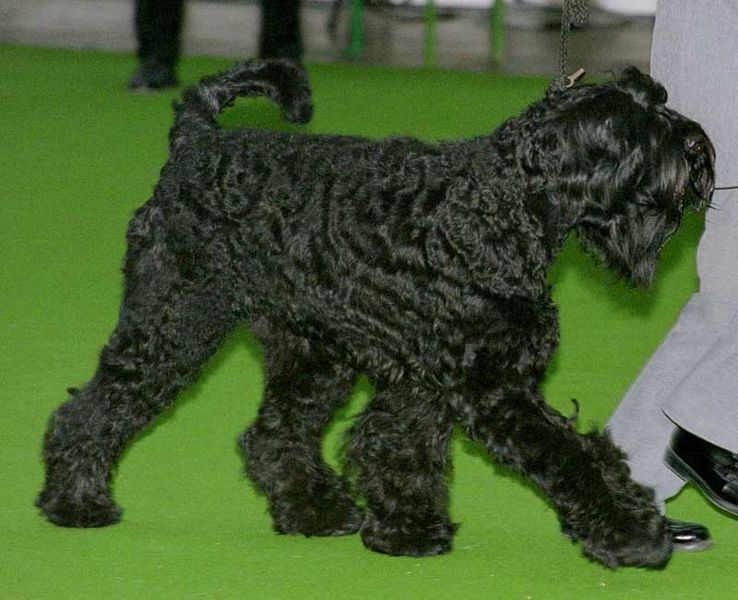
Black Russian Terrier

Black Russian Terriers are prone to hip and elbow dysplasia.

Temperament and Behavior

Black Russian Terriers are very confident and intelligent. These traits make them excellent guard dogs. However, their personality also makes them a good fit for families with children. They can make a great playmate for a child.

The breed enjoys spending time with members of the family. They love getting attention, but if they don’t get enough attention and are left home alone, this breed can also develop separation anxiety. Also, if left alone for too long, blackies may engage in destructive behaviors.

Proper socialization is important with these dogs. It will help them develop a more even temperament and make them more tolerant of people and other pets.
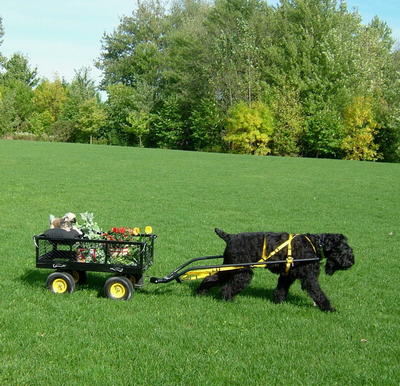
A Black Russian Terrier pulling a cart

A Black Russian Terrier makes a great family companion.

How to Take Care of a Black Russian Terrier

A Black Russian Terrier, though most likely a relatively healthy dog, will need special care tailored to their nutritional needs, temperament, health concerns, and the other unique features of this breed. For example, seek out the specific nutrients that help prevent bad eyes, hips, and joints in dogs.

The Best Dog Food

As a large dog, this breed will eat a lot of food each day. They typically eat 3 to 4.5 cups of food a day. The exact amount that your blackie will need will vary based on weight, age, activity level, and health concerns. If you aren’t sure how much food your blackie should be consuming, check with your veterinarian. Making sure your dog is getting the right amount of food is important for preventing obesity, which can lead to other problems like hip and elbow dysplasia.

Most dogs of this breed do best when their food is split into two smaller meals a day rather than one large meal. This can also help reduce the risk of bloat. Always look for high-quality foods from reputable manufacturers. You should select a large breed of food for adults and puppies alike.

Puppies have smaller stomachs and will need to be fed smaller, more frequent meals throughout the day. Young puppies should be fed four times a day. After a few months, you can drop it down to feeding them only three times a day. Then, after a few more months, they should be fine eating two times a day.

Maintenance and Grooming

This breed has higher grooming needs than some other breeds. They have a double coat with a thick undercoat and a coarse outer coat. You will need to brush their coat at least once, if not more, every week. Additionally, the hairs around their face can grow long and make the dog look shaggy. They will either need to be trimmed by a professional groomer or trimmed by their owner periodically.

This breed is not known for heavy shedding, but they will shed some hair around the house if they aren’t brushed regularly. While they are not a heavy-shedding breed, they are not hypoallergenic dogs. So, they are not a good option for homes with people who suffer from allergies.

In addition to brushing and grooming your dog’s fur, you will also need to brush their teeth a few times every week to prevent plaque and tartar from building up. Their nails will also need to be trimmed regularly. If the nails get too long, they can make it painful for a blackie to walk.
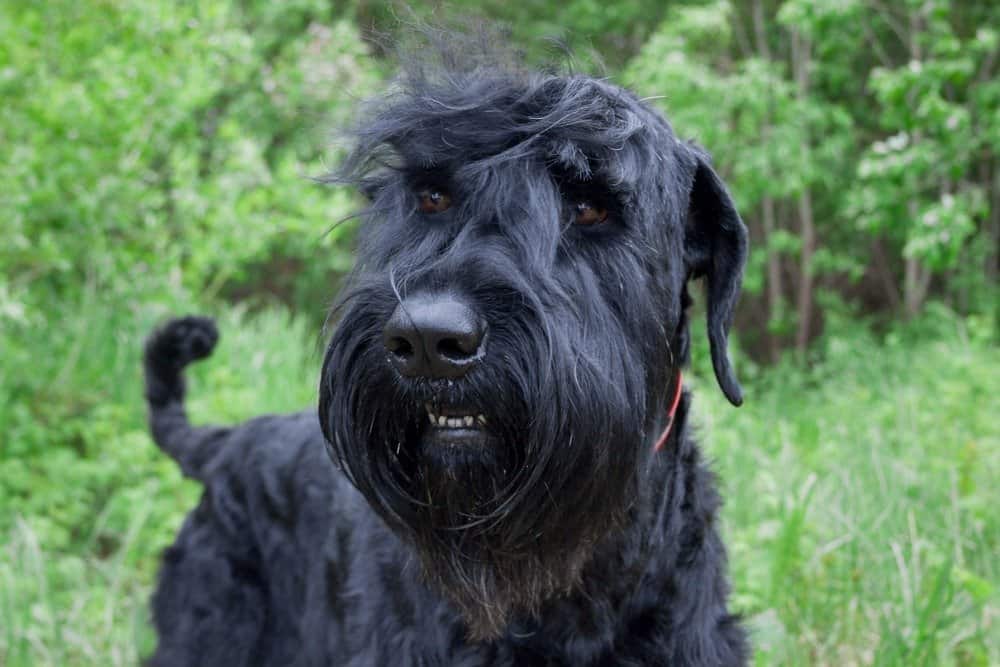
Black Russian Terrier close-up

When it comes to grooming, Black Russian Terriers are high-maintenance.

Training

This breed is relatively easy to train. Training is essential, though. They are very large dogs, and without consistent, positive reinforcement-based training, they can be quite unruly and may become aggressive. They do learn quickly because of their higher intelligence, so with consistency, your blackie should pick up on commands and appropriate behaviors relatively easily.

In addition to training your dog from an early age, socializing them is also important. Socialization will help a Black Russian Terrier know how to act in different situations and around different people and pets.
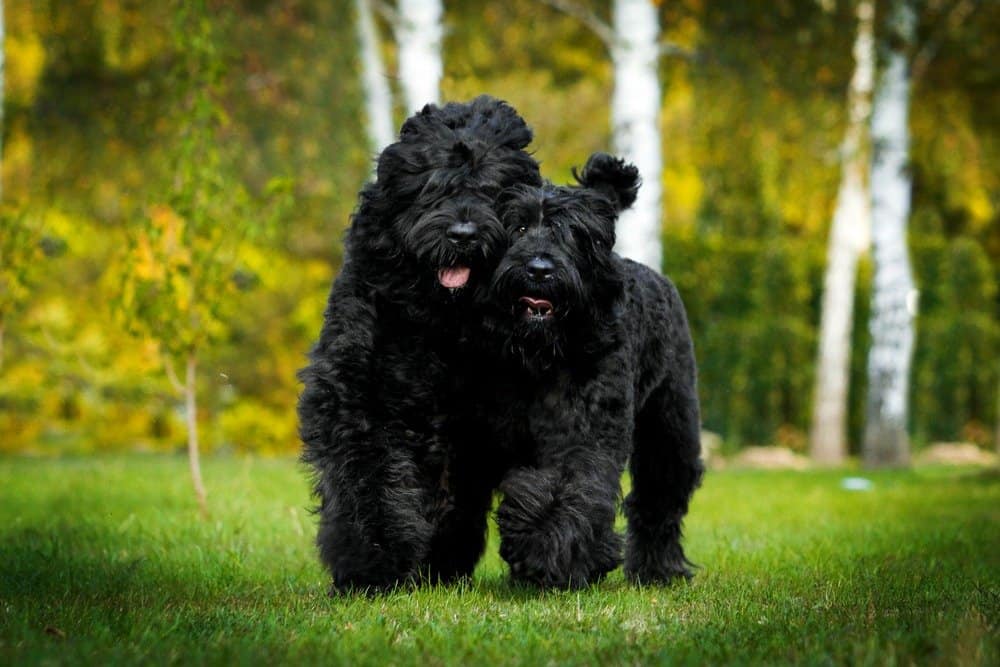
Two Black Russian Terriers

Black Russian Terriers respond best to positive reinforcement training.

Exercise

It will be important to keep your Black Russian Terrier active both physically and mentally. They are not a high-energy dog breed, so they don’t need as much physical exercise as some other breeds. Giving your dog about 45 minutes of exercise each day is generally sufficient. Walking, jogging, and vigorous playtime are all good options. Getting your dog involved in canine sports can help give them more mental stimulation as well.
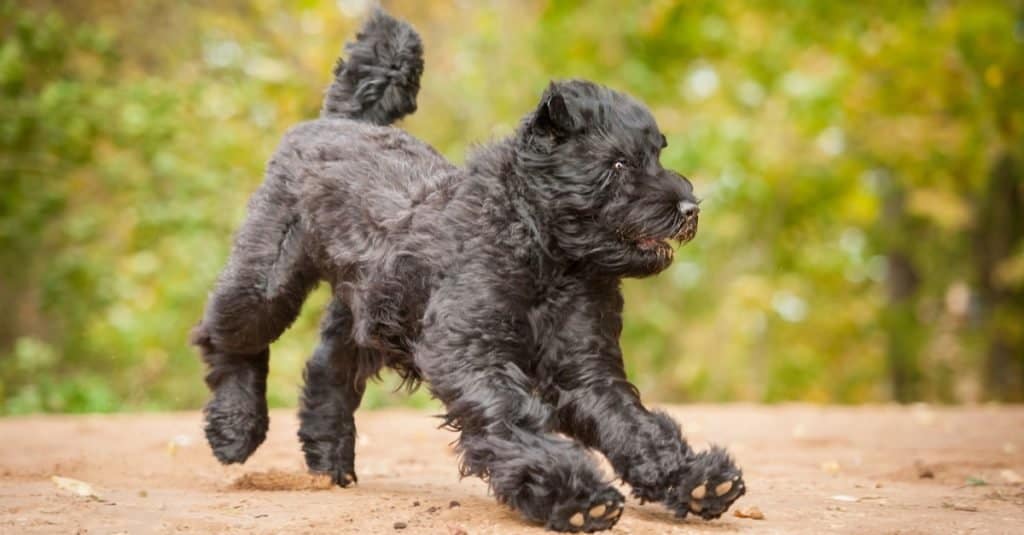
Biggest Dog Breeds: Black Russian Terrier

Black Russian Terriers are highly intelligent, confident guard dogs who need lots of daily exercise.

Puppies

Before bringing home a Black Russian Terrier puppy, make sure your home is ready for the new addition to your family. Puppy-proof your space by removing any potential hazards or harmful chemicals. Also, move anything out of the space that you wouldn’t want to see destroyed by a puppy.

You should also purchase food, a collar and leash, a dog bed, a crate, toys, and any other supplies that your dog will need. This will help ensure that you’re ready as soon as you bring them home.

It will be important to watch how much exercise your dog gets. By the time the puppy is three months old, you can start taking them for five-minute walks and slowly increase the length of these walks. Until a puppy is nine months old, it should not participate in any intense activities such as jumping, going upstairs, or running on firm surfaces. A puppy’s bones and joints are still developing, and these activities could lead to an injury.
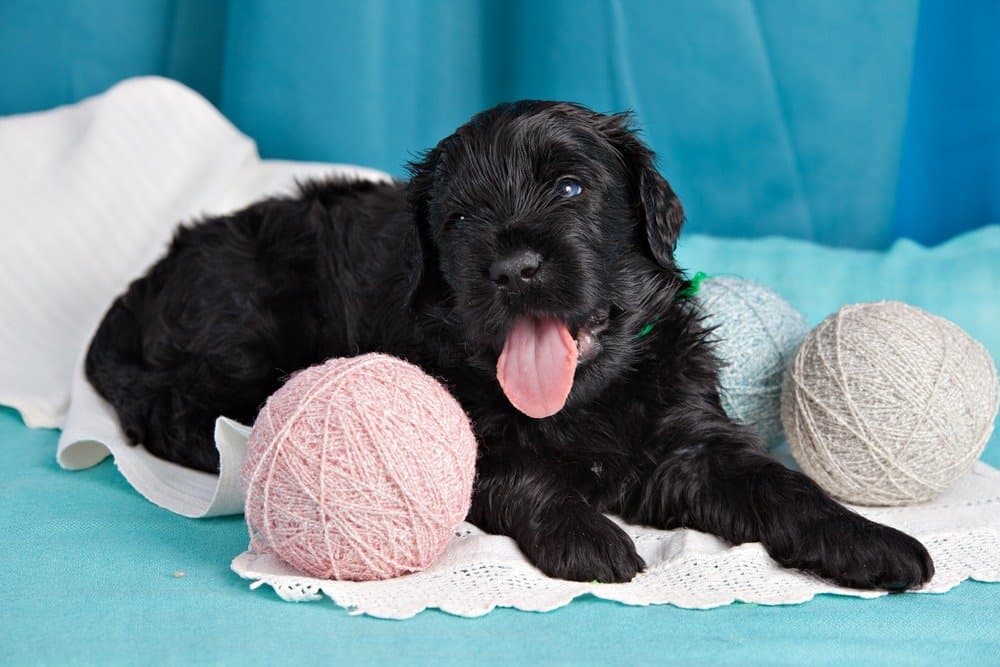
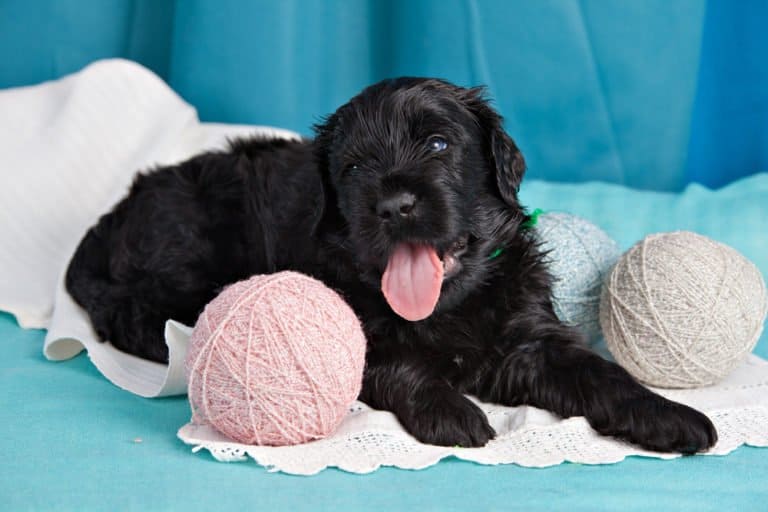
Black Russian Terrier puppy

Puppies should not be heavily exercised while their bones are developing.

With Children

This dog can make an excellent dog for families with children. They can be both protective and playful. Even though they are large dogs, Blackies can be very gentle with children. If you have younger children in the house, you should always closely supervise them when they are around your Black Russian Terriers. A Black Russian Terrier is a large dog and could accidentally knock down a child as they play together.

If you are looking to adopt a Black Russian Terrier from a rescue organization, you will want to find out if it is tolerant of children. Blackies do best when they grow up alongside children, so an older dog that wasn’t raised around children may not be the best match for you.
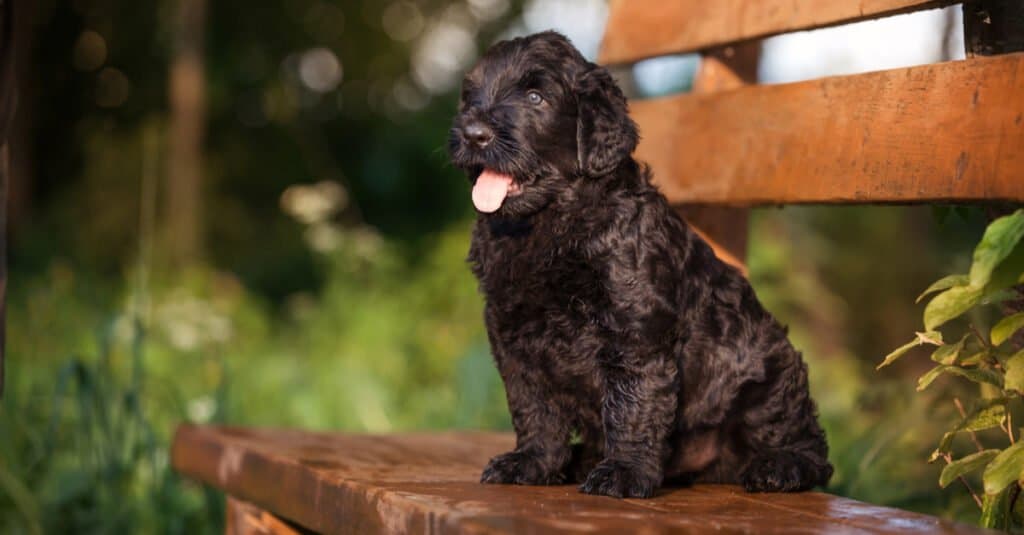
Black Russian Terrier sitting outside on bench with tongue out

Black Russian Terriers are tolerant of children.

Dogs similar to Black Russian Terriers

Giant Schnauzers, Rottweilers, and Airedale Terriers are three breeds similar to the Black Russian Terrier.

  • Giant Schnauzer: The Giant Schnauzer was one of the breeds used to create the Black Russian Terrier. Both breeds are very territorial and can make excellent watchdogs. Blackies make a better family pet than Giant Schnauzers. They are also more tolerant of other dogs.
  • Rottweiler: Rottweilers and Black Russian Terriers are both about the same size. Both breeds have an average weight right around 110 pounds. Rottweilers are easier to groom than Black Russian Terriers, which will need to be brushed multiple times each week. Both breeds make good watchdogs, but a Rottweiler is more likely to bite than a Black Russian Terrier is.
  • Airedale Terrier: Airedale Terriers and Black Russian Terriers are both very affectionate and social breeds. They are both good breeds to have around children. Black Russian Terriers are a much larger breed than Airedale Terriers, though. The average weight of a Black Russian Terrier is 111.5 pounds, while Airedale Terriers weigh just 57.5 pounds, on average.

View all 453 animals that start with B

Sources

  1. American Kennel Club / Accessed November 8, 2019
  2. Dog Time / Accessed November 8, 2019
  3. Wikipedia / Accessed November 8, 2019
  4. Pet Finder / Accessed November 8, 2019
  5. Vet Street / Accessed November 8, 2019
  6. Zestava Kennel / Accessed November 8, 2019
  7. Dog-Learn / Accessed November 8, 2019
  8. Dog Breeds 9-1-1 / Accessed November 8, 2019
  9. Dogell / Accessed November 8, 2019
  10. The Paws / Accessed November 8, 2019
Heather Hall

About the Author

Heather Hall

Heather Hall is a writer at A-Z Animals, where her primary focus is on plants and animals. Heather has been writing and editing since 2012 and holds a Bachelor of Science in Horticulture. As a resident of the Pacific Northwest, Heather enjoys hiking, gardening, and trail running through the mountains with her dogs.

Thank you for reading! Have some feedback for us?


Black Russian Terrier FAQs (Frequently Asked Questions)

A Black Russian Terrier is a large black dog that was bred in the form USSR to work with the army. The breed is very intelligent and protective. They make an excellent guard dog, but are also good with kids and can make a good family dog.