










Quick Take
- The 'King of Terriers' title hints at something royally surprising. There is a strain of this breed that breaks every size expectation you'd have for a terrier. See the size range →
- John Wayne's iconic nickname has nothing to do with Hollywood, and the credit for it belongs entirely to an Airedale Terrier. Meet the dog behind the name →
- Bathing your Airedale too often doesn't keep it cleaner. It actually ruins the coat, and most owners don't realize it until the damage is done. Check coat care guidelines →
- Airedales are highly intelligent, yet trainers consider them one of the harder breeds to work with. The reason why is rooted in their DNA. Understand the training challenge →
The Airedale Terrier, often called the ‘King of Terriers,’ is the largest terrier breed. Developed in the mid-19th century in the Aire Valley of Yorkshire, England, the breed was prized for its versatility, intelligence, and ability to hunt small game and assist in various working roles. The Airedale is a versatile working breed, an excellent family guard dog, and a loyal companion.

Size, Weight, and Appearance
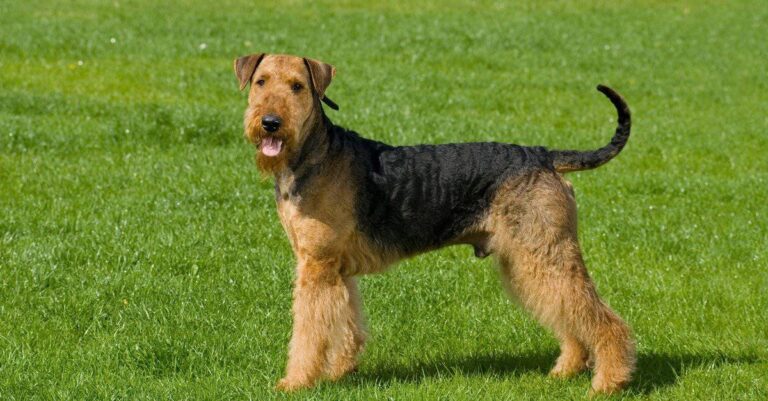
The Airedale terrier is a medium-sized dog that usually weighs between 50 and 70 pounds, though smaller females may weigh as little as 45 pounds. Males are usually about 23 inches tall, while females are slightly shorter at 22 to 23 inches.
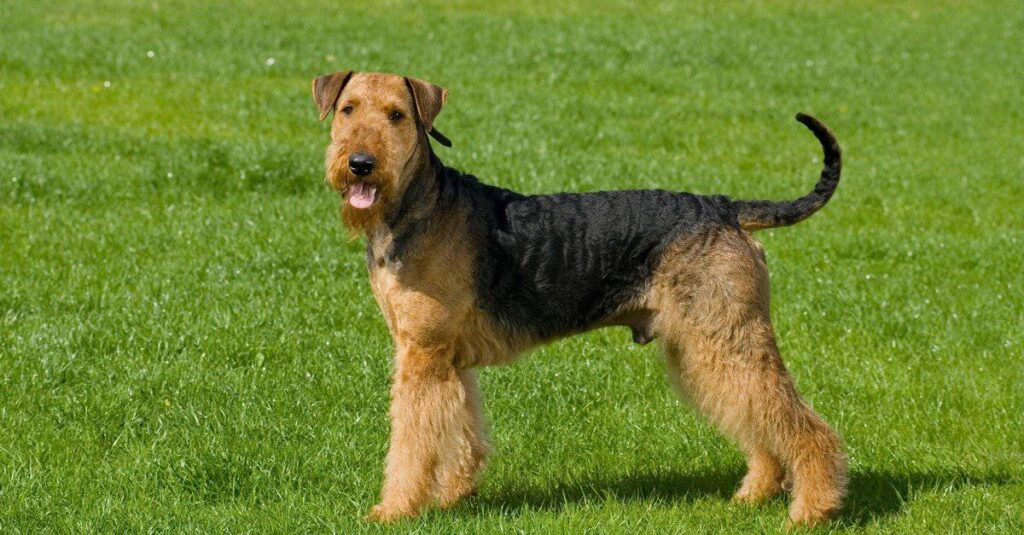
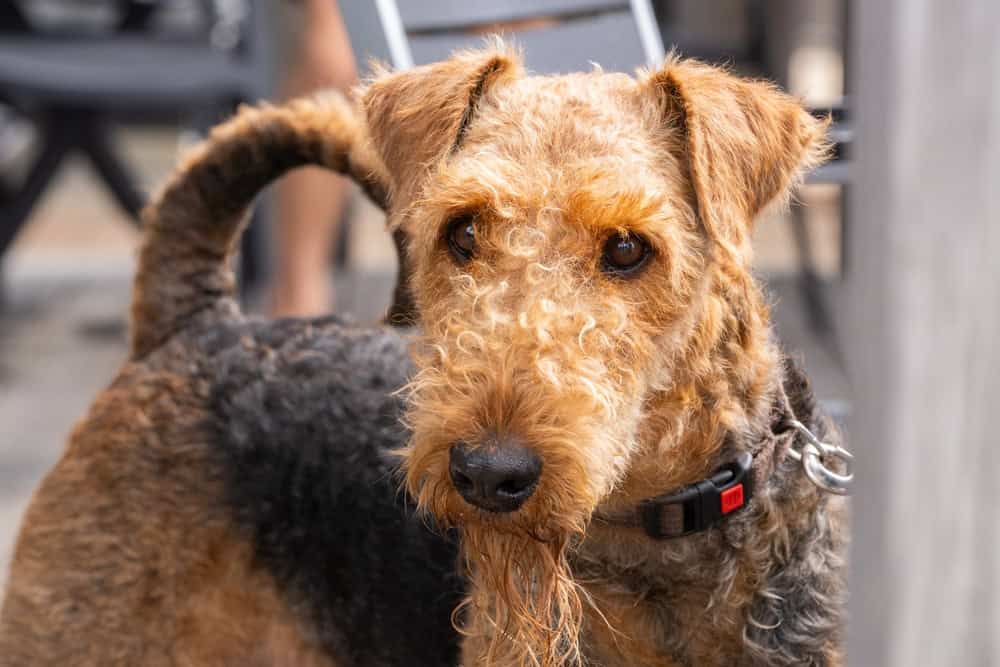
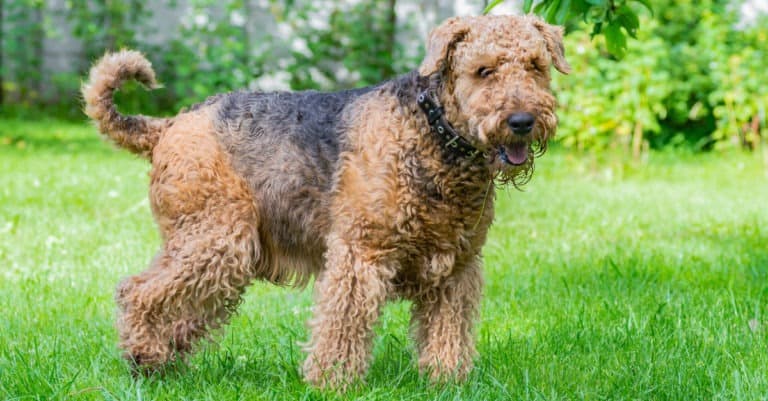
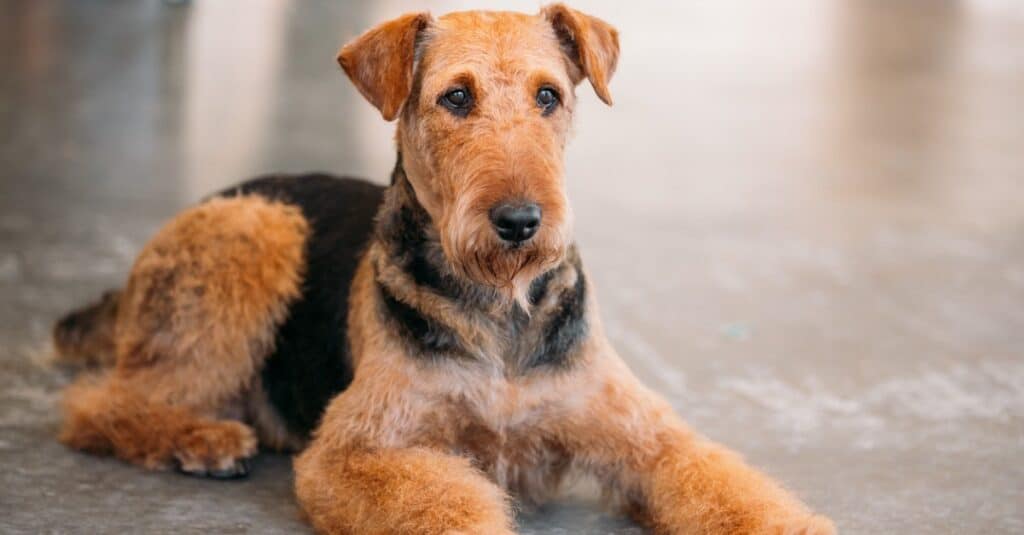
Airedale terriers are medium-sized dogs with wiry, dense coats.
©Dora Zett/Shutterstock.com
An Oorang strain of Airedales weighs in the 80 to 100-pound range, and sometimes more. This strain of the breed was developed back in the 1920s. Airedale puppies typically weigh about 10 pounds and are 10 inches tall at 8-10 weeks. Airedales don’t usually reach their full adult size until between one and two years of age.
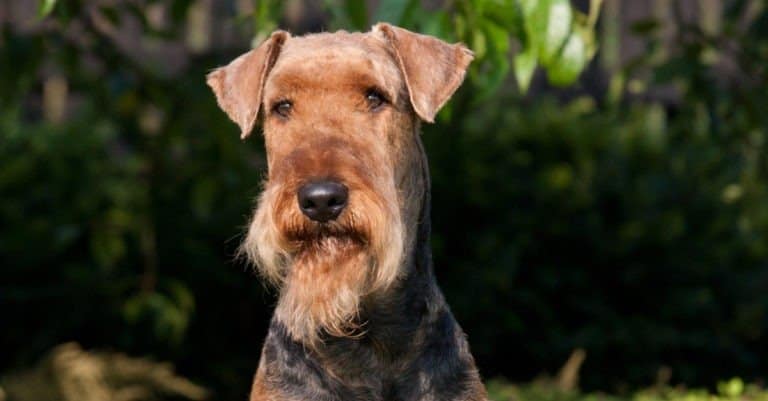
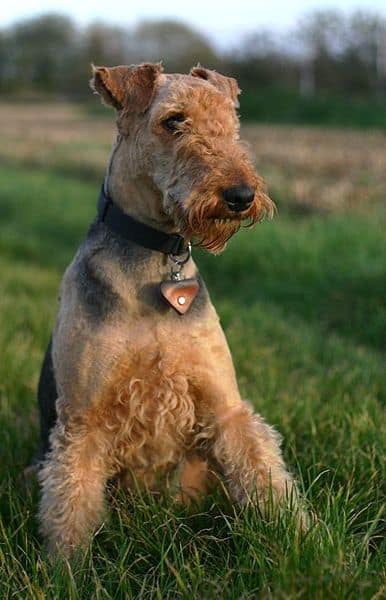
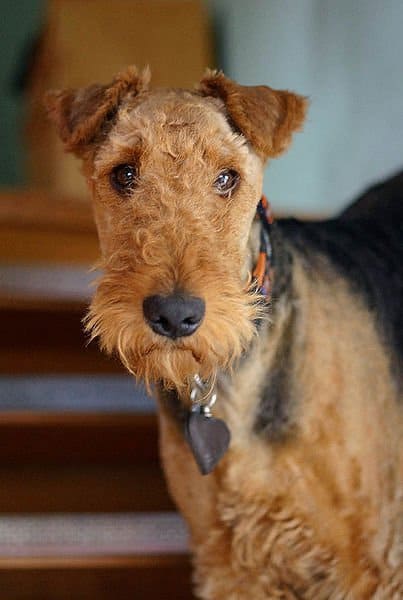
Airedales are the largest of the terrier group. They have a well-proportioned, athletic build with a deep chest and straight back, which gives them a commanding presence. Their coats are dense, wiry, and usually tan with a darker saddle of black or grizzle on the back. The breed’s distinct appearance includes a broad head with a flat skull, a long, straight nose, and deep-set, dark eyes that give them an alert, confident expression. Their ears are medium-sized, V-shaped, and fold forward, enhancing their characteristic look.
Characteristics
The Airedale Terrier is a lively breed known for its intelligence, strength, and energy. These qualities make them excellent working dogs and loyal companions. Despite their considerable size, they are agile and quick, having been initially bred for hunting and retrieving in rugged terrain. The breed is generally friendly and good-natured, though they can be independent and occasionally stubborn, reflecting their terrier instincts. Whether engaged in outdoor activities or relaxing with their family, Airedales exhibit a dignified bearing and a playful spirit.
History of the Breed
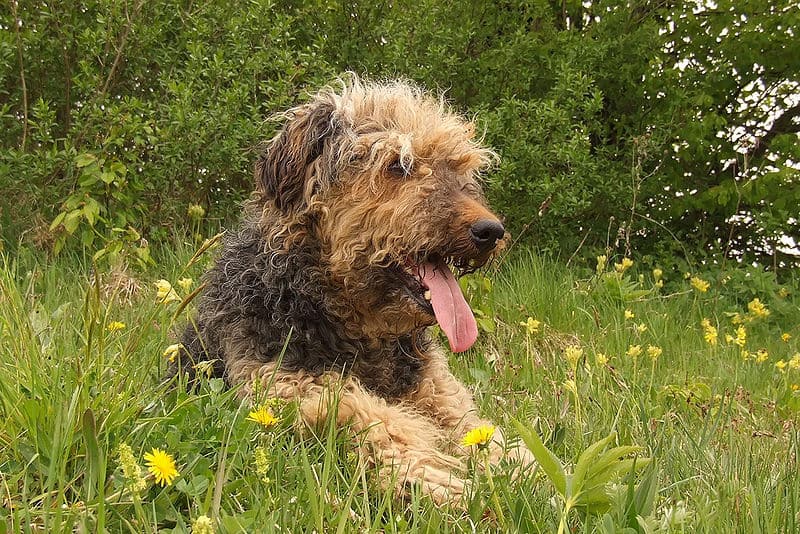
Airedale terriers were bred to hunt small game, like otters.
©Ioan Bodean, CC BY-SA 2.0, via Wikimedia Commons – Original / License
The Airedale Terrier is a dog breed originating in the Aire River valley in Yorkshire, England. The breed was developed in the mid-19th century by crossing the old English rough-coated Black and Tan Terrier with the Otterhound, along with possible crosses with other terriers, to create a versatile hunting dog that could work on land and water. The Kennel Club (UK) officially recognized the breed in 1886.
The Airedale Terrier was used for hunting small game, including otters, and also served as a guard dog and a messenger dog during World War I. The breed is also known for its versatility; it has been trained as a police dog, guide dog for the blind, therapy dog, and loyal companion.
Temperament and Behavior
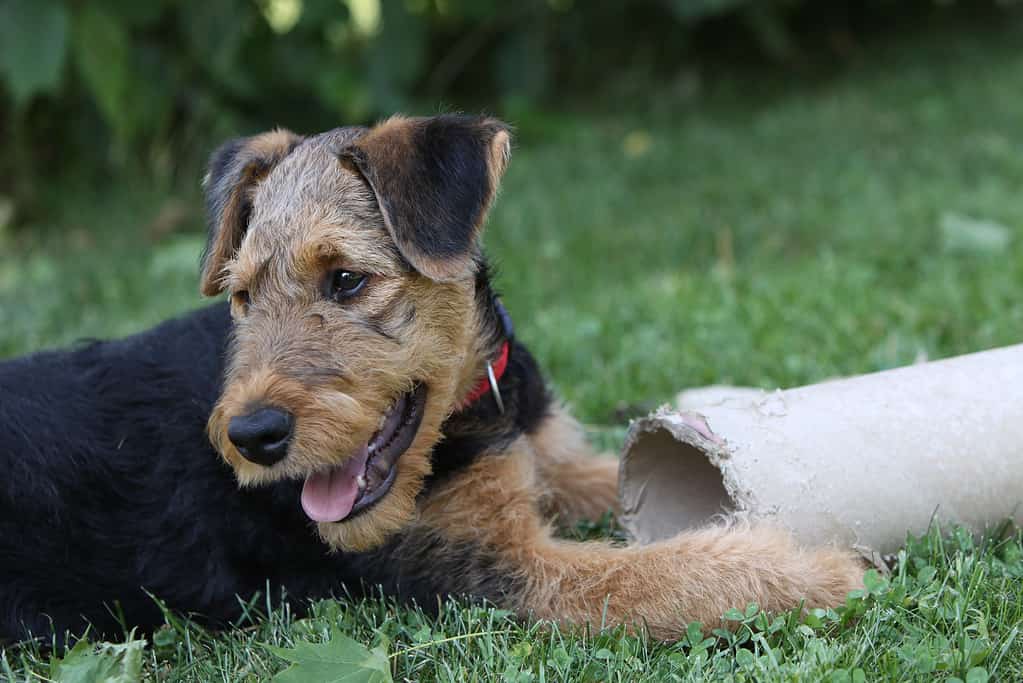
Airedale terriers are great pets for a high-energy family with kids.
©mb-fotos/iStock via Getty Images
The Airedale’s most prevalent personality traits include independence, energy, and stamina. Airedales exhibit fun-loving and active behavior, making them great for a high-energy family with kids. Airedales don’t like to be bored. Bored Airedales often engage in destructive behavior like chewing, barking, and digging.
The Airedale’s personality is most affected by training, socialization, and genetics. Puppies displaying the most positive traits of the breed will be curious, playful, and friendly. As long as an Airedale is adequately socialized and trained, it can make a good family dog and a reliable watchdog.
Diet
The recommended daily amount for feeding an adult Airedale is 1.5 to 2.5 cups of dry food. These amounts should be divided into two meals. Airedale puppies should be fed about one cup of dry puppy food daily, divided into two meals. You can also mix dry and wet food for your Airedale. Look for foods with fish oil and glucosamine, which help the Airedale’s coat and joints. You can also use supplements if necessary.
Airedales benefit from foods with fish oil and glucosamine to keep their coats and joints healthy.
©Grisha Bruev/Shutterstock.com
There is a broad selection of dog foods for dogs that experience allergies, like Airedale Terriers. Many dog foods contain limited ingredients to eliminate the most common allergy-causing ingredients and additives that irritate some dogs.
Maintenance And Grooming
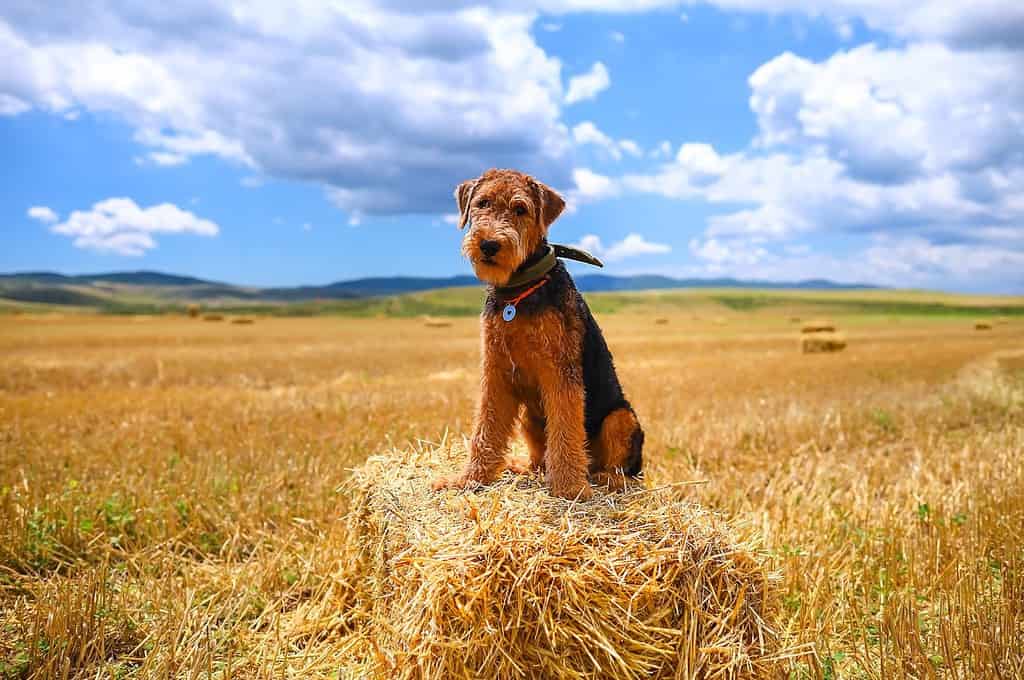
Airedales are easy to care for and only require one trip to the groomer a year.
©Aleks Silchenko/Shutterstock.com
The Airedale is a low-shedding breed, though it is not considered truly hypoallergenic, as its wiry coat still produces pet dander. Occasional brushing with a brush made for wiry coats can help remove dead hair. Airedales only need to visit the groomer once per year. Too much bathing can make the Airedale’s coat too soft. The coat can be trimmed with clippers or with a stripping knife. Most groomers use a mix of both techniques.
Training
Compared to other breeds, the Airedale terrier is challenging to train. They are very independent and have a stubborn streak. They need plenty of positive reinforcement, and yelling or roughness doesn’t work well. However, Airedales are also very intelligent, and respond well to creative and stimulating training. Be sure to start training early to prevent willfulness from setting in.
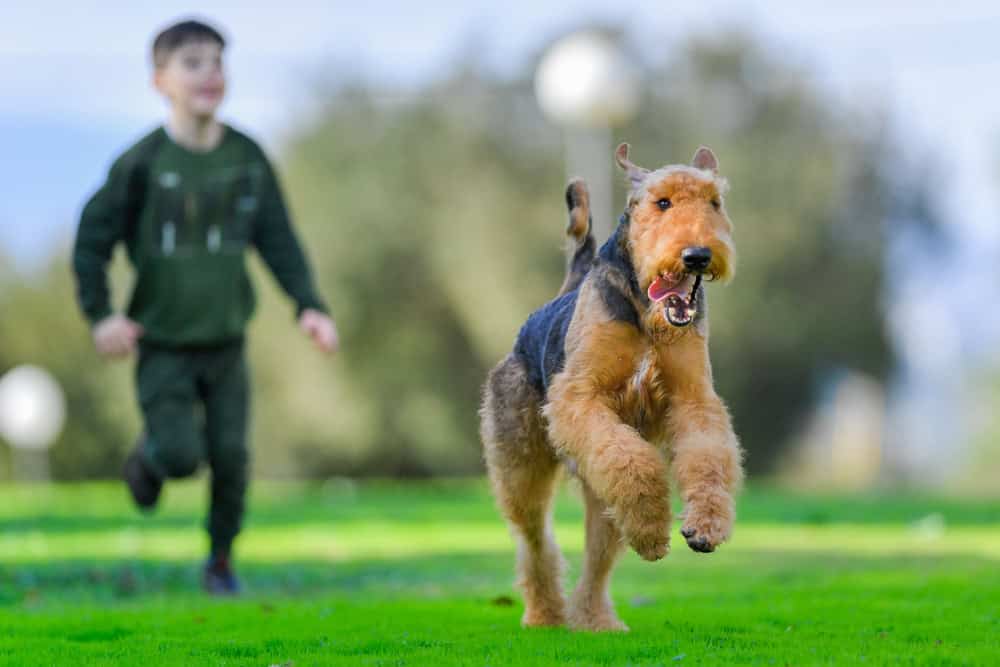
Airedale terriers are energetic dogs and require plenty of exercise.
©PROMA1/Shutterstock.com
Exercise
Airedales need plenty of exercise and entertainment. They were bred as working dogs and would get bored quickly if they had nothing to do. The best situation for an Airedale is a large property with a tall fence. Then they can run and explore to their heart’s content. If you don’t have that setup, you’ll need to ensure your Airedale gets daily walks or time at a park where they can run free.
Puppies
Airedale puppies need to be trained and socialized from a young age. They have a lot of energy and curiosity. They also like to chew, so you must provide plenty of approved chewing objects to keep them from chewing on shoes and furniture.
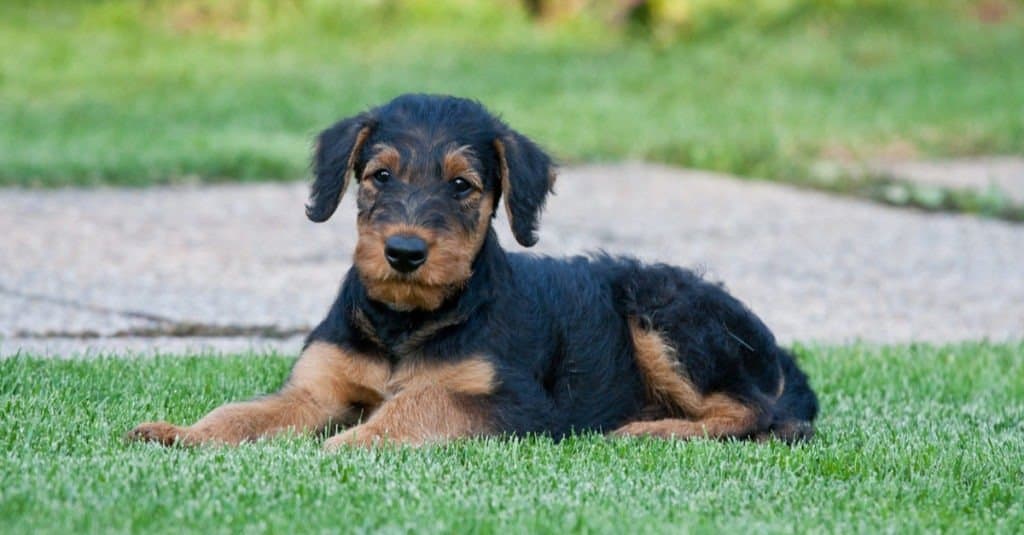
Airedale Terrier puppies are great with children. They can be quite playful and rambunctious.
©Lenkadan/Shutterstock.com
Airedale Terrier And Children
Airedales are typically good with children when socialized early. They have incredible protective instincts and can sense who is part of their family and who isn’t. They will often protect and guard their children when strangers are present. However, Airedale puppies are very rambunctious and larger than the average puppy, which sometimes can be too much for small children.
Common Health Issues
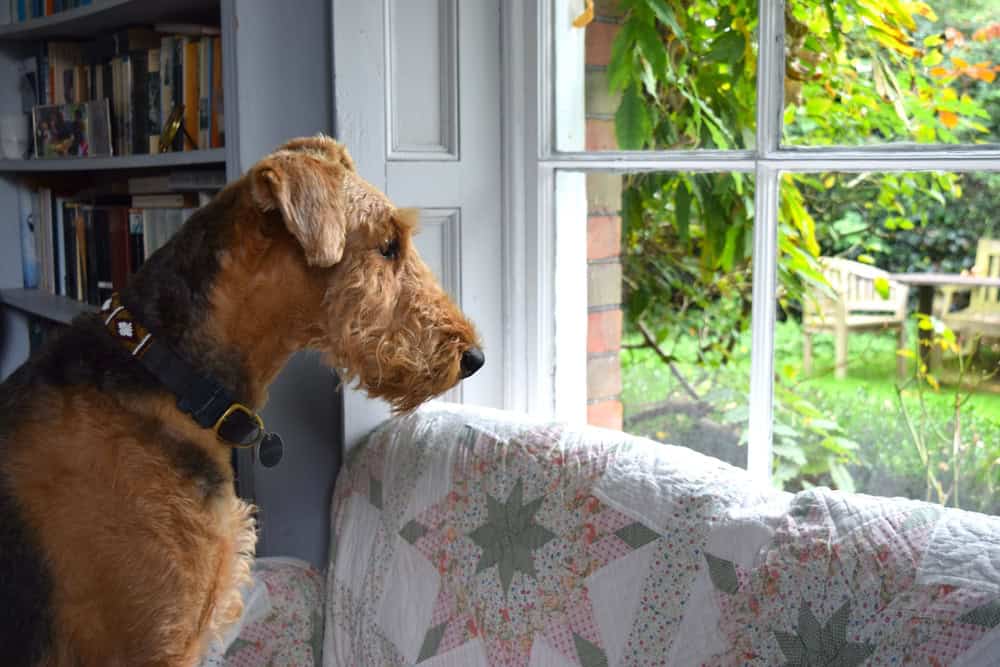
Airedale terriers are generally healthy but can suffer from hip dysplasia.
©Wirestock Creators/Shutterstock.com
The Airedale is a generally healthy breed with a few common health issues. It’s important to be aware of the breed’s potential health issues before purchasing a dog. A good breeder should be able to show you health clearances for hip dysplasia, elbow dysplasia, von Willebrand’s disease, and hypothyroidism.
The most common issues with Airedales are hip dysplasia and eye problems that result in vision loss. Hip dysplasia is a common problem in larger breeds and affects the dog’s ability to move around as they age. Another problem to look out for in Airedales is gastric dilatation-volvulus, also commonly called bloat. Bloat can occur if the dog exercises too soon after eating. Airedales may also suffer from food and contact allergies. Lastly, von Willebrand’s disease is a blood-clotting disorder that may affect Airedales between three and five years of age.
Famous Airedale Terriers
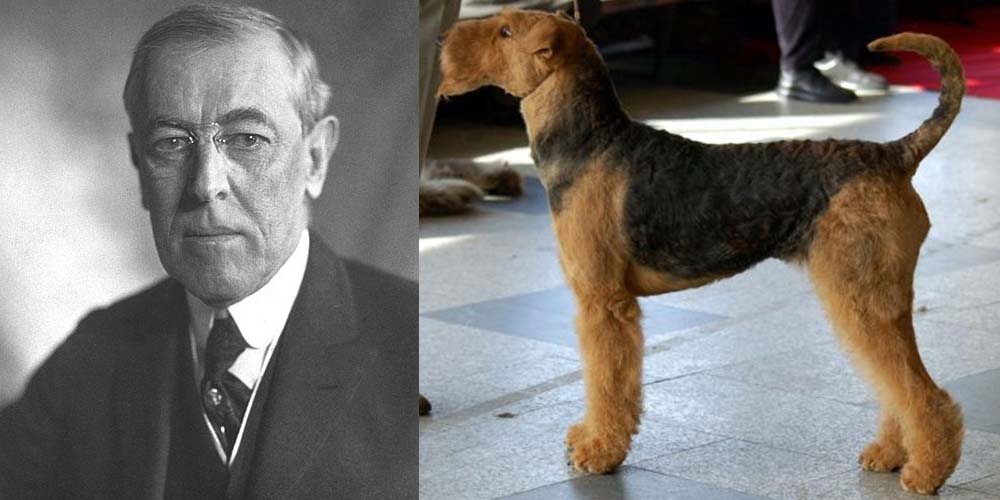
President Harding had an Airedale terrier named Laddie Boy.
©Woodrow Wilson – Harris & Ewing, Public domain | Airedale Terrier – Lilly M, CC BY-SA 2.5 – Original / License
Airedales have long been popular dogs in America, but they somewhat fly under the radar in terms of media coverage. However, there have been some famous examples of the breed through the years.
• President Warren G. Harding owned an Airedale named Laddie Boy
• Actor John Wayne owned an Airedale named Duke
• Various episodes of the cartoon Family Guy feature an unnamed Airedale
Laddie Boy was arguably the most famous Airedale and was doted on by an adoring public and press. “Letters” from the dog were published in the New York Times. President Harding loved his dog and had statues and portraits made of Laddie Boy.
John Wayne’s Airedale, Duke, originated the actor’s famous nickname. Wayne had the dog growing up, and local firemen began calling the dog Big Duke and Wayne Little Duke.
Airedale Terrier Pictures
View all of our Airedale Terrier pictures in the gallery.

Lenkadan/Shutterstock.com
Sources
- Wikipedia / Accessed February 4, 2021
- Wikipedia / Accessed February 4, 2021
- Dogtime / Accessed February 4, 2021
- Terrier Center / Accessed February 4, 2021
- Doglime / Accessed February 4, 2021
- The Paws / Accessed February 4, 2021
- Petbudget / Accessed February 4, 2021
- Wagwalking / Accessed February 4, 2021