













Quick Take
- Most people think they know what a Terrier is, yet the group hides one breed that breaks every rule the others follow. Browse all Terrier types →
- Terriers are intelligent and easy to train, though that same intelligence can sometimes work directly against you. See how intelligence cuts both ways →
- The most famous Terrier in advertising history wasn't what the world was told. The truth is stranger than the campaign. Discover the advertising secrets →
- Terriers originated in the British Isles, but their deepest roots trace somewhere most dog owners would never guess. Trace their surprising roots →
The Terrier is not a dog breed in and of itself, but a dog group of breeds that share common features. They range from small to large sizes with coats that range from short and wiry to long and smooth, and personalities that are fearless, lively, protective, loyal, intelligent, and playful. Terriers are bred to hunt, kill vermin, and guard family homes and barns. They are further categorized by size and function, with there being 5 different groups of Terrier.
The name “terrier” comes from the Latin word for “earth” (terra) because these dogs burrow and “go to ground” to catch field vermin such as chipmunks, mice, rats, moles, voles, badgers, otters, and even foxes.
This group of dogs originated in the British Isles from a small selection of ancestors. Although they’re fairly new, they’re extremely popular all over the world as working dogs, companion animals, and family pets.

Different Types of Terrier Breeds
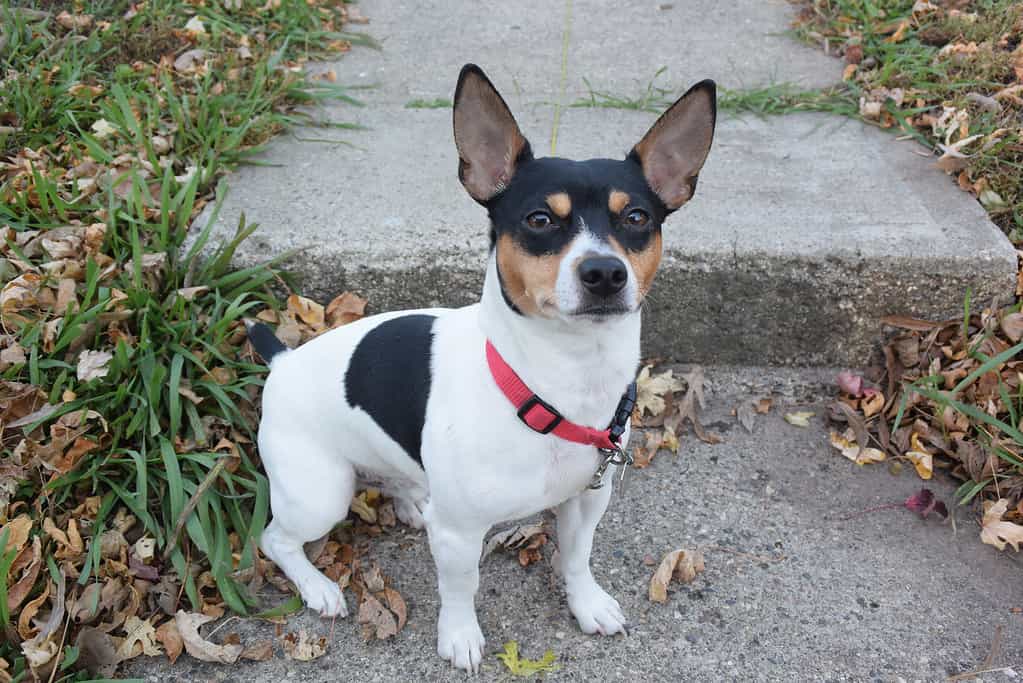
Teddy Roosevelt Rat Terrier, male puppy on sidewalk steps in autumn.
©Michele M Vogel/Shutterstock.com
There are hunting, short-legged, bull-type, toy, and large breeds. They are all working breeds with the exception of the Boston Terrier, which originated in the United States, and the American Kennel Club accepted it in 1893 as a non-sporting breed. Rat-baiting, bull-baiting, and dog-fighting have been popular blood sports involving various types and breeds.
Here are some examples of popular Terrier breeds, in alphabetical order:
- Airedale Terriers
- American Hairless Terriers
- American Pit Bull Terriers
- American Staffordshire Terriers
- Australian Terriers
- Bedlington Terriers
- Biewer Terriers
- Black Russian Terriers
- Boglen Terriers
- Border Terriers
- Boston Terriers
- Brazilian Terriers
- Bull Terriers
- Cairn Terriers
- Cesky Terriers
- Fox Terriers
- Glen of Imaal Terriers
- Irish Terriers
- Jack Russell Terriers
- Japanese Terriers
- Kerry Blue Terriers
- Lakeland Terriers
- Manchester Terriers
- Miniature Bull Terriers
- Norfolk Terriers
- Norwich Terriers
- Parson Russell Terriers
- Patterdale Terriers
- Rat Terriers
- Russell Terriers
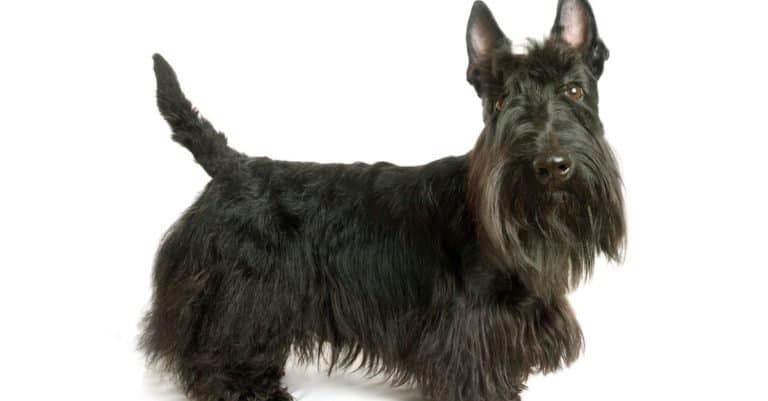
- Scottish Terriers
- Sealyham Terriers
- Silky Terriers
- Skye Terriers
- Smooth Fox Terriers
- Staffordshire Bull Terriers
- Taco Terriers
- Toy Fox Terriers
- Teddy Roosevelt Terriers
- Tenterfield Terriers
- Tibetan Terriers
- Welsh Terriers
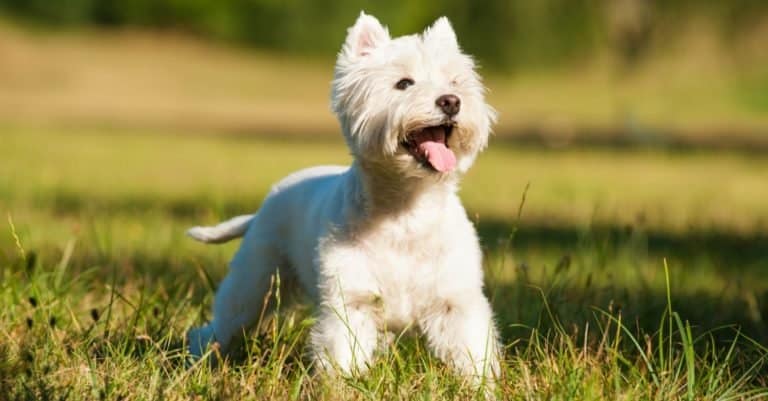
- West Highland Terriers
- Wheaten Terriers
- Wire Fox Terriers
- Yorkshire Terriers
Evolution and Origins
Several dog breeds, primarily developed in England, were originally bred for vermin hunting and for their role in foxhunting and dog fighting, exhibiting a pugnacious nature; however, over time, their breeding has focused on cultivating a friendlier temperament.
The term “terrier” originates from the Middle French phrase “chien terrier,” meaning “dog of the earth,” reflecting their original purpose of hunting and eliminating vermin, which is still evident in breeds like the rat terrier. At the same time, their bold and fearless nature has come to characterize the temperament of the breed as we know it today.
A recent study reveals that the origins of various dog breeds, such as Chihuahuas, spaniels, and tiny terriers, can be traced back to the Middle East, indicating that the domestication of the gray wolf is responsible for the diverse range of dog breeds we have today.
3 Pros and Cons of Owning a Terrier
| Pros | Cons |
|---|---|
| They’re social and lively. They enjoy being around people. Although they can make new friends, they prefer their owners and families. | They have separation anxiety. These dogs tend to be prone to negative behaviors such as excessive barking, chewing, and digging when left alone. It is very important to socialize and train them early; otherwise, it will be very difficult to do so later on. |
| They love to work. These dogs thrive on having tasks or jobs to do. | Overall, they don’t get along with other dogs and other animals. They have a high prey drive, so they are prone to chasing smaller animals. They are also territorial and should never be off-leash outside. |
| They’re intelligent. Curious dogs take to training as long as there is variety and consistent, positive rewards. Although they’re also stubborn, this means they won’t give up what they’ve learned easily. | They shouldn’t be left unsupervised around small children. Some breeds are very possessive of their food and toys. Teach children how to handle them gently and never leave them unsupervised. |
Size and Weight

There are more than 40 types of Terrier mixes, such as the Staffordshire Bull Terrier, pictured here.
©Melounix/Shutterstock.com
These dogs are a group of small to large-sized breeds with a coat that ranges from short and wiry to long and silky, or even hairless, such as the American Hairless Terrier, which is derived from the Rat Terrier.
Due to their variety, they can weigh as little as 2.7 kg (6 lb), such as with the English Toy Terrier, to up to 80 lbs, such as with the Bull Terrier.
Their height can range from 10 to 24 inches. In some breeds, males are larger than females in both weight and height, while there is little to no difference in others. All puppies are considered adults at approximately 12 to 18 months, but they don’t reach their full growth until 2 or even 3 years of age.
Common Health Issues
These dogs as a whole tend to be fairly healthy. Smaller breeds are especially hardy, although specific small breeds have unique health issues; for example, Yorkshire Terriers have a higher risk of hypoglycemia in their first five months after birth, and many small breeds are at risk of blindness and other vision problems. The Boston Terrier is prone to respiratory issues due to brachycephalism, and larger breeds, especially with deep chests (such as bull-type terriers), are more vulnerable to bloat (gastric torsion).
Some terrier breeds, such as Bull Terriers and Cairn Terriers, are more prone to compulsive behaviors (Dog Compulsive Disorder), but this is not a general trait of all terriers. Behaviors include excessive barking, chewing, digging, and other destructive or negative behaviors. Breeds that are actively working are prone to arthritis and joint dysplasia. Cancer is also a risk.
Temperament
The temperament of this dog group is generally described as lively. Their general personality is social and playful, with traits of fearlessness, intelligence, and protectiveness. They also tend towards having separation anxiety, with behaviors of excessive barking, chewing, and digging. They prefer people over other dogs or animals. Some breeds are more possessive and snappish than others. They also tend towards having a high prey drive and so will chase cats and other smaller animals.
How To Take Care of Them
New pet owners looking for how to care for these dogs, especially puppies, must consider the specific breed. Whether it’s behavioral or stress issues like separation anxiety and OCD, health issues like hypoglycemia and trouble breathing, or different care related to their coat and size, each breed has unique needs that must be considered.
The Best Dog Food for Terriers
These dogs, especially puppies, have unique health considerations depending on the breed. Therefore, new owners should consider these factors when choosing food for their pets:
Puppy food: Puppies should have puppy food for their age, size, and nutritional needs. All puppies need nutritionally complete puppy food and to be fed according to the directions of the food or the recommendations for their breed.
Adult dog food: Similar to puppy food considerations, adult dog food should be nutritionally complete. Adding supplements is a good idea if your dog is prone to specific health issues. Because these dogs remain active well into adulthood, they should have an active dog food variety that combines the main ingredient of animal protein with carbohydrates, fats, and vegetables.
Maintenance And Grooming
Maintenance and grooming for these dogs depend on the coat of the breed you have. For instance, Airedale Terriers are best suited for warm climates, the Australian Terrier adapts to any climate, and the Bedlington Terrier is best suited for cold climates. Short-haired breeds have one coat and so only need brushing a couple of times a week, while longer-haired breeds will need more frequent brushing and more than one type of brush. Those with long fur, which sheds often, or who are prone to matting, need daily brushing.
Training
These dogs are intelligent but stubborn. If they are bored due to a lack of variety in their training or are punished with negative reinforcement, they will refuse to do the tasks and act out. Early training and socialization at 3-4 months with firm and consistent directions and positive rewards is a must.
Exercise
Like other dogs, playtime for puppies should be limited, with 5 minutes for every month of age. Once they are adults, however, these dogs need a lot of exercise. Smaller breeds do not need nearly as much space as larger ones and do not require heavy exercise.
Generally, they need a high amount of exercise every day. They also need variety to keep them happy and engaged. Aim for 60-90 minutes of exercise with 30 minutes of moderate to intense play.
Puppies
Puppies will display signs of separation anxiety early on, even when not left alone for long. Crate training is recommended along with leaving toys. If socialized early, they will do well being left alone with other puppies or other dogs of any age.
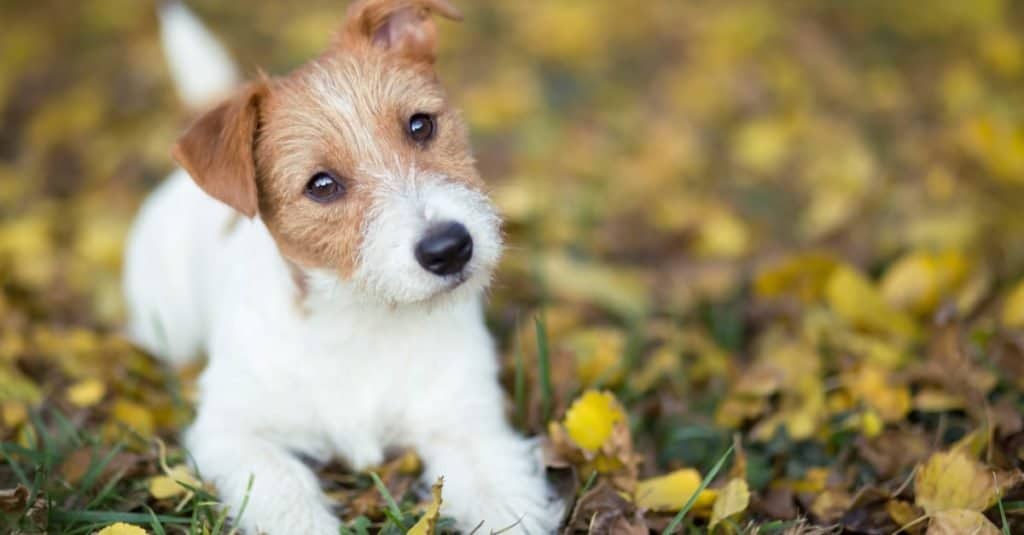
The Jack Russell Terrier is a cute and playful Terrier breed.
©Reddogs/Shutterstock.com
Terriers and Children
Certain breeds tend to be very possessive of food and toys and may bark, growl, or snap at children in the same way they would at adults. They are also defensive and, hence, should not be left unsupervised with children, especially those who do not know how to be gentle with them.
Dogs Similar
Dog breeds similar to those in this dog group include Beagles, Poodles, and Dachshunds. Additional dog breeds similar to Terriers include:
- Chihuahuas: They’re lively and energetic dogs. They’re also similar in size to many of these dog breeds.
- Shih Tzu: As a companion animal, it’s as loyal to its owners as Terriers are.
- Schnauzer: This breed has several size possibilities, like those found in this dog group. It’s likewise been used as a hardworking farm dog.
Famous Terriers
Several breeds have been used in advertising. Here are 3 different breeds that have been the most popular in video commercials and ads:
- Spuds Mackenzie: This white English bull terrier with a black mark around her left eye was the mascot for Anheuser-Busch in a 1987 Super Bowl ad. Although the name and character were supposed to be male, the dog in the commercials was a female named Honey Tree Evil Eye. She traveled the world for the next 2 years after a series of highly popular commercials, stopping in 1989 with the Bud Bowl and dying of kidney failure in 1993.
- Nipper: This dog was so named due to his biting visitors’ legs. 3 years after he died, his owner (English painter Francis Barraud) painted a picture of him staring into a phonograph machine entitled, “His Master’s Voice.” The Gramophone Company bought the image after convincing Barraud to alter it to resemble one of its machines. Patented in 1990, the image of Nipper became posthumously famous starting in 1901. It has extended to being used to promote products for several other companies, including Victor and RCA.
- Bullseye: This white bull terrier with a target painted over its left eye became the mascot for Target stores in 1990, with several other similar dogs replacing it as mascot over the years.
Terrier Pictures
View all of our Terrier pictures in the gallery.

Zero Degrees Photography/Shutterstock.com
Sources
- Wikipedia / Accessed March 29, 2021
- Five Thirty Eight / Accessed March 29, 2021
- American Kennel Club / Accessed March 29, 2021
- Tea Cup Dog Daily / Accessed March 29, 2021
- The Happy Puppy Site / Accessed March 29, 2021
- Barkley and Paws / Accessed March 29, 2021
- Fairmount Pet Service / Accessed March 29, 2021
- Pet Educate / Accessed March 29, 2021
- Dog MD / Accessed March 29, 2021
- Dogster / Accessed March 29, 2021