



D
Species Profile

Doberman Pinscher

Canis lupus familiaris

Brains, speed, and steadfast loyalty
DragoNika/Shutterstock.com

Doberman Pinscher Distribution

Click a location to explore more animals from that region

Origin Location

This map shows the native origin of the Doberman Pinscher. As a domesticated species, they are now found worldwide.

Loading map...

Found in 1 country

Size Comparison

Human 5'8"
Doberman Pinscher 2 ft 2 in

Doberman Pinscher stands at 38% of average human height.

smartest dog breeds - Doberman Pinscher

At a Glance

Domesticated
Also Known As Doberman, Dobermann, Dobie
Diet Omnivore
Activity Diurnal+
Lifespan 11 years
Weight 45 lbs
Status Not Evaluated
Did You Know?

The breed was developed in late-1800s Germany by Karl Friedrich Louis Dobermann, a tax collector who wanted a protective companion.

Scientific Classification

The Doberman Pinscher is a medium-to-large domestic dog breed developed in Germany (late 19th century) for protection and companionship, known for athleticism, intelligence, and trainability.

Kingdom
Animalia
Phylum
Chordata
Class
Mammalia
Order
Carnivora
Family
Canidae
Genus
Canis
Species
Canis lupus familiaris

Distinguishing Features

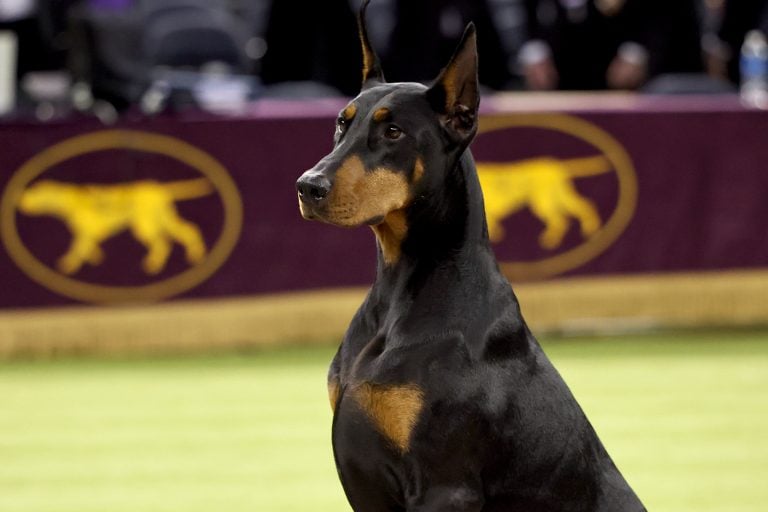
  • Sleek, muscular, square-built body with deep chest
  • Long, wedge-shaped head; alert expression
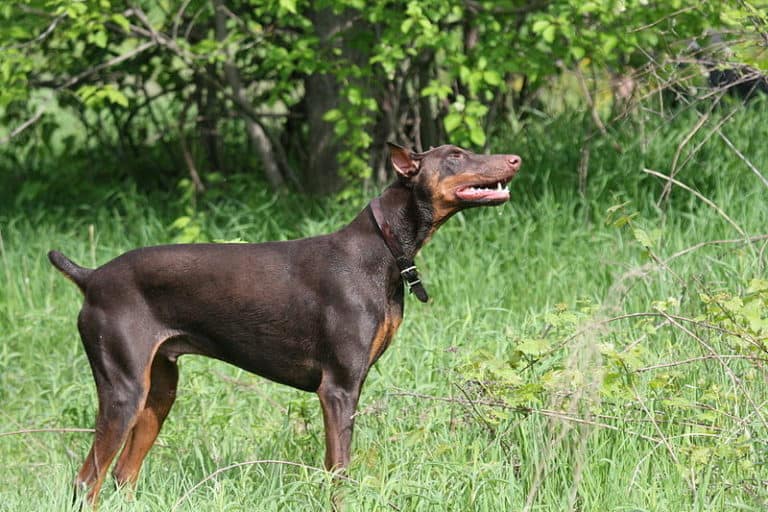
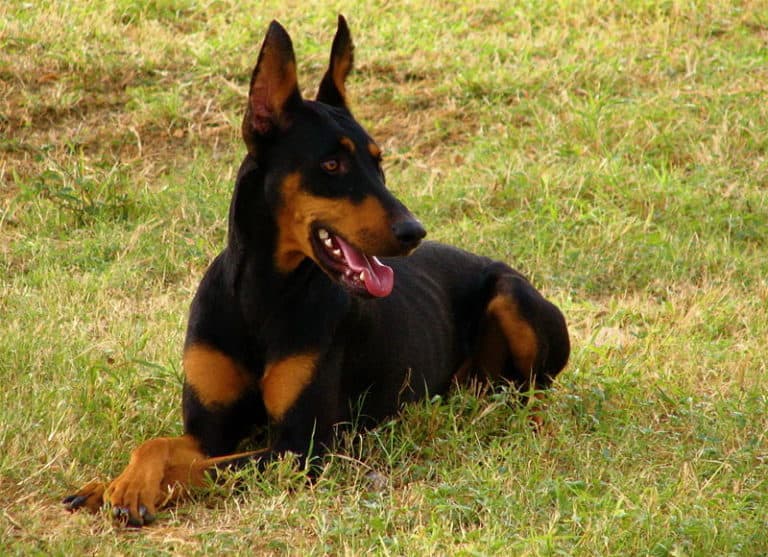
  • Short coat commonly black/rust, red/rust, blue/rust, or fawn/rust
  • High energy, strong working drive, highly trainable and responsive

Physical Measurements

Males and females differ in size

Height
♂ 2 ft 4 in (2 ft 3 in – 2 ft 4 in)
♀ 2 ft 2 in (2 ft 1 in – 2 ft 3 in)
Length
♀ 3 ft 9 in (3 ft 5 in – 4 ft 1 in)
Weight
♂ 90 lbs (77 lbs – 99 lbs)
♀ 68 lbs (60 lbs – 77 lbs)
Tail Length
♂ 12 in (10 in – 1 ft 2 in)
♀ 1 ft 3 in (1 ft 1 in – 1 ft 6 in)
Top Speed
31 mph
Very fast sprinting working dog

Appearance

Primary Colors
Secondary Colors
Skin Type Tight, short, smooth coat over well-pigmented skin; typically low-odor but sheds year-round (generally moderate shedding) and has limited insulation (often minimal undercoat), making the breed more cold-sensitive than many other domestic dogs.
Distinctive Features
  • Domestic dog (Canis lupus familiaris) breed selectively developed in Germany (late 19th century) for personal protection and companionship; not a wild canid and not to be confused with Miniature Pinscher or German Pinscher.
  • Athletic, elegant, "square" working-dog silhouette: deep chest, tucked abdomen, strong topline, long neck, and well-angulated hindquarters built for speed and endurance.
  • Refined, wedge-shaped head with a long muzzle; alert expression; strong bite typical of guardian/working breeds.
  • Coat is very short and sleek, emphasizing musculature and overall clean outline; grooming is comparatively easy (occasional brushing, bathing as needed).
  • Color/marking hallmark is the sharply defined rust/tan points; this crisp point pattern is a key distinguishing visual trait compared with many other domestic dog breeds.
  • Tail docking and ear cropping are historical practices in some regions but are not universal and are not required for the breed to function as a companion/working dog; many Dobermans are naturally eared and tailed.
  • High intelligence and trainability with strong handler focus; requires consistent, humane training and early socialization to channel protective instincts appropriately.
  • High exercise and mental-enrichment needs (daily structured activity, obedience/sport work, scent games); under-stimulated individuals may develop nuisance behaviors.
  • Cold sensitivity due to short coat-often benefits from a coat in cold/wet weather; also needs heat management during intense exercise.
  • Notable breed-associated health concerns to monitor with veterinary guidance: dilated cardiomyopathy (DCM), von Willebrand disease (vWD), cervical spondylomyelopathy (Wobbler syndrome), hypothyroidism, hip dysplasia, and gastric dilatation-volvulus (bloat) risk; responsible breeding and screening are especially important.
  • Care considerations: maintain lean body condition to support joints/heart, routine dental care, nail/foot care for athletic work, and proactive cardiac evaluation (e.g., echo/Holter as advised).

Sexual Dimorphism

Sexual dimorphism is common: males are typically larger, heavier-boned, and more visually powerful through the chest and head; females are generally slightly smaller, finer-boned, and more streamlined while retaining the same overall athletic proportions and point markings.

♂
  • Broader skull and thicker neck; more pronounced forechest and overall heavier bone.
  • Typically taller and more muscular, giving a more imposing guardian-type presence.
♀
  • Slightly smaller frame with a more refined head and lighter bone.
  • Often appears more streamlined and agile while maintaining the breed's square, athletic outline.

Did You Know?

The breed was developed in late-1800s Germany by Karl Friedrich Louis Dobermann, a tax collector who wanted a protective companion.

Dobermans are among the most trainable breeds and are widely used in protection sports, service work, and search-and-rescue.

Typical coat colors include black/rust and red/rust; blue and fawn (Isabella) also occur, with tan markings forming a classic "rust points" pattern.

Their sleek, short coat offers low grooming needs but less cold tolerance than many double-coated dogs.

A famous WWII-era Doberman, "Kurt," served with the U.S. Marine Corps in the Pacific and is commemorated at the War Dog Memorial on Guam.

The breed's silhouette is defined by a deep chest, tucked waist, and long, athletic stride-built for endurance and quick acceleration.

Dobermans are often called "velcro dogs" because many strongly prefer staying close to their people.

Unique Adaptations

  • Athletic, efficient build: a deep chest and strong hindquarters support stamina and rapid bursts-useful for historical guard and patrol roles.
  • Short, close coat: reduces snagging and aids heat dissipation during activity, though it increases need for warmth in cold climates.
  • High biddability: selective breeding for working partnership makes many individuals highly responsive to training and human direction.
  • Strong proprioception and coordination: often excel in agility/obedience/protection sports when conditioned safely.
  • Social sensitivity: many read human posture and tone keenly-an advantage for companion-guardian work, but it benefits from calm, consistent handling.
  • Species context (Canis lupus familiaris): like other dogs, Dobermans retain wolf-derived social cognition and cooperative tendencies, but are specialized by breeding for stable, controllable protective behavior.

Interesting Behaviors

  • Shadowing/"velcro" following: strong handler focus and preference for proximity, especially in bonded adults.
  • Alert scanning: many Dobermans posture tall, orient ears/eyes forward, and visually track movement-classic guardian-style vigilance.
  • Controlled protectiveness: they may place their body between owner and a perceived threat, then look to the handler for cues.
  • High play/drive: energetic games (fetch, tug, scent games) can become intense; structured outlets prevent boredom behaviors.
  • Fast learning and patterning: they quickly anticipate routines-helpful in training, but can lead to "outsmarting" inconsistent rules.
  • Mouthy puppy phase: like many working dogs, young Dobermans may explore with their mouths; early bite-inhibition training is important.
  • Vocal variety: some use a low "woof" or grumble-like sounds for alerting rather than nonstop barking.

Cultural Significance

Doberman Pinscher (Canis lupus familiaris) became a symbol of the modern guardian dog, bred in late 19th-century German city life. Selective breeding shaped athletic, handler-sensitive dogs with controlled protective skills used as police/military partners, service, sport, and family dogs.

Myths & Legends

Legend says Karl Friedrich Louis Dobermann, a tax collector who traveled with money and records, bred the Doberman Pinscher (Canis lupus familiaris) to look fierce, stay loyal, and protect him on the road.

Early Dobermans gained the 'collector's dog' reputation. People nicknamed them the tax collector's or night watchman's dog, telling stories that made the breed a four-legged guard in rough neighborhoods.

War-dog remembrance: U.S. Marine Corps wartime narratives from the Pacific theater include celebrated Dobermans such as "Kurt," whose story is repeated in military-dog lore as a symbol of canine courage and loyalty under fire.

The elegant sentinel archetype: in European and American storytelling and media, the Doberman often appears as the sleek, vigilant estate or industrial guard-an enduring cultural motif that shaped public imagination of the 'ideal watchdog.'

Naming lineage as lore: the breed's name itself-Dobermann-functions as a kind of modern "founder legend," tying a single human creator to a recognizable canine type in a way few breeds do.

Conservation Status

NE Not Evaluated

Has not yet been evaluated against the criteria.

Population Stable

Life Cycle

Birth 7 pups
Lifespan 11 years

Lifespan

In the Wild
10–12 years
In Captivity
9–13 years

Reproduction

Mating System Polygynandry
Social Structure Managed Domestic
Breeding Pattern Serial
Fertilization Managed Selective
Birth Type Managed_selective

Doberman Pinscher (Canis lupus familiaris): Dogs are generally polygynandrous. Doberman breeding is strongly managed: breeders plan serial pairings. Stud dogs may father many litters and females may breed with different males; timing is often set using progesterone. No lifelong pair bonds.

Behavior & Ecology

Social Pack Group: 2
Activity Diurnal, Crepuscular, Cathemeral
Diet Omnivore Meat-forward meals (especially poultry or beef) with high-quality animal protein.

Temperament

Intelligent, fast-learning, highly trainable; thrives with consistent cues and clear boundaries (breed hallmark vs general domestic dog variability).
Protective/guardian-leaning with pronounced vigilance; typically reserved with strangers compared with many companion breeds-requires early, ongoing socialization to maintain stable, discerning responses rather than fear-based reactivity.
High energy/athletic endurance; care requirement: substantial daily exercise (running, structured play, sport training) plus mental work (obedience, scent games, problem-solving) to prevent frustration behaviors.
Strong handler attachment and sensitivity to household tension; responds best to positive reinforcement and structured routines; harsh handling can increase avoidance, defensiveness, or shutdown.
Dog-dog sociability often selective; careful management recommended around intact dogs and during adolescence; proactive training for neutrality and impulse control is beneficial.
Doberman Pinschers have higher risk of dilated cardiomyopathy (DCM), arrhythmias, Wobbler, von Willebrand disease, hypothyroidism, and some cancers. Do regular heart checks (echo/Holter), keep them lean, and watch for fainting.
Care requirement (general): short coat with low grooming load but needs temperature management (cold sensitivity), nail/teeth/ear care, and structured rest to avoid overarousal in high-drive individuals.

Communication

Alert barking Often sharp/insistent in territorial contexts
Growls Warning/defensive or during play, context-dependent
Whines/whimpers Attention-seeking, frustration, or separation-related distress
Howls Less common, may occur with sirens or social facilitation
Grumbles/low "talking" sounds Affiliative or complaint-like, varies by individual
Body posture and weight shift Forward-leaning vigilance vs relaxed curves
Facial expressions Hard stare vs soft eyes; lip tension; yawns/licks as stress signals
Scent marking and investigative sniffing Social information gathering; urine marking varies by sex/neuter status
Physical contact Leaning, following, nudging/pawing; strong affiliative contact common in the breed
Play signals (play bow, bouncy gait) that can be subtle if arousal is high-training helps maintain clear, safe play
Resource-guarding signals (freezing, head over item, side-eye) requiring management and counterconditioning if present

Habitat

Biomes:
Temperate Forest Temperate Grassland Boreal Forest (Taiga) Tundra Desert Hot Desert Cold Mediterranean Savanna Freshwater Wetland +4
Terrain:
Plains Hilly Mountainous Plateau Valley Coastal Island Riverine +2
Elevation: Up to 16404 ft 3 in

Ecological Role

Human-associated omnivorous canid; primarily a companion/guardian with secondary roles as working/security/sport dog.

Provides protection/guarding and deterrence in human environments Assists humans as a working partner (training-driven tasks, sport, security roles) Can suppress local pest species in some settings via predation/chasing (context-dependent) Potential ecological impact if unmanaged: may harass or prey on wildlife and contribute to scavenging/food-waste utilization

Diet Details

Main Prey:
Small mammals Birds and eggs Fish Domestic animal meats
Other Foods:
Cooked grains and starches Vegetables Fruits Plant oils and seed-derived fats

Human Interaction

Domestication Status

Domesticated

Doberman Pinscher (Canis lupus familiaris) is a domestic dog breed developed in Germany in the late 1800s by Karl Friedrich Louis Dobermann for personal protection and companionship. They are athletic, smart, loyal, protective, and high-energy. Common health issues: dilated cardiomyopathy, arrhythmias, von Willebrand disease, Wobbler syndrome, hip dysplasia, bloat. They need lots of exercise, training, and social time.

Danger Level

Moderate
  • Potential for serious bite injury due to size, strength, and guarding instincts if poorly socialized, mishandled, or encouraged toward aggression
  • Higher risk scenarios: unsupervised interactions with unfamiliar people, resource/territory guarding, rough handling, or pain/illness
  • Risk increases with inadequate training/exercise, neglect, chaining/confinement, or irresponsible protection training
  • Well-bred, well-socialized, properly managed Dobermans are typically stable and controllable, but still require competent handling

As a Pet

Suitable as Pet

Legality: Generally legal as a companion animal in most U.S. jurisdictions, but may be restricted by some landlords/insurers and subject to breed-specific legislation or local dangerous-dog ordinances depending on location. Always verify city/county/state rules and housing policies.

Care Level: Experienced

Purchase Cost: $1,500 - $3,500
Lifetime Cost: $20,000 - $60,000

Economic Value

Uses:
Companion/pet Personal and property security Working/service roles Sport/competition Breeding and kennels
Products:
  • trained protection and deterrence services (guard/handler-trained dogs where permitted)
  • service/assistance and therapy-dog work in suitable individuals
  • sport titles and participation (IGP, obedience, agility, tracking)
  • breeding stock and puppies (pet and working lines)
  • training, boarding, equipment, veterinary care, and insurance demand generated by ownership
  • community roles: police/military adjacent use historically and in limited modern contexts, plus search/tracking in some programs

Relationships

Pinschers are known to be extremely fearless and have been one of the finest protection dog breeds in the world. This breed of dog is known to have originated in Germany and was developed by Karl Friedrich Louis Dobermann in 1890. These dogs come in a variety of colors, including black, rust, brown, white, blue, and red.

The red Dobermans are especially considered to be attractive and amazing. The blue ones are a result of a special genetic pigmentation. These dogs also have a miniature version of the breed, known as the mini Doberman pinscher. However, the mini pinscher is a whole separate breed.

The word ‘pinscher’ in German refers to a dog’s habit of pouncing on and biting its prey. German Pinschers are related to Doberman Pinschers but are smaller in size and have a different body shape. They are also energetic and intelligent, much like the Doberman pinschers, and are trained for all kinds of canine work. This one makes a great working dog, especially the European Doberman.

3 Pros and Cons of Owning a Doberman Pinscher

If you are thinking of owning a Doberman pinscher as a pet, you might want to consider what does — and doesn’t — make it favorable.

ProsCons
Protective behavior
A Doberman is very protective and often acts as a guard dog, and people often use it as a protection dog. These dogs are very protective of their owners and the families they live with.
Dominant
Even though they are affectionate, these dogs are also very independent as well as dominant, which could mean that you might have a problem if you are a first-time owner.
Easy to train
These dogs are very easy to train and often find physical activity exciting. According to sources, if you choose a reward-based approach with a Doberman, you would not be disappointed. This is also known to be a great working dog.
Not very sociable
These dogs are not very social. So, while they are very affectionate towards their family, they could become very suspicious of strangers. It has also been observed that in some situations, the dogs could deliberately attempt to push strangers away from their owners.
Playful and affectionate
Dobermans are very affectionate and playful. They are usually extremely high on energy and are very friendly towards the children in the family. They are known to be good family companion pets.
Separation anxiety
These dogs have separation anxiety, primarily arising when the dog is left alone at home. The dog might start acting weird and would be emotionally distressed, but there are many remedies for anxiety relief.

Evolution and Origins

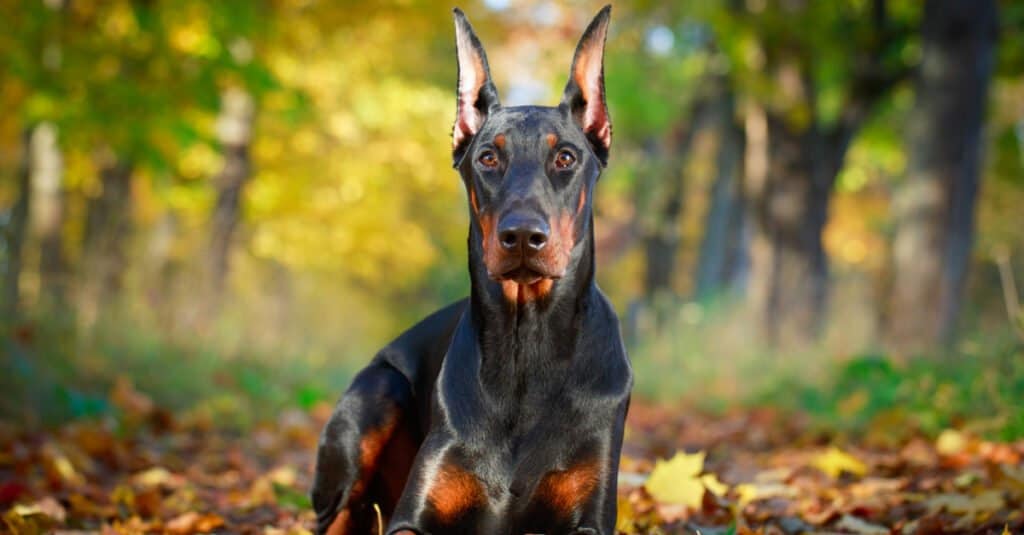
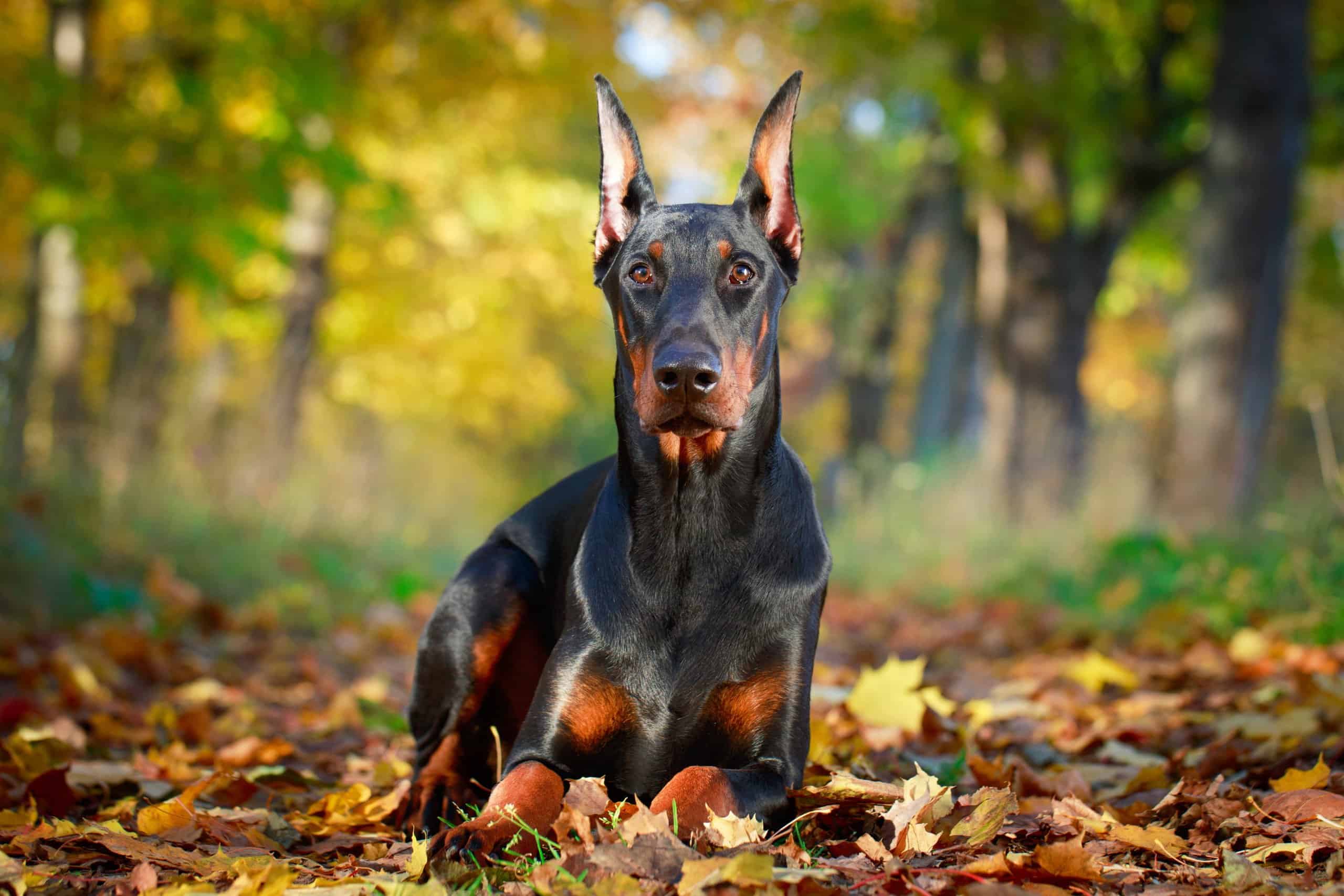
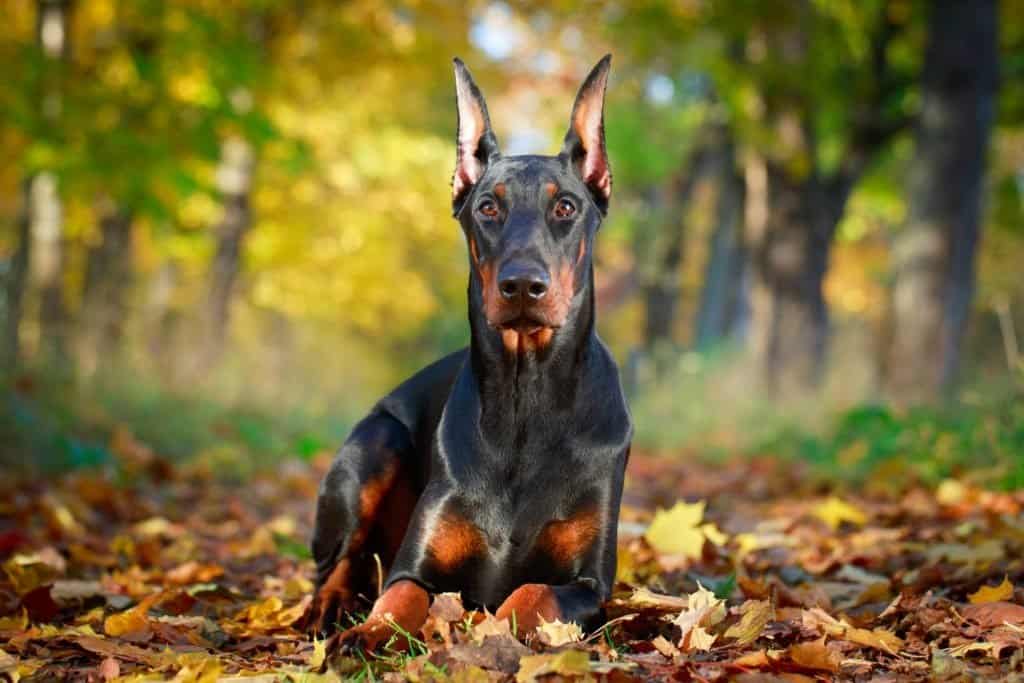
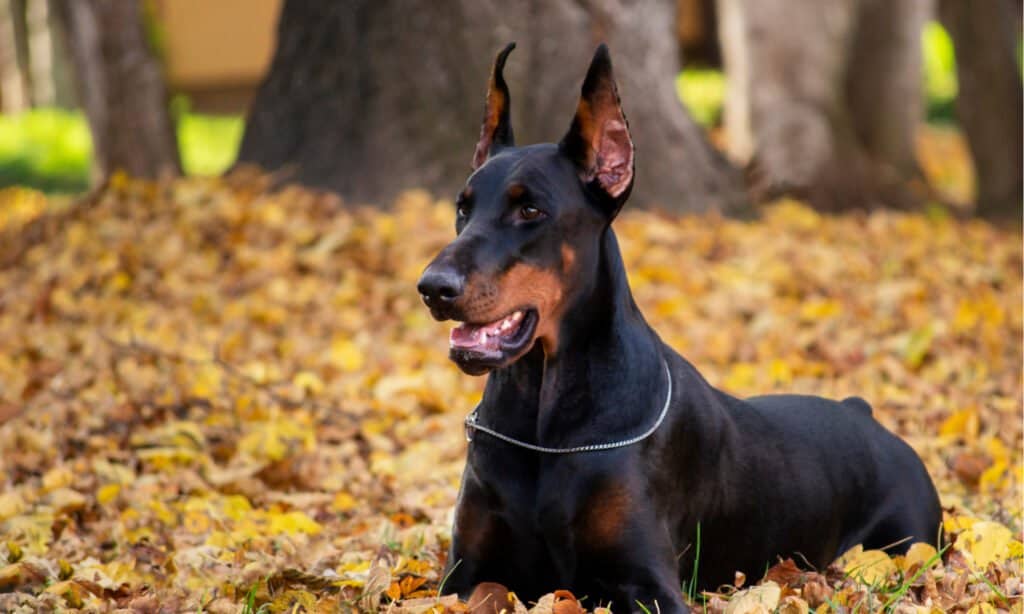
Doberman pinscher with erect ears laying in leaves

The Doberman Pinscher was first bred by a tax collector.

Doberman Pinschers were first bred to provide support to tax collectors going about their business, since the line of work was a rather risky one. Karl Friedrich Louis Dobermann, tax collector, and also night watchman and dogcatcher, of Apold, Germany, came up with the idea of a canine bodyguard of sorts, which would not quake in the face of occasionally violent opposition.

To achieve that aim, he is believed to have bred together the German Pinscher for speed and boldness, the  German Shepherd for endurance and cleverness, the Rottweiler for strength, and the Weimaraner for a sensitive nose capable of picking up scents with ease.

These sleek hounds derive their name from the enterprising tax collector and from the German word Pinscher, which means terrier.
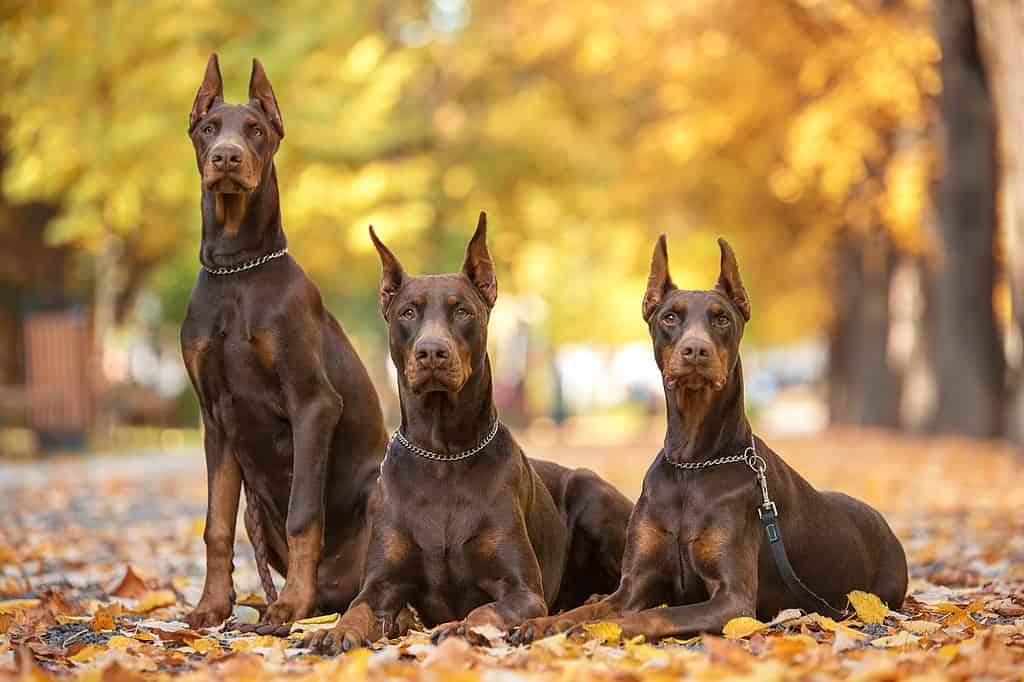
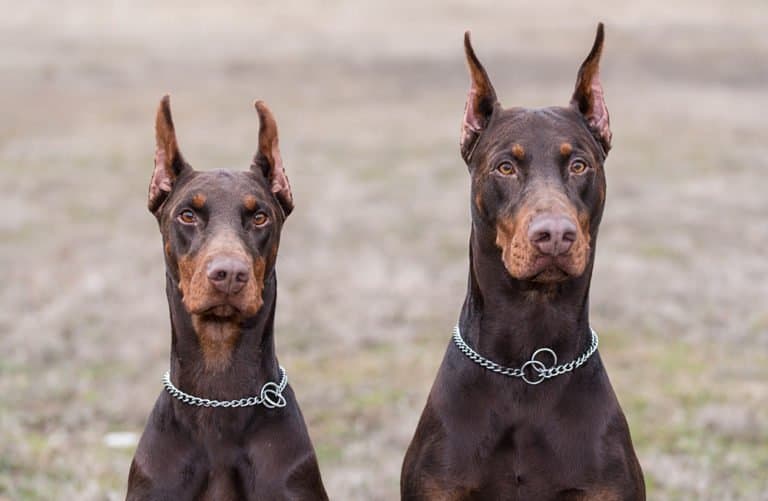
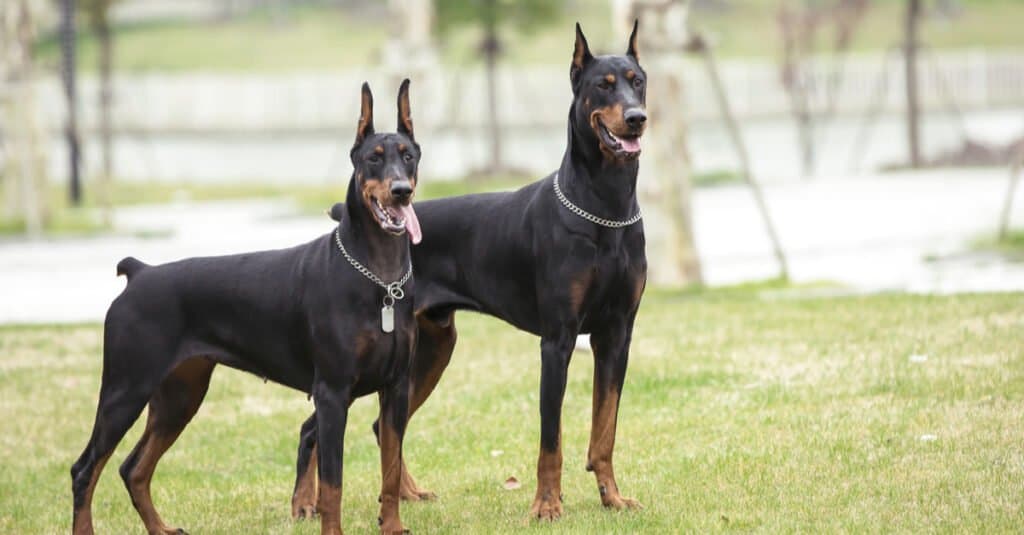
Three Doberman Pincher relaxing in the park

Three Doberman Pinschers are relaxing in the autumn park

Size and Weight

Male Doberman pinscher dogs are about 27 to 28 inches tall and weigh about 70 pounds, while female Doberman pinschers are usually 25-27 inches and weigh about 60 to 65 pounds.

Common Health Issues
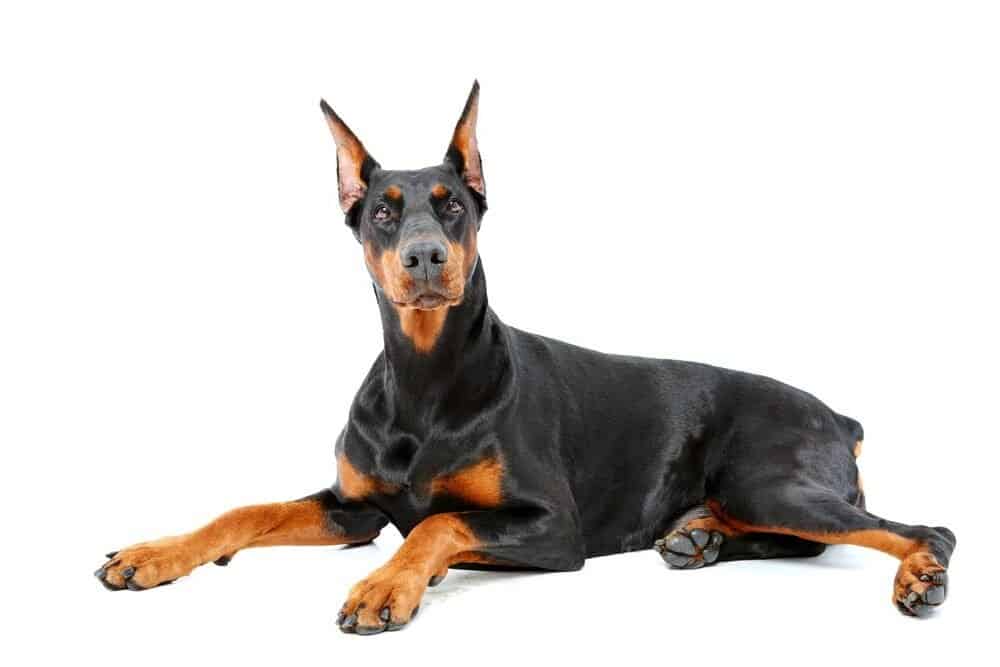
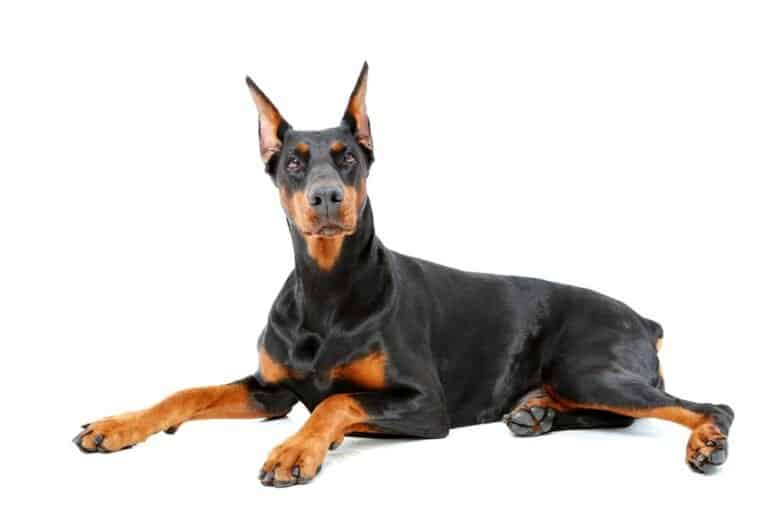
Doberman Pinscher on isolated background

Doberman pinschers are prone to hip dysplasia, hypothyroidism, and Von Willebrand’s disease.

There are several health issues that Dobermans suffer from, including cervical vertebral instability and dilated cardiomyopathy. Cervical vertebral instability affects the vertebral column and neck. The result is a wobbly gait, hence its nickname “wobbler syndrome”. Dilated cardiomyopathy is a condition that impacts the heart, thinning the ventricle and preventing it from pumping blood correctly.

Doberman pinschers may also fall ill with Von Willebrand’s disease, which prevents the blood from clotting as it should. It is caused by a lack of a protein that the platelets need to clot.

    Temperament
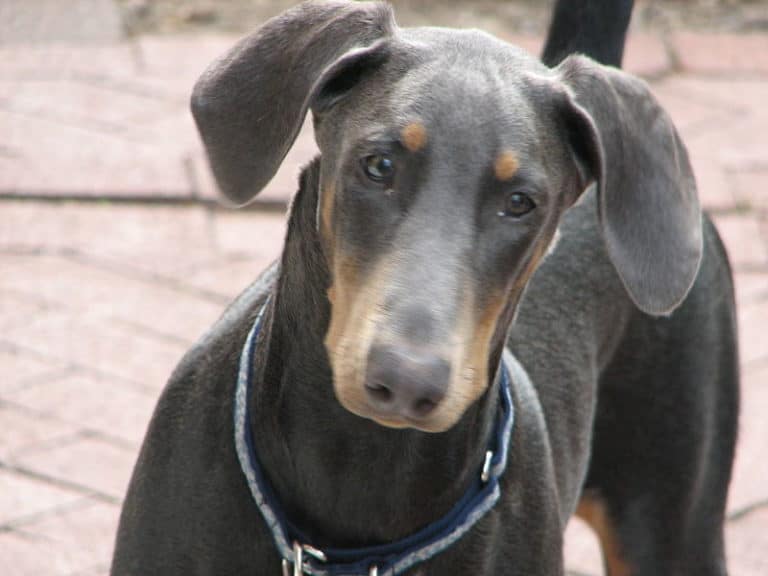
    dog food for Dobermans

    Doberman pinschers are affectionate and energetic.

    Temperament-wise, the Doberman pinscher is known to be very energetic and is very alert. It is also very loyal to its owners. Plus, the dog is known to be very intelligent and is usually also called “beauty with brains.”

    This dog makes a great family companion, and it is usually very difficult for it to live in kennels. With its outpouring of affection, these dogs like to be with their family inside, despite the plentiful energy.

    To make sure that this energy doesn’t become destructive, they must get a lot of physical activity. If you live in an apartment and don’t get out much, it may not be the right dog for you.

    How to Take Care of a Doberman Pinscher

    If you are looking to buy a Doberman pinscher, there are a few things that you should know about taking care of it. Providing this dog with the right home and nutrition will promote a longer lifespan and a significantly more harmonious home.

    The Best Dog Food for Doberman Pinschers
    Doberman Pinschers

    Some veterinarians recommend caution with diets high in legumes for Dobermans due to a potential link to heart disease, but a legume-free diet is not universally required.

    Doberman puppies that are up to three months of age should ideally be fed about 3 to 4 times a day. For adults, however, the feed should be broken into two as one big portion could be difficult to digest.

    Ideally, your Doberman pinscher should be fed foods that are easily digestible. Their main feed includes chicken, beef, brown rice, lamb, and sweet potatoes, which can be served with dry dog food or prepared by the owner.

    Pinscher Insurance

    Like any other animal that you would have as a pet, a Doberman also suffers from a host of problems that could require insurance. However, as an owner, you need to identify the needs and issues of your Doberman so that you can pick the right kind of insurance for your dog that will have it covered when needed.

    Some veterinarians offer payment plans and personalized programs that also help with these insurance costs.

    Maintenance and Grooming

    The Doberman is not a high-maintenance pet but will need regular grooming for sure. Tasks include the removal of “eye boogers,” brushing the dog’s teeth, removing any excess hair and brushing its fur, and thoroughly cleaning its ears.

    Besides that, you would also need to regularly bathe your dog and trim its nails to keep it healthy, safe, and clean. These dogs do not shed too much, so regular brushing is more of a luxury than a necessity.

    Training

    These dogs are easy to train and quickly pick up new skills. They are smart and intelligent and don’t take much time in starting to start picking up commands. However, the training needs to be consistent, and you have to spend a lot of time with your Doberman puppy for it to be used to it.

    Usually, the right way to go about it would be to take your Doberman puppy out for about half an hour and start using a simple command. If you take your puppy to the same spot every time, it will start recognizing the scent and will start picking up commands in no time.

    Exercise

    Dobermans need a lot of physical activity every day. They are energetic animals and need exercise to expend their energy. Otherwise, they could turn into aggressive pets with behavioral issues. This dog needs a lot of room to roam, so apartment living may not be ideal. In case your Doberman is injured or stressed, a muzzle would be a great idea. This device would help the dog to do regular activities like eating, drinking, and panting, but will restrict the distressed behavior.

    Puppies
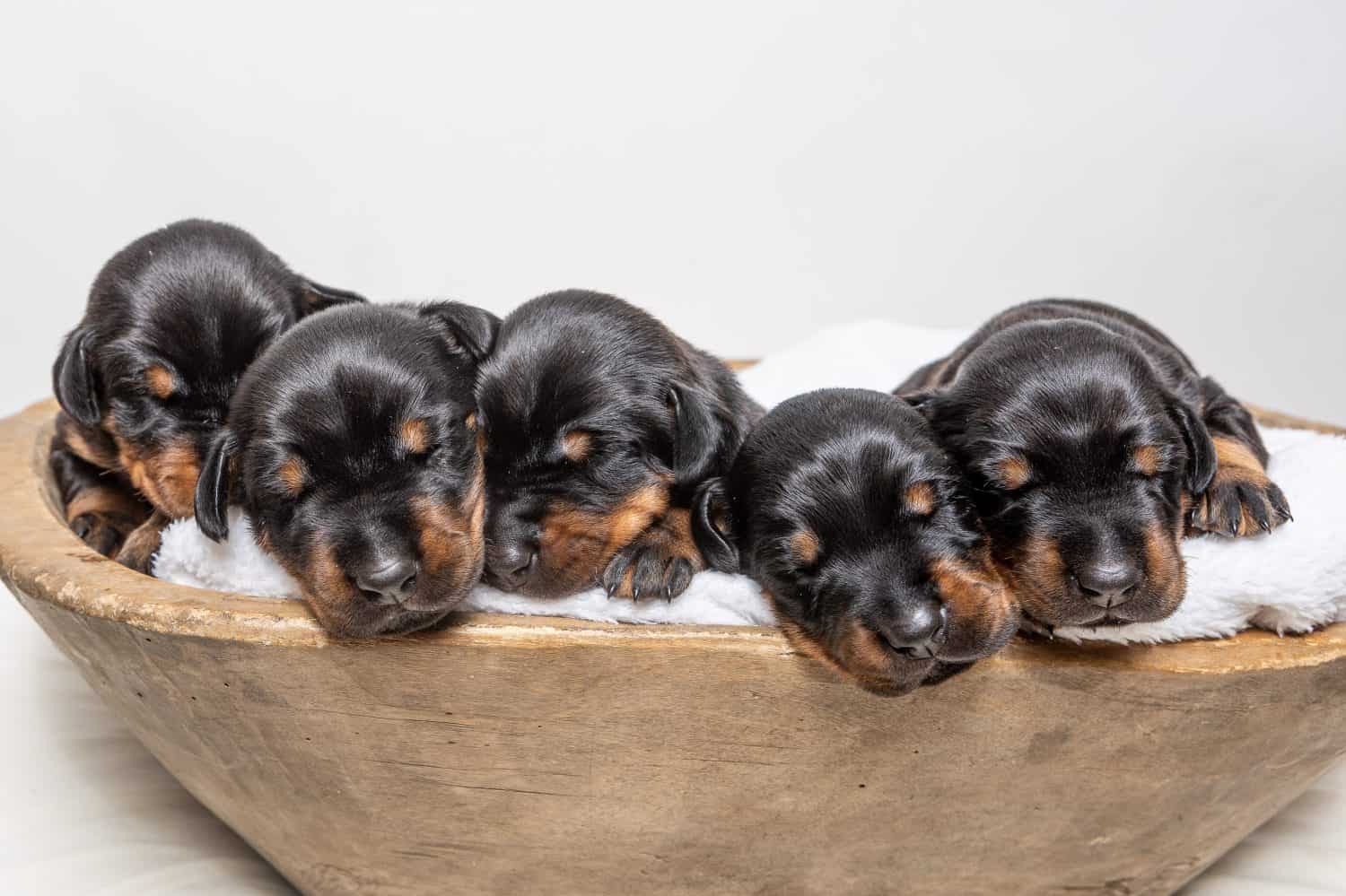
    A lot puppies doberman pincher sleeping in a wooden bowl, sweet sleeping puppies

    Doberman pinscher puppies should be fed a minimum of three meals per day

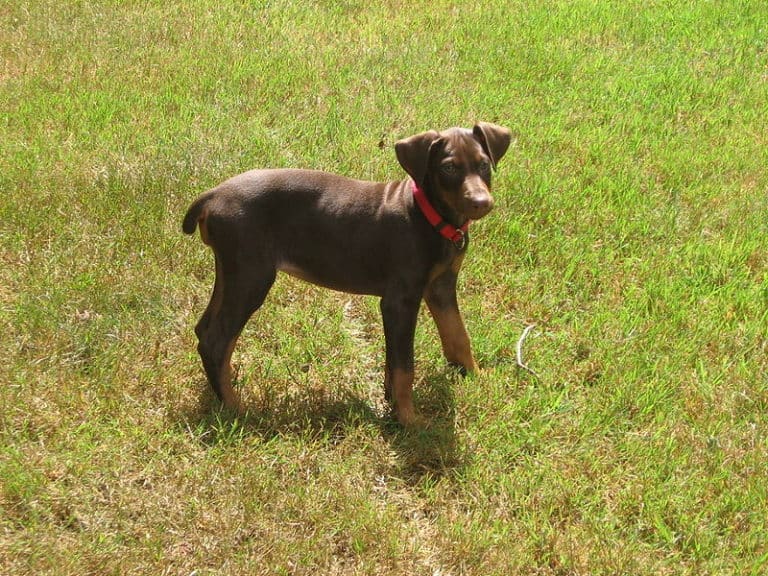
    Doberman Pinscher puppies are cared for in much the same way as adult Dobermans. However, they are more sensitive than the adult version of this breed, and they need more care. They should be fed 3 to 4 times, unlike adults, who should be fed twice each day.

    Children

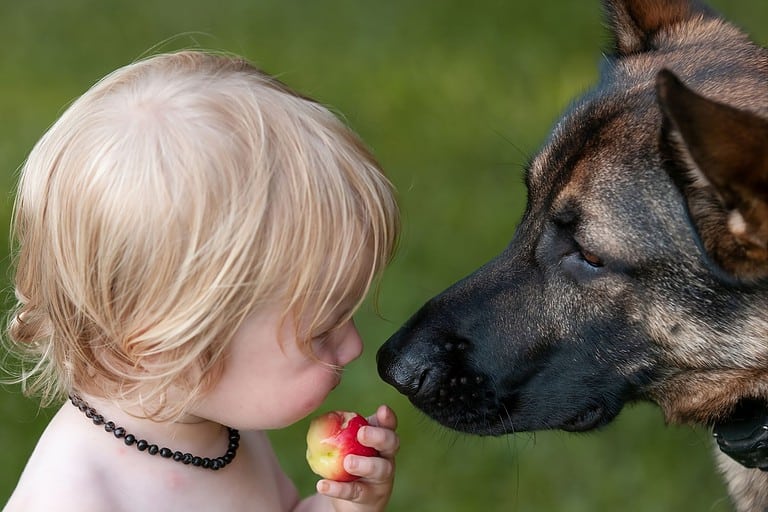
    This dog is very good with children and is known to be playful. It is a family companion dog and is great with children and young adults.

    Dogs Similar to Doberman Pinschers

    Some dogs are very similar to Doberman pinschers. These breeds include:

    • Ibizan Hound: These dogs are very affectionate towards children. However, they can also sometimes turn very aggressive if threatened. Overall, the breed is considered intelligent and incredibly energetic.
    • Pointer: This is a well-built dog — just like the Doberman pinscher. The German Pointer was originally bred as a hunting dog in the 19th century, giving it a strong and sturdy physique. It is also incredibly gentle and loyal to the children in the family.
    • Rottweiler: These dogs are especially like Doberman pinschers and are very attached to their owners. They need to be kept inside the house with the family and usually don’t like to live in kennels.

    Famous Doberman Pinschers

    Doberman Pinschers have been a part of several movies. Some of them include The Amazing Dobermans, America’s Sweethearts, Beethoven, and Father of the Bride, to name a few. Some celebrities who have owned this breed include Bea Arthur, Jean-Christophe Novelli, Bela Lugosi, Tanya Roberts, and Raquel Welch.

    View all 451 animals that start with D

    Sources

    1. Rover / Accessed November 8, 2019
    2. Brittanica / Accessed November 8, 2019
    3. American Kennel Club / Accessed November 8, 2019
    4. DogBreeds911 / Accessed November 8, 2019
    5. Wikipedia / Accessed November 8, 2019
    6. Mayo Clinic / Accessed November 8, 2019
    7. Pet Care RX / Accessed November 8, 2019
    8. Doberman's Owner's Guide / Accessed November 8, 2019
    9. Pet Life Today / Accessed November 8, 2019
    10. Canna-Pet / Accessed November 8, 2019
    11. Doberman's Den / Accessed November 8, 2019
    12. Doberman Planet / Accessed November 8, 2019
    Dana Mayor

    About the Author

    Dana Mayor

    I love good books and the occasional cartoon. I am also endlessly intrigued with the beauty of nature and find hummingbirds, puppies, and marine wildlife to be the most magical creatures of all.
    Connect:

    Thank you for reading! Have some feedback for us?


    Doberman Pinscher FAQs (Frequently Asked Questions)

    You can buy 6 to 9 week-old Doberman Pinscher puppies for about $600 to $1000. The annual cost could range from $2000 to $3000.