



E
Species Profile

Epagneul Pont Audemer

Canis lupus familiaris

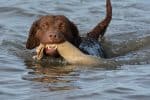
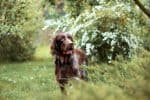
Normandy's curly marsh retriever
Alephalpha / CC BY-SA 3.0

Epagneul Pont Audemer Distribution

Click a location to explore more animals from that region

Origin Location

This map shows the native origin of the Epagneul Pont Audemer. As a domesticated species, they are now found worldwide.

Loading map...

Found in 1 country

Size Comparison

Human 5'8"
Epagneul Pont Audemer 1 ft 10 in

Epagneul Pont Audemer stands at 33% of average human height.

At a Glance

Domesticated
Also Known As Épagneul Pont-Audemer, Epagneul Pont-Audemer, Pont-Audemer
Diet Omnivore
Activity Diurnal+
Lifespan 5 years
Weight 27 lbs
Status Not Evaluated
Did You Know?

Nicknamed the "Little Clown of the Marshes" in France for its lively, playful working style.

Scientific Classification

The Pont-Audemer Spaniel is a rare French spaniel-type gundog historically developed for hunting in wetlands, especially working waterfowl and marsh game. It is known for its distinctive curly/wavy coat and spaniel temperament.

Kingdom
Animalia
Phylum
Chordata
Class
Mammalia
Order
Carnivora
Family
Canidae
Genus
Canis
Species
Canis lupus familiaris

Distinguishing Features

  • Rare French gundog breed associated with the Pont-Audemer area (Normandy, France)
  • Distinctive curly/wavy coat often described as having a ‘wig’-like look on the head
  • Bred for marsh/water work; strong retrieving ability and comfort in water
  • Spaniel build and demeanor; athletic, energetic working dog

Physical Measurements

Males and females differ in size

Height
1 ft 10 in (1 ft 8 in – 1 ft 11 in)
1 ft 9 in (1 ft 8 in – 1 ft 10 in)
Length
3 ft 1 in (2 ft 9 in – 3 ft 7 in)
Weight
46 lbs (40 lbs – 53 lbs)
Tail Length
12 in (10 in – 1 ft 2 in)
Top Speed
28 mph
short sprints

Appearance

Primary Colors
Secondary Colors
Skin Type Domestic dog skin with typically darker pigmentation under a dense, wavy-to-curly, water-resistant coat; ears have long, curly hair that can trap moisture and debris.
Distinctive Features
  • Curly, woolly coat with a distinctive topknot (often described as a "wig" on the head) and long, low-set ears.
  • Signature coat: Distinctive wavy-to-curly coat with pronounced curls and characteristic head furnishings; ears are set low with long curly hair, contributing to the breed's unique outline among French spaniel-type breeds.
  • Head and expression: Spaniel-like head with notable facial furnishings; overall look is more 'curly-coated marsh spaniel' than the flatter-coated French spaniels-this helps distinguish it from other French spaniel types.
  • Build/working form: Medium-sized, athletic gundog with adequate bone and a body built for pushing through reeds and swimming; tail is typically carried in line with the back when working.
  • Temperament/handling: Generally gentle, sensitive, and people-oriented with strong hunting drive; responds best to consistent, reward-based training and regular field/mental work.
  • Care requirements (coat): Regular brushing/combing to prevent matting in curls and furnishings; periodic trimming around feet and sanitary areas; check for burrs after marsh/brush work; avoid over-bathing to preserve coat oils that support water resistance.
  • Care requirements (ears/skin): High priority ear care-routine inspection and drying after swimming to reduce risk of otitis; watch for hotspots/skin irritation under dense coat, especially in humid conditions.
  • Exercise needs: Bred for sustained wetland work-benefits from daily aerobic exercise, retrieving/swimming opportunities, and structured scent/field games to prevent boredom-related behaviors.
  • Pont-Audemer Spaniel often gets ear infections from heavy, curly ears and water; may have hip dysplasia, other joint problems, and eye issues—regular vet checks and careful breeding help reduce risks.
  • Rarity: A rare breed with limited population; prospective owners should seek reputable breeders focused on health testing and functional working temperament, maintaining its traditional marsh-gundog role.

Sexual Dimorphism

Males are typically slightly larger and more heavily boned with a broader head; females often appear a bit lighter and more refined while keeping the same curly coat and working outline.

  • Slightly greater height/weight; more robust neck and forequarters.
  • Broader skull/muzzle appearance; heavier overall substance while maintaining athleticism.
  • Slightly smaller, more refined frame; often lighter-boned.
  • Same characteristic curls and head furnishings; typically a more streamlined outline.

Did You Know?

Nicknamed the "Little Clown of the Marshes" in France for its lively, playful working style.

Developed around Pont-Audemer (Normandy), a region of rivers, marshes, and coastal wetlands.

Its curly/wavy coat and head furnishings help shed water and protect from reeds and brush.

Bred to hunt in water and thick marsh cover, then retrieve game-classic spaniel versatility.

Still uncommon worldwide; conservation-minded breeders keep strong working instincts in the lines.

Part of the domestic dog (Canis lupus familiaris) diversity: selective breeding shaped a wetland specialist from the same species as all dogs.

Unique Adaptations

  • Water-ready coat: dense curls/waves help insulate and repel moisture compared with many smoother-coated spaniels.
  • Protective furnishings: fuller hair around the head/ears can reduce abrasion from wet brush and reeds during marsh work.
  • Athletic, compact build: suited to pushing through heavy cover and climbing muddy banks without being cumbersome.
  • Canid endurance toolkit: like other Canis lupus familiaris, benefits from efficient trotting gait and strong olfaction; selectively intensified here for wetland hunting.
  • Temperament selection: generations favored steadiness around gunfire, trainability, and reliable retrieving-behavioral "adaptations" shaped by human-directed breeding.

Interesting Behaviors

  • Marsh-probing quartering: works close-to-medium range, weaving through reeds to flush or locate game.
  • Water confidence: readily enters cold water, often using a steady, purposeful swim to reach downed birds.
  • Soft-mouth retrieving: many individuals naturally carry game gently, a prized gundog trait.
  • High social focus: checks in frequently with handlers and bonds tightly with its "team."
  • Playful "clownish" energy: bouncy, expressive body language-especially when excited to work.
  • Scent-driven problem solving: persists on a track in tangled cover, then reorients using wind and handler cues.

Cultural Significance

Pont-Audemer Spaniel (Canis lupus familiaris) is a Normandy marsh hunting dog linked to wetland waterfowl and game traditions. Its rarity brings pride to French spaniel clubs, who focus on keeping its hunting skills as a cultural duty, not just looks.

Myths & Legends

French sporting circles have long repeated the affectionate sobriquet "the little clown of the marshes," a traditional nickname that frames the breed as a spirited, good-humored companion in hard, wet work.

An oft-told origin anecdote credits Norman hunters with shaping the breed specifically for the local marshes around Pont-Audemer-selecting dogs that could plunge into cold water, push through reeds, and still retrieve gently at day's end.

Breed fans often said the Pont-Audemer Spaniel's curls and head "wig" were a sign the dog was a marsh worker's dog and could handle thick marsh plants.

After the war, the Pont-Audemer Spaniel (Canis lupus familiaris) was scarce and nearly lost; a small group of devoted people rebuilt the breed, keeping it alive as living regional heritage.

Conservation Status

NE Not Evaluated

Has not yet been evaluated against the criteria.

Population Stable

Life Cycle

Birth 5 pups
Lifespan 5 years

Lifespan

In the Wild
2–10 years
In Captivity
12–14 years

Reproduction

Mating System Polygyny
Social Structure Managed Domestic
Breeding Pattern Serial
Fertilization Managed Selective
Birth Type Internal_fertilization

Pont-Audemer Spaniel (Canis lupus familiaris): breeding is managed by humans. Selected male dogs may father multiple females during heat. Pairings are short and chosen for family lines, health, and work skills. Cooperative breeding is rare.

Behavior & Ecology

Social Pack Group: 4
Activity Diurnal, Crepuscular
Diet Omnivore High-protein animal foods-especially duck or fish (often well-tolerated and palatable for this water-oriented gundog type).

Temperament

Sociable, people-oriented spaniel temperament; typically affectionate and friendly in familiar settings (more human-bonded than the baseline free-ranging dog).
Biddable and trainable for gundog tasks, especially retrieving and water work; excels with structured routines and clear reinforcement.
High energy with strong working drive; needs daily aerobic exercise plus scent/retrieving games to prevent frustration behaviors (e.g., excessive barking, restlessness).
Wetland hunter background: strong interest in water, reeds, and scent trails; may display higher prey/chase motivation than many companion-only breeds-recall training is important.
Sensitive and sometimes soft-tempered; harsh corrections can reduce confidence and increase avoidance behaviors.
Can be enthusiastic and exuberant in play; benefits from early socialization to avoid adolescent pushiness or over-friendly jumping.
Breed-typical care requirements: curly/wavy coat needs regular brushing to prevent matting; after swimming/hunting, rinse/dry coat and especially ears to reduce irritation.
Watch for ear infections from drop ears and water, hip dysplasia like other gundogs, and possible eye or skin problems. Regular vet checks are important because the breed is rare.

Communication

Barking used for alerting and excitement Often increases with under-stimulation
Whining/whimpering for attention, anticipation, or mild stress Common in sensitive, handler-attached spaniels
Growling as a distance-increasing signal when uncomfortable Usually clear and avoidable with good socialization
Howling is possible but typically less prominent than in more primitive or northern breeds.
Body language: play bows, loose wiggly posture, and approach behavior signaling friendly intent; stiffening/averted gaze signaling discomfort.
Tail carriage and wag patterns communicate arousal and intent; many individuals show high, fast wagging when excited for work/retrieves.
Facial expressions and ear position changes (even with drop ears) used to communicate attention and uncertainty.
Scent-based communication: sniffing, urine marking, and investigatory behavior typical of domestic dogs; often intensified on walks in marshy/wooded habitats.
Mouth-oriented social signaling: carrying/retrieving objects to initiate interaction Breed-typical 'offer' behavior
Physical contact: leaning, pawing, licking, and close following as affiliation behaviors; can become clingy without independence training.

Habitat

Biomes:
Wetland Freshwater Temperate Forest Temperate Grassland Marine Boreal Forest (Taiga) Tundra Alpine Mediterranean Desert Hot Desert Cold Savanna Tropical Dry Forest Tropical Rainforest +8
Terrain:
Riverine Coastal Plains Muddy
Elevation: Up to 14763 ft 9 in

Ecological Role

Human-managed mesopredator/omnivorous scavenger; in this breed, primarily a working hunting companion in wetland environments rather than an independent ecological predator.

Assists humans in harvesting game (flush/retrieve waterfowl), influencing local prey take under regulated hunting Can contribute to control of small pest mammals around human settlements when roaming is allowed (situational) Cultural/utility role: supports hunting traditions and working-dog functions rather than filling a wild trophic niche Minor nutrient cycling via waste inputs in human-dominated landscapes

Diet Details

Other Foods:
Wild berries and fallen fruit Grasses and herbaceous plants Roots and tubers Seeds and grains Vegetables

Human Interaction

Domestication Status

Domesticated

The Pont-Audemer Spaniel (Canis lupus familiaris) was bred in Pont-Audemer, Normandy, France as a spaniel gundog for wetland and waterfowl hunting. It has strong water drive, good scenting and flushing instincts, will enter cold water and reed beds, and a curly, water-resistant coat. The rare breed is kept for hunting, small-scale breeding, club care, and occasional pets.

Danger Level

Low
  • Accidental bites or nips (typically linked to fear, pain, poor socialization, or rough handling)
  • Knock-down risk from an enthusiastic, athletic dog (jumping/charging during play)
  • Zoonotic risks common to dogs if unmanaged (e.g., parasites, leptospirosis exposure in wet environments) mitigated by routine veterinary care
  • Potential for resource guarding or possessive behavior if not trained/managed

As a Pet

Suitable as Pet

Legality: Generally legal to own as a pet where domestic dogs are permitted; subject to standard local dog licensing, leash laws, vaccination/rabies rules, and any jurisdiction-specific regulations on breeding/sale/importation. Breed-specific bans are uncommon for this breed.

Care Level: Moderate

Purchase Cost: $1,500 - $3,500
Lifetime Cost: $18,000 - $45,000

Economic Value

Uses:
Companion animal (rare-breed pet) Working gundog (wetland hunting) Breeding and conservation of rare breeds Canine sports and training services Veterinary, grooming, and boarding services
Products:
  • Field-trained hunting dog services (flushing/retrieving support)
  • Puppy sales from preservation breeders
  • Stud services and breed-club registration activities
  • Training (gun-dog, obedience, recall, water work)
  • Grooming (coat maintenance for curly/wavy coat)
  • Veterinary care (preventive care, orthopedic/ear management when needed)

Relationships

Ecological Equivalents 8

Animals that fill a similar ecological role in their ecosystem

Pont-Audemer Spaniel
Pont-Audemer Spaniel Canis lupus familiaris Rare French gundog bred for wetland hunting, flushing, and retrieving, occupying the niche of a medium-sized water dog adapted to marshy habitats. Has a medium, curly, water-resistant coat, requires abundant exercise, regular grooming and ear care, and is predisposed to hip, ear, skin, and eye problems.
Irish Water Spaniel
Irish Water Spaniel Canis lupus familiaris Most similar working profile: a curly-coated water specialist bred for waterfowl retrieving, with comparable coat function (insulation and water-shedding) and a similar need for swimming and retrieving outlets. Helpful comparator for grooming and ear-care demands in wet environments.
Barbet
Barbet Canis lupus familiaris French water dog breed with a dense, curly coat and a history of marsh/water retrieving; similar grooming needs (mat prevention) and an athletic temperament suited to wetland work.
Lagotto Romagnolo
Lagotto Romagnolo Canis lupus familiaris Has ancestry in curly-coated water dogs and a strong scenting drive; requires similar coat upkeep and mental stimulation, though it is now more associated with truffle hunting than with bird work.
Chesapeake Bay Retriever
Chesapeake Bay Retriever Canis lupus familiaris A different retriever group but with a very similar ecological role: retrieving waterfowl in cold, harsh conditions. Serves as a useful analog for conditioning, with emphasis on shoulder and hip health and high exercise requirements.
French Spaniel Canis lupus familiaris Close functional peer among French hunting spaniels—upland/mixed-terrain pointing, flushing, and retrieving. Shares a handler-focused temperament and similar exercise and training needs, though typically is less coat-specialized for marsh and water work.
Picardy Spaniel
Picardy Spaniel Canis lupus familiaris Regional French spaniel used around marsh edges and mixed cover. Overlaps in habitat use (wet fields, reeds) and gundog style, providing a good behavioral and working comparison.
Brittany
Brittany Canis lupus familiaris Occupies a similar active, biddable bird-dog niche and has high stamina. Comparable in training approach and exercise load, though the Brittany is typically more upland-oriented and shorter-coated.

Very popularly known as the ‘little clown of marshes’ in France, the Epagneul Pont Audemer is a French dog and is also known to be a descendant of the Picardy spaniel. It has always been a rare breed and saw a rapid decline in population after World War II.

Rarely identified as family pets, they are usually best suited for gun dog environments and are water dogs. During the early 20th century, these dogs were used to hunt wild ducks in wet conditions.

This rare breed of dog is known to have originated in the 19th century and owes their origin to several different water spaniel breeds. However, owing to their decreasing population, these dogs were, around 1980, merged with the Picardy spaniel to avoid extinction. They are believed to have originated in France’s Pont-Audemer region.
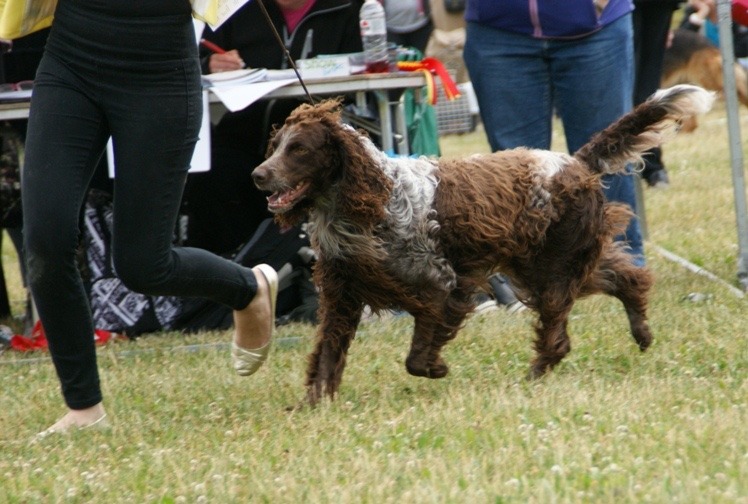
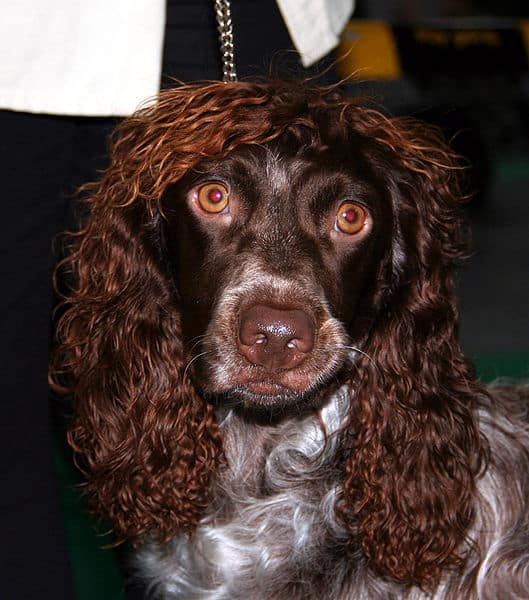
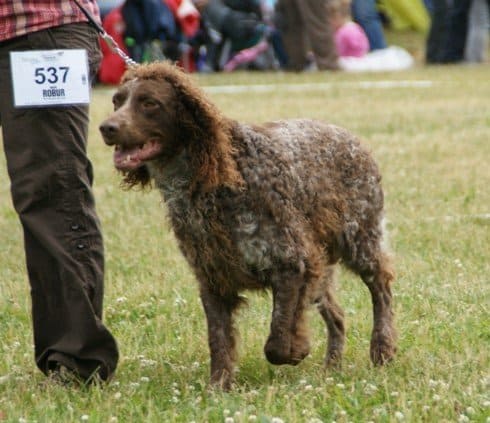
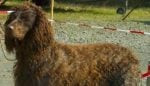
Epagneul Pont Audemer being shown

Evolution and Origins

Epagneul Pont Audemers originate from France, where they are believed to have been the descendants of barbets, Picardy spaniels, and poodles. By the 19th century, they had become a firm favorite among hunters interested in waterfowl, as well as poachers.

Following the two world wars, however, the numbers of this breed plummeted, and enthusiasts were forced to breed it with the Irish water spaniel to prevent it from becoming extinct.

However, its numbers remain low, and only about 300 are thought to be in existence.

Pros and Cons of Owning Epagneul Pont Audemer

Like any other animal, several factors should be taken into account while considering adding this breed as a family pet.

ProsCons
These dogs are playful and cheerful. Therefore, if kept as a pet, it will keep your home lovely and lively.If you’re looking to keep a pet that helps you with being a watchdog, this might not be the best choice. These dogs are known to be very affectionate and are too kind to be good watchdogs.
The grooming needs of this dog are simple, which means that they wouldn’t need too much of your attention and are easier to keep as a pet.This breed requires a great deal of daily physical activity; otherwise, they just turn lazy and lethargic.
Audemers are known to be great family companions and are especially known to be great with children, thus making a wonderful choice of a pet.Since these dogs require a great deal of space, small apartment owners might want to look for other pet options. These dogs would be ideal for bigger spaces.

Size and Weight

These are medium-sized dogs with a very elegant appearance. Both the male and female stand at about 20-23 inches in height. Males weigh around 44 to 60 pounds, while females weigh around 40 to 55 pounds.

Appearance

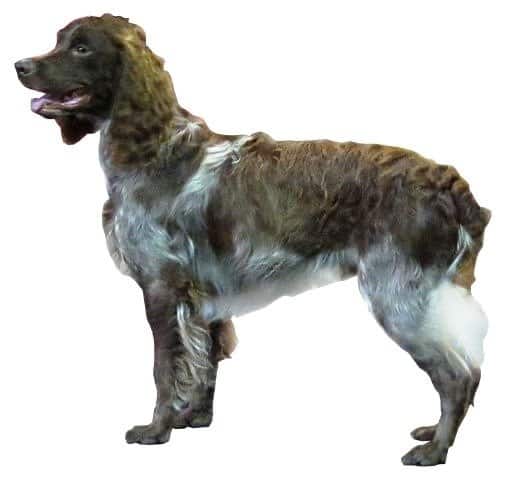
The Epagneul Pont Audemer is an elegant medium-sized dog with a muscular and sturdy body and a deep chest. It has padded paws with medium-length legs. This breed has beautiful hair that drapes over its head, giving the appearance of a curly wig.

It has round eyes and longish ears. The curly hair is also found on its tail and may be red or brown. It also has shorter hair on the face. However, the longer, denser hair on its head helps it withstand extreme winter conditions.

Common Health Issues

Like all other animals, this breed has health conditions to watch for. Canine hip dysplasia, a condition relating to the hip sockets, can cause arthritis in dogs. These dogs are also prone to Von Willebrand’s Disease (a bleeding condition involving clotting) and hyperthyroidism (overproduction of hormones in the thyroid).

Aside from those concerns, kneecap dislocation and dental problems are the most common health issues encountered by this breed. Alopecia, a skin disease caused by ringworms or other parasites, can also affect these dogs.

To summarize, the following health concerns are not uncommon in the Epagneul Pont Audemer breed:

  • Canine hip dysplasia
  • Von Willebrand’s Disease
  • Hyperthyroidism
  • Dental diseases
  • Kneecap dislocation
  • Alopecia

The Epagneul Pont Audemer is affectionate and shows unwavering loyalty toward its owners. However, without getting their regular dose of attention, these dogs can often get anxious, which is a major trait of their personality.

These dogs are especially great with kids and are very social. They also make great playmates and family companions. However, if you are looking for a good watchdog, this might not be the best choice as they are too kind and laid back to guard anything or anyone.

This breed is great with other dogs but does not fare well with other Epagneul Pont Audemers that are not part of the same pack or group. It is also not very friendly towards other pet animals. However, puppies of this breed easily mingle with other animal pets and are known to have a friendly behavior towards them.

How to Take Care of an Epagneul Pont Audemer
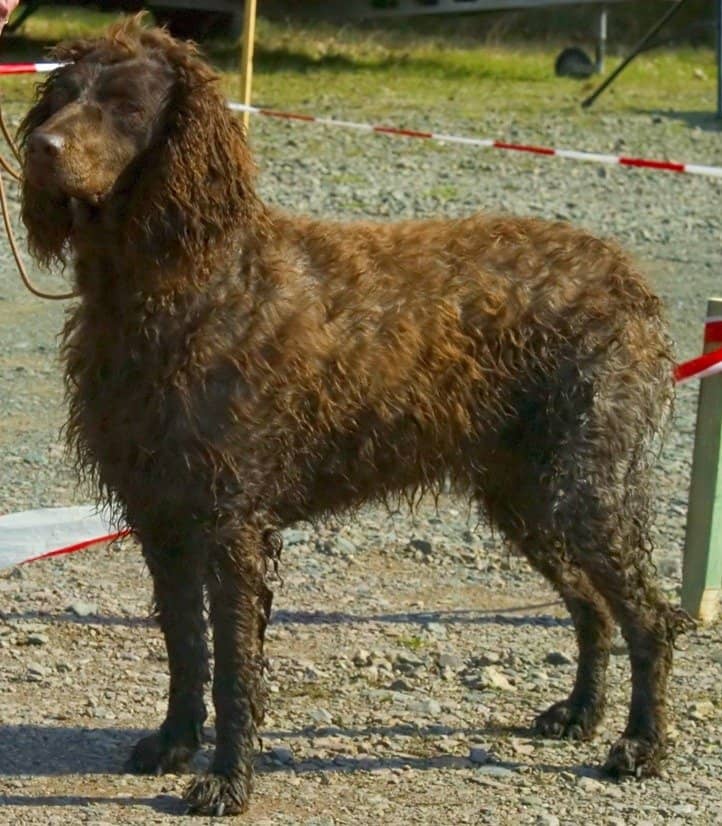
Epagneul Pont Audemer full body photo

Members of this breed require food that contains high amounts of animal-based protein and require intense exercise.

From what food should be given to them to how to groom them and what to do when they get sick, here are a few things that you need to keep in mind before you decide to bring the Epagneul Pont Audemer home:

The Best Dog Food for the Epagneul Pont Audemer

Pet owners need to understand their dog’s nutritional needs. This breed often needs about 2.25-2.75 cups of high-quality dry dog food. Epagneul Pont Audemer puppies need a diet that is rich in animal-based protein, including dried chicken and turkey. They also need food products that are rich in omega-6 and omega-3 fatty acids. In adult dogs, chicken is a great source of protein that helps in building their muscles for a stronger body.

Chicken and turkey provide natural glucosamine and chondroitin to keep your dog’s joints healthy and mobile. Plus, this specially formulated kibble has a crunchy texture, unique shape, and polyphosphate to keep teeth and gums in ideal condition.

Insurance

Insurance is a must-have when you’re thinking of getting an animal. With the Epagneul Pont Audemer, find insurance that covers the risk factors based on the health conditions and threats listed above that affect these dogs. Compare multiple pet insurance companies to learn which appointments, medications, and emergencies are covered by their plans.

Maintenance and Grooming

The fur on these dogs could look like it needs a lot of grooming, but in reality, this breed needs little to no maintenance at all. Regular brushing once or twice every week is all that’s required.

However, the dog’s ears require cleaning on an as-needed basis and are at risk of infection if not kept clean.

Training

Training the Epagneul Pont Audemer is easy. This dog is very obedient and loyal to its master’s orders. The training sessions, however, need to be short because the dog hates any long, repetitive tasks.

Exercise

This dog has extensive exercise needs, which means that even long walks usually won’t satisfy it. The most satisfaction it would get would be from any long hunting sessions. However, if hunting isn’t a reality, this dog should be allowed to frolic in controlled areas for it to burn enough calories and meet its exercise requirements.

Puppies

Epagneul Pont Audemers have different food needs than adult dogs and require animal proteins. Some of the food that you could give the puppies would be dried chicken and turkey.

Children

Epagneul Pont Audemers are known to be family companions and are especially great with children. They are known to be very loyal to their masters and are very loving and affectionate.

Similar Breeds

Several dog breeds are remarkably like the Epagneul Pont Audemer. These include:

  • American Water Spaniel: This breed is similar to that of the Epagneul Pont Audemer because they are also water hunter dogs. In addition to that, they have similar personality traits like being affectionate, loving, and highly loyal to their masters.
  • Irish Setter: An Irish setter is also like the Epagneul Pont Audemer, not only in looks but also in behavior and personality. They are fun-loving and are family companions just like the Audemers.
  • Boykin Spaniel: Much like the Epagneul Pont Audemer, these dogs also have a fun-loving, bright personality. They are similar in looks, too. They are also great with children and make great companions for a family setting.

View all 185 animals that start with E

Sources

  1. United Kennel Club / Accessed September 10, 2018
  2. Wikipedia / Accessed September 10, 2018
  3. Petolog.com / Accessed September 10, 2018
  4. Wag! / Accessed September 10, 2018
  5. Dog Temperament / Accessed September 10, 2018
  6. Dog Breeds List / Accessed September 10, 2018
Dana Mayor

About the Author

Dana Mayor

I love good books and the occasional cartoon. I am also endlessly intrigued with the beauty of nature and find hummingbirds, puppies, and marine wildlife to be the most magical creatures of all.
Connect:

Thank you for reading! Have some feedback for us?


Epagneul Pont Audemer FAQs (Frequently Asked Questions)

Epagneul Pont Audemer puppies usually cost about $1200 to $1600.