



G
Species Profile

German Pinscher

Canis lupus familiaris

Sleek. Smart. Always on watch.
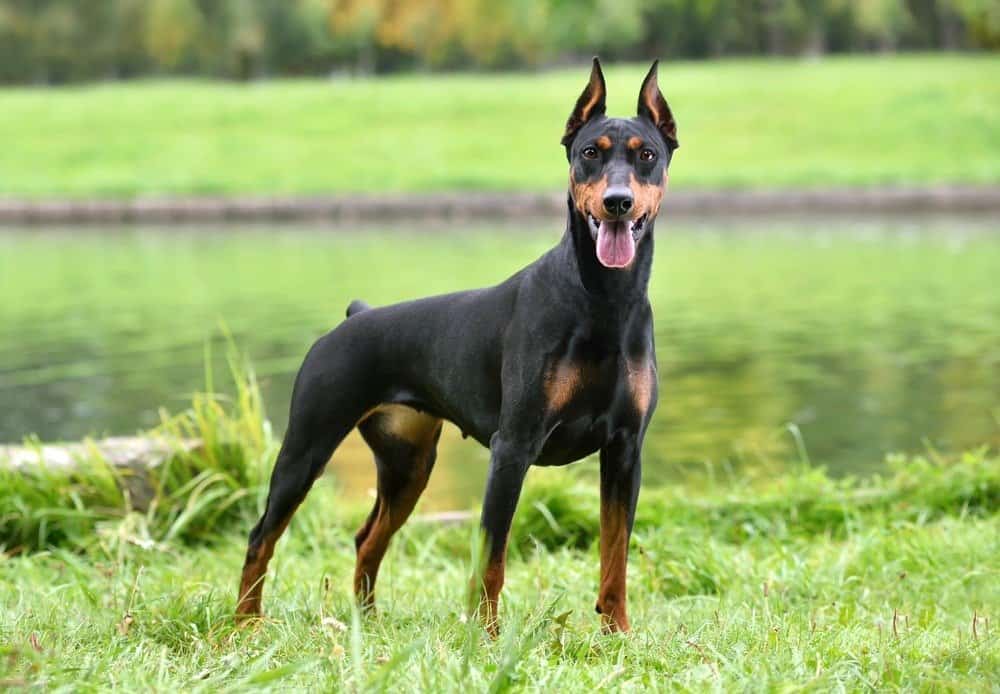
Alina Ziabrieva/Shutterstock.com

German Pinscher Distribution

Click a location to explore more animals from that region

Origin Location

This map shows the native origin of the German Pinscher. As a domesticated species, they are now found worldwide.

Loading map...

Found in 1 country

Size Comparison

Human 5'8"
German Pinscher 1 ft 7 in

German Pinscher stands at 27% of average human height.

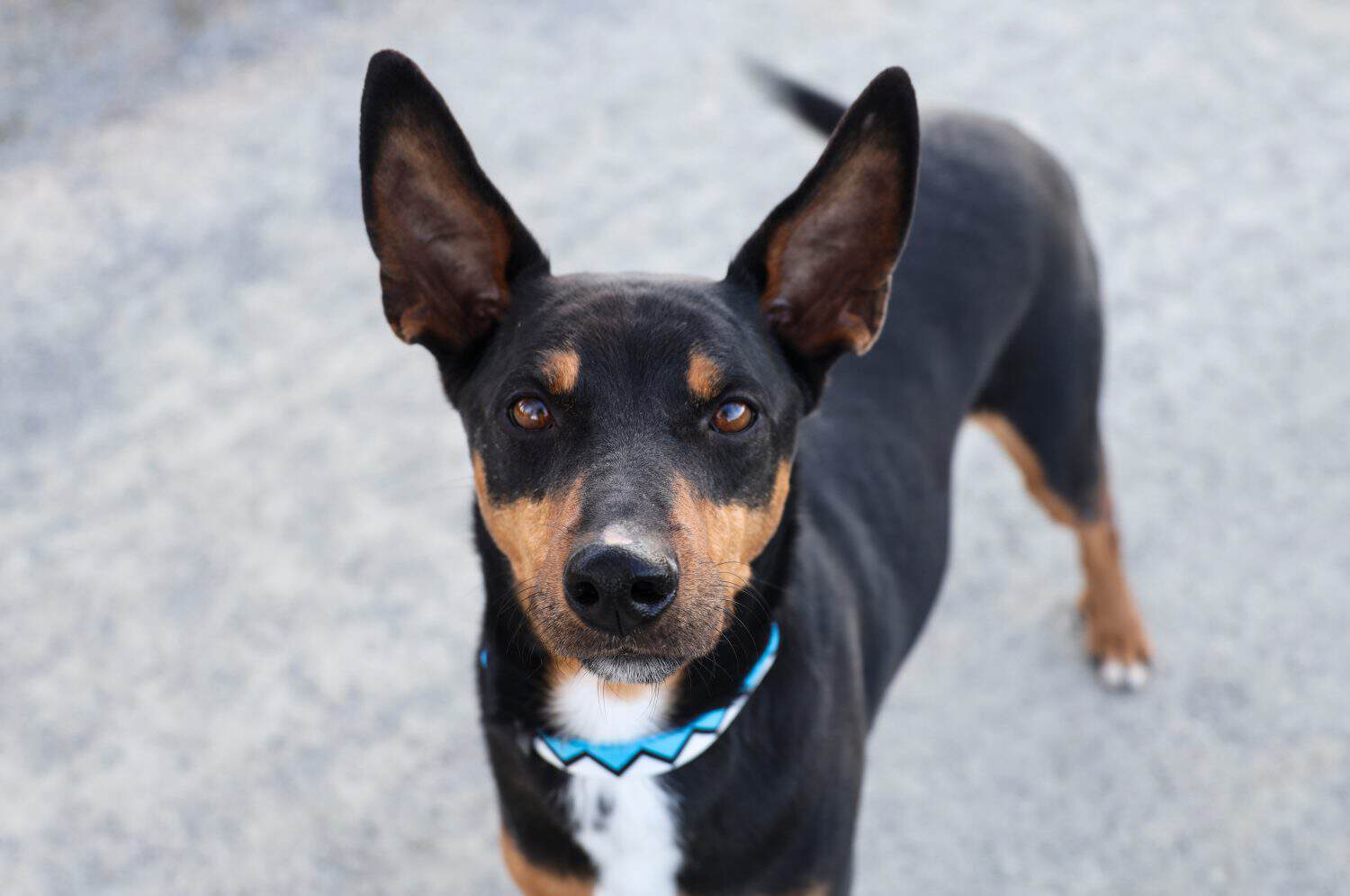
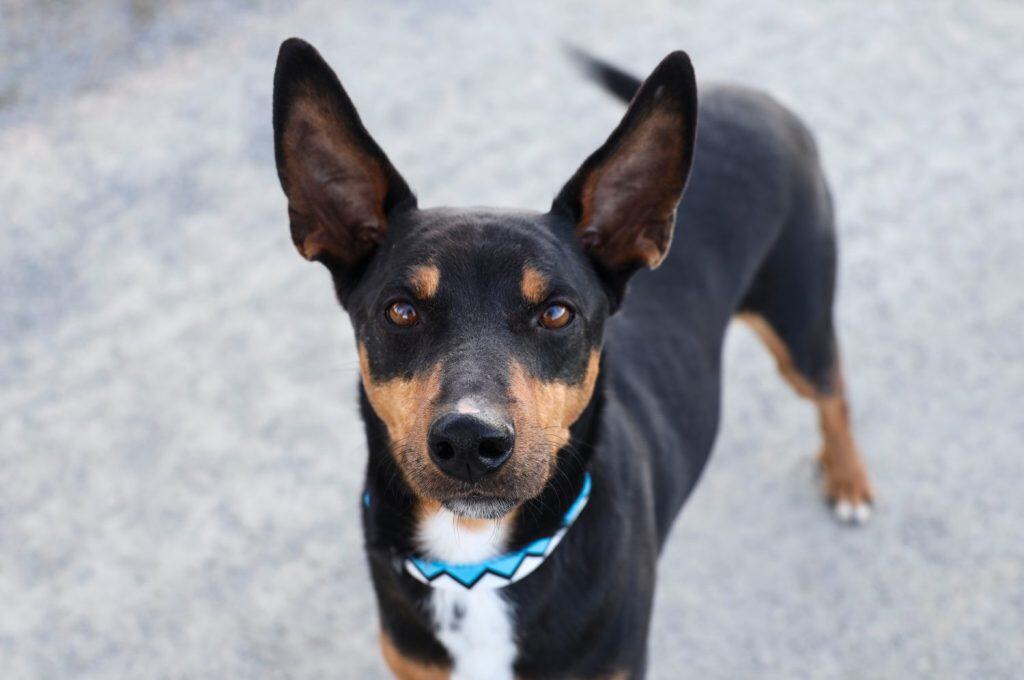
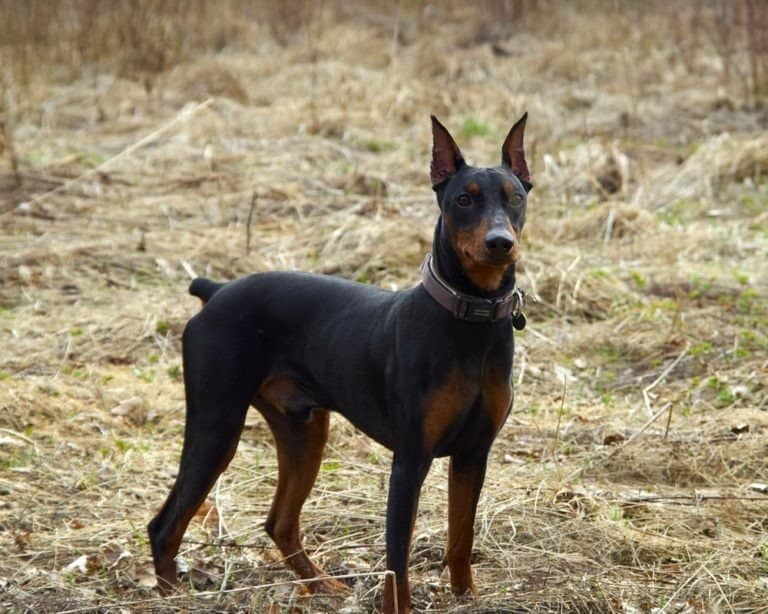
Black brown dog german pincher

At a Glance

Domesticated
Also Known As Deutscher Pinscher, Pinscher, Pinscher Alemán, Pinscher Allemand, Pinscher Tedesco
Diet Omnivore
Activity Diurnal+
Lifespan 5 years
Weight 20 lbs
Status Not Evaluated
Did You Know?

The German Pinscher is considered a foundation breed behind several German working breeds, including the Doberman Pinscher and Miniature Pinscher lines.

Scientific Classification

The German Pinscher is a medium-sized, short-coated domestic dog breed from Germany, historically used as a general-purpose farm dog and ratter and today kept primarily as a companion and watchdog.

Kingdom
Animalia
Phylum
Chordata
Class
Mammalia
Order
Carnivora
Family
Canidae
Genus
Canis
Species
Canis lupus

Distinguishing Features

  • Medium-sized, athletic, square-proportioned build
  • Short, smooth coat (commonly black-and-tan or various shades of red)
  • Alert, watchful temperament; strong watchdog tendency
  • Pinscher-type head and expression; natural ears may be carried folded (cropped in some regions, where legal)

Physical Measurements

Males and females differ in size

Height
♂ 1 ft 7 in (1 ft 6 in – 1 ft 8 in)
♀ 1 ft 7 in (1 ft 6 in – 1 ft 8 in)
Length
♂ 2 ft 8 in (2 ft 6 in – 2 ft 11 in)
Weight
♂ 39 lbs (33 lbs – 44 lbs)
♀ 35 lbs (31 lbs – 40 lbs)
Tail Length
♂ 9 in (7 in – 10 in)
Top Speed
30 mph
Can sprint about 48 km/h

Appearance

Primary Colors
Secondary Colors
Skin Type Short, smooth, tight-lying coat with fine hair; skin generally fits close to the body with minimal wrinkling. Low-to-moderate shedding; coat offers limited insulation compared with many double-coated northern-type breeds.
Distinctive Features
  • Domestic dog, pinscher-type: selectively bred for an athletic, medium-sized, square-to-slightly-rectangular outline rather than a more variable, wolf-like morphology.
  • Sleek, short coat and clean silhouette: less undercoat and weather protection than many spitz or shepherd-type domestic dogs; more 'wash-and-wear' but benefits from warmth in cold climates.
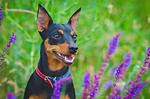
  • Head and expression: wedge-shaped head with a strong, blunt muzzle; dark, alert eyes; natural ears are V-shaped and folding, carried high-overall an attentive, keen look consistent with watchdog/ratter history.
  • Build and movement: firm topline, deep chest, tucked-up abdomen, and springy, efficient gait-built for endurance and quick turns when pursuing vermin.
  • Tail carriage: natural tail (where undocked) typically carried saber-like; overall carriage is confident and animated.
  • Breed-specific temperament context (appearance-linked): alert, intelligent, energetic-often carried in a poised, ready stance and intense focus on the environment.
  • Health issues in some German Pinschers include hip dysplasia, eye problems (progressive retinal atrophy, cataracts), and von Willebrand disease (bleeding tendency). These are not visible but are specific to the breed.
  • Short coat needs little grooming—weekly brushing and occasional baths. Skin scrapes easily. Keep nails and teeth cared for. Use a coat or sweater in cold or wet weather for warmth.
  • Exercise/conditioning needs (affects physique): high daily activity requirement; without structured exercise and mental work, the breed can become underconditioned or gain weight, obscuring its typical lean, athletic definition.
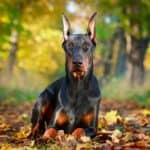
  • Distinguish from similar breeds: larger and more substantial than the Miniature Pinscher; generally smaller and less massive than the Doberman Pinscher; shares pinscher outline but retains a medium, agile farm-dog build.

Sexual Dimorphism

Males are typically slightly larger and more powerfully built, with a broader skull and thicker neck; females are usually a bit lighter and more refined while retaining the same athletic, square outline.

♂
  • Slightly greater height and weight; more pronounced musculature through neck/shoulders.
  • Broader head and stronger cheek/muzzle development.
  • Often a more robust chest and bone while maintaining an athletic silhouette.
♀
  • Slightly smaller frame with a more refined head/neck.
  • Often a lighter, more streamlined outline while remaining sturdy and athletic.
  • Same coat colors/patterns as males; differences are primarily size and substance rather than coloration.

Did You Know?

The German Pinscher is considered a foundation breed behind several German working breeds, including the Doberman Pinscher and Miniature Pinscher lines.

Its short, tight coat is low-maintenance and historically suited to busy farm life-easy to keep clean after work.

Bred as a ratter, many German Pinschers still show intense prey drive toward rodents and quick "pounce" reactions.

The breed nearly disappeared after World War II and was rebuilt from a small number of surviving dogs and careful breeding programs.

Compared with many companion breeds, it tends to stay lean and athletic, with stamina for running, hiking, and dog sports.

German Pinschers are known for using their paws and body to "box" or nudge-an expressive, hands-on style common in pinscher-type dogs.

Unique Adaptations

  • Pinscher-type build: medium size, deep chest, and strong rear drive support quick acceleration and agile turns-useful for catching vermin and moving around farmyards.
  • Short, close coat: offers freedom of movement and minimal snagging; requires less grooming than double-coated working breeds (but gives less insulation in cold).
  • High arousal/alertness: selectively bred attentiveness makes them strong watchdogs; it also means they benefit from structured training to prevent nuisance barking.
  • Efficient movement: typically a balanced, ground-covering trot suited to sustained activity rather than short bursts only.

Interesting Behaviors

  • Patrol-and-check routine: many will repeatedly "make the rounds" of home/yard, pausing to listen and scan-classic watchdog behavior.
  • Targeted alerting: quick to sound an alarm at novel sounds or visitors, then reassess once they can see the situation.
  • Rodent-hunt style play: stalking, pouncing, and vigorous shaking of toys reflects historic ratter instincts.
  • Problem-solving mischief: intelligent, energetic dogs may open doors, raid counters, or invent games if under-stimulated.
  • Velcro-then-independent: often affectionate with family yet confident enough to work at a distance when exploring.
  • Body language clarity: upright posture, forward focus, and quick head turns show their "on duty" mindset.

Cultural Significance

In Germany, pinscher types were classic multi-purpose farm dogs-ratters, stable dogs, and property sentries-valued for vigilance and practicality. The German Pinscher represents this pre-industrial "all-around" working dog tradition, later influencing modern German utility breeds and remaining a symbol of tidy, athletic companionship with a serious watchdog streak.

Myths & Legends

German Pinscher tales from German farms say these dogs guarded at night, kept horses calm, cleared rats, and barked at strangers—stories that built the breed's reputation as a tough, no-nonsense protector.

Breed-history anecdotes recount how postwar enthusiasts rebuilt the German Pinscher from very few surviving dogs, a near-loss and recovery often retold as a perseverance story within German dog circles.

In German-speaking regions, the older pinscher-and-schnauzer "stable dog" tradition is sometimes framed in family lore as a good-luck presence for barns and granaries because fewer rats meant safer stores and healthier livestock.

Conservation Status

NE Not Evaluated

Has not yet been evaluated against the criteria.

Population Stable

Life Cycle

Birth 7 pups
Lifespan 5 years

Lifespan

In the Wild
2–10 years
In Captivity
11–16 years

Reproduction

Mating System Polygyny
Social Structure Managed Domestic
Breeding Pattern Serial
Fertilization Managed Selective
Birth Type Internal_fertilization

German Pinscher (Canis lupus familiaris): Breeding is human-managed. Dogs mate by sex (internal fertilization); no long-term pair bonds. Popular sires may father many litters (effective polygyny). Estrus ~6–8 months; gestation ~63 days; litters ~4–8.

Behavior & Ecology

Social Pack Group: 4
Activity Diurnal, Crepuscular
Diet Omnivore Meat-forward complete dog food (e.g., chicken or beef-based) with a high-protein reward such as cooked lean meat used for training.

Temperament

Alert, vigilant watchdog; quicker to notice novel stimuli than many breeds (distinguishing breed trait versus baseline domestic dog average).
High energy and drive; persistent 'ratting/farm-dog' work ethic often expressed as intense play, chase, and investigation behaviors (breed-specific emphasis).
Confident and sometimes willful/independent; responds best to reward-based training with clear boundaries-harsh methods can increase avoidance, defensive behavior, or reactivity (care/training requirement).
Affectionate with family but often reserved with unfamiliar people; early, structured socialization helps prevent suspicion turning into fear-based reactivity (breed-specific risk).
Can be dog-selective; may show higher tendency for same-sex conflict than more socially tolerant breeds-management and controlled introductions recommended (variation across individuals and lines).
Prey drive can be moderate to high; increased likelihood of chasing small animals compared with many companion-focused breeds (distinguishing trait).
Health/behavior-linked concerns seen in the breed: separation-related distress can occur in strongly bonded individuals; sound sensitivity and barrier frustration may appear without adequate enrichment and outlets.
Care requirements (behavioral): daily aerobic exercise plus problem-solving enrichment (scent work, obedience, agility, structured tug/fetch) reduces nuisance barking, destructiveness, and pacing; secure fencing recommended due to chase/roam tendencies.
Care requirements (social): consistent exposure to people, dogs, and environments during adolescence supports stable adult temperament; ongoing training helps channel watchdog alerting into controlled behaviors.
Health concerns (owner-relevant): potential predisposition to hip dysplasia, patellar issues, certain eye conditions (e.g., cataracts/PRA reported in some lines), and occasional cardiac concerns; maintaining lean body condition and routine veterinary screening supports mobility and longevity.

Communication

Alarm barking Often sharp/insistent when detecting strangers or unusual sounds
Growls and low grumbles during boundary-setting or discomfort Important early warning signals
Whines/whimpers to solicit attention or express frustration/excitement.
Play barks during high arousal games.
Highly expressive body posture: forward stance, erect tail carriage, and focused staring when on alert; turning away/avoidance when uncertain.
Facial signals: lip tension, closed mouth, or 'hard eye' can precede escalation; relaxed open mouth and soft eyes during affiliative interactions.
Scent marking (urine/ground scratching) especially during walks; information-sharing common to the species.
Physical contact: leaning, pawing, and nudging used to initiate interaction; mouthy play can occur and benefits from training for bite inhibition.
Environmental communication: patrolling windows/doors and positioning between family and perceived threat reflects watchdog role and resource-guarding tendencies in some individuals Management via training and controlled greetings

Habitat

Biomes:
Temperate Forest Temperate Grassland Boreal Forest (Taiga) Tundra Alpine Mediterranean Desert Hot Desert Cold Savanna Tropical Dry Forest Tropical Rainforest Temperate Rainforest Freshwater Marine Wetland +9
Terrain:
Plains Hilly Valley Mountainous Coastal Island
Elevation: Up to 16404 ft 3 in

Ecological Role

Human-associated mesopredator/commensal omnivore; in rural settings historically a synanthropic pest-controller (ratter) and property guardian.

Rodent control around farms and households Deterrence of intruders via watchdog behavior Scavenging of human food waste (where allowed), reducing local refuse attractants Cultural and social services as a companion animal (human well-being, working/guard roles) Potential ecological impact mitigation when managed (leash/containment reduces predation on wildlife)

Diet Details

Main Prey:
Rat Rats and mice Rat Rat Rabbits and young lagomorphs Insects and other small invertebrates
Other Foods:
Cooked grains and starches Root vegetables Green vegetables Fruits Fermentable fibers and prebiotics

Human Interaction

Domestication Status

Domesticated

Canis lupus familiaris (the domestic dog) came from the gray wolf and was shaped by people for tameness, social skills, training, and work. The German Pinscher, from Germany, is a medium, short coat farm dog bred for ratting, guarding, and active companionship. It is high-energy, alert, has a strong chase drive, and needs exercise, training, socialization, and health checks.

Danger Level

Moderate
  • Bite risk if poorly socialized, mishandled, or if guarding/territorial behavior is reinforced
  • Reactivity toward unfamiliar people/dogs possible without early socialization and consistent training
  • High chase drive can cause chasing/knocking over small children or cyclists if unmanaged
  • Potential for nuisance barking/alarm behavior leading to neighbor conflict
  • Risk increases with neglect, lack of exercise, harsh training methods, or inadequate containment

As a Pet

Suitable as Pet

Legality: Generally legal as a companion dog in most jurisdictions; typically not specifically targeted by breed-specific legislation, though all dogs are subject to local leash, dangerous-dog, nuisance-barking rules, housing/insurance policies, and occasional municipal breed lists.

Care Level: Experienced

Purchase Cost: $800 - $2,500
Lifetime Cost: $15,000 - $35,000

Economic Value

Uses:
Companion animal Watchdog/property alert Canine sports and training services Breeding (regulated/pedigree) Veterinary and preventive care market Pet products (food, gear, enrichment)
Products:
  • puppies from registered breeders
  • training/behavior services (obedience, reactivity management, sport training)
  • sport participation (agility, rally/obedience, scent work)
  • pet insurance and routine veterinary services
  • specialized gear (secure fencing, harnesses, enrichment toys)

Relationships

Quick Take

  • Owners must establish dominance early to prevent this breed from taking total control of the household.
  • The 1958 registration gap reveals why a minimal gene pool threatens the current breed’s health.
  • Despite their ferocious ratter heritage, these dogs are calm enough for apartment living under specific conditions.
  • Werner Jung initiated a high-stakes smuggling operation to ensure the breed survived total extinction.

As their name suggests, German pinschers hail from southern Germany. The first German Pinscher was registered in 1885. These intelligent, short-haired dogs nearly went extinct during World War II. In West Germany, there was no record of registration for one from just after the war until 1958. Luckily, they were brought back by an industrious breeder named Werner Jung. Jung smuggled a single female German Pinscher out of the country and revived the breed with the blood of several miniature and regular pinschers. You can find German Pinschers in a variety of colors, including red, salt and pepper, black, and various shades of tan or brown. Today, the breed is once again common across Germany. German Pinschers can also be found in other parts of Europe, and they were brought to the United States just before 1980.

Now we know where the German part of their namesake comes from, what about “pinscher”? As these dogs and terriers were initially bred to be ratters, it is similar to “pincher”, which makes sense to them grabbing at rodents.

German Pinschers are attentive and affectionate dogs who get along well with experienced owners. If you have time and energy for them, a German Pinscher will be your best friend; these dogs love to spend time doing any activity their owner is interested in.

An educational infographic about German Pinschers featuring historical timelines, health tips, and breed characteristics with minimalist icons.
A daring smuggling mission and a battle against a thinning gene pool: the high-stakes survival story of the German Pinscher. © A-Z Animals

3 Pros and Cons of Ownership

ProsCons
Eager and intelligent. German Pinschers are smart dogs that listen for instructions and love to learn new commands. Your German Pinscher may even communicate with you; just pay attention to their whines, barks, and eye movements.Needs exercise. German Pinschers are high-energy dogs, so they need at least two long walks a day. Only get a German Pinscher if you have plenty of time for them.
Loves the family. German Pinschers are incredibly attached to their families and owners. Expect this dog to take part in nearly every family activity.Requires socialization. German Pinschers have a strong guarding instinct. If you do not socialize your German Pinscher as a puppy, they may have difficulty interacting with strangers.
Short-haired and shed-free. German Pinschers have short hair, and their shedding is incredibly minimal. Brushing them with a cloth a few times a week should be enough to keep loose hairs off your furniture.Not for new owners. German pinschers need clear and confident training from an early age. These dogs are best suited to experienced owners who can give them the time, attention, and skill that they need to thrive.
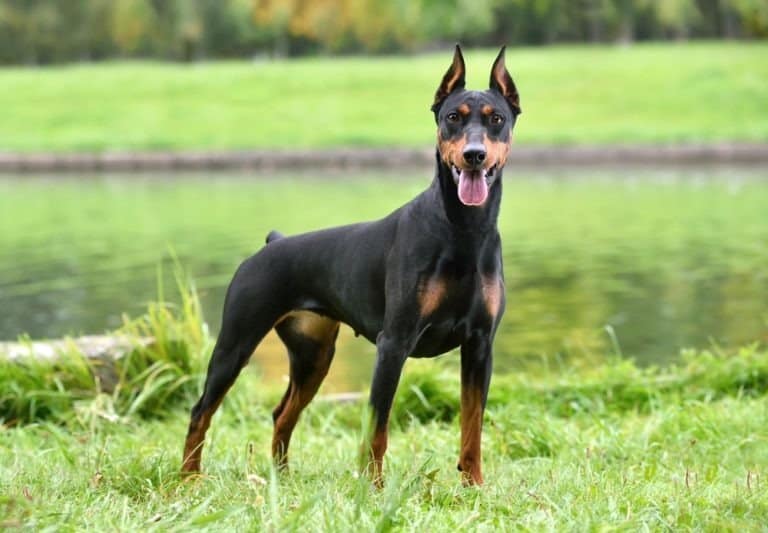
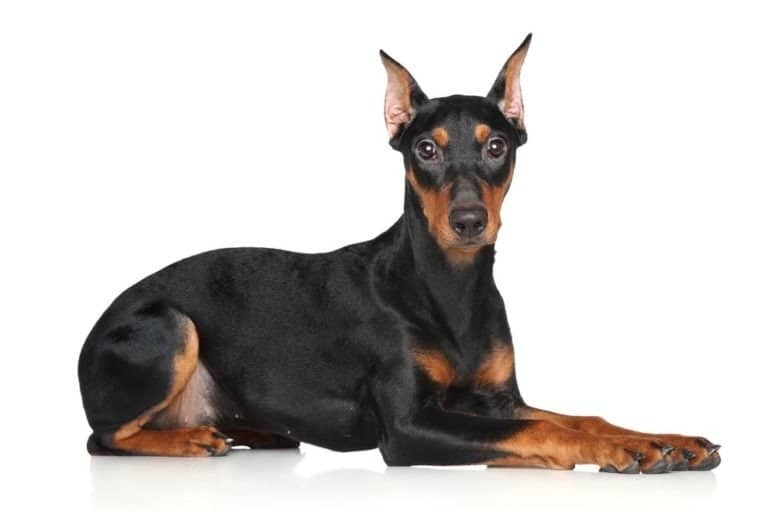
Beautiful tan-and-black German Pinscher sitting on a river bank background

A German Pinscher is an active dog that needs lots of exercise.

Size and Weight

German Pinschers are medium-sized dogs with short hair. Both males and females are about the same size. German Pinschers can get as tall as 20 inches at the shoulder, and they typically weigh between 25 and 45 pounds when they are fully grown.

Common Health Issues

German Pinschers nearly went extinct after World War II. The breed was actually revived in Germany from a single female and several normal and miniature pinschers. Because of the minimal gene pool, German Pinschers should always be checked for health issues before adoption.

Responsible German Pinscher breeders work to reduce the risk of genetic defects and strive to produce healthy, long-lived dogs, but some inherited conditions may still occur. However, some German Pinschers may be susceptible to dysplasia of the hips and elbows. Another common health issue is the presence of cataracts, which can cause blindness if they are left untreated. Other problems, like thyroid disease and Von Willebrand’s disease, pose long-term health problems in older dogs. Finally, German pinschers are also at risk for heart disease; luckily, this can often be noticed early and treated by your vet.
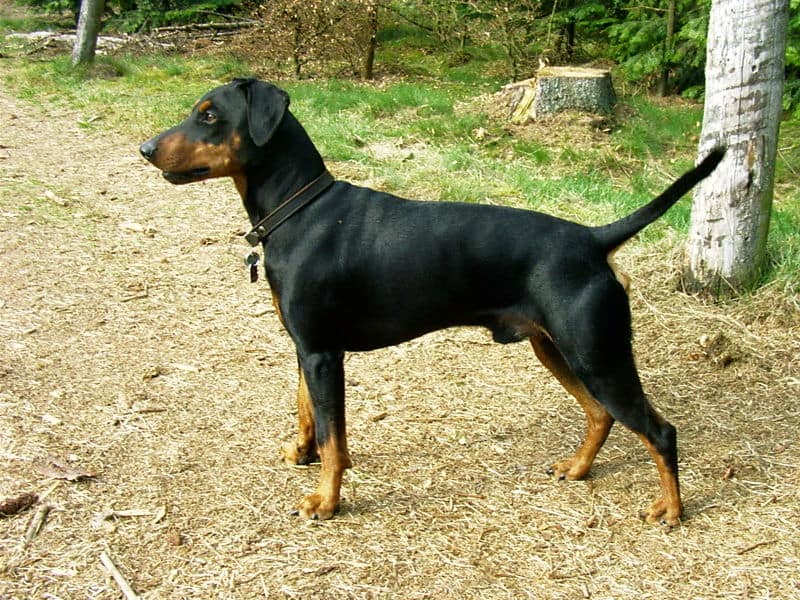
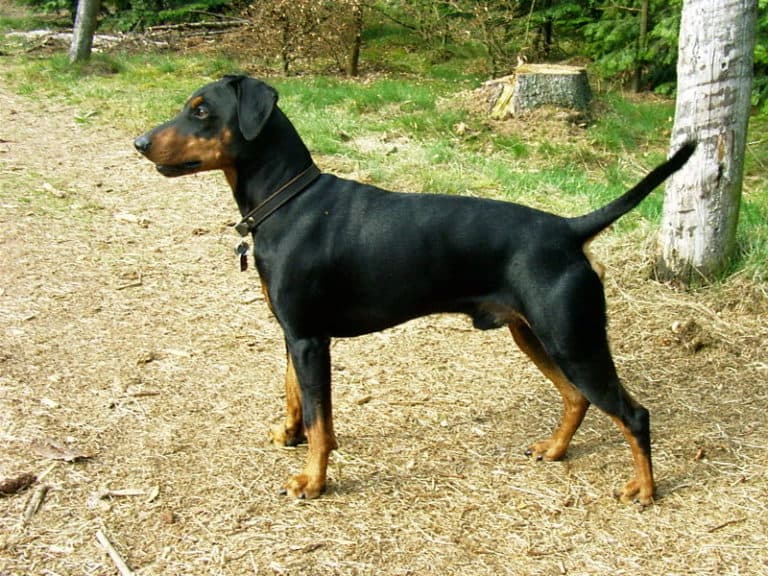
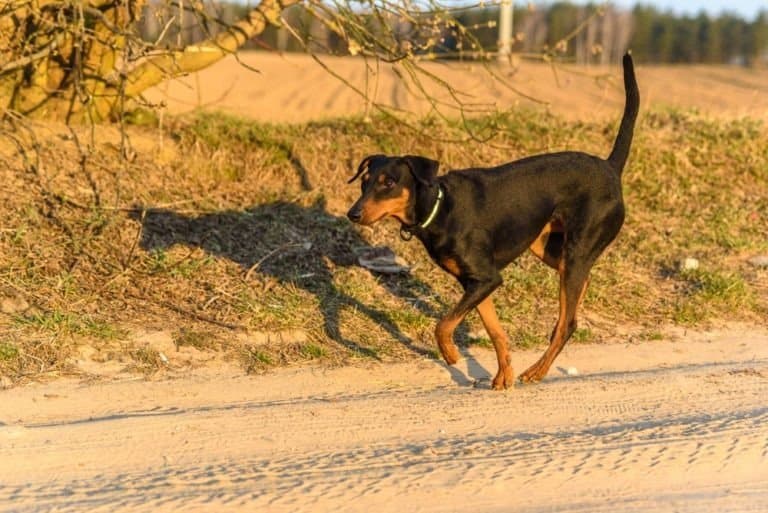
German Pinscher standing on ground

Some German pinschers may be susceptible to dysplasia of the hips and elbows.

Temperament

These are intelligent, energetic, protective, and loving dogs. German Pinschers take incredibly well to training, but they also have a strong independent streak; if you do not establish dominance early in the relationship, your German Pinscher may try to take control for themselves. Because of this, German Pinscher puppies should only be adopted by owners who are ready to commit to their training for the first few years of their lives.

Aside from the need for an attentive owner, German pinschers have many wonderful traits and are excellent pets. A German Pinscher is a fine choice for a family with older children, but they may be too jumpy to live with very young children. Owners should be aware that German Pinschers are guard dogs; they have very protective personalities and may not get along with strangers or other dogs unless they are properly socialized.
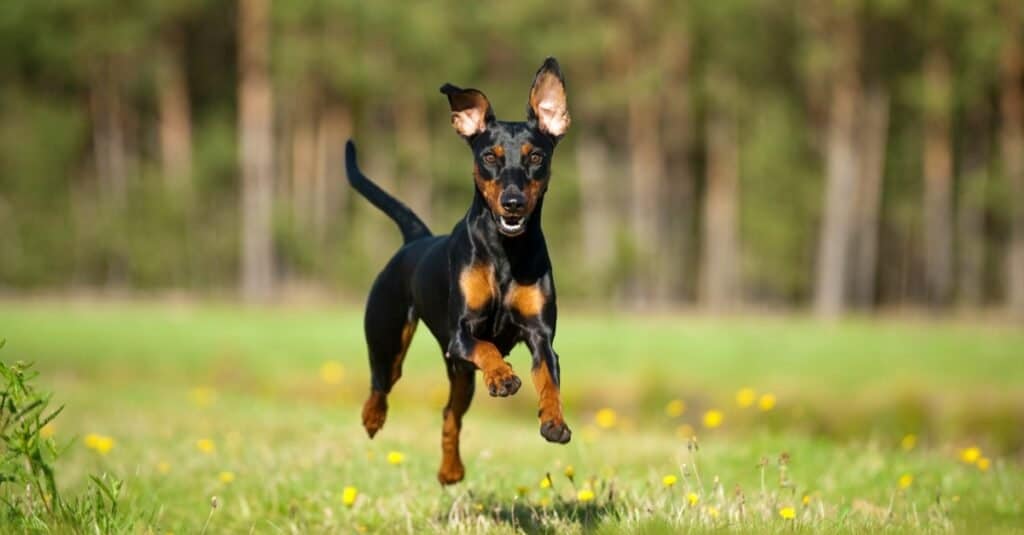
Types of terrier dogs

The German Pinscher is an excellent watchdog because of its alert and watchful nature. 

How to Take Care of Them

German Pinschers are moderately difficult to take care of compared to other dogs. They need attentive training and a high level of exercise in order to stay happy and healthy. Luckily, German Pinscher puppies are incredibly intelligent and will pick up most commands after only a handful of repetitions. Once your German Pinscher is trained, you will find that it is an accommodating and engaging pet.

The Best Dog Food

German Pinschers are extremely active dogs, which means that they may need to be fed more than other breeds of the same size. A German Pinscher puppy may need as many as four meals a day, although this amount should be decreased to three and then two times a day as the puppy ages.

Adult German Pinschers still need enough calories to maintain their active lifestyle, but two light meals a day are usually enough to help them stay fit and happy. Look for dog food that has plenty of protein, fiber, and healthy fats. You may also want to consider feeding your German Pinscher a calcium supplement to combat their risk of joint dysplasia; just make sure to consult with your vet before adding any vitamins or minerals to your dog’s diet.

Maintenance and Grooming

German Pinschers are a short-haired breed with incredibly minimal shedding. In fact, your German Pinscher probably won’t need to go to the groomer except to get their nails trimmed.

Still, German Pinschers do need a moderate amount of brushing to keep their coats glossy and smooth. Don’t use a long-bristled brush, as it may be too rough for your pinscher’s sensitive skin. Instead, look for a cloth or a grooming mitt that will gently gather excess hair.

Training

If you have the attention and dedication, German pinschers are incredibly easy to train. These dogs love to learn new commands and dislike having to repeat the same lesson twice. A German Pinscher needs an authoritative trainer who can understand the dog’s body language. These dogs are not recommended for new dog owners as pets.

Exercise

The German Pinscher needs a moderate to high amount of exercise. Most breeders recommend taking your German Pinscher on at least two long walks a day. Although they prefer having access to a backyard, German pinschers are relatively calm dogs and can live in an apartment if they are taken out three to four times a day.

When it comes to activities, your German Pinscher will be excited to participate in anything you can come up with. From fetch to mock hunting, there are few canine sports that a German Pinscher won’t want to participate in. However, German Pinschers are not actually hunting or sporting dogs, so make sure to keep their activities at a casual level.

Puppies

German Pinscher puppies are incredibly attached to their owners. Be ready to spend time developing a bond with your dog and socializing with them as early as possible. Because German Pinschers are naturally protective, they may be aggressive to strangers if they are not actively socialized during the developmental years of their lives.
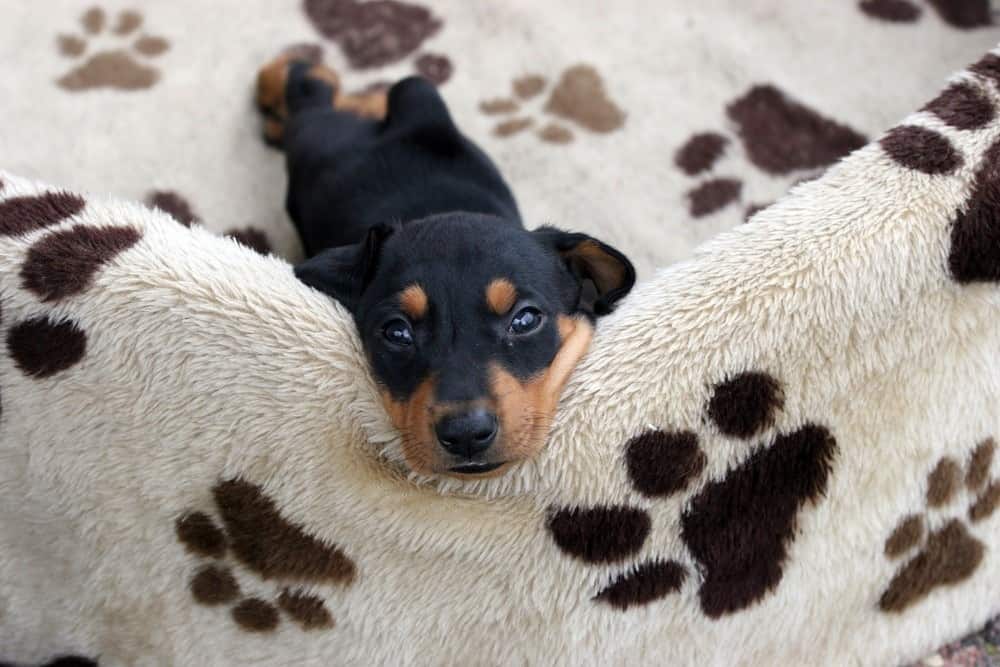
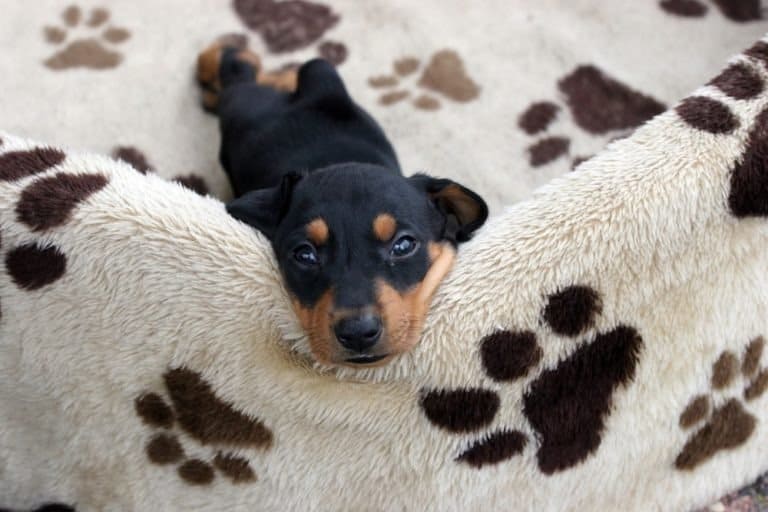
A portrait of a German pincher puppy

You should spend time with your puppy, developing a bond with it and socializing it as early as possible.

With Children

German Pinschers are sweet and loving dogs that get along incredibly well with their owners. This breed is well-suited to being a guard dog; most German Pinschers are very protective of everyone in their family. German Pinschers are good with kids, but they may be annoyed or irritated with very young children. A German Pinscher should always be trained by an experienced adult who is ready to take responsibility for their behavior.

Similar Dogs

German Pinschers might not always be available in some areas. If you’re looking for a similar dog, consider adopting a Doberman Pinscher, Affenpinscher, or German Shepherd.

  • Doberman Pinschers: Doberman pinschers are only distantly related to German pinschers, but they share a similar appearance and attentive personality. Doberman Pinschers are working dogs and may require more attention than German Pinschers.
  • Affenpinschers: The Affenpinscher is a fluffy, attentive toy dog that is also a member of the pinscher family. Although they require more grooming, Affenpinschers are friendly, fun, and receptive to training.
  • German Shepherds: They might be large, but German shepherds are sweet and loving dogs that do well in active families. These dogs respond quickly to commands and love to participate in activities with their owners.
View all 261 animals that start with G

Sources

  1. David Burnie, Dorling Kindersley Animal, The Definitive Visual Guide To The World's Wildlife / Accessed November 10, 2008
  2. Tom Jackson, Lorenz Books The World Encyclopedia Of Animals / Accessed November 10, 2008
  3. David Burnie, Kingfisher The Kingfisher Animal Encyclopedia / Accessed November 10, 2008
  4. David Burnie, Dorling Kindersley Illustrated Encyclopedia Of Animals / Accessed November 10, 2008
  5. Dorling Kindersley Dorling Kindersley Encyclopedia Of Animals / Accessed November 10, 2008
  6. Dogell / Accessed November 24, 2020
  7. Your Purebred Puppy / Accessed November 24, 2020
  8. American Kennel Club / Accessed November 24, 2020
  9. Pet Health Network / Accessed November 24, 2020
  10. Animal Care Tips / Accessed November 24, 2020
  11. Pet Central / Accessed November 24, 2020
  12. The German Pincher Club of America
Heather Ross

About the Author

Heather Ross

Heather Ross is a secondary English teacher and mother of 2 humans, 2 tuxedo cats, and a golden doodle. In between taking the kids to soccer practice and grading papers, she enjoys reading and writing about all the animals!

Thank you for reading! Have some feedback for us?


German Pinscher FAQs (Frequently Asked Questions)

A purebred German pinscher will cost anywhere from $2,000 to $6,000. Good breeders will charge more to ensure that your German pinscher has an even temperament and is free from any health problems. Luckily, German pinschers are relatively low-maintenance and do not typically cost more to own than any other dog.