
A
Species Profile

Affenpinscher

Canis lupus familiaris

Big attitude, monkey-faced charm
Joy Baldassarre/Shutterstock.com

Affenpinscher Distribution

Click a location to explore more animals from that region

Origin Location

This map shows the native origin of the Affenpinscher. As a domesticated species, they are now found worldwide.

Loading map...

Found in 1 country

Size Comparison

Human 5'8"
Affenpinscher 10 in

Affenpinscher stands at 15% of average human height.

Affenpincher

At a Glance

Domesticated
Also Known As Monkey Terrier, Monkey Dog, Affen
Diet Omnivore
Activity Diurnal+
Lifespan 4 years
Weight 6 lbs
Status Not Evaluated
Did You Know?

The name Affenpinscher is German for "monkey terrier," a nod to its primate-like facial expression and furnishings.

Scientific Classification

The Affenpinscher is a small toy dog breed of the domestic dog, historically kept as a ratter and companion. It is characterized by a wiry coat and a distinctive, primate-like facial expression (the name roughly means “monkey terrier” in German).

Kingdom
Animalia
Phylum
Chordata
Class
Mammalia
Order
Carnivora
Family
Canidae
Genus
Canis
Species
Canis lupus

Distinguishing Features

  • Small toy-sized dog with a shaggy/wiry coat
  • Prominent facial furnishings (beard/mustache) and short muzzle
  • Rounded eyes and “monkey-like” expression
  • Typically black coat is common (other colors also occur)
  • Compact, sturdy build with terrier-like demeanor

Physical Measurements

Height
10 in (9 in – 11 in)
Length
1 ft 3 in (1 ft – 1 ft 7 in)
Weight
10 lbs (7 lbs – 13 lbs)
Tail Length
4 in (3 in – 6 in)
Top Speed
15 mph
Fast in short bursts

Appearance

Primary Colors
Secondary Colors
Skin Type Affenpinscher (Canis lupus familiaris) skin lies under a dense, harsh wiry outer coat and soft undercoat; usually well colored, especially in black coats, but can get irritated if mats trap moisture or grooming is wrong.
Distinctive Features
  • Domestic dog toy breed (small, compact companion), highly derived from the base species (gray wolf) with markedly reduced body size and shortened muzzle.
  • Harsh, wiry, shaggy coat with a soft undercoat; coat stands off the body and gives a tousled outline.
  • Prominent facial furnishings: pronounced eyebrows, moustache, and beard creating the characteristic 'monkey-like' (primate-like) expression-this is a canine facial-hair trait, not a primate feature.
  • Short to moderate muzzle with a slightly undershot bite possible; round, dark eyes contribute to an alert, comical expression.
  • Small, sturdy, square-proportioned frame; relatively heavy-boned for a toy breed; agile and confident.
  • Historically used as a ratter (vermin hunter) and later as a companion; retains terrier-like boldness and prey drive for small pests.
  • Coat care requirement: regular brushing/combing to prevent mats in furnishings; many owners use hand-stripping or careful clipping to maintain correct wiry texture and reduce shedding.
  • Common health issues: kneecap slipping, breathing problems from a short face, crowded teeth and gum disease risk, eye injury from prominent eyes, and possible hip/bone problems like Legg-Calve-Perthes.
  • Routine care considerations: keep facial hair clean/dry to prevent irritation; regular dental care is especially important; avoid overheating/overexertion in hot weather if breathing is compromised; maintain lean body condition to protect joints.
  • Compared with the base species (wolf): substantially smaller size, reduced bite/jaw robustness, coat maintained via grooming rather than seasonal functional shedding alone, and strong human-directed social/companion behaviors selected through domestication.

Sexual Dimorphism

Mild sexual dimorphism typical of domestic toy breeds: males are often slightly larger/heavier with a marginally broader head and neck, but overall appearance is very similar between sexes.

  • Often slightly taller/heavier within the breed standard range
  • May show a broader skull/neck and a more robust overall outline
  • Often slightly lighter and finer-boned
  • May have a slightly narrower head and more refined overall outline

Did You Know?

The name Affenpinscher is German for "monkey terrier," a nod to its primate-like facial expression and furnishings.

Though classified today as a toy breed, it historically worked as a ratter in homes, stables, and shops.

Its iconic look comes from a harsh, wiry coat plus a pronounced beard, eyebrows, and moustache-like furnishings.

Affenpinschers are compact but notably fearless-many act like much larger dogs.

The breed developed in German-speaking regions and influenced (and was influenced by) other small rough-coated European toy dogs.

Their coat is designed to be "shaggy," not silky-regular grooming helps maintain texture and prevents matting.

As a domestic dog (Canis lupus familiaris), it shares the species' social intelligence, but this breed is especially known for clownish, self-confident attitude.

Unique Adaptations

  • Harsh, wiry coat and facial furnishings help protect skin from scratches and debris during close-to-ground work (useful for ratting in cluttered spaces).
  • Compact, square build supports quick pivots and bursts of speed in tight indoor environments.
  • High alertness and sensitivity to sound make the breed effective as a small watchdog-leveraging the domestic dog's keen hearing.
  • Confident temperament (for size) can deter small pests and supports the breed's historical "little ratter" role.
  • As with many toy breeds, small body mass means faster heat loss-often benefiting from sweaters in cold weather and avoiding prolonged chill.

Interesting Behaviors

  • "Clowning" and mugging: many Affenpinschers use expressive faces, head tilts, and pawing to get attention.
  • Bold sentry behavior: quick to alert-bark at new sounds despite small size (a common toy-breed trait).
  • Prey-chase instincts: may dart after rodents or small moving objects-an echo of its ratter history.
  • Scrappy play style: tends to wrestle and spar, often preferring interactive games over passive lounging.
  • Strong person-bonding: frequently chooses a "favorite human" and shadows them around the home.
  • Terrier-like tenacity: can fixate on a goal (a toy under furniture, a scent trail) and persist until it's resolved.

Cultural Significance

The Affenpinscher (Canis lupus familiaris) is a small, rough-coated Central European pinscher once used to catch rats and mice. Its "monkey-faced" look made it popular in German-speaking homes and shows and a sign of the shift to city toy pets.

Myths & Legends

In German-speaking areas, the Affenpinscher's nickname "monkey dog" and monkeylike face led people to playfully believe these small dogs had a mischievous household spirit—pranksters rather than lapdogs, making home life funny.

Old European ratter stories said small stable and kitchen dogs, like little pinscher types, were lucky pantry guards. A watchful dog at home kept bad luck and pests from stealing household food and wealth.

Breed lore links the Affenpinscher (Canis lupus familiaris) to the pinscher tradition—dogs kept to catch pests—an old story used to explain why the tiny companion acts bold and serious toward small prey.

Early dog show tales said the Affenpinscher (Canis lupus familiaris) had an almost human face, so people joked it could read moods like a tiny, mustached judge, cute human-like stories about its expression.

Conservation Status

NE Not Evaluated

Has not yet been evaluated against the criteria.

Population Stable

Life Cycle

Birth 3 pups
Lifespan 4 years

Lifespan

In the Wild
2–8 years
In Captivity
10–17 years

Reproduction

Mating System Polygynandry
Social Structure Managed Domestic
Breeding Pattern Transient
Fertilization Managed Selective
Birth Type Internal_fertilization

Affenpinscher mating is polygynandrous: both sexes may mate with multiple partners. Breeding is human-managed and selective (natural mating or artificial insemination). Pair bonds are brief during female heat. Cooperative (non-parent) helpers are not typical.

Behavior & Ecology

Social Pack Group: 3
Activity Diurnal, Crepuscular
Diet Omnivore Meat-forward, highly palatable small kibbles or soft foods (especially poultry-based).

Temperament

Alert, watchful companion; quick to notice novelty and intrusions (often more vigilant than many toy breeds).
Bold, confident, and sometimes 'terrier-like' in persistence; can challenge larger dogs despite small size (requires thoughtful socialization).
Affectionate and clownish with trusted people; may be reserved or skeptical with strangers until properly introduced.
Independent streak and mild stubbornness; responds best to short, upbeat training with consistent boundaries.
Moderate prey/chase drive rooted in ratter history; may pursue small animals and fast-moving objects.
Can be possessive/territorial about favored person, food, or resting spots; early resource-guarding prevention is beneficial.
Sensitivity to handling: prefers respectful interaction; may snap if over-restrained or treated roughly-important around children.
Affenpinschers need regular coat care and dental checks. Watch for patellar luxation, Legg-Calvé-Perthes, airway and heat sensitivity, and eye irritation — these can limit long or rough play.

Communication

Sharp alert barking/yapping when detecting movement or unfamiliar sounds; often used as 'announcement' and boundary-setting.
Growling (low or brief) during resource disputes or when uncomfortable with handling; important early signal to respect.
Whining/whimpering to solicit attention, indicate frustration, or during brief separations.
Play vocalizations (short barks, grumbles) during chase/tug; can escalate if arousal is not managed.
Expressive facial communication (notable for the breed's 'monkey-like' face): eyebrow/forehead movement, direct stare, and lip tension can signal curiosity, challenge, or uncertainty.
Body posture: forward weight shift, stiffened stance, and high tail carriage as confidence/territorial display; crouch/avoidance when uncertain.
Scent communication typical of domestic dogs: urine marking, sniffing, and investigative circling; may mark more when aroused or in new environments.
Touch and proximity: leaning, pawing, lap-seeking with trusted humans; may place themselves between person and 'intruder' as a guarding behavior.
Play signals: play-bow, quick darts, and toy presentation; requires supervision with larger dogs to prevent injury due to small size and bold engagement style.

Habitat

Biomes:
Temperate Forest Temperate Grassland Mediterranean Boreal Forest (Taiga) Tundra Alpine Savanna Desert Hot Desert Cold Tropical Rainforest Tropical Dry Forest Freshwater Wetland Marine +8
Elevation: Up to 16404 ft 3 in

Ecological Role

Domestic companion canid with localized pest-control (ratter) function; not a natural ecosystem predator in typical settings.

rodent and small pest deterrence in homes/stables (historical role) companionship and psychological benefits to humans alerts/household watchdog behavior (minor) serves as a managed consumer of animal- and plant-derived foods within human environments

Diet Details

Main Prey:
Rodents Small mammals Small birds Insects and other invertebrates
Other Foods:
Commercial dog food Cooked vegetables Safe fruits Starches used in diets

Human Interaction

Domestication Status

Domesticated

Domestic dogs (Canis lupus familiaris) were tamed from gray wolves about 15,000–30,000 years ago. The Affenpinscher was bred in German-speaking areas as a small, tough ratter and house pet. It has a monkey-like face, wiry coat with beard and eyebrows, toy size, compact build, and a bold, people-loving, terrier-like temperament.

Danger Level

Low
  • Bite risk is generally low due to small size, but nipping can occur if poorly socialized, handled roughly, or resource-guarding is present.
  • Can be bold/territorial; may bark and lunge at strangers or other dogs without training.
  • Small-breed injury risk: humans can accidentally injure the dog (falls, stepping on), which can provoke defensive reactions.
  • Zoonotic risks are typical of pet dogs (e.g., parasites) and are minimized with routine veterinary prevention.

As a Pet

Suitable as Pet

Legality: The Affenpinscher (Canis lupus familiaris) is usually legal to own, but you must follow local dog license, rabies shots, and leash laws; some areas limit pet numbers. Breed bans are rare—check city, HOA, and travel rules.

Care Level: Moderate

Purchase Cost: $800 - $3,500
Lifetime Cost: $18,000 - $45,000

Economic Value

Uses:
Companion animal (pet) Show/conformation and hobby breeding Pet services economy (grooming, training, boarding) Veterinary care and pharmaceuticals Historical vermin control/ratting (limited modern role)
Products:
  • puppy sales and stud services (regulated/ethical breeding)
  • grooming (hand-stripping/clipping, shampoos, tools)
  • veterinary services (vaccines, dental care, surgery, diagnostics)
  • parasite prevention (flea/tick/heartworm)
  • training classes and behavior services
  • pet insurance policies
  • boarding/daycare and pet sitting
  • show entry fees and travel (for exhibitors)

Quick Take

  • Banana Joe secured Westminster Best in Show, a record achievement for the Affenpinscher breed.
  • Corneal dystrophy produces crystals that create a specific vision problem for the Affenpinscher.
  • Paradoxically, 10-pound dogs use fearless behavior to intimidate large breeds.
  • Affenpinscher breeding in the 1600s was a necessary process for managing vermin control.

An Affenpinscher is a fearless dog brimming with confidence. This may seem funny, seeing that it’s a member of the Toy group and only weighs around 10 pounds fully grown. But, in its mind, this dog is a Great Dane!

The history of the Affenpinscher, sometimes called a monkey terrier due to its appearance, goes back to the 17th century. In Germany, they were used to hunt down rats and mice in stables. They could easily get into small spaces to capture these rodents. Eventually, they were brought into people’s homes to serve the same purpose. From there, they became loyal companions for members of the family.

This breed is affectionate and good with older kids and adults. They are serious about protecting their family, but are also known to clown around, giving everyone a laugh.

A detailed infographic about the Affenpinscher breed featuring icons for its history, health, pros and cons, and temperament against a white and green background.
Don't let the 10-pound frame fool you—this 'Mustached Little Devil' thinks it's a Great Dane and has the fearless attitude to prove it. © A-Z Animals

3 Pros and Cons of Owning an Affenpinscher

ProsCons
Needs minimal exercise. This small pooch only requires 20 to 30 minutes of exercise per day.Sometimes this breed can be difficult to housebreak due to its independent nature.
Families who want an alert canine that barks when a stranger comes to the door will be pleased with an Affenpinscher.Though considered hypoallergenic, it’s best to groom this pooch twice a week. This can be time-consuming for an owner.
This breed doesn’t need much space, so it’s a good option for a family that lives in an apartment.Affenpinschers were bred to chase down rats and mice. Unfortunately, they aren’t able to distinguish between a pet hamster or gerbil and a field mouse they are supposed to capture.
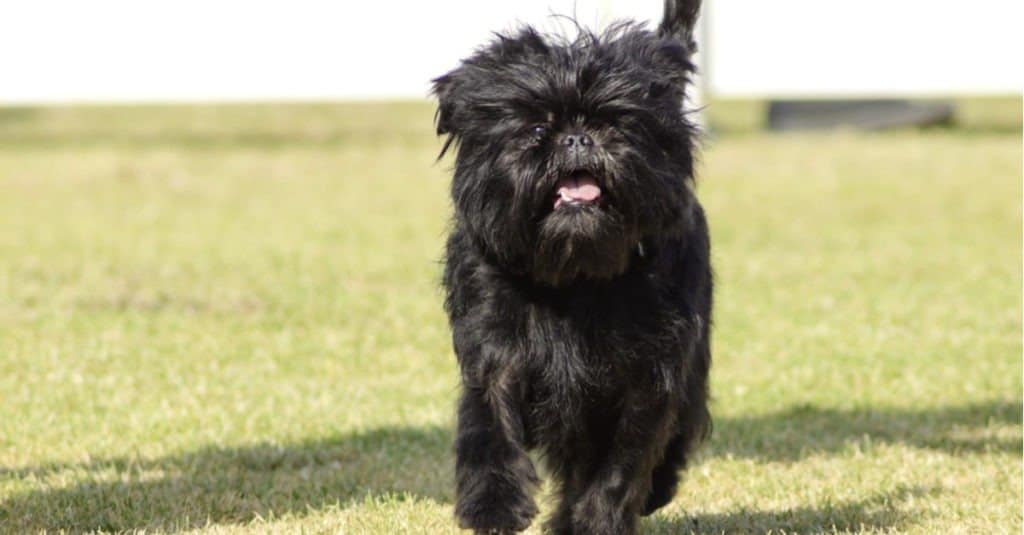
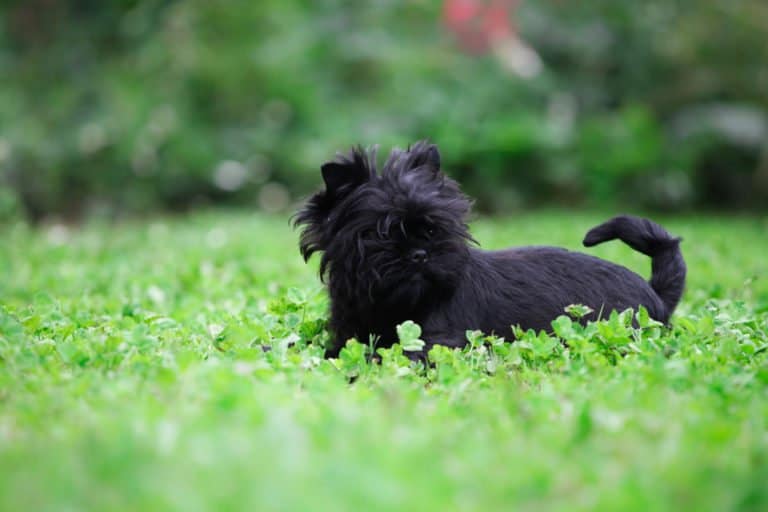
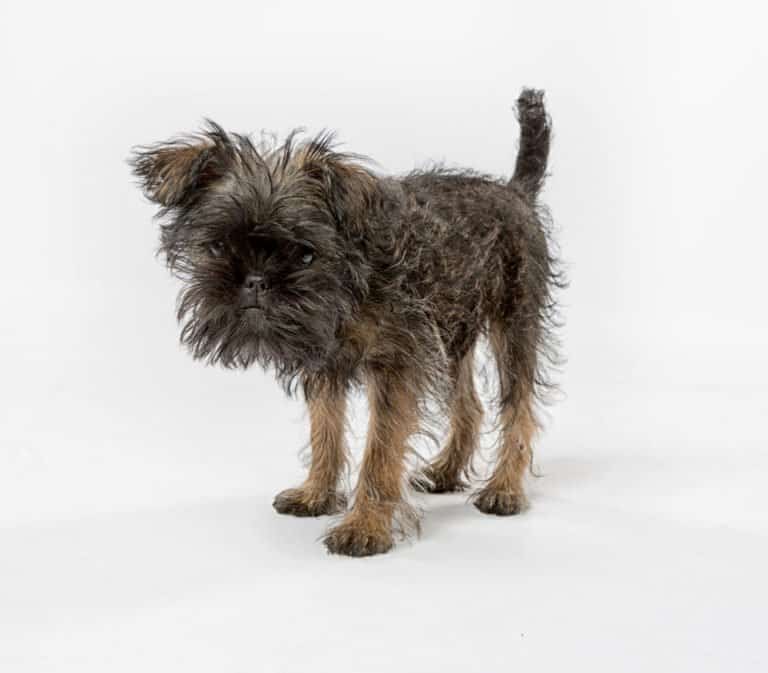
Affenpinscher standing in the grass

Affenpinschers are friendly dogs, but they can be yappy.

Evolution and Origins

Affenpinschers were first bred in the 1600s in Germany to get rid of vermin such as mice and rats, some of which were bold enough to scuttle up homeowners’ legs. However, their friendly, devoted nature soon saw them become beloved domestic companions, in addition to being natural forms of pest control.

Their name comes from the German word “affen” which means monkey or ape, and fully translates to “monkey dog”. In France, however, they are called  “mustached little devils” (diablotin moustachu).

Size and Weight

Affenpinschers are small pooches that can grow to be 11.5 inches at the withers. They weigh 10 pounds fully grown. At 7 weeks old, Affenpinschers weigh around 2 pounds. They are considered fully grown at one year old.

Common Health Issues

Affenpinschers have some common health issues that their owner should be aware of. The first one is called patellar luxation. This is a medical term for a dislocated knee. Knee dislocation happens when the pup’s kneecap moves out of place as it’s running or trotting along. Sometimes an Affenpinscher is able to pop it back into place with a certain movement. In other situations, surgery may be needed.

Another common health issue is called corneal dystrophy. It’s a genetic condition that occurs when crystals form on the dog’s cornea. These crystals can affect the Affenpinscher’s vision, and sometimes surgery is necessary.

Hip dysplasia is another common health issue of this breed. This condition occurs when the hip joint moves out of alignment. Hip dysplasia can lead to arthritis in later years. Limping and limited movement are signs of this condition.

Temperament

Affenpinschers are small dogs known for their fearless behavior. They sometimes bark at and try to intimidate big dogs while forgetting about their size disadvantage!

This courageous quality makes them great watchdogs for a household. In addition, they have a loyal, affectionate personality. These traits have earned them a good reputation as a family dog.

Many owners of Affenpinschers are entertained by the antics of this pet. They have a silly streak meaning they like to frolic, jump around, throw toys in the air, and act goofy. This is one of their most endearing traits.

How to Take Care of an Affenpinscher

Giving the best level of care to an Affenpinscher is easier when an owner knows the unique diet, exercise and healthcare needs of this breed. Whether someone has a puppy or an adult Affenpinscher, making a daily care plan can help to keep this pet healthy and happy.

The Best Dog Food

Affenpinscher puppies and adult dogs have different dietary, exercise and healthcare needs. Look at some of the required nutrients in their daily diets.

Affenpinscher puppy food: Protein is the main ingredient in any high-quality puppy food for Affenpinschers. The amino acids in protein build strong muscles and tissue. Protein may help to prevent the development of hip dysplasia.

A limited amount of fat gives a puppy energy and helps them absorb the vitamins in their food. Calcium and vitamin D support the growth of strong bones, which is especially valuable to this breed due to its potential to develop patellar luxation. Vitamin A contributes to this puppy’s eye health. Fiber helps with its proper digestion.

Affenpinscher adult dog food: Protein is just as important for adults as it is for puppies. Protein maintains strong muscles and tissue.

Vitamin E contributes to skin health, and Vitamin A supports a dog’s eye health. This is important in preventing corneal dystrophy in this breed. A limited amount of fat provides energy to this little dog while not adding unnecessary weight.

Giving Affenpinscher puppies and adults access to water at all times keeps them hydrated and helps digestion.

Maintenance and Grooming

How much does an Affenpinscher shed? Though this canine is considered to be hypoallergenic, it does shed a little more than average with the change of seasons. Grooming twice a week keeps its medium-long, wire-haired coat in good condition.

A simple grooming routine would include brushing the dog with a slicker brush. This removes loose and dead hair. Next, groom with a metal comb featuring both fine and medium teeth, so it reaches into the dog’s coat. Using these two grooming tools on an Affenpinscher’s hair keeps the tangles away and maintains a healthy coat. It’s best to start at the pup’s head and brush toward its tail.

Training

Affenpinschers are relatively easy to train. An owner should keep in mind that these dogs do best with short obedience training sessions. When a training session is short, an Affenpinscher has less opportunity to become bored and distracted.

Words of praise and favored treats are very helpful tools when putting this pup through obedience training. It’s a good idea to save a certain kind of favored treat to use only during obedience training sessions. That way, the Affenpinscher knows it’s training time when the treats are given.

Exercise

These cute canines need a moderate amount of exercise each day to maintain good health. This means about 20 to 30 minutes of activity. Taking a walk around the neighborhood, walking in the woods, or playing fetch are all good options. These little canines have a short stride, so taking them on a long jog is not a good idea. The dog will be exhausted!

As far as apartment living goes, an Affenpinscher is an excellent option. This pet doesn’t need a lot of space to move around in, so an apartment would be a good living environment. This breed is ideal for people who like to take their pooch along everywhere they go. Learn more about the best dogs for apartment living here.

Puppies

Since this is a Toy breed, Affenpinscher puppies are especially small. So, owners of these puppies must take extra care to keep them safe while allowing them to explore their environment.
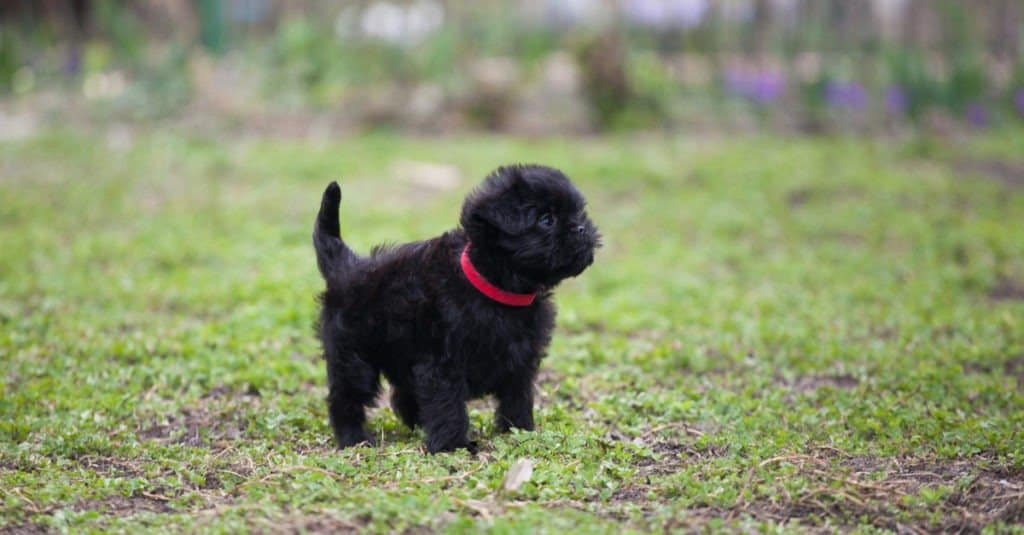
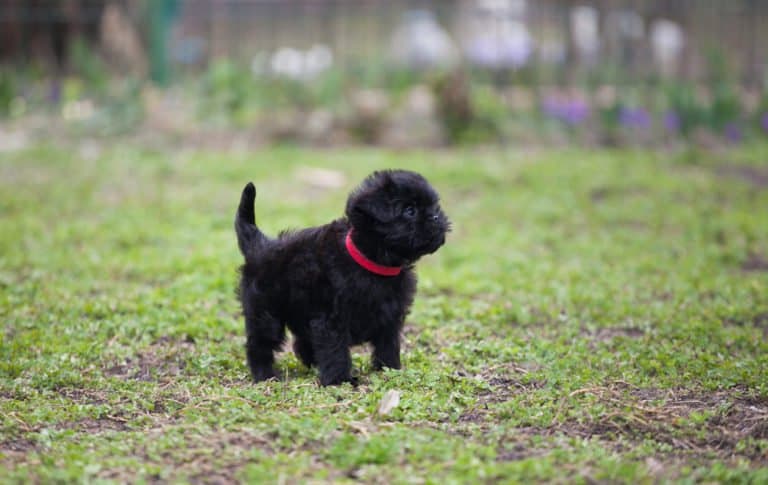
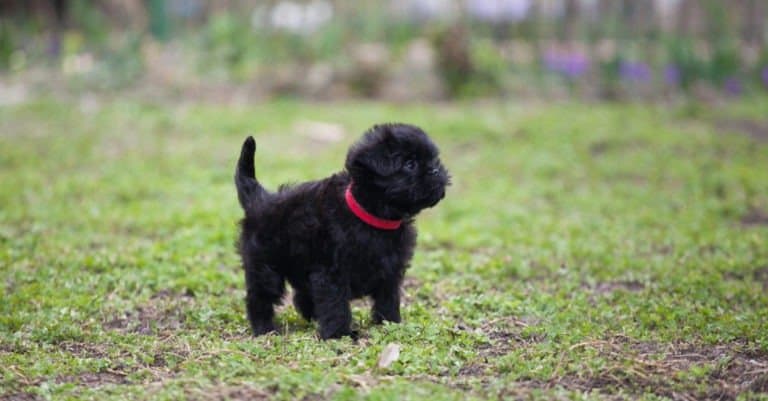
Affenpinscher puppy standing in the grass

Affenpinschers make great family pets. They are good with kids and are quite playful.

Children

Affenpinschers are a good option for families with older children. Some younger children and toddlers have a tendency to treat small dogs as toys. An Affenpinscher that’s treated in a rough way by a young child can become nervous and jumpy. Though the child may not mean any harm, an Affenpinscher can become frightened for its own safety and lash out.

Dogs Similar to Affenpinschers

Dogs similar to the Affenpinscher include the Cairn terrier, Norfolk terrier, and the Border terrier.

  • Cairn terrier: Cairn terriers and Affenpinschers are about the same height, but Cairn terriers weigh a little more. They are both alert, energetic dogs that are considered hypoallergenic.
  • Norfolk terrier: Norfolk terriers have a temperament both feisty and sweet, like Affenpinschers. They are approximately the same size, but Norfolk terriers are in the Terrier group, not the toy group.
  • Border terrier: Border terriers are taller and heavier than Affenpinschers. Both Affenpinschers and Border terriers are intelligent and energetic with a loyal temperament.

Famous Affenpinschers

One of the most famous Affenpinschers goes by the name of Banana Joe. At 5 years old, Banana Joe was the first Affenpinscher to win Best in Show at the Westminster Dog Show in 2013.

View all 328 animals that start with A

Sources

  1. akc.org / Accessed October 20, 2019
  2. yourpurebredpuppy.com / Accessed October 20, 2019
Dana Mayor

About the Author

Dana Mayor

I love good books and the occasional cartoon. I am also endlessly intrigued with the beauty of nature and find hummingbirds, puppies, and marine wildlife to be the most magical creatures of all.
Connect:

Thank you for reading! Have some feedback for us?


Affenpinscher FAQs (Frequently Asked Questions)

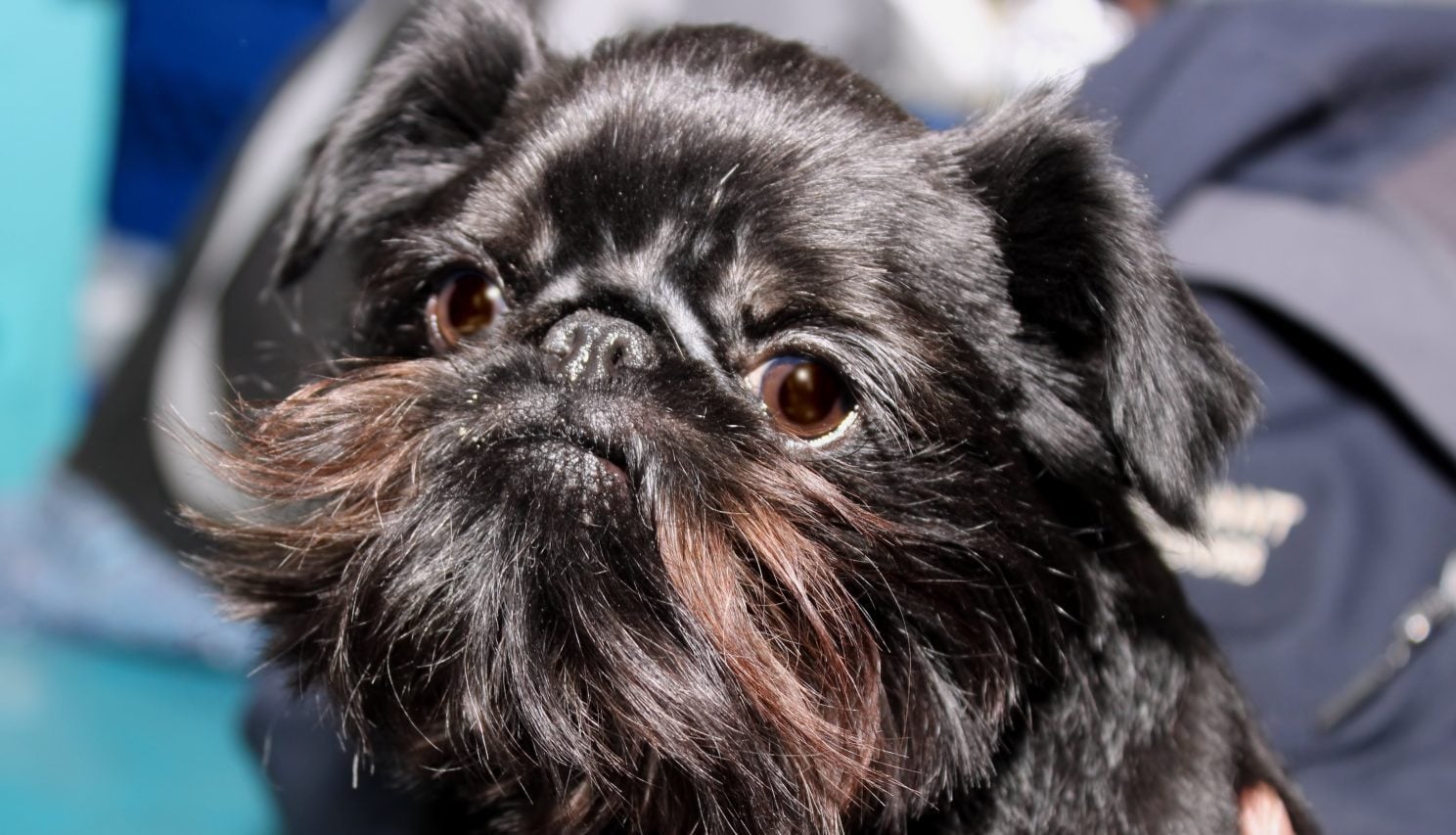
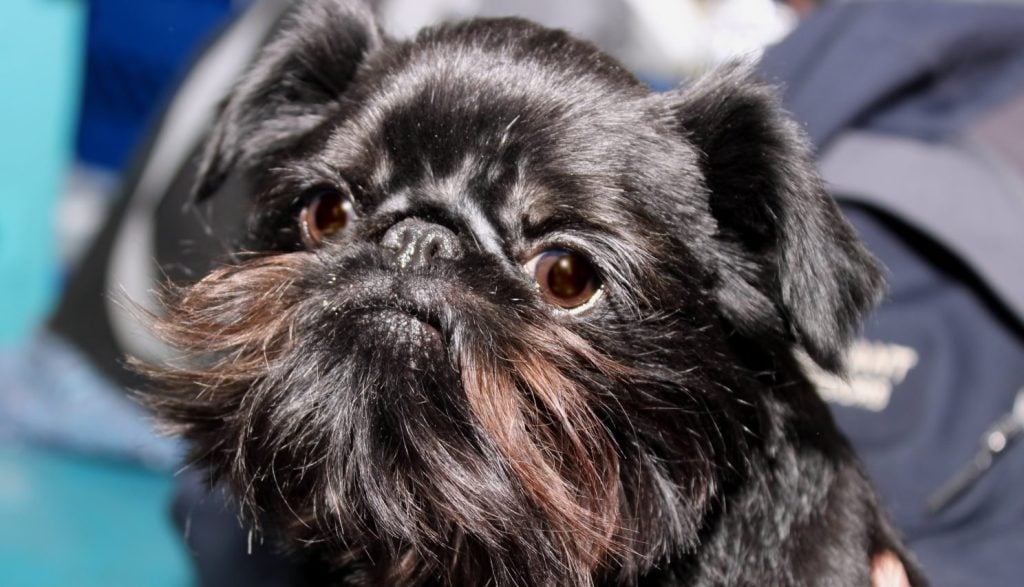
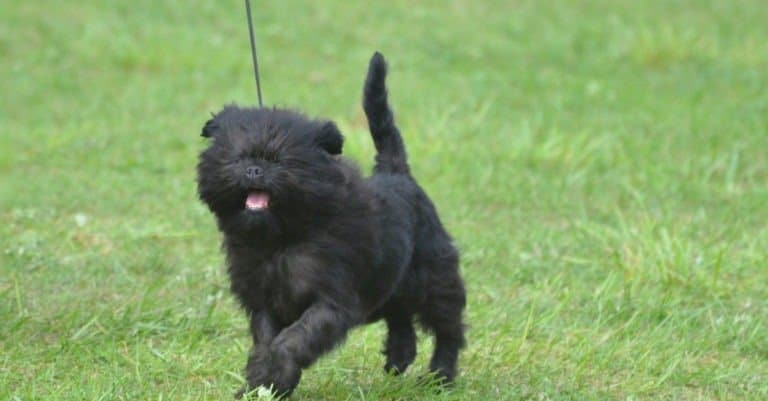
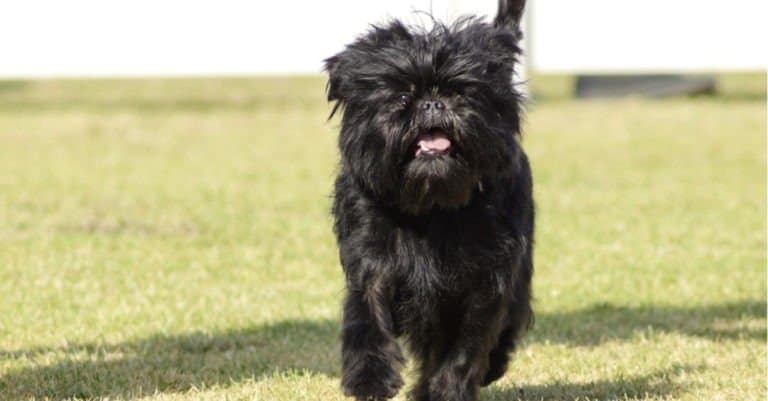
Affenpinschers have dark, wiry-haired bodies and dark eyes.