


M
Species Profile

Moray Eel

Muraenidae

Crevice kings with a second bite
fenkieandreas/Shutterstock.com
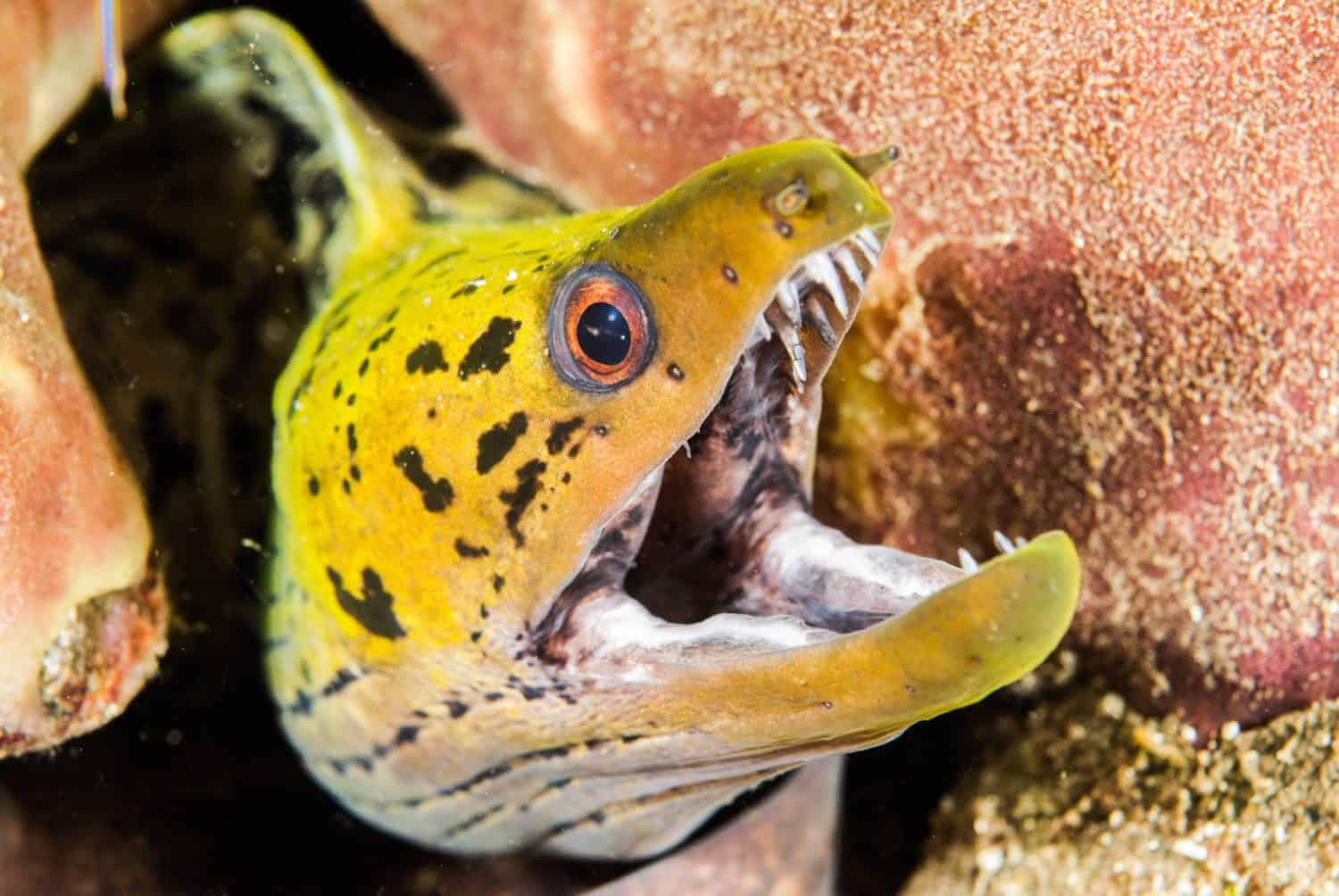
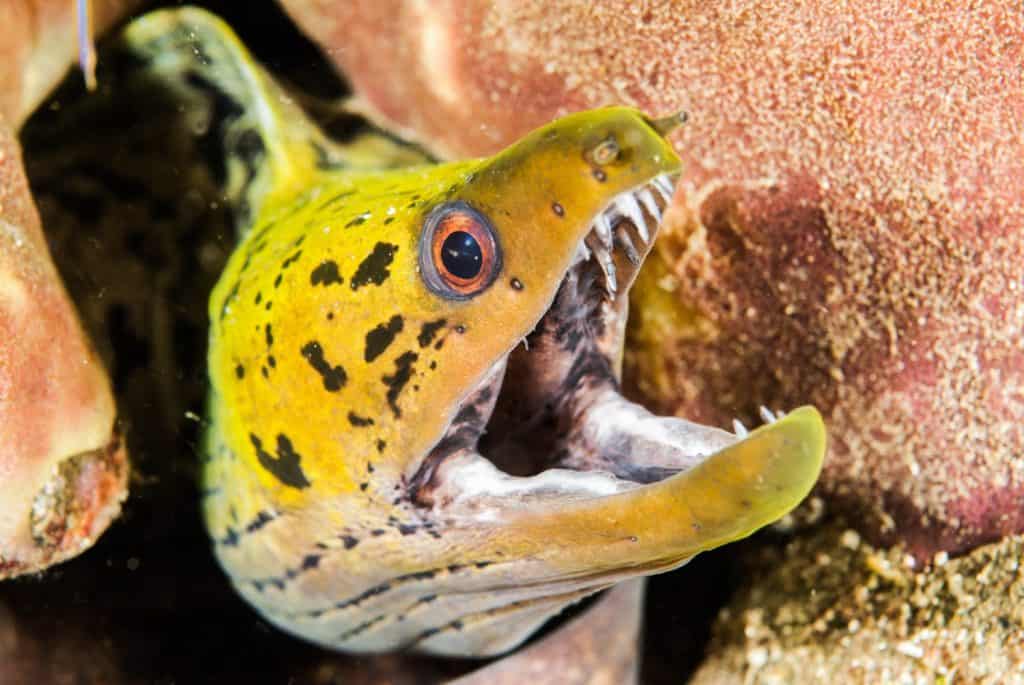
Fimbriated moray eel in Ambon, Maluku, Indonesia underwater photo. Fimbriated moray eel Gymnothorax fimbriatus among the reef with the opened mouth.

At a Glance

Family Overview This page covers the Moray Eel family as a group. Stats below are general traits shared across the family.
Also Known As Moray, Puhi, Morena, Murène, Muräne, Moreia
Diet Carnivore
Activity Nocturnal+
Lifespan 15 years
Weight 30 lbs
Status Not Evaluated
Did You Know?

Morays have pharyngeal jaws-an inner set of jaws that grabs prey and pulls it into the throat.

Scientific Classification

Family Overview "Moray Eel" is not a single species but represents an entire family containing multiple species.

Moray eels are ray-finned fishes in the eel order Anguilliformes, comprising the family Muraenidae. They are primarily marine, reef-associated predators known for their elongate bodies, large mouths with prominent teeth, and a strong tendency to hide in crevices with the head protruding.

Kingdom
Animalia
Phylum
Chordata
Class
Actinopterygii
Order
Anguilliformes
Family
Muraenidae

Distinguishing Features

  • Elongate, scaleless-looking body; dorsal fin continuous with caudal/anal fin in many species
  • Small or absent pectoral fins; gill openings typically reduced to small round/oval openings
  • Large jaws with strong teeth; some species possess a second set of ‘pharyngeal jaws’ used to pull prey into the throat
  • Often secretive, crevice-dwelling behavior; many are nocturnal or crepuscular

Physical Measurements

Males and females differ in size

Length
♂ 393 ft 8 in (32 ft 10 in – 1312 ft 4 in)
♀ 3 ft 11 in (4 in – 13 ft 1 in)
Weight
♂ 7 lbs (0 lbs – 66 lbs)
♀ 7 lbs (0 lbs – 66 lbs)
Top Speed
6 mph
swimming

Appearance

Primary Colors
Secondary Colors
Skin Type Scaleless, thick and leathery skin coated in copious mucus; reduced external gill openings (small pores) with continuous dorsal/caudal/anal finfold; pectoral and pelvic fins absent.
Distinctive Features
  • Family-wide size range spans ~12 cm to ~4 m total length, with many species 0.5-1.5 m.
  • Lifespan varies by species and conditions; commonly ~5-30+ years (long-lived in some large morays).
  • Elongate, laterally compressed body with a large head and wide gape; head often protrudes from shelter.
  • Prominent conical or molariform teeth vary with diet; strong bite adapted to gripping prey.
  • Pharyngeal jaws are well-developed and used to transport prey into the throat.
  • Gill openings are reduced to small round/oval apertures; breathing often visible as rhythmic gill pumping.
  • Color and pattern diversity is high (e.g., Gymnothorax, Echidna, Muraena), from plain to heavily patterned forms.
  • Ecology is predominantly marine and reef/rock-associated; most are crevice-dwelling ambush predators.
  • Activity is often nocturnal/crepuscular, but many species also hunt by day; behavior varies by habitat and species.
  • Diet varies: many take fishes and cephalopods; durophagous forms (notably Echidna) specialize more on crustaceans and hard-shelled prey.
  • Commonly solitary and territorial around shelters; aggression toward conspecifics and humans varies widely by species and context.

Did You Know?

Morays have pharyngeal jaws-an inner set of jaws that grabs prey and pulls it into the throat.

Most morays lack pectoral fins and have a continuous dorsal-caudal-anal fin ribbon, giving them a "living rope" swimming style.

Their "open-mouth" look is usually breathing: pumping water over reduced gill openings, not a threat display.

Different genera specialize: many Gymnothorax are fish-eaters, while many Echidna (pebbletooth morays) focus on hard-shelled crustaceans.

Morays rely heavily on smell and lateral-line sensing; some hunt in low light or turbid water where vision is less useful.

Several species can produce protective skin mucus; in some, it may help deter parasites or predators.

A number of morays engage in cooperative hunting with groupers in some reefs, coordinating to flush prey from hiding places.

Unique Adaptations

  • Pharyngeal jaw apparatus: highly mobile throat jaws that seize prey and transport it inward-an important solution for swallowing without a typical suction-feeding gulp in narrow crevices.
  • Reduced gill openings: small, round/oval openings minimize snagging in rockwork and support a head-first, crevice-dwelling lifestyle.
  • Fin configuration for tight spaces: absence of pectoral fins and a continuous dorsal-caudal-anal fin helps maneuver through complex reef structure.
  • Powerful dentition diversity: long, needle-like teeth for gripping slippery fish in many genera (e.g., Gymnothorax, Muraena) versus rounded "pebble" teeth for crushing crustaceans in many Echidna.
  • Thick, scaleless skin with mucus: reduces abrasion against rocks and can provide a chemical/physical barrier; composition and potency vary among species.
  • Elongate, muscular body and strong bite mechanics: enables rapid lunges from shelter and effective prey retention.
  • Enhanced chemosensory and mechanosensory abilities: strong olfaction and lateral-line sensitivity support hunting where visibility is limited.

Interesting Behaviors

  • Crevice ambush living: across Muraenidae, many species spend daylight tucked into holes with only the head exposed; some are more active hunters at night, and a few roam more openly depending on habitat and size.
  • Threat and ventilation display: gaping and head-waving commonly reflect respiration and situational assessment; intensity varies by species, context, and individual tolerance of disturbance.
  • Diet specialization: family members range from fish specialists (often long, pointed teeth) to crustacean/crab specialists (often blunter, molar-like teeth, especially in Echidna); many are opportunistic generalists on local reefs.
  • Site fidelity: many morays reuse preferred dens and may maintain "home" crevices, while others shift among shelters as prey and competition change.
  • Opportunistic scavenging: some individuals will take carrion or bait, especially around human fishing activity; reliance on scavenging varies with location and species.
  • Cleaning interactions: morays may allow cleaner fishes/shrimps into the mouth and gill area; frequency varies among reefs and individuals.
  • Cooperative hunting (documented in multiple species): some morays and groupers use complementary tactics-morays probe crevices while groupers patrol open water to intercept escaping prey.

Cultural Significance

Moray eels (Muraenidae) have long been part of coastal life: shown in ancient art and Roman writings, kept in seaside fishponds (vivaria) as luxury items, and today are well-known in diving, aquariums, and folklore as reef 'guardians'.

Myths & Legends

Ancient Roman stories say wealthy homes kept moray eels (Muraenidae) in fishponds. The famous tale of Vedius Pollio threatening to feed a servant to his morays became a lesson about cruelty and power.

In classical Mediterranean natural-history stories, like those of Aristotle and Pliny, moray eels (Muraenidae) were said to have strange ties with people and other animals, because they live hidden in rocky dens and strike suddenly.

In Mediterranean coastal stories, moray eels and other eels were called "serpents of the sea." Fishermen passed down local names and old beliefs warning against putting hands into reef holes and rocky crevices.

In many reef coastal stories, big eels (including morays) are seen as guardian spirits or scary cave dwellers at reef 'doorways' (crevices and caves), so people avoid disturbing certain holes while fishing or gathering.

You might be looking for:

Green moray

25%

Gymnothorax funebris

Large Western Atlantic moray; often appears green due to yellow mucus over dark skin.

Giant moray

22%

Gymnothorax javanicus

Very large Indo-Pacific moray commonly encountered on coral reefs.

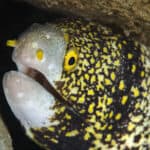
Snowflake moray

18%

Echidna nebulosa

Indo-Pacific species with pale patterning; specialized on hard-shelled prey.

View Profile

Zebra moray

12%

Gymnomuraena zebra

Banded Indo-Pacific moray; feeds mainly on crustaceans.

Mediterranean moray

10%

Muraena helena

Common moray in the Mediterranean and eastern Atlantic; often seen in rocky reefs.

Life Cycle

Birth 300000 leptocephalus larvas
Lifespan 15 years

Lifespan

In the Wild
4–30 years
In Captivity
5–25 years

Reproduction

Mating System Promiscuity
Social Structure Aggregation Group
Breeding Pattern Transient
Fertilization Broadcast Spawning
Birth Type Broadcast_spawning

Behavior & Ecology

Social Aggregation Group: 1
Activity Nocturnal, Crepuscular, Cathemeral
Diet Carnivore Variable across the family; many species focus on fishes, while others specialize more on crustaceans or cephalopods depending on habitat and jaw/teeth morphology.

Temperament

Predominantly secretive, crevice-dwelling ambush predators; boldness varies widely among species and individuals.
Often territorial around shelter sites; threat displays include gaping, head jerks, and lunges when cornered.
Aggressiveness is defensive rather than social; bites more likely during feeding competition or handling.
Ecology varies from shallow reefs to deeper rocky habitats; some species roam more openly than others.
Body size spans roughly ~10-15 cm in dwarf species to ~3-4 m in the largest morays (family-wide range).
Lifespan varies broadly with size and species, commonly ~5-30+ years across the family (longer in large forms).
Some species show opportunistic interspecific cooperation (e.g., with groupers) during hunting; not in all morays.

Communication

Low-frequency grunts/clicks reported in some individuals; generally uncommon and not central to social behavior.
Visual threat and spacing signals: gaping, jaw flaring, head weaving, and rapid retreat into shelter.
Chemical cues for mate finding/spawning synchronization; olfaction is primary sensory channel in many contexts.
Tactile contact during courtship (nudging, body alignment) in some species; typically brief.
Spatial signaling via shelter occupancy and repeated site use; dominance expressed by displacement from crevices.

Habitat

Coral Reef Rocky Shore Coastal Kelp Forest Seabed/Benthic Cave Cliff/Rocky Outcrop Estuary Mangrove Open Ocean Deep Sea +5
Terrain:
Coastal Island Rocky Sandy
Elevation: Up to 3280 ft 10 in

Ecological Role

Mid- to upper-level mesopredators (occasionally higher) in reef, rocky, and coastal marine food webs; primarily structure-associated predators that can strongly influence local prey communities.

Population regulation of reef/benthic fishes and large invertebrates (top-down control) Maintenance of reef community balance by removing vulnerable/sick individuals and shaping prey behavior around shelter sites Energy transfer from cryptic/benthic habitats to broader reef food webs through predation Localized nutrient redistribution via feeding, excretion, and occasional scavenging

Diet Details

Main Prey:
Reef and benthic fishes Crustaceans Cephalopods Benthic invertebrates Carrion

Human Interaction

Domestication Status

Wild

Moray eels (family Muraenidae) are not domesticated and have no domestication history. People mainly meet them through reef fishing or bycatch, the marine aquarium trade, public aquaria, research, and dive/ecotourism. Interactions range from divers viewing them to catching for food or aquariums; larger, bolder species cause more contact.

Danger Level

High
  • Severe bite and laceration risk (large teeth, powerful jaws); most incidents occur when provoked, handled, spearfishing, or during feeding in captivity
  • Wound infection risk (marine bacteria; bites can become serious without prompt care)
  • Diving/reef hazard: defensive strikes from crevices when hands are placed near shelters
  • Food safety risk in some regions/species if consumed: potential ciguatera poisoning from reef food-web toxin accumulation (varies geographically and by diet/size)

As a Pet

Not Suitable as Pet

Legality: Moray eels are often legal to own in many places, but rules can limit collecting, importing, or keeping them; marine protected areas, fishery and welfare laws, and local bans on protected species may apply.

Care Level: Expert Only

Purchase Cost: $30 - $3,000
Lifetime Cost: $3,000 - $25,000

Economic Value

Uses:
Aquarium trade (select species, typically smaller/juveniles) Public aquaria and educational display Fisheries/bycatch (limited targeted harvest in some regions) Ecotourism (diving/snorkeling attraction) Scientific research (behavior, sensory biology, venom/toxin and microbiome studies)
Products:
  • live specimens for marine aquaria (trade varies by species and size)
  • display/education value in public aquariums
  • food in some local cuisines (usage varies; not uniformly recommended due to toxin risk)
  • tourism value via wildlife viewing on reefs

Types of Moray Eel

15

Explore 15 recognized types of moray eel

Giant moray Gymnothorax javanicus
Green moray Gymnothorax funebris
Spotted moray Gymnothorax moringa
Fimbriated moray Gymnothorax fimbriatus
Tessellated moray Gymnothorax tessellatus
Goldentail moray
Goldentail moray Gymnothorax miliaris
Dwarf moray Gymnothorax melatremus
Mediterranean moray Muraena helena
Zebra moray Gymnomuraena zebra
Snowflake moray
Snowflake moray Echidna nebulosa
Chain moray Echidna catenata
Ribbon eel
Ribbon eel Rhinomuraena quaesita
Dragon moray
Dragon moray Enchelycore pardalis
Fangtooth moray Enchelycore anatina
Yellowhead moray Gymnothorax rueppelliae

When most people think of a moray eel, they think of a huge, secretive eel with tiny, cold eyes and jaws full of impressive fangs. But did you know there are over 200 species of these eels, and they live primarily in marine environments, from shallow reefs to deeper ocean waters, with only a few species occasionally found in brackish or estuarine habitats? Read on to learn more about these spectacular creatures.

Classification and Scientific Name
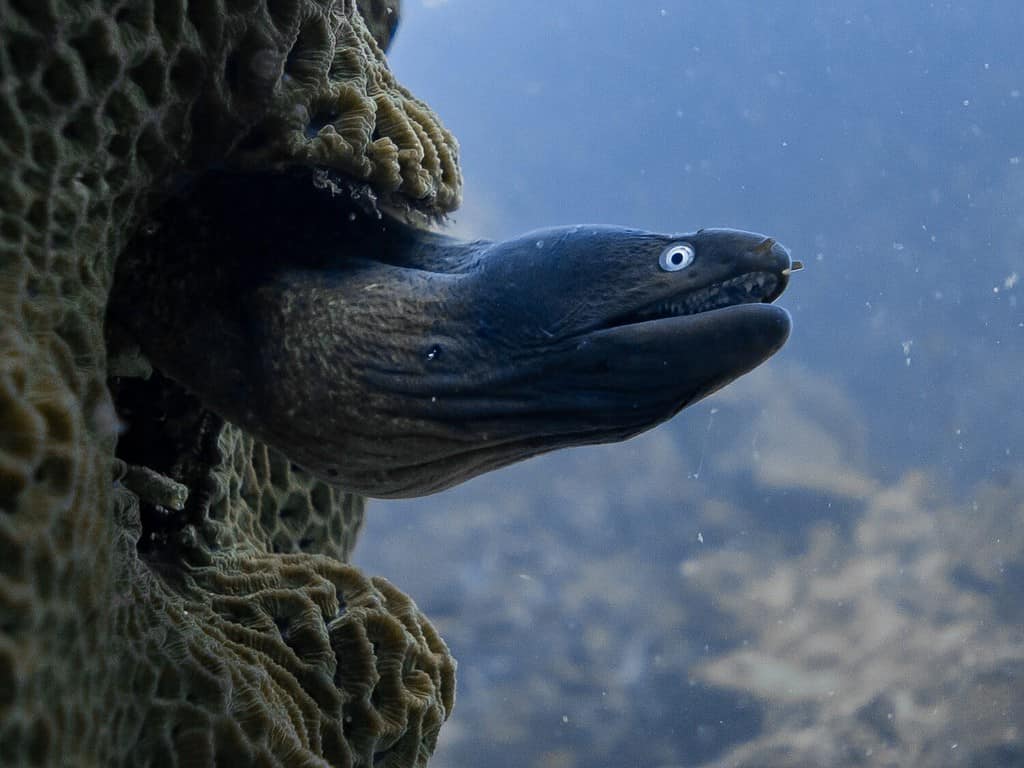
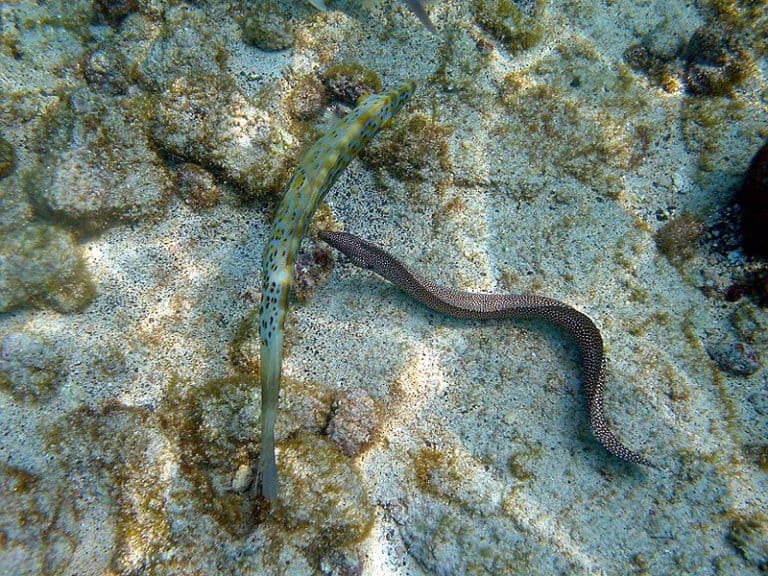
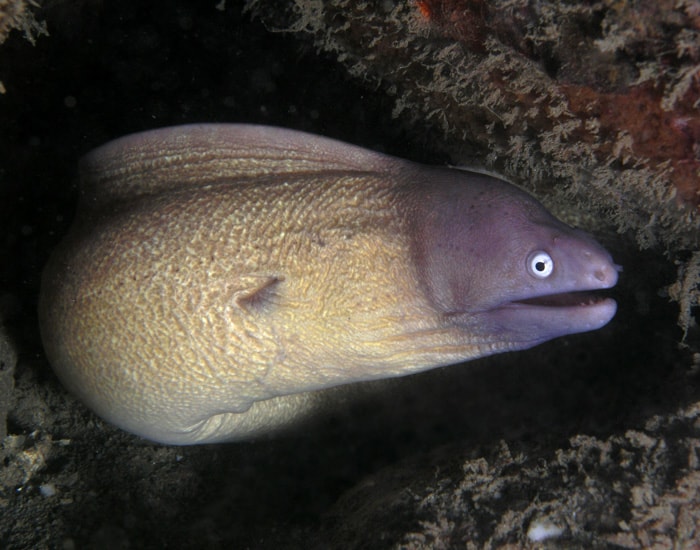
white eyed moray eel around Koh Tao, Thailand

There are over 200 species of moray eels.

Moray eels belong to the Muraenidae family. The name comes from mūrēna, which is Latin for the Mediterranean moray eel. This word in turn comes from the Greek word muraina. There are 16 genera and over 200 species.

Appearance

The moray has a long, laterally compressed body and is scaleless. These eels have a long dorsal fin that can run the length of their back, but they lack pelvic and pectoral fins. They have long snouts with tiny nostrils, and the type of teeth in the jaws depends on the diet. Some of these fish have two rows of teeth in their top jaw. The California moray has teeth in the roof of its mouth that help it grip prey firmly, assisted by its pharyngeal jaws. Some morays have teeth that are pointed and curved, while others have teeth that resemble human molars. These teeth evolved in morays that need to crush the shells of crustaceans. All moray eels have pharyngeal jaws that shoot into the mouth — rather like a Xenomorph — to help hold onto prey.

Besides this, moray eels come in many sizes, from the diminutive, 4.5-inch-long Snyder’s moray eel to the 13-foot slender giant moray eel. The eels also come in a variety of colors and patterns, but they lack scales and protect their skin with a thick mucus layer, which in some species may contain toxins. Their eyes are small and don’t see well, so they depend largely on their sense of smell. This is fine, as most moray eels are nocturnal.
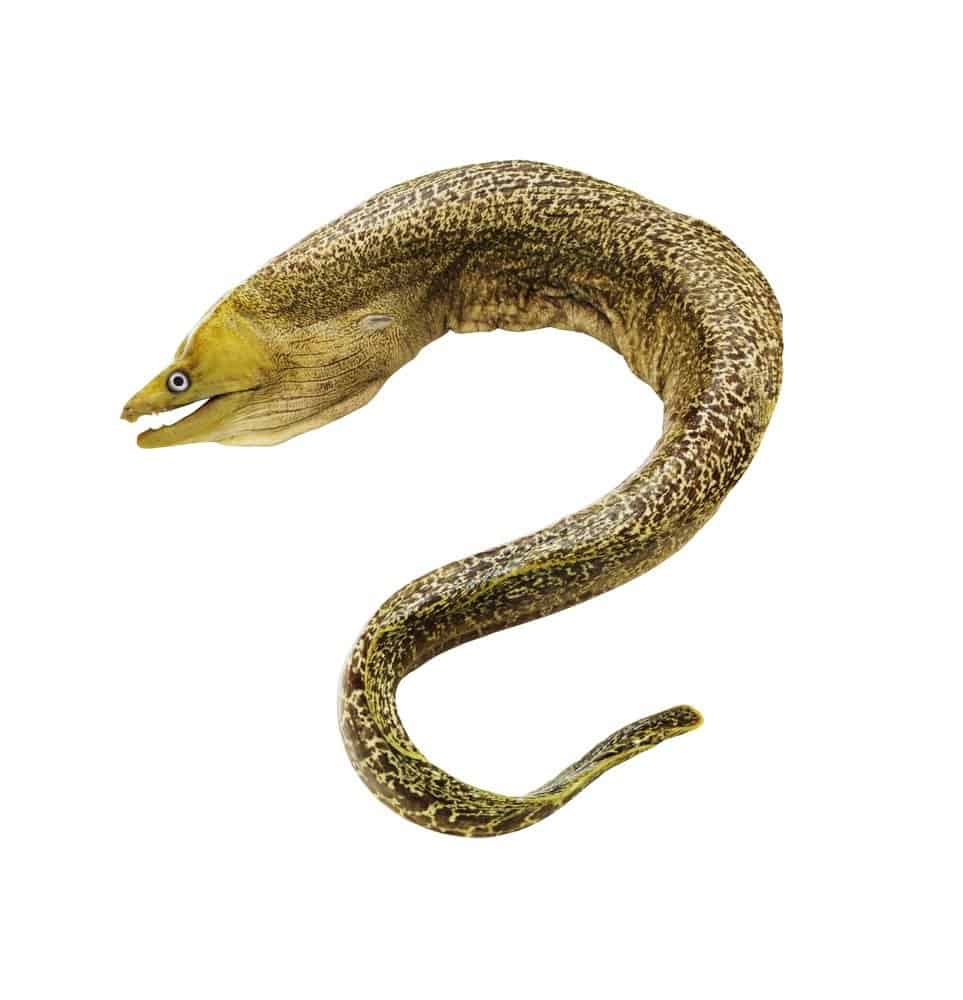
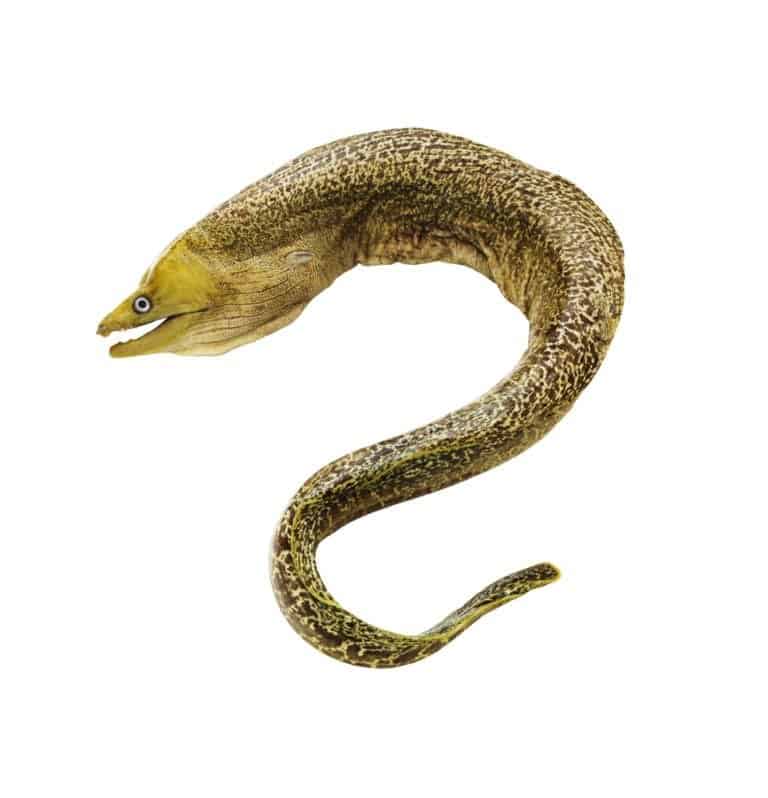
Moray eel isolated on white background

Moray Eels have a long dorsal fin that can run the length of their back, but they lack pelvic and pectoral fins.

Types of Moray Eels

There are over 200 different types of moray eels in the world. These are just a few of them!

Giant Eel

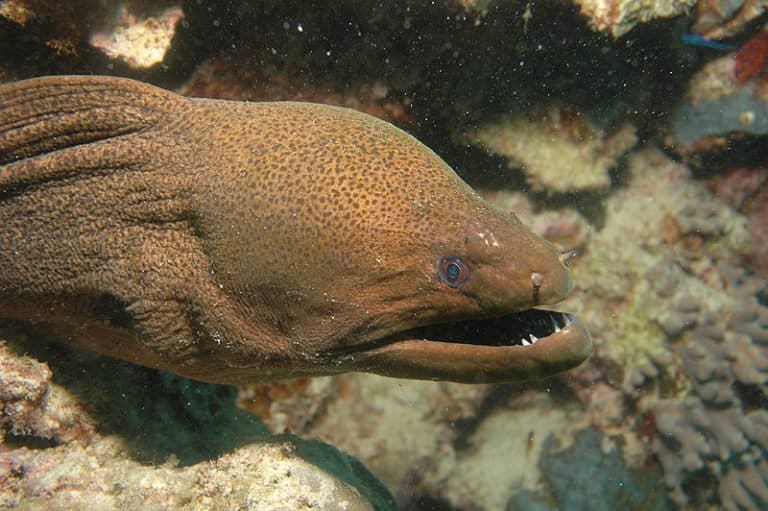
Also called the red moray, the giant moray eel, Gymnothorax javanicus, isn’t the longest of the morays, for that title belongs to the slender giant moray. However, it is the heaviest. It is a large animal that can weigh as much as 66 pounds and grow to nearly 10 feet in length. Its body is usually brown, but red individuals have been seen, and adults have black spots in the area behind their heads. It is found in the Indo-Pacific area and can range from Hawaii to southern Japan. It is found in coral reefs and lagoons and spends most of its days hidden in crevices up to 164 feet deep.
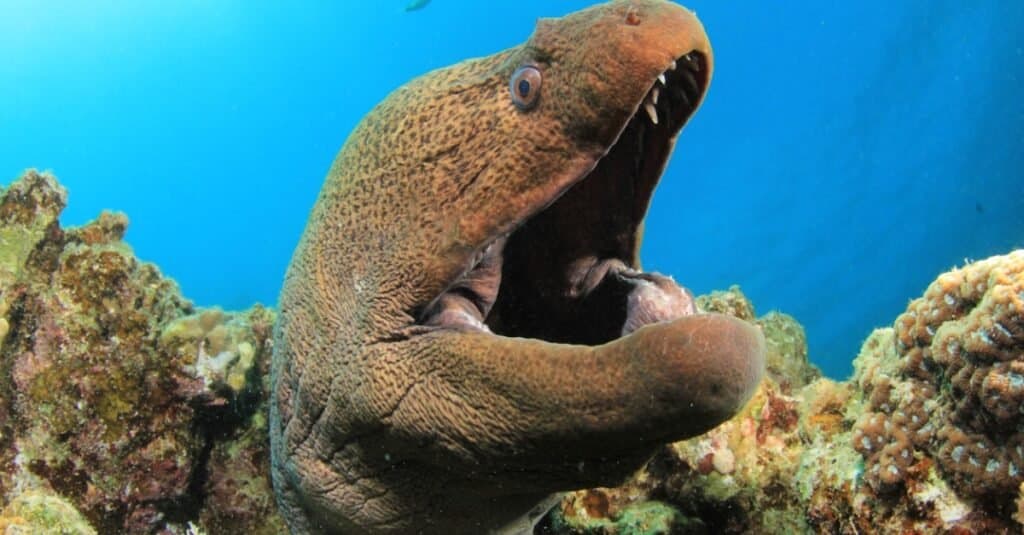
Largest eels - Giant Moray

The Giant Moray Eel is the heaviest of these eels.

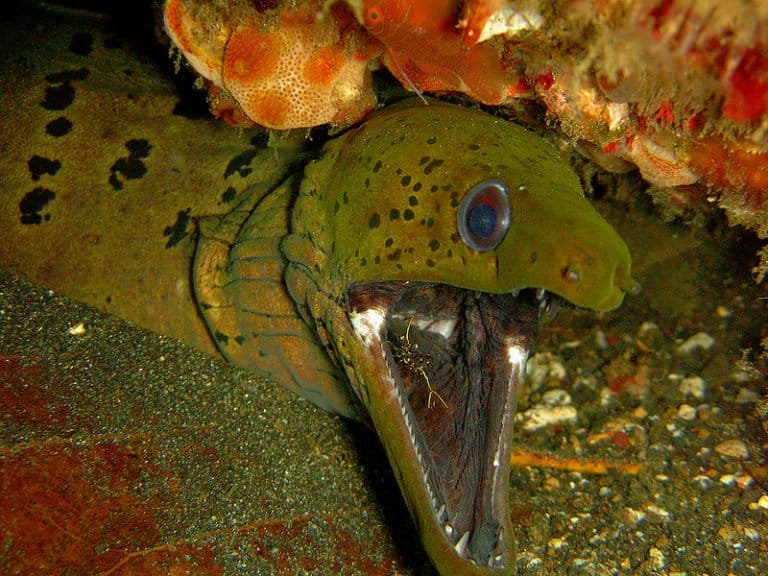
Green Moray Eel

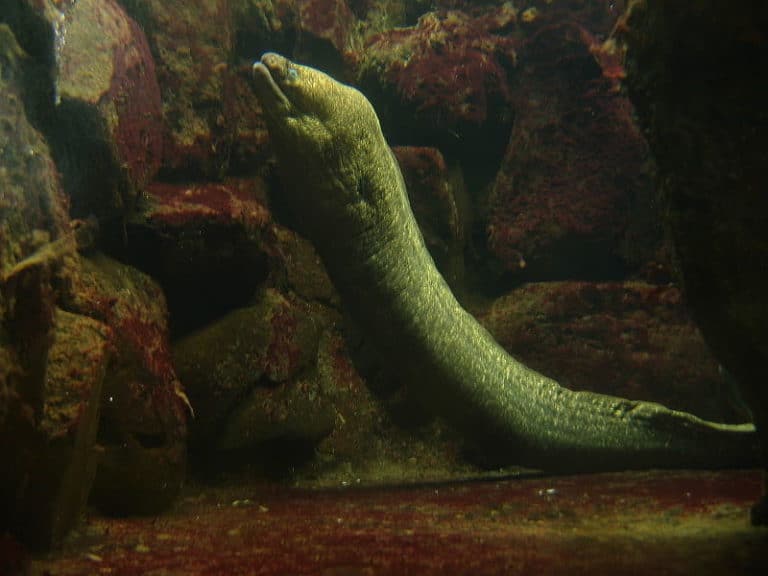
The green moray eel, Gymnothorax funebris, isn’t actually green. Its skin is either dark brown or gray, but the mucus secreted by the skin is yellow, which gives the eel a green color. A large green moray can be over 8 feet long and weigh nearly 64 pounds, but most of them are around 6 feet and weigh about 30 pounds. In contrast to the giant moray, the green moray is found in the western part of the Atlantic Ocean and the Caribbean and can be found from New Jersey south to Brazil. This eel lives in coral reefs, harbors, mangroves, and other intertidal areas.
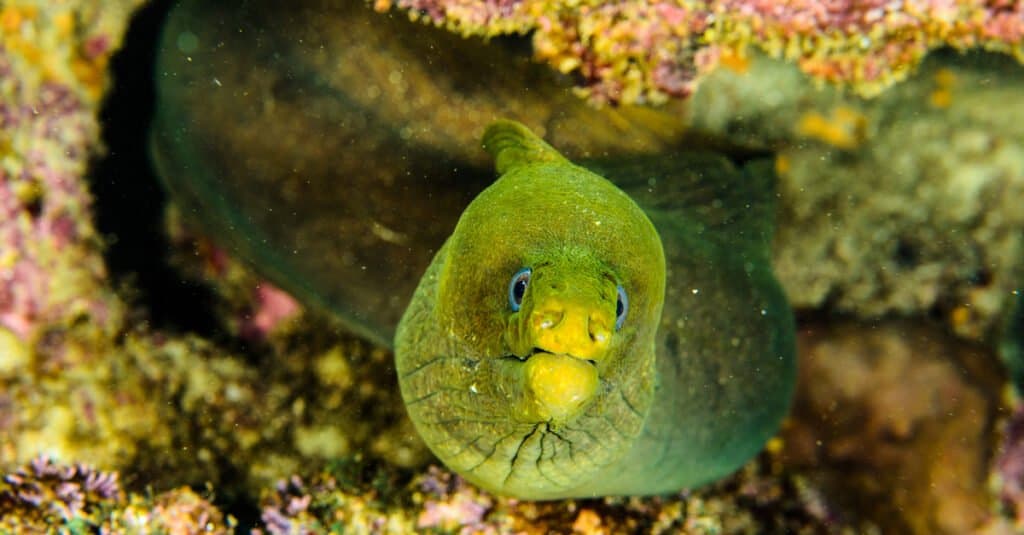
Largest eels - green moray

Green moray eels are actually dark brown or gray, but look green because they secrete yellow mucus.

Here are a few more of them:

  • Muraena – The Muraena Eel is a large version of the Moray Eel, with 12 species. They can be found around coral reefs in the Mediterranean Sea. They are known for their bright colors.
  • Dragon Moray Eel – Dragon Moray Eel, also known as the Leopard Moray Eel, can be found throughout a large stretch of the Indo-Pacific Ocean. Living up to its different names, this eel has striking, bright stripes on its head.
  • Yellow-edged Moray Eel – Yellow-edged Moray Eels live in a similar area of the ocean as their dragon cousins, except that they typically live at deeper depths. Not as colorful as some other morays, these eels have a dull yellow coloration.

Distribution, Population, and Habitat

Moray eels are found in warmer waters all over the world. They thrive in both shallow waters and relatively deeper, benthic areas of the oceans. Though scientists don’t know their exact numbers, moray eels are especially numerous in habitats that offer them cover, such as those with rock formations or crevices.

The actual population of moray eels is unknown, but scientists do know that of the millions of eggs released during the spawning period, few hatch, and even fewer larvae reach maturity. As of 2022, the conservation status of most moray eels is least concern.
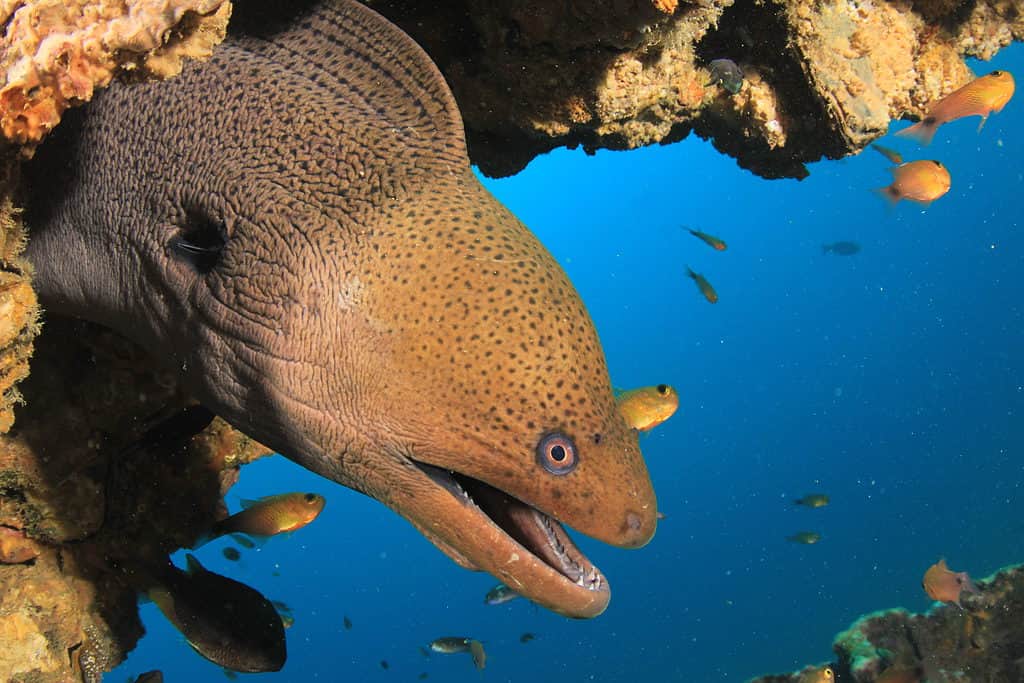
Moray Eel teeth

Moray eels like to live in coral reefs.

Predators and Prey

The largest of the moray eels are most likely the apex predators in their areas, but moray eels are prey for fish such as barracudas and sharks. Humans also kill moray eels, as do sea snakes. Moray eels prey upon smaller fish, crustaceans, and octopuses. They’ll attack and eat any sort of animal that they can either gulp down or tear into manageable bits.

Reproduction and Lifespan
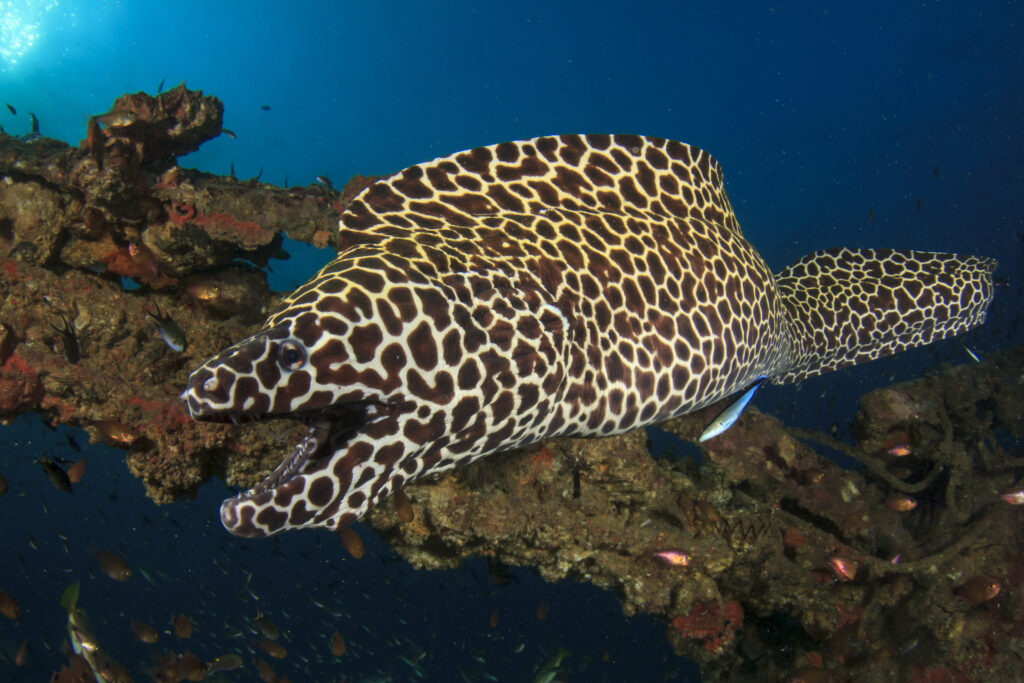
Honeycomb Moray Eel

Moray Eel eggs hatch after a few days to a week.

When it comes to reproduction, most moray eels don’t seem to have a breeding season but breed when the circumstances, such as abundant food, are right. Some moray eels migrate a small distance to a spawning site. Once there, the female releases as many as 10,000 eggs with a chemical that attracts males to the area so they can fertilize them. After this, the eels return to their usual home range and take no more care of their offspring.

Moray eel eggs hatch after a few days to a week, after which the larvae (leptocephali) drift in the plankton for several weeks to months. Depending on the species, they can spend two years drifting on the currents until they’re mature enough to hunt and find shelter.

History and Evolution

Several interesting evolutions of the Moray Eel make them one of the more interesting swimmers in our oceans. Their high number of vertebrae makes their bodies long and slender, and they are able to propel themselves through the water quickly. As mentioned, their two sets of jaws are an incredible adaptation that has helped different species with differing diets. Some species have smoother teeth to help break down prey with shells, and some Moray Eels can lay their back jaw’s teeth almost flat to help their food slide through their throats.

Fishing and Cooking

Though some people eat moray eel, this is inadvisable as the eel often is ciguatoxic. Eating a contaminated eel can cause ciguatera fish poisoning, a potentially serious disease.

View all 330 animals that start with M

Sources

  1. Fish Base / Accessed April 20, 2022
  2. Wikipedia / Accessed April 20, 2022
  3. Guinness World Records / Accessed April 20, 2022
  4. Ocean Today NOAA / Accessed April 20, 2022
  5. Aqua / Accessed April 20, 2022
  6. UniGuide / Accessed April 20, 2022
Heather Ross

About the Author

Heather Ross

Heather Ross is a secondary English teacher and mother of 2 humans, 2 tuxedo cats, and a golden doodle. In between taking the kids to soccer practice and grading papers, she enjoys reading and writing about all the animals!

Thank you for reading! Have some feedback for us?


Moray Eel FAQs (Frequently Asked Questions)

Moray eels are not known to eat humans, but the bite of a large eel is powerful and can inflict a grievous wound.