
Quick Take
- Alligators lack teeth that are made to chew, so they rely on a surprisingly brutal workaround for breaking down prey, and it's not what most people picture. See how they break down prey →
- The two species of alligator have radically different diets, not just due to location, but to a single physical difference in their mouths. Explore the Chinese alligator's diet →
- Alligators are almost blind to prey once underwater, and yet they rarely miss. Their secret has nothing to do with eyesight. Discover their underwater secret →
- A large adult alligator's diet looks nothing like a juvenile's, and the shift between the two is more dramatic than you'd expect. See the full diet shift →
Alligators are powerful reptiles with tails used for both navigation and combat. These reptiles frequently float near the water’s surface. Their eyes, ears, and nostrils are situated on top of their long heads so they can remain almost completely submerged while hunting for prey. But what do alligators eat? Here’s everything you need to know about what they eat and how they hunt.
What Do American Alligators Eat?
American alligators are primarily freshwater crocodilians that live across the southeastern U.S. They favor slow-moving rivers, as well as marshes, swamps, lakes, and ponds. Alligators are opportunistic carnivores, which means they eat animals that are easy to find and catch. Their cone-shaped teeth are suited to grabbing and puncturing prey, but they cannot chew.
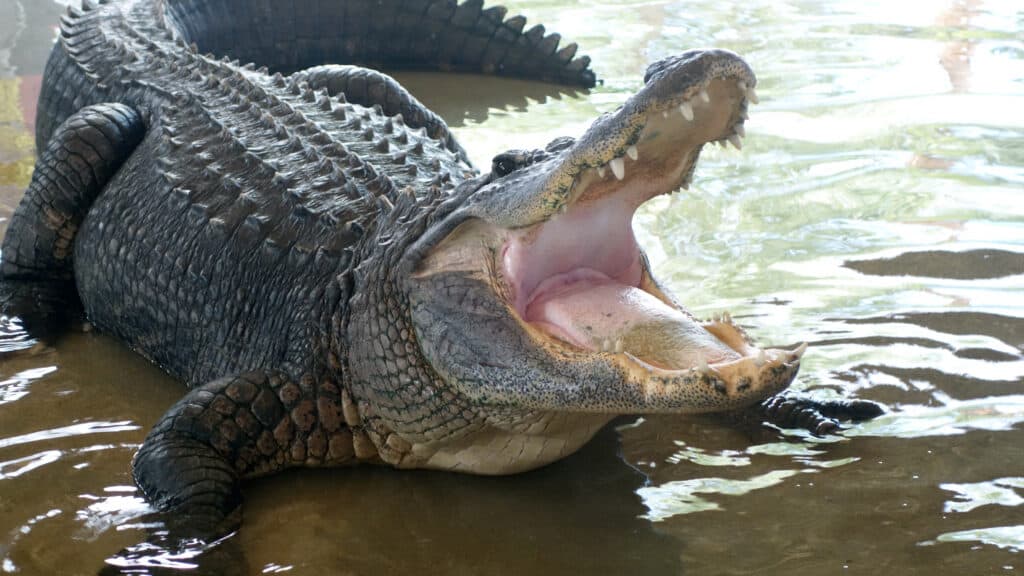
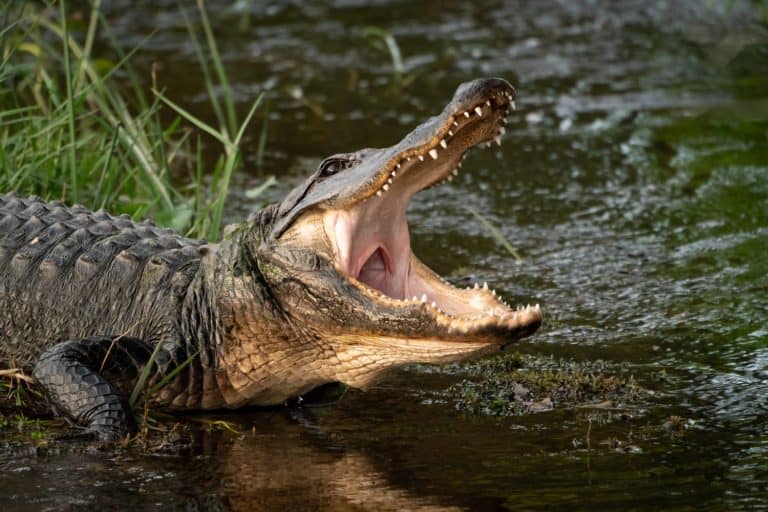
American alligators are found across the southeastern U.S.
©Ernie Hounshell/Shutterstock.com
Adult alligators typically eat the following:
- Fish
- Turtles
- Wading birds
- Small- to medium-sized mammals
- Snakes
Very large adults may eat larger prey such as deer and wild boar. Alligator diets also change with age. Young gators and juveniles typically eat insects, arthropods, invertebrates, amphibians, small fish, and crustaceans.
What Do Chinese Alligators Eat?
The other type of alligator is the severely endangered Chinese alligator. This species is the only member of the Alligatoridae family outside of the Americas. They are much smaller than American alligators and have bony plates over their eyelids and bellies that American gators lack. These crocodilians are native to the slow-moving, freshwater regions of China’s lower Yangtze River, primarily in eastern China.
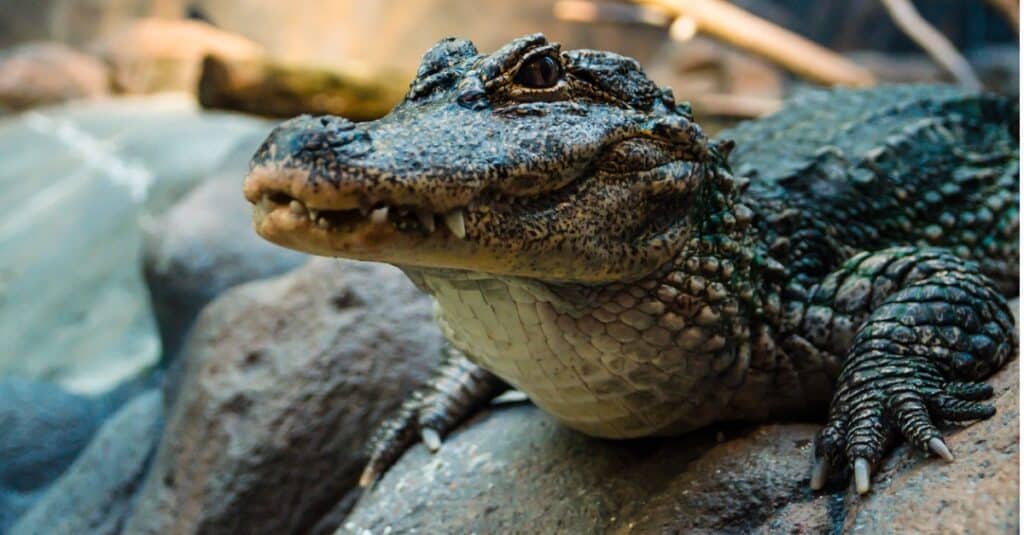
Chinese alligators are primarily found in the Anhui and Zhejiang provinces.
©iStock.com/zhnger
Chinese alligators generally feed on:
- Crabs
- Snails
- Mussels
- Fish
- Waterfowl
- Mollusks
- Crustaceans
The Chinese alligator is also an opportunistic carnivore. Their dentition features blunt, rounded teeth that are ideally suited for cracking open hard-shelled prey.
How Do Alligators Hunt?
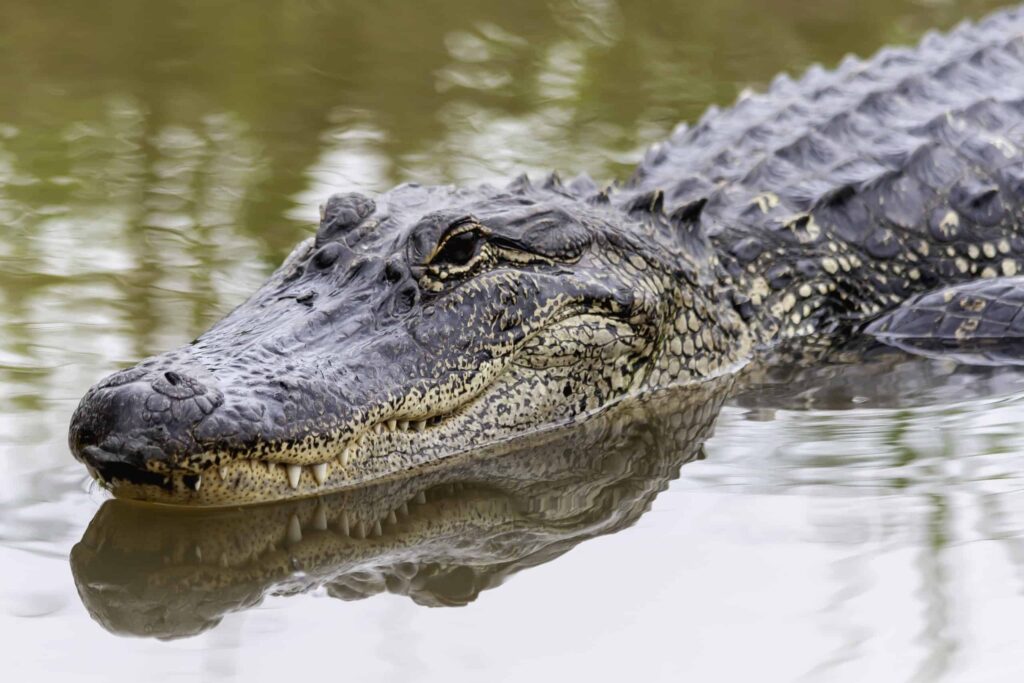
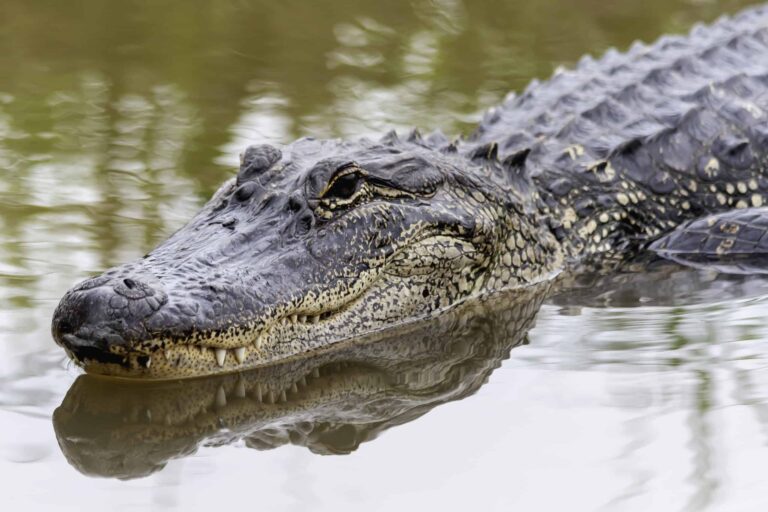
Alligators typically hunt in water where they patiently lie in wait for their prey.
©iStock.com/Cindy Larson
Typically, alligators don’t hunt on land. They struggle to move quickly on land and cannot efficiently pursue prey. However, to protect their eggs, alligators have been known to attack terrestrial animals. They also engage in brief pursuits to drive potential predators from their territory.
Alligators typically lurk in the water watching for prey. Just their snouts and eyes are visible above the surface. Most of their bodies are submerged to camouflage themselves in the dark water. Alligators remain still, waiting for the ideal opportunity to attack. They simply wait for something to swim past or walk by on land.
When prey comes within range, the alligator lunges, clamping its strong jaws on the prey and pulling the victim into the water. To subdue its prey, the alligator must drown it. Once in the water, the gator will perform a death roll to tear off large chunks. As we noted earlier, alligators cannot chew, so they must rip prey into smaller pieces that can be easily swallowed.
Using Water to Their Advantage
Although alligators lack the ability to smell underwater as humans would, integumentary sense organs (ISOs) densely distributed on their jaws enable them to detect chemical cues in the water made by fish or other animals. Alligators have a palatal valve that they seal when submerged. If they move their jaws to bite, this valve keeps water from getting into their esophagus. Alligators are neither fish nor amphibians, so they cannot breathe underwater, but they have a long breath-holding capacity.
The alligator will resurface once it has successfully attacked and has the victim in its mouth, at which point it will bite more forcefully and devour the prey. Alligators don’t ingest prey while submerged, since they cannot breathe underwater.