
Quick Take
- American alligators and mugger crocodiles have been observed balancing sticks on their snouts to attract nesting birds. See reptile tool use →
- Using objects to help lure prey makes this one of the earliest documented examples of tool use in reptiles. How the snout trick works →
- The unusual hunting strategy takes advantage of herons and egrets searching for sticks and twigs to build their nests. Why timing is everything →
- The behaviour is closely linked to bird nesting season, when suitable nesting material is in high demand. How scarcity sets the trap →
Crocodiles and alligators are known for being patient ambush predators, waiting motionless for unsuspecting prey to come within reach. However, some species have taken this strategy even further by balancing twigs and sticks across their snouts. This unusual approach attracts nesting birds who attempt to take a piece of the material, not realizing that they have just walked straight into a trap.
Continue reading
How the Stick Lure Works
Crocodiles and alligators are some of the most powerful hunters in the world, famed for their ability to seize unsuspecting prey from the water’s edge. However, mugger crocodiles (Crocodylus palustris) and American alligators (Alligator mississippiensis) both use a unique strategy to lure prey directly to themselves.
These crocodilians balance sticks and twigs on their snouts and lie partially submerged in the water. From a distance, the crocodile or alligator is difficult to spot and often closely resembles a submerged log. The sticks on their snout add to this illusion. Because suitable sticks and twigs can be scarce in these areas, their presence on the crocodilians’ snouts is particularly unusual. So far, this behavior has only been documented in the two species.
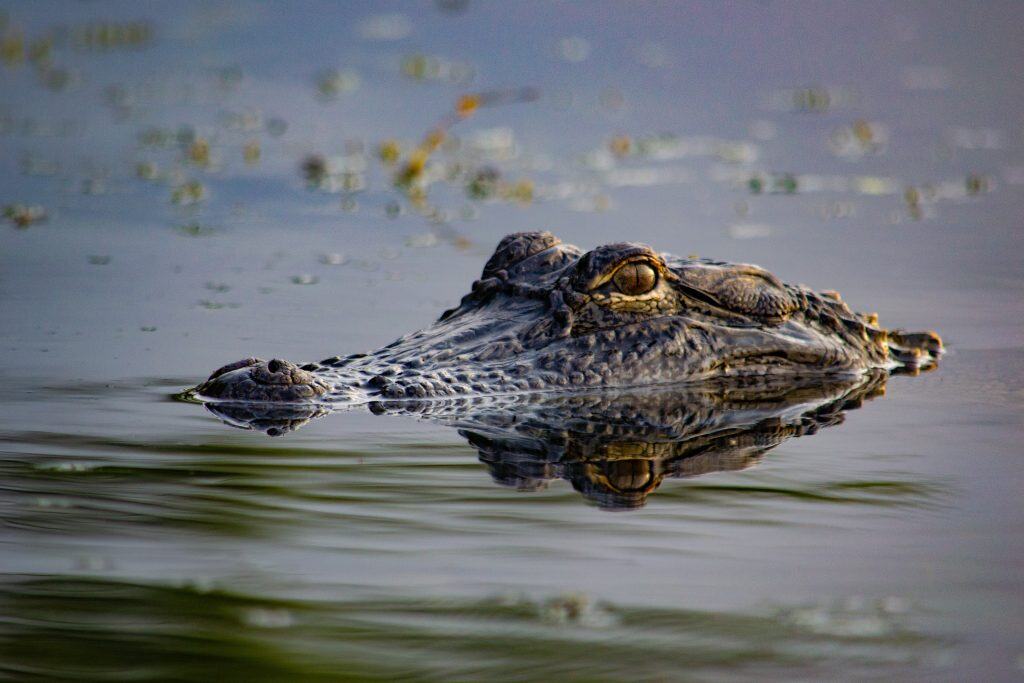
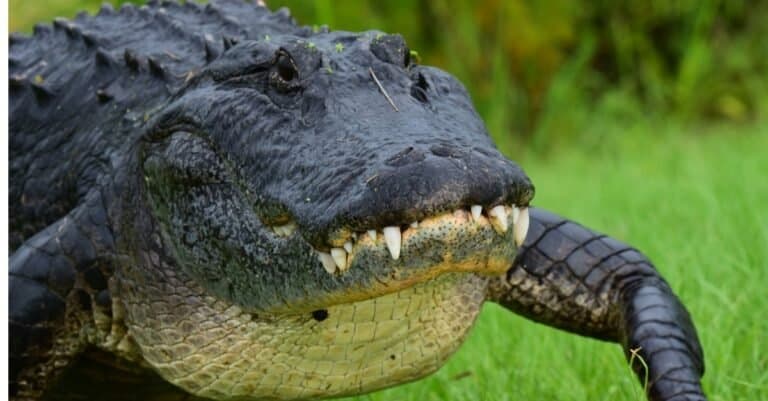
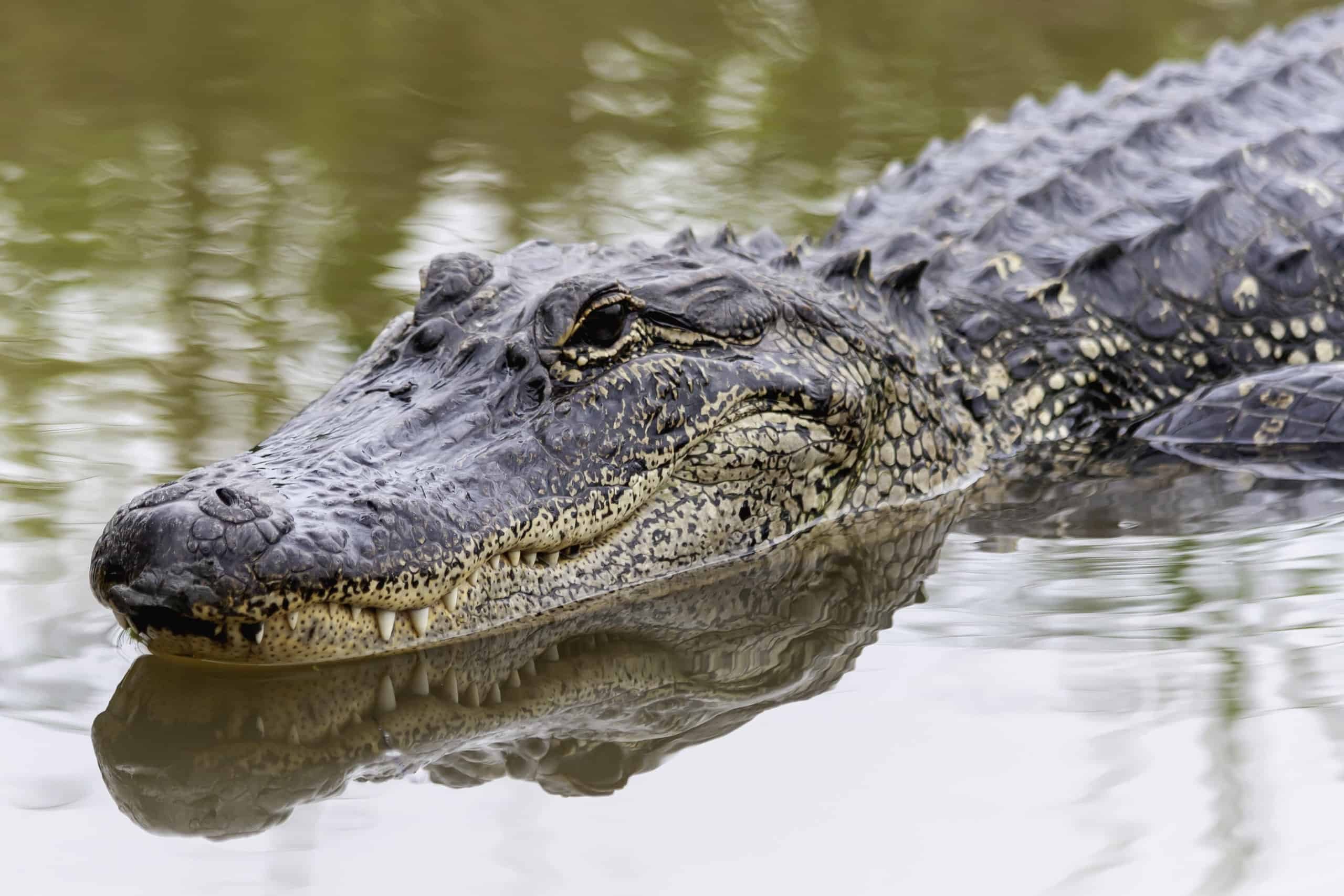
American alligators and mugger crocodiles balance sticks on their snouts to lure birds in.
©SomervilleArts/Shutterstock.com
The sticks attract birds that are looking for materials to build their nests. However, as they approach, they unknowingly move close enough for the waiting predator to strike. Interestingly, this behavior allows these crocodilians to use their normal hunting style. Instead of simply waiting for prey to come into range, however, they actively encourage the bird to approach them. Once the bird is close enough, the crocodilian uses its usual ambush technique to lunge at it.
Many animals use lures to catch prey, such as alligator snapping turtles using their tongue to mimic a worm, and green herons that drop small items on the surface of the water. However, this behavior is significant as it is one of the first documented examples of tool use in reptiles. These observations show that crocodilians can also use objects in their environment to help them hunt.
Why Nesting Season Matters
The use of sticks as lures by crocodilians isn’t just a random occurrence. This behavior is typically only observed in crocodilians during bird nesting season. The timing of this behavior is particularly important as building nests requires large amounts of material. Herons and egrets, for example, both live and nest close to water. Therefore, they are actively searching for nesting material in that area.
This luring behavior was documented in populations of American alligators in Louisiana and mugger crocodiles in India. It almost always occurred in places where suitable nesting material was scarce. This means that a single piece of vegetation becomes more noticeable to nesting birds and increases the likelihood that they will approach to collect the sticks.
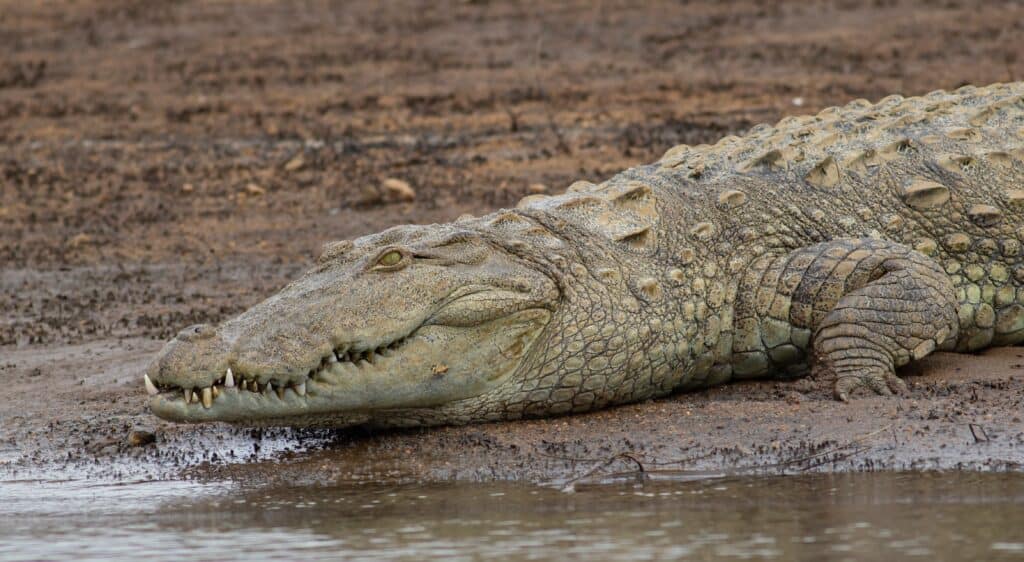
Mugger crocodiles target birds during their nesting period.
©DINAL_SAMARASINGHE/Shutterstock.com
As this behavior occurs only at nesting time, it shows how the crocodilians take advantage of the seasonal nesting events and adapt their hunting strategy accordingly. The birds’ need for nesting material provides crocodilians with an opportunity that is only available for a limited period each year, allowing them to exploit what the birds are seeking.