Quick Take
- One common household cleaner bears hate can actually attract them if you use it the wrong way. See the bleach warning →
- Bears live in pine forests and love pine nuts, so why does one pine product send them running? Explore pine cleaners →
- Mixing two of these scents together does not double the repellent effect. Instead, it creates a life-threatening hazard. See the mixing danger →
- Applying these scents to your body seems logical, but doing so is actually one of the worst mistakes you can make in bear country. See proper application tips →
While many websites claim that their products contain scents that bears hate, the effectiveness of most of these repellents is questionable on their own. While one study shows that chemical or household items might temporarily repel bears, the study failed to prove that such items deter bears for extended periods. As such, repellents work best when combined with other bear deterrents, including sound deterrents and locking up odorific items. There are stipulations to follow when applying these scents outdoors. Placing scents on bear lockers or bear-safe trash cans is an approved method of application; however, you should never put these scents on your body.
Lock Up Odorific Items Before Scent Application
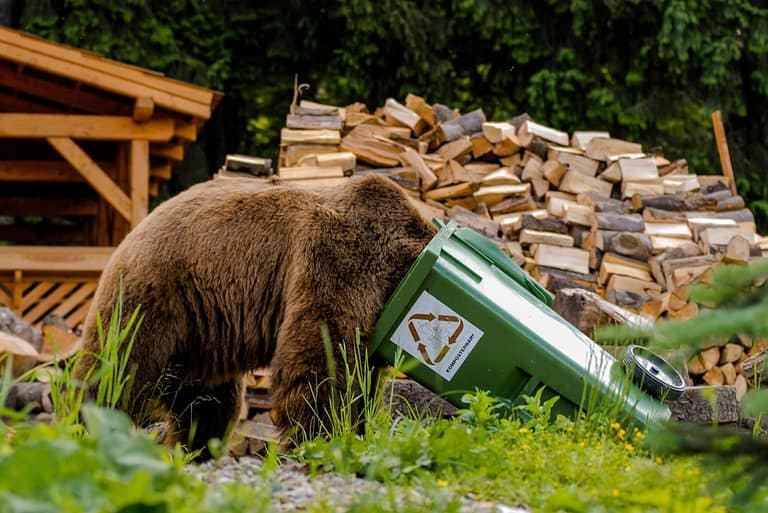
It is important to remember that bears are incredibly curious animals with extremely sharp senses of smell. Due to their curiosity, they often seek out unknown scents that could be food sources.

Yosemite National Park has a population of black bears, so park management uses food storage lockers to protect visitors and bears.
©Tupungato/Shutterstock.com
The most effective prevention of unwanted bear encounters is to lock up any odorific items. Use lock boxes provided by campsites, as bears have been known to break into cars.
If lock boxes are not provided, other options to consider are bear bags or canisters.
Odorific items include:
- Food
- Food scraps
- Alcohol
- Pet food
- Used utensils
- Cooking grates
- Soap
- Deodorant
- Toothpaste
- Any cosmetic item
- Clothing with food odor (say, from a barbecue)
Smells to Apply That Bears Absolutely Hate
Once all of your odorific items are locked up and away from the bear’s reach, you can apply some common household cleaning agents to your canisters, bags, or lock boxes.

Just like many humans, bears hate the smell of stronger cleaning products such as bleach, ammonia, and pine-based cleaners.
©Andrew Angelov/Shutterstock.com
Locking up your items is required at any campsite; however, the use of scent to repel bears is not required, but it can go a long way in preventing bears from entering a campsite.
Bleach
Used alone, bleach is not an effective or recommended bear repellent and should never be used as a primary defense against them. Although it has a strong, pungent odor that can temporarily mask the scent of food or disrupt a bear’s keen sense of smell, bleach does not reliably deter bears and may actually pique their curiosity.

Bleach is a strong chemical cleaner and should be treated as such. Always dilute your bleach and never mix it with ammonia.
©RVillalon/Shutterstock.com
Wiping down food lockers and picnic tables with a diluted bleach solution is a generally accepted practice to eliminate food odors, but it must be done with caution. When food residue or juices spill inside a metal food locker, the lingering scent will actively attract bears. Using a diluted bleach solution breaks down the organic compounds causing the smell, effectively neutralizing the food scent. However, this method should be used for cleaning and deodorizing rather than as a primary chemical deterrent.
Ammonia
Ammonia is another scent that humans find repellent, so it is no wonder bears hate it too.
If you use these scents as bear repellents, you must pick either bleach or ammonia, and never use both. Never mix ammonia with bleach, as it is a safety concern for both humans and bears. Mixing ammonia and bleach creates a toxic gas called chloramine, which can cause severe respiratory damage or death.

Like bleach, you should only ever use ammonia by itself.
©chemical industry/Shutterstock.com
You can put containers of ammonia around your campsite to ward off bears and neutralize smells in your area. Because ammonia could cause chemical burns and potentially blind a bear if it were to come into direct contact with ammonia from an open container, containers with holes in the top are the safest option, allowing the scent to disperse without risking direct exposure.
Pine-Based Cleaners
Bears do not naturally dislike the scent of pine, as they live in pine forests, eat pine nuts, and rub against pine trees to leave scent markings from their own fur, skin, and glands. However, they strongly dislike the intense, pungent smell of concentrated, man-made pine cleaners like Pine-Sol®.
Because a bear’s sense of smell is estimated to be up to 2,000 times stronger than a human’s, these sharp, concentrated chemical odors completely overwhelm their sensitive olfactory receptors. While pine-scented cleaners can temporarily mask the smell of food or garbage, they should never be used as a stand-alone bear repellent.

Pine-based cleaners are another option for repelling bears from campsites, but make sure your cleaner is free of citrus.
©Indre Pau/Shutterstock.com
The Use of Bear Spray
Unlike the scents listed above, bear spray is only to be used for unwanted contact with a bear, not for prevention. This is why it is so important to be aware and knowledgeable about bear spray. Bear spray is a defense when all other methods of avoiding bear contact have been exhausted.
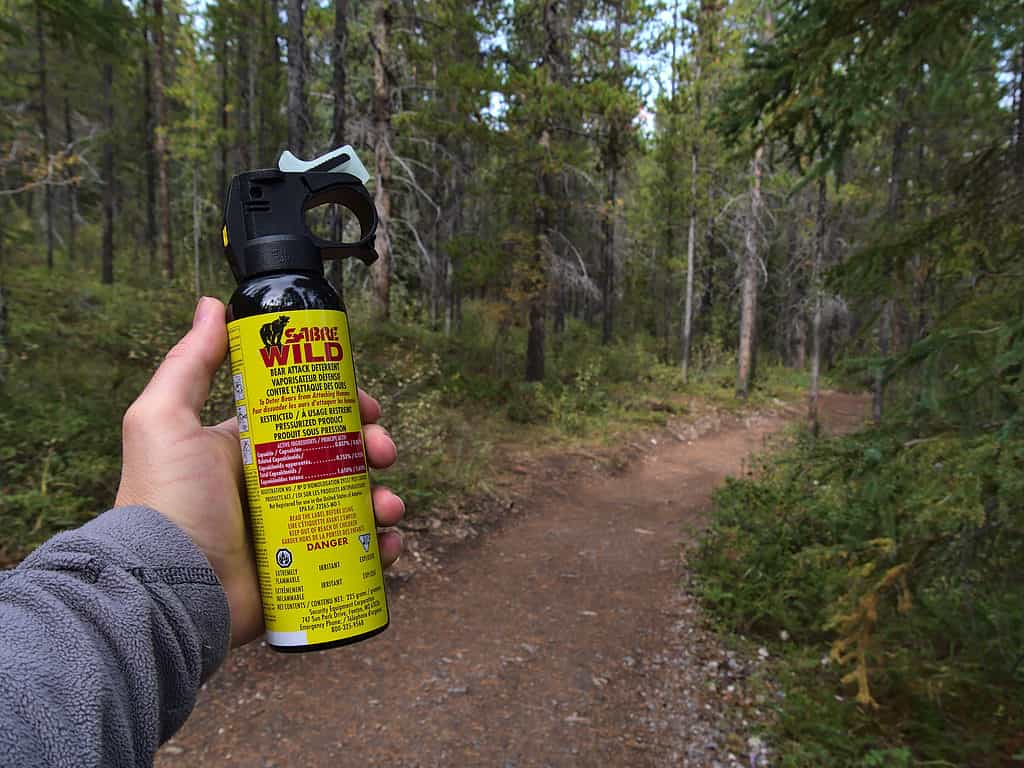
Bear spray is typically used in situations in which danger is imminent.
©iStock.com/Timon Schneider
The smell of bear spray when left to dry attracts bears, so never spray it unless you are in direct contact with a bear. If you are staying in bear country, you must know how to use bear spray properly. Bear spray is a red-pepper-oil- or capsaicin-based spray. Although both use capsaicin, bear spray typically contains a lower concentration (around 1–2%) than personal pepper spray, which can reach 10% or more; however, bear spray compensates with a higher volume and wider spray pattern designed to deter charging bears.
Experts recommend treating this defense like a firearm. In fact, bear spray holsters are a common item for hikers and backpackers alike. Sometimes, seconds are the difference between a fatal bear attack and simply an encounter. This is why a fast draw of bear spray is crucial. When compared to firearms, bear spray has actually proven more effective.

The smell of bear spray actually attracts bears once dried. As such, it’s not for the prevention of bears, but rather, defense against them. Avoid spraying it outside your bear box.
©Photo Spirit/Shutterstock.com