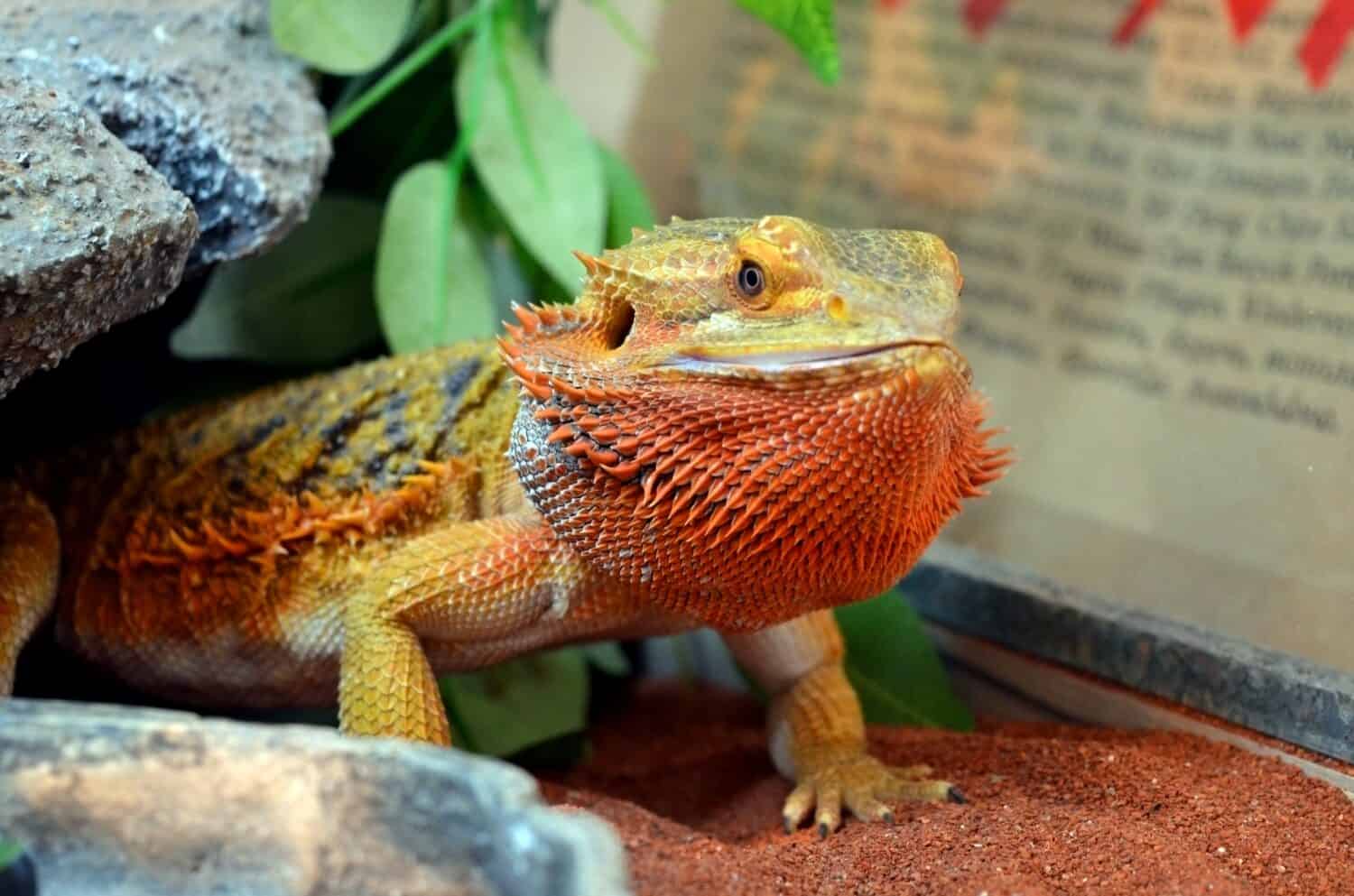

Quick Take
- Central bearded dragons average 18 to 22 inches in length from the snout to the tip of the tail, but some large individuals may grow longer.
- The most rapid growth typically takes place during the juvenile stage between 2 and 7 months.
- Rankin’s dragons are much smaller than Central and Eastern bearded dragons, typically only reaching about half their size.
- A tank measuring 48 x 24 x 24 inches, or 120 gallons, is recommended for adult bearded dragons.
Bearded dragons are native to Australia, but they were first introduced in the U.S. pet trade in the 1990s. These lovable lizards have become one of America’s favorite reptiles due to their gentle and curious natures. There are eight currently recognized bearded dragon species in the genus Pogona. However, the inland, or Central, bearded dragon (Pogona vitticeps) is the most common species available in the pet trade. Rankin’s Dragon (Pogona henrylawsoni), also known as Lawson’s dragon, and the Eastern bearded dragon (Pogona barbata) are also occasionally seen in the pet trade. So, keep reading to discover just how big your pet bearded dragon can get.
Bearded Dragon Average Sizes
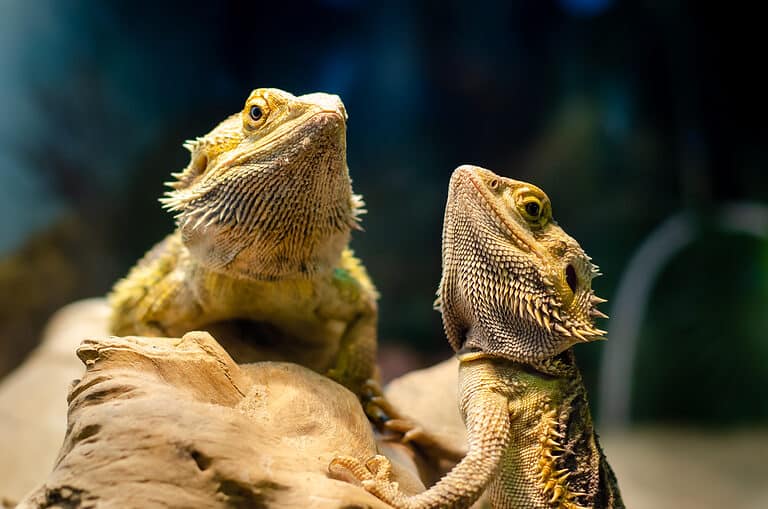
Central bearded dragons are medium-sized lizards. They average 18 to 22 inches in length from the snout to the tip of the tail, but some large individuals may grow longer. They generally weigh between 10 ounces and 1.1 pounds. Males are generally larger than females and have bigger heads, but females may have stockier bodies to accommodate their eggs.
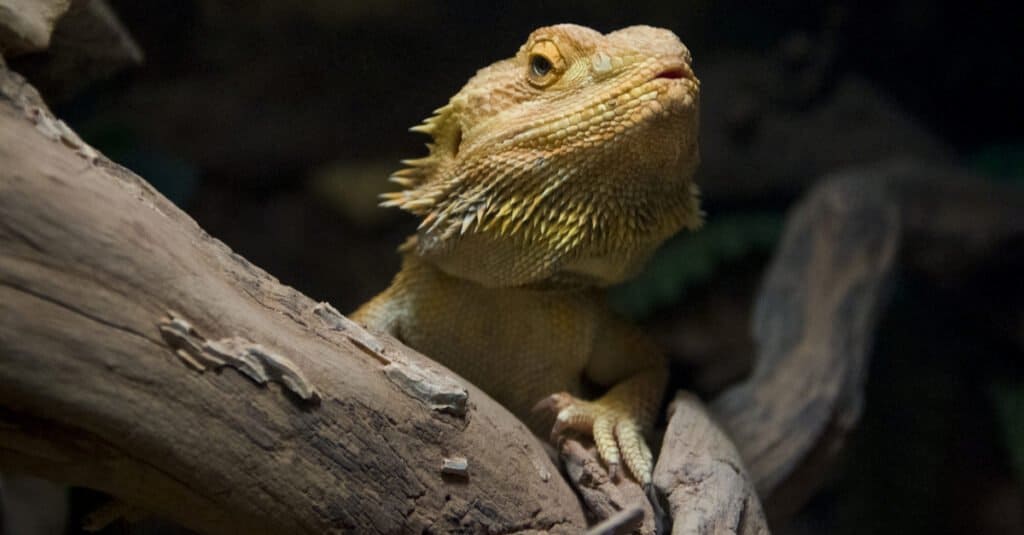
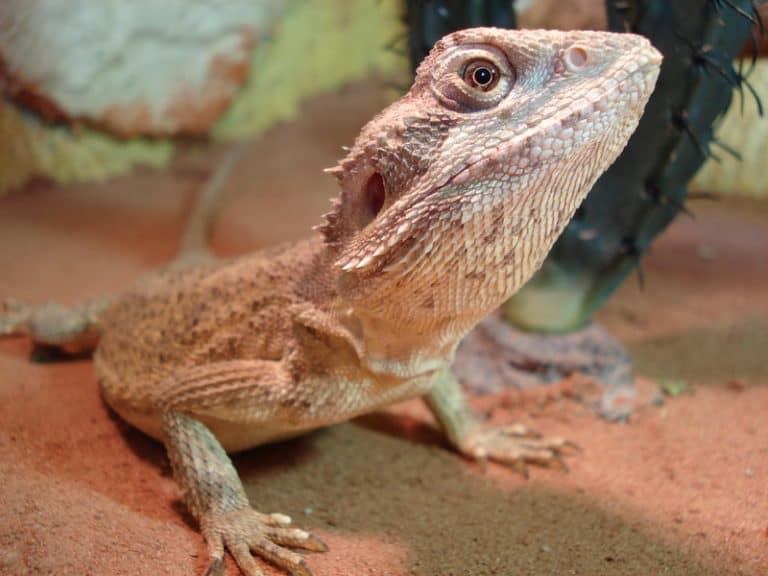
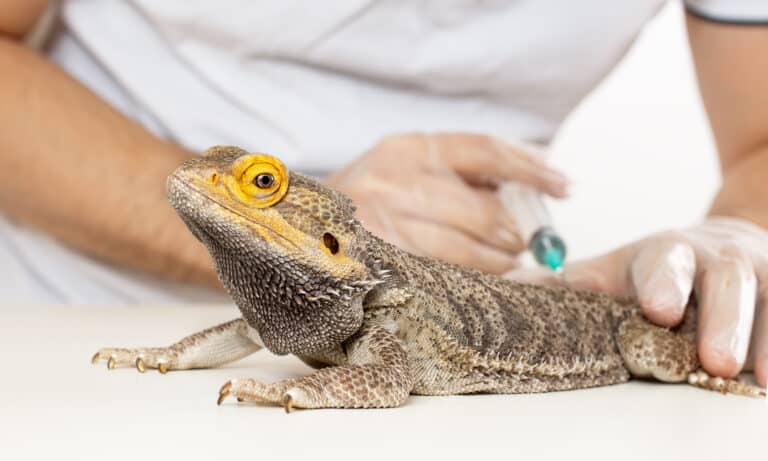
Central bearded dragons typically average 18 to 22 inches in total length.
©Zhitkov Boris/Shutterstock.com
Rankin’s dragons are much smaller than Central and Eastern bearded dragons, typically reaching only about half their size. They are sometimes referred to as dwarf or pygmy bearded dragons. Rankin’s dragons grow to a total length of 8 to 12 inches from snout to tail. They generally weigh between 2 and 3.5 ounces, with males being larger.
Eastern bearded dragons are similar in size to Central bearded dragons, averaging between 18 and 24 inches in total length. They typically weigh between 8 ounces and 1.1 pounds. Males are generally larger than females and have bigger, more muscular heads.
Bearded Dragon Growth Patterns
The growth pattern below focuses on the Central bearded dragon, the most common species kept as a pet. Of course, every dragon is different, and an individual’s size also depends on genetics, husbandry, and diet. As noted earlier, males are generally larger than females. Newly hatched bearded dragons are about 3 to 4 inches in length.
- Hatchling (0-2 Months): Bearded dragon hatchlings reach lengths of 5-9 inches in the first 2 months, growing between 0.5 inches and 1 inch per week.
- Juvenile (2-7 Months): Dragons can reach up to 17 inches, growing between 1 and 3 inches per month. The most rapid growth is believed to take place during this stage.
- Sub-Adult/Adult (7-18 Months): Their growth begins to slow as they reach their full length of 18 to 22 inches.
- Adults (18+ Months): Growth typically ceases by 18 months, but some dragons may continue to fill out until they reach about 24 months.
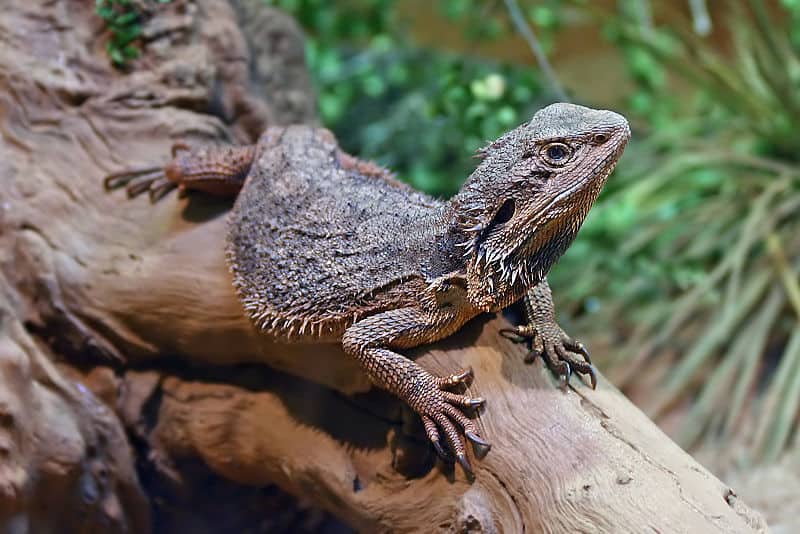
Bearded dragons are generally fully grown when they reach between 18 and 24 months of age.
©John O'Neill / Creative Commons – Original
What Size Terrarium Does My Bearded Dragon Need?
Experts recommend a minimum of 36 x 18 x 18 inches, or 40 gallons, for a juvenile bearded dragon, depending on the size of your pet. A tank measuring 48 x 24 x 24 inches, or 120 gallons, is recommended for adult bearded dragons; however, larger is always better. The width of your tank should be at least 18 to 24 inches so your bearded dragon can easily turn around. Remember your pet will also need a basking area as large as itself on one end of the enclosure.
In a larger tank with a great deal of open space, young dragons may feel exposed and vulnerable. Experts suggest including decor that can be easily removed as your dragon grows and becomes accustomed to its new home. Offer your dragon a place to hide at both the warm and cool ends of the enclosure to minimize stress. Rocks, branches, and climbing equipment will also help reduce stress and encourage exercise.