
Quick Take
- Indiana has over 400 bird species, and one on this list is so rare you'll need to know the exact refuge to find it.
- One of these birds is named for a feature you almost never actually see in the field. See the misnamed bird →
- Two species on this list look nearly identical even though they live in completely different parts of the state, and telling them apart takes one specific trick. Learn to tell them apart →
- One of these birds winters in tropical Central America, which is not exactly where you'd expect an Indiana backyard bird to end up. Meet the tropical migrant →
The Hoosier state is home to over 400 bird species. Some of these birds are year-round residents, while others are migratory and only visit during the breeding season. In this article, we’ll look at eight Indiana birds that are worth spotting for any birder.
Northern Cardinal
The Northern cardinal is the state bird of Indiana. They are among the most recognizable and common garden birds in the United States, but they are always a welcome sight. The males have bright red feathers and a black mask, while the females are a more subtle reddish olive with a gray mask and warm red accents in the wings, tail, and crest.
Northern Cardinals are non-migratory and can be seen throughout the state of Indiana year-round. They favor overgrown fields, hedges, forest edges, and even suburban parks and backyards. They primarily forage on the ground or in bushes for seeds, berries, and insects. Northern cardinals are often seen at bird feeders, where they prefer sunflower seeds.
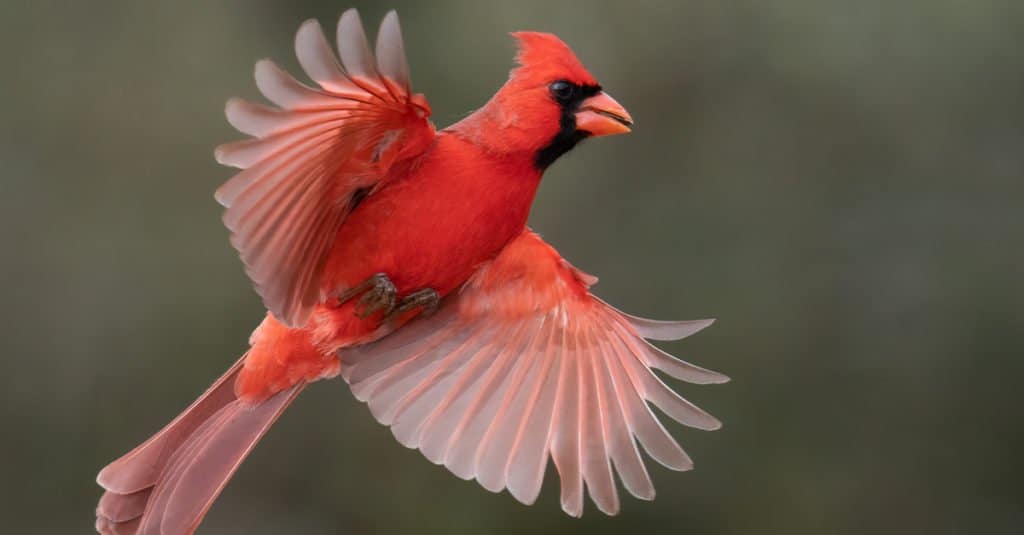
The Northern cardinal can be seen year-round throughout Indiana.
©Rob Palmer Photography/Shutterstock.com
Tufted Titmouse
These little birds can be distinguished from other species by their little mohawk, which is similar to that of cardinals. Titmice are predominantly grey and white with black markings on their foreheads and wings and rusty-colored patches on their sides.
The Tufted Titmouse can be seen throughout the state all year long. They generally prefer woodlands, but they can also be found at bird feeders in suburban backyards. They primarily eat insects and seeds, foraging among tree branches and frequently hanging hanging upside down.
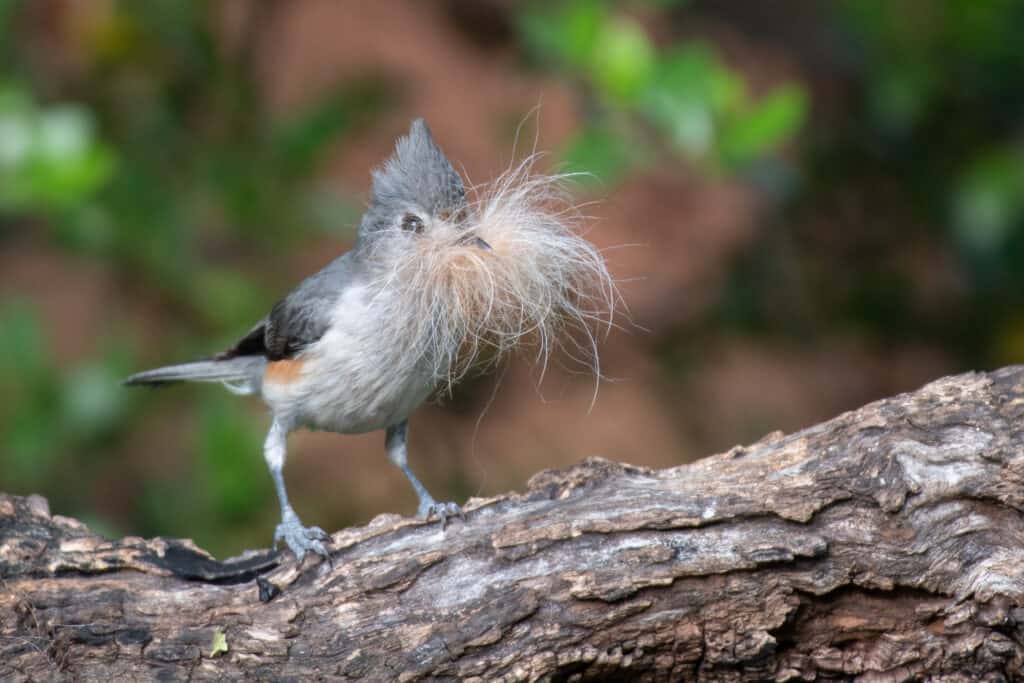
Tufted titmice forage among the tree branches for seeds and insects.
©Jeanne Crockett/Shutterstock.com
Chickadees
Due to their “black caps” and black bibs, chickadees are easy to identify. Black-capped chickadees and Carolina chickadees are the two species of chickadees that are found in Indiana year-round. While black-capped chickadees have more white edging on their wings and a larger black bib, Carolina chickadees have plain gray wings with little or no white edging and a more defined, smaller black bib.
Black-capped chickadees can be seen in the northern part of the state, while Carolina chickadees are seen in Central and Southern Indiana. Both species favor woodlands and forest edges, as well as parks and suburban backyards. They primarily feed on insects, seeds, and berries, but their diet changes with the season. They predominantly focus on insects during the summer and change to a more even split of insects and plant matter in the winter.
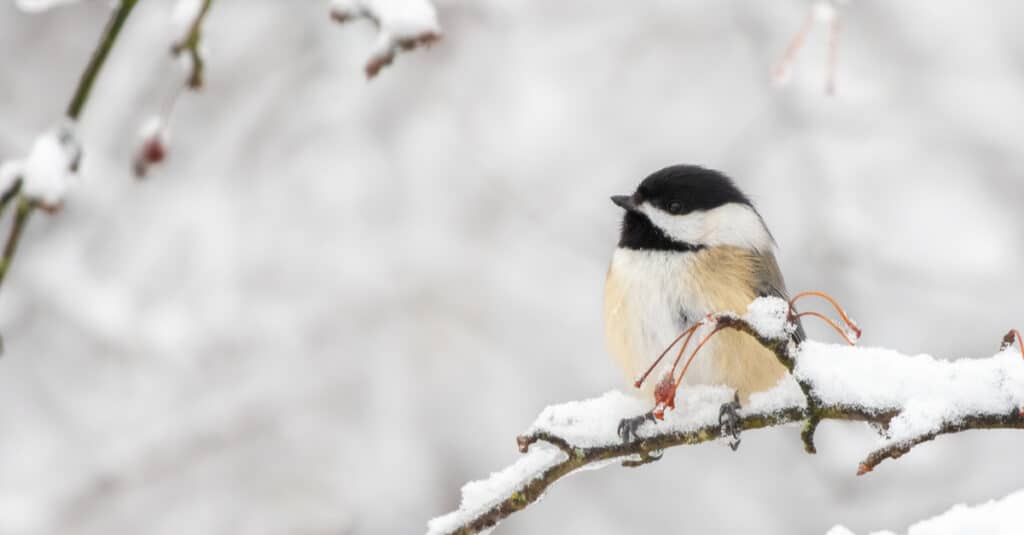
Black-capped chickadees can be found in the northern part of Indiana.
©Mr.Coffee/Shutterstock.com
Blue Jay
The blue jay is yet another common bird found in the state. They have blue-grey backs with bright blue, black, and white patterned wings and tails. These birds also have white or light grey chests and bellies, black “necklaces,” and bright blue crests.
Blue jays can be seen across Indiana all year, although some populations of blue jays may migrate to the southern U.S. during the colder months. They are typically found in oak and pine forests, but they can also be seen in wooded parks and backyards. They forage on the ground and in trees and shrubs for nuts, seeds, grains, and berries.
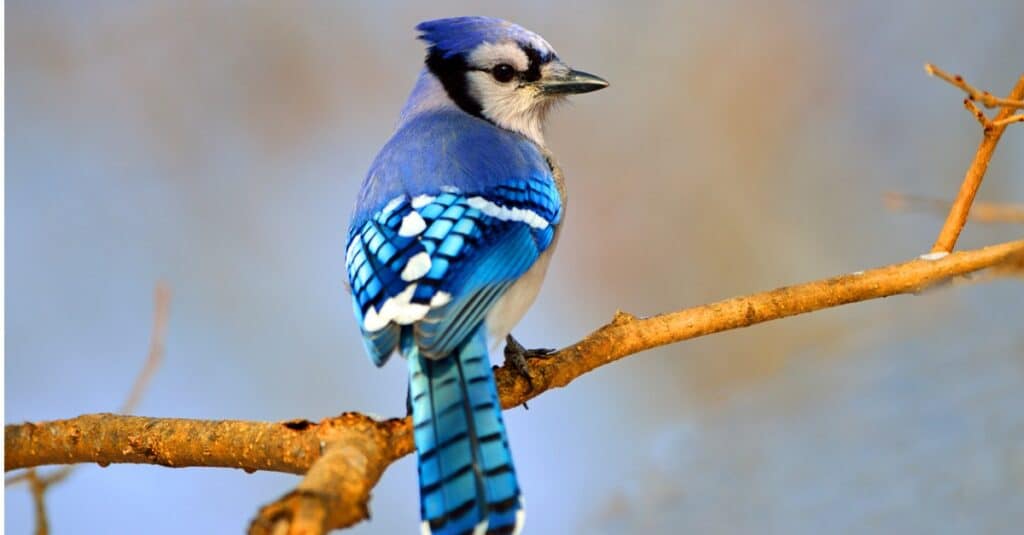
Blue jays are found in Indiana throughout the year.
©iStock.com/BrianEKushner
Eastern Bluebird
As the name indicates, the eastern bluebird is common throughout the eastern United States. Male eastern bluebirds have bright blue upper parts and vivid reddish-orange bellies. The females are lighter with duller coloration.
The Eastern Bluebird can be seen all year round in Indiana, with populations increasing during the breeding season in the spring. They prefer open areas with scattered trees, and they breed in many different types of semi-open habitats. They primarily feed on insects and berries, foraging by perching on low branches where they can flutter down to catch insects in the air.
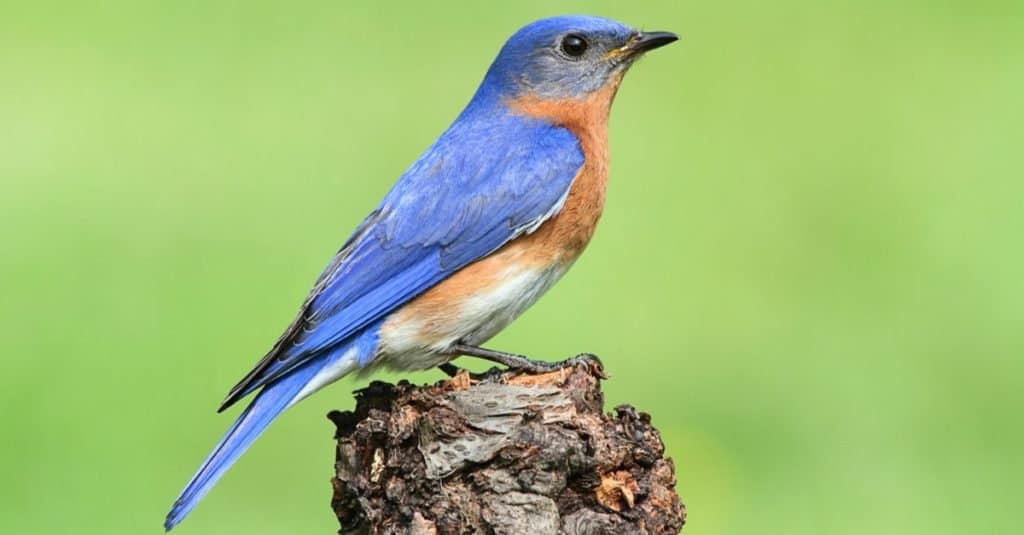
Eastern bluebirds have brilliant blue upper parts and contrasting orange chests.
©Steve Byland/Shutterstock.com
Cerulean Warbler
The cerulean warbler has blue upper parts with white underparts. It has two white wing bars and a blue-black necklace and blue streaks along the sides. The female has yellowish-green upper parts and yellowish-grey underparts, but it has no necklace or streaks.
These birds favor dry oak or deciduous woodlands, especially those near river valleys. The bird is uncommon except in a few areas. One place they have been observed is Big Oaks National Wildlife Refuge in southeast Indiana. The best time to see them is during the breeding season in spring and summer. They migrate to the tropical forests of Central America during the winter.
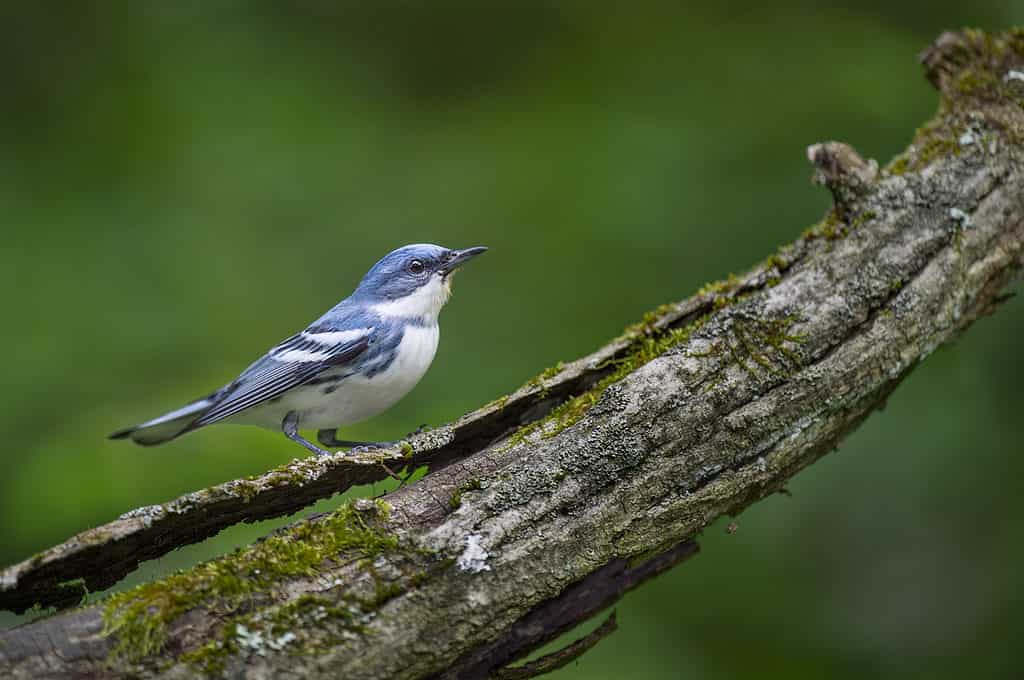
A bright blue and white Cerulean Warbler perched on a textured log in soft overcast light with a smooth green background.
©iStock.com/ps50ace
Red-Bellied Woodpeckers
The first thing many people notice about these medium-sized woodpeckers is the vivid crimson cap on their heads. They have white chests with a pinkish-red patch on their bellies, which is frequently hidden. They have prominent black and white striping on their wings, making them more easily recognizable.
In Indiana, red-bellied woodpeckers are year-round residents. They are most commonly found in deciduous woodlands, especially near rivers and swamps. Red-bellied woodpeckers typically forage for insects on tree trunks and large branches. They may also eat berries and nuts, and they often store seeds and nuts in bark crevices for the winter.
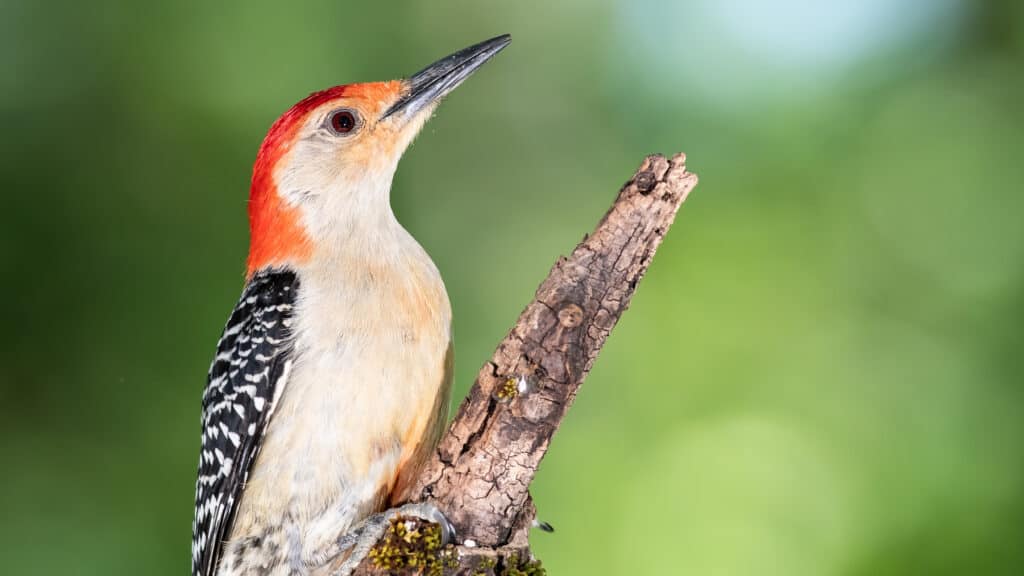
The red-bellied woodpecker does have a red belly, but it may be hard to see in the field.
©rck_953/Shutterstock.com
Great Horned Owl
The great horned owl is a common sight across North and parts of South America. These are large owls reaching up to 24 inches in length with a wingspan of up to 4.75 feet. These owls are shades of brown, black, grey, orange, red, rust, and yellow. They have white throats, reddish-brown discs, feathered tufts that look like horns, and horizontal bars on the belly. Great horned owls also have large yellow eyes.
These owls are year-round residents throughout the entire state of Indiana. They live in a wide variety of habitats, including woodlands, swamplands, open farmlands, and even city parks. Great horned owls are nocturnal, hunting small rodents and rabbits, as well as larger prey like skunks.
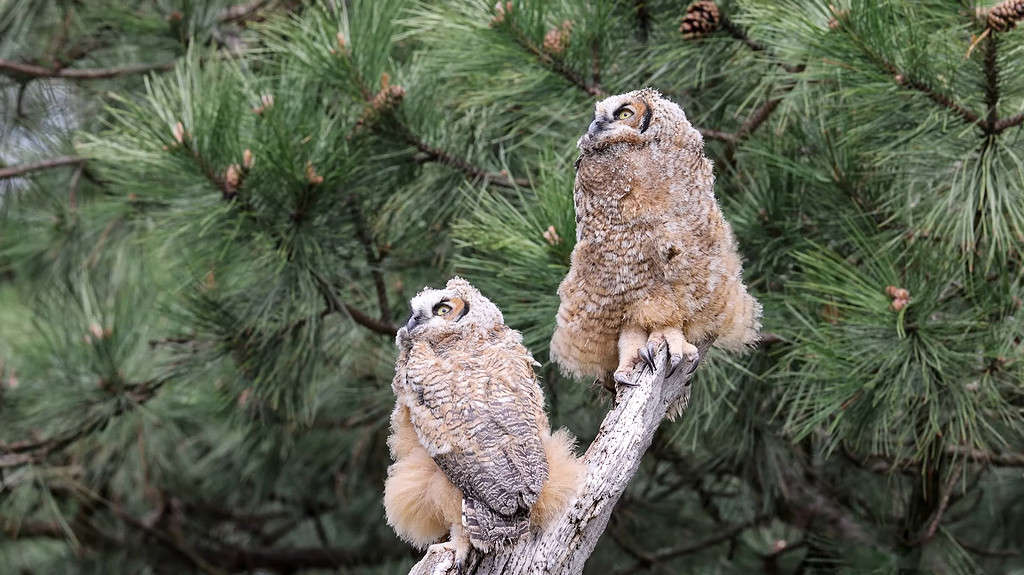
Great horned owls are found throughout the state of Indiana year-round.
©Banu R/iStock via Getty Images