Quick Take
- One bird on this list breeds right on the beach itself, and beachgoers unknowingly walk past roped-off nesting zones without knowing why. Least tern beach nesting →
- Not all of these birds are year-round residents. Some travel from the Arctic to spend winter on North Carolina's shores, making a sighting more remarkable than it looks. Arctic-breeding winter visitor →
- One bird on this list has a physical feature so unusual that it had to evolve a completely different bill shape just to eat, and you can spot it flying low over the water. Skimmer's unique bill shape →
- The smallest bird on this list measures under 6 inches, and knowing exactly where to look on the beach is the only way you'll ever find it. World's smallest sandpiper →
A day at the beach is not complete without seeing the area’s natural wildlife. Some of the most abundant wildlife along the shoreline is birds. Whether wintering, summering, or migrating, birds love the North Carolina coast for its warm, humid climate and temperate seasonal waters. Whenever you visit your favorite beach, look out for these common shorebirds. Discover 19 birds you’ll see along North Carolina’s coastline and beaches.
1. American White Pelican
The American white pelican is most commonly found along North Carolina’s coast during winter. However, a few can be spotted here and there throughout the year. They are among the largest birds in North America, measuring between 4.2 and 5.4 feet in length with a wingspan of up to 9.5 feet. It’s no wonder they can be a startling sight when you find them perched on boardwalks, but also look for them in the skies when they travel in flocks.
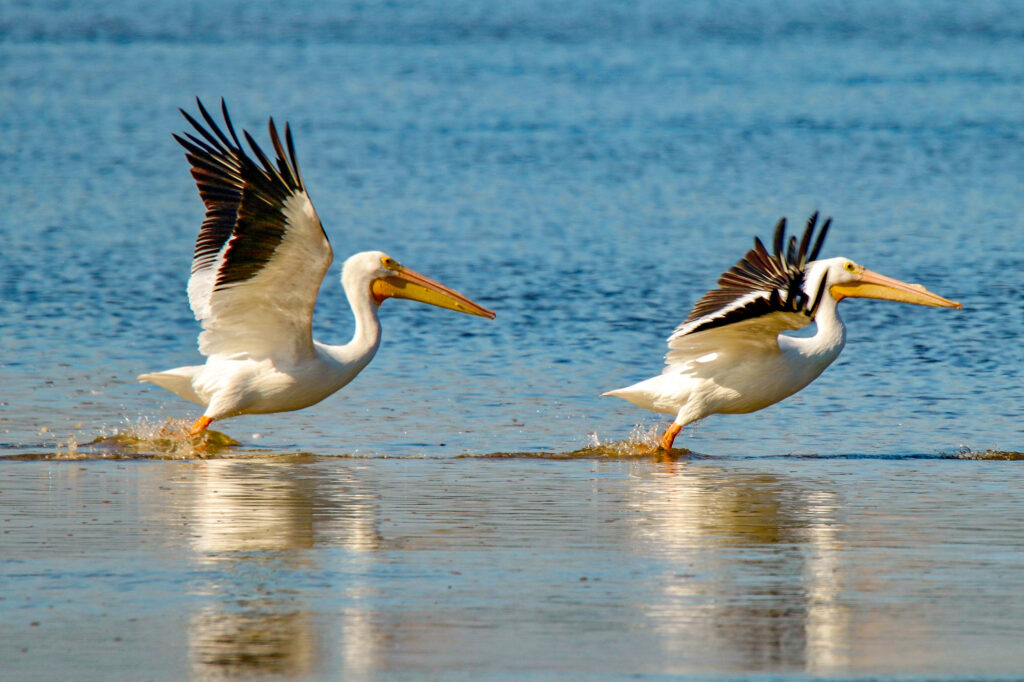
Pelicans have a wingspan of up to 9.5 feet.
©Susan Rydberg/Shutterstock.com
2. American Oystercatcher
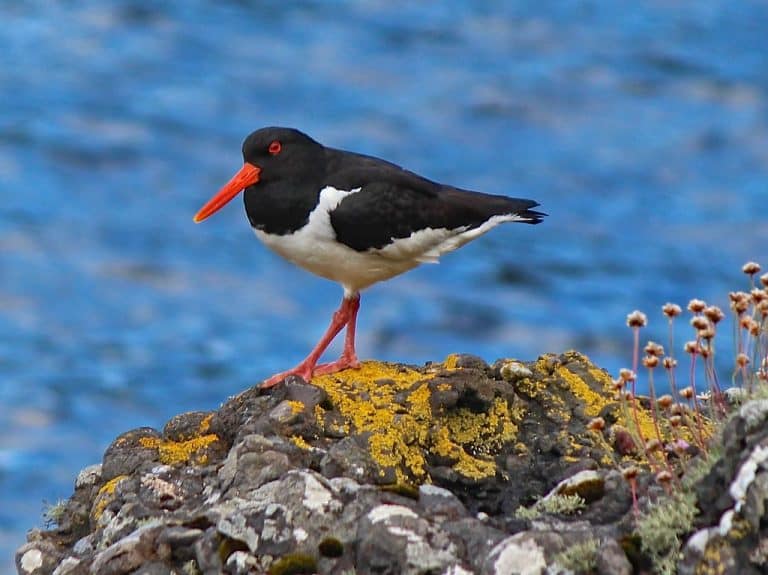
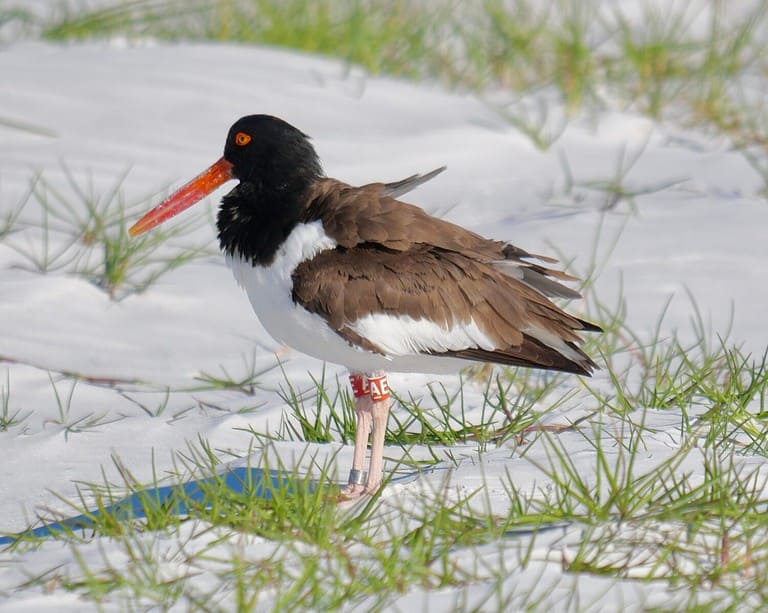
The American oystercatcher has a black head and breast, brown upperparts, white underparts, and a long, vibrant, orange-red bill. These large shorebirds measure 15.8-17.3 inches. They live along the state’s coastline year-round, where you will find them on barrier beaches and salt marshes. During high tide, they wait in remote roosts until the tide goes out. Then they descend upon their feeding grounds, where they eat oysters, clams, and other mollusks.
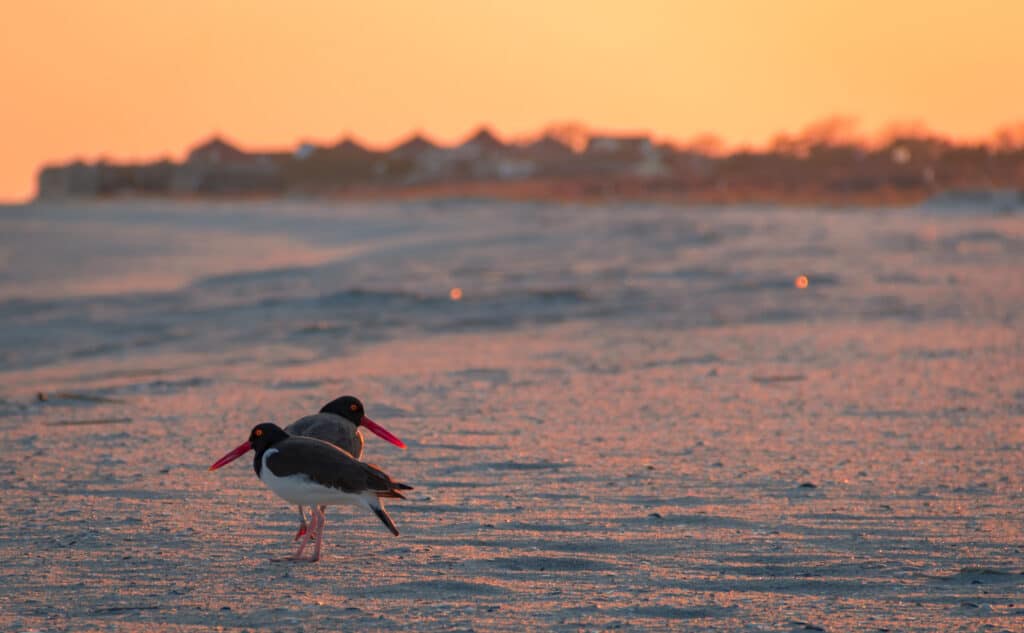
American oystercatchers live in North Carolina year-round.
©iStock.com/Rabbitti
3. Semipalmated Plover
While the semipalmated plover can be found in inland ponds and muddy agricultural fields, they also forage with shorebirds. In North Carolina, you can find them along the coast during the winter. You may even see them migrating during spring and fall throughout the rest of the state. On the beach, they stick to sandbars rather than rocky areas. These small, plump shorebirds measure 6.7-7.5 inches, with a wingspan of up to 19.7 inches. They have brown upperparts and white underparts, with black band on the breast and black around the eye. They have short, orange bills with black tips.
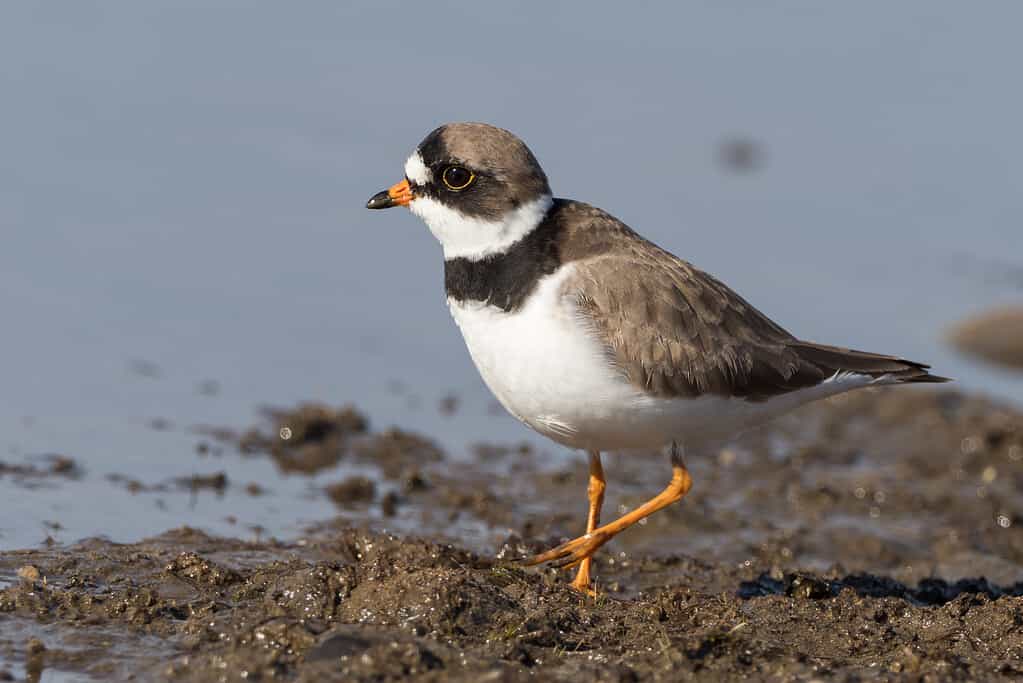
Semipalmated plovers live along the coast during winter.
©Dee Carpenter Originals/Shutterstock.com
4. Least Tern
The least tern is a breeding bird along North Carolina’s coastline. They are the smallest species of terns, measuring 8.3-9.1 inches with a wingspan of up to almost 21 inches. They frequent coastal beaches and barrier islands. From March 1 to September 15, you may even see their breeding areas roped off on your favorite beaches to protect their nests. Breeding adults have primarily light grey and white plumage. They have a black cap with a white forehead and a yellow bill.
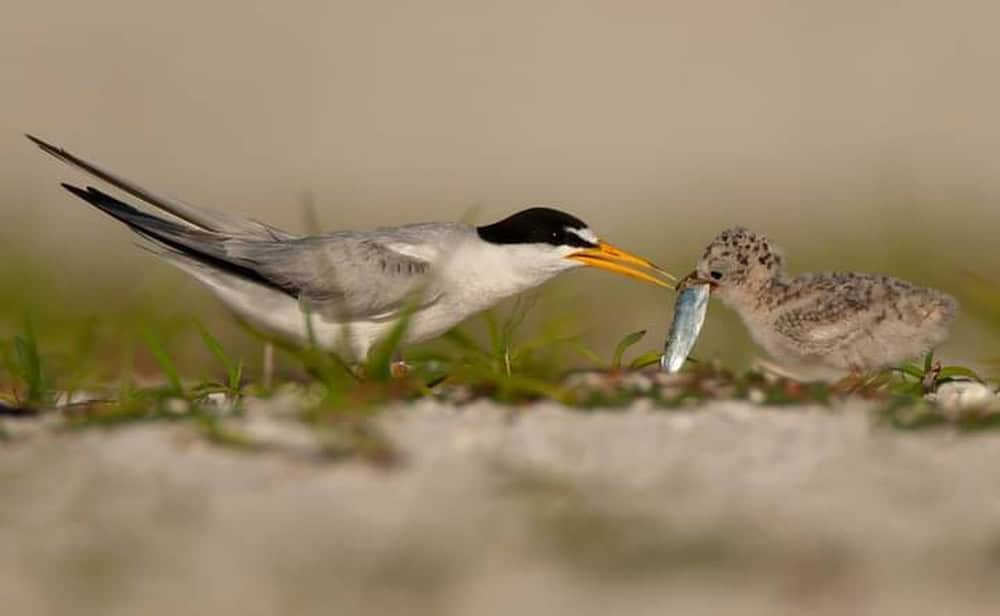
Least terns breed along North Carolina’s coastline.
©DANY STOCK/Shutterstock.com
5. American Avocet
This large, elegant shorebird winters along the North Carolina coast. They wade through shallow water and swish their long bills from side to side under the water to catch their prey, which is mostly invertebrates. You can find them foraging in coastal water, often standing on one leg. In the winter, you can find them in lagoons, salt ponds, and mudflats. American avocets are 16.9-18.5 inches in length with a wingspan of up to 28.4 inches. Breeding birds have rust-colored heads and necks that fade to greyish-white after the breeding season. Their bodies are mostly white with black-and-white wings and blue-grey legs.
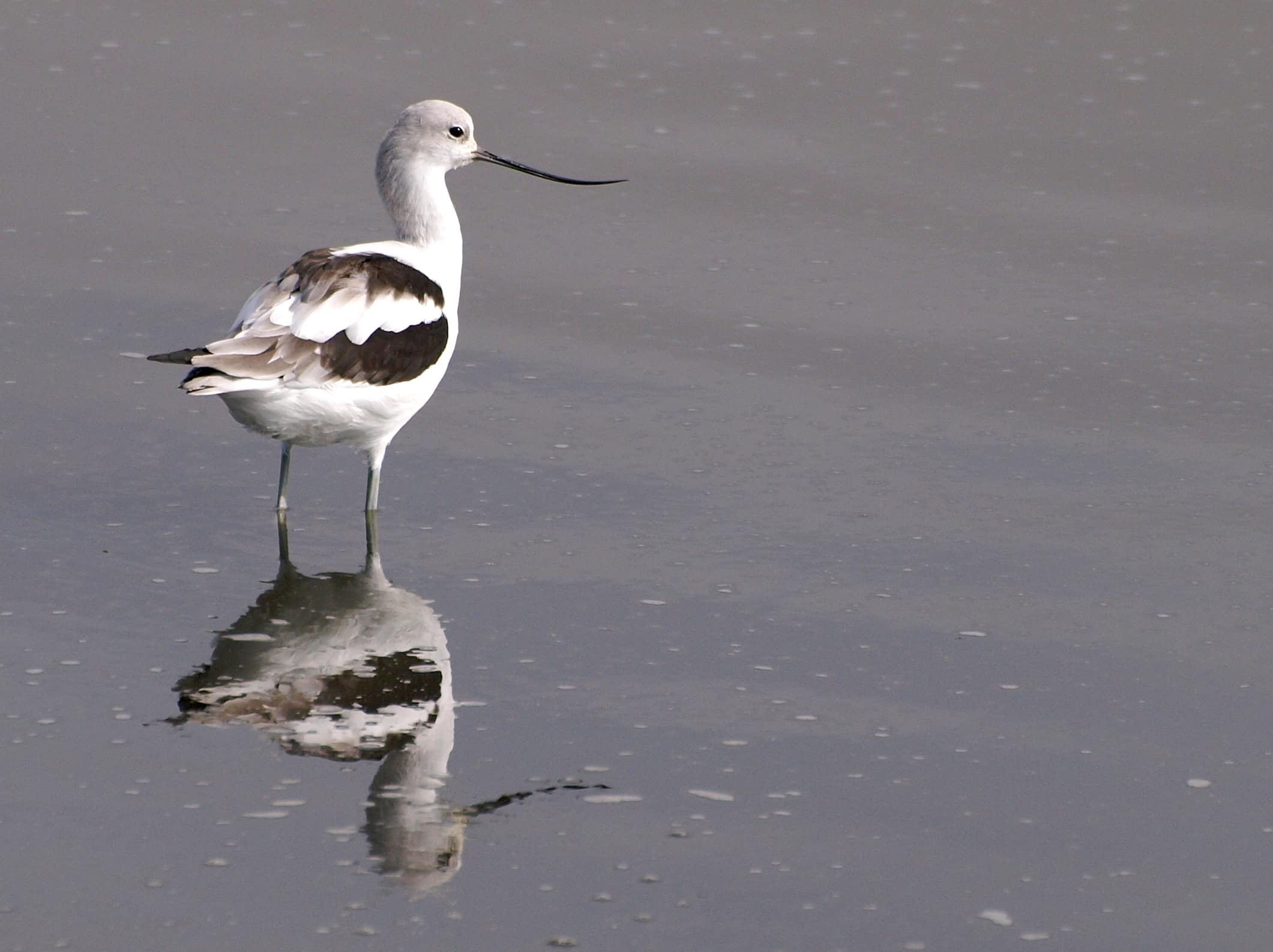
American avocets forage in shallow coastal waters.
©Ingrid Taylar from San Francisco Bay Area – California, USA, CC BY 2.0, via Wikimedia Commons – Original / License
6. Osprey
Ospreys are large hawks abundant throughout North America. They eat live fish, diving underwater to catch their prey. You will often see them flying over the beach near the shoreline and patrolling for prey. They live year-round along North Carolina’s coast but can also be found throughout the rest of the state during the breeding season. Away from the coast, look for them perched on tall trees around bodies of water. Ospreys have brown upperparts and white underparts. They have white heads with a brown stripe through the eye. They measure 21.3-22.8 inches with a wingspan of nearly 6 feet.
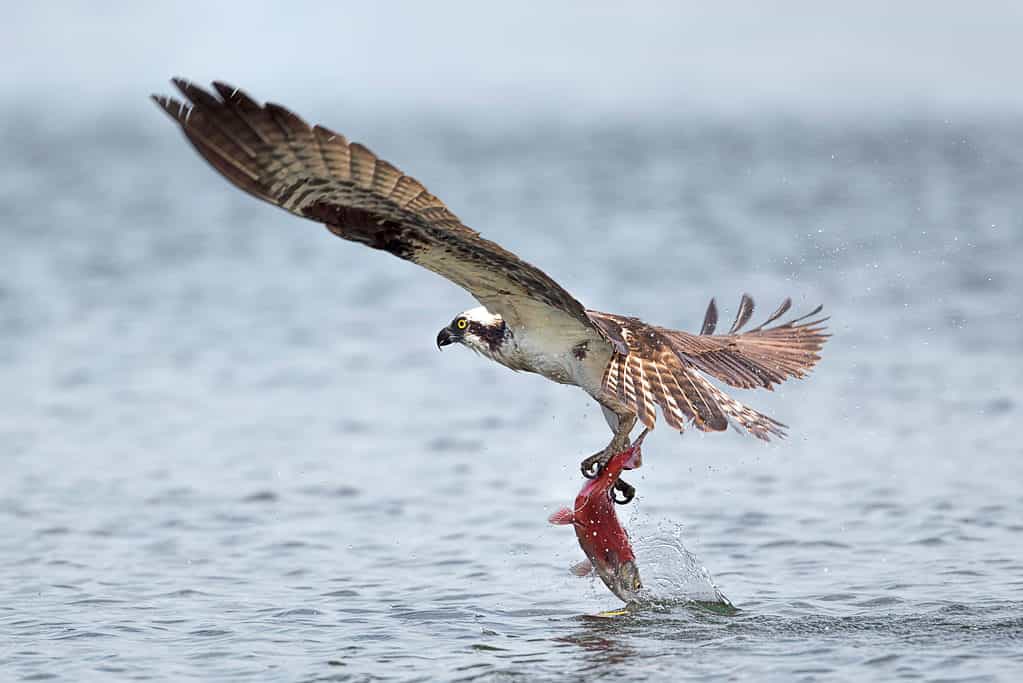
Ospreys eat live fish by diving into the water to catch their prey.
©Gregory Johnston/Shutterstock.com
7. Lesser Yellowlegs
These medium-sized yellow-legged shorebirds spend their winters near North Carolina beaches. You can find them during migration throughout the rest of the state. These birds are not just associated with beaches. They inhabit shallow wetlands with plenty of weeds and other vegetation. Near the beach, look for them in ephemeral mudflats and shallow marshes. Lesser yellowlegs are 9.1-10.6 inches in length with a wingspan of up to 25.2 inches. They are greyish-brown birds with bright yellow legs and black bills. They have grey streaks across their heads and necks, white spots on their backs and wings, and a white eye ring. Nonbreeding birds are duller colored with less streaking and spotting.
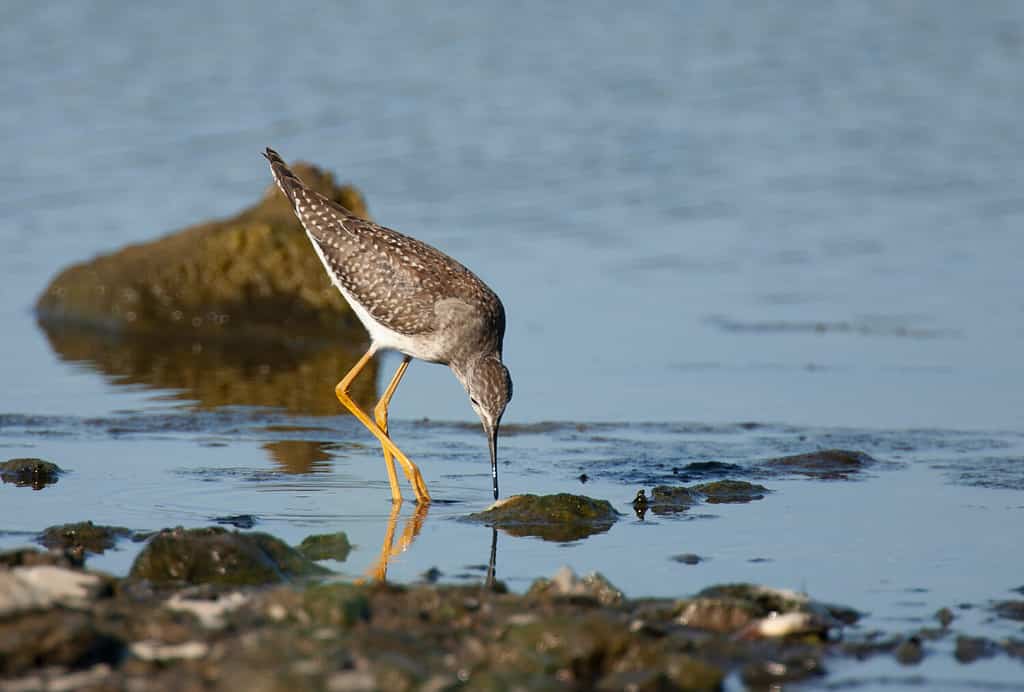
Lesser yellowlegs inhabit coasts and flooded fields.
©Dennis W Donohue/Shutterstock.com
8. Snowy Egret
The snowy egret is a slender heron with snow-white plumage, black legs, and yellow feet. They measure 22.1-26.0 inches long with a wingspan of up to approximately 3.3 feet. They live year-round along North Carolina coasts, and you can also see them during migration throughout most of the state. You are more likely to find them in tidal wetlands and mudflats in shallow water, where they like to forage. Once threatened by the fashion industry’s demand for their feathers, their populations were restored by conservationists and are now a common sight across North and South America.
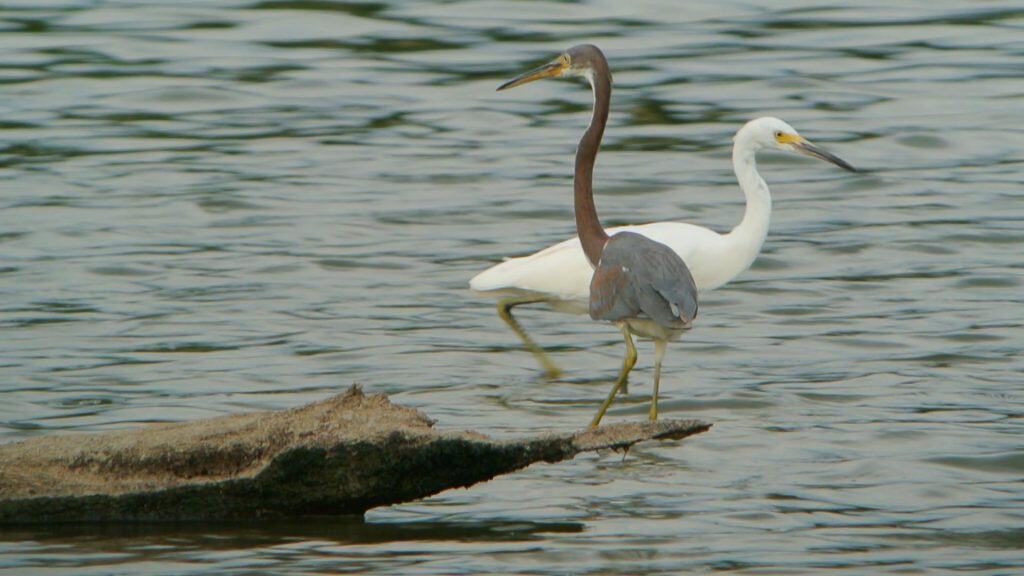
Snowy egrets live on the North Carolina coast year-round.
9. Spotted Sandpiper
Spotted sandpipers are abundant in the United States and the rest of the Americas. In fact, they are the most widespread breeding sandpiper in North America. They breed throughout most of North Carolina, including inland regions. Although often associated with shorelines, they can also be spotted along the shores of lakes, streams, and rivers. During the breeding season they have dark brown backs, dark spots on their white breasts, and an orange bill. They measure 7.1-7.9 inches with a wingspan of nearly 16 inches.
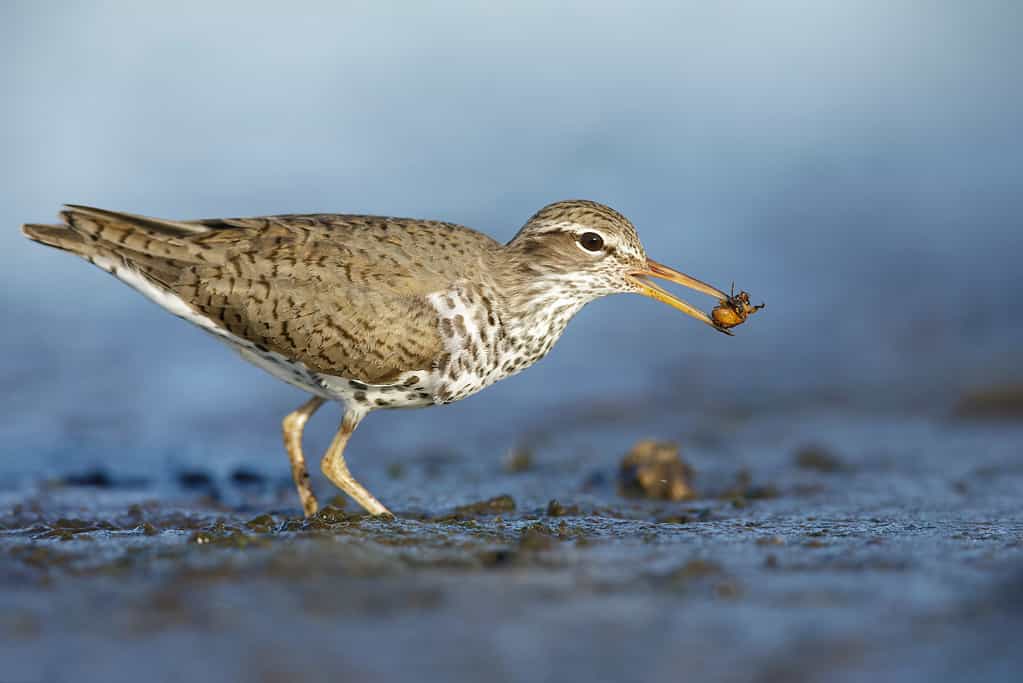
Spotted sandpipers have dark spots on their white breasts during the breeding season.
©Agami Photo Agency/Shutterstock.com
10. Willet
The willet’s large, stocky body, mottled grey, brown, and black markings, and black-and-white stripe along each wing make it easy to spot during the summer. Willets feed on the water’s edge and are one of the most common shorebirds in the country. These birds are 13.0-16.1 inches in length with a wingspan of 27.6 inches. Both the eastern and western subspecies can be seen on the East Coast during fall migration. While eastern willets winter in Central and South America, you can find some western willets along the North Carolina coast during the winter. However, their winter plumage is more of a uniform grey.
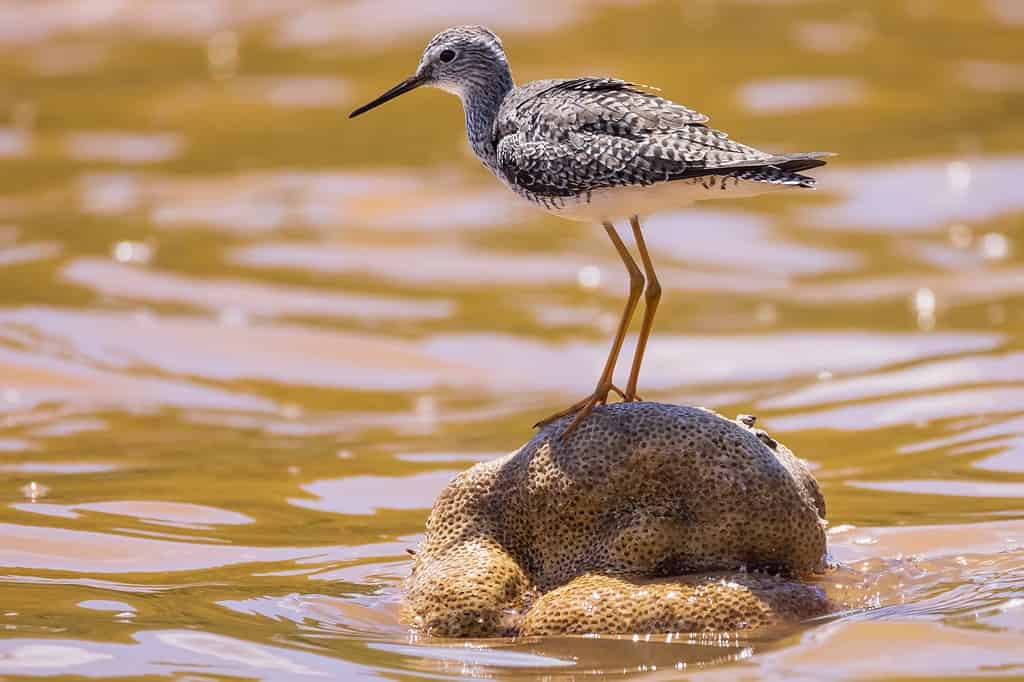
Willets have distinct mottled brown, grey, and black markings.
©BlueBarronPhoto/Shutterstock.com
11. Sanderling
Sanderlings breed on tundra of the High Arctic and winter along the United State’s coastline. These shorebirds live on the outer beaches and aggressively defend their feeding range along the water’s edge. You can easily spot them by their wave-chasing behavior. If you see birds running back and forth with the waves, they are most likely sanderlings. Sanderlings are most commonly seen with their light nonbreeding plumage. They have light grey upperparts and white underparts, with a dark mark at the shoulder. Sanderlings are 7.1-7.9 inches in length with a wingspan of 13.8 inches.
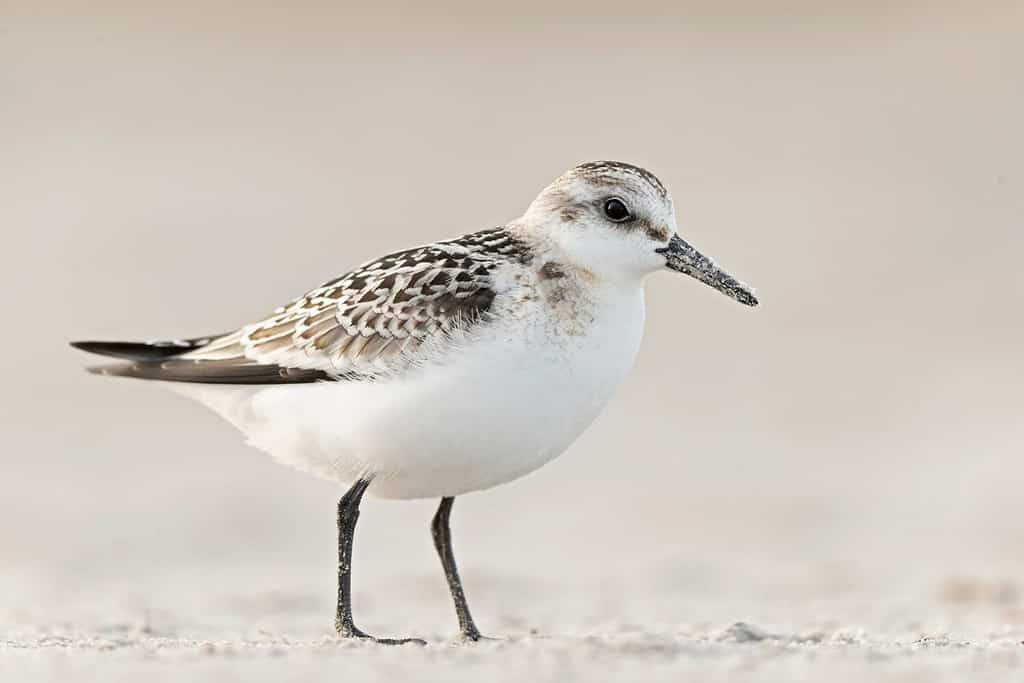
Sanderlings winter along North Carolina’s coast.
©Bouke Atema/Shutterstock.com
12. Great Egret
Great egrets are tall, slender birds measuring 37.0-40.9 inches with impressive wingspans of up to 4.75 feet. They live along the North Carolina shoreline year-round, and they also breed in the inland regions of the state. This all-white bird is slightly smaller than the great blue heron, and you can find them near ponds and coastal marshes. They wade in shallow waters, either standing completely still or moving very slowly.
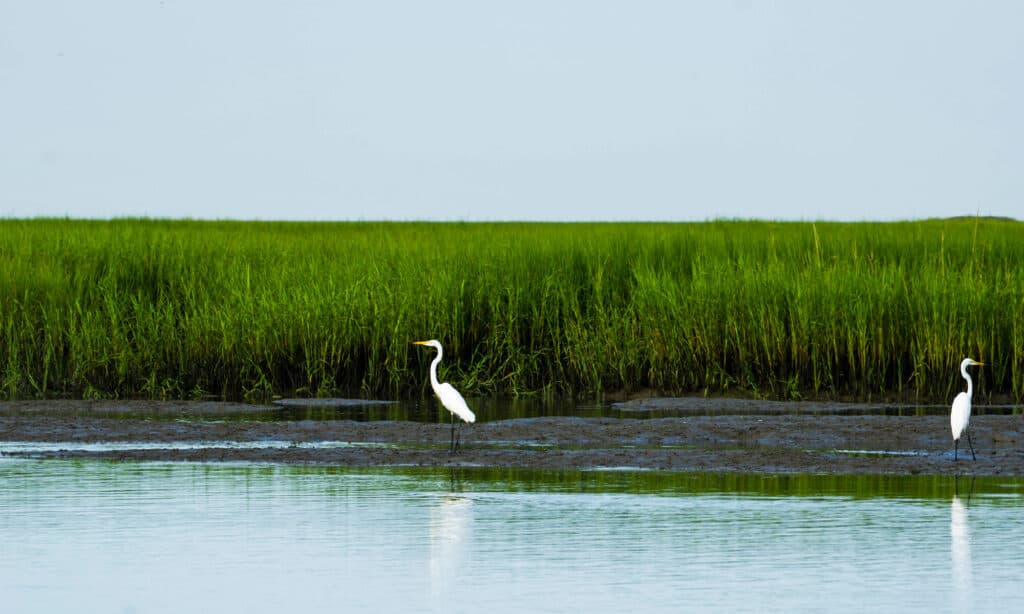
Great egrets have a wingspan of up to 4.75 feet.
©iStock.com/makasana
13. Ruddy Turnstone
This unique shorebird has easy-to-spot plumage of orange, white, and dark brown. Breeding males are brighter than breeding females, and nonbreeding adults retain only a very faint version of the breeding pattern in light brown. Ruddy turnstones are long-distance migrants that breed in Arctic tundra and winter along the United States and Mexican coasts. They like both sandy beaches and rocky shorelines, but you can also find them in inland lakes and marshes. These small stocky birds measure 6.3-8.3 inches with a wingspan of up to 22.4 inches.
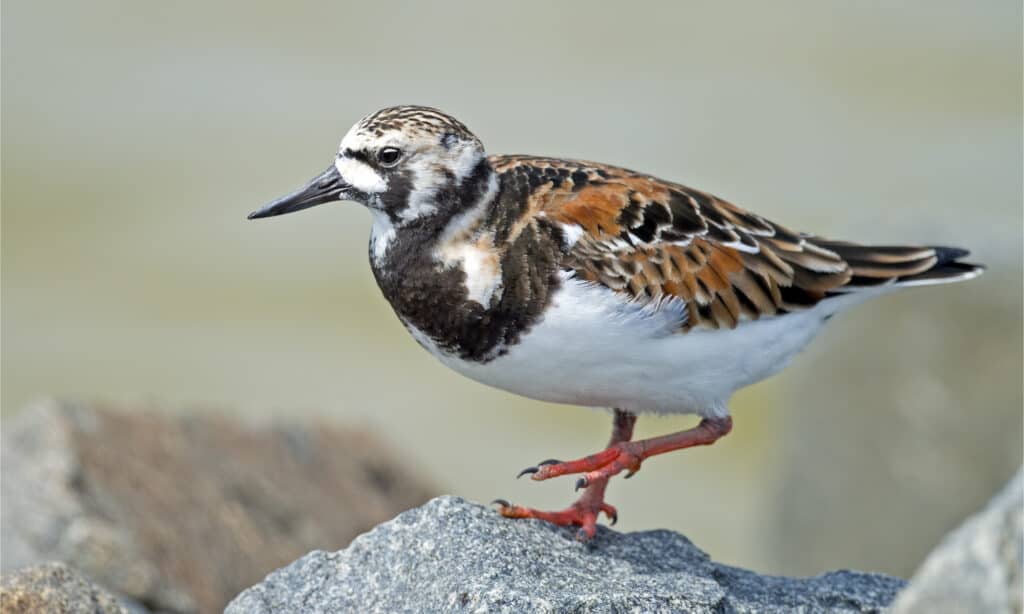
Ruddy turnstones favor sandy beaches and rocky shorelines.
©Brian E Kushner/Shutterstock.com
14. White Ibis
The white ibis isn’t as common in North Carolina as other shorebirds. But you can still find them year-round on southern county beaches. They are wading birds with mostly white plumage, black-tipped wings, long red legs, and long reddish-pink curved beaks. You can find them in groups moving through shallow wetlands, but they also inhabit flooded fields, parks, and backyards. During the breeding season, you can find them nesting in trees or shrubs near the water. They measure 22.1-26.8 inches in length with a wingspan of around 37 inches.
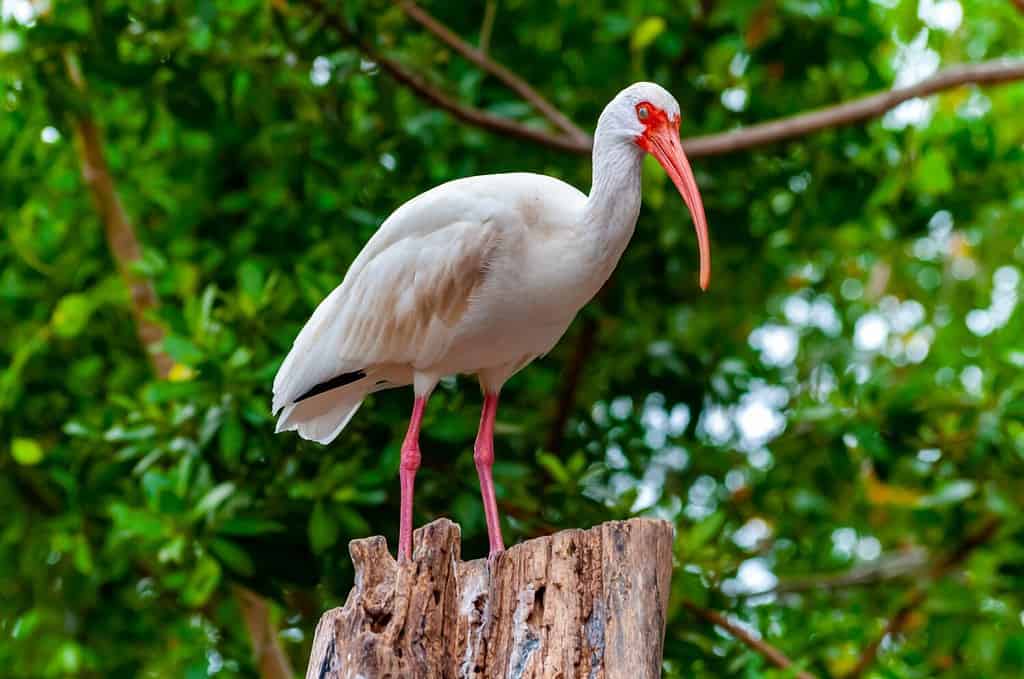
White ibises have bright, reddish-pink legs and beaks.
©Oleg Kovtun Hydrobio/Shutterstock.com
15. Dunlin
Dunlins are abundant shorebirds in the United States during winter and migration. They breed in the Arctic and winter along coasts, bays, and estuaries. As the tide falls, these birds feed on mudflats, dipping their bills just below the water’s surface to find invertebrates. In North Carolina, you will find populations near the coast during winter and migrating birds throughout the rest of the state. Breeding adults have rust-colored backs and crowns, black belly patches, white undersides with dark stippling, and black legs and bills. Nonbreeding adults have brownish-grey upperparts and white underparts. These small, stocky birds measure 6.3-8.7 inches with a wingspan of up to 15 inches.
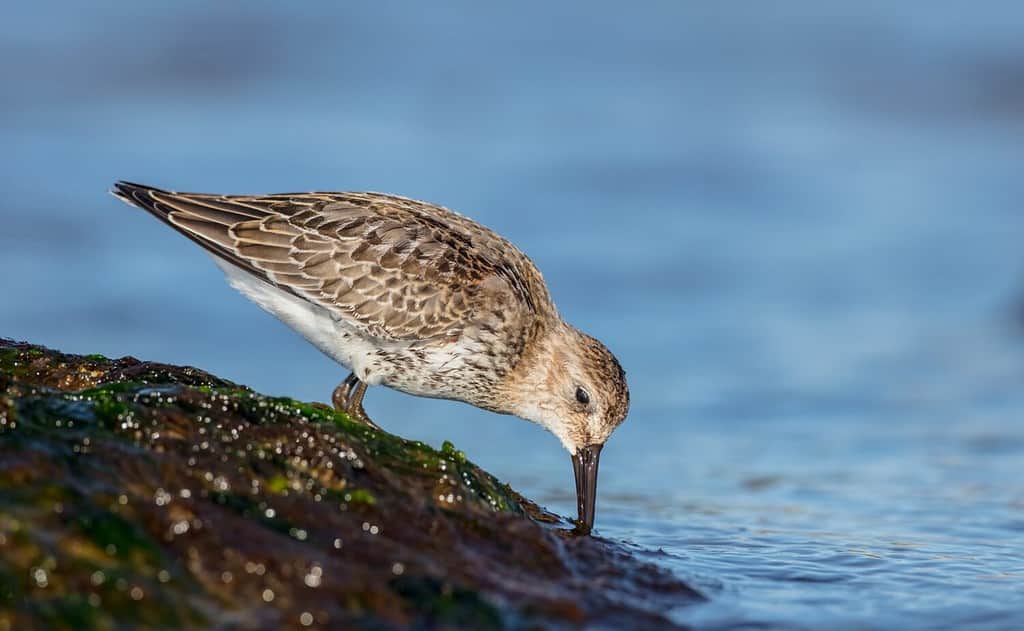
Dunlins feed on mudflats, where they look for invertebrates.
©Simonas Minkevicius/Shutterstock.com
16. Forster’s Tern
The Forster’s tern is an abundant seabird along North Carolina shores during the summer. Breeding adults have grey upperparts, white underparts, distinctive black caps, and orange bills with black tips. Nonbreeding adults are white overall with dark bills and a dark eye patch. They are often seen soaring above shallow waters near marshes, bays, and oceans. There are year-round populations of Forster’s terns on the Outer Banks of North Carolina. These seabirds measure 13.0-14.2 inches with wingspans of up to 31.5 inches.
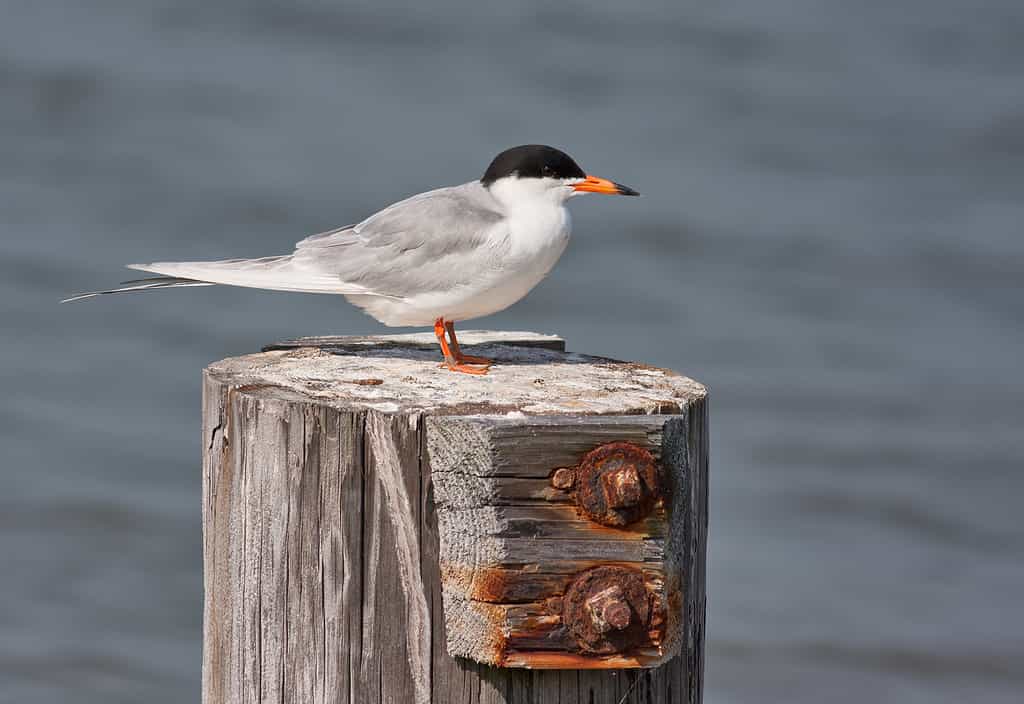
Forster’s terns soar above shallow waters near bays and oceans.
©Stephen Bonk/Shutterstock.com
17. Least Sandpiper
Also called “peeps,” least sandpipers are the smallest of the sandpipers, measuring only 5.1-5.9 inches with wingspans of up to 11 inches. They spend winters in the southern half of North Carolina, where you will commonly find them on mudflats along the coast. However, they are equally abundant in inland bodies of water. You can find them by scanning the sand or mud where they like to forage. These birds have brown patterned upperparts, white underparts, dark bills, and greenish-yellow legs.
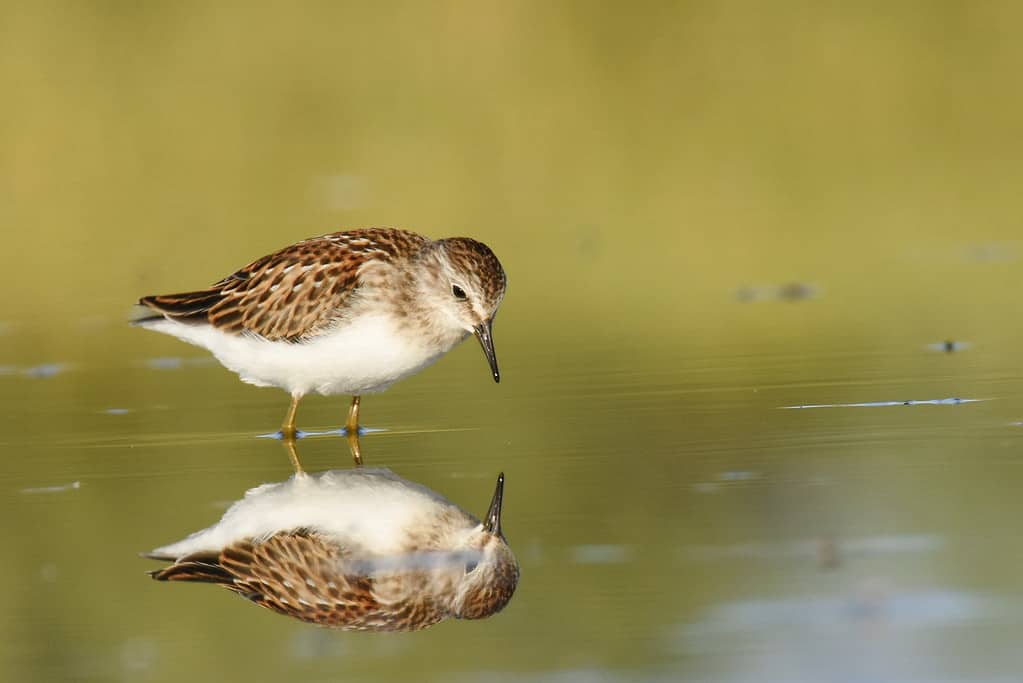
Least sandpipers are the smallest sandpipers, measuring less than 6 inches.
©Carrie Olson/Shutterstock.com
18. Black Skimmer
Black skimmers are primarily South American birds, but breeding and some year-round populations exist along the coast of North Carolina. These birds have black upperparts with white underparts. They measure 15.8-19.7 inches with wingspans of approximately 3.8 feet. Black skimmers are most notable for their long wings and large, vibrant orange and black bills, with a lower mandible that is longer than the upper. They frequent barrier islands and beaches, where they fly low over the water, skimming the surface for food.
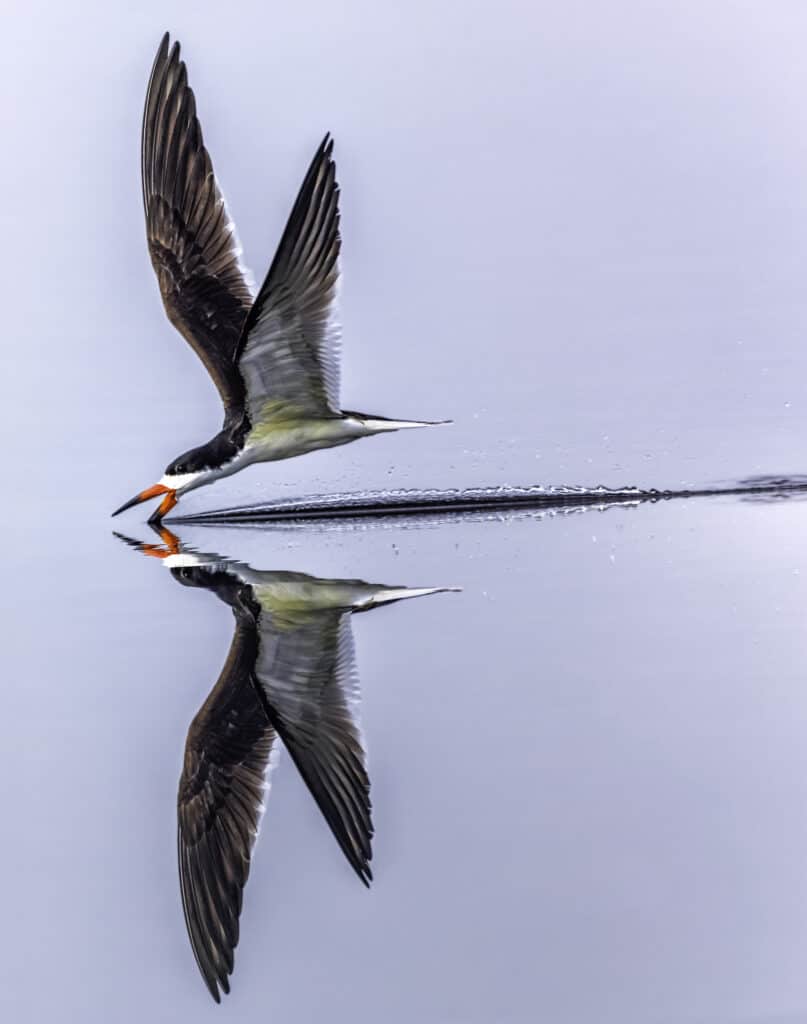
Black skimmers have a longer lower mandible than upper so they can skim the water for food.
©iStock.com/Natures_Vision
19. Wilson’s Snipe
Wilson’s snipe is a plump shorebird with a large bill. They can be difficult to spot due to their mottled brown, black, and white plumage that easily blends with their environment. Plus, they can be very secretive. These birds spend winters throughout North Carolina, including the coastline. They live in most wetlands and like to perch on fence posts. Wilson’s snipe measure 9–11 inches and have a wingspan of up to 18 inches. They have very long bills they use to probe the mud for invertebrates. When disturbed, they fly in an erratic zig-zag pattern.
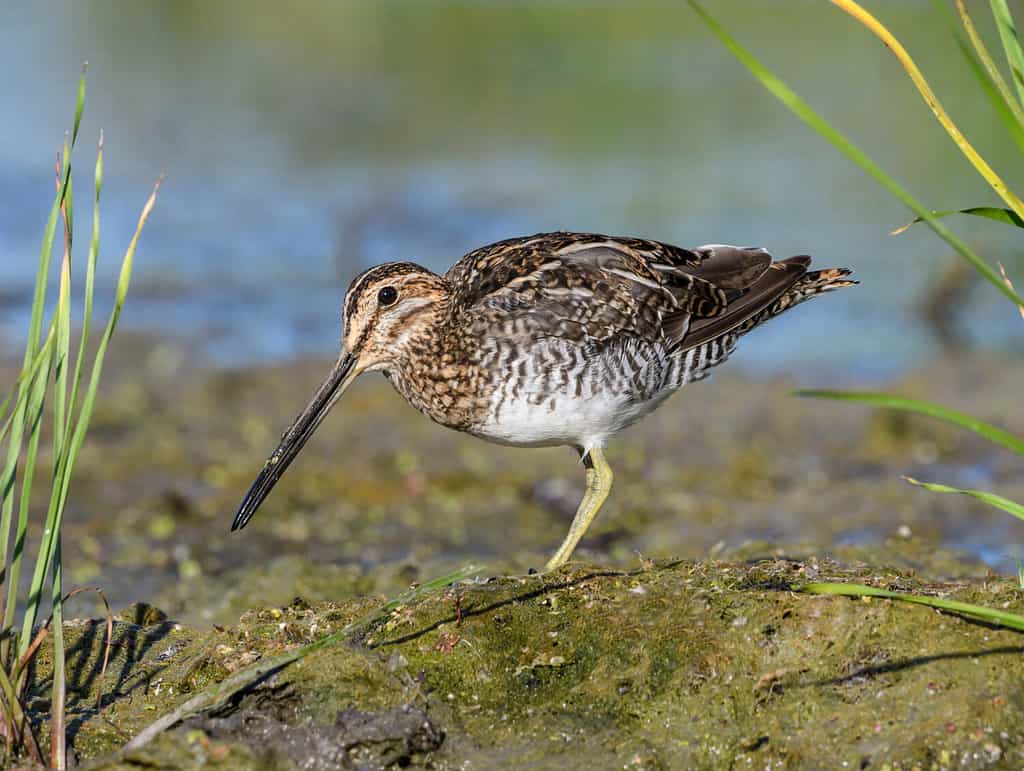
Wilson’s snipes winter along North Carolina’s coastline.
©FotoRequest/Shutterstock.com