
Birds are remarkable creatures. Their colors range from subtle earth tones to vivid, eye-catching hues. Whether gliding silently overhead or chirping in the trees, they add life and movement to the world. But have you ever wondered how birds go to the bathroom? Their bodies work differently from humans, and the way they get rid of waste is intriguing. Continue reading to discover whether birds urinate and how their digestive system compares to other animals.
Birds Don’t Technically Urinate
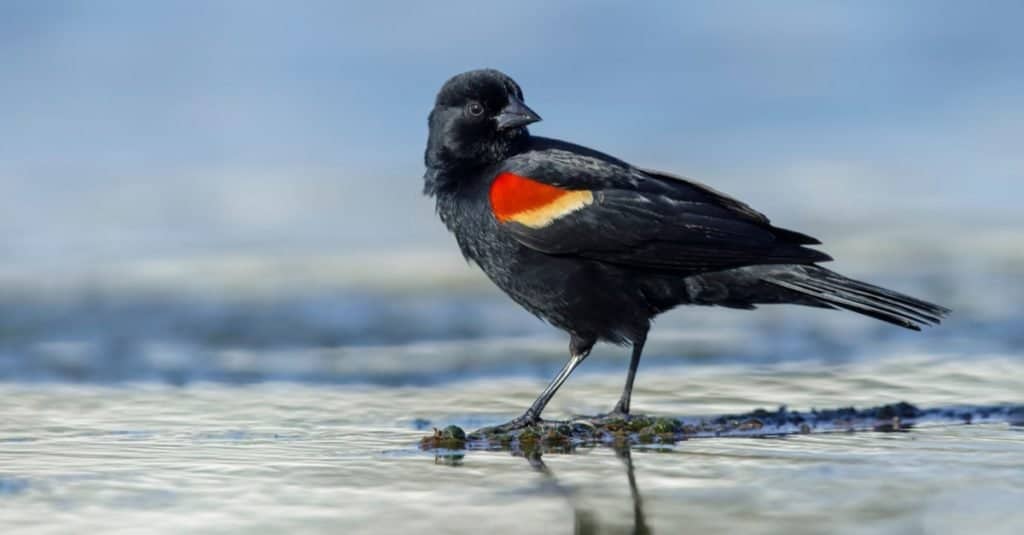
Red-winged Blackbird
©Agami Photo Agency/Shutterstock.com
Birds don’t urinate the same way mammals do. Mammals store liquid urine in a bladder, eliminating it through a separate opening. Unlike mammals, birds don’t have bladders in which to store urine. Birds excrete liquid waste mixed with their feces through a single opening called the cloaca. This combined waste is often seen as a white watery substance containing bits of dark fecal matter.
Avian Anatomy
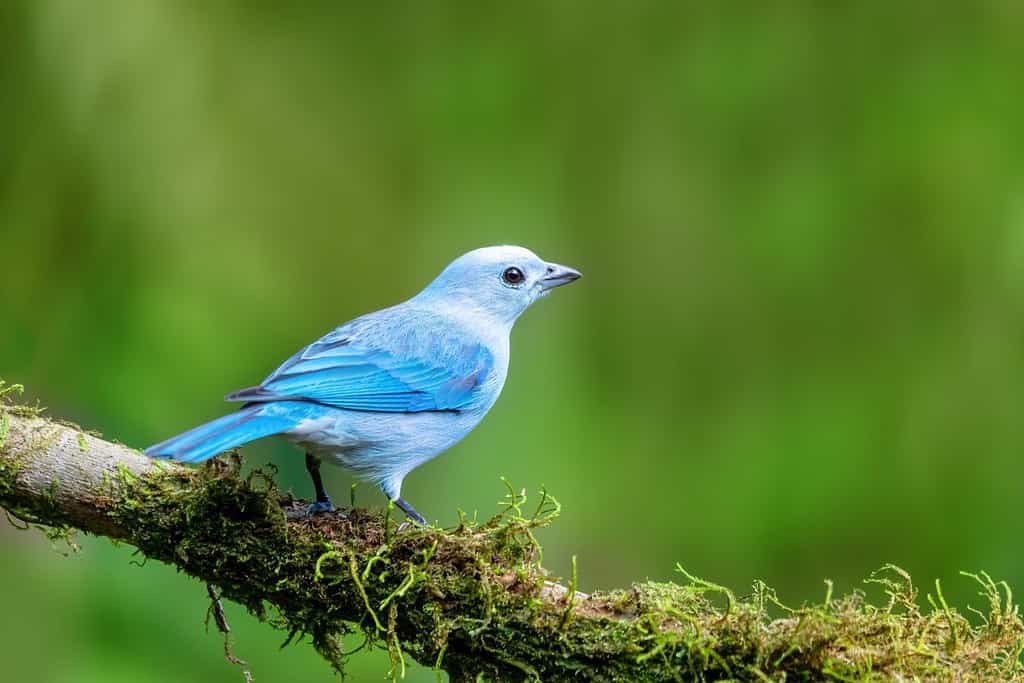
Bird anatomy differs significantly from human anatomy.
©Artush/Shutterstock.com
Mammals have urethras, or tubes, from which urine exits the body, while solid waste, known as feces, is eliminated separately. Birds are different. They don’t have urethras or bladders. Instead, birds release waste through an organ called the cloaca. Derived from a Latin word meaning to cleanse, the cloaca is an opening that connects to the bird’s reproductive system and its digestive and urinary tracts. Urine and feces both drain into the cloaca, where they are mixed before being expelled.
Birds don’t have bladders. This is by design: a bird with a full bladder would weigh a lot more, making flight difficult. Instead, bird urine is sent directly from the kidneys to the cloaca. The cloaca absorbs much of the liquid waste back into the body. Roughly 98% of the water that’s filtered by avian kidneys is reabsorbed.
The Avian Digestive System

Birds are not particular about where they will eliminate waste.
©iStock.com/Iuliia Burmistrova
Bird waste consists of urine and feces. The avian digestive system includes the esophagus, crop, proventriculus, gizzard, small intestine, large intestine, and cloaca. Food is stored in the crop, then passes to the proventriculus (the glandular stomach) where digestive juices are secreted. The gizzard (muscular stomach) grinds the food. Nutrient absorption occurs in the small intestine, while the large intestine absorbs water. Waste is eliminated through the cloaca.
Although they lack bladders and urethras, birds have a pair of kidneys that function much like those of mammals. The kidneys’ primary function is to filter toxins from the blood and then turn it into waste in the form of urine.
Compared to mammals, birds urinate frequently because they process food and liquids rapidly. Smaller birds eliminate waste more frequently than larger ones. Food passes through a bird’s digestive tract in 2.5 to 12 hours.
Nitrogenous Waste
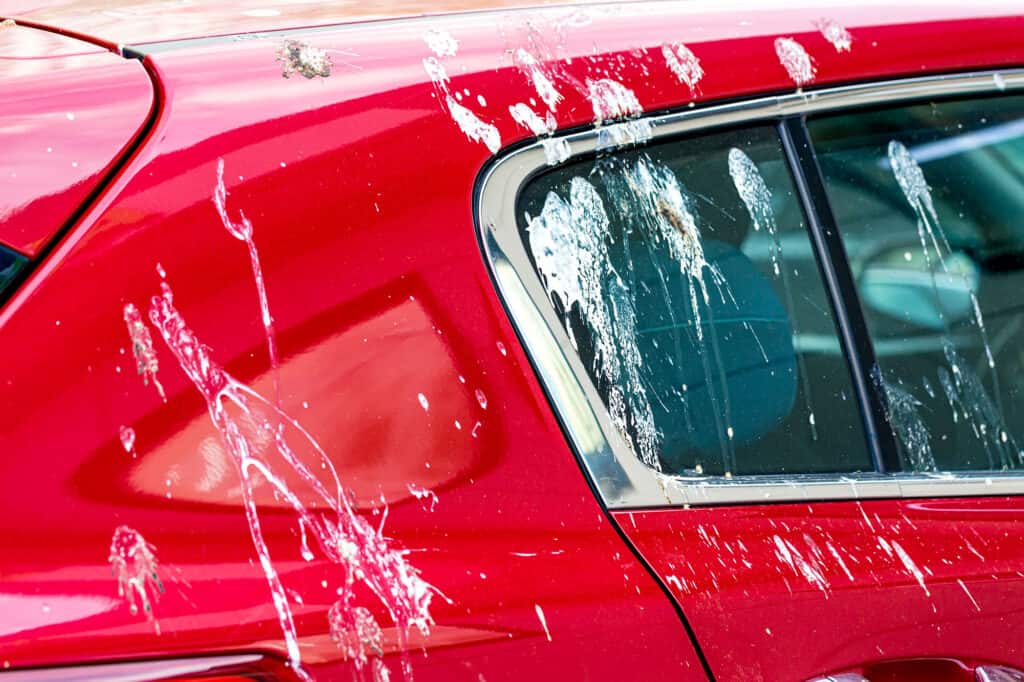
Although it’s usually white, bird urine may appear a bit yellow when exposed to sunlight.
©iStock.com/nantonov
Birds, like mammals, produce metabolic waste containing nitrogen, which is made up of substances the body cannot use. A significant portion of this waste consists of nitrogen; when combined with water, nitrogen creates ammonia, a toxic substance that must be eliminated quickly and efficiently.
Birds primarily eliminate nitrogenous waste as uric acid, a relatively non-toxic, semi-solid substance. This is in contrast to mammals, which excrete most nitrogenous waste as urea. Since birds don’t have bladders, they can’t store enough water to produce urea. However, uric acid effectively flushes harmful ammonia byproducts from their bodies.
Bird droppings usually consist of a pasty, chalky-white colored portion and darker flecks of material. The pasty, white substance is the closest thing to urine that a bird produces.
Avian droppings can carry pathogens such as E. coli, salmonella, and the fungus that causes histoplasmosis, which can pose health risks to humans and other animals.