
Quick Take
- One Wisconsin park hosts breeding warblers and songbirds that normally belong hundreds of miles farther south, and its location explains exactly why. Southerly breeding birds →
- The biggest spectacle in Wisconsin birding isn't at a national forest or river refuge. It's at a marsh most out-of-state birders have never heard of. Horicon Marsh migration →
- A 185-acre urban nature center outperforms sprawling wilderness refuges for one specific type of bird-watching, a fact that comes down to its position along Lake Michigan's shoreline. Urban Lake Michigan hotspot →
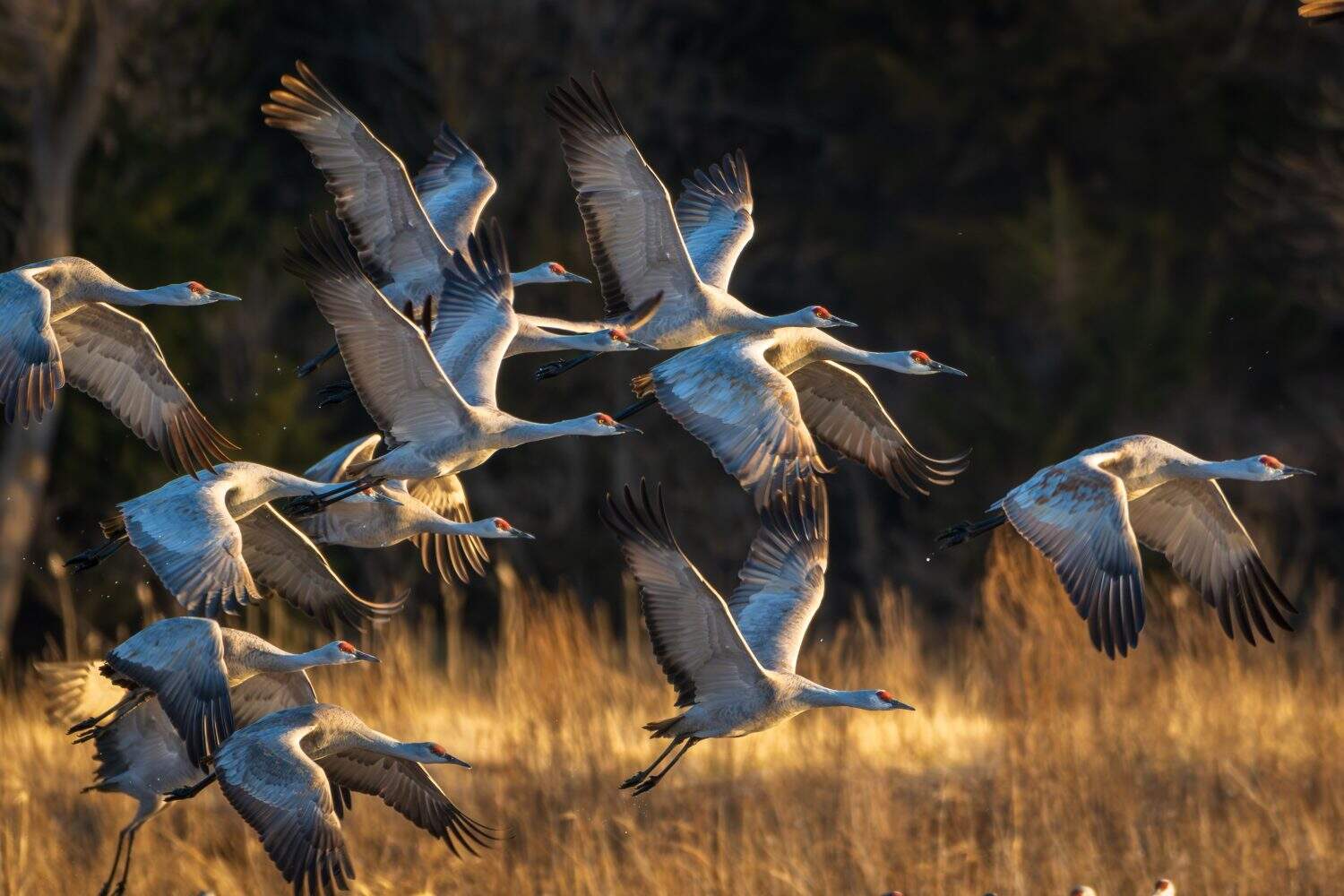
- Wisconsin's location in a major North American flyway means some spots deliver jaw-dropping numbers that most birders don't realize are possible outside coastal hotspots. Jaw-dropping crane numbers →
Wisconsin birders anticipate the annual bird migrations that bring exciting seasons of bird-watching. The state is located in the Mississippi Flyway, which supports around 40% of North American waterfowl and shorebird populations. Wisconsin is a top spot for bird watching, with over 400 species documented in the state. If you’re visiting or live in the Badger State, here are some of Wisconsin’s best bird-watching destinations.
Horicon Marsh
The Horicon Marsh includes the largest freshwater cattail marsh in the United States, covering approximately 32,000 acres. Over 300 bird species have been spotted here throughout the years. The marsh is arguably best known for the hundreds of thousands of ducks that visit the area during spring and fall migration, including mallard, northern pintail, green-winged teal, and gadwall ducks. Large numbers of warblers and other migrating songbirds return to the area, and tens of thousands of Canada geese and sandhill cranes also migrate through the marsh. Additionally, visitors can see great blue herons, bald eagles, and state-endangered black terns by taking the paddle trail along Rock River.
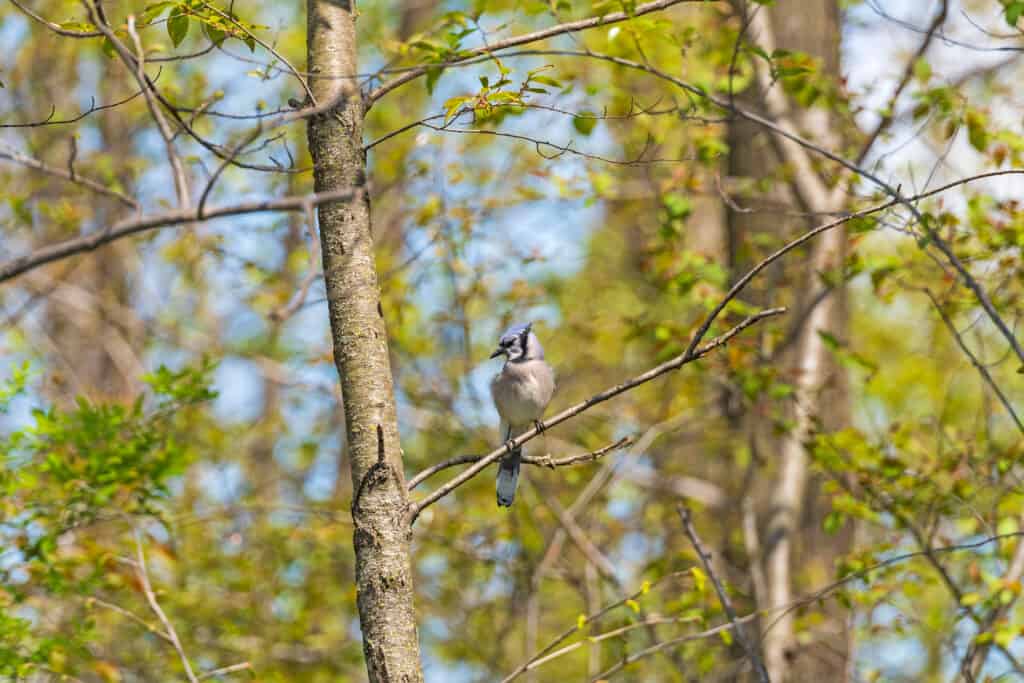
Visitors will also find blue jays in the forest edges and upland areas around Horicon Marsh.
©Wildnerdpix/Shutterstock.com
Wyalusing State Park
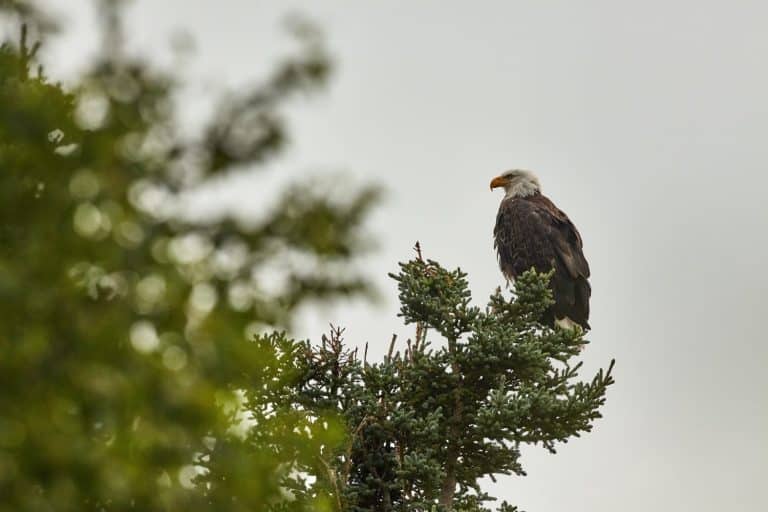
Wyalusing State Park is located where the Wisconsin River and Mississippi Rivers converge. The rocky bluffs make it a wonderful location for a spring or fall trip, as you can see warblers, waterfowl, and a variety of other songbirds as they follow the river along the Mississippi Flyway. The park is also known for attracting nesting birds from more southerly regions. Some of the breeding birds in the park include the ovenbird, Louisiana waterthrush, Kentucky warbler, blue-winged warbler, prothonotary warbler, cerulean warbler, scarlet tanager, eastern whip-poor-will, yellow-billed cuckoo, and the red-headed woodpecker. Bald eagles are also present year-round.
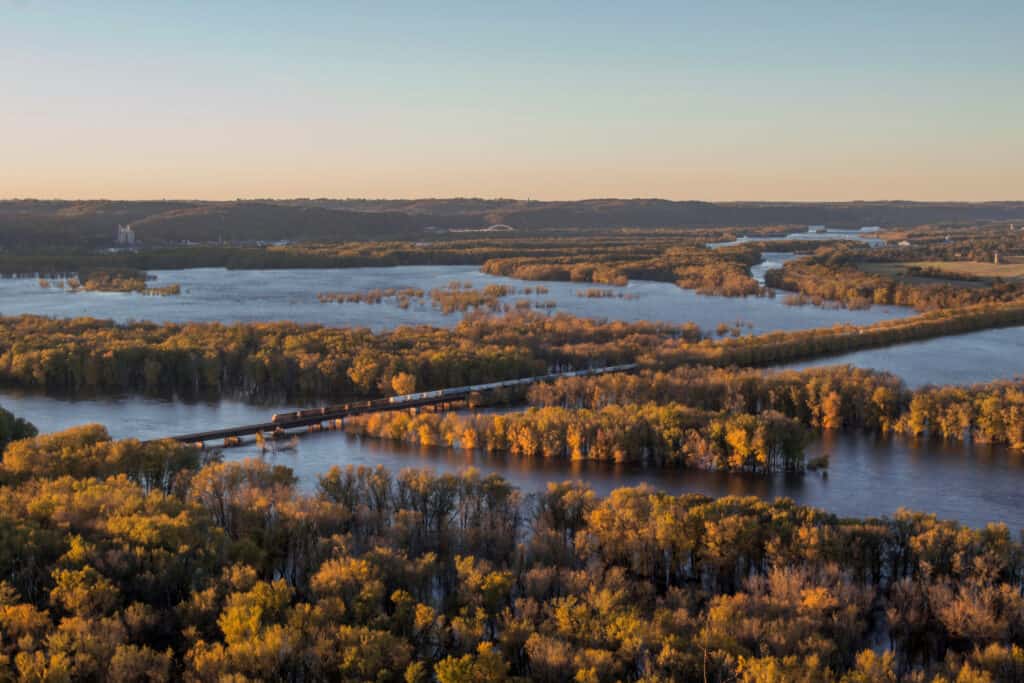
During migration, you can see waterfowl and songbirds at Wyalusing State Park.
©Sam Wagner/Shutterstock.com
Northern Highland–American Legion State Forest
The Northern-Highland-American Legion State Forest is over 236,000 acres across Vilas, Oneida, and Iron counties in north-central Wisconsin. You can see populations of loons, bald eagles, ospreys, and warblers across the wetlands and hemlock forests. Warblers include pine warblers, yellow-rumped warblers, blackburnian warblers, and Nashville warblers. Birders may also see yellow-bellied sapsuckers, blue-headed vireos, winter wrens, and eastern wood-pewees, as well as trumpeter swans and great blue herons.
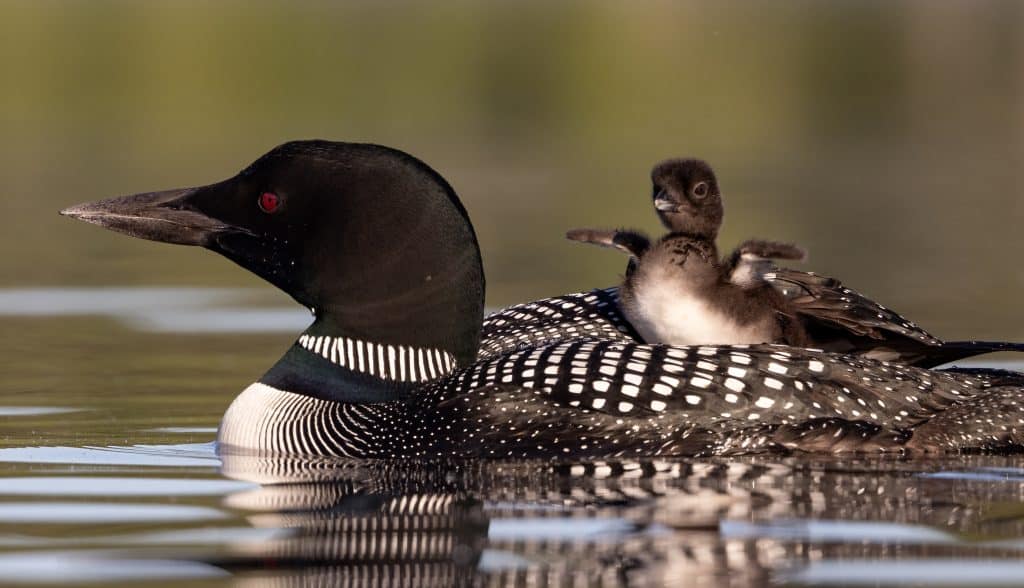
Birders can see a population of common loons at the Northern-Highland-American Legion State Forest.
©Harry Collins Photography/Shutterstock.com
Crex Meadows Wildlife Area
Crex Meadows Wildlife Area is a more than 30,000-acre property in western Burnett County, north of Wisconsin’s Grantsburg Village. It is renowned for waterbirds in spring and flocks of sandhill cranes in fall. Phantom Lake flowage is the largest body of water on the property, featuring open water, marsh, and sedge meadows that vary depending on water management levels. It is considered an excellent spot to view sharp-tailed grouse, osprey, and bald eagles, as well as trumpeter and tundra swans, least bitterns, red-necked grebes, and black terns.
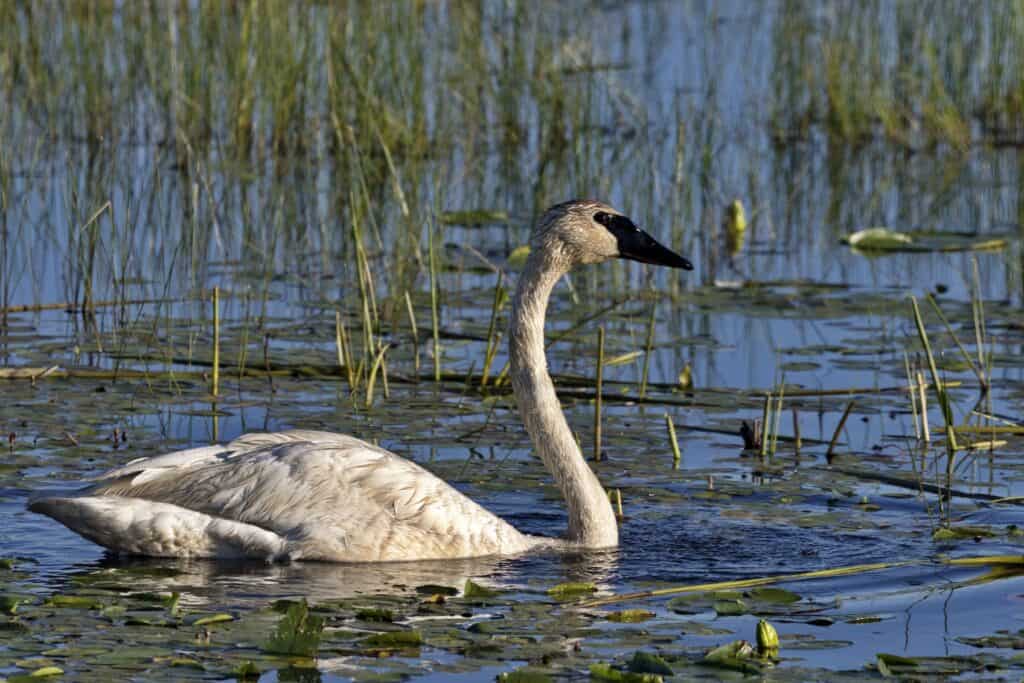
Crex Meadows is home to waterfowl like trumpeter swans.
©Florence-Joseph McGinn/Shutterstock.com
Schlitz Audubon Nature Center
The Schlitz Audubon Center is a 185-acre nature area with woodlands, grasslands, and wetlands on the shore of Lake Michigan. During the spring migration, the center is a hot spot for songbirds. During the fall migration, many species of raptors congregate along the lake shore as they migrate south. Birders can catch a glimpse of species such as osprey, sharp-shinned hawks, broad-winged hawks, Cooper’s hawks, merlins, and peregrine falcons. Many species of duck can be seen from fall through spring. Nesting birds at the center include great horned owls, marsh wrens, ovenbirds, blue-winged warblers, mourning warblers, red-headed woodpeckers, and Savannah sparrows, among others.
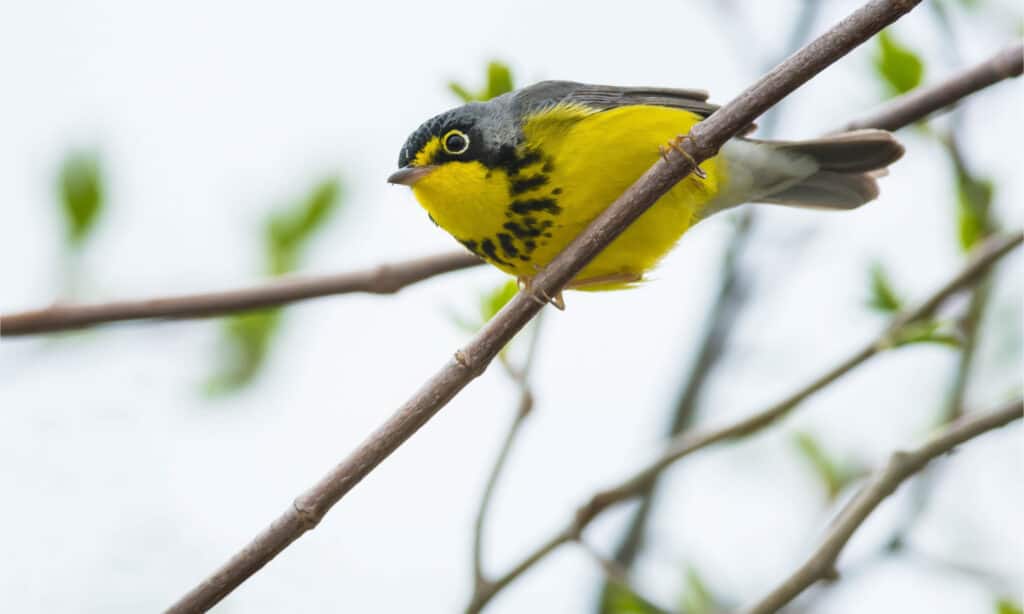
Warblers are a sought-after bird to spot at the Schlitz Audubon Nature Center.
©Paul Reeves Photography/Shutterstock.com
Trempealeau National Wildlife Refuge
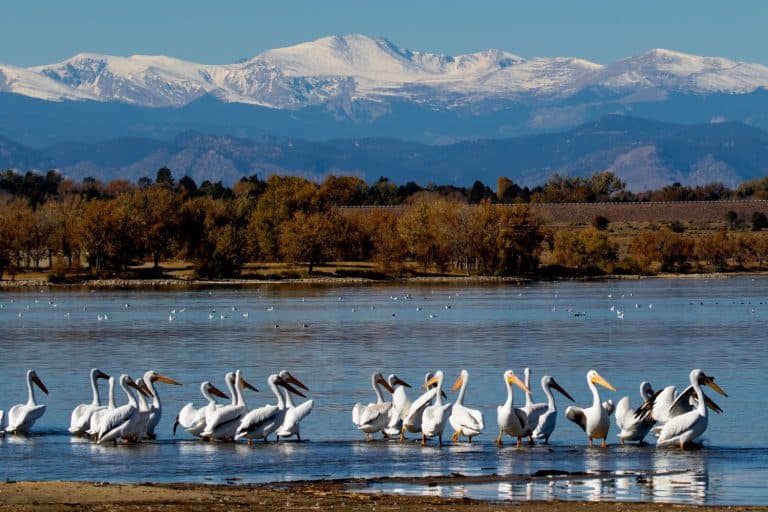
The Trempealeau National Wildlife Refuge covers 6,808 acres along the Mississippi River’s eastern shore in western Wisconsin. Travelers are drawn to the refuge by the Great River Scenic Byway’s beautiful scenery. A wide variety of animal species is supported by the prairies, wetlands, sand dunes, and bottomland woods. Tundra swan and many other waterfowl can be seen at the refuge during the spring and fall. Breeding species include American white pelicans, sora, osprey, bald eagles, and sandhill cranes, while many sparrow species nest in the grasslands. Birders can also see warblers, flycatchers, and other songbirds during the spring migration.
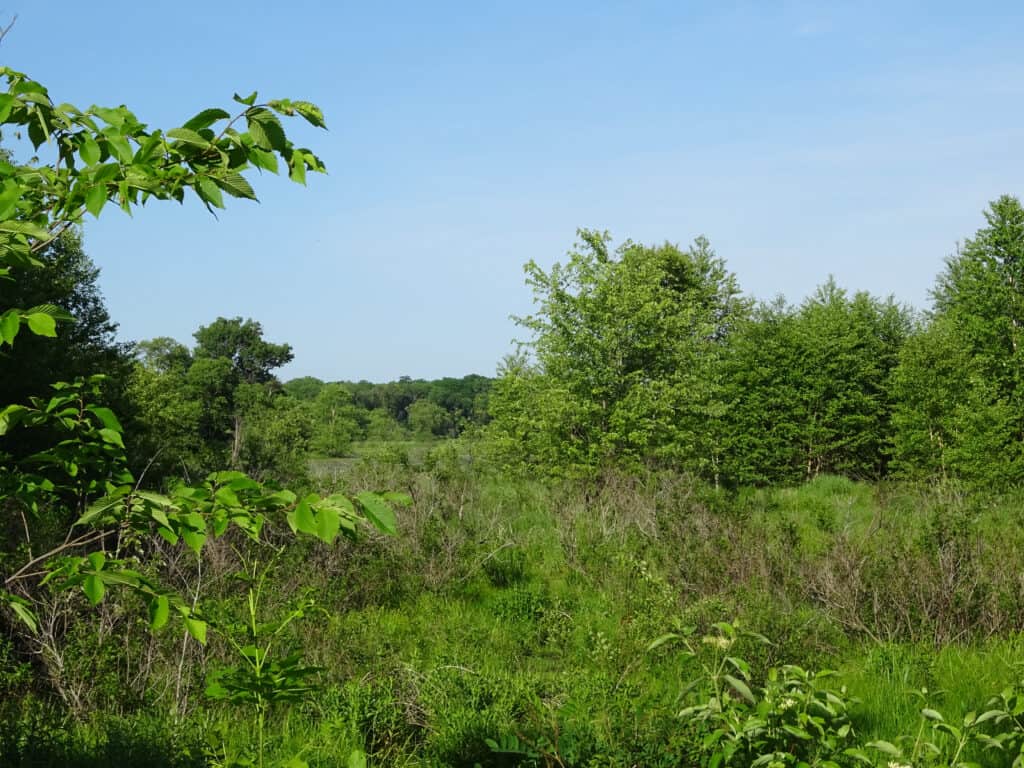
A number of sparrow species nest in the grasslands of Trempealeau National Wildlife Refuge.
©Maarten Daams/Shutterstock.com
Nicolet National Forest
Nicolet National Forest is home to many Northwoods species, from the secretive spruce grouse to vibrant warblers. Traveling on forest paths is an excellent way to explore the region east of Three Lakes. Ruffed grouse, blue-headed vireo, yellow-bellied sapsucker, olive-sided flycatcher, gray jay, yellow-bellied flycatcher, golden-crowned kinglet, and numerous other species may be spotted here. The hooded merganser, American bittern, sedge wren, osprey, northern harrier, sandhill crane, and American woodcock are among the species that nest here.
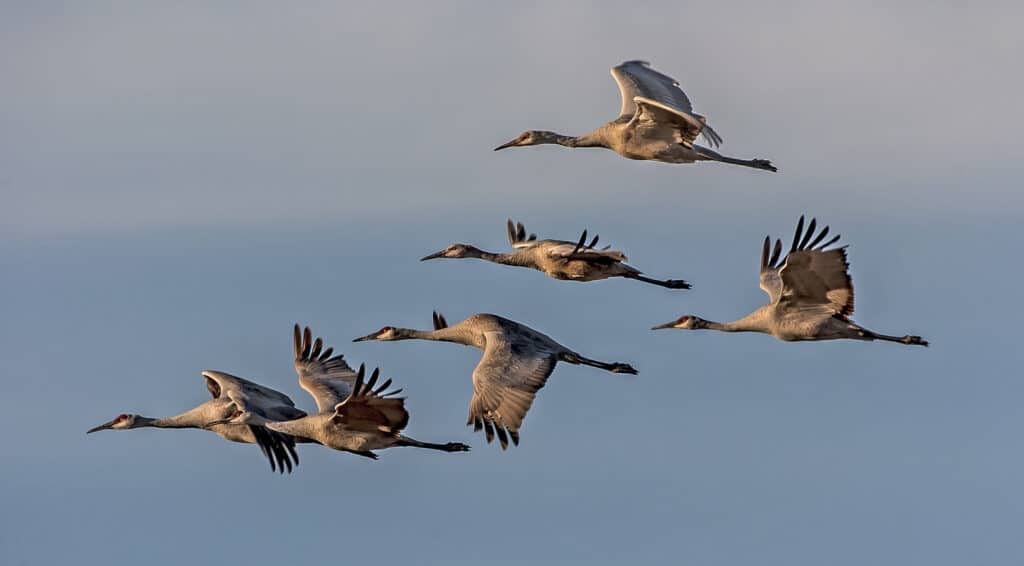
In Nicolet National Forest, be on the lookout for sandhill cranes.
©Tom Zeman/Shutterstock.com
Harrington Beach State Park
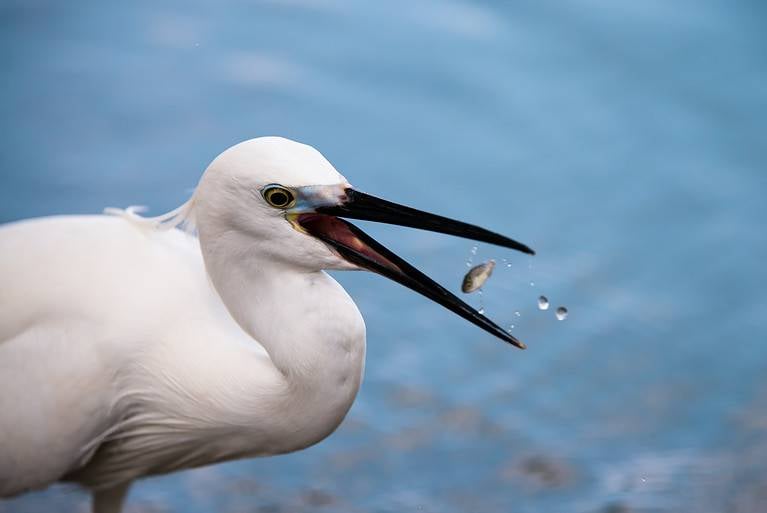
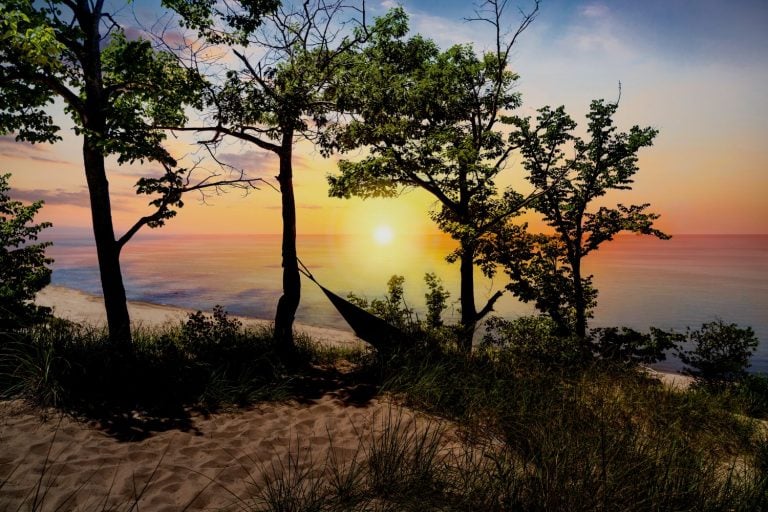
Harrington Beach State Park is a 715-acre property featuring more than a mile of Lake Michigan coastline and a bird list of over 280 species. Waterfowl migrate offshore in large numbers throughout the spring and fall seasons. Warbler species decorate the trees in the hardwood forests and lowland white cedar swamps in the spring. Visitors can see raptors such as osprey, northern harriers, red-tailed hawks, peregrine falcons, and sharp-shinned hawks in the fall as they travel south along the shoreline. Ducks, terns, gulls, and shorebirds of Lake Michigan can also be seen at the park.
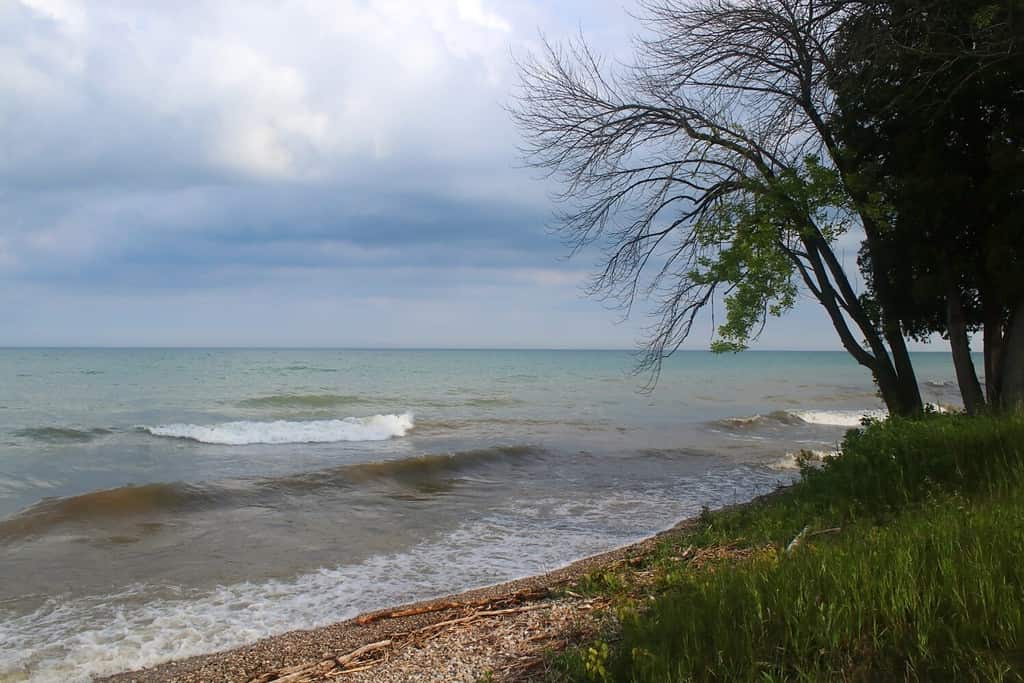
Harrington Beach State Park features a mile of Lake Michigan coastline and a bird list of over 280 species.
©MarynaG/Shutterstock.com