Quick Take
- One bird on this list shares its name with the state, yet it never actually breeds or winters here. Meet the Tennessee warbler →
- One of these birds holds a reputation as the most visually stunning waterfowl in all of North America, yet most Tennesseans walk right past its habitat. Discover North America's most stunning duck →
- A common backyard bird here isn't native to Tennessee at all, and its arrival has a surprisingly recent and unlikely origin story. Explore the house finch's origins →
- One species flashes a brilliant color that completely vanishes for half the year, a switch that most people never notice. See the goldfinch's seasonal change →
Of the approximately 11,000 distinct species of birds globally, the state of Tennessee hosts more than 400 native and migratory bird species. These birds span a wide array of ecological groups, including water birds, waterfowl, songbirds, and raptors. However, songbirds tend to top the list of colorful birds in the Volunteer State. Continue reading to discover a rainbow of colorful birds found in Tennessee.
Summer Tanager
The rosy summer tanager (Piranga rubra) is a medium-sized songbird measuring approximately 7.75 inches in length with a wingspan of about 12 inches. It is a fairly common summer resident across Tennessee, where they inhabit low-elevation deciduous forests where they inhabit low-elevation deciduous forests and forages high in the tree canopy for bees and wasps. Migrating northward from their wintering grounds in Central and South America, summer tanagers arrive in Tennessee in late April and typically depart by early October.
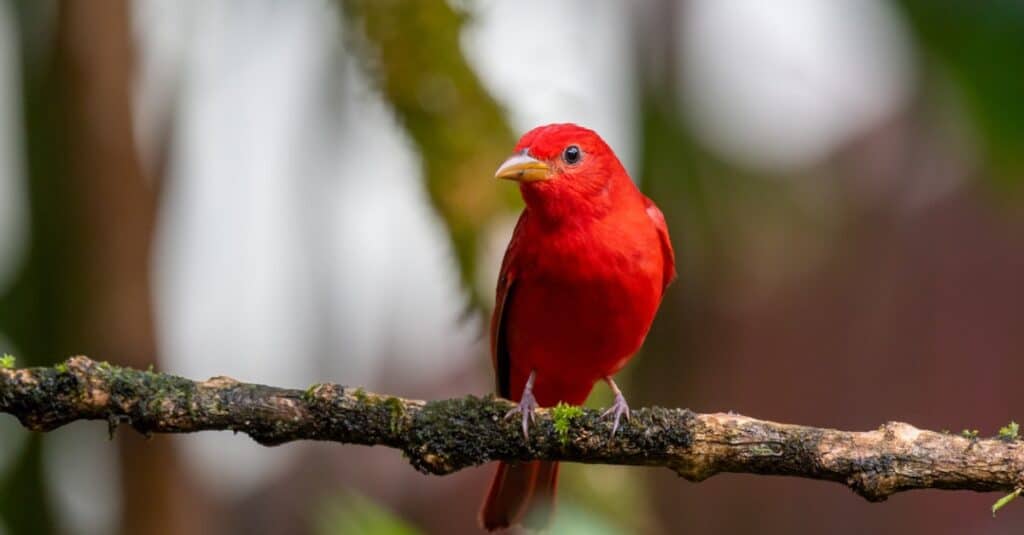
Male summer tanagers are among the rare completely red birds in North America.
©iStock.com/Dave Kempe Photography
House Finch
The house finch (Haemorhous mexicanus) is a small, adaptable songbird that measures 5 to 6 inches in length with an average wingspan of 8 to 10 inches. Though originally native to the American Southwest and Mexico, they were introduced to the Eastern United States in the 1940s and have since become firmly established in Tennessee.
Although females of the species are a drab brown color, male house finches are bright red to red-orange on their heads and backs.
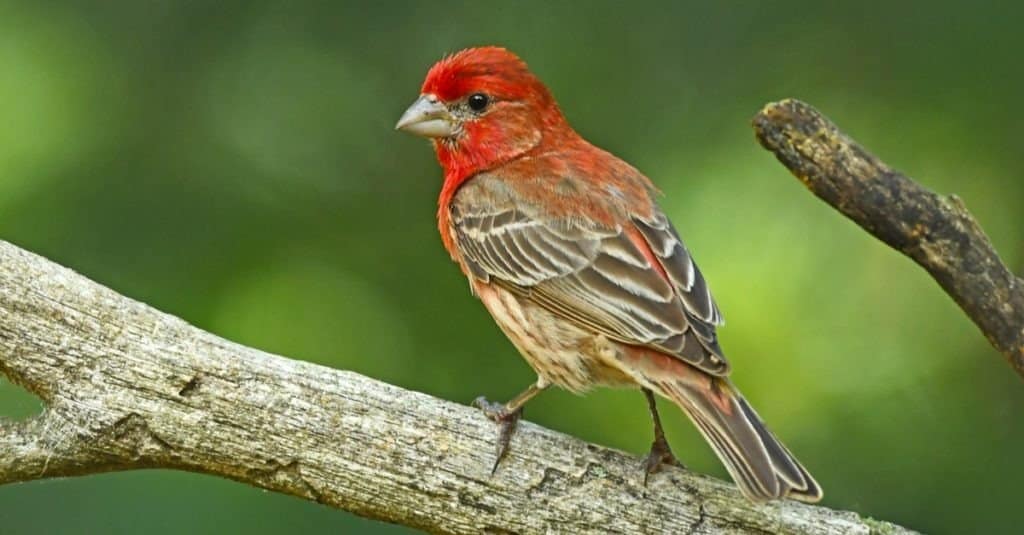
Although currently year-round residents of Tennessee, house finches were first seen in the state in 1972.
©Brian A Wolf/Shutterstock.com
The house finch can be found year-round as a common resident statewide, where they can be found almost exclusively in urban and suburban environments, such as residential backyards, city parks, and agricultural farmlands. They frequently gather around backyard bird feeders, lawns, and small ornamental conifers.
Baltimore Oriole
The Baltimore Oriole (Icterus galbula) is a medium-sized songbird measuring between 6.7 and 7.5 inches in length with a wingspan of 9.1 to 11.8 inches. In Tennessee, this striking black-and-orange bird is a fairly common migrant, present in the state from late April through early September. During spring and fall migration, Baltimore orioles can be spotted statewide in open deciduous woodlands, with some populations nesting high in deciduous trees, primarily sycamores.
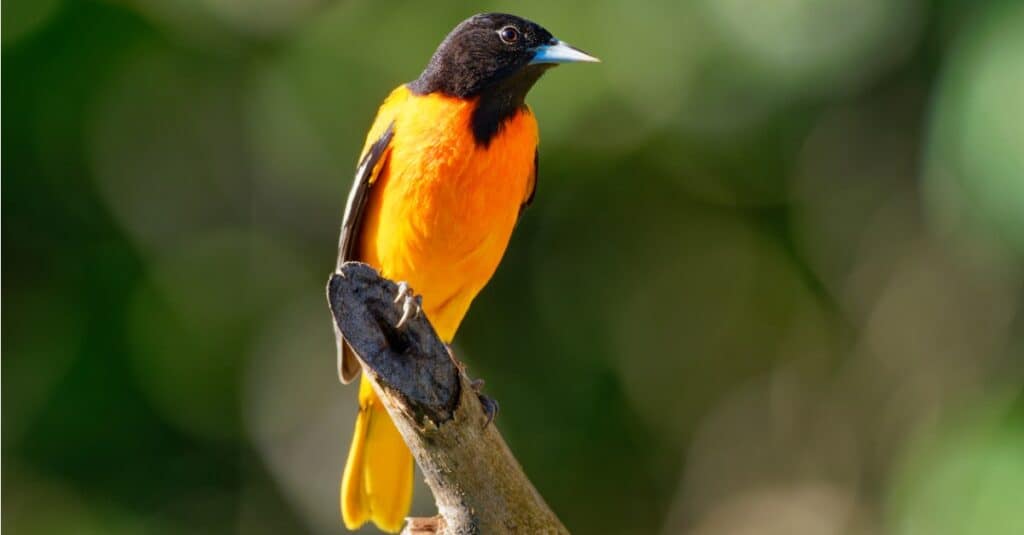
The Baltimore oriole is a transient resident of Tennessee.
©iStock.com/phototrip
American Robin
The American robin (Turdus migratorius) measures approximately 8 to 11 inches in length with a wingspan between 12 and 16 inches. Mature robins have a distinctive warm brick-red to orange breast, a dark gray to blackish head, a yellow bill, and a gray back and wings.
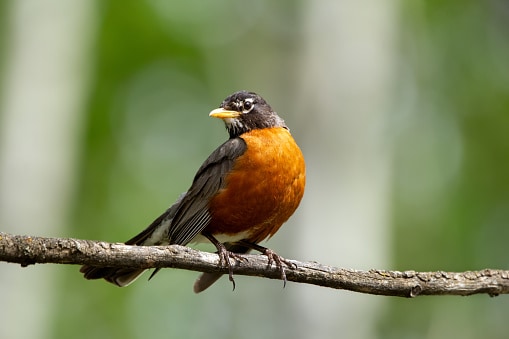
American robin in bright breeding plumage posing on a branch in spring.
©Anna Richard/iStock via Getty Images
The American robin is a common permanent resident of Tennessee, found in every county across the state year-round, though their numbers swell during the fall and winter months as migratory flocks from northern regions join the local population.
Tennessee Warbler
Measuring a compact 4 to 5 inches in length with a wingspan of 7 to 8 inches, the Tennessee warbler (Leiothlypis peregrina) is a common migrant visitor across the entire state.
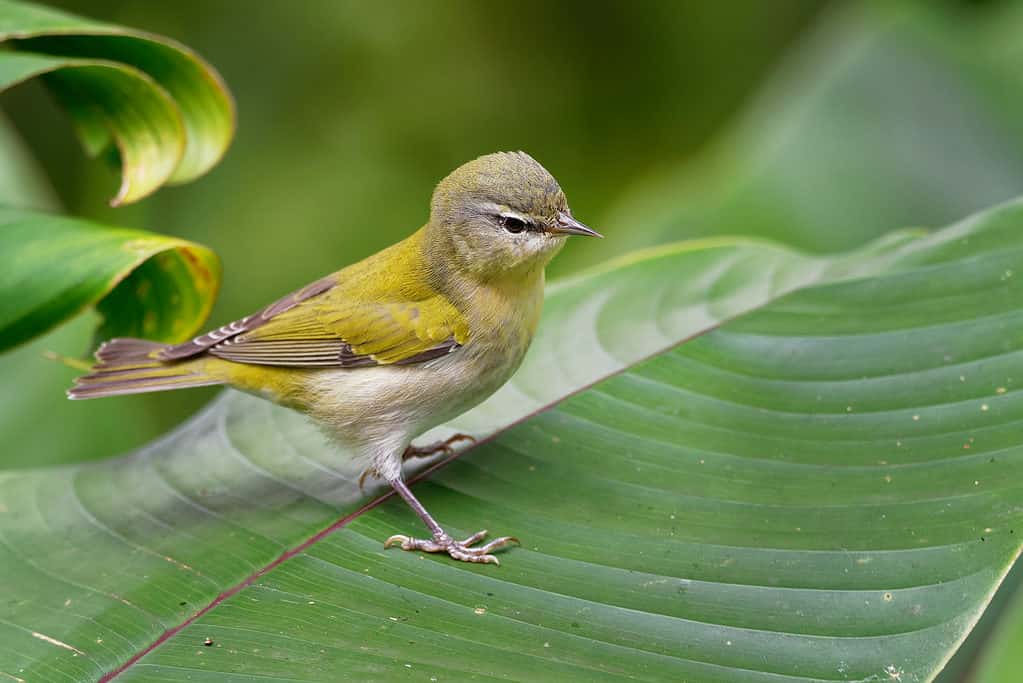
Despite its name, the Tennessee warbler neither breeds nor winters in Tennessee
©Martin Pelanek/Shutterstock.com
Tennessee warblers are not native to the state, but instead pass through Tennessee during spring migration from mid-April to mid-May, when these tiny songbirds are returning to their Canadian breeding grounds, and again from late August to late October on their way to wintering grounds in Central America.
Goldfinch
The American goldfinch (Spinus tristis) is a wee songbird measuring 4.3 to 5.1 inches in length with a wingspan of 7.5 to 8.7 inches. Its plumage changes according to the season. Breeding adult males display an unmistakable brilliant lemon-yellow body accented by a black forehead cap and black-and-white wings, while females and non-breeding winter birds of both sexes shift to a much more subdued, drab olive-brown.
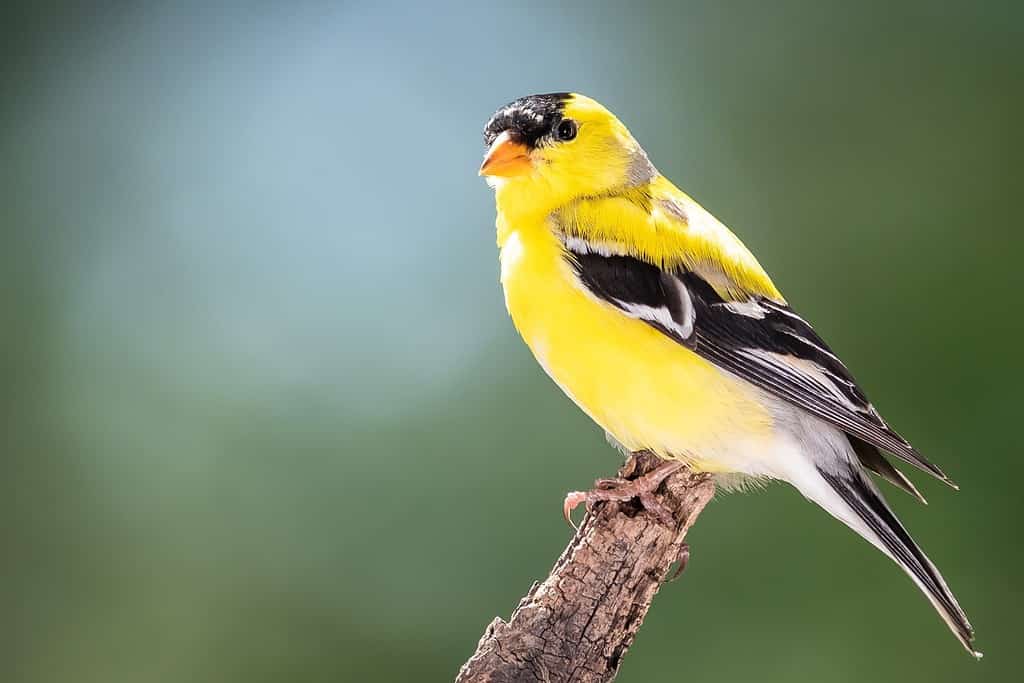
American male goldfinches only have yellow plumage during the summer.
©rck_953/Shutterstock.com
In Tennessee, the goldfinch is a common year-round resident found statewide. They frequent weedy fields, overgrown meadows, woodland edges, and suburban backyards. They often visit residential thistle and sunflower feeders, particularly during the winter months.
Ruby-throated Hummingbird
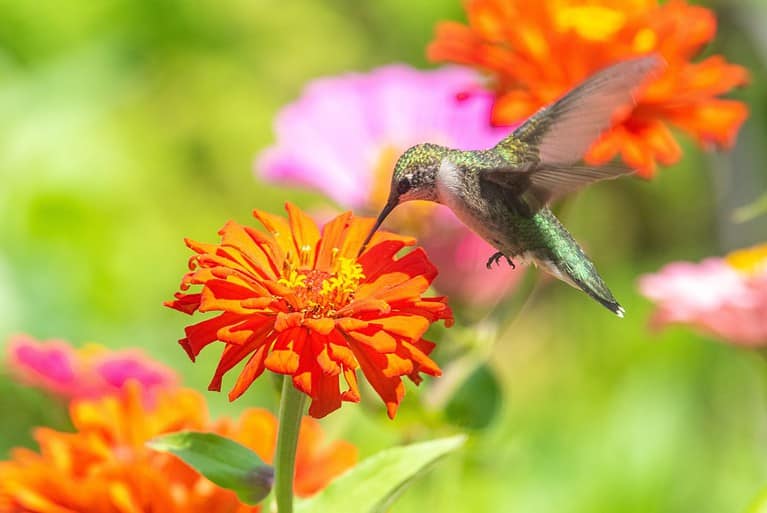
The ruby-throated hummingbird (Archilochus colubris) is diminutive, measuring 2.8 to 3.5 inches in length with a wingspan of 3.1 to 4.3 inches. Both males and females feature metallic bronze-green plumage on their crowns, backs, and tails alongside grayish-white underparts. However, only adult males are distinguished by a brilliant, iridescent ruby-red throat patch (gorget), which can appear dark or black depending on the angle of the light.
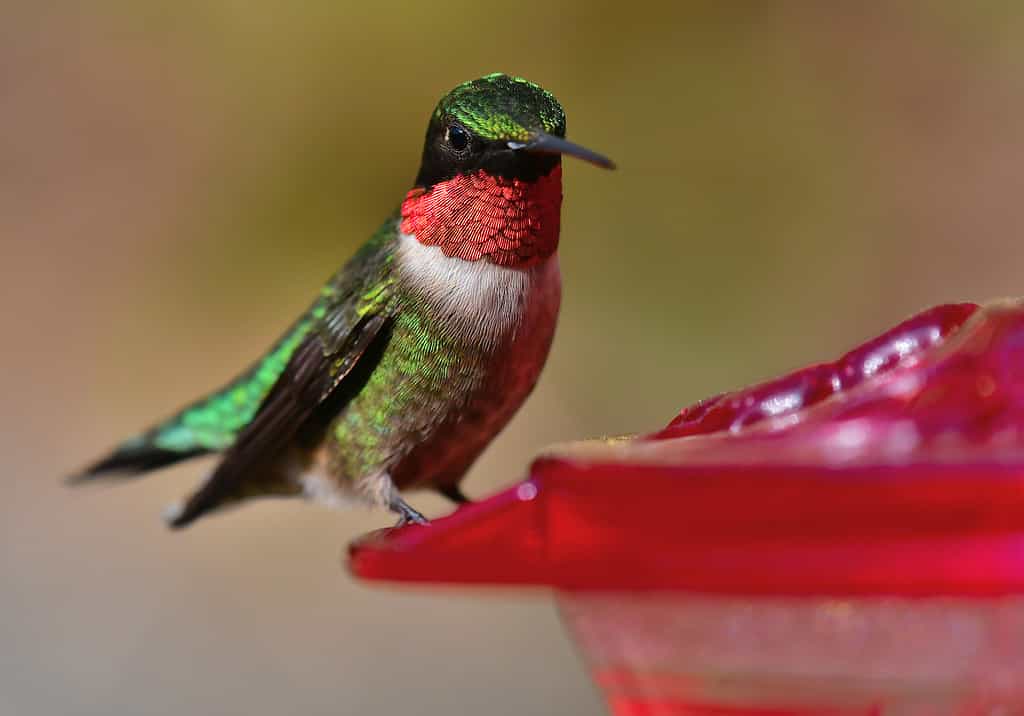
Only male ruby-throated hummingbirds have the red gorget.
©Robert Winkler/iStock via Getty Images
The ruby-throated hummingbird is the only hummingbird species that regularly breeds and spends the summer in Tennessee. They can be found statewide in open woodlands, forest edges, suburban gardens, and backyards from mid-April until early October, when they return to their Central American wintering grounds.
Eastern Bluebird
The Eastern bluebird (Sialia sialis) is a small songbird measuring approximately 6.3 to 8.3 inches in length with a wingspan ranging from 9.8 to 12.6 inches. Adult males feature stunning blue wings, back, and head, with a warm, rusty throat and breast, and a white belly. Adult females are more subdued, with grayish-blue plumage and a duller orange-brown chest. Eastern bluebirds are year-round Tennessee residents, found across the state.
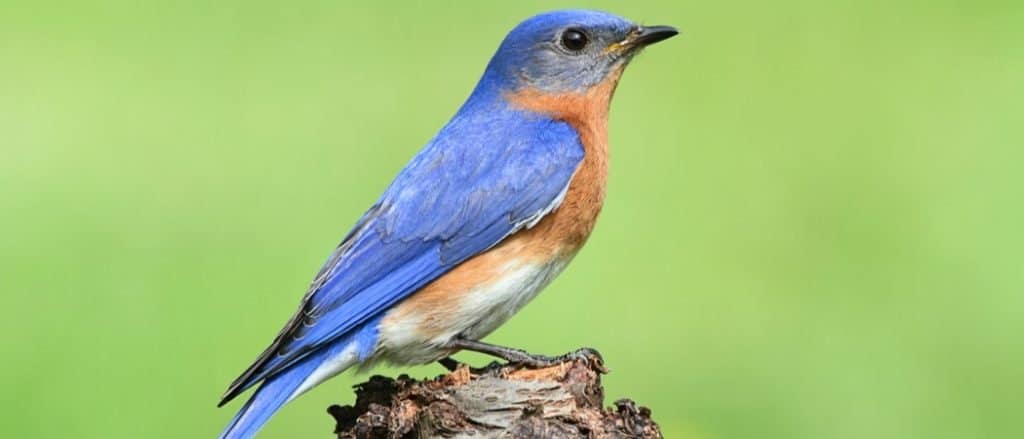
Male Eastern Bluebird (Sialia sialis) on a perch with a green background
©Steve Byland/Shutterstock.com
Indigo Bunting
The indigo bunting (Passerina cyanea) is a small songbird measuring about 4.7 to 5.5 inches in length with a wingspan ranging from 7.5 to 8.7 inches. Adult breeding males feature vibrant blue plumage, while females and non-breeding males are an unassuming warm brown.
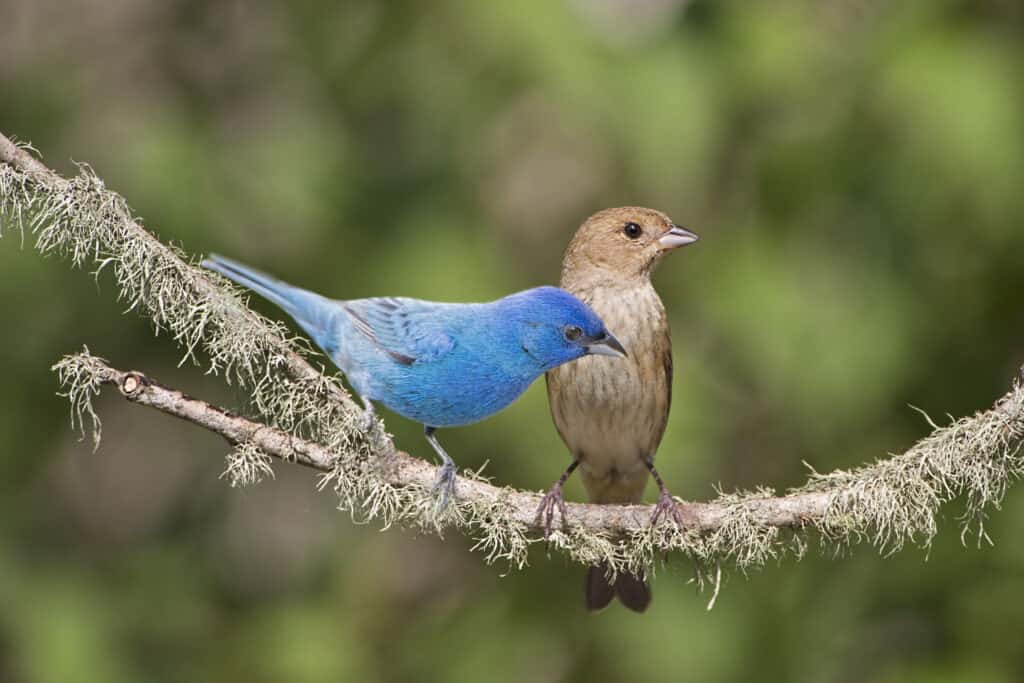
Male indigo buntings are much more colorful than female indigo buntings.
©Bonnie Taylor Barry/Shutterstock.com
The indigo bunting is an abundant summer resident and breeding species in Tennessee that can be found statewide from mid-April through mid-October.
Purple Martin
The purple martin (Progne subis) is the largest swallow in North America. They measure approximately 8 inches in length with an impressive wingspan of between 15 and 18 inches. Adult males feature striking, glossy dark blue-purple plumage, whereas females and juveniles possess duller upperparts with gray or grayish-brown collars and pale, whitish bellies.
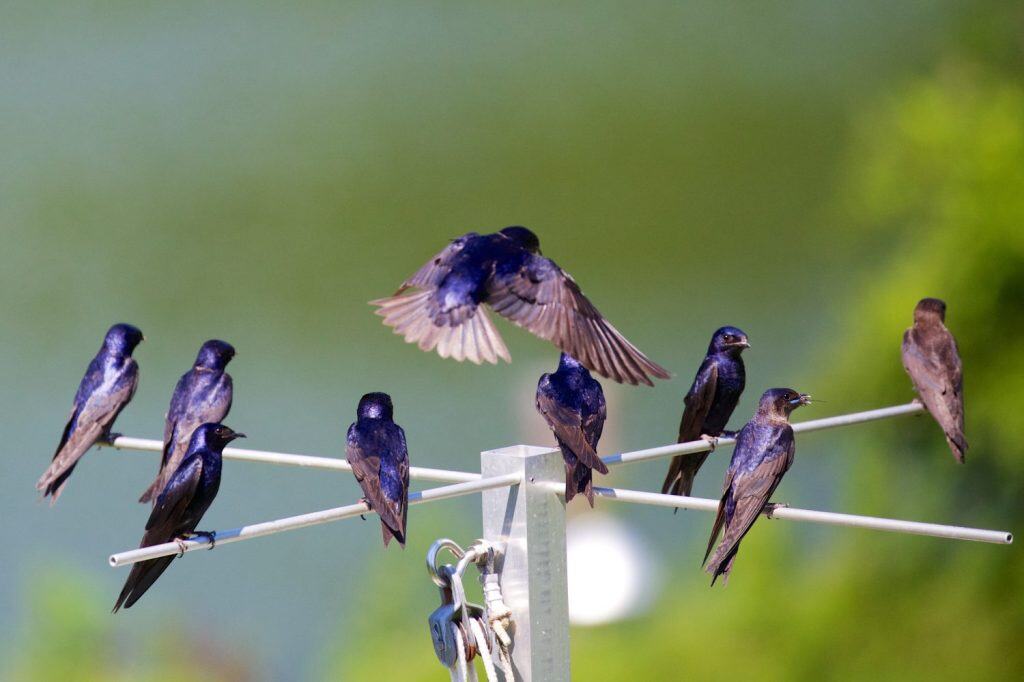
Purple martins consume dragonflies, damselflies, moths, butterflies, beetles, and wasps.
©CSNafzger/Shutterstock.com
Purple martins can be found statewide in Tennessee, nesting in human-provided martin houses and gourd racks near open areas and water from their arrival in early spring (around March) through late summer. They are known to form pre-migration night roosts in urban centers like downtown Nashville from July into early September before departing for South America.
Wood Duck
The wood duck (Aix sponsa) is Tennessee’s most widespread native nesting duck, found across the state year-round as a locally common breeding species, supplemented by northern migrants in the winter. Wood ducks favor sluggish streams, bottomland hardwood forests, wooded swamps, beaver ponds, and small, quiet lakes. Thanks to mature woodlands and proactive artificial nest box programs, these striking cavity-nesting birds thrive throughout the state.
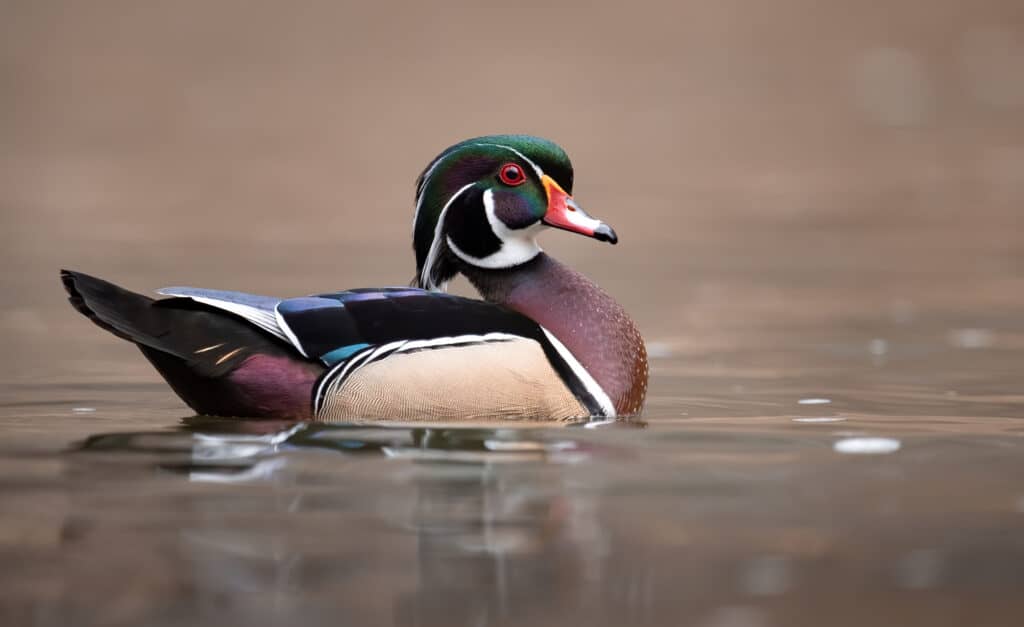
The wood duck has a reputation as the most attractive waterfowl in North America.
©Harry Collins Photography/Shutterstock.com
Wild Turkey
The wild turkey (Meleagris gallopavo) is a large, ground-dwelling bird measuring approximately 36 to 46 inches in length with a wingspan ranging from 49 to 64 inches. Adult males feature striking, dark iridescent bronze-green plumage with a bare red-and-blue head that changes color seasonally. Females are smaller and have earthy brown-and-gray plumage. Thanks to successful statewide reintroduction efforts, wild turkeys can be found year-round across Tennessee, where they are especially active and visible during their spring mating and nesting season.
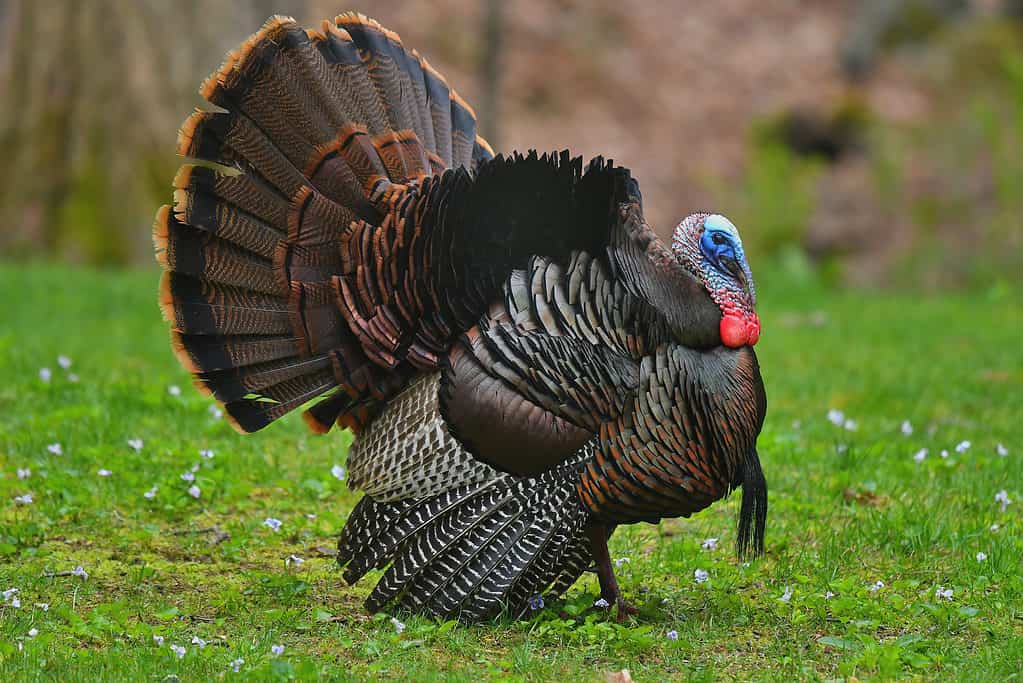
Turkeys can see better than humans.
©iStock.com/Robert Winkler