
Quick Take
- A bird the size of your thumb pulls off a construction technique that rivals human craftsmanship, and the method it uses is stranger than you'd expect. See how it sews →
- The nest's most impressive feature isn't the stitching. It's a single design choice that makes predators walk right past it. Discover the camouflage trick →
- With no lessons, no practice, and no instructions, the finished nest is nearly indistinguishable from something made by human hands. Explore the instinct behind it →
- The female does all the sewing, but if something goes wrong mid-build, the pair has a surprisingly resourceful fallback plan. See the building timeline →
Found across South and Southeast Asia, the common tailorbird (Orthotomus sutorius) is just 4 to 5 inches long and weighs less than half an ounce. Despite its tiny size, it pulls off one of the most impressive engineering feats in the bird world. As seen in this Instagram video, this small songbird is the ultimate tailor, using its beak like a sewing needle to carefully pierce leaves and thread fibers through the holes.
Why Does a Tailorbird Sew Leaves Together?
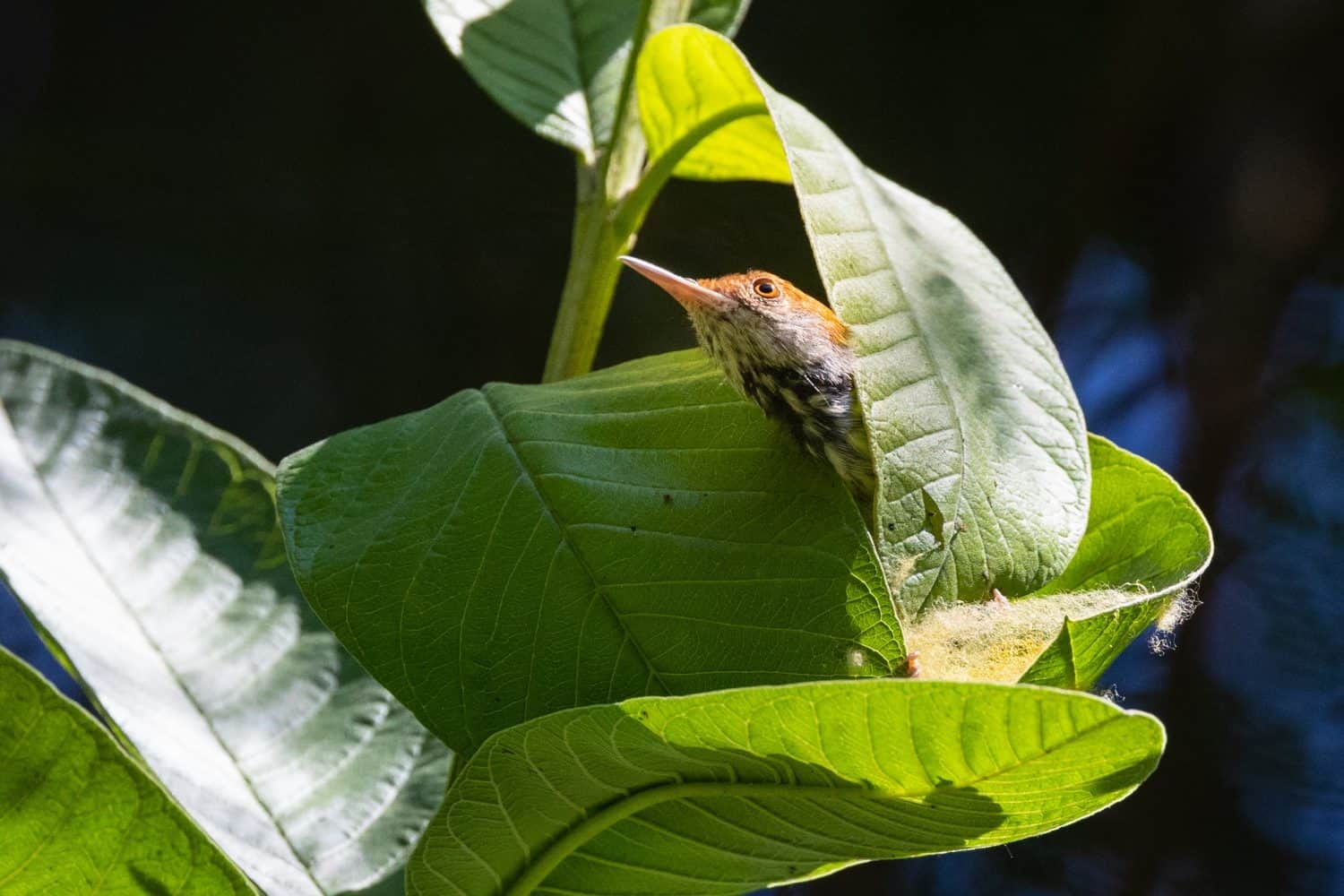
The tailorbird’s unusual nest serves one primary purpose: protection. Instead of building an exposed nest on an open branch, the bird creates a hidden cradle by stitching together the edges of living leaves. Because the leaves stay green, they camouflage the nest and make it incredibly difficult for predators to spot vulnerable eggs and chicks.
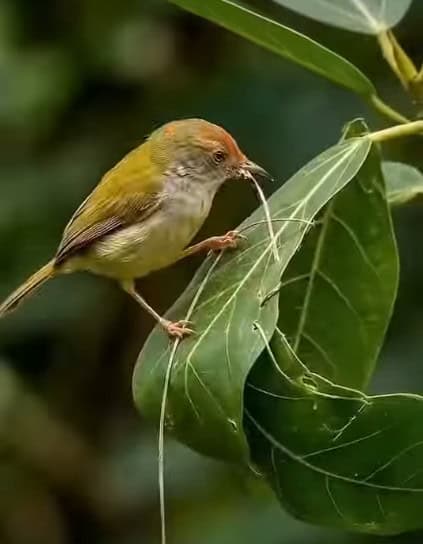
Tailorbirds typically eat fruits, insects, tiny seeds, berries, and floral nectar.
©Instagram / mei_mei_0946 – Original
Keeping the leaves alive is a critical part of the nest’s design. The bird only punctures tiny holes along the edges, avoiding serious damage so the leaves remain healthy. As a result, the nest blends seamlessly into the surrounding vegetation.
How Does It Work?
To build her nest, a tailorbird selects a broad, flexible leaf, usually near the end of a branch where predators can’t easily reach it. If a single leaf isn’t big enough, she will pull extra leaves into position. Using her slender beak like a needle, she punctures small holes along the edges of the leaves. She then threads materials through the holes, using plant fibers, cotton fluff, spider silk, cobwebs, caterpillar silk, or even human-made threads and wool. These fibers act like stitches, pulling the leaves together to form a secure pocket.
A finished nest can feature anywhere from 150 to 200 individual stitches. Once this leafy outer shell is complete, the birds line the inside with grasses, feathers, fur, and soft plant fluff to create a cozy nursery for their chicks.
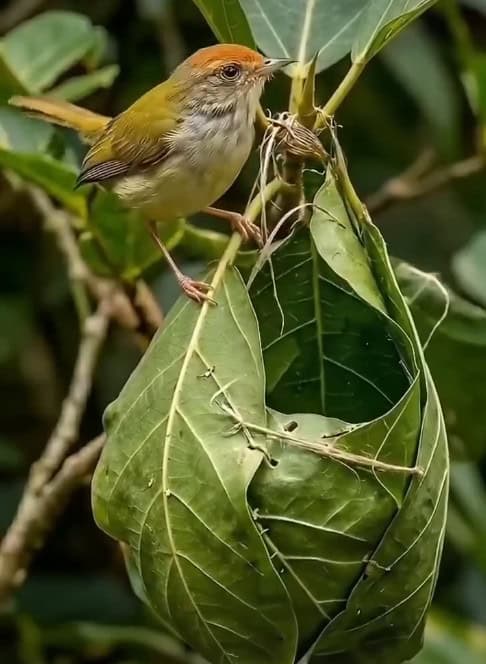
The tailorbird’s beak is sharp like a needle to pierce tiny holes along the edges of a leaf.
©Instagram / mei_mei_0946 – Original
How Long Does It Take?
It typically takes a tailorbird between two and four days to complete its nest. The female usually handles most of the intricate sewing and construction, while the male may assist by gathering the necessary materials, though the exact division of labor can vary between pairs. This process demands incredible patience and persistence. If a thread breaks or a leaf tears, the female repairs the damage and continues working. However, if the structure becomes completely unusable, the pair abandons the site and salvages the materials to start a new nest elsewhere.
How Does the Bird Know How to Sew?
Unlike human tailors, common tailorbirds don’t take lessons or practice with instructions. Their nest-building behavior is instinctive — a trait shaped by generations of natural selection. While young birds likely improve with practice and experience, the core ability to select materials, stitch leaves, and construct a functional nest is hardwired into their DNA. The final result often looks so sophisticated it’s easy to mistake for something crafted by human hands.
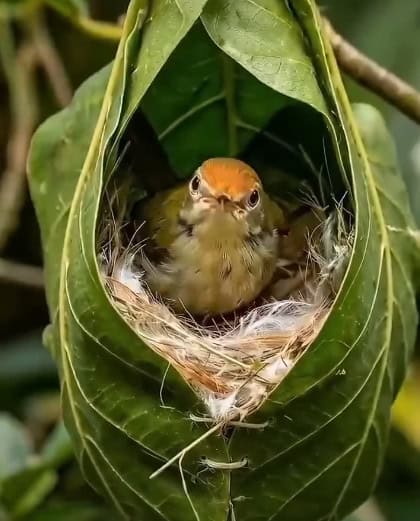
Tailorbirds fill their nest with feathers, fur, and fine grass.
©Instagram / mei_mei_0946 – Original
For a bird weighing only a few grams, this stitched nest is an extraordinary achievement. By transforming living leaves into a hidden nursery using actual sewing techniques, this tiny songbird easily earns its reputation as the ultimate seamstress in the animal kingdom.