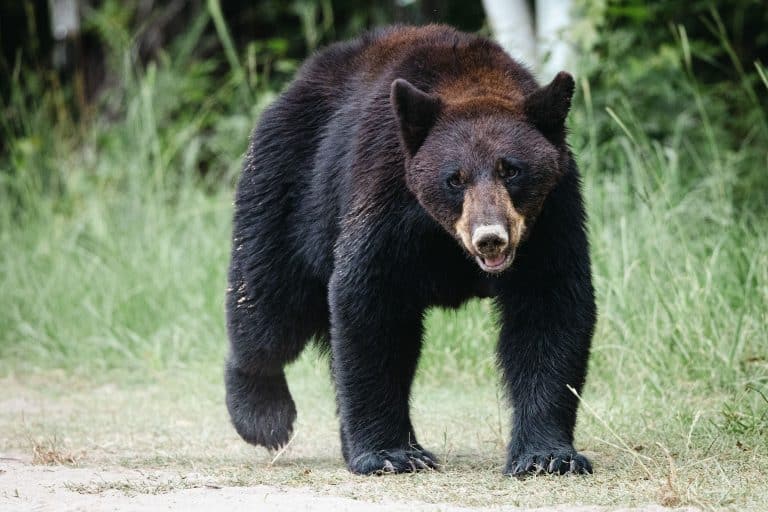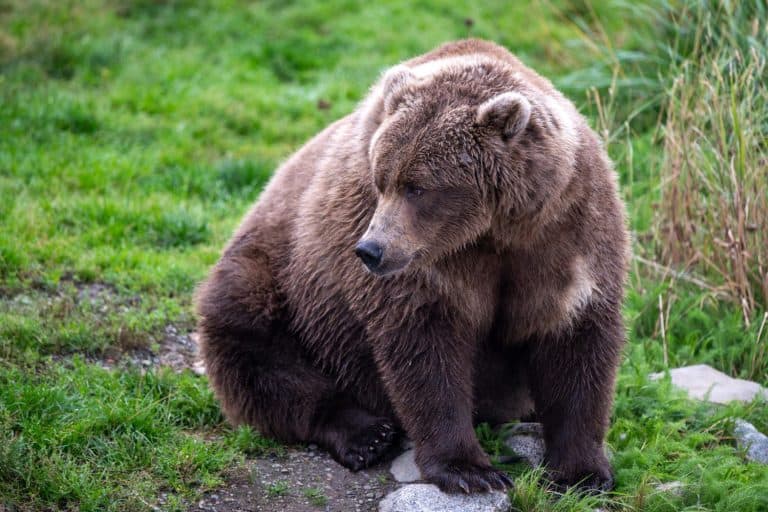

There are three species of bears in North America. Among them, the American black bear (Ursus americanus) is the most common and the most widely distributed. Black bears have historically been found across Alabama and there are still black bear populations in the state. Black bears are a protected species in Alabama, so hunting is illegal. However, over the years, there have been a number of large bears that have been identified by locals or captured and released by researchers. In fact, one of the largest bears ever seen in the state was observed only recently. Keep reading to discover the largest bear ever identified in Alabama.
Where Are Black Bears Found in Alabama?
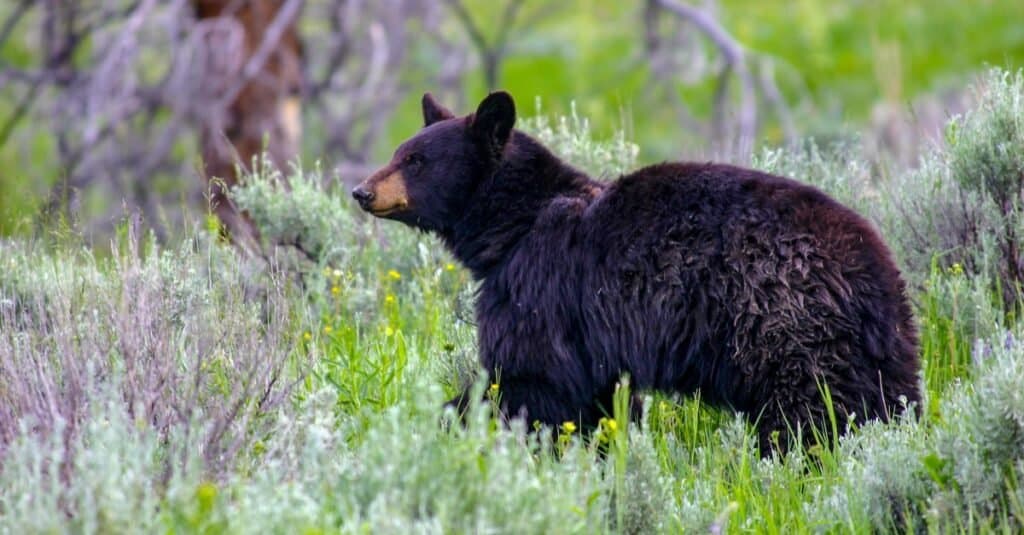
Historically, black bears have been found throughout southwest Alabama.
©iStock.com/christiannafzger
There are fewer than 500 bears in the state, and the majority of Alabama’s black bear population is found in two locations. One is located in Mobile and Washington counties in the southwest. Researchers believe there could be up to 150 bears in the southwestern group. However, the black bear population in northeastern Alabama has steadily increased over the past few years. They are mainly in DeKalb, Cherokee, and Etowah counties, specifically along Lookout Mountain and Little River Canyon. There are around 250 bears in this group, which is thought to have migrated into the state from North Georgia. Sporadic bear sightings throughout the state continue to be documented, suggesting that Alabama’s black bear population is slowly increasing.
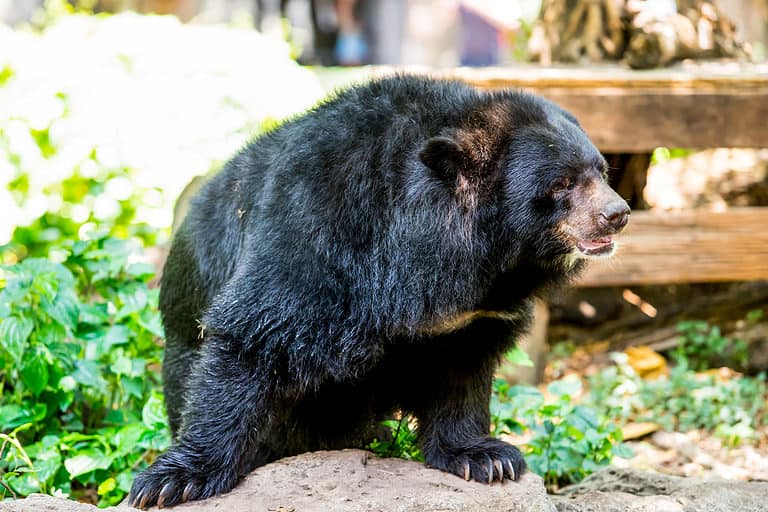
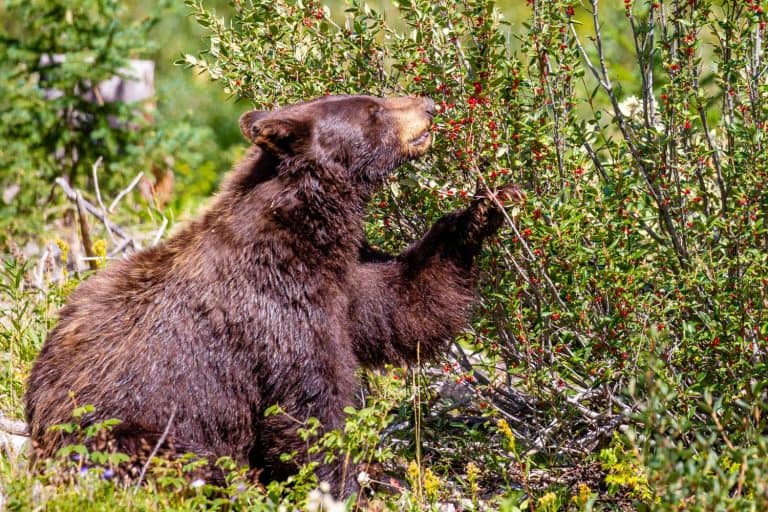
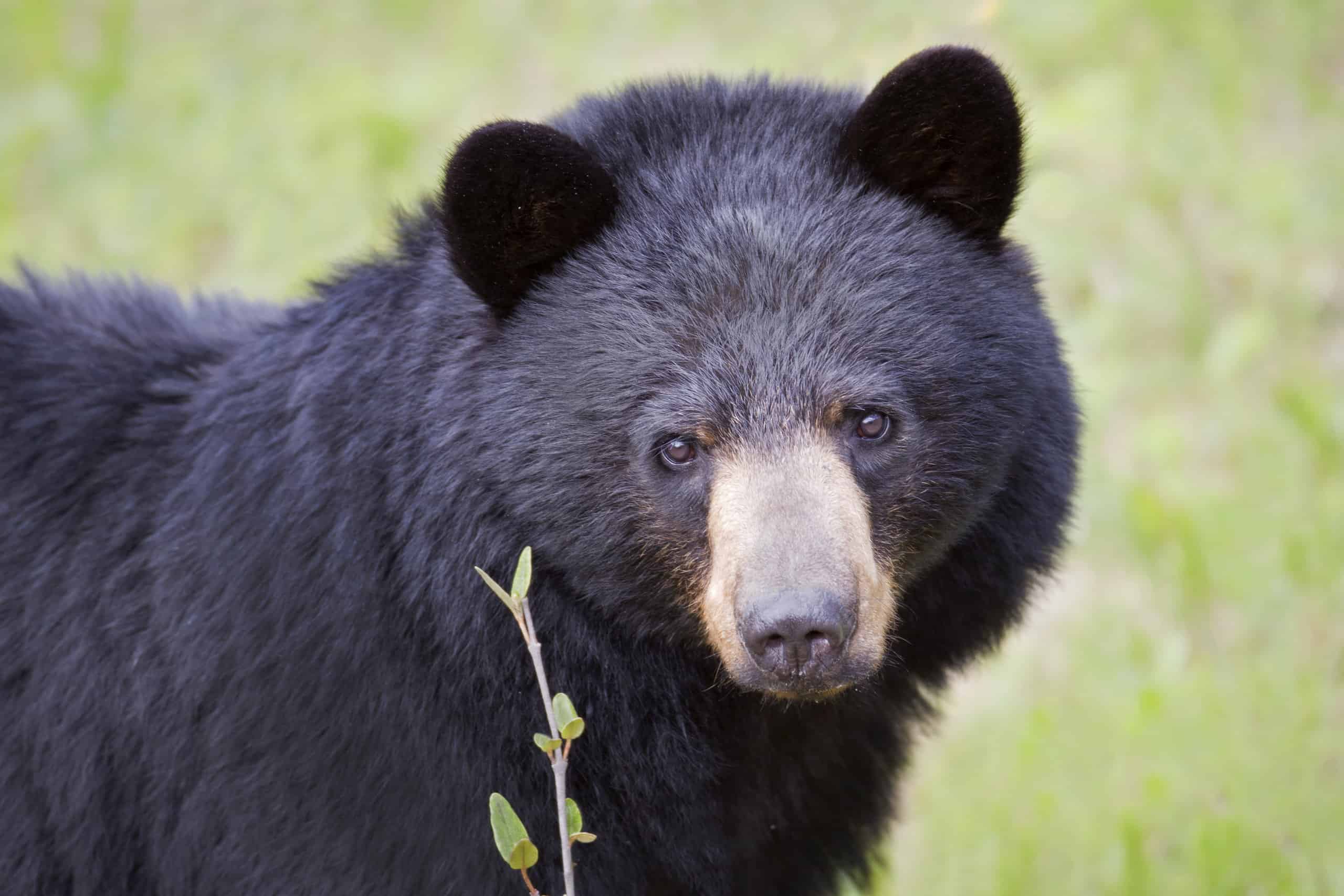
The black bears that inhabit northern Alabama are believed to be Ursus americanus americanus, the Eastern black bear subspecies. The population in the southwest is the Florida black bear subspecies, Ursus americanus floridanus. In the eastern part of the U.S., black bears generally have brown-flecked dark fur, elongated, non-retractable claws, brown muzzles, and distinct white markings on their chests. In general, males weigh from 150 to 350 pounds, while females weigh 120 to over 250 pounds. Adult bears reach lengths of up to 6 feet.
Black Bear Habitat
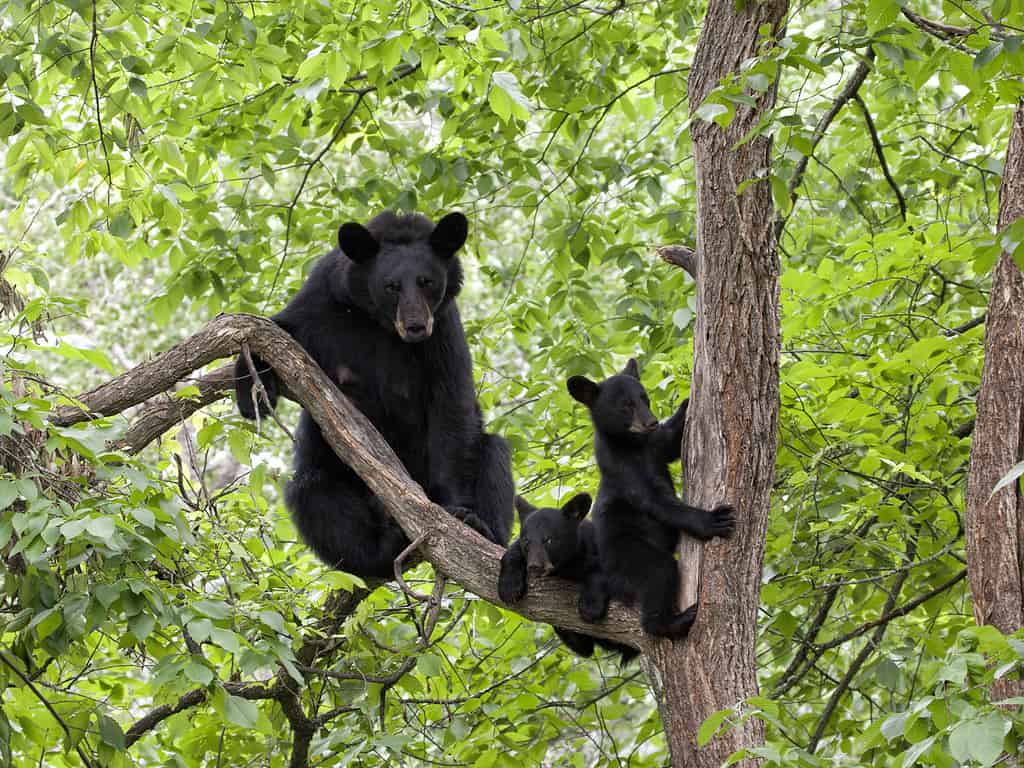
Black bears prefer dense, mixed forests near water and food.
©dssimages/iStock via Getty Images
The black bear thrives in forested areas with a mixture of hardwoods and pines. The dense undergrowth and thickets provided by these trees offer both food and cover. Black bears are opportunistic omnivores, so they feed on a wide range of foods, including fruits, seeds, nuts, berries, tree roots, insects, carrion, fish, and small mammals.
Black bears can also find additional sources of food and water in the scattered wetlands, streams, and ponds located throughout the region. There are large areas of protected land, such as the 392,567 acres of Talladega National Forest, where black bears can wander freely. The average male bear roams over 15,000 acres, while the average female bear roams less than 2,600 acres.
The Largest Bear Ever Identified in Alabama
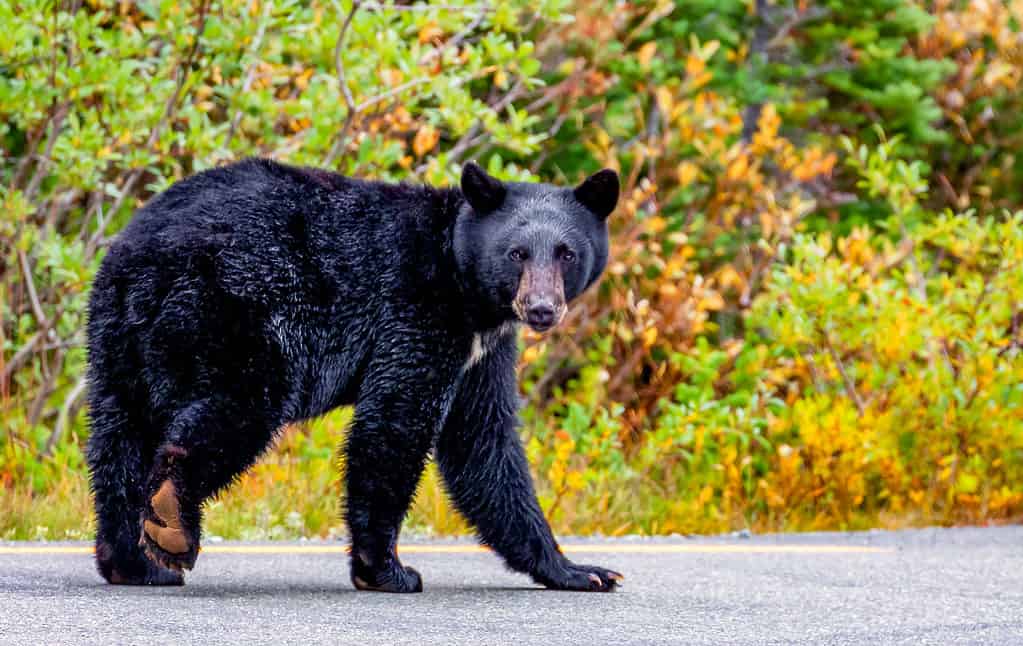
A 315-pound black bear is the largest known black bear found in Alabama.
©iStock.com/Mark Lee
As hunting black bears is a Class A misdemeanor in the state, Alabama does not keep records of the largest bears ever seen. However, there are a few contenders for the largest bear that have been reported by researchers and locals.
In June 2016, a black bear was found wandering around downtown Opelika. The Alabama Department of Conservation and Auburn University worked together to capture the male bear, which was then released back into the wild in Macon County after being fitted with a radio-tracking collar. Sadly, that fall, the Department of Conservation reported that someone had illegally killed the bear in the Talladega National Forest in Clay County. The bear weighed 315 pounds.
In 2018, Dr. Todd Steury from Auburn University was interviewed by The Cullman Tribune about a multiple-year study he and two graduate students conducted on the black bear population in Alabama. The largest bear the research team caught and collared weighed 308 pounds. One of the graduate students, Chris Seals, reported that during the course of the research, he had seen a bear that he estimated to be 400 pounds. However, most of the black bears the research team has captured and released weigh around 150 pounds.
In 2024, an Odenville family captured a large black bear on film. Trail cameras on their wooded property caught clear images of a massive, male black bear. By measuring the bear’s shoulder height against a nearby tree, they estimated the bear was around 36 inches tall. They estimate their visitor weighed more than 300 pounds.
How Dangerous Are Black Bears?
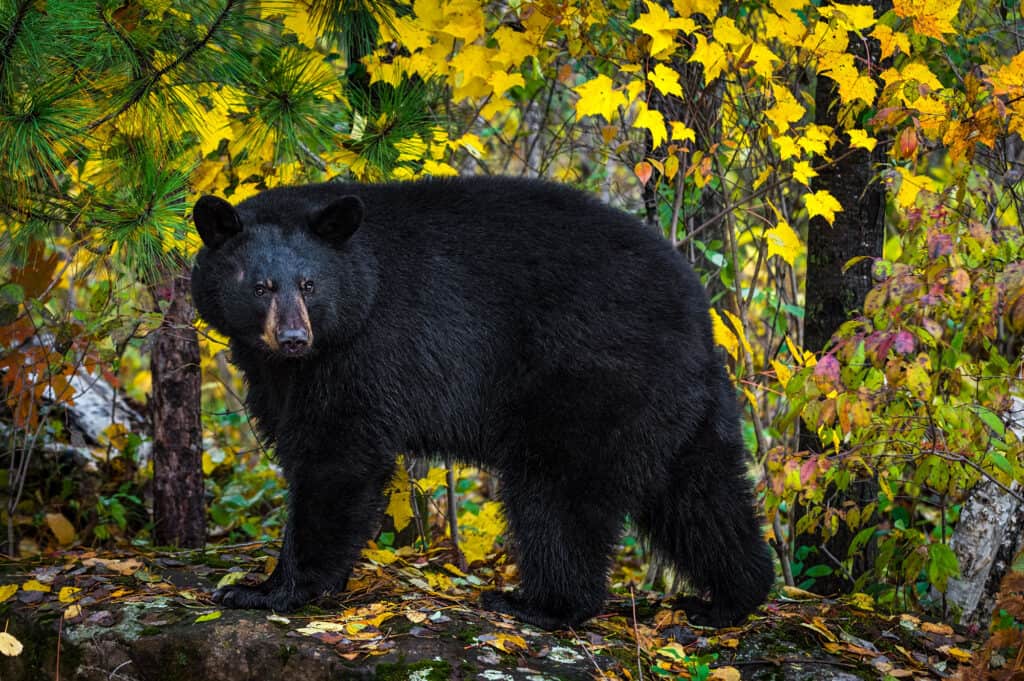
Although they don’t usually attack unprovoked, it is important to keep your distance from a black bear.
©Holly Kuchera/Shutterstock.com
Like all wild animals, black bears can react in unpredictable ways. However, black bears are typically not aggressive. Throughout its range, black bears rarely attack humans without provocation. A large majority of attacks have been caused by humans who surprise, corner, or otherwise threaten them.
Maintaining a safe distance from a black bear is the best course of action to avoid a confrontation. If you are hiking in wilderness areas, make noise so that unseen bears cannot surprise you. You should secure garbage cans around your home and place food well out of reach. It is believed that black bears can smell food from over a mile away, and they prefer human food because it is more calorie-dense. After removing food sources and securing garbage cans, a habituated black bear may take a few days or even weeks to stop coming back to the area. For more information about black bear safety in Alabama, visit the Alabama Department of Conservation and Natural Resources website.