








Quick Take
- Blue shark females evolved a bizarre physical trait specifically to survive their own mates, which reveals something unsettling about how this species reproduces. Mating and thick skin →
- There's a single maneuver that can put a blue shark into a trance, and understanding it reframes everything we assume about apex predators. Tonic immobility explained →
- Blue sharks are caught by the millions every year, yet their meat ends up somewhere most people would never guess. Where the catch ends up →
- A blue shark can give birth to more pups in one pregnancy than most people would believe possible, and yet the species is still losing the numbers battle. Litter sizes and survival →
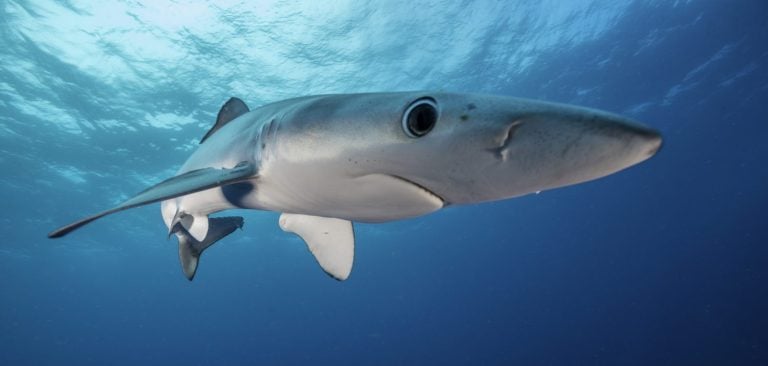
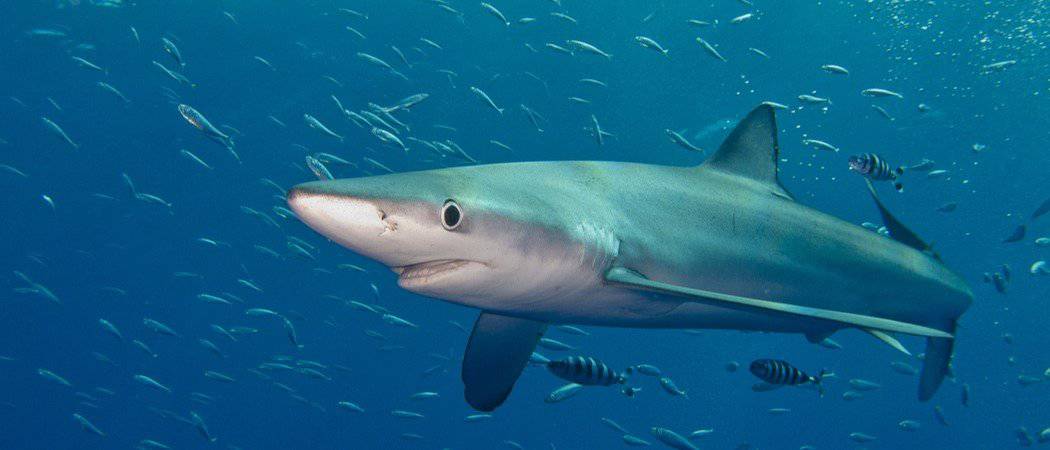
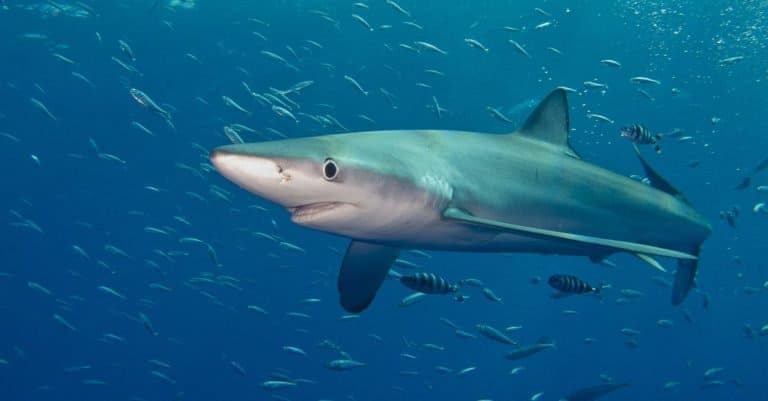
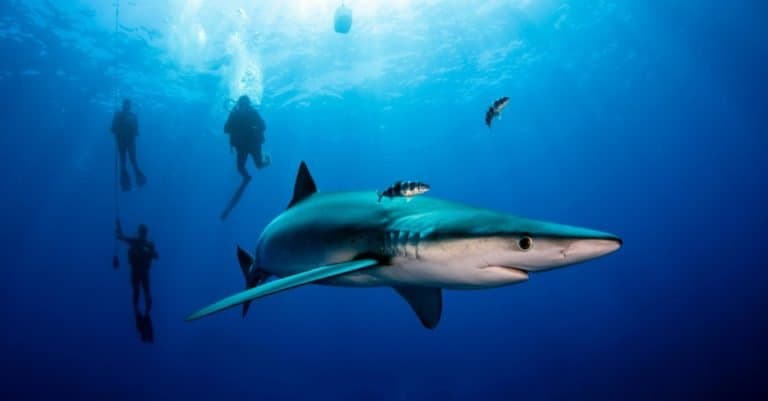
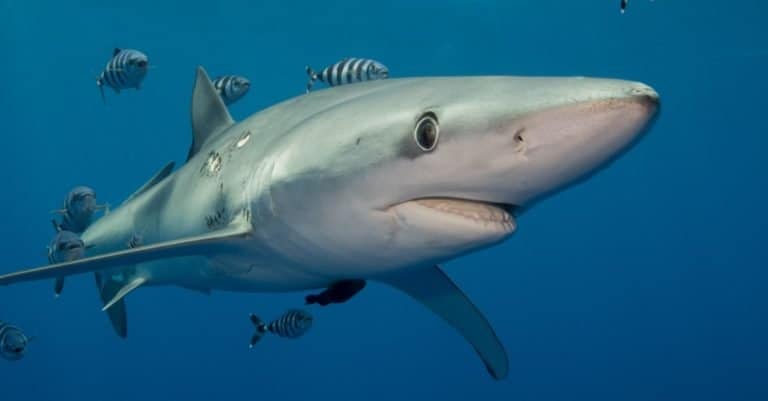
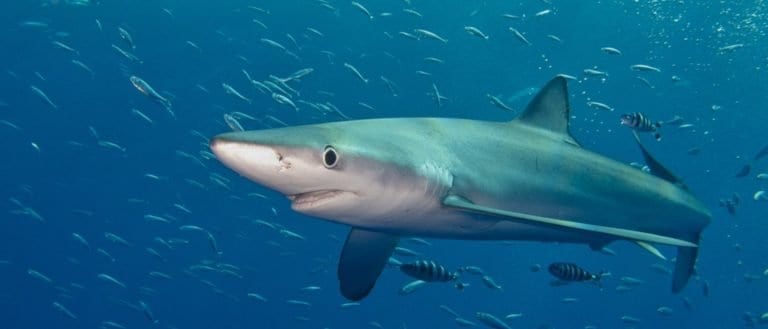
Slender and beautiful in the way that a shark can be beautiful, the blue shark is found in all the deep seas of the world save the coldest. It is a requiem shark, which means it gives birth to live young, migrates to feeding and breeding areas, and is found in warmer waters, though the blue shark prefers waters on the cooler side. Characteristics include its big, round eyes and unusually long pectoral fins.
Though some can be found in aquariums, blue sharks don’t do well in captivity. They are creatures of the open ocean.

4 Incredible Blue Shark Facts
Here are some fascinating facts about and characteristics of the blue shark:
- One of the shark’s adaptations is that the skin of the female shark is twice as thick as that of the male. This protects her when he bites her during mating.
- The blue shark is the most commonly caught shark species as bycatch, with millions caught in nets and longlines every year.
- Like many sharks, the blue shark can enter a state of tonic immobility, a sort of trance, if it’s taken out of the water and rolled on its back.
- A blue shark baby grows very quickly. It can grow nearly a foot a year until it’s an adult.
Evolution and Origins
The maximum lifespan of blue sharks is currently undetermined, but they are believed to survive for at least 20 years. Their seasonal migrations are commonly linked to fluctuations in water temperature; they move toward northern and inshore areas as waters warm, with larger females leading smaller males and females.
Blue sharks can be found off the shores of every continent, except Antarctica. They live in regions as distant as Norway in the north and Chile in the south, ranging across the Pacific roughly between 50° South and 60° North, with significant seasonal variations.
The blue shark (Prionace glauca) inhabits the temperate and tropical oceans of the world and is distinguished by its radiant blue color on its back and sides. It is recognized as a swift predator that travels vast distances to prey on squid, bony fish, and carrion from marine mammals.
Classification and Scientific Name
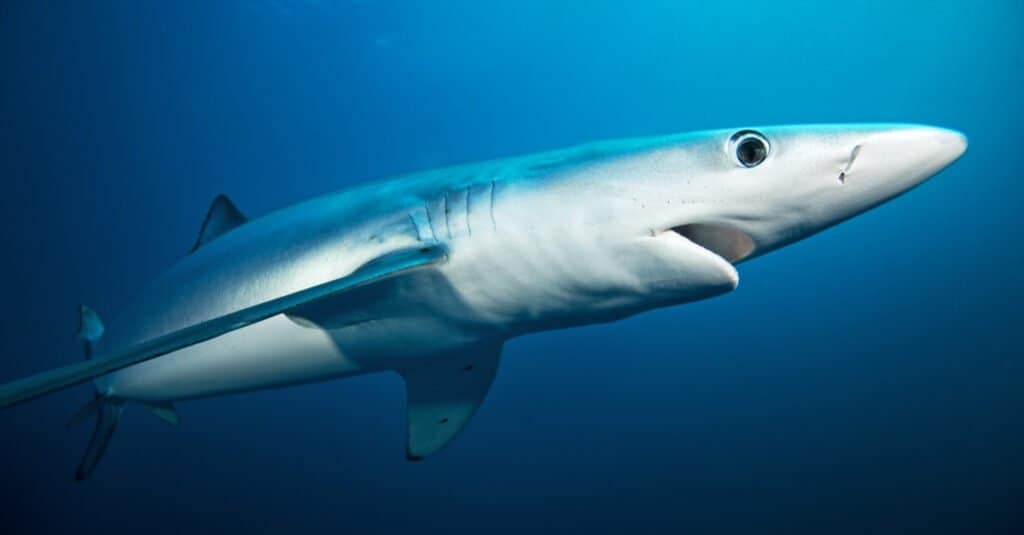
Prionace glauca is the scientific name of the blue shark, where the term Prionace is derived from Greek, with “prion” denoting “saw” and “akis” indicating “point”.
©Martin Prochazkacz/Shutterstock.com
The blue shark’s scientific name is Prionace glauca. Prionace is from the Greek. Prion means “saw”, and akis means “point”, which probably refers to the animal’s teeth. Glauca is Latin for “blue-green” or “blue-gray,” which describes the color of the shark’s body.
Appearance and Adaptations
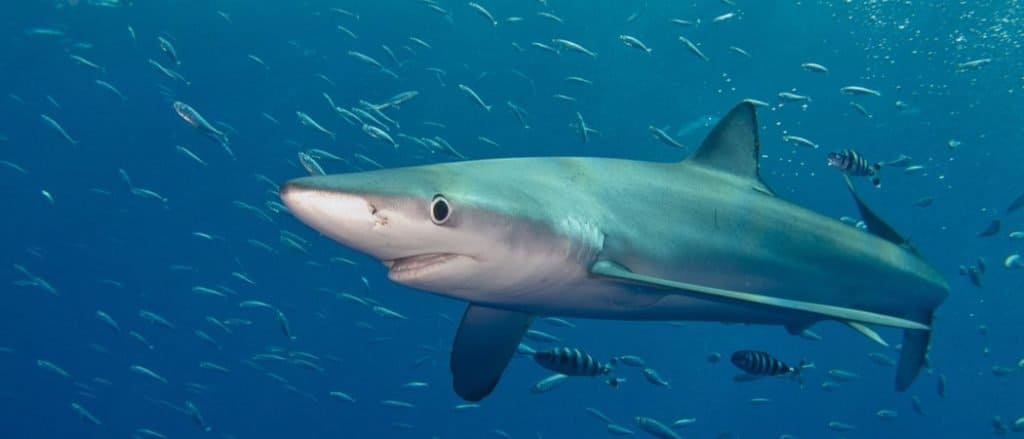
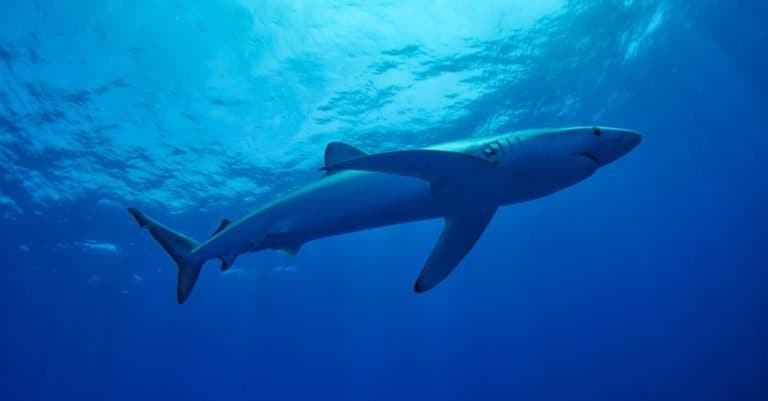
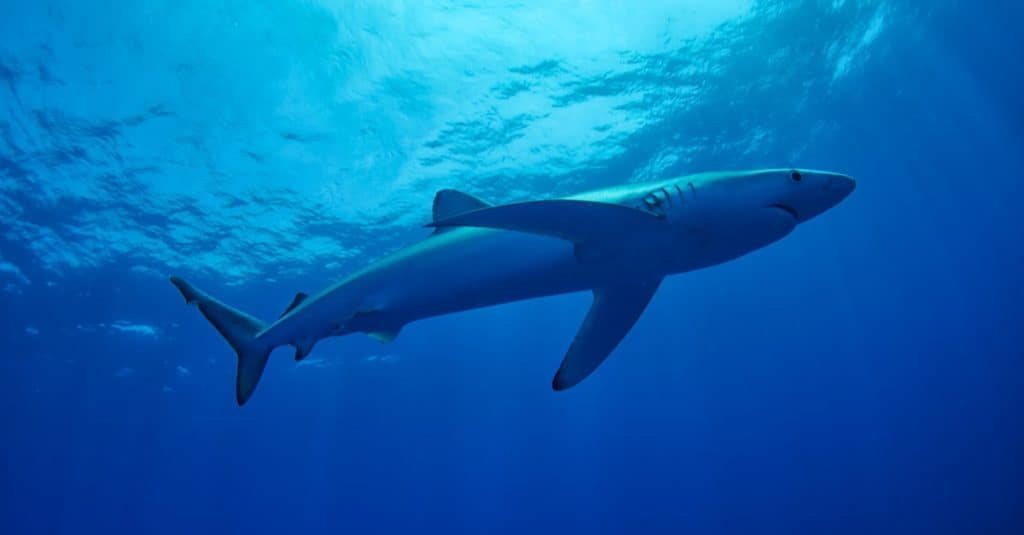
The blue shark is a well-known fish recognized for its attractive coloration and streamlined, sleek body.
©Anna L. e Marina Durante/Shutterstock.com
The blue shark is a sleek, streamlined fish renowned for its striking coloration. On top, it’s a rich indigo blue, which fades down the flanks to sapphire blue, which turns to light gray on the belly.
This coloration is also one of the shark’s adaptations, as the coloration makes it hard to see for both predators and prey. Its long tail fin is said to help it attain speeds of up to 43 miles per hour, though estimates vary widely, and it has unusually long pectoral fins.
The mouth is full of very sharp and serrated teeth, which are constantly being replaced. A large blue shark can reach around 12 feet long and weigh over 450 pounds, though the heaviest blue shark found weighed an impressive 862 pounds. Like most other sharks, the blue shark also has highly developed senses of smell and touch.
Distribution, Population, and Habitat
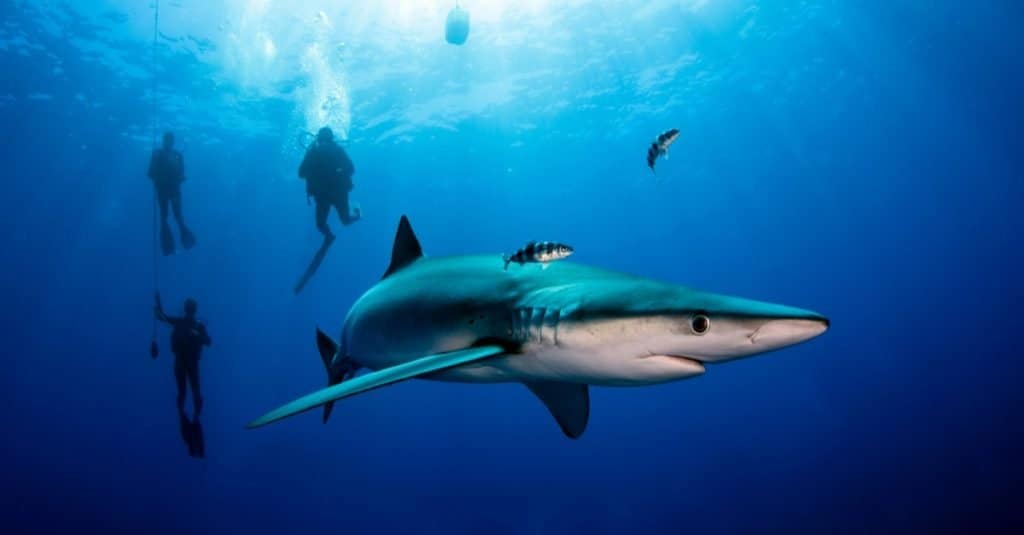
These sharks inhabit the open oceans worldwide, and while they favor colder waters, they avoid the Arctic and Antarctic regions.
©Vladislav Klimin/Shutterstock.com
These sharks are found in open oceans around the world, and though they prefer cooler water, they stay away from the waters around the Arctic and Antarctic. If the water is too warm, as it might be around the equator, they will dive to a level where it’s a bit cooler.
Millions of blue sharks are caught by accident and on purpose every year, and they are near threatened. The population has been declining in recent years due to high fishing pressure, despite the blue sharks’ high reproductive rate.
Predators and Prey
Humans hunt these sharks for their fins, which are used to make shark fin soup, and their meat is used, ironically, to make fish food.
The shark’s hide is turned into leather, and it is sometimes hunted for sport as it puts up a fight. Other predators include larger and more aggressive sharks, such as the great white shark and the tiger shark. Killer whales, elephant seals, and sea lions also eat these sharks. Baby sharks are especially at risk.
The blue shark is also parasitized by tapeworms acquired from eating infected fish. Copepods can be so numerous on and in a shark that they can impair its vision and the functioning of its gills.
Prey includes a variety of cephalopods and many species of bony fish, including castor oil fish and snake mackerel. If a seabird is unfortunate enough to be in the same location as a blue shark, the shark may eat it as well.
A characteristic of sharks is that the female’s skin is twice as thick as the male’s skin, which is an adaptation that safeguards her when he bites her while mating.
©Pommeyrol Vincent/Shutterstock.com
Reproduction and Lifespan
Location is important for these sharks’ reproduction. In summer, they gather on the continental shelves to mate. To do this, the male has to bite the female to hold her still, as eggs are fertilized internally. The female may store the sperm for some months before she lets it fertilize her eggs.
When she does become pregnant, her next location becomes the Northern Pacific, where she gives birth. The shark is pregnant for about a year, and she can give birth to over 100 pups at a time, though the usual number is between 25 and 50.
A pup is independent soon after birth and becomes ready to breed when it’s five to six years old. Female sharks breed every year or so.
The shark’s lifespan in the wild is about 15 years, and it is halved if the shark is held in captivity.
Fishing and Cooking
These sharks aren’t hunted extensively for food, though they’re captured to make shark fin soup, leather, and fish food, and for the alleged health benefits of their cartilage. They are mostly bycatch victims.
Population
Between 10 and 20 million of these sharks are caught in nets, long lines, and as bycatch yearly, and their population is decreasing. The exact global population size is unknown, but the species is classified as Near Threatened due to high catch rates.
Blue Shark Pictures
View all of our Blue Shark pictures in the gallery.

Anna L. e Marina Durante/Shutterstock.com
Sources
- Florida Museum / Accessed July 5, 2021
- Pelagic Shark Research Foundation / Accessed July 5, 2021
- Wikipedia / Accessed July 5, 2021
- Animal Diversity Web / Accessed July 5, 2021