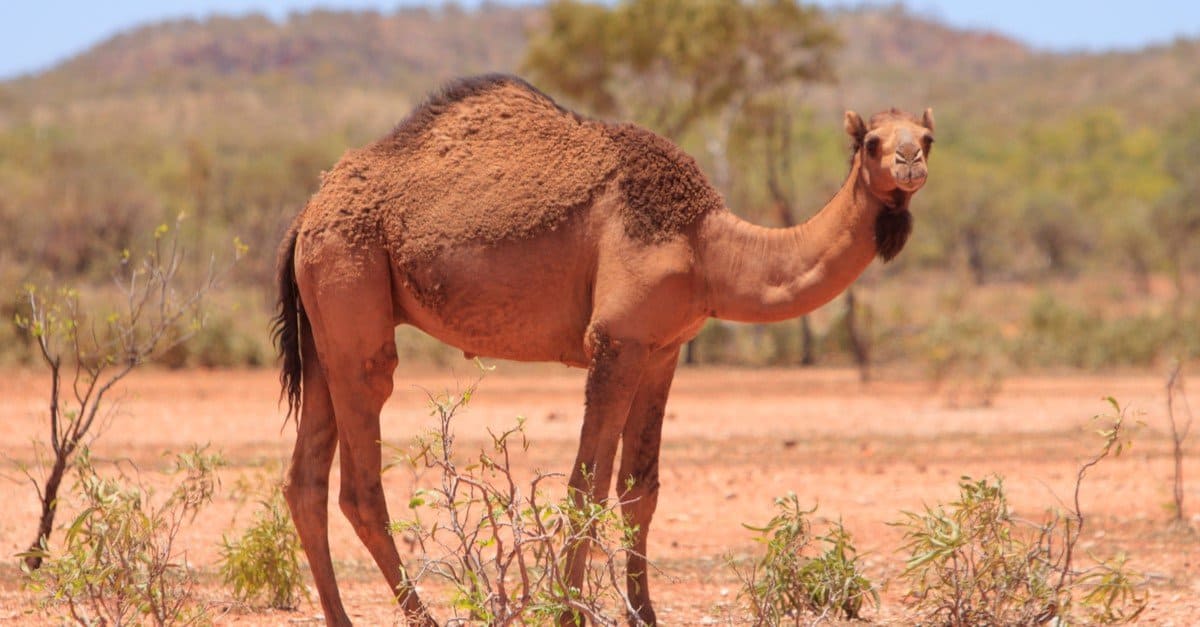

Camels (Camelus dromedarius) are even-toed ungulates that live in the desert. They are known for being able to go a long time without water and storing fat in their humps. Some people raise them for milk, meat, and hair. Living in a harsh, hot, and dry environment, camels must be expert foragers to survive. Continue reading to learn about what these desert survivors eat.
Camels: An Overview
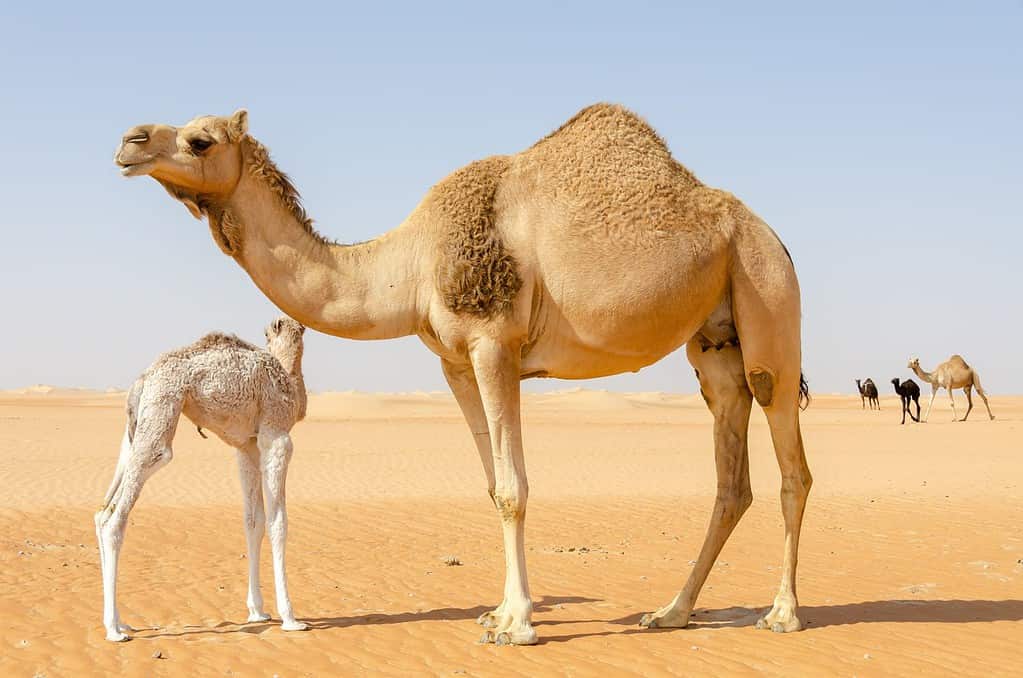
A mother and her calf in the desert.
©Lotta Axing/Shutterstock.com
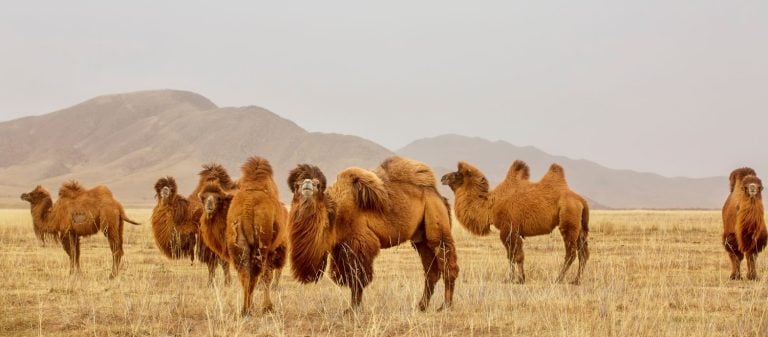
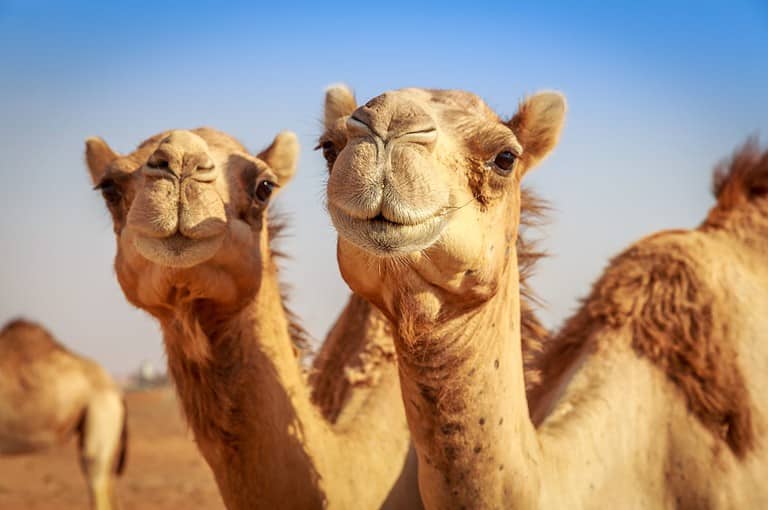
Camels are members of the genus Camelus and the only living member of the suborder Tylopoda. One-humped dromedaries account for 94% of the camels in the world; they are also known as Arabian camels. The other six percent are two-humped Bactrian camels. A separate species, the Wild Bactrian, is critically endangered.
Due to dromedary camels being so common, dromedary is used interchangeably with camel. Also, camelid can refer to camels in a wider sense, including all members of the family Camelidae. This not only includes the true camels, but also New World camelids: the llama, the alpaca, the vicuña, and the guanaco.
Camels can not only withstand harsh conditions that would kill most other mammals, but they can also survive for months in these environments. While most mammals can survive a few weeks without food and only days without water, camels are uniquely adapted to endure much longer periods without either.
Camels can survive for several weeks, and in rare cases up to a few months, without an external source of water, if they have access to moisture-rich food or cooler temperatures. This is where the fat stored in its hump becomes essential. As the camel burns this fat for fuel, the hump gradually shrinks. If a camel has been deprived of water, it can drink up to 30 gallons of water in a single sitting; some reports suggest even higher volumes under extreme conditions, allowing it to quickly rehydrate.
A Camel’s Diet
A camel’s diet consists of twigs, bushes, dried grasses, leaves, and other plants such as saltbushes and cacti. Its diet is rich in plant matter. However, camels are not strictly herbivores; when vegetation is scarce, they can become omnivorous, resorting to eating carrion, bones, and fish.
In captivity, camels are given alfalfa pellets, fruits, vegetables, Bermuda hay, grains, salt blocks, vitamins, and mineral supplements. There are no longer wild populations of dromedaries, only feral individuals that have escaped captivity. Domesticated dromedaries are found in desert caravans or captivity.
How Camels Forage

A dromedary near the sea in Oman’s Rub’ al Khali. Camels are opportunistic foragers that can eat even thorny plants.
©lkpro/Shutterstock.com
In the desert, camels must forage for whatever they can that contains the nutrients they need. Like goats, camels can eat even thorny plants, such as cacti. Their digestive systems allow them to eat roughage to make use of the most plentiful vegetation.
Camels are very clever and able to find food in harsh deserts. Each half of a camel’s split upper lip moves independently, allowing it to get close to the ground and eat short, sprouting grass. These flexible lips can adjust to eat hard vegetation such as salty plants or thorns.
How Camels Eat
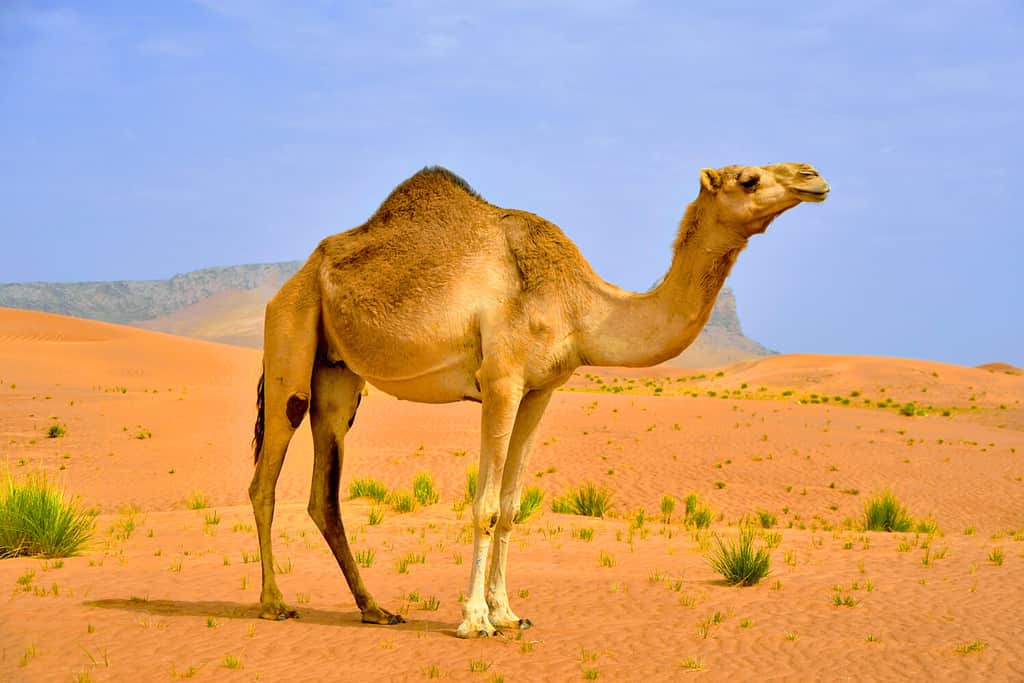
A camel and some short grass.
©Shengyong Li/Shutterstock.com
Camels are herbivorous, cud-chewing mammals, yet are not true ruminants; instead, they are considered pseudo-ruminants. Ruminants have multi-chambered stomachs (which have been mistaken to be multiple separate stomachs) with specialized compartments for digesting plant material. Camels and all other camelids lack the fourth stomach compartment, called the omasum, which squeezes liquids out of food. Instead, they have glandular sacs for specialized digestive functions. They also have large mouths with leathery lips that protect them while eating thorny vegetation.
A Complete List of Foods Camels Eat
Wild camels eat:
- Dried grasses
- Desert bushes
- Twigs, stems, leaves, and seeds
- Date stones
- Saltbushes, cacti, and other thorny plants
- Carrion, bones, and fish
Camels in captivity eat:
- Alfalfa pellets
- Carrots, apples, dates, and other fruits and vegetables
- Bermuda hay
- Dried grass
- Wheat, oats, and other grains
- Salt blocks
- Vitamin and mineral supplements