
Quick Take
- Camels are uniquely adapted to desert life, with specialized features that help them conserve water and survive extreme heat and cold.
- Wild Bactrian camels are the only remaining wild camel species and are now listed as endangered, with fewer than 1,000 individuals remaining.
- Wild camels help maintain desert ecosystems by dispersing seeds, enriching soil, and preventing plant overgrowth. Camels as ecosystem engineers →
- Habitat loss, climate change, and hybridization with domestic camels remain major threats to wild camel populations. The hybridization threat →
When we think about camels, most people probably think of them as the dependable animals carrying people across harsh deserts. However, camels are much more than just a source of travel, as wild camels also still exist in several countries. With fewer than 1,000 wild camels across China and Mongolia, they are now an endangered species. World Camel Day is observed on June 22 and aims to raise awareness about camels and their importance to the desert ecosystems in which they live.
How Camels Survive in a Harsh Landscape
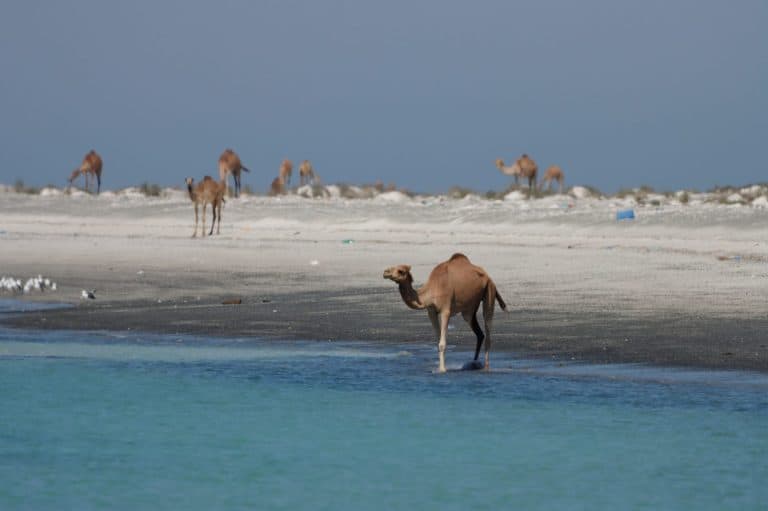
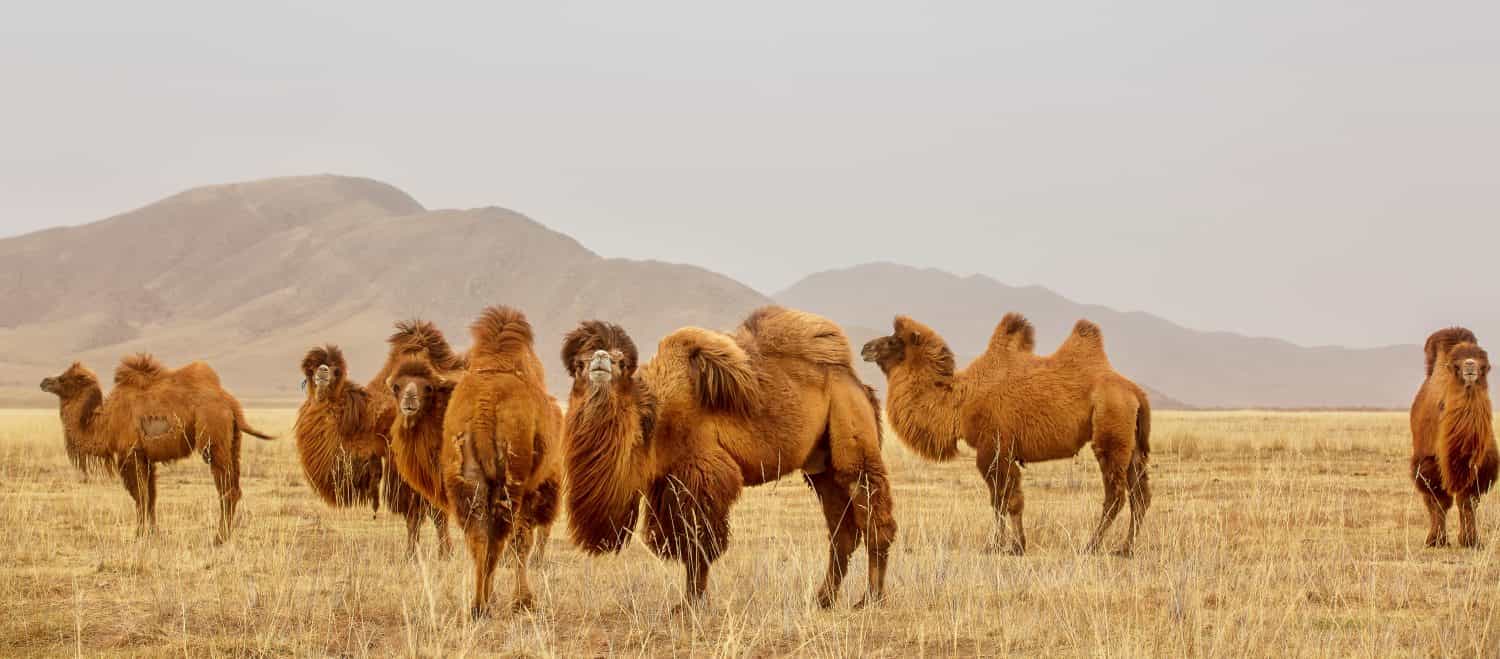
Camels are some of the largest mammals in the world, and there are currently three species. Two of these are domesticated species – the dromedary or Arabian camel and the Bactrian camel – while the wild Bactrian camel is the sole wild species. Although wild camels are genetically distinct from their domesticated counterparts, all camels share a unique set of adaptations that help them survive in the harshest environments.
Water Conservation
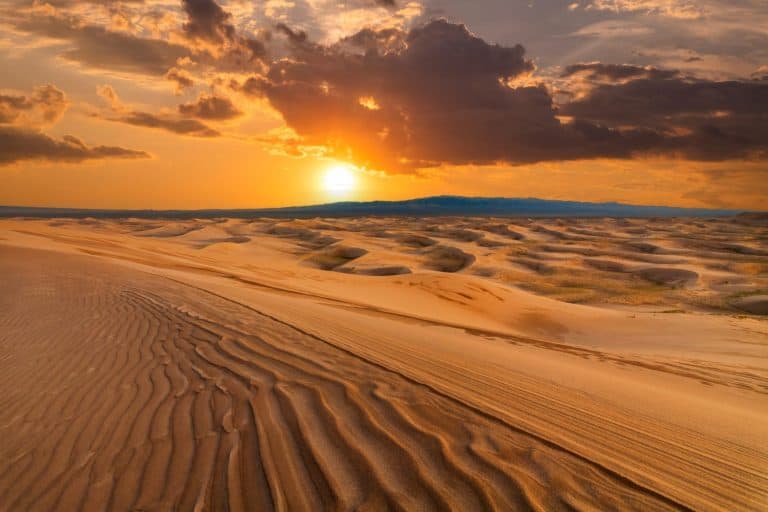
Deserts are some of the driest places on Earth, with some regions receiving less than two inches of rain annually. One common misconception about camels is that they store water in their hump. Dromedary camels have just one hump, while both domesticated and wild Bactrian camels have two humps. However, all of these species store fat in their humps, which can be utilized in times of scarcity. When the fat is metabolized, it actually produces water as part of the transformation. This allows camels to survive for long periods without drinking. In some cases, they can survive by drinking only once every ten days.
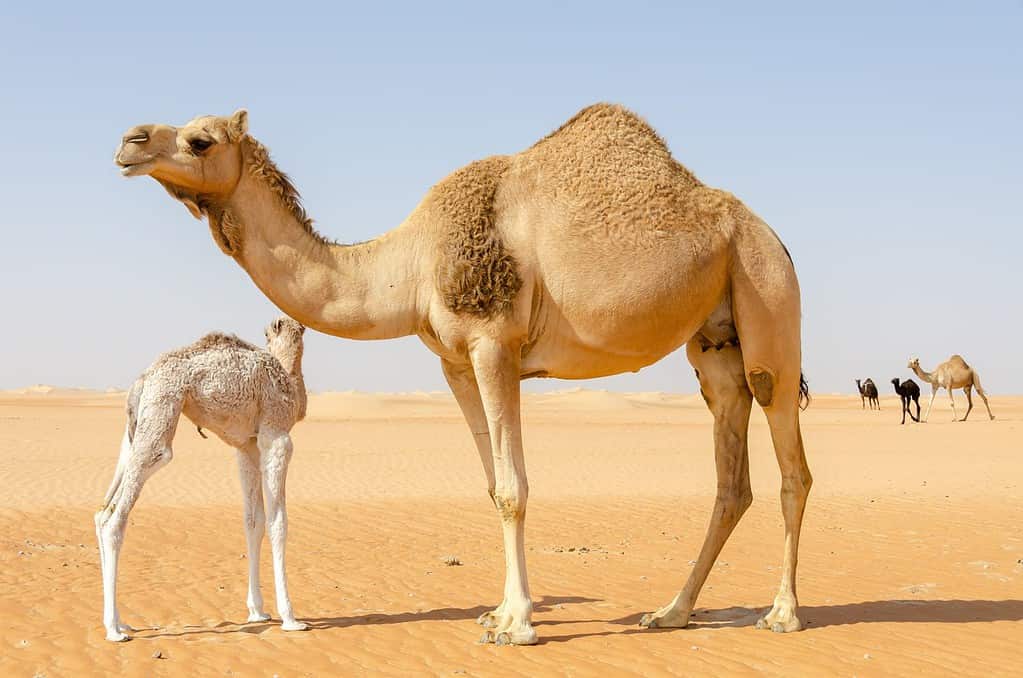
Camels store fat in their hump, not water.
©Lotta Axing/Shutterstock.com
Additionally, when they do drink, they consume large amounts of water (up to 40 gallons). However, this goes into their digestive system and their bloodstream, not into their hump. Camels also rarely sweat, even at high temperatures. Instead, their body temperature fluctuates throughout the day, rising with the environmental temperature and dropping again at night. As a result, they only begin to sweat when their body temperature is higher than 107°F. Surprisingly, camels can lose up to 25% of their body weight in water, whereas a loss of just 12% is fatal for most other animals. Wild Bactrian camels also have a further adaptation when it comes to water, as they can drink water that is saltier than the ocean. This means they can drink brackish water without suffering any ill effects, whereas other animals cannot.
Physical Adaptations
Camels also have several other adaptations that help them survive in such inhospitable regions. Sandstorms are frequent in the deserts, but camels can close their nostrils to prevent sand from entering them. They also have thick eyelashes to protect their eyes and a third eyelid (nictitating membrane) that helps clear sand from their eyes. Additionally, although it might seem that a thick coat would make camels hotter, it actually helps them stay cooler by shielding them from the desert heat.
Why Camels Matter to Desert Ecosystems
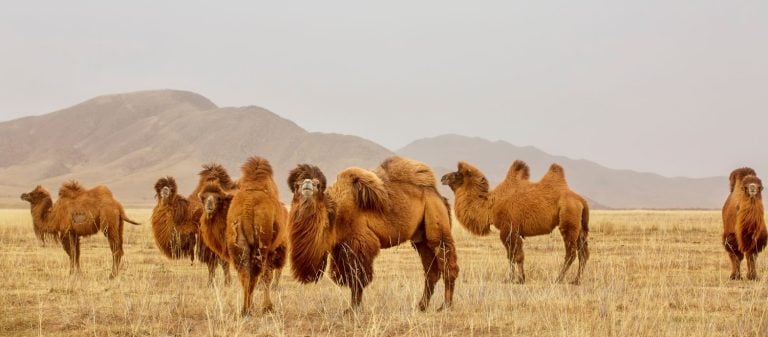
Wild Bactrian camels (Camelus ferus) currently inhabit just three areas across China and Mongolia – the Gobi, Kumtag, and Taklamakan deserts. Although camels are far from the only species to inhabit these regions, they are actually one of the most important, as they play a vital role in helping to keep the entire ecosystem healthy.
Wild camels have a highly nomadic lifestyle and often travel long distances in search of fresh vegetation and water. The trails camels create become useful paths for smaller animals. This has led to camels increasingly being called habitat engineers. As herbivores, camels are also important seed dispersers. They browse on various shrubs and vegetation, spreading seeds through their droppings as they move across the landscape. While doing so, their droppings also add vital nutrients back into the soil. Additionally, many of the plants camels eat, such as thorny bushes, are avoided by other animals. By consuming these, camels help prevent certain plants from dominating the landscape. This helps maintain a balanced ecosystem and supports ongoing plant diversity.
Protecting the Wild Camel

Wild camels could lose 44% of their habitat by 2050.
©Alex Tumee/Shutterstock.com
It is estimated that there are fewer than 1,000 wild Bactrian camels left in the world. Their three populations are all isolated from each other, making fragmentation one of the greatest threats to wild camels. This is due to the increasing development of their natural habitat for roads, mines, and other infrastructure. The problem is further compounded by habitat loss resulting from climate change. It is estimated that wild camels could lose up to 44% of their habitat due to climate change before the 2050s.
However, hybridization with domesticated camels is also a significant risk. Domestic camel genes have already been detected in the Gobi Desert population of wild camels. As Mongolia is home to approximately half of the wild camel population, the impact of hybridization could be devastating.
Some measures are already in place to help protect wild camels, but more action is needed. The entire Mongolian population already lives within the Great Gobi Specially Protected Area, and several national nature reserves cover the majority of the Kumtagh habitat. However, the Taklamakan population does not currently live in a protected area.
Captive breeding and reintroduction are also underway in both Mongolia and China, although hybridization has been identified as a potential risk at the breeding centers. The Wild Camel Protection Foundation has also been established to protect wild camels and educate people worldwide about their plight.