
Stories of camel spiders and their aggressive nature have been told for generations. Tales of these critters running at high speeds and taking down camels have made the species notorious across the globe.
Although such stories are just myths, camel spiders are indeed stealthy hunters capable of destroying entire ant colonies in short order. This has been proven repeatedly via social media, with posts showing camel spiders versus an ant colony. Spoiler alert: Try as they might, the ants never stand a chance against these arachnids.
Why A Camel Spider Took on a Massive Ant Colony
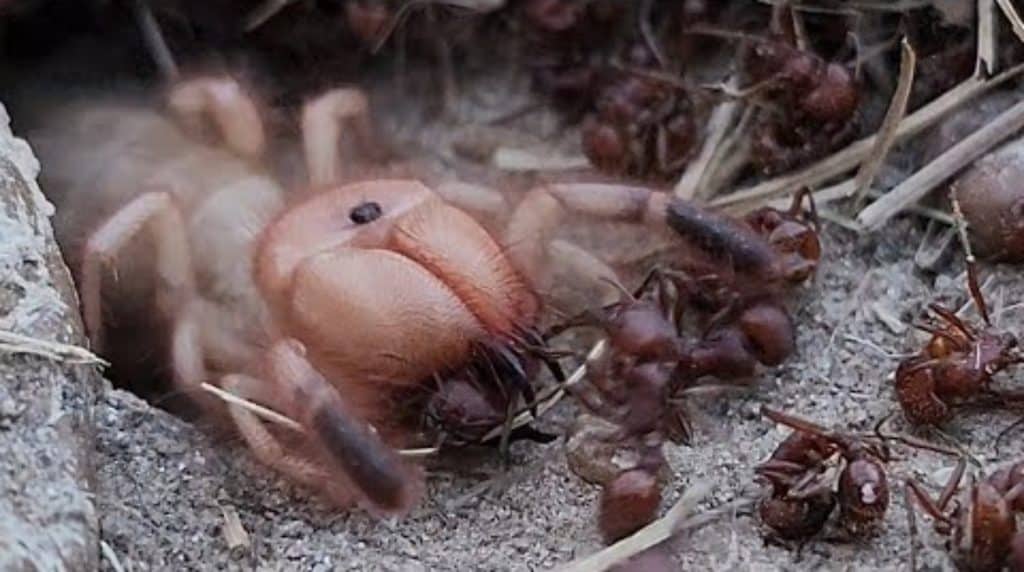
Camel spider attacks an ant colony in Texas.
© – Original
Over the last several decades, camel spiders have been portrayed as massive, aggressive, nightmarish creatures. While their size and behavior have been exaggerated, when it comes to decimating a colony of ants, camel spiders are fearsome creatures not to be messed with.
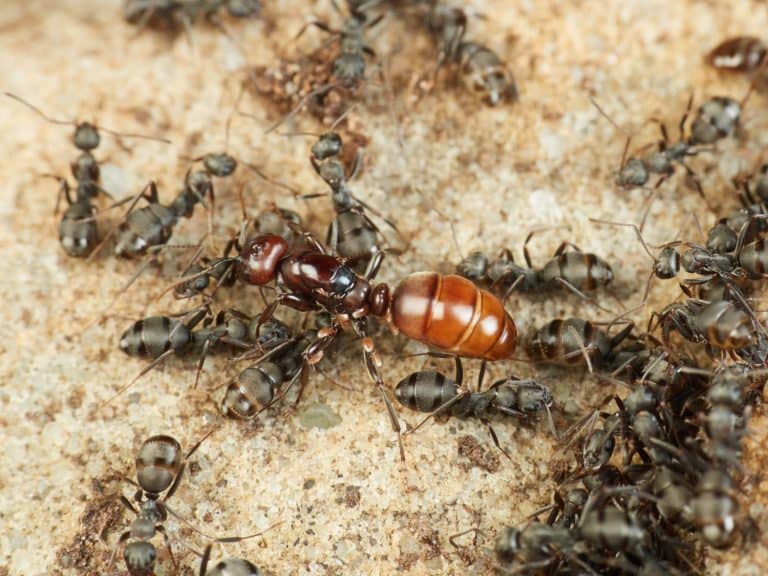
A YouTube video has garnered nearly 370,000 views after showcasing the swift destruction a camel spider inflicts on an ant colony. The camel spider invades the colony for unknown reason. As the ants continue to thwart the camel spider’s attempt to take over their home, the spider kills every ant with its powerful jaws. Instead of eating its victims, the camel spider works to keep the pile of dead ants from falling into the entrance to the colony.
This is not an isolated event. Camel spiders across the planet take over ant colonies without consuming the ants. But researchers aren’t sure why the unique spiders do this. Only hypotheses have been drawn as to the reasons behind their massacre of entire colonies of ants.
Camel Spiders Generally Do Not Eat Ants
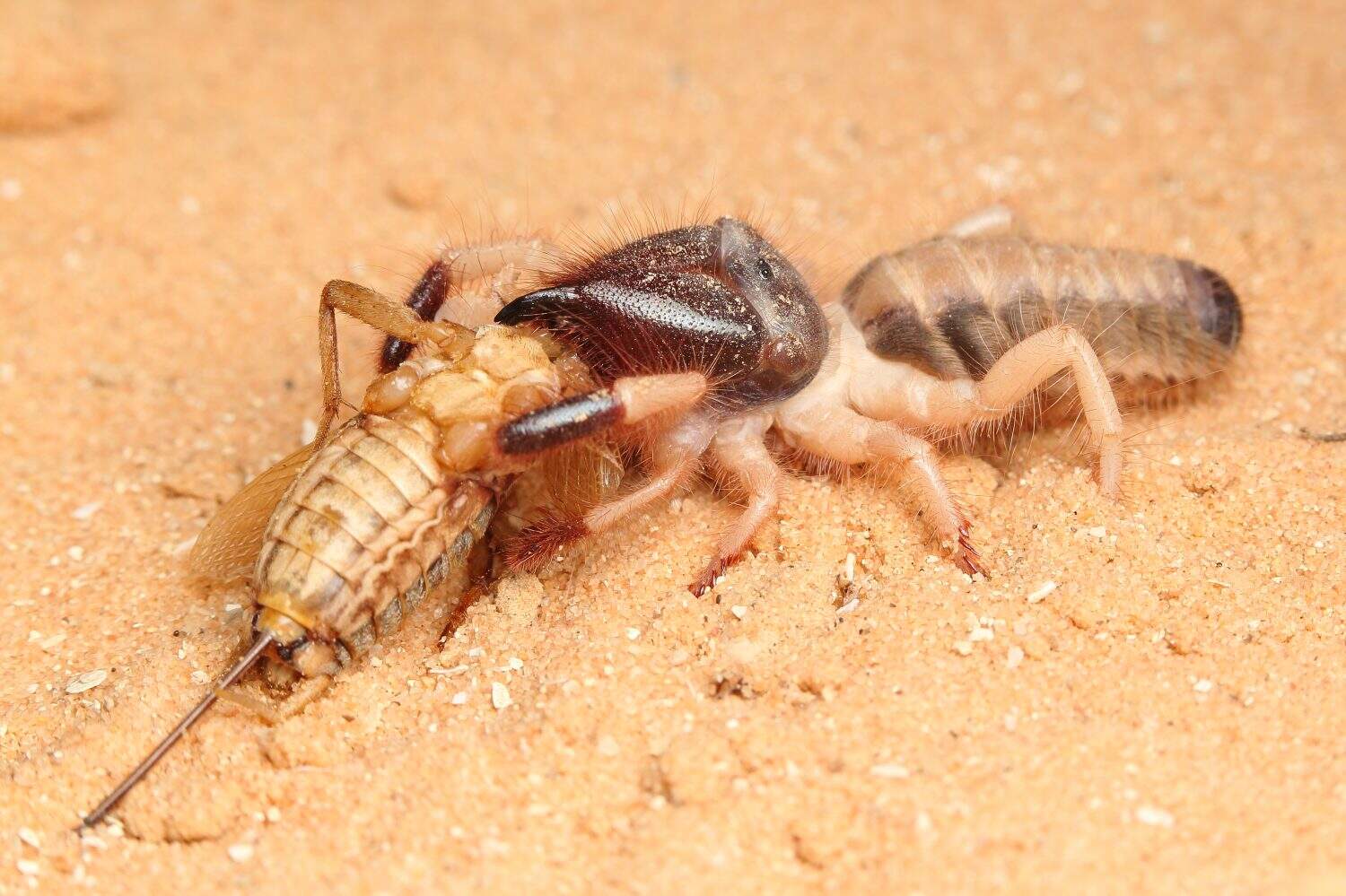
Camel spiders prefer to eat crickets over ants.
©Ondrej Michalek/Shutterstock.com
Since they are not massacring the colony for prey, why do camel spiders kill so many ants at one time?
There are a few theories about camel spider behavior around ants. According to Paula Cushing, an evolutionary biologist from the Denver Museum of Nature and Science, two main theories have taken hold over the years. One is that the spiders are stockpiling food and the other is related to shelter.
It is believed that camel spiders may attack an entire colony of ants to create a stockpile of food. There have been a few instances where camel spiders are witnessed eating ants. However, they never consume the entire colony. Therefore, some in the scientific community believe the ants are killed en masse to be saved for a later meal.
While this is a possibility, the typical prey that camel ants consume include:
- Beetles
- Termites
- Small arthropods
- Other arachnids
- Small lizards
- Small rodents
- Small birds
It appears that camel spiders will only eat ants and silverfish if they do not have access to other prey.
The other theory is that camel spiders are simply taking over the ant colony to protect themselves from the sun and heat of the desert landscape they inhabit. While this is unfortunate for the ants, it is how camel spiders have likely been able to survive the 250 to 300 million years they have been on the planet.
Camel Spiders Destroy Ant Colonies Around The World

Camel spiders have been spotted destroying ant colonies around the world.
©Viktor Loki/Shutterstock.com
The YouTube video of the camel spider destroying an ant colony in Texas may be shocking, but it is not rare. Camel spiders have been spotted in multiple social media videos over the years, exhibiting the same behavior in different places around the world. This is because camel spiders live on every continent except Australia and Antarctica.
Locations where camel spiders live around the world include:
| Region Where Camel Spiders Live | State/Country Camel Spiders Live In |
| Africa | Algeria, Namibia |
| Asia | Afghanistan, India, Pakistan |
| Middle East | Iran, Iraq, Saudi Arabia |
| North Africa | Egypt, Libya, Sudan |
| North America | United States (Arizona, California, New Mexico, Nevada, Texas) |
| South America | Chile, Peru |
It may be surprising to some where these arachnids live. While all of these camel spiders look slightly different from one another, they all enjoy living in arid, desert areas. In most instances, the most common places to find camel spiders include shady areas like under rocks or a pile of leaves. However, it is not recommended to go searching for these spiders due to their propensity for biting.
Camel Spiders Are Arachnids but Not Spiders
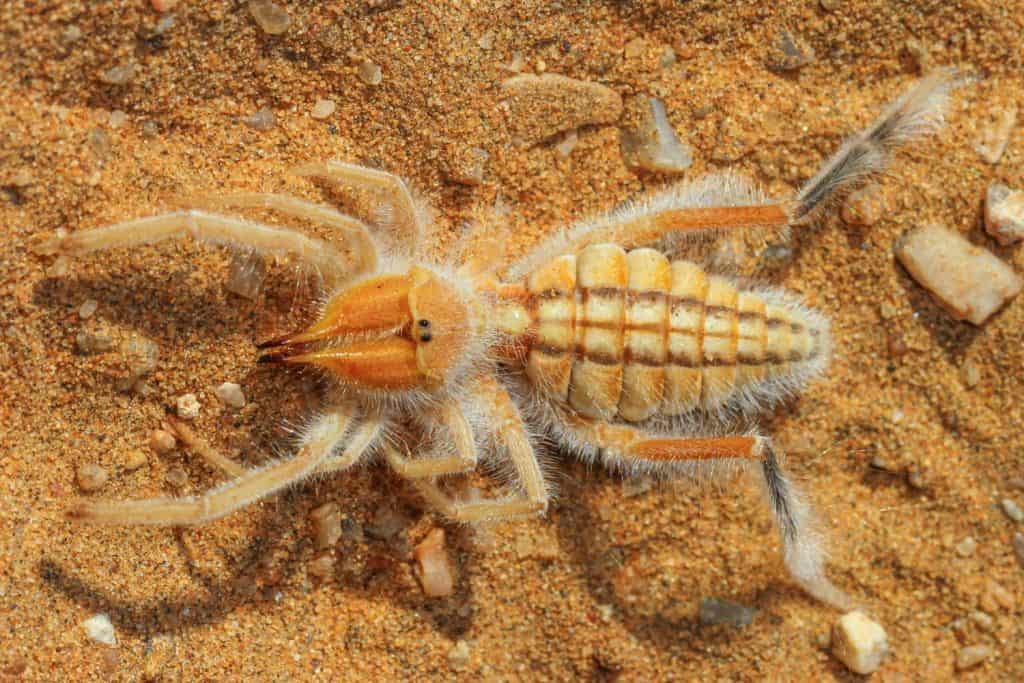
Camel spiders are believed to be related to pseudoscorpions or mites.
©Chantelle Bosch/Shutterstock.com
The scientific community is still at odds as to what type of creature the camel spider truly is.
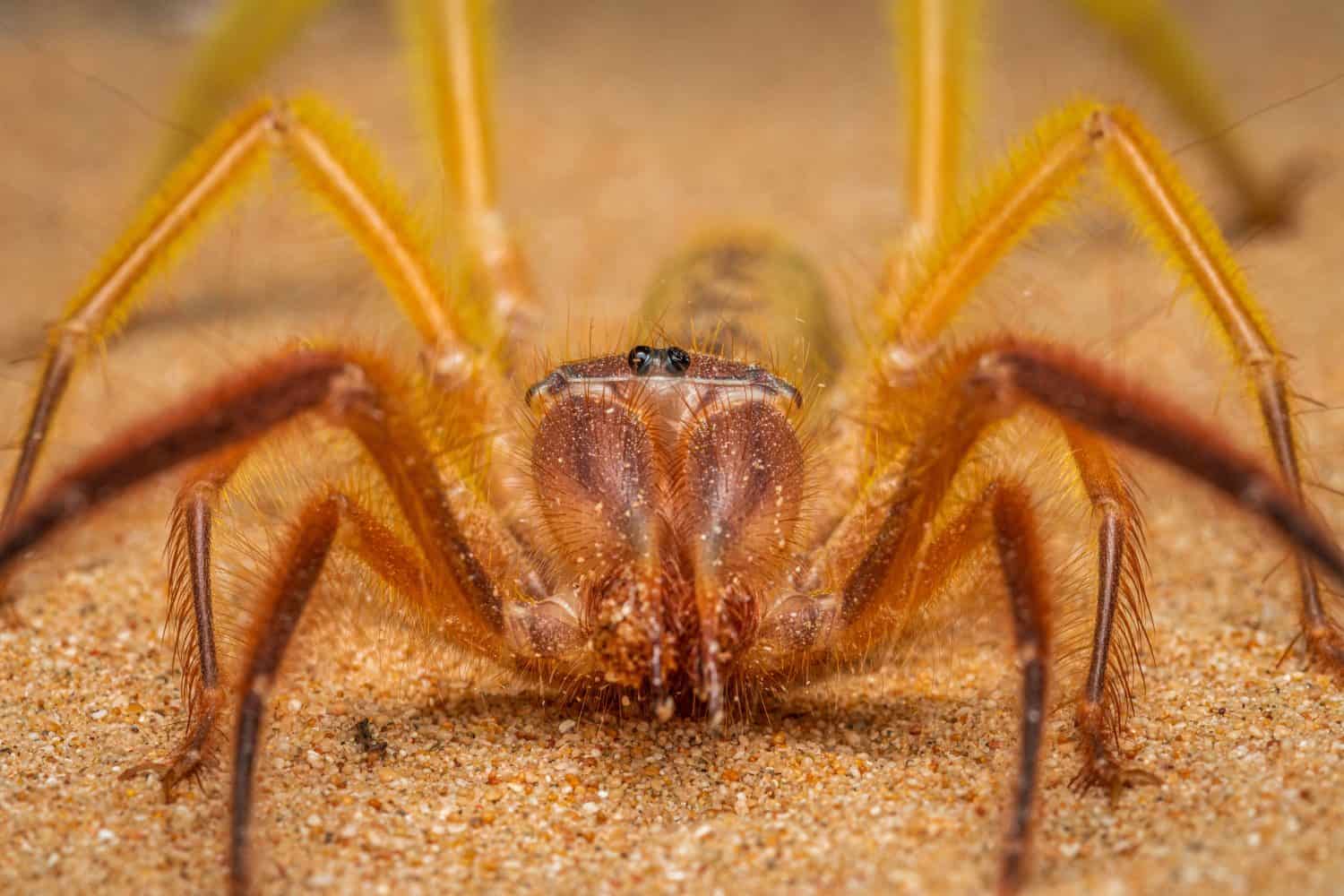
Despite being classified as an arachnid, the camel spider belongs to the order Solifugae, which, in Latin, means “those that flee the sun.” In this order, there are over 1,000 different creatures. The most common names for these arachnids are camel spiders, sun spiders, wind scorpions, and solifuges.
Some consider the camel spider to be a pseudoscorpion. Others believe it is a mite. There are others still that will classify the camel spider as a cousin of both. But, with so little known about the camel spider, just which arachnid is the nearest relative is still up for debate.
Camel Spiders Despise The Sun
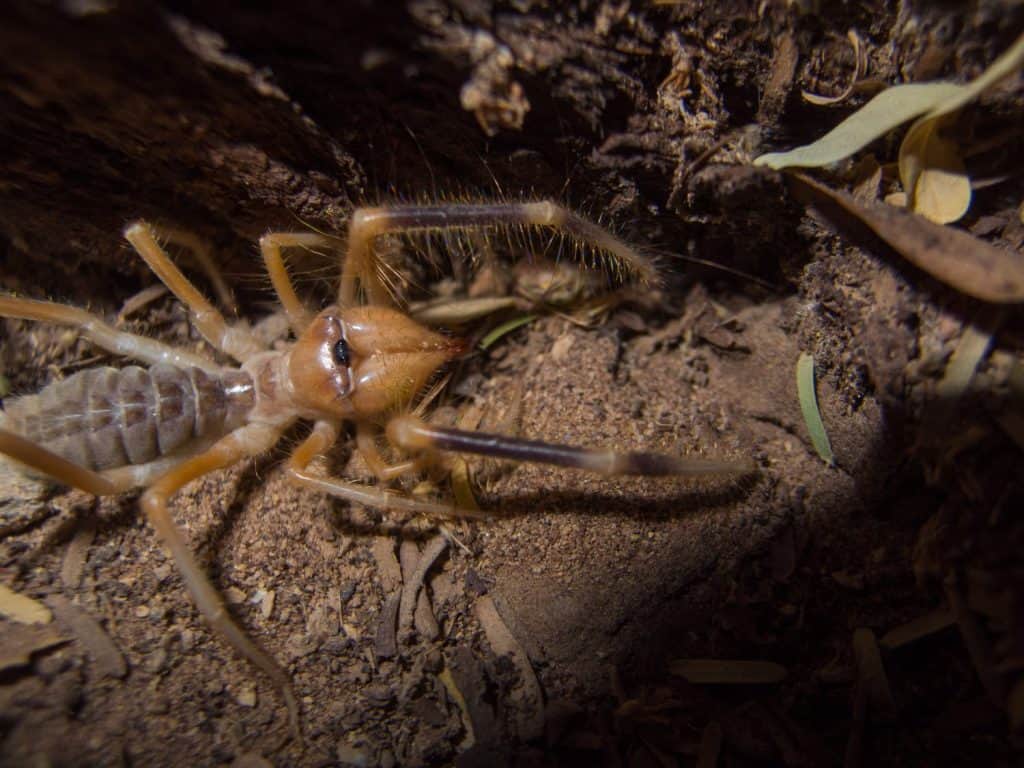
Camel spiders seek refuge under rocks, debris, and other landscape to protect themselves from the sun.
©DVY714/Shutterstock.com
These interesting spiders live in desert habitats. Consequently, they are consistently exposed to the sun and hot temperatures. To combat the extremes of the desert, camel spiders are nocturnal creatures. This is why it is so hard to spot them in their natural habitats, as they would prefer to hide in the shade until the heat of the day has gone.
While it is not known why camel spiders attack entire ant colonies around the world, one of the beliefs is that they are simply looking for a cool place to go during the day. If this means killing an entire ant colony to achieve this, camel spiders will do just that.
Other places that camel spiders seek refuge during the day include:
- Under rocks
- Beneath logs
- Burrowing in sandy areas
- Abandoned rodent holes
- Under vegetation debris
The camel spiders need to find places to hide from the sun during the day so that they can regulate their body temperature. This is why camel spiders are nocturnal and do their hunting during the nighttime.
Camel Spiders Are Not Venomous, But Have a Painful Bite
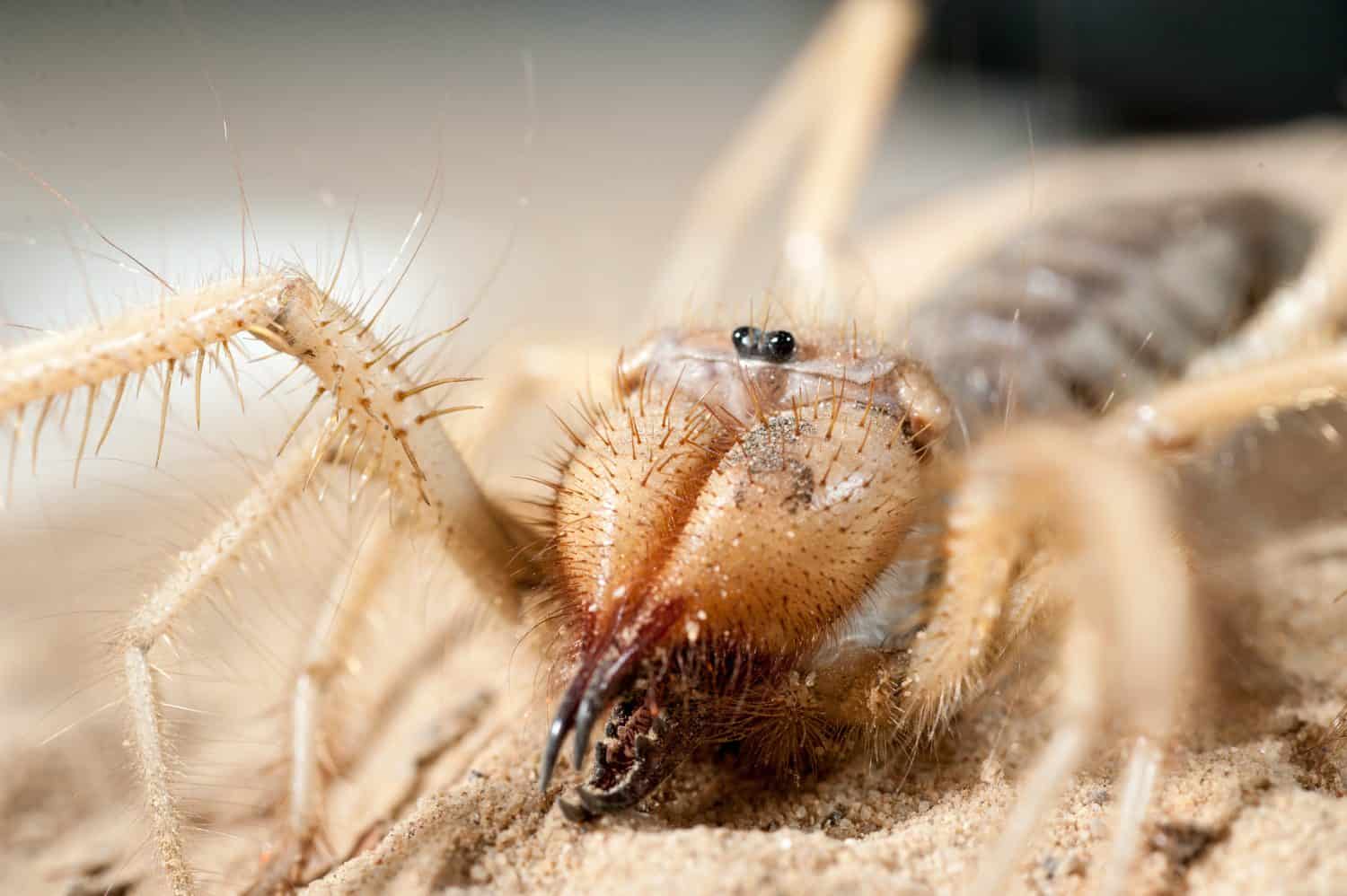
Camel spiders deliver a painful bite.
©Dmitry Abezgauz/Shutterstock.com
Camel spiders are definitely creepy-looking arachnids. Unlike others that fall into this class, however, they are not venomous. Generally speaking, camel spiders would prefer to flee from a person rather than bite them. But they will not hesitate to bite if they feel threatened, and the bite they deliver is a painful one.
The most common effects after a camel spider bite include:
- Intense pain
- Puncture wound turns red and swollen
- Wound could be large depending on the size of the spider and how hard it chose to bite
While medical attention is generally not necessary for a camel spider bite, it is recommended that the site be washed to protect from infection. If symptoms such as swelling begin to spread or a fever develops, seeking healthcare advice may be necessary, as these are signs that infection has set in.
There are no documented cases of people dying from camel spider bites.
Myths Surrounding The Camel Spider
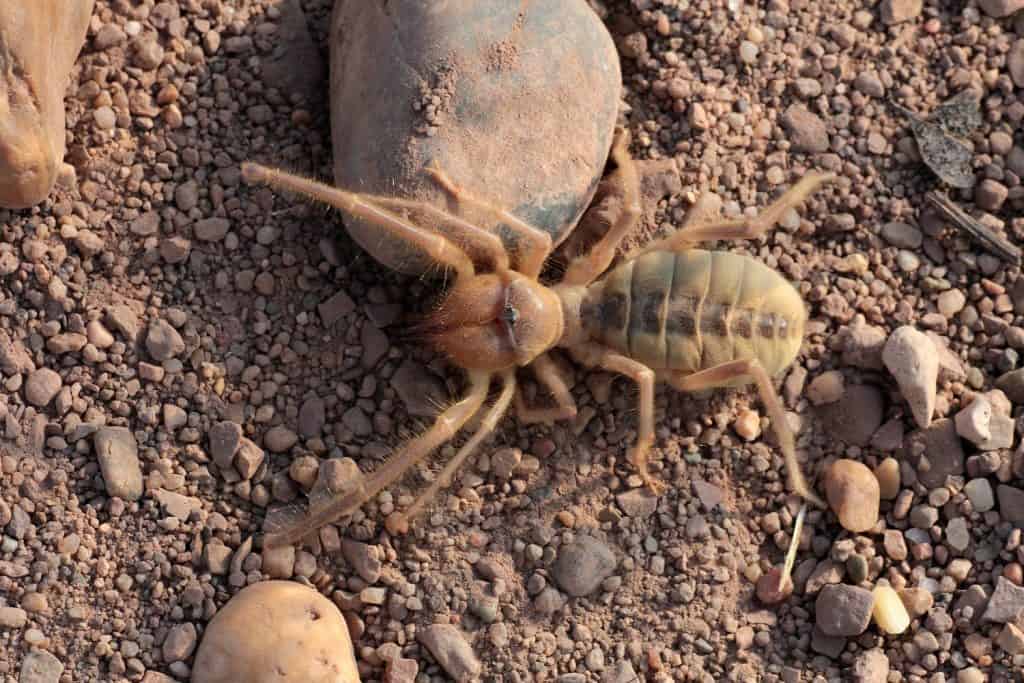
Camel spiders are stealthy killers, but they are nothing like the tales told about them over the years.
©Dmitry Fch/Shutterstock.com
The reason that camel spiders are so feared has to do with the myths that surround them. While stories have been told for thousands of years about how vicious camel spiders are, it was not until the Iraq War that stories of the camel spiders took off with gusto, to the point that some of these tall tales are still believed today.
Some of the most common myths about camel spiders include:
| What The Myth Says | What The Truth Is |
| Camel spiders can grow to be the size of a person’s hand, or even larger. | Camel spiders are typically between three to six inches long, including their legs. |
| Camel spiders can run up to 25 mph. | Camel spiders have never been clocked running faster than 10 mph. |
| Camel spiders run at people aggressively. | Camel spiders may approach people, but it is to seek shade, not to attack. |
| Camel spiders attack camels in the night, disemboweling them and laying eggs under the skin. | Camel spiders do not attack large prey. They generally do not attack anything larger than themselves. |
| Camel spiders scream as they chase down prey. | Camel spiders are stealthy hunters. They are quiet in their approach. However, when threatened, camel spiders may make a hissing sound. |
Despite viral internet images, camel spiders are not nearly as dangerous to people as they have been made out to be. As long as they are given space, they will not attack. All camel spiders want is a shady place to rest during the daylight hours, so that once night comes, they can hunt their small prey. If this means that ants have to pay the price for this to happen, as far as camel spiders are concerned, so be it.