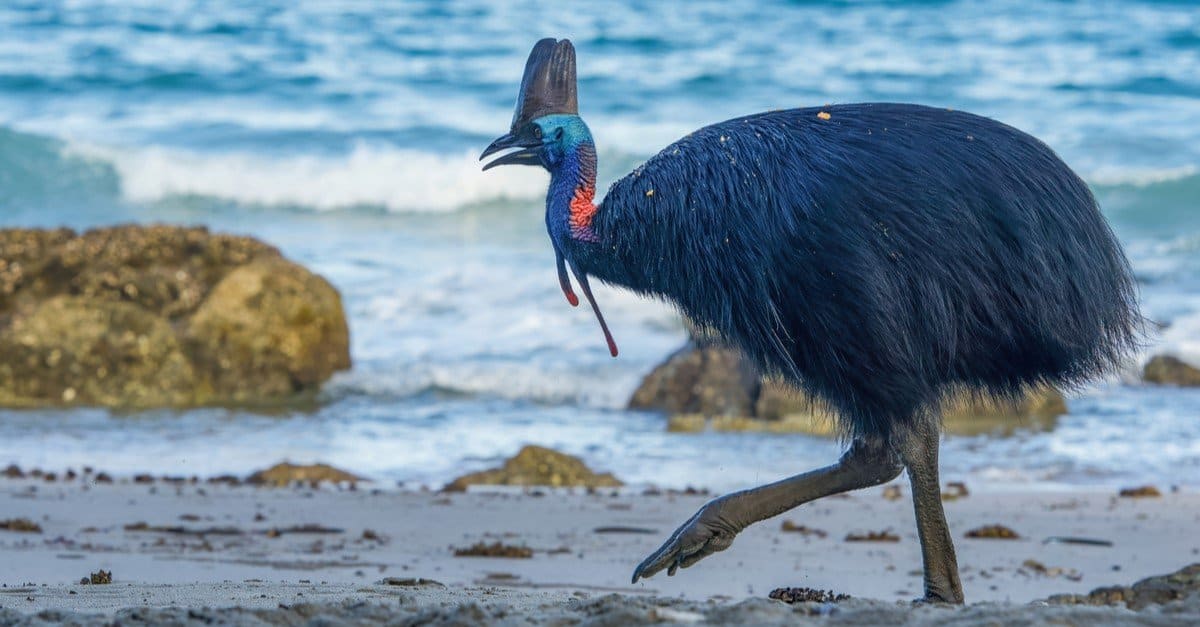

Cassowaries, like many birds, share some features with theropod dinosaurs, such as their feet and claws. One look at the horn-like casque on their heads and the razor-sharp claws on their scaly feet conjures up images of Jurassic Park. Yet, just how big are their claws, and how deadly are they? Let’s dive into the full details below!
Cassowary Feet Are Built for Defense
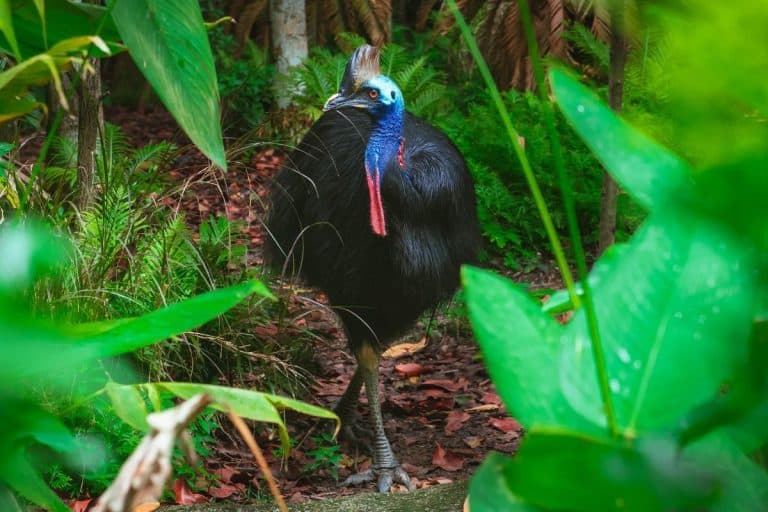
Cassowaries have large feet with three toes on each foot. Each toe has a powerful claw. These feet are connected to muscular legs to hold up a bird that can reach 170 pounds and six feet tall. These powerful legs also allow them to run up to 31 miles per hour and jump seven feet in the air. The bird is good at fending off threats and escaping danger by outrunning them. Cassowaries are not predators; they are frugivores, eating a diet that consists of 90%-99% fruit.
So, when you see the feet and claws of a cassowary, remember they’re adapted for defense, not offense. Cassowaries typically use their claws to forage for fruit on the forest floor. However, these giant birds are not afraid to use those claws if they feel threatened. Cassowaries are also known to be somewhat aggressive and are frequently described as “unpredictable.” They can pose a danger to humans, and cassowary attacks have resulted in two fatalities.
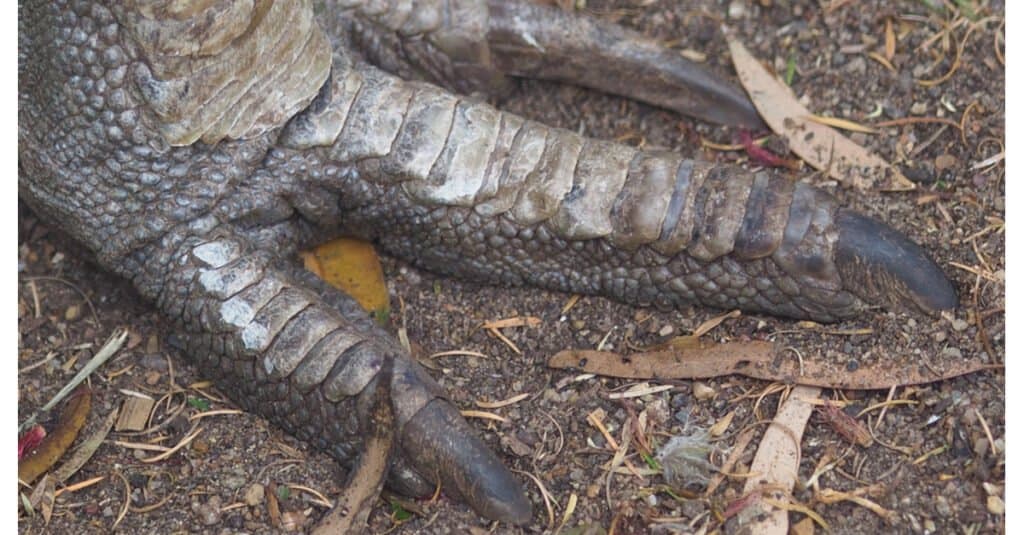
Cassowaries are not predators, but they will defend themselves with their claws when threatened.
©Andreas Ruhz/Shutterstock.com
Reptilian Feet With Long, Dagger-Like Claws
The legs and feet of the cassowary are covered in protective scales, called scutes. If you think it looks more reptilian than bird-like, then you’re right. All reptiles have scales covering their bodies. Cassowaries’ scutes protect their legs and feet as they run through their forested habitat. These scutes are made of hard keratin, which is the same material covering their casques. Our fingernails and rhinoceros horns are also made of keratin.
Two of the cassowary’s toes have relatively short claws, measuring around an inch long. A third claw on the inside of the foot is what really draws the eye, as this dagger-like claw can reach up to five inches in length. Their claws are also made of keratin, just like our toenails.
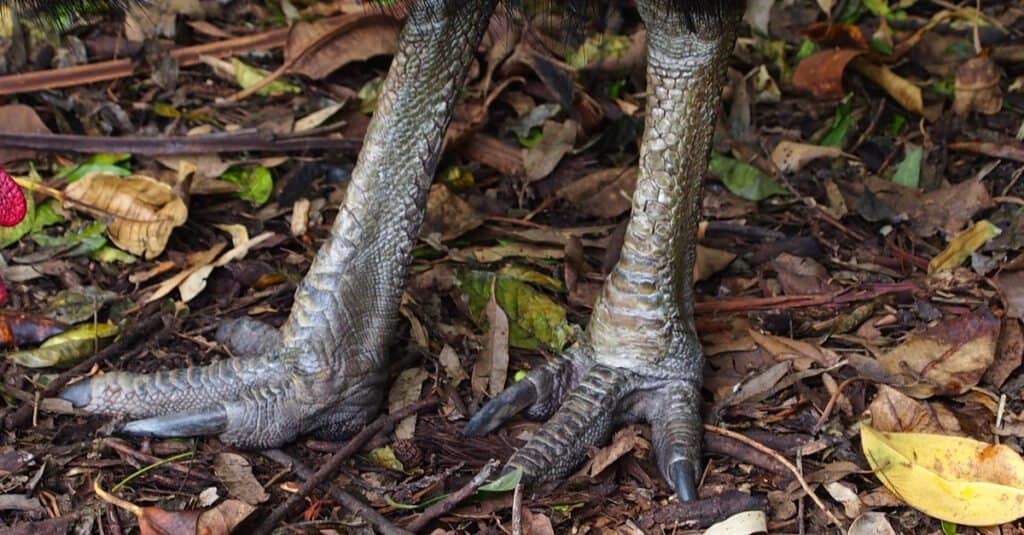
Cassowaries have scales, or scutes, to protect their legs and feet.
©Andreas Ruhz/Shutterstock.com
Just How Dangerous Is a Cassowary Claw?
Across the past 100 years, there have been two fatal cassowary attacks. The first occurred in Australia back in 1926. Two teenagers attacked a cassowary, leading to one teen falling to the ground before being struck in the neck with the cassowary’s claw. The second occurred in Florida in 2019. A man who kept a cassowary on his farm fell to the ground, and the cassowary struck him with its claws, resulting in the man’s death.
Given these fatalities, are cassowaries really “the most dangerous bird in the world” as Guinness World Records has called them? The truth is that cassowaries live in remote areas where they rarely encounter humans. One study found that 75% of cassowary attacks occurred because the animals were being fed by humans. 71% of incidents with cassowaries saw them charging or pushing. So while a cassowary claw may look imposing, the bird prefers to charge first and kick second. Any vision of giant birds leading with claws first, five feet in the air, is pure fiction.