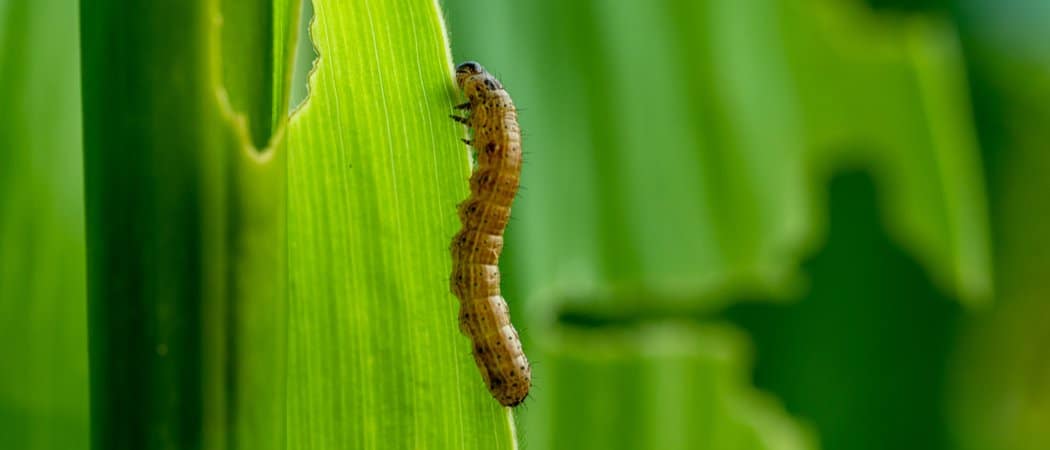

Armyworms are pests that can destroy any farm field, pasture, yard, or garden they come across with their hunger. True to their name, they march into vegetation.
If you think you have armyworms, it’s necessary to know how to control them. But not all pests are the same and not all methods work on every type. Here’s all the information you need to know about how to get rid of armyworms.
#1: Recognize Armyworms

Once an entire crop is destroyed, armyworms “march” together to search out other crops.
©NokHoOkNoi/Shutterstock.com
Before learning about how to get rid of armyworms, you first need to make sure it’s armyworms you are dealing with. Let’s go over their appearance and the effects they have in the average garden.
Armyworms’ bodies are green, yellow, or have brown stripes down their sides and backs. Adult armyworm moths can be about one and a half inches across, and their front wings are dark gray with light and dark patches. However, their hind wings are pale gray.
The fall, common, and southern armyworms are species that exist in North America, including the United States. It is the fall armyworm you’re most likely to encounter chewing up plants in your yard or pasture. Regardless, methods for getting rid of any type of armyworm will be the same.
Different Types of Armyworms
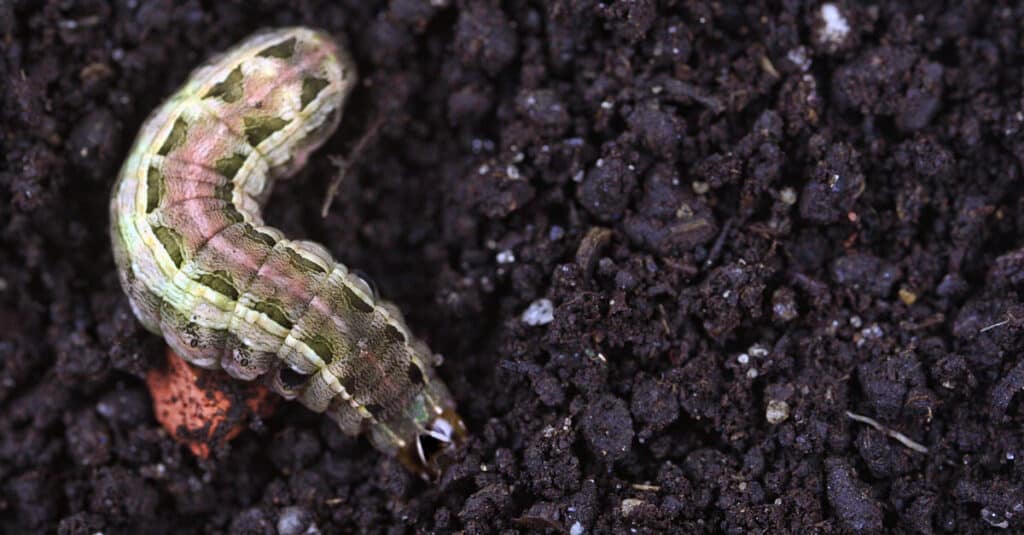
There are multiple types of armyworms, so learning to recognize them is key.
©Frank Reiser/Shutterstock.com
First and most importantly, armyworms are not actually worms. They’re caterpillars. Measuring about 1 and 3/4 inches and up to 2 inches long, there are seven common types. Here are the common names for each of the seven species, followed by their scientific names and their appearance:
- Common armyworm, true armyworm, or white-speck moth (Mythimna unipuncta): Greying-brown or green-brown in color with long, dark stripes, its moth form has tiny black dots on the outside of its wings and white specks, which its name refers to.
- Northern armyworm, Oriental armyworm, or rice ear-cutting caterpillar (Mythimna separata): The larvae have long, greenish stripes of a lighter line and two wider stripes on either side, and their heads are brownish. The adult moth has a greyish color with yellow-tinged wings.
- Southern armyworm (Spodoptera eridania): The blackish-green or grey-green larvae have reddish-brown heads, maturing to develop long, yellow stripes and off-white or white stripes, darkening into a greyish-black undertone. The adult moths have a brown body, brown forewings, and off-white rear wings.
- Fall armyworm (Spodoptera frugiperda): This hairier species is mostly brown with bright yellow, long stripes, which may sometimes have white borders. The adult moth has a darker, patterned forewing and a white rear wing.
- Beet armyworm, asparagus fern armyworm, small mottled willow moth (Spodoptera exigua): The greenish-brown larvae have dark, long stripes on their upper sides, while adult moths are brownish with reddish-brown spotted forewings and beige or ivory rear wings.
- Lawn armyworm or paddy swarming caterpillar (Spodoptera mauritia): Beginning as pale green larvae, it matures into a green color on its back with long brown and white stripes. The adult moths have dark patterns with greyish-brown undertones.
- African armyworm, nutgrass armyworm, Okalombo, or Kommandowurm (Spodoptera exempta): Single larvae are green, while the ones in a group are dark grey or black. Both have dark, long stripes. Adult moths have grey-brown forewings, off-white hindwings, and veining patterns.
#2: Use a Pest Control Method for Armyworms
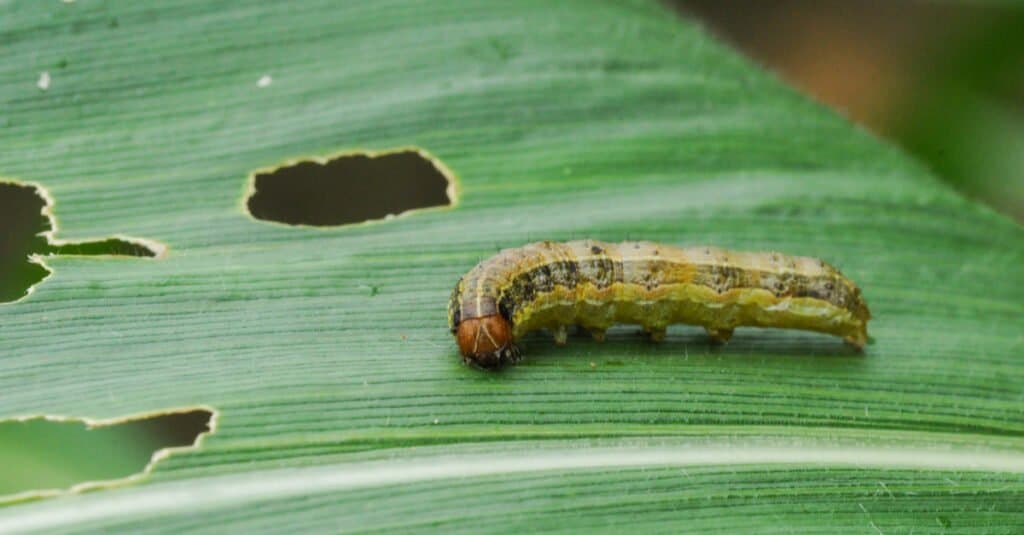
The fall armyworm is the most common found chewing plants in yards or pastures.
©kale kkm/Shutterstock.com
Finding a method that works for you will help you control these pests. It’s best to go with the least invasive and potentially dangerous method as possible first, and then continue with additional methods:
Method 1: Common Organic Remedies
One organic remedy is a liquid spray or powdered form of Bacillus thuringiensis var. kurstaki, also called BT for short. You might find the liquid spray available as Monterey BT, and the powdered version available as Garden Dust. BT will poison armyworms as well as many other types of caterpillars.
Method 2: Beneficial Insects or Birds in the Environment
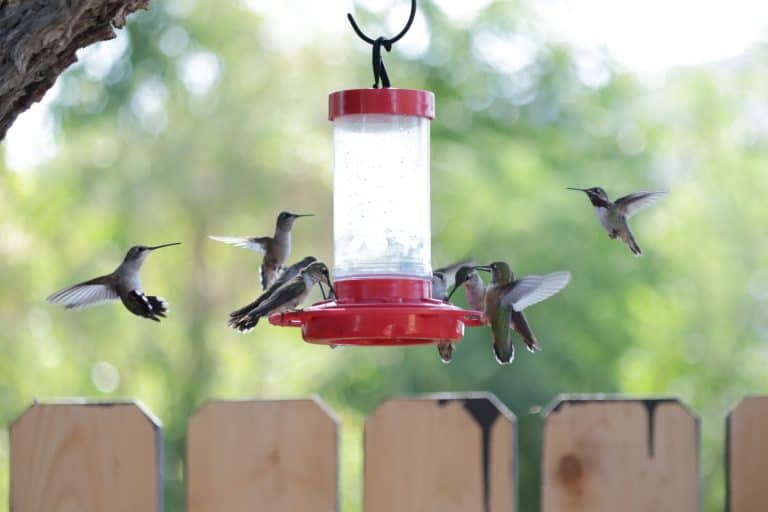
You can benefit your small ecosystem by providing food for the armyworm’s natural predators. Ladybugs, lacewings, ground beetles, and predatory wasps are sold as beneficial insects for biological pest control. Alternately, you can set up bird feeders and nests to attract local birds.
Method 3: Insecticide
When all else fails, it’s time to bring out the insecticide. Use IGR insecticide to interrupt the armyworm’s growth cycle, and pyrethroid insecticide for small to medium-sized armyworms. Note that IGR insecticide does not require a license to use, but pyrethroid does.
#3: Prevent Armyworms From Setting Up Camp Again
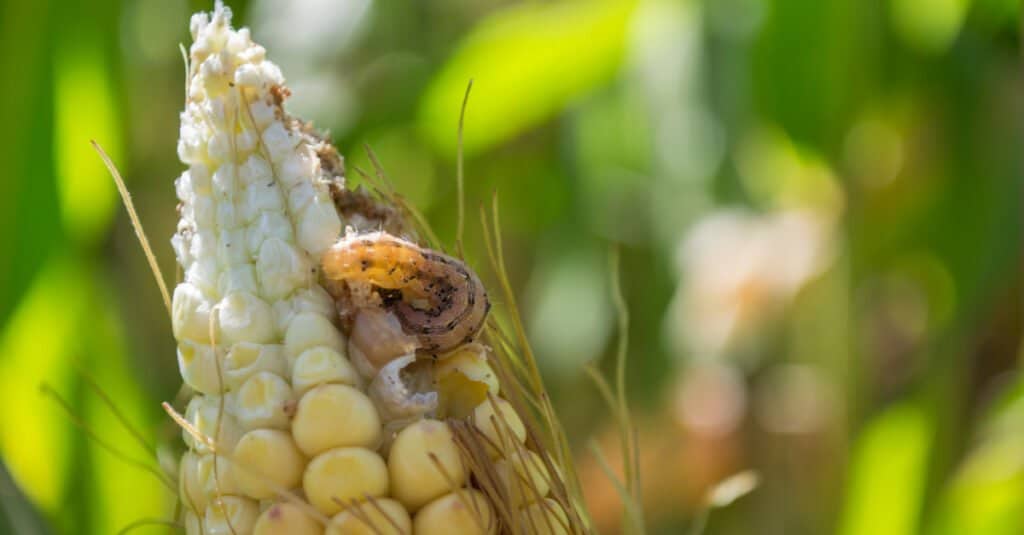
Corn is a major crop that armyworms feed on.
©Fabian Putruele/Shutterstock.com
You are most likely to experience armyworms if you have wild grasses, any of the several flower species they feed on, or the following plants and crops:
- alfalfa
- barley
- bean
- beets
- carrot
- cauliflower
- celery
- corn
- cotton
- kale
- lettuce
- parsley
- peas
- rice
- sugarcane
- sunflower
- tomato
- turnip
- wheat
It’s not enough to know how to get rid of armyworms once you have an infestation of them. You also need to know how to prepare your yard or pasture to stop them from returning. Floating row covers can prevent armyworms from laying eggs. Also, diatomaceous earth can deter them from moving in on your grasses, crops, and flowers.
Armyworms are just one possible type of common pest you might encounter in your yard or pasture. If you are dealing with armyworms, you need to know how to eliminate them properly and effectively.