
When a peregrine falcon turned up injured outside Rhode Island Hospital in Providence, he inspired all hands-on-deck care. The falcon’s beak was split vertically right down the middle after he collided with the hospital building. First, the Rhode Island Department of Environmental Management took charge of the injured bird. Then they called the Congress of the Birds, a bird rescue and recovery nonprofit licensed by the state. The nonprofit treats more than 1,000 birds a year, as well as many other wild animals.
“Every day, I see firsthand how human activity impacts wildlife—birds colliding with windows, being struck by vehicles, entangled in fishing line, poisoned by rodenticides and pesticides, or injured by domestic cats–these are just a few of the many reasons wild birds come into our care,” says its founder and director, Sheida Soleimani.
Birds and Buildings

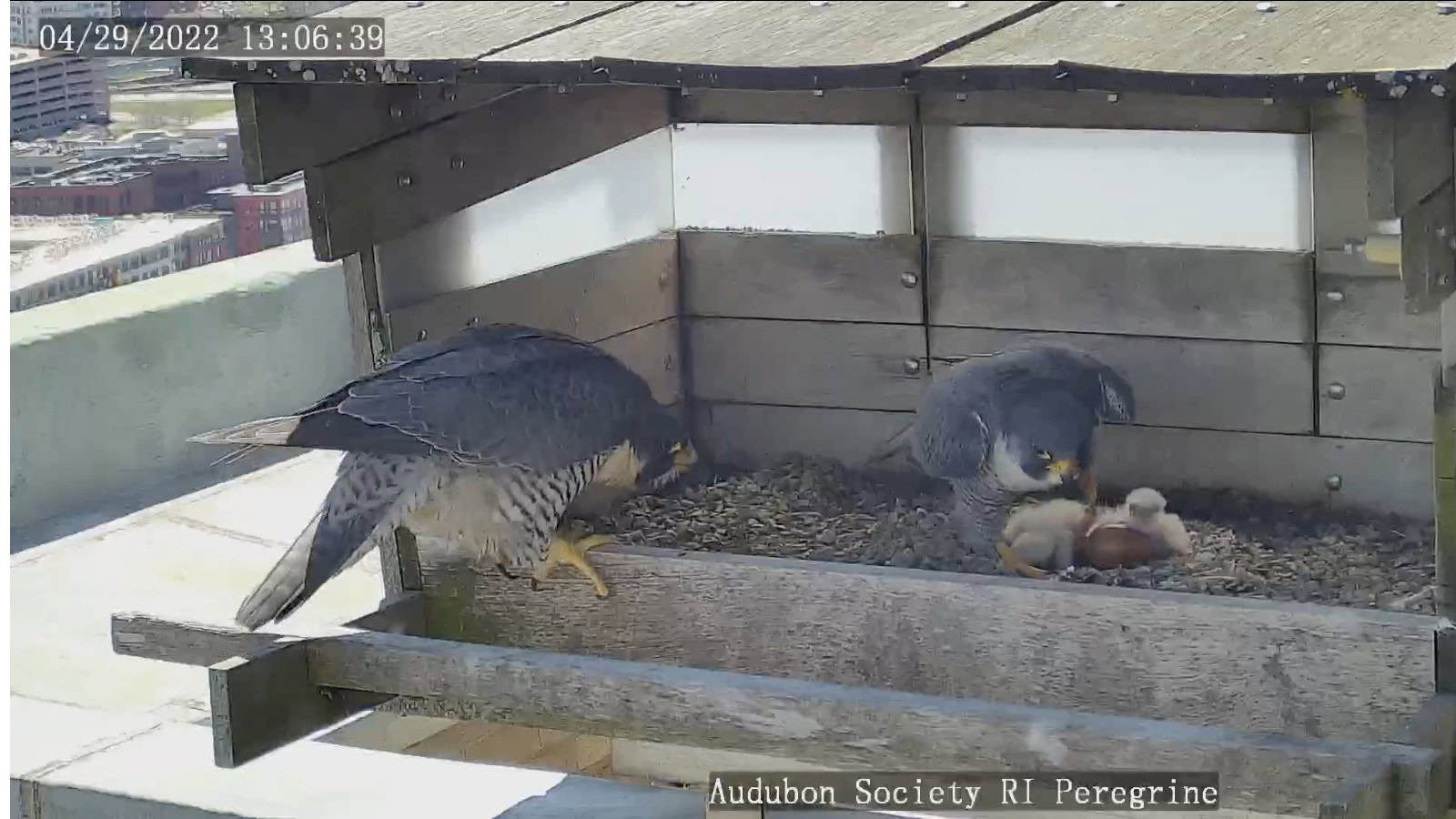
Peregrines nest on Providence’s historic Industrial National Bank Building.
Based on his numbered leg bands, this injured peregrine was one of a brood of four that had hatched in 2022 on top of the Industrial Trust Bank building (dubbed “Superman Building” for likeness to the Daily Planet headquarters) in Providence, just over a mile from the hospital. Peregrines had been nesting there—33 floors up—every year since 2000, adding to the populations of a species that made a comeback after being declared federally Endangered in 1970. Young peregrine falcons tend to disperse several hundred miles away from their parents’ nest to establish their own territories, but this peregrine was clearly a homebody.
Still, when peregrine falcons move around a lot during migration season, large windows become a deadly hazard. In 2024, for example, another peregrine falcon, “Ben,” who nested on a building ledge in Chicago, died from a building collision. Birds either do not see or do not recognize glass and fly straight into the visible reflections of trees or sky.
Peregrine Falcon Triage
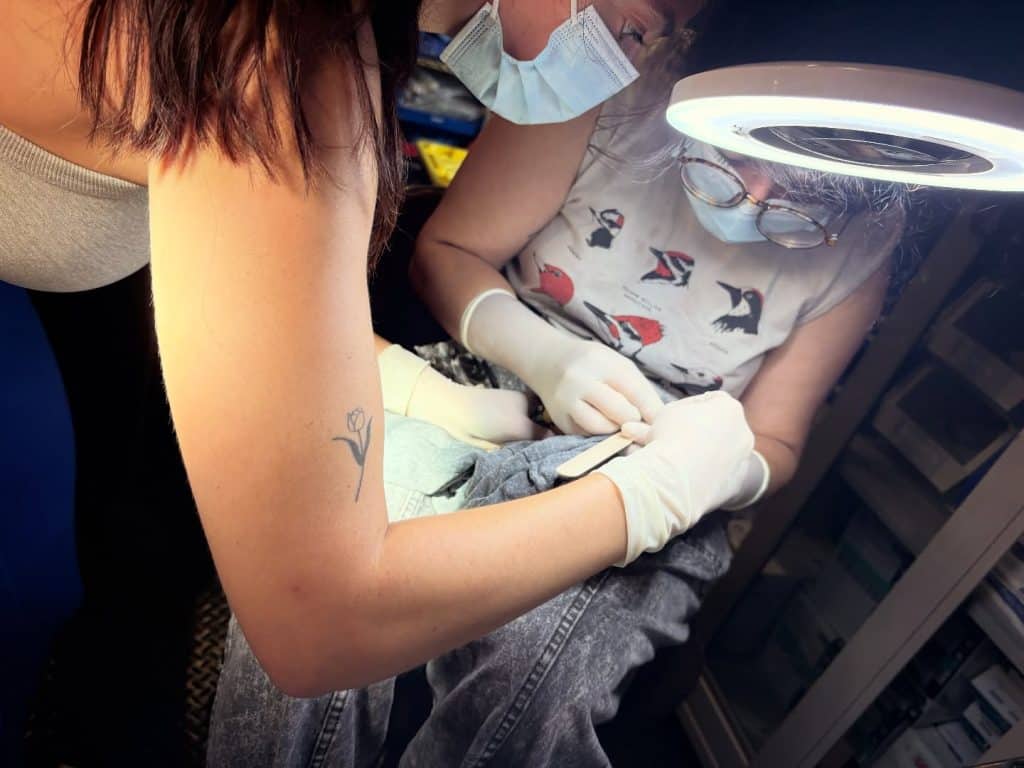
Dentist Rachael Gilardetti and another Congress of the Birds volunteer repair a peregrine falcon’s beak.
©Sheida Soleimani – Original
The Providence peregrine falcon survived the recent collision but needed specialized treatment for its beak. A local dental surgeon, Dr. Rachael Gilardetti, who had previously volunteered for Congress of the Birds, stepped up to lend a hand. Gilardetti, a member of a family dentistry practice that treats humans, proved invaluable in assessing and treating the falcon. She ascertained that the keratin part of the beak (outside sheath) was damaged, but that the important growth plate and soft tissue underneath were OK.
This was Gilardetti’s first bird beak repair.
“Before we dove into it, we did a good amount of research. I do a lot of pretty complex [human] surgeries in the mouth, so I’m very comfortable working with my hands,” she says. “After I got the OK from some veterinarians and wildlife researchers, I researched the anatomy and physiology of beaks, and then I felt comfortable.”
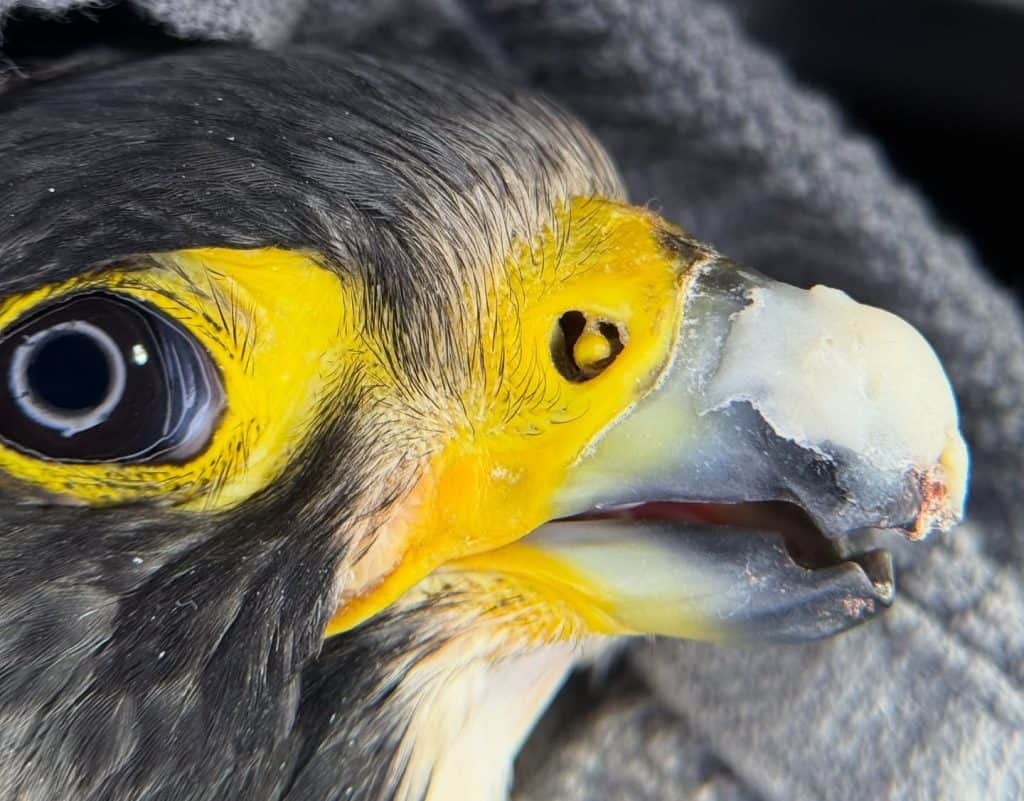
Peregrine falcon after beak repair, showing the dental material applied to the break.
©Sheida Soleimani – Original
First, Gilardetti used the acrylic recommended by avian rehabbers, but the cast fell off after a couple of days. Since the falcon’s beak would need months to heal, a more durable solution was necessary. Gilardetti decided to try a material that worked on human teeth, since both human teeth and the keratin layer of birds’ beaks contain a structural component called hydroxyapatite.
“I figured that the materials I use here [in my dental practice] should work on beaks. So you know how they clean the tooth when you have a cavity, then put on a white material that hardens with the blue light,” Gilardetti says. “That’s the composite material I used, which chemically bonds to teeth.” Using her dental composite, Gilardetti—with Soleimani’s help—glued up the split and covered it with a beak-shaped patch designed to allow the keratin to regrow underneath.
It will take an estimated nine months for the beak to recover after this “nose job.” Because bird beaks are adapted to withstand high force, especially in those species that crush hard foods like nuts, any repair must result in a sturdy structure.
Every day, I see firsthand how human activity impacts wildlife—birds colliding with windows, being struck by vehicles, entangled in fishing line, poisoned by rodenticides and pesticides, or injured by domestic cats.
Sheida Soleimani, director and founder of the Congress of the Birds
The Best Rehab Care
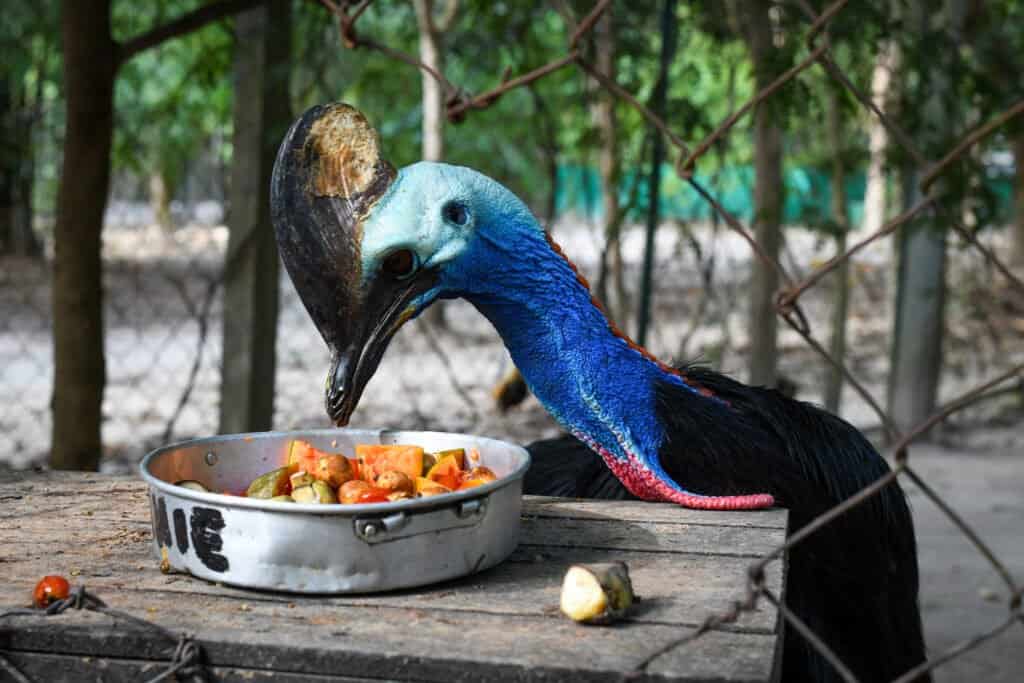
Rehab centers nourish many injured birds, such as this cassowary at the Wildlife Friends Foundation, Thailand.
©Pongpol Teinpothong/Shutterstock.com
During those months in captivity, the peregrine will enjoy a diet of chopped meat with vitamins and mineral supplements. In the wild, he would, of course, have to chop his own meat, but he requires special treatment until his beak gets stronger. This peregrine will graduate to catching mice when he is ready and will also spend time in a large enough “flight enclosure” so he doesn’t forget his fundamental bird skills. After a year or more, if he shows that he can hunt and survive on his own, the peregrine will be released back into the wild.
Birds and Buildings
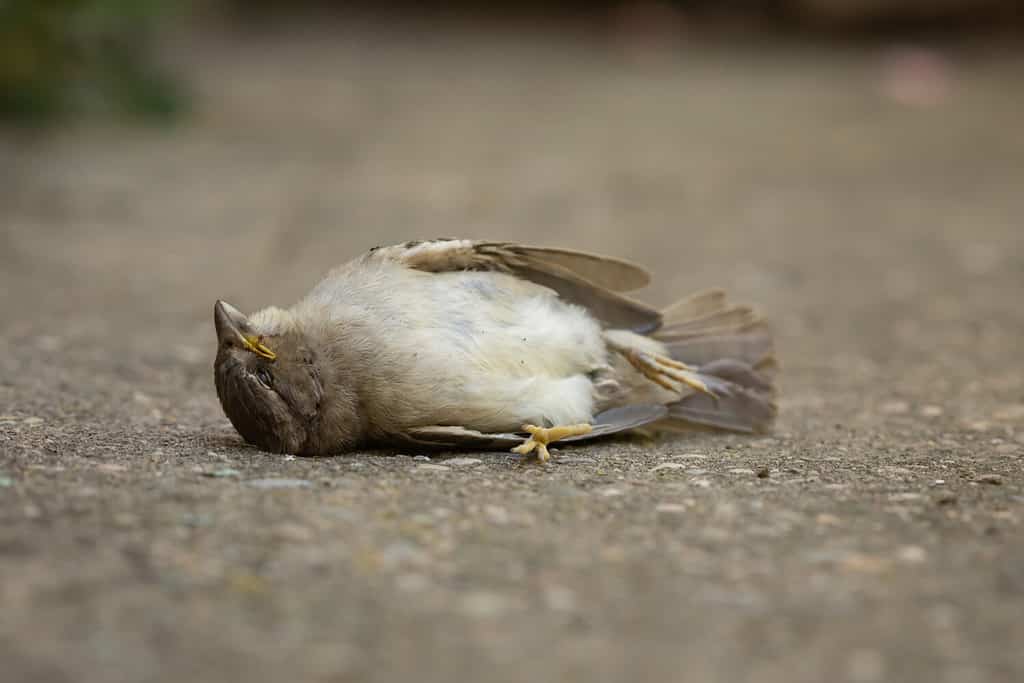
About 60% of birds that make it to rehab after hitting buildings die anyway.
©alvarobueno/Shutterstock.com
This rehabbed peregrine falcon was lucky to have survived the collision, since an estimated one billion birds die from building collisions annually. And even those who are lucky enough to receive the best care are not likely to survive. A recent study published in the journal Plos One found that only 40 percent of birds found injured by collisions with buildings and sent to wildlife rehabilitation survive (and that doesn’t account for the many that are not found).
“This indicates that birds who appear stunned or fly away after a collision are far more likely to die than previously thought,” says study author Ar Kornreich of Fordham University in a press release. Ironically, urban areas pose more risk to birds but a greater chance of discovery and rehab.
Bird Veterinarians
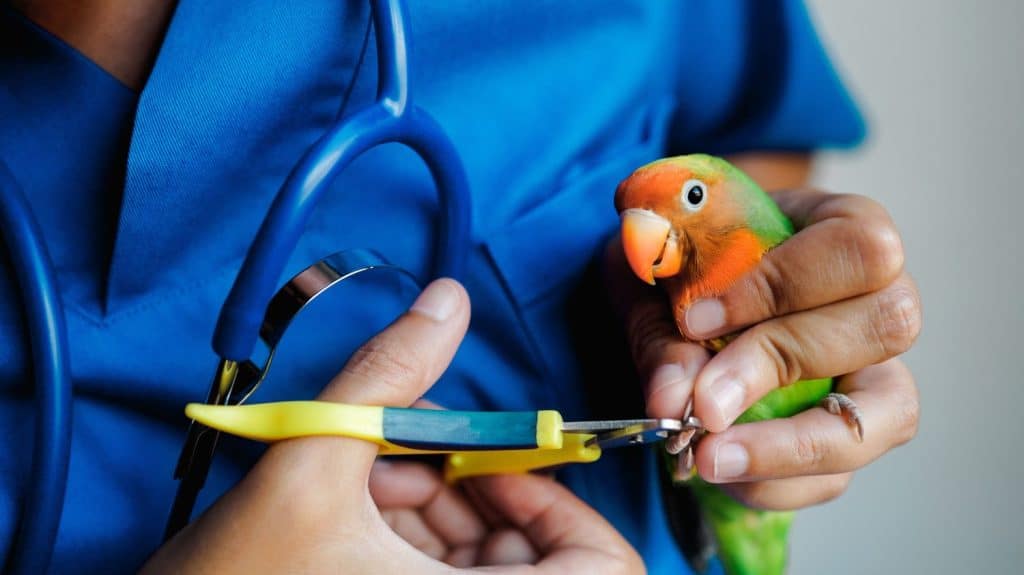
Bird veterinarians know how to safely trim both bird beaks and toenails.
©Nuva Frames/Shutterstock.com
Thanks to volunteer medical professionals like Dr. Gilardetti, injured birds have a chance of surviving. There are not many dentists who have taken the opportunity to repair bird beaks. But veterinarians who treat exotic animals have experience with beaks. Anyone who has owned a bird knows that beaks must be trimmed regularly, which may require a professional. And these professional veterinarians can also employ dental materials to fix broken beaks. In Orange, CA, The Bird Clinic says a bird vet has attended the California Dental Association (CDA) annual meeting every year since 1991 to adapt human dentistry to bird care.
Rehabilitation Experts

This red-tailed hawk received treatment for a broken beak at the Cascades Raptor Center.
Even without official dental materials, bird rehabilitation experts are figuring out how to repair broken beaks. A red-tailed hawk that suffered severe beak damage when hit by a car ended up in the care of a nonprofit wildlife hospital called the Cascades Raptor Center (CRC). The care team used a mixture of glue and baby powder to create new upper and lower beak tips for the hawk. Once dry, they filed the artificial beak to the right size and shape for feeding. A permanent marker was used to give the beak a more natural color. It will gradually erode as the real beak grows back out. “We are testing him for a while here in care but are hoping not to have to keep him until the beak grows all the way out,” CRC director Louise Shimmel explains to EarthTouch News Network.
Indian Ringneck Parakeet Case
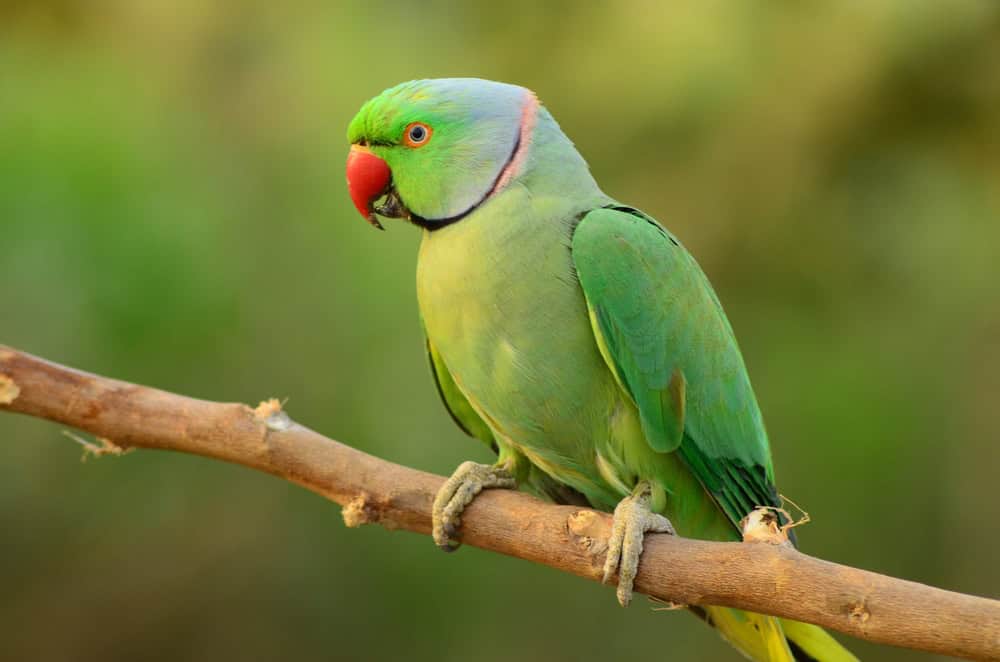
Bird rehab centers treat wild birds, including naturalized species such as Indian ringneck parakeets in Australia.
©Chetan Mahajan/Shutterstock.com
Specialized bird veterinary clinics will, in some cases, take on wild bird injury cases. Typically, the care of wild birds falls to rehabilitation centers, often staffed by volunteers, who must find vets willing to contribute their time. An Indian ringneck parakeet (Psittacula krameri manillensis) in Australia got injured in a fight with a macaw, resulting in a crushed, split lower beak. A Melbourne bird vet—Dr. Phil Sacks—stepped up to save the parakeet, see HERE. The repair was laborious, requiring anesthesia for the bird, as the vet wired the remains of the lower beak together and patched the break.
Kookaburra Case
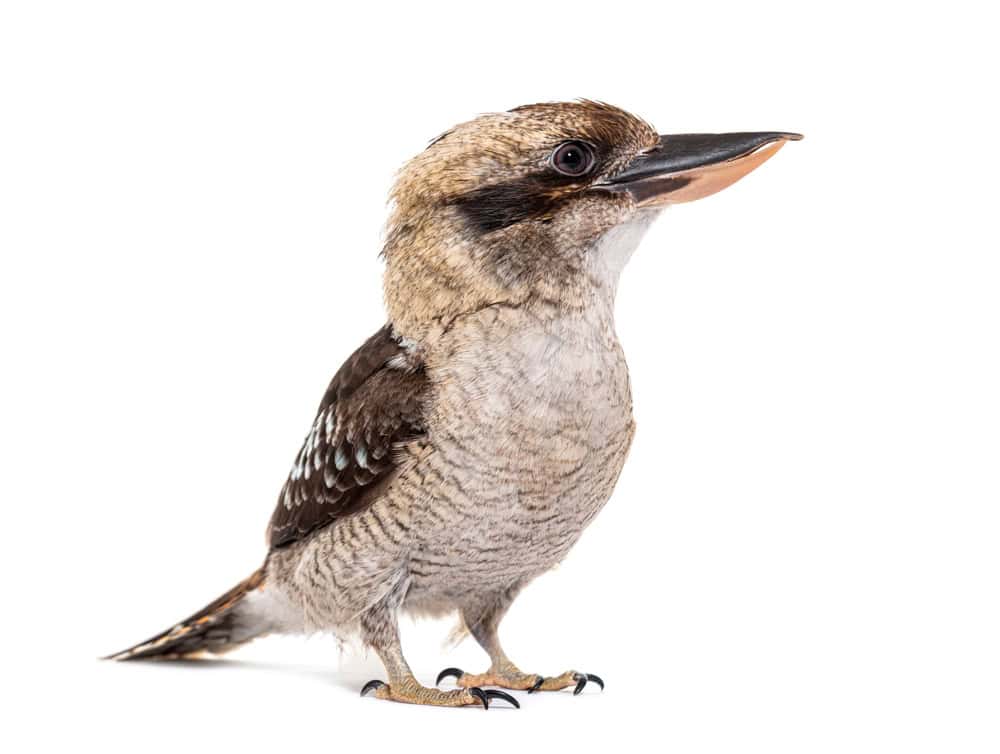
Laughing kookaburras, like the one pictured here, need their stout beaks to catch small prey such as mice.
©Eric Isselee/Shutterstock.com
Zoos, in contrast, often have their own veterinary staff, including bird specialists who know how to repair beaks. The Lake Superior Zoo, for example, had to repair a hole in the beak of a laughing kookaburra (Dacelo novaeguineae) that presumably resulted from a collision with a solid surface, creating a crack that widened into a hole. The bird was not likely laughing after her trauma, since kookaburra “laughs” are the sounds they use in social communication to announce their territories to other kookaburras. The Lake Superior Zoo vets strategically patched the hole with epoxy over a wire scaffold threaded through tiny openings drilled into the beak. The kookaburra “Nancy” reportedly could feed normally once her patch hardened.
Amazon Parrot Case
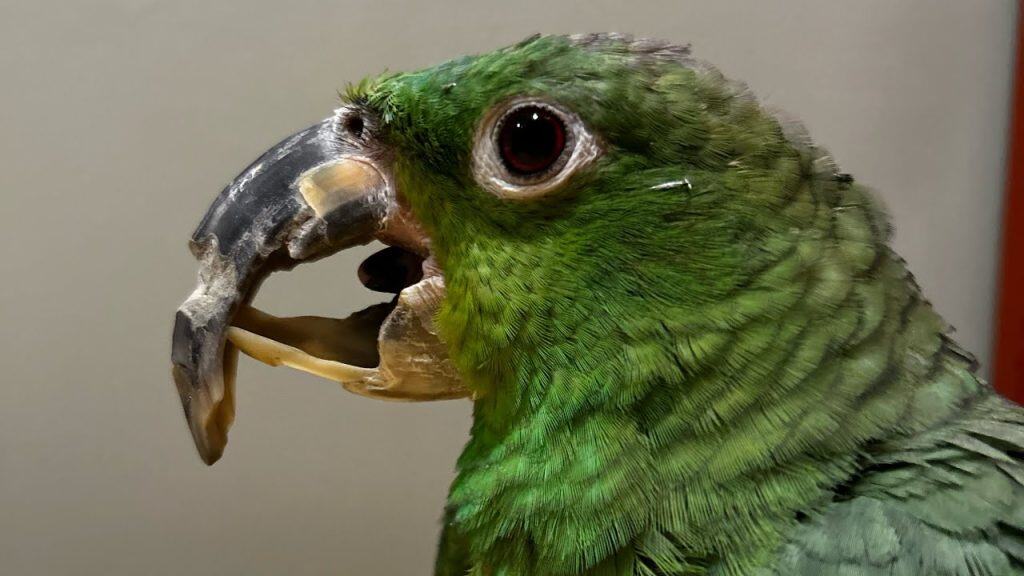
An Amazon parrot with a messed-up beak was brought to an Ohio rehabber for care.
A mealy Amazon parrot (Amazona farinosa) was brought to bird rescuer GeckoEmmy with a badly damaged beak from overgrowth and neglect in captivity as a pet.
“The most challenging aspect of Paco’s beak repair was knowing how much to remove at a time to let his muscles and tendons recover slowly,” Emmy says. “They were in unnatural positions due to the pressure being put on these delicate structures over a period of time, and too much keratin removed at once could have made it difficult for him to move his beak properly. I removed it in phases to allow the inner mechanisms to return to a more natural position.”
If Emmy had not repaired “Paco’s” beak, he would eventually have lost his ability to eat and would not have survived long without hand feeding.
Anatomy of a Beak
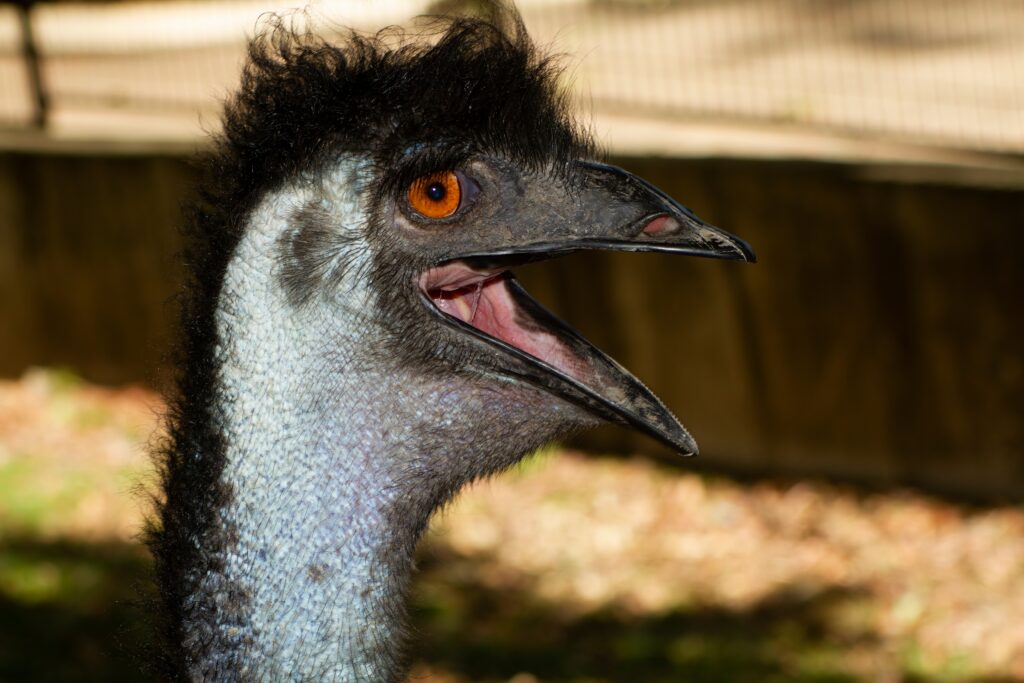
You can see how living tissue underlies the keratin sheath on this emu’s beak.
©IngeBlessas/Shutterstock.com
In thinking about the structure of a bird’s beak, the part you see is the keratin outer covering that birds use to feed. While it may crack or break off, the keratin can regrow over time like our fingernails. However, the underlying network of blood vessels and nerves—including a sensitive touch organ at the tip of the beak—is not easily restored if damaged. Once that organ gets damaged, the bird will not have sensation at the tip of the beak, which helps in holding onto food and preening. A damaged beak may bleed from the blood vessels just under the keratin surface.
Release Back Into the Wild

Some injured birds, such as this Verreaux’s eagle at a rehabilitation center in South Africa, cannot be released back into the wild.
©Eleanor Esterhuizen/Shutterstock.com
Time will tell whether the peregrine falcon that crashed into the Rhode Island Hospital will recover enough functionality of its beak to live as a wild bird. The good news is that, well, it could have been worse.
“Without intervention, the bird almost certainly would not have survived. Losing the ability to tear food meant he couldn’t hunt or feed himself, which would have led to starvation,” Soleimani says. “Additionally, without proper medical treatment—especially anti-inflammatory medication—he likely would have succumbed to the head trauma from the incident. The care he received was truly life-saving.”
A bird’s beak can get torn right off its face from a hard impact, rupturing the blood vessels and nerve connections. In those cases, beak amputation may be the only course of action, likely leaving the bird unable to feed itself and entirely dependent on humans. Congress of the Birds offers instructions on what to do if you find a bird that has been stunned and potentially injured by a window strike. And dentists like Gilardetti stand ready to help.
“This has been my only bird beak repair, but it might not be my last. If another bird needs it, I’ll do another repair,” Gilardetti says.