
Quick Take
- Rectilinear locomotion looks like the snake is walking, yet the body part you would expect to drive that movement is doing something else entirely. See the mechanics →
- Only certain snakes regularly utilize use this motion, and the reason why has nothing to do with species and everything to do with physiology. Discover which snakes qualify →
- Being slower is actually the whole point of this movement style, and it helps while hunting. Explore the stealth advantage →
- One common invertebrate moves in a way that eerily mirrors rectilinear locomotion, though it still cannot quite replicate it. Meet the earthworm comparison →
Snakes are some of the best-known reptiles, with more than 4,000 species across the world. When we think of snakes, we instantly think of their typical side-to-side slithering motion. However, some snakes move in a different way, known as rectilinear locomotion. This is a straight-line movement that is primarily used by only a few types of snakes. Keep reading to find out how it works and why they use it!
How Rectilinear Locomotion Works
Rather than using the typical side-to-side slithering motion that we usually associate with snakes, rectilinear locomotion results in the snake moving in a straight line. To achieve this motion, they use a combination of muscles in their belly and near their ribs. The muscles involved are the costocutaneous inferior and costocutaneous superior, which connect the snake’s ribs to the skin on its belly.
From above, it can appear as though the snake is “walking” on its belly. In reality, it uses its muscles to lift alternating sections of its belly off the ground and move each one forward. This essentially functions as a walking pattern, but it is not walking in the traditional sense. Although it can look as though the movement comes from the ribs themselves, the snake is not actually “walking” along the ground. Instead, the ribs serve as anchor points for the muscles. At the same time, the belly skin and scales provide traction on the ground, which helps to both pull and propel the snake forward. Rather than lifting the entire body on one side off the ground at the same time, the snake lifts its belly in sections, creating a wave or ripple-like movement.
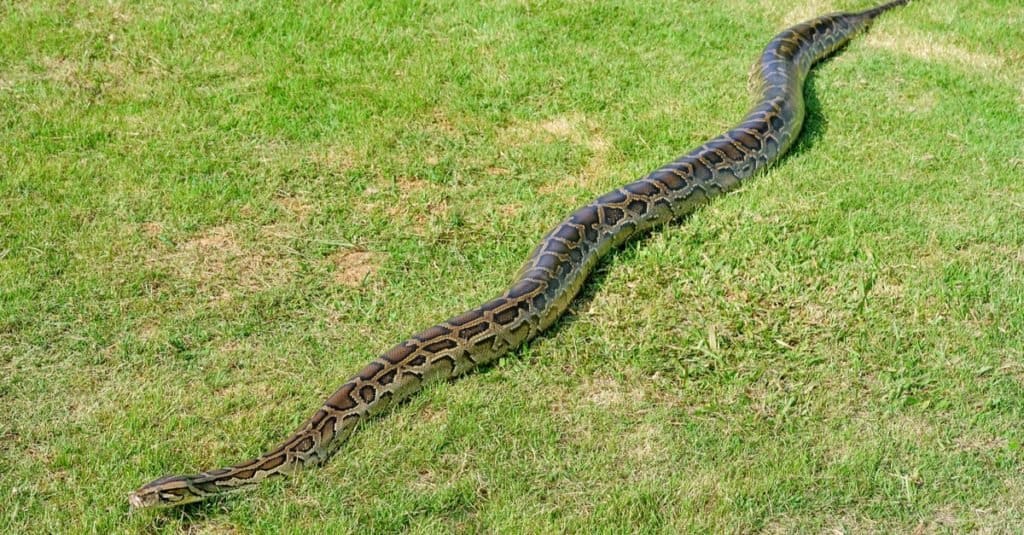
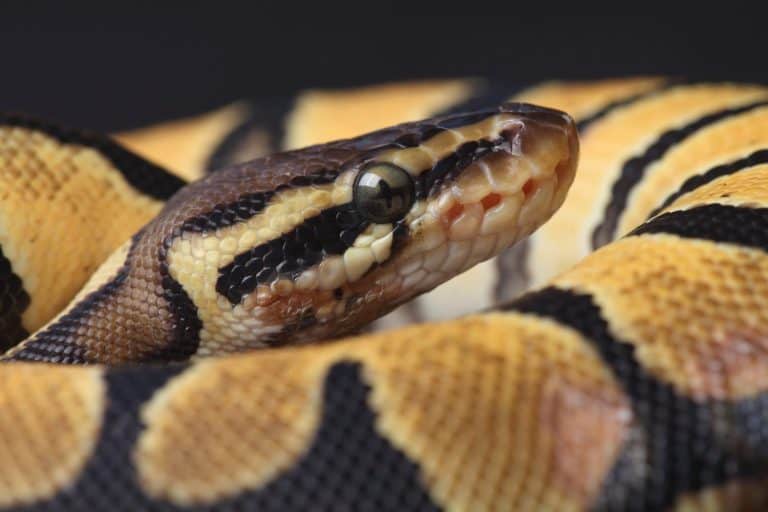
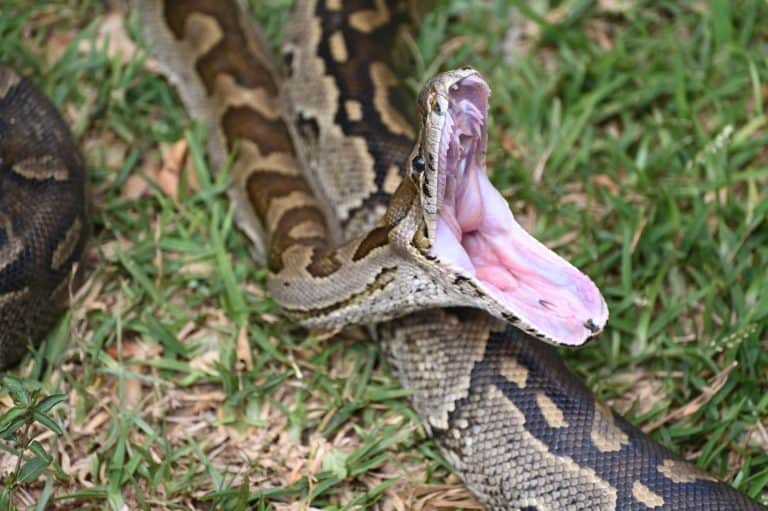
Pythons are one of several types of snake to use rectilinear locomotion.
©Yatra/Shutterstock.com
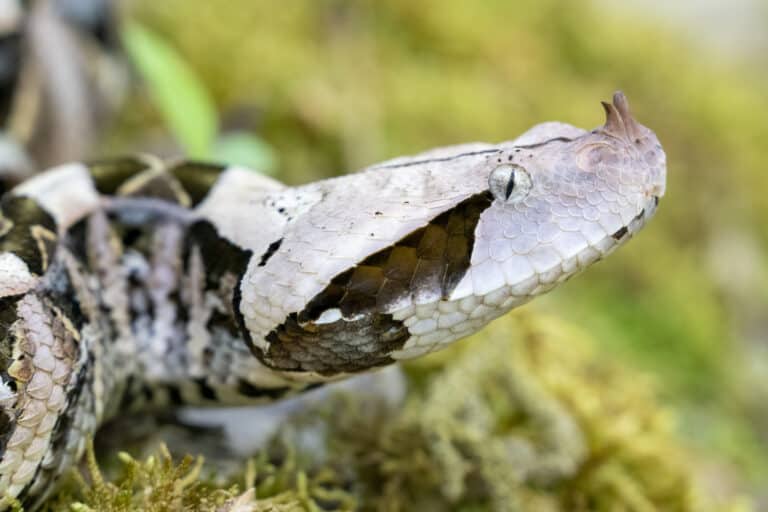
Although it seems like a relatively simple thing for the snake to do, it actually requires extremely strong muscles in order to achieve the combination of lifting the belly and propelling it forward. Therefore, rectilinear locomotion is actually only associated with large, heavy-bodied snakes. This includes snakes such as pythons, boas, Gaboon vipers, and puff adders.
Why Snakes Use This Type of Movement
Rectilinear locomotion is actually just one of several movement types available to snakes. The others are concertina locomotion, sidewinding, and lateral undulation. Although rectilinear locomotion is typically only used by larger-bodied snakes, they don’t use it all the time. Instead, they switch between movement types depending on the situation and the terrain.
Rectilinear locomotion is a slow-speed movement, generally slower than other forms of snake locomotion. As it is such a slow movement, it means that the snake doesn’t make much noise, even amongst leaf litter. This makes the snake harder to detect by other animals. Therefore, it is typically used at times when stealth is a priority. This is primarily when they are stalking prey and trying to creep closer undetected. Rectilinear locomotion is not used as a defense mechanism. However, being quiet can be useful when the snake needs to avoid danger.
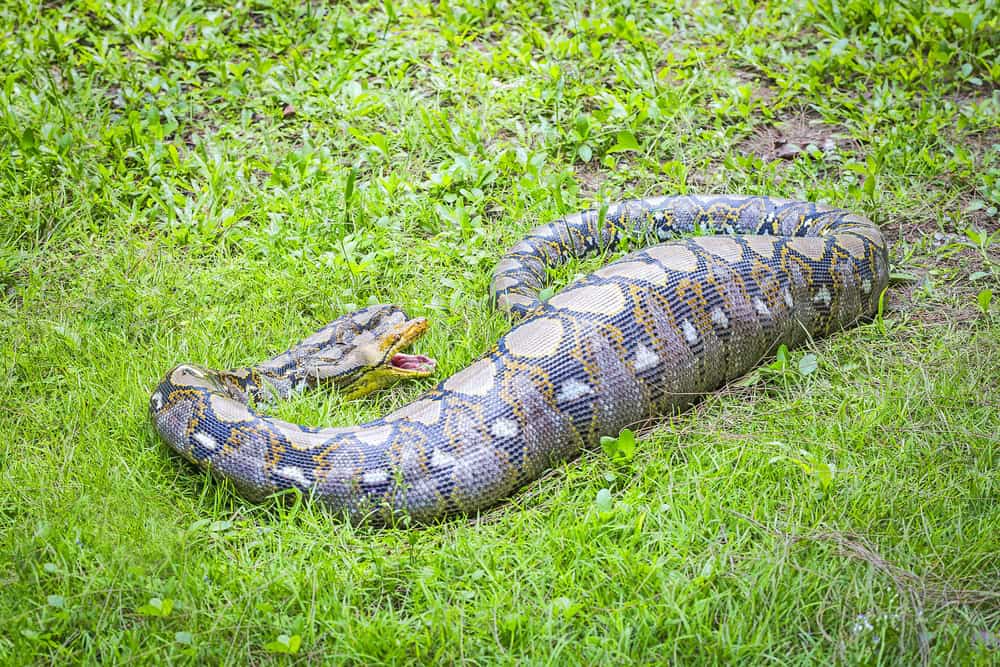
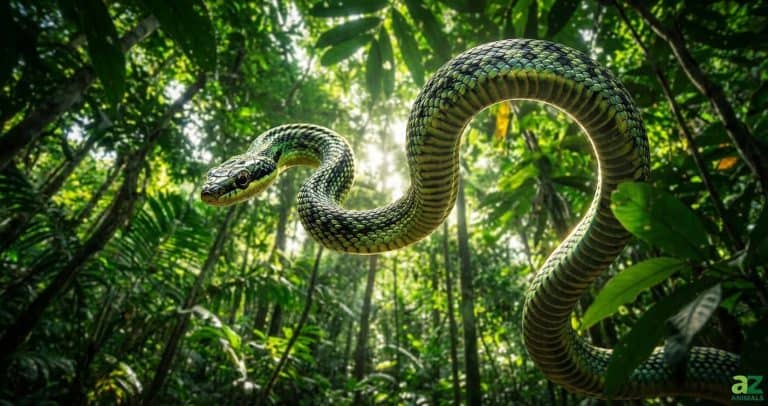
Rectilinear locomotion is often used when the snake is stalking their prey or after a heavy meal.
©tanoochai/Shutterstock.com
Rectilinear locomotion is also useful when the snake is trying to move through a small gap, where the space is too narrow for side-to-side movement. This could be a space such as a burrow, den, or rocky area where there’s little room for navigation. It can also be useful after the snake has eaten a large meal, when it cannot easily move side-to-side.
Do Other Animals Use Rectilinear Locomotion?
True rectilinear locomotion is most closely associated with snakes because of the way that their bodies are so well adapted for it, with their long bodies and movable skin. Although you might expect some legless lizards to use the same type of movement, their lack of belly scales limits their ability to do so. Without sufficient grip, they cannot propel themselves forward in a straight line. Instead, they use a motion similar to the typical side-to-side movement seen in snakes, although it is much stiffer than that of snakes.
Some worms and other soft-bodied invertebrates utilize a movement that is closer to rectilinear locomotion, although it is still not exactly the same. Some studies suggest that earthworms, in particular, bear some similarities as they use a wave-like movement caused by contraction and expansion along their body. However, despite these similarities, rectilinear locomotion remains a unique movement distinctive to snakes.