
Quick Take
- More potent venom doesn't automatically mean more dangerous, and these two snakes split that distinction in a surprising way. Compare venom potency →
- A simple rhyme can help you tell a deadly coral snake from a harmless look-alike, though this only holds true if you know the rule and its limits. See color pattern differences →
- Their ranges overlap in ways most people don't expect, and knowing where puts you ahead of most hikers in the Southeast. Explore their overlapping ranges →
Many people confuse cottonmouth snakes and coral snakes, as they’re both venomous. However, these snakes differ in many ways, from their size and appearance to their location. In this article, we speak with a herpetologist about the notable contrasts between these two snakes. Here are the differences between cottonmouth and coral snakes, so you can properly identify these venomous creatures.
Where Are the Snakes Found?
Cottonmouth snakes and coral snakes are found in different parts of the U.S., but they do overlap in some locations.
“Both cottonmouths and coral snakes are native to the United States,” says Michael Ring, a herpetologist from Arizona with an extensive background in venomous snakes. “The three native species of coral snake—the Arizona coral snake, Texas coral snake, and Eastern coral snake—are found within their respective ranges in the Sonoran Desert, Texas, and the American Southeast (Florida, Georgia, etc.).
“Cottonmouths, meanwhile, are primarily found throughout the American Southeast, ranging as far west as Texas and as far north as Virginia,” he continues. “There are regions where the ranges of coral snakes and cottonmouths overlap.”
Size and Appearance of Cottonmouths vs. Coral Snakes
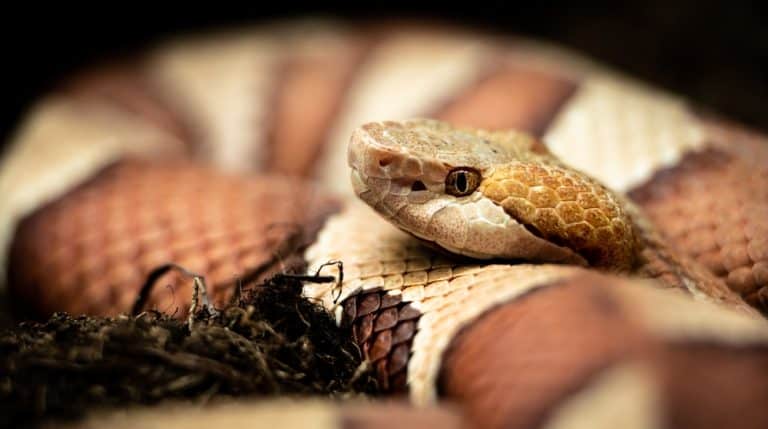
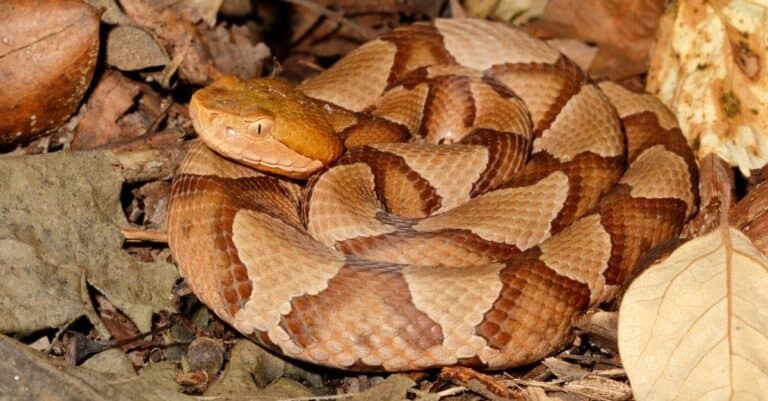
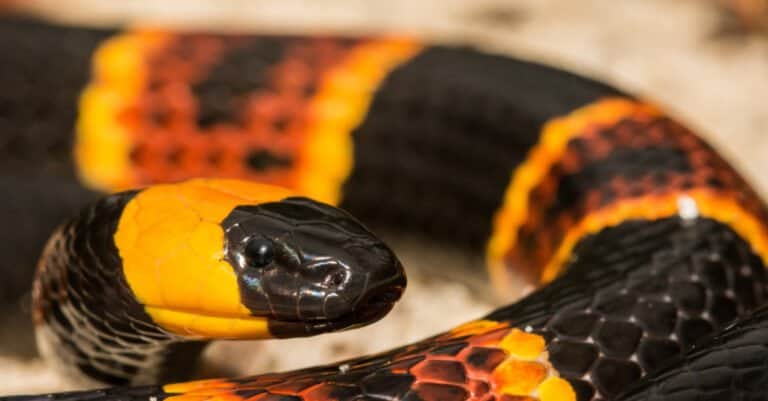
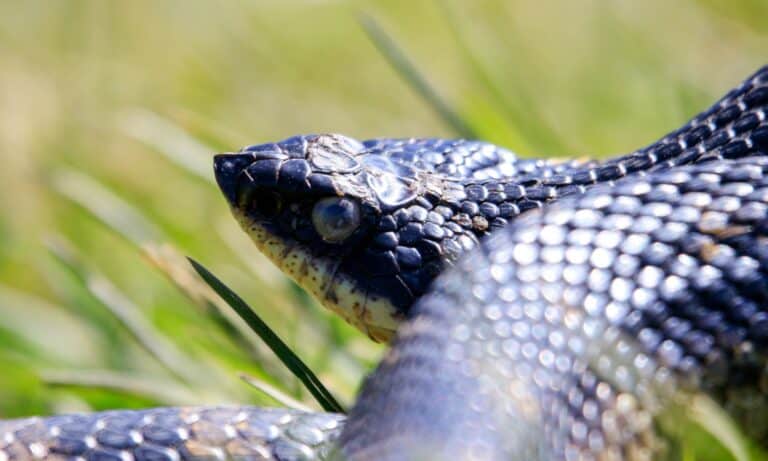
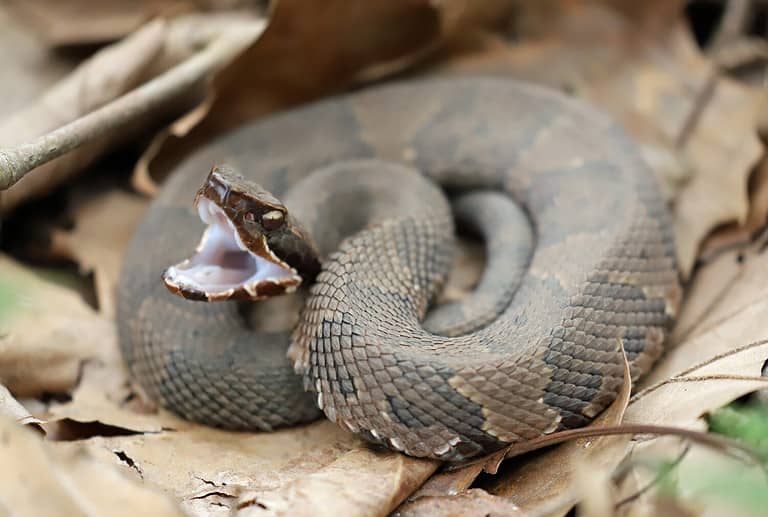
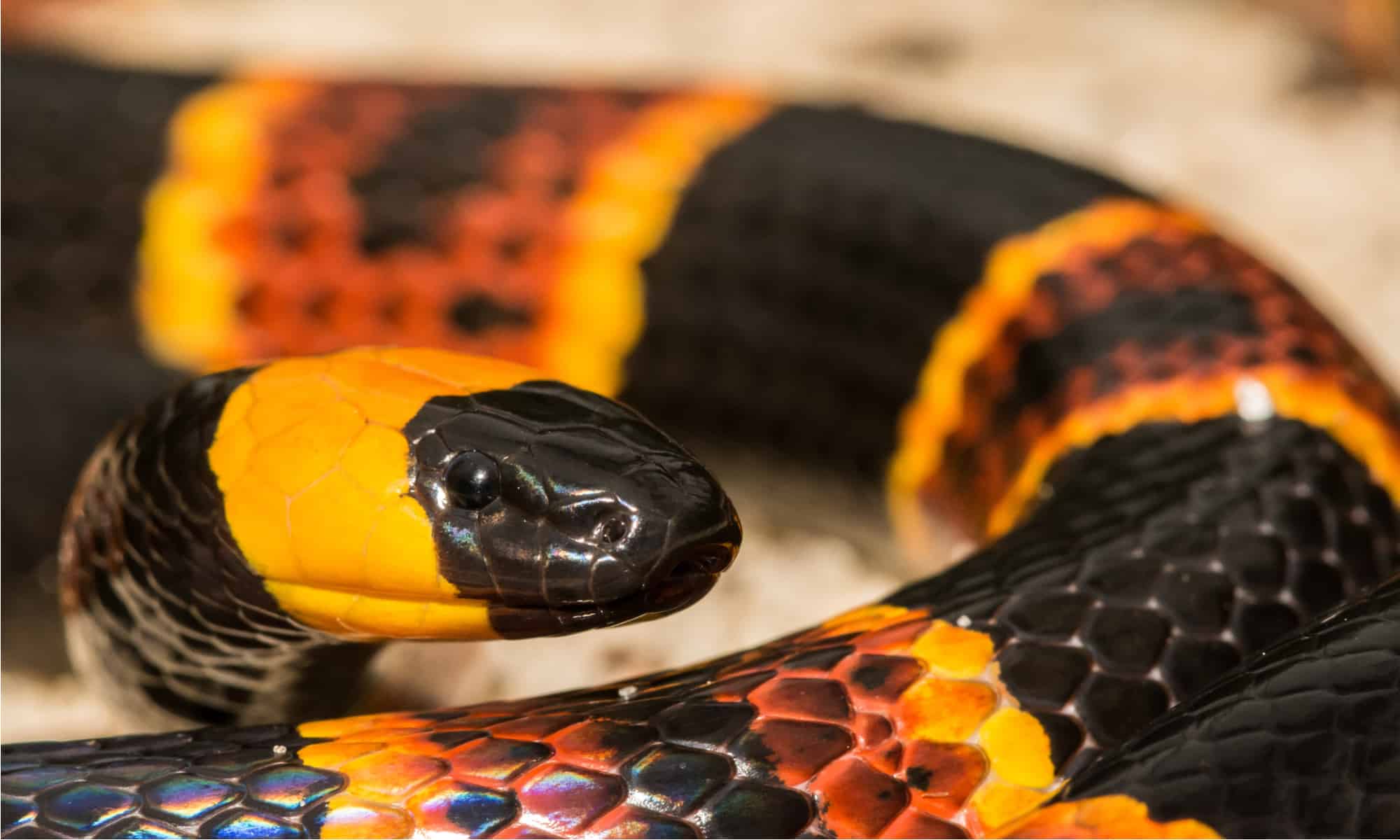
Cottonmouths and coral snakes differ in their appearance. Cottonmouth snakes have thick, dark-colored bodies with distinctive markings and crossbands. Coral snakes, on the other hand, are more colorful, displaying bands of red, yellow (or white), and black.
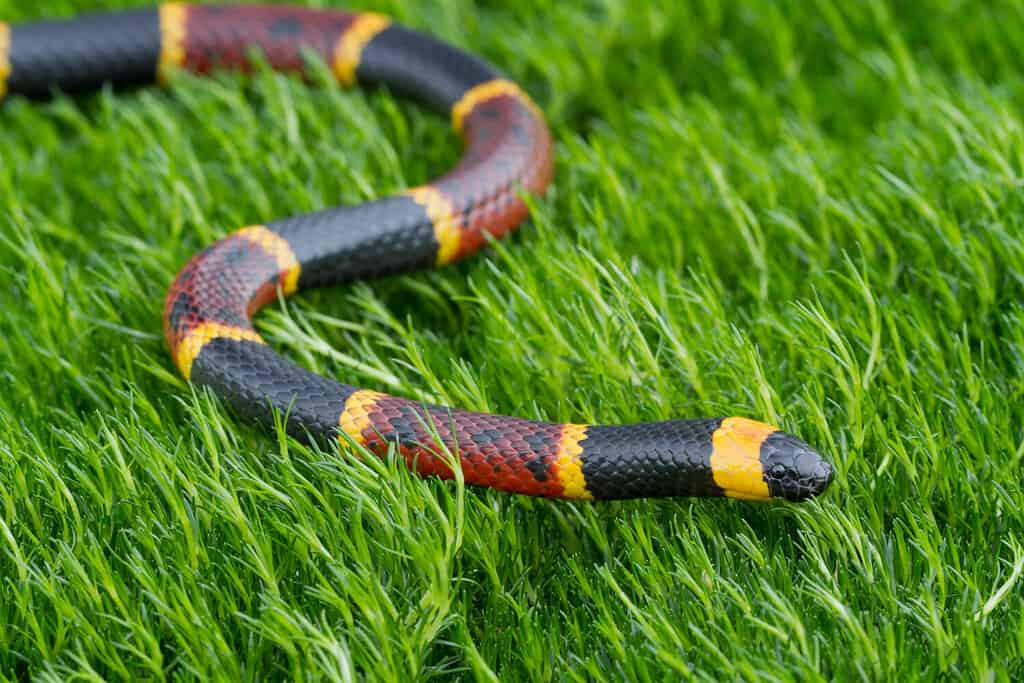
Coral snakes are highly venomous creatures, but their markings make them easier to spot.
©Mark_Kostich/Shutterstock.com
According to Ring, neither cottonmouths nor coral snakes are particularly large. Most would consider them average in size. However, cottonmouths are thick-bodied, while coral snakes are more slender.
“The longest North American coral snake is the Eastern coral snake, which can reach lengths of more than three feet,” Ring explains. “Other species, such as the Sonoran coral snake, are considerably smaller and typically grow to around 20 inches in length.”
Cottonmouths are larger than coral snakes, with adults reaching an average of around 4 feet in length, Ring states.
Both cottonmouths and coral snakes are venomous snakes, but the composition and overall potency of these two reptiles’ venoms differ greatly.
Michael Ring, herpetologist
Which Snake Is More Venomous?
While both snakes are venomous, coral snakes have more potent venom, whereas cottonmouth snakes produce a larger quantity of venom.
“Both cottonmouths and coral snakes are venomous snakes, but the composition and overall potency of these two reptiles’ venoms differ greatly,” says Ring. “As elapids (the same family of venomous snakes that includes cobras), the three species of coral snakes found in the United States possess highly potent neurotoxic venom.”
However, cottonmouth snakes typically inject larger amounts of venom, which can cause severe tissue damage and even necrosis.
“In comparison, the cottonmouth’s venom is significantly less potent and is primarily used to immobilize its preferred prey, including frogs, fish, birds, and small mammals or reptiles,” Ring says.
Which Snake Is More Dangerous to Humans?
Regarding the danger these snakes pose to humans, the general public should not be overly concerned, but should exercise caution if they encounter one in the wild. Although the risk is low, a bite from either of these venomous snakes can be deadly.
“Although both coral snakes and cottonmouths have caused human fatalities in the United States, deaths are exceptionally rare,” Ring explains. “Neither species is aggressive and will usually attempt to escape when encountering humans … With access to modern medical treatments such as antivenom, the likelihood of dying from a bite is statistically very low.”
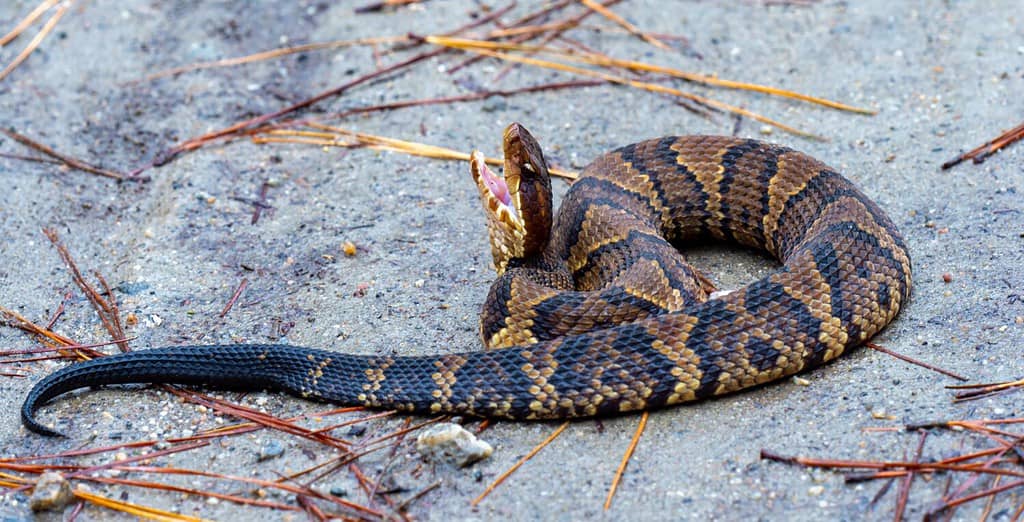
Cottonmouth snakes might be venomous, but they are not naturally aggressive.
©Kyle J Little/Shutterstock.com
When comparing the two species, coral snakes tend to be more dangerous due to their highly potent venom.
“Between the two species, a bite from a coral snake would generally be more dangerous to humans because of the neurotoxic properties of its venom,” says Ring. “Left untreated, the venom can affect the body’s nervous system and potentially cause paralysis or other neurological complications. It should be noted, however, that coral snakes are highly cryptic, spending much of their lives hidden beneath leaf litter or sand while feeding on small prey. Despite possessing more potent venom, coral snakes are far less likely to bite humans because of their secretive nature.”
If you encounter one of these snakes, it’s best to leave it alone. Typically, they will only bite if provoked and are more likely to flee than to act aggressively toward humans.