
Quick Take
- Falcons used at airports aren't trained to hunt, so what exactly are they doing out there? See what falcons actually do →
- Every airport bird deterrent eventually stops working, with one notable exception whose explanation is buried in bird biology. Why falcons never stop working →
- Bird strikes cost the industry hundreds of millions a year, yet the most effective fix costs a fraction of a single serious incident. Most airports still don't use it. See the cost of bird strikes →
- Not all raptors do the same job on the runway, so matching the wrong bird to the wrong threat is a real problem. Compare raptor roles →
Collisions between aircraft and birds are known as bird strikes, and they are one of the most persistent safety hazards in commercial aviation. Costing the U.S. industry an estimated $300 million or more per year and contributing to hundreds of fatalities and destroyed aircraft worldwide since 1988, bird strikes are a real problem that airports are getting increasingly creative in trying to prevent.
In fact, airports use a wide range of deterrents to manage this problem: propane cannons, pyrotechnics, border collies, habitat modification, and radar monitoring, to name a few. However, at a growing number of airports across North America and Europe, one of the most effective tools in preventing bird strikes is just other birds. Namely, falcons.
Trained raptors have been used for wildlife management at airports for decades, and the science behind the practice is what makes it work: prey birds cannot adapt to predators the way they can to noise or simpler deterrents. How are airports using falcons in their airspace, and what does the research say about the benefits of airport falconry?
Here’s a closer look at one of the few deterrent methods for bird strikes that doesn’t lose effectiveness over time.
How Dangerous Are Bird Strikes?
The FAA’s National Wildlife Strike Database recorded 22,372 wildlife strikes at U.S. airports in 2024 alone. However, because bird strike reporting remains voluntary, this figure likely undercounts actual incidents by a potentially wide margin.
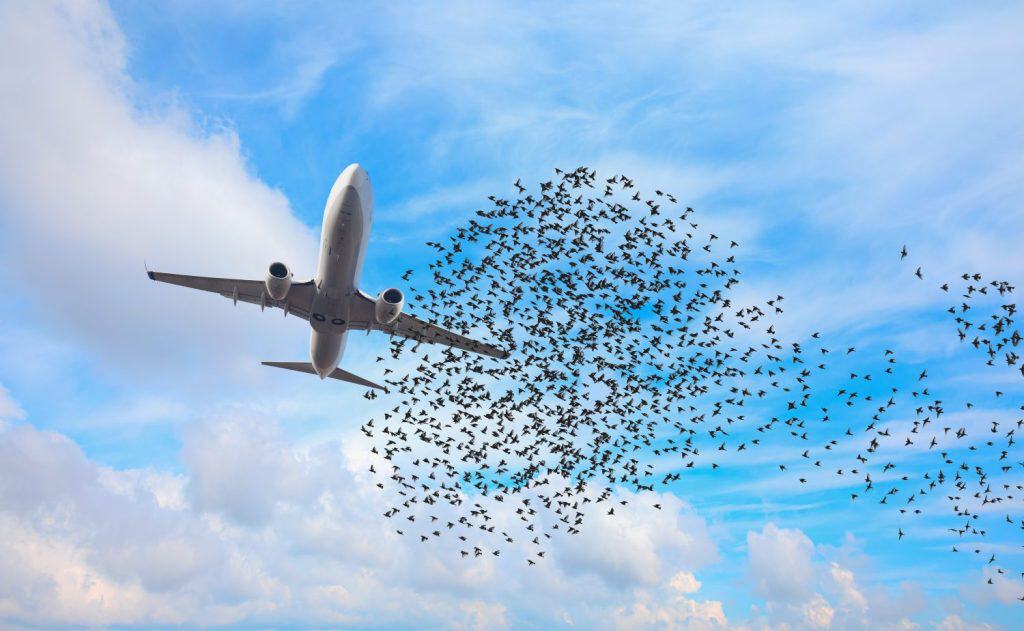
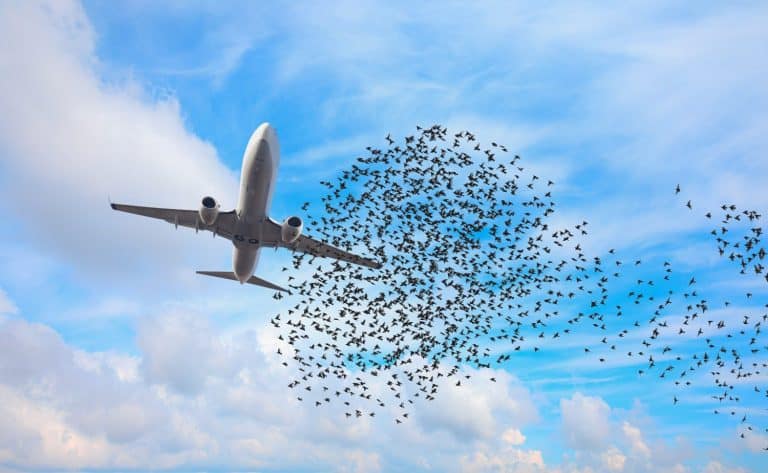
Bird strikes can cause millions in airplane damages, and can even cost lives.
©muratart/Shutterstock.com
Since 1988, wildlife strikes have killed more than 499 people and destroyed over 361 aircraft globally, and the FAA estimates losses could be as high as $300 million per year when adjusted for unreported strikes. But why do these costs and dangers add up in a bird strike scenario?
The primary danger of bird strikes is that they occur at low altitude. About 61% of bird strikes with civil aircraft occur during landing phases of flight, with another 36% happening during takeoff and initial climb. Wings and engines are the primary locations a plane gets damaged (each accounts for roughly 25% of all damaged aircraft components), and the delicate timing needed for these flight phases puts bird strikes into perspective.
The problem is also getting harder to manage. Faster, quieter aircraft give birds less warning before impact, and wildlife populations near airports have expanded steadily, likely due to urban sprawl occupying their former habitats.
How Conventional Bird Deterrents Lose Effectiveness
For decades, airports have tried nearly everything to prevent bird strikes. Propane cannons can fire random blasts to startle birds, while less-disruptive recorded predator calls might work on bird flocks for a few months. Laser patterns can sweep open ground; border collies can patrol airport margins, startling any birds away. Airport landscaping tips can also be handy: cutting grass short, draining standing water, removing seed-bearing vegetation, and, of course, no trees, reduces attractants.
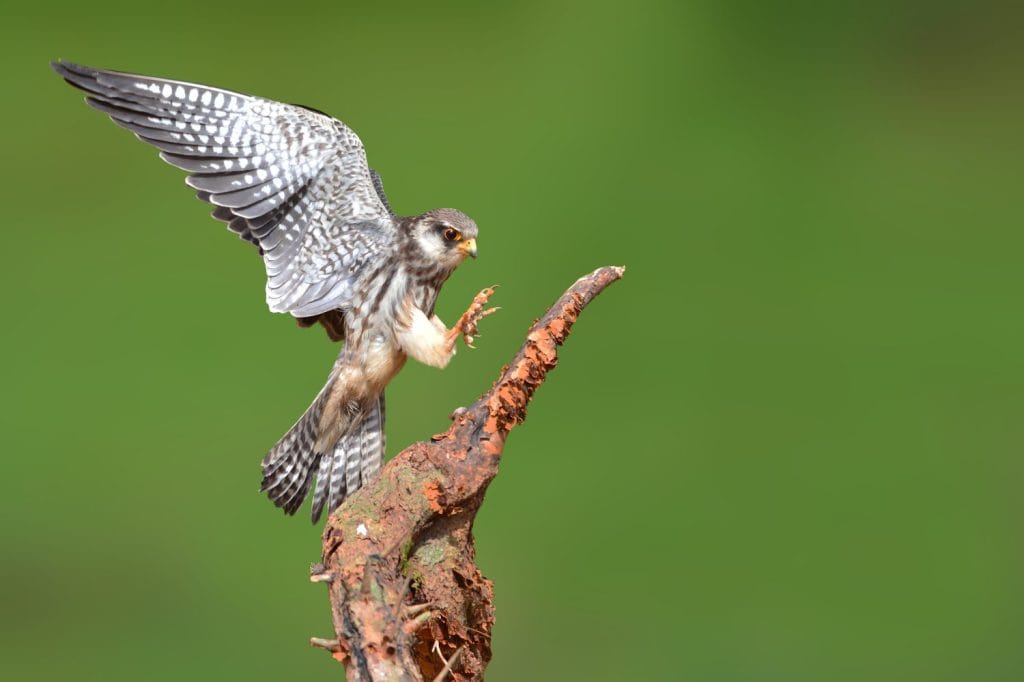
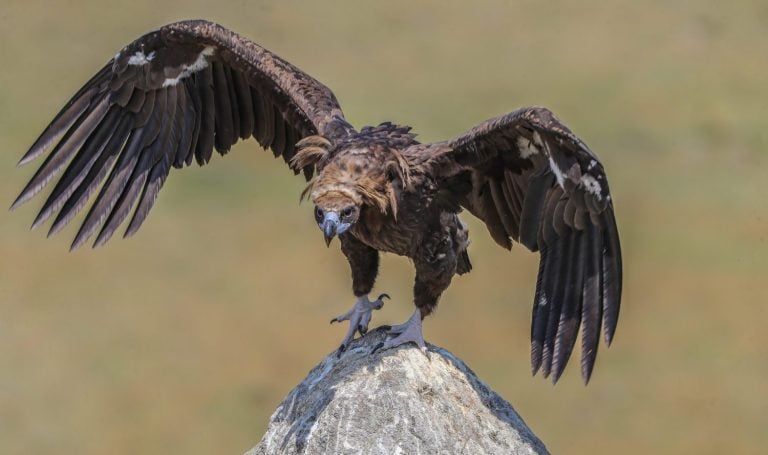
Falconry works when conventional bird deterrents fail, as they activate an innate part of a prey bird’s brain.
©Butterfly Hunter/Shutterstock.com
All of these tools can work, but habituation spreads quickly in birds. In particular, the migratory shorebird species that gather in large numbers near coastal airports learn to tolerate noise. And this awareness and ignoring of certain sounds can happen for generations of birds.
But What About Falcons as Deterrents?
“Just the sight of a falcon flying is enough to scare the birds away from an airfield,” said Mark Adam, president of Falcon Environmental Services; the company runs raptor programs at Toronto Pearson International Airport, Montreal-Trudeau International Airport, and several military airfields in North America.
“It’s like the shark in the water. If you were at the beach and saw a shark fin, you’d get out right away. The same thing applies to raptors and smaller birds — they see that ‘fin’ and they get out.”
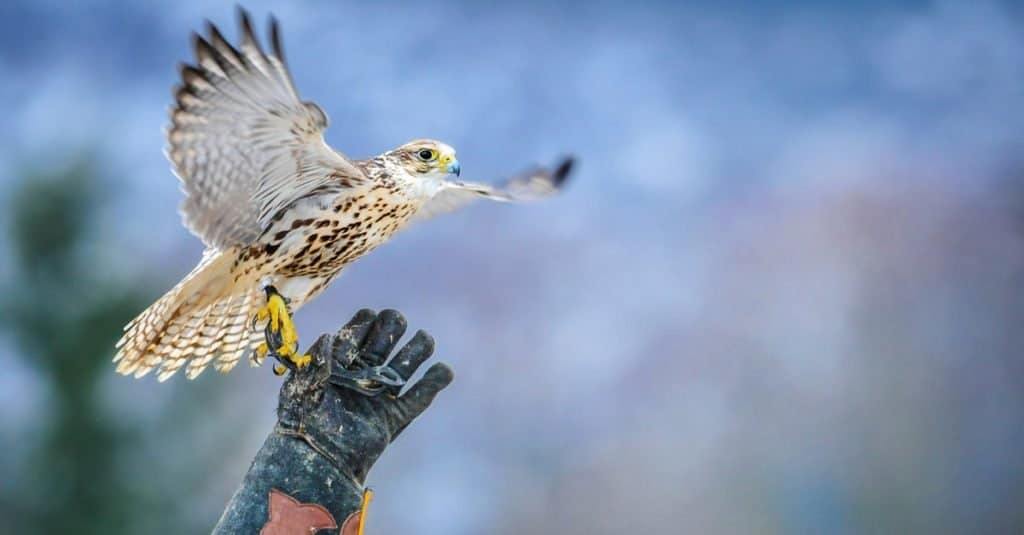
Falconry, the ancient sport of using birds of prey to hunt wild animals, has existed for at least 4,000 years, and it continues to exist in airports.
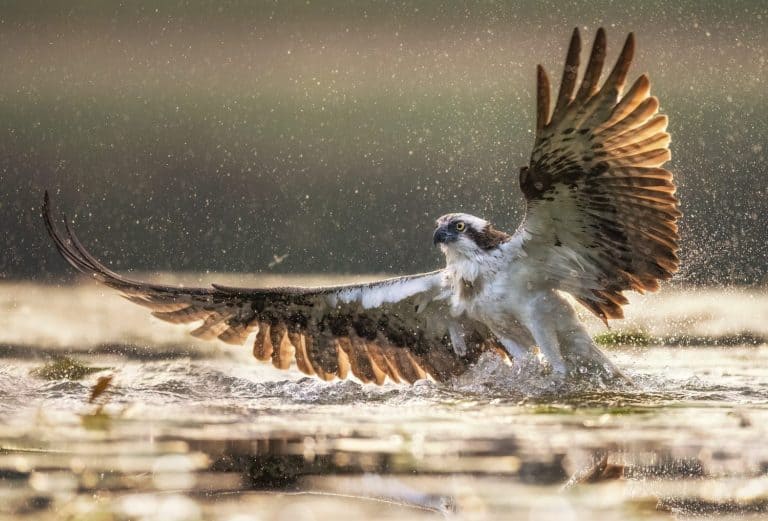
©Krasula/Shutterstock.com
Prey birds understand the threat of a falcon, with their responses hardwired; this immediate escape response never goes away.
How Airport Falconry Works in Practice
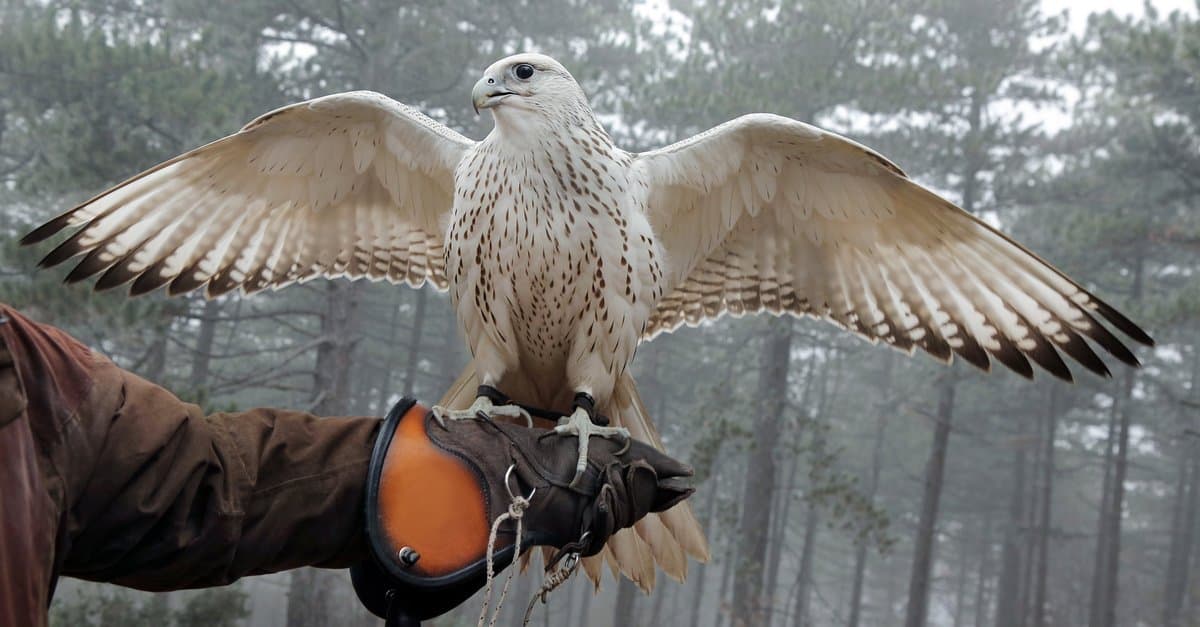
Raptors used in airport programs are captive-bred and not wild-caught. They are also trained specifically for high-traffic, high-noise environments. It’s important to note that they are not trained to kill other birds, only to intimidate.
A falcon flies trained circuits above a runway until any birds in the area leave and the airspace is deemed safe. The falcon lands back on its falconer’s glove and is rewarded.
“They’ll tolerate a propane cannon going off beside them when they’re hungry,” YVR falconer Kristine Kirkby said in an interview with Earth Island Journal. “Whereas if they see a falcon, because they’ve evolved with the serious threat that falcons pose, they recognize it as a predator and they have to leave. They can’t really become habituated to falcons.”
Airports Currently Utilizing Falconry
At Vancouver International Airport (YVR), Pacific Northwest Raptors has operated a falconry program since 2012. Their team patrols seven days a week during the months of October through April, which is the period corresponding to peaks in migratory and wintering bird activity. Falconers also work shifts aligned to tidal patterns at coastal airports; when nearby mudflats flood and feeding is cut off, birds head directly toward these airports, so a well-timed crew can halt this process. The team works with falcons, Harris’s hawks, and a bald eagle, each selected for different tactical roles depending on the species causing problems that day.
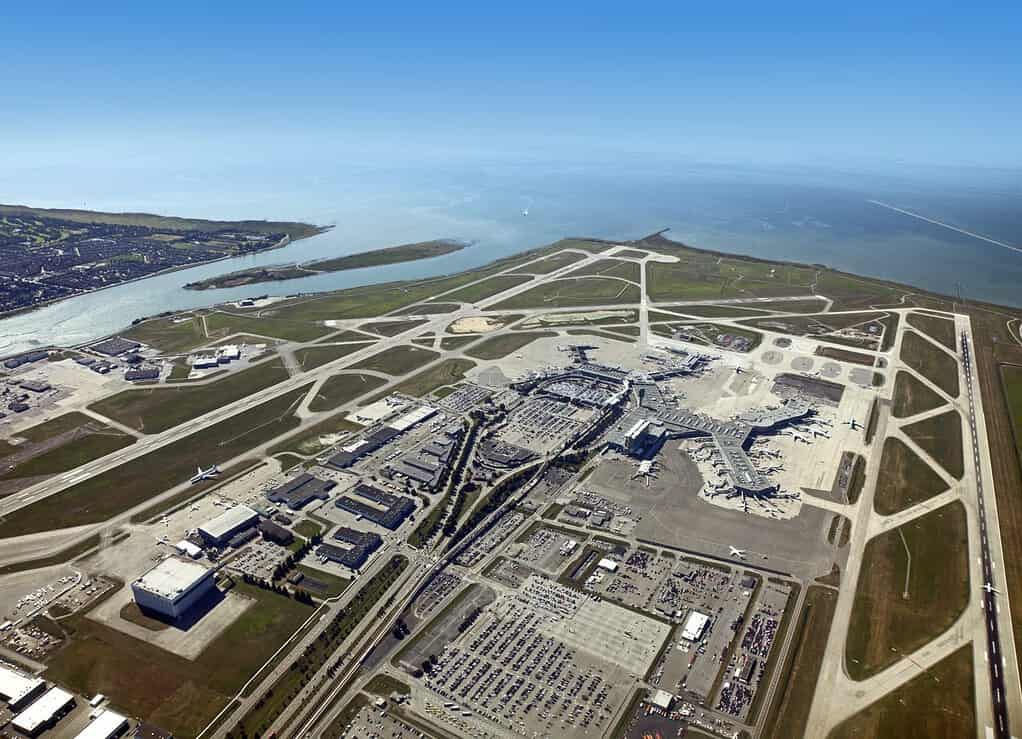
Given YVR’s proximity to waterways, birds can be a real concern for airplane safety.
©Josef Hanus/Shutterstock.com
Toronto Pearson, one of Canada’s busiest airports, also uses falconry to keep their runways safe. Their Falcon Environmental Services runs a year-round program with 28 trained birds of prey and a team of 12 falconers. Because Pearson sits alongside creeks, ponds, and grasslands, the program operates every single day of the year.
Different Bird Species and Their Strengths at Airports
Each species used for airport security represents a different skillset. Falcons are fast in open-field environments, ideal for chasing quick-moving flocks across exposed runways. Meanwhile, Harris’s hawks are slower and more methodical; they reportedly work best flushing birds from vegetation and structures where road access is limited. Finally, eagles are the least common, but they handle the largest birds: geese are one such culprit that requires a bigger bird to chase them away.
Current Research on Falconry in Airports
Over the eight years following the launch of YVR’s program, the airport’s wildlife management team moved nearly 800,000 animals away from runways, taxiways, and aprons. In 2018 alone, the raptors themselves chased away 45,000 of those birds.
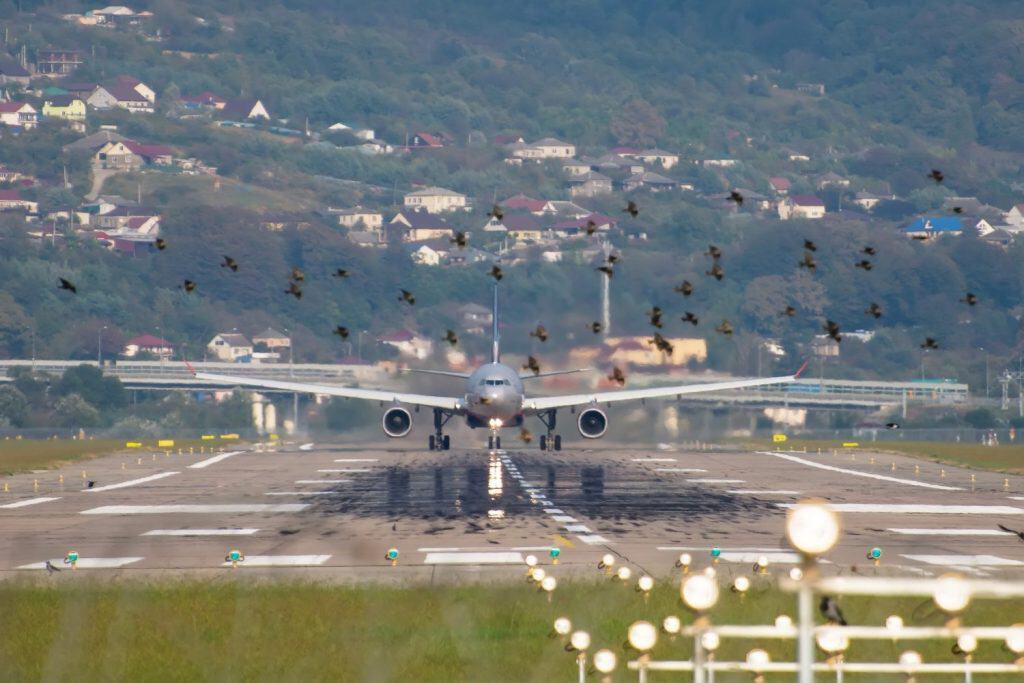
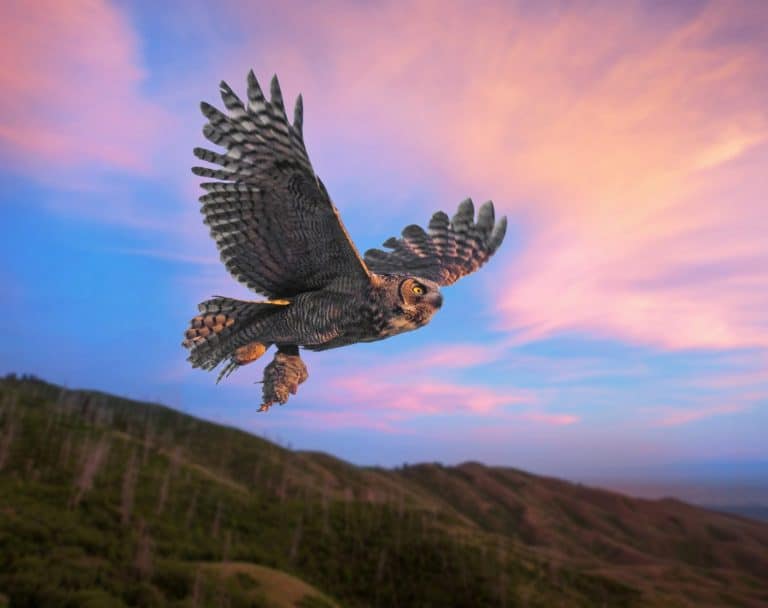
Falconry has helped prevent multiple bird strike issues at the airports with current wildlife programs.
©aapsky/Shutterstock.com
Additionally, bird strikes that cause actual damage have dropped from 6% of all reported strikes in 1996 to 3.7% in 2024, a period during which wildlife management programs have become significantly more sophisticated. “The data shows that strikes may happen every day, but damaging strikes remain rare events because of the research, analysis and mitigation strategies we implement and recommend, both domestically and internationally,” said FAA wildlife biologist John Weller.
While an airport falconry program requires investment in trained handlers, facilities, and bird care, the cost is worth it. For perspective, a single serious strike can cost millions, and it removes an aircraft from service for weeks. YVR spends more than $1 million annually on its full wildlife management program, and lives are also saved in the process.
How Airport Falconry Triumphs (Alongside Other Safety Measures)
Airport wildlife managers are quick to point out that falconry is only one component of airport and runway security. The FAA’s Wildlife Hazard Management guidelines insist that habitat modification, radar monitoring, pyrotechnics, and active deterrents function together, so a mixed plan is a better plan than falconry alone. However, what makes falconry irreplaceable in preventing bird strikes is that it works in situations where no other methods do. It’s a practice worth implementing, if the data is any suggestion.

While airport wildlife programs with falconry can be costly, the money saved in the long run tends to be well worth it.
©Katiekk2/iStock / Getty Images Plus via Getty Images
“There’s a different awareness about bird strikes now,” said David Bradbeer, wildlife program specialist at YVR. “These programs have come a long way.”