Quick Take
- Komodo dragons have a hunting trick so effective that a one-ton water buffalo never sees its own death coming, and the trick has nothing to do with brute strength. See the hunting strategy →
- Kraken's teeth aren't just sharp. They have a property no other living reptile possesses, and it makes every bite more dangerous than it looks. Discover Kraken's metal-tipped teeth →
- A 154-pound animal that could kill a water buffalo is capable of behaving more like a family pet, but only under one very specific condition. Explore Kraken's gentle side →
- When a Komodo dragon bites its prey, the kill is already guaranteed. The prey just doesn't know it yet. Understand the venom's role →
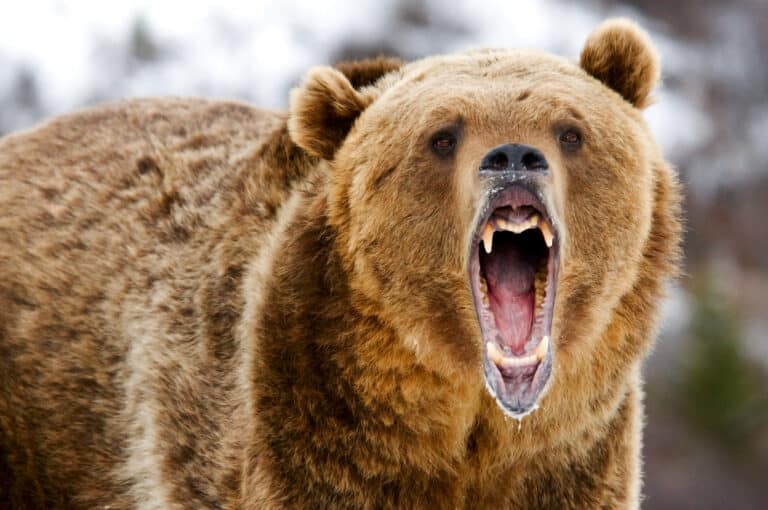
Water buffalo have a number of predators, including tigers, lions, wild dogs, and even crocodiles. However, taking on a one-ton water buffalo is no easy task.
Remarkably, there is one reptile that can take down a massive water buffalo despite being a fraction of its size. According to Australian Reptile Park employees, Komodo dragons regularly prey on water buffalo, making the reptile an apex predator and formidable foe.
Why Kraken the Komodo Dragon Went Viral
Kraken the Komodo dragon has been a fixture at the Australian Reptile Park since he was small. Today, he is a favorite at the park due to his demeanor and looks.
It came as no surprise to Brandon Troy Gifford, the Operations Manager at the Australian Reptile Park, that Kraken recently went viral for his size.
“He’s just gone viral with Billy online at the moment,” Gifford explained in the Instagram reel, “because he’s such a big rig.”
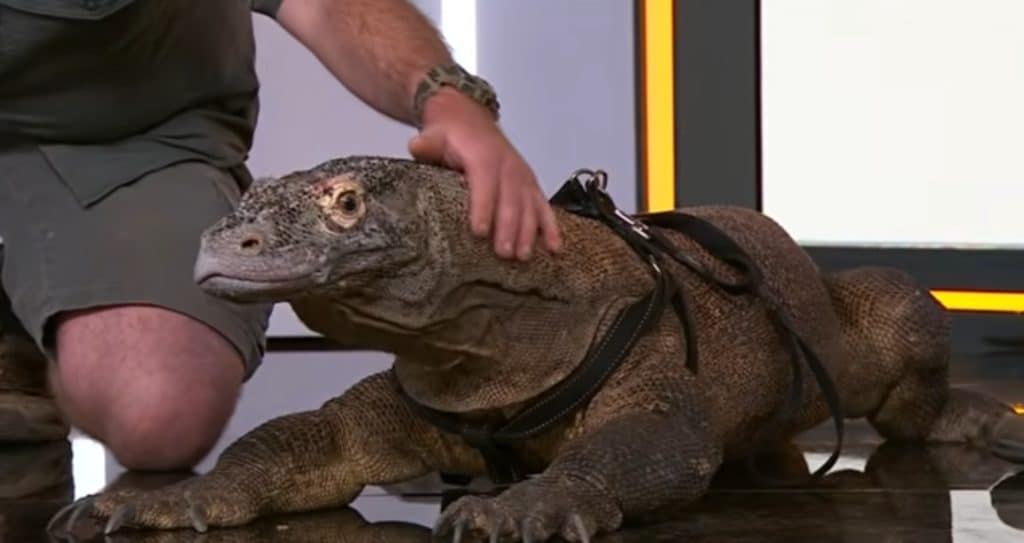
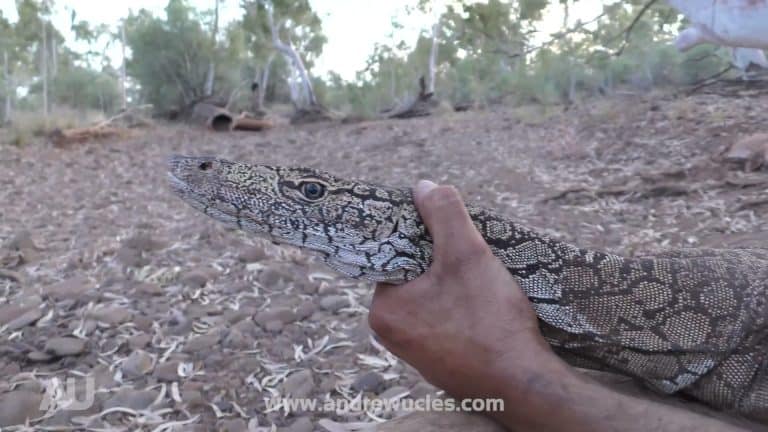
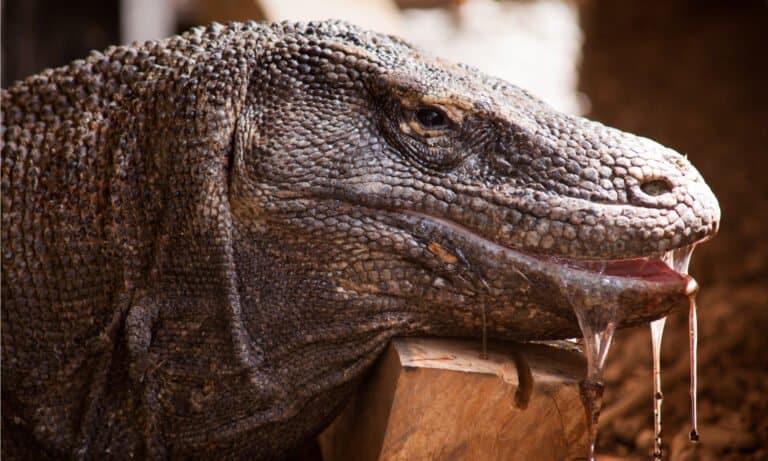
Kraken the Komodo dragon weighs 154 pounds and is 9.8 feet long.
©Sunrise / YouTube – Original
Kraken is a good-sized Komodo dragon, weighing in at 154 pounds and measuring 9.8 feet long. However, Komodo dragons can grow significantly larger, weighing over 300 pounds and measuring 10 feet long.
Gifford goes on to state in the Instagram reel that Komodo dragons are the largest reptile in the world and the only species left with metal-tipped teeth.
Kraken the Komodo Dragon Could Take Down a One-Ton Water Buffalo
In captivity, Kraken is likely fed a variety of protein sources, including rabbits, chickens, deer, and pigs. The amount of food would be significant at feeding time, given Komodo dragons can consume 80% of their body weight per meal. However, this meal can last days to weeks between feedings.
In the Instagram reel, Gifford comments that a Komodo dragon Kraken’s size could take down a one-ton water buffalo. Given the size differential, this seems nearly impossible. But thanks to a keen hunting strategy and a deadly bite, Komodo dragons can catch water buffalo and other large prey.
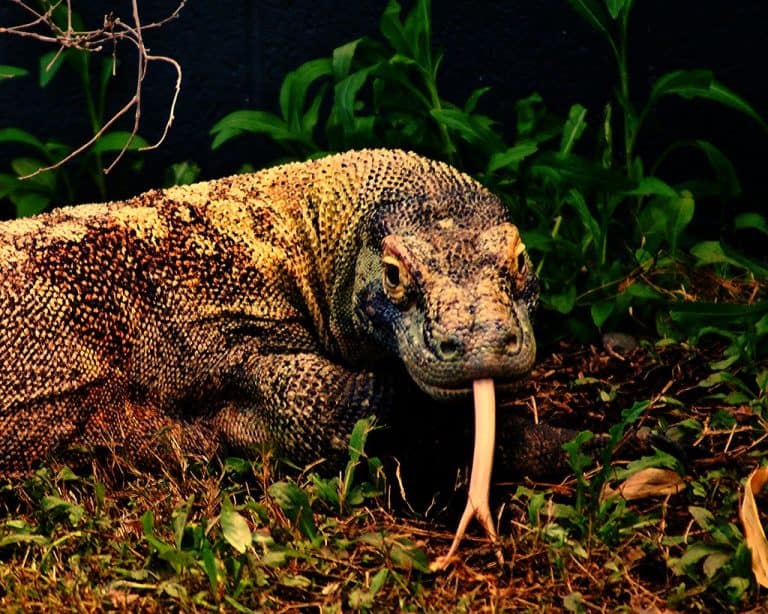
The hunt begins when Komodo dragons smell water buffalo using their forked tongue and the vomeronasal organ, located under the nasal cavity, which detects chemicals and odors in the environment. The Komodo dragon then stealthily tracks the water buffalo, with the large mammal being none-the-wiser.
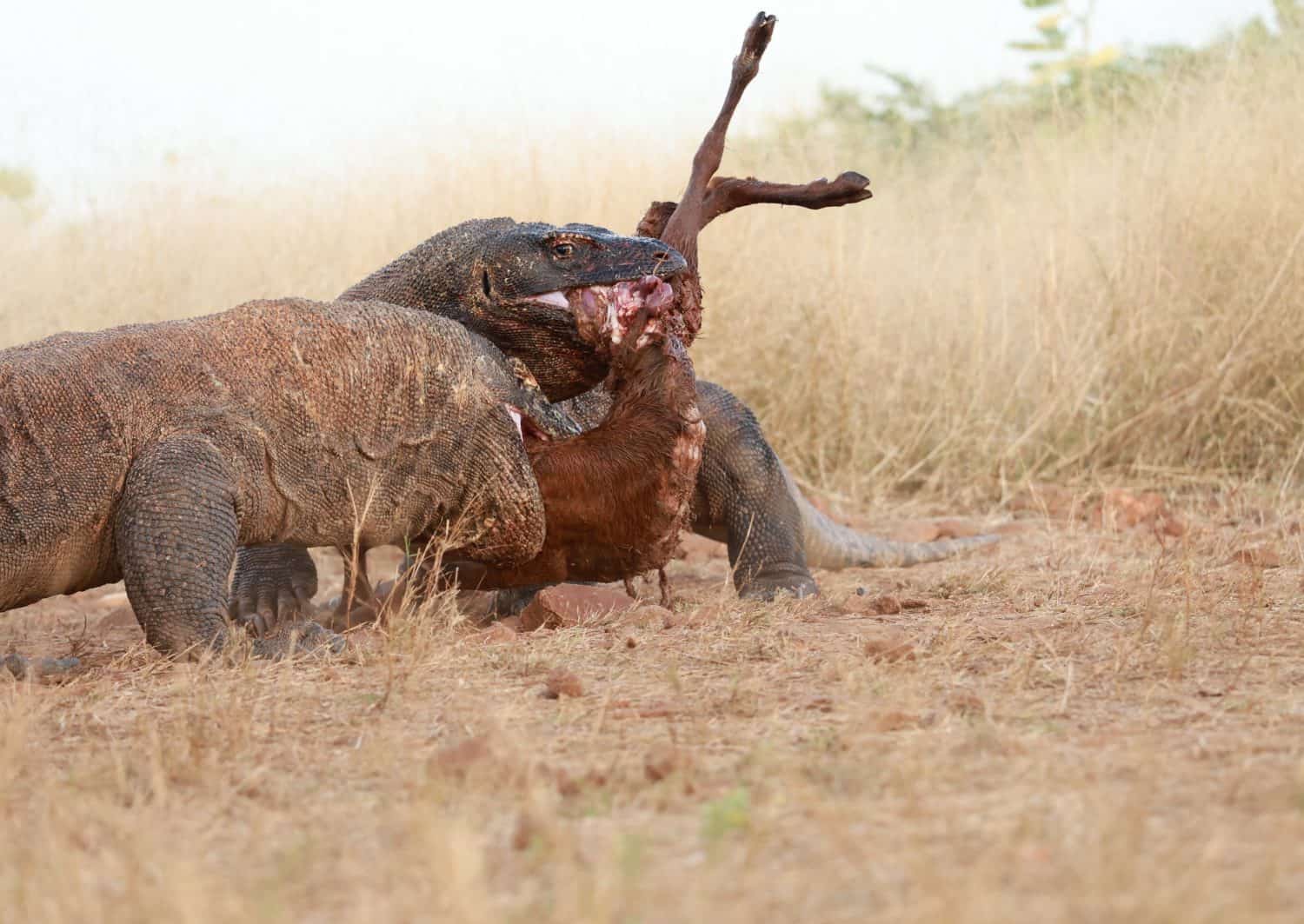
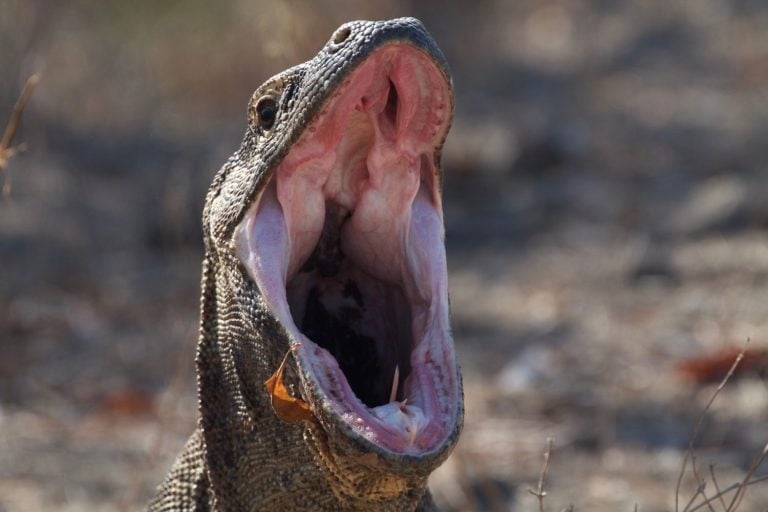
Komodo dragons can take down large prey, including water buffalo.
©Leonardus Nyoman/Shutterstock.com
As soon as the Komodo dragon gets close enough to strike, it targets vulnerable areas of the water buffalo, such as the legs and the belly. Each strike causes a large gash, which alone would not necessarily be enough to bring the water buffalo down. Instead, it is the venom injected into the water buffalo that is problematic.
With every bite the Komodo dragon makes, venom from glands in the lower jaw is injected. The venom causes multiple problems, which include:
- Pain
- Shock
- Paralysis
- Blood anticoagulation
- Hypotension
The venom begins to take effect almost immediately, but it can take minutes to hours for the prey to succumb. This is why bites from the Komodo dragon’s 60 serrated, metal-tipped teeth are used to quicken the process through blood loss, bringing down one-ton water buffalo in the process.
Are Komodo Dragons Like Kraken Friendly?
During the segment on Sunrise, the question was raised as to whether Kraken was friendly. The response was an overwhelming “yes.” However, this is because Kraken has been in captivity for 13 years and has worked consistently with trainers. Coming across a Komodo dragon in the wild would be a different story.
“He’s almost 14 years old,” Billy Collett, the Australian Reptile Park manager, explained. “We’ve done stacks of conditioning with him.”
Collett went on to say that, despite Kraken no longer being small enough to sit on shoulders, it’s because of all the work they did with the Komodo dragon when he was young that they can “still hold that relationship” with Kraken today.
Additionally, it was asked if Kraken ever bites. While generally, Kraken is well-behaved, there is an exception to this rule and that is if food is involved.
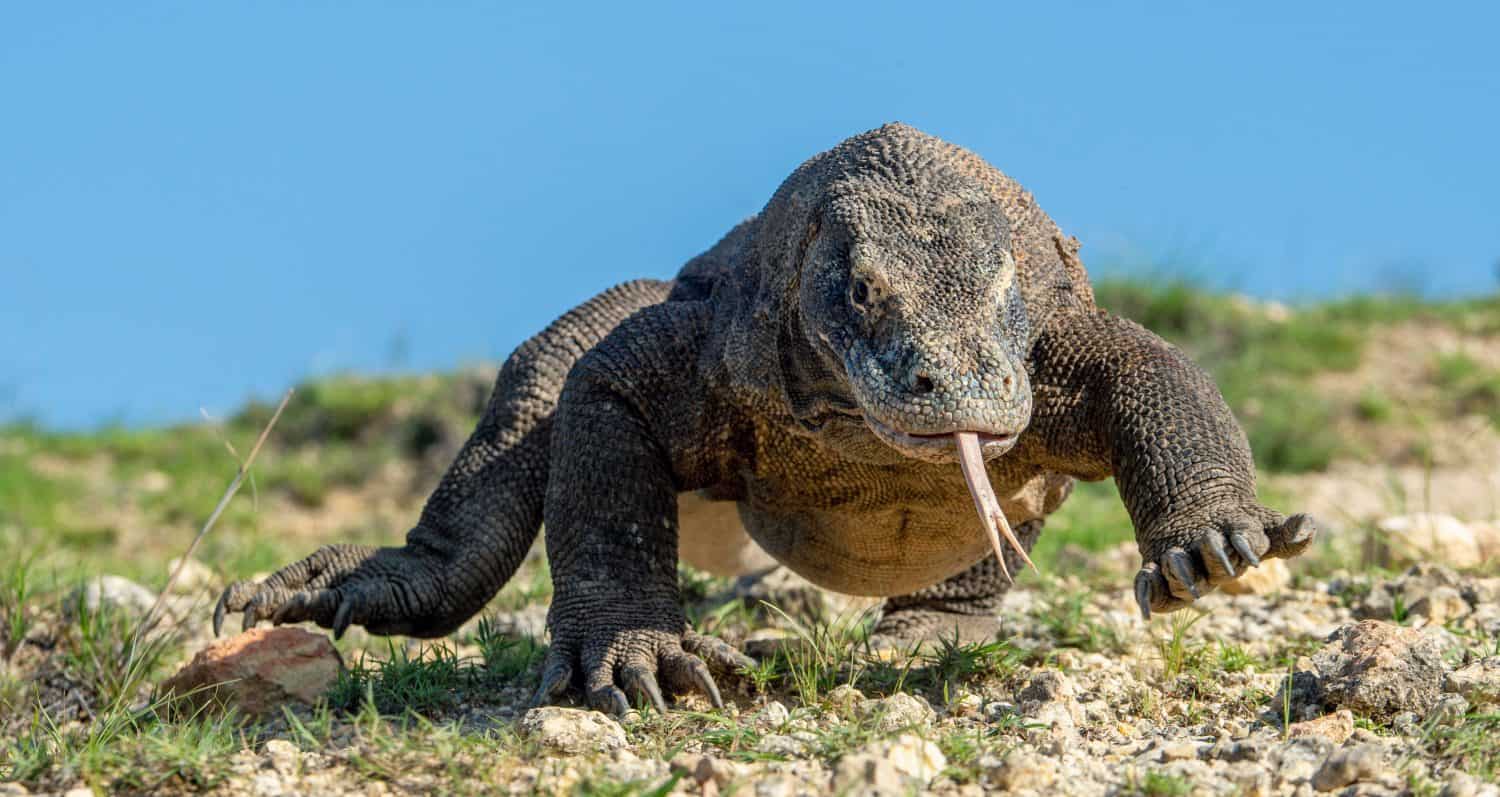
Komodo dragons are not friendly and should be given space in the wild.
©Sergey Uryadnikov/Shutterstock.com
“He goes off in a food response,” Gifford said. “It’s like if you’ve got food, Bill and I feed him like a croc. He runs around. But as soon as he’s out, it’s like a dog with a bone. He can switch it off, and it’s back to being a Labrador.”
In the wild, Komodo dragons are not friendly. While attacks on humans are rare, Komodo dragons can cause serious bodily harm or death. Consequently, a minimum distance of 15 feet should be kept from Komodo dragons. If the reptile decides to charge at 12 miles per hour, there is time to react and reach safety.