Quick Take
- Woodsy Owl's origin traces back to a popular TV show, though not in any way you'd expect. Discover his TV origins →
- Before Woodsy became iconic, the Ad Council declined to take on his campaign, forcing the Forest Service to find another approach. See how the campaign was built →
- The campaign's designers made a deliberate choice about its target audience that set Woodsy apart from every other environmental mascot of the era. Explore the audience strategy →
- Congress passed a federal law with Woodsy Owl's name on it, and the reason why says something unexpected about how seriously the government took him. Read about the Woodsy Owl Act →
If you grew up in the 1970s or 1980s, there’s a good chance you’ve heard of and would recognize Woodsy Owl in a second. His iconic “Give a hoot—don’t pollute” slogan remains unforgettable in past marketing and forestry efforts. But how did this campaign become so famous, and what impact has it had on U.S. environmental history and its potential today?
This is Woodsy Owl’s fascinating history, as well as his possible place in our environmental future.
The Origins of Woodsy Owl: Earth Day and a Television Show
Woodsy Owl’s origin story lies at a fascinating intersection in early 1970s America. The emergence of the environmental movement and the enduring popularity of the television series Lassie are two of the main reasons Woodsy Owl exists today.
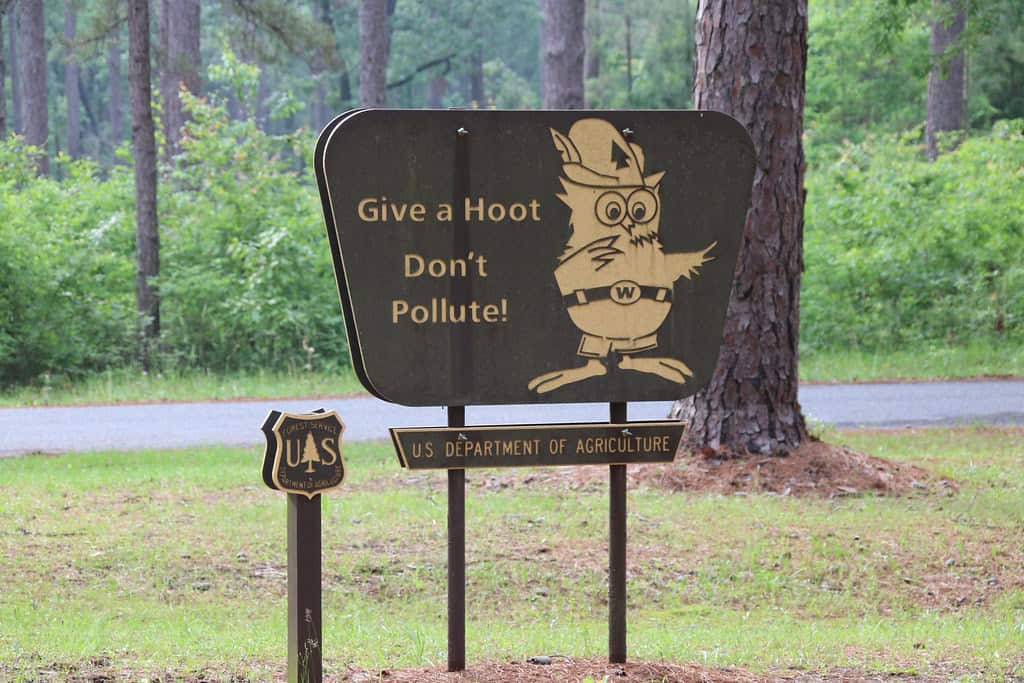
Woodsy Owl started in the 1970s, as part of the U.S. Forest Service.
©"Woodsy Owl sign on Catahoula Ranger District, Kisatchie National Forest" by US Forest Service – Southern Region is licensed under PDM 1.0. – Original / License
The U.S. Forest Service had technical advisers on the Lassie set (the show featured a Forest Service ranger and his family), and it was in that odd context that a small creative team began developing ideas for a new mascot, one that could represent the public’s responsibility for environmental conservation.
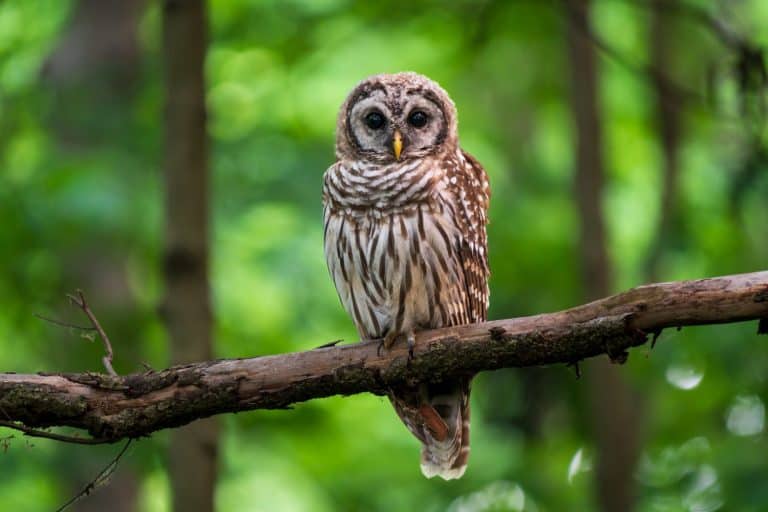
Harold Bell, a cartoonist and marketing agent with Western Publishing and someone who had previously worked on Smokey Bear public service announcements, collaborated with Forest Service employees to bring Woodsy to life. The team chose an owl because owls can be found in both forests and urban parks, and their design could be made approachable for children.
Woodsy was created in 1970, just in time for the first Earth Day on April 22, 1970. His slogan was recorded in newspapers as early as November of that year, and the Secretary of Agriculture Clifford Hardin officially introduced Woodsy Owl and his motto to the public on September 15th, 1971, a date the Forest Service still marks as Woodsy’s official birthday (and my birthday too, a couple decades later!).
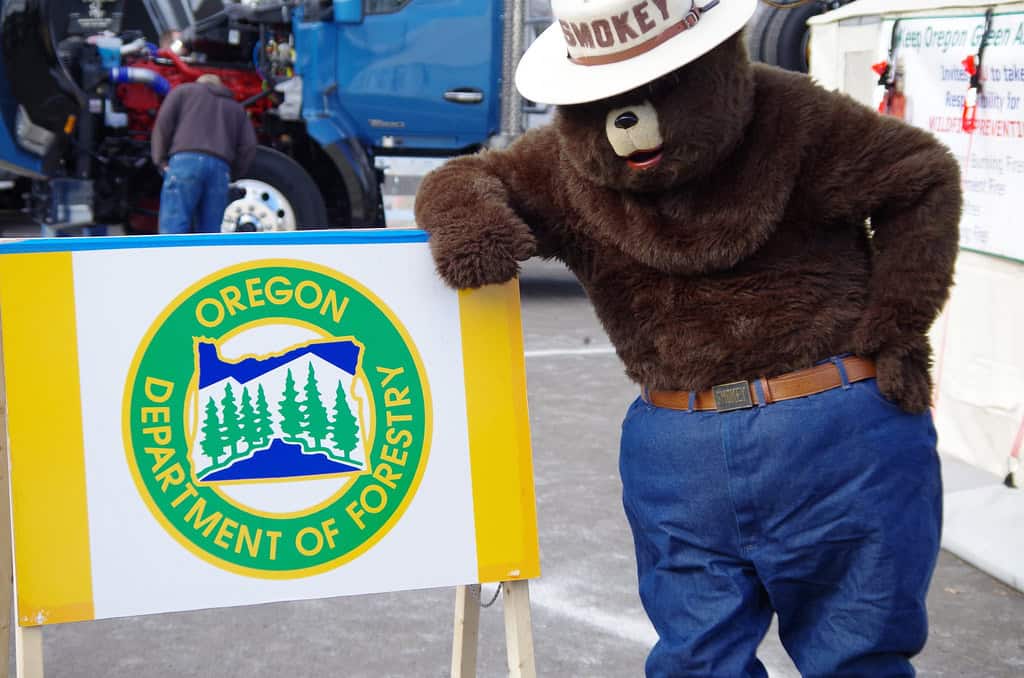
Woodsy Owl’s fame rose to the likes of Smokey Bear, and they are both protected properties.
©"Smokey Bear-fire prevention education" by #ODF is licensed under BY 2.0. – Original / License
However, the Ad Council, which managed Smokey Bear’s advertising, declined to take on Woodsy due to concerns about a conflict with its existing Smokey account. As a result, the Forest Service had to get creative; Woodsy’s television spots were ultimately produced with the help of a newly formed Public Service Council instead.
What Made Woodsy Owl’s Campaign So Memorable?
While Woodsy’s slogan was memorable, it wasn’t the only factor; it was the sheer volume and variety of touchpoints the Forest Service built around him. Woodsy appeared in television and radio spots, educational films, posters, coloring sheets, bookmarks, decals, and classroom kits. The Forest Service even sent people dressed as Woodsy into schools to teach children about littering and conservation, and the children adored him.
There was also a 1977 educational film titled Help Woodsy Spread the Word. Now held in the National Archives, the film was part of a broader multimedia campaign and distributed to schools with an educational pamphlet and teacher discussion questions. It was written by a Forest Service employee and featured a well-known actor as Woodsy.
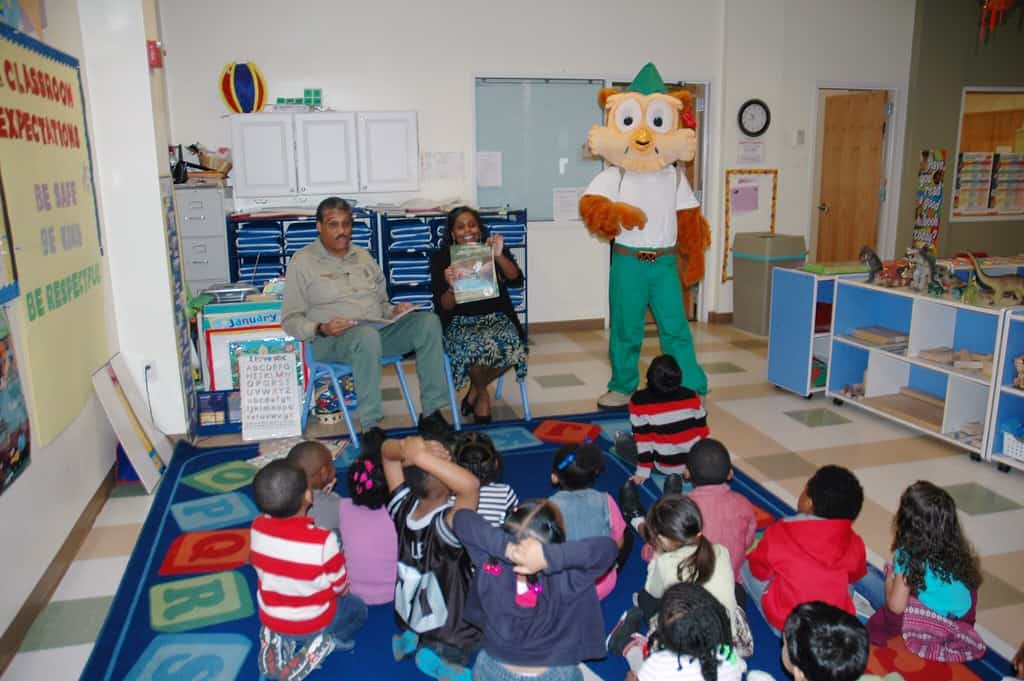
Woodsy was widely known, especially in households with children.
©"Woodsy Owl Interactivity" by Region 5 Photography is licensed under BY 2.0. – Original / License
A series of Gold Key comic books about Woodsy also ran from 1973 to 1976, and he had his own songs. Regardless of the medium, the campaign made it clear that multiple types of pollution are everyone’s problem, in every environment.
Children living in urban areas were just as much a target audience for Woodsy Owl as children from rural areas; this was a deliberate choice. Woodsy’s creators recognized that other existing environmental or business mascots were not resonating with children from non-rural areas.
How Recognizable Did Woodsy Owl Become?
By the mid-1970s, Woodsy was recognized in a majority of U.S. households, appearing in classrooms, public service campaigns, and outdoor spaces across the country. Within a few years of his introduction, a national survey found that Woodsy and his message were recognized by 90% of U.S. households with children and by 70% of the general population.
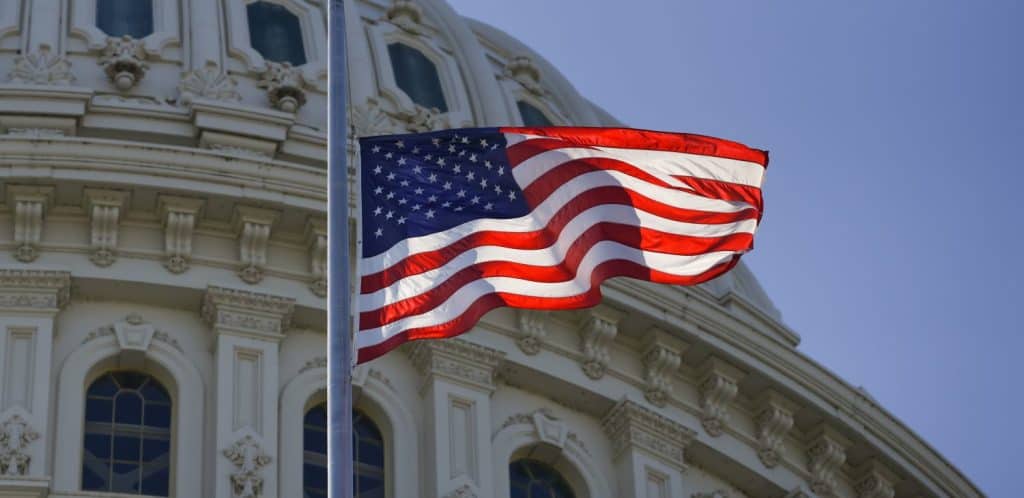
Congress deemed Woodsy Owl a federally protected property in 1974.
©Volodymyr TVERDOKHLIB/Shutterstock.com
In 1974, Congress made Woodsy federally protected. The Woodsy Owl Act was passed to protect the character’s image, prohibiting unauthorized commercial use of Woodsy’s likeness. It remains one of the few federal laws written to protect an advertising mascot, showing how seriously the government valued Woodsy Owl’s cultural and educational impact.
A Look at Woodsy Owl’s Future
The Woodsy that Boomers and Gen-Xers remember was retired in favor of a redesigned character better suited to the 1990s and beyond. According to the USDA, the updated Woodsy is leaner, more athletic, and wears hiking boots and a trusty backpack.
His original slogan was replaced by a new motto: “Lend a hand—care for the land!” His message also expanded to include the 4Rs: recycle, reduce, reuse, and rot (also known as composting).
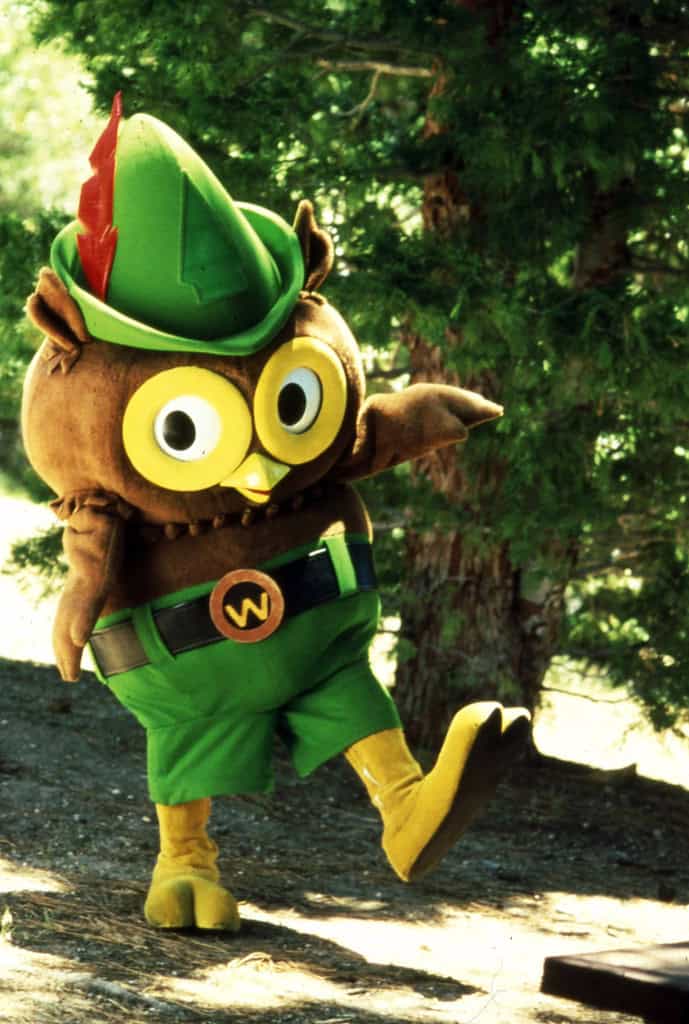
Woodsy’s appearance has changed over the years, but he’s still recognizable today.
©"Woodsy Owl Costume" by Forest Service Photography is licensed under PDM 1.0. – Original / License
“Woodsy Owl’s messages are clear: all of us have a responsibility to help this Earth,” said Heidi McAllister, assistant director of the Forest Service’s Conservation Education program, in a statement marking Woodsy’s 42nd birthday in 2013. Today, Woodsy Owl continues to appear in Forest Service educational programs and outreach efforts for children.
In 2021, the Forest Service marked Woodsy’s 50th anniversary with renewed awareness efforts. Even better, the original 1971 Woodsy Owl costume is now part of a pop-up exhibit at the World Forestry Center in Portland, Oregon. Well worth a visit!
What the Woodsy Owl Campaign Did for American Environmentalism
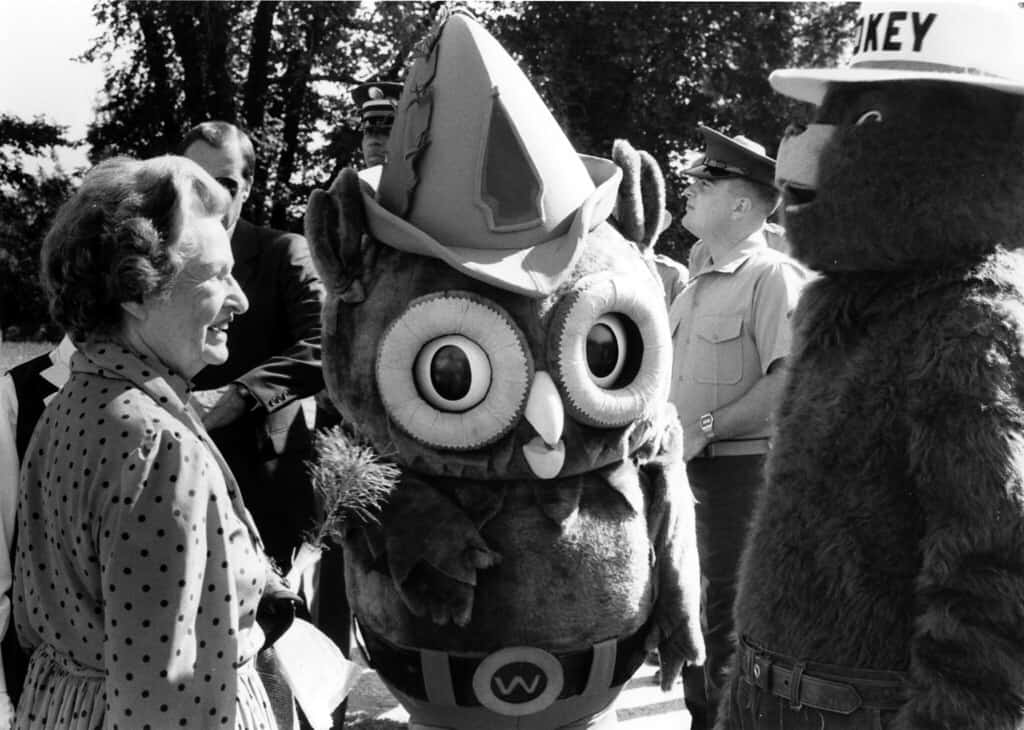
American environmental history wouldn’t be the same without Woodsy Owl.
©"Woodsy Owl & Smokey with Lady Bird Johnson c1970" by Forest Service Pacific Northwest Region is licensed under PDM 1.0. – Original / License
While the Forest Service acknowledges that no longitudinal data ties Woodsy to specific behavioral change metrics, the impact of this mascot is undeniable. A campaign character recognized by nine out of ten households with children, and sustained across television, radio, film, schools, and print for more than two decades, truly shaped the environmental intuitions of an entire American generation during their formative years.